Working with Galician Literature, Castelao

Working with Galician Literature, Castelao

TOURO

CHANGING THE VILLAGE THROUGH PROTAGONIST PARTICIPATION

Working with Galician Literature, Castelao

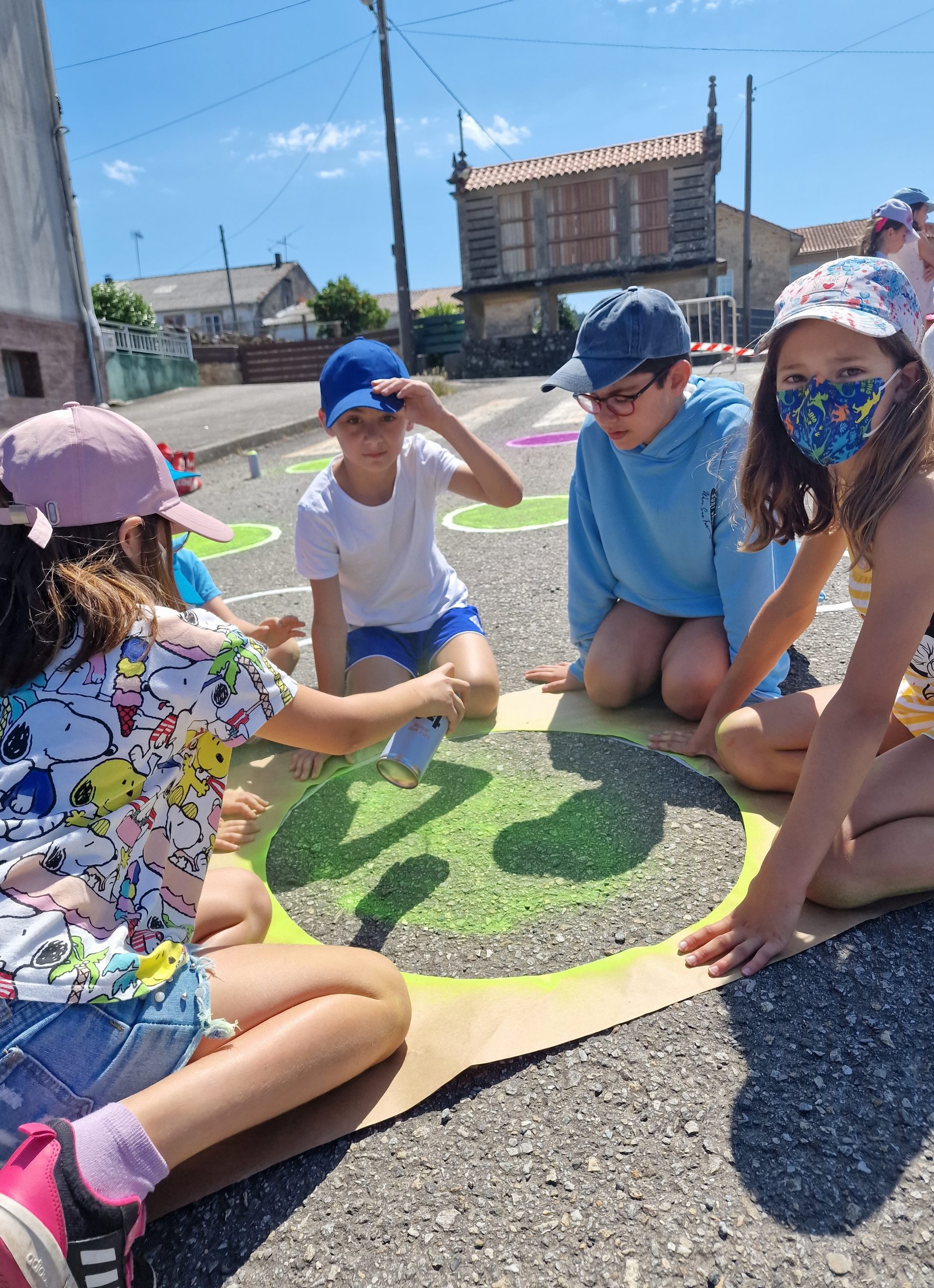
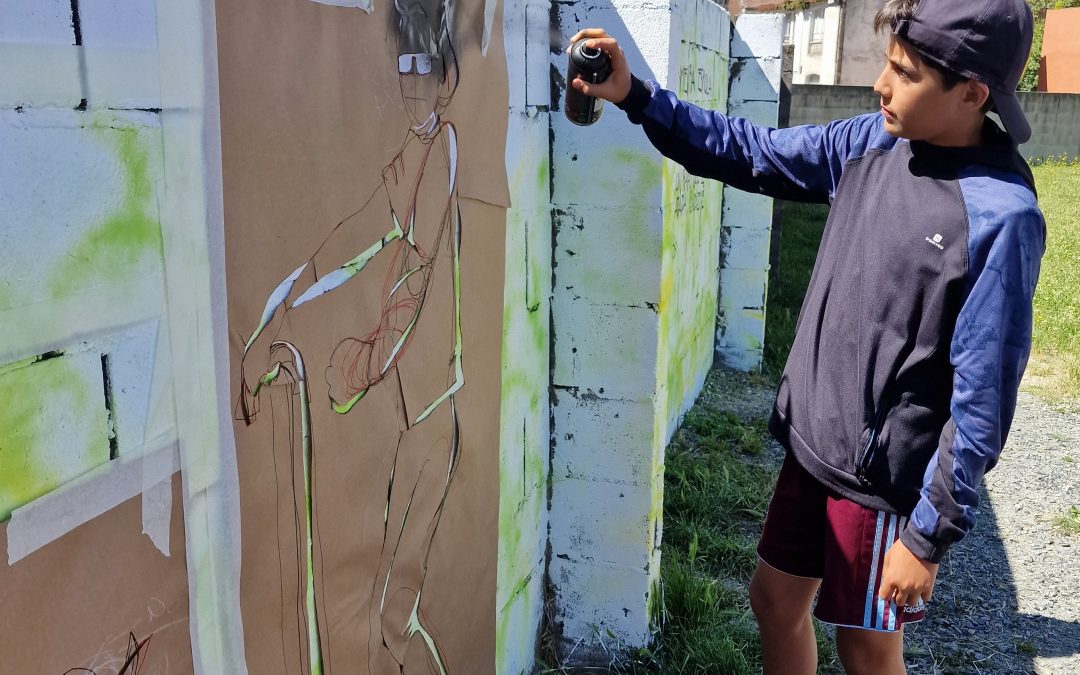
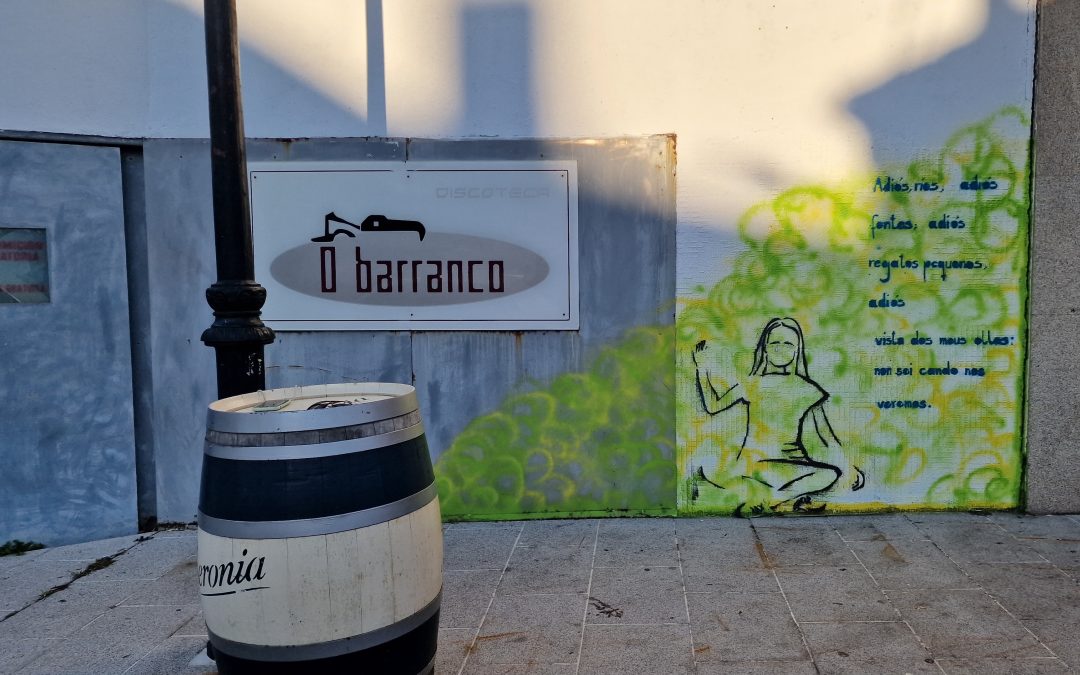
In a place lacking strong identity references (where the main element of collective memory was a disused nightclub), the project begins with a latent infrastructure: the town’s street map, whose names pay tribute to authors of Galician literature. Based on this cultural cartography, A Vila do Mañá turns words into infrastructure and literature into a tool for urban activation.

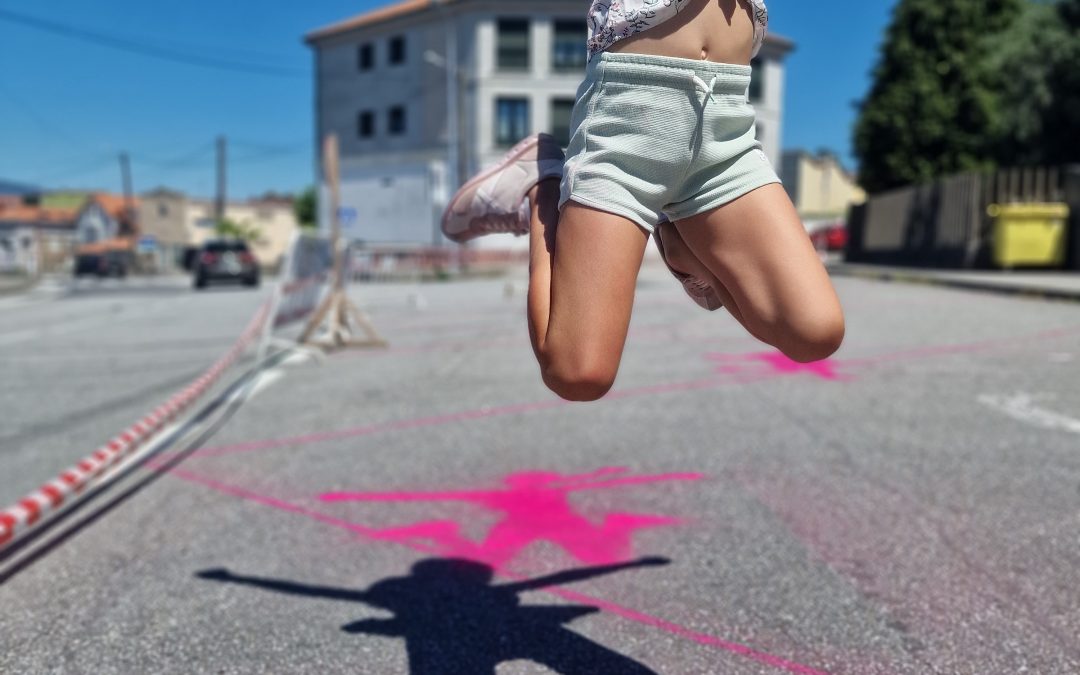
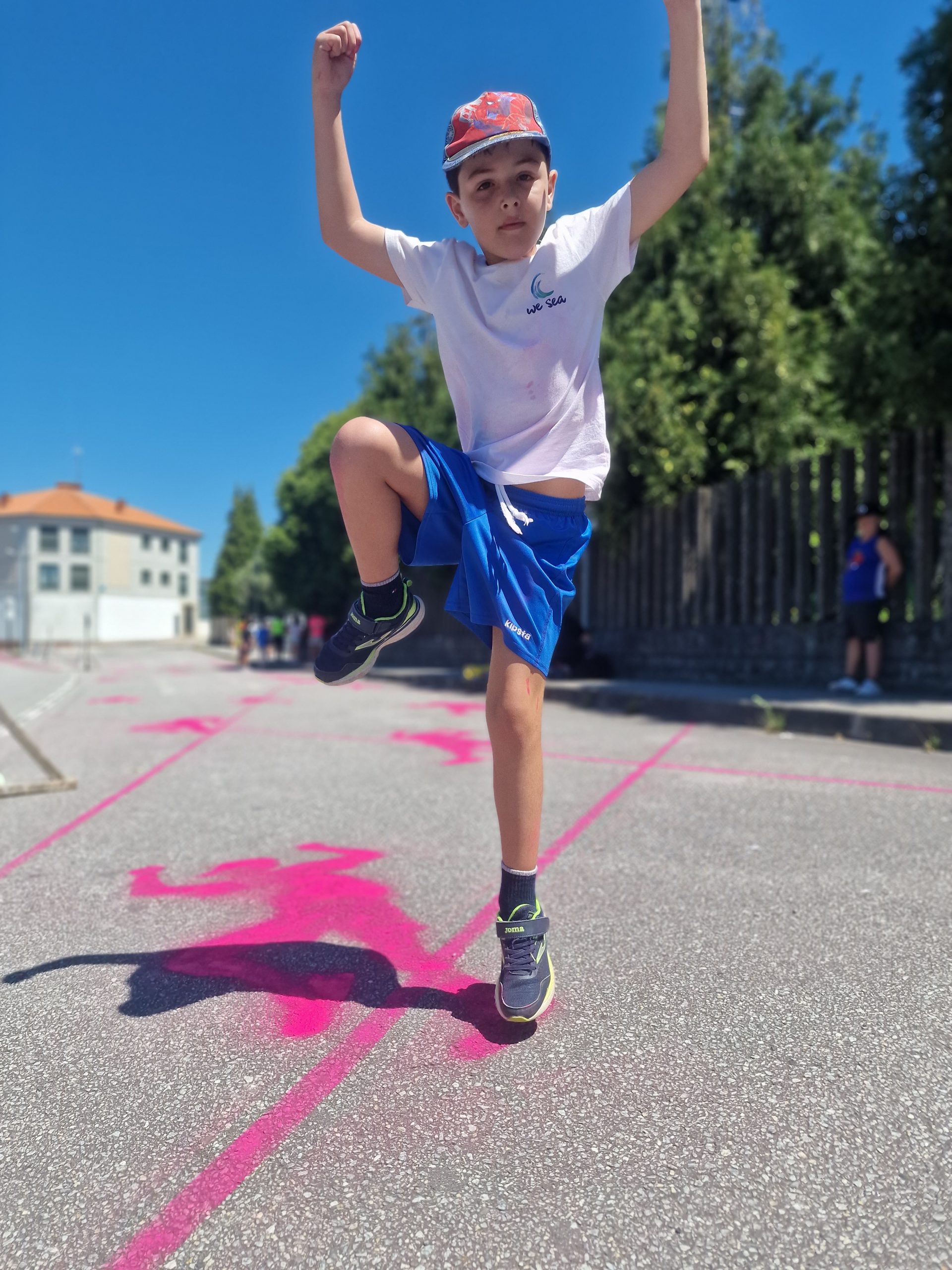
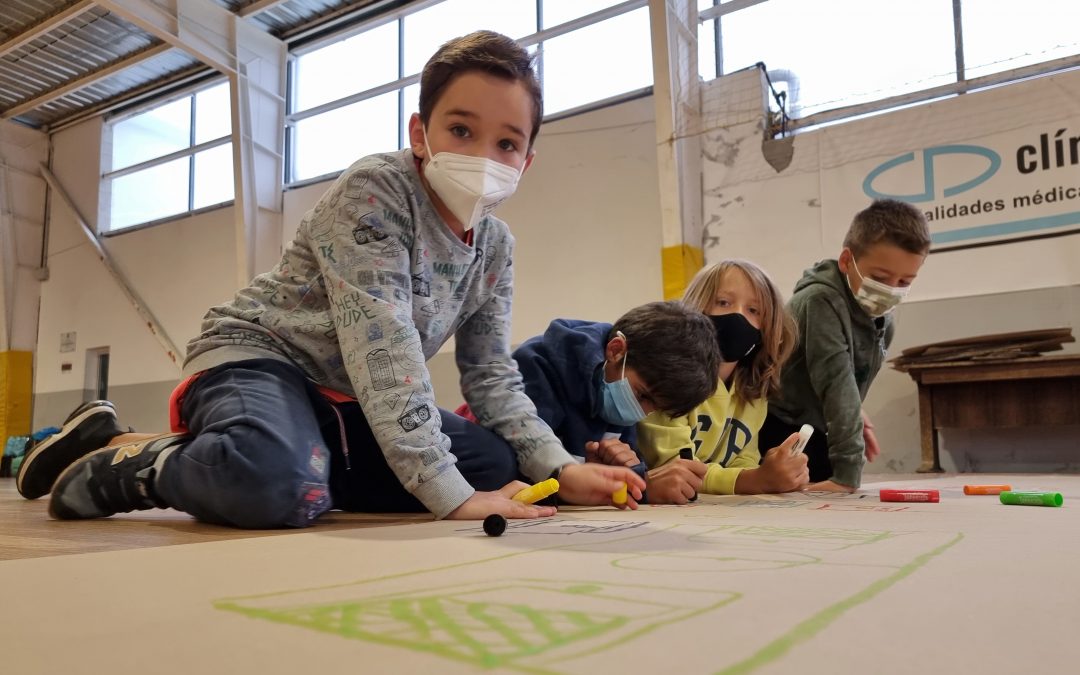
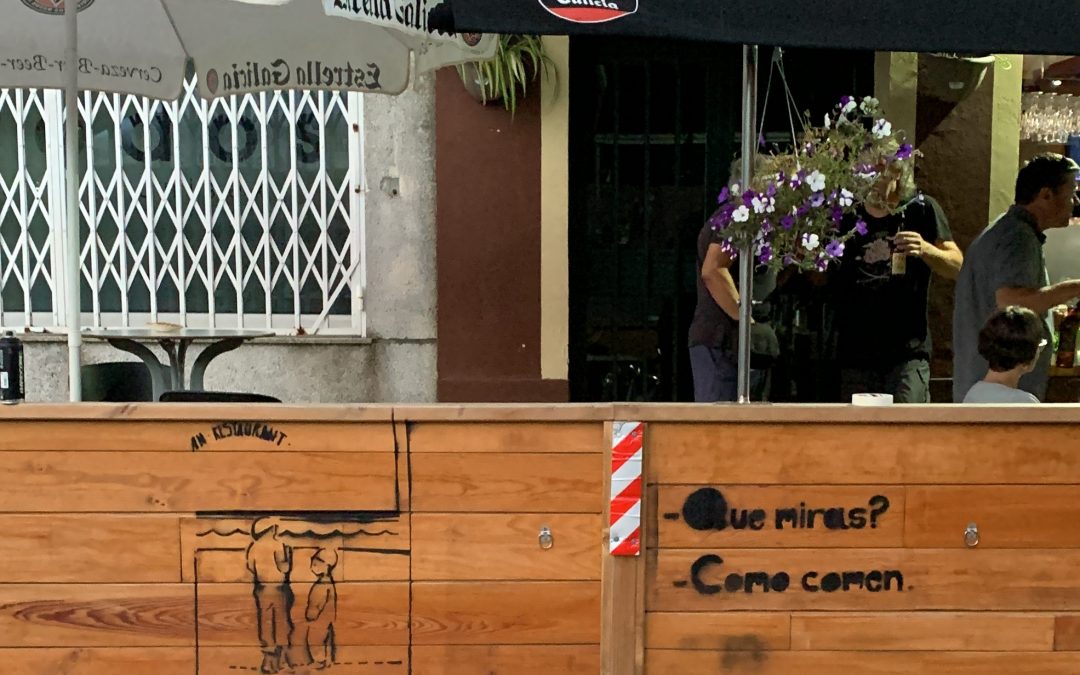
The figures of children and teenagers themselves (their silhouettes, bodies, and gestures) become the visual protagonists of the urban space. The aim is not to represent them, but to allow them to inscribe themselves into the landscape with their scale, their language, and their living presence. Their image occupies façades, walls, and partitions, intervening in the urban environment with their collective identity and symbolic power.

COLOUR YOUR VILLAGE

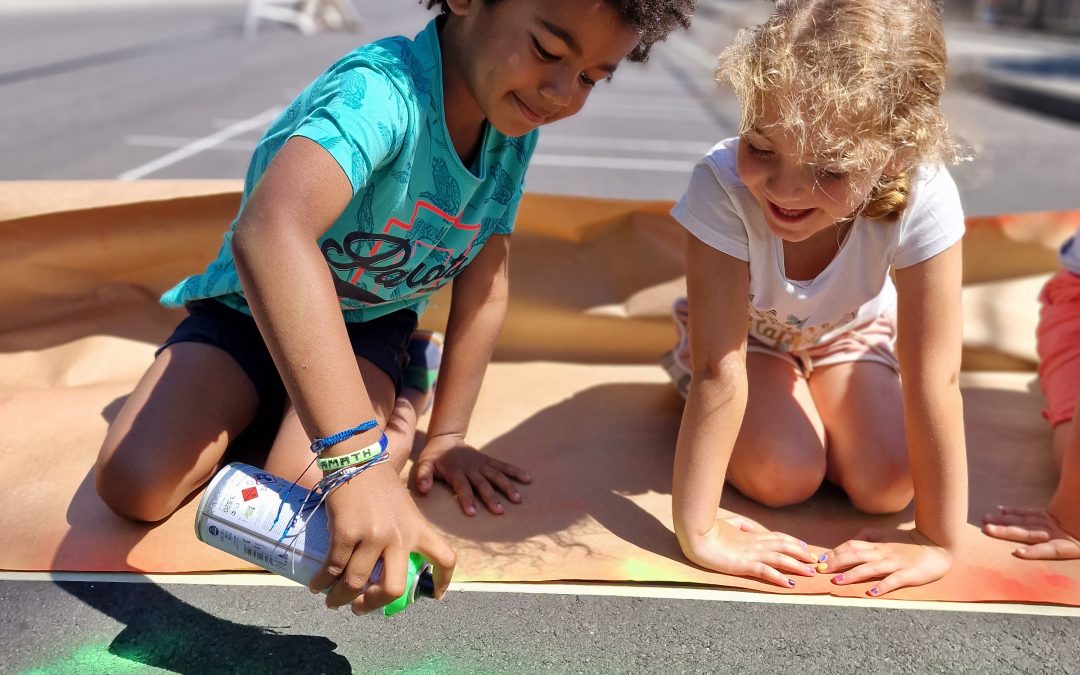
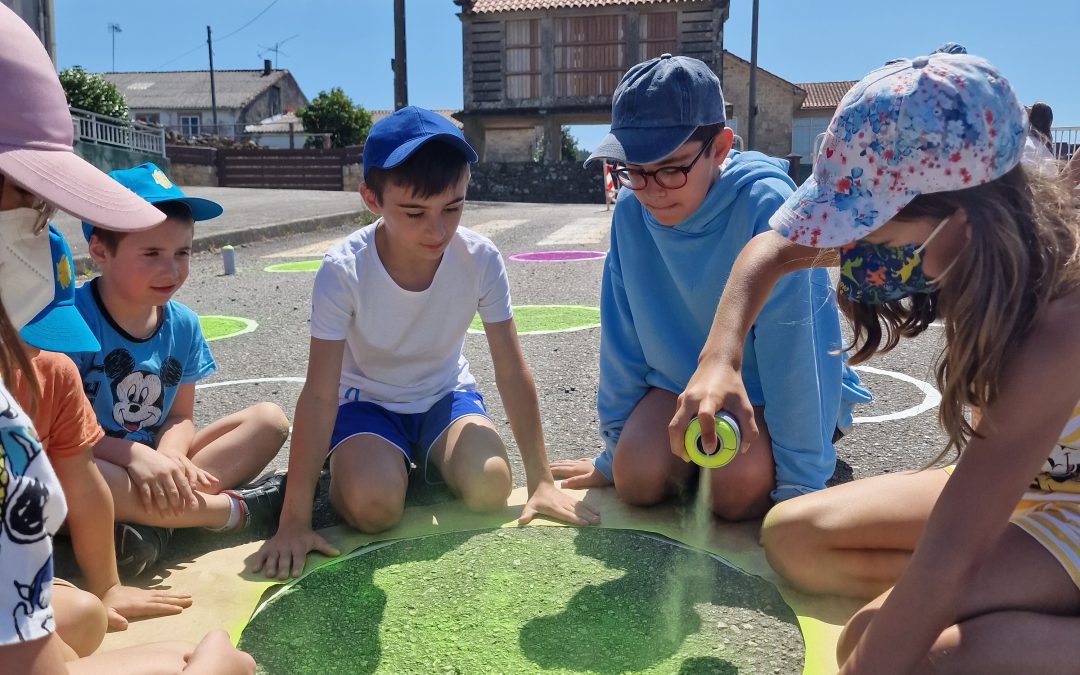
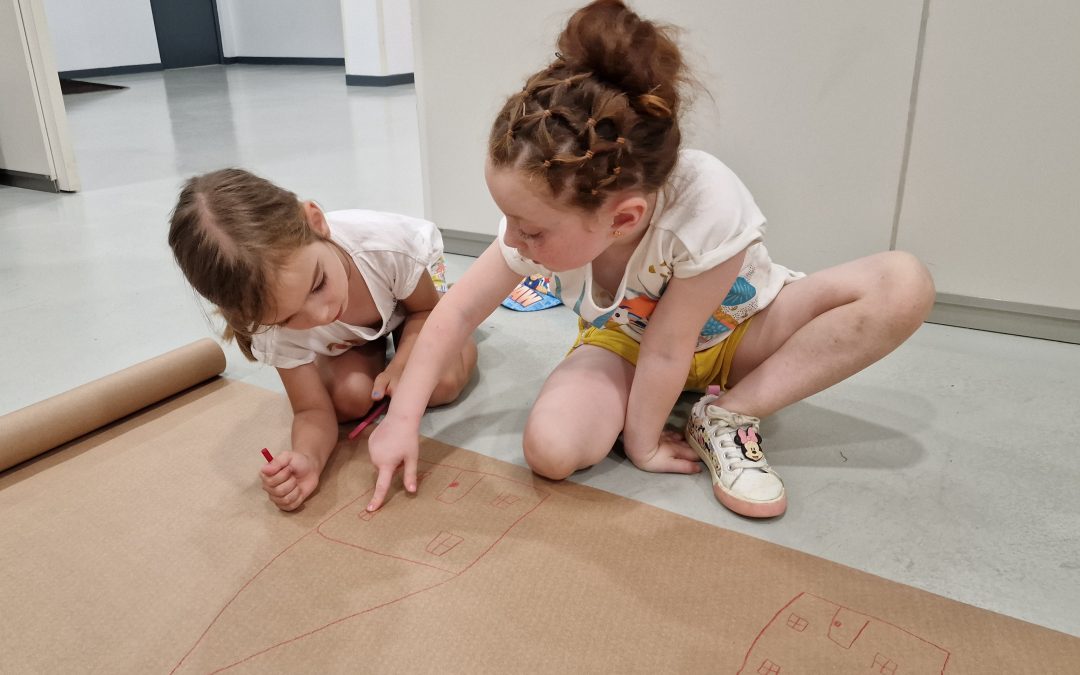
The village or city in which we are working, transformed into a game board, a laboratory of experimentation where children and teenagers can act from a new point of view.

Protagonist participation in Galician literature

Protagonist participation in Galician literature

RIANXO

CHANGING THE VILLAGE THROUGH PROTAGONIST PARTICIPATION

Protagonist participation with the work of Manuel Antonio 

The figures of children and teenagers themselves (their silhouettes, bodies, and gestures) become the visual protagonists of the urban space. The aim is not to represent them, but to allow them to inscribe themselves into the landscape with their scale, their language, and their living presence. Their image occupies façades, walls, and partitions, intervening in the urban environment with their collective identity and symbolic power

        Navy Bar 

Este bar ten balances
E tamén está listo
pra se facer á vela

Encheron-noS O vaso
con toda a auga d’o Mar
pra compor un cocktail de horizontes

Pendurados d’as horas
atlas xeográficos d’esperantos
están sin tradución
E tatexan as pipas
c’o ademán políglota d’as bandeiras

Es cantar improvisado
é o mesmo
que xa se improvisou n-algures

Quen chegou avisándo-nos
d’esa cita noiturna que temos
c’o vento ao NE
n-a encrucillada d’as estrelas apagadas?

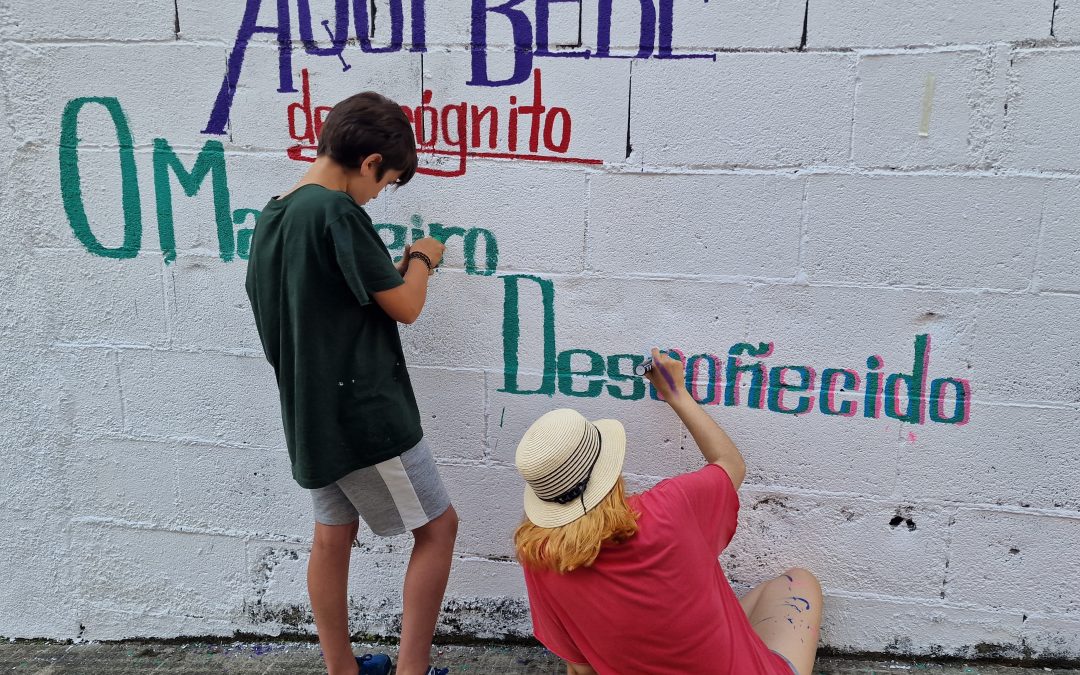
Eiquí bebe de incónito
o Mariñeiro Desconecido
—sin xeografía in literatura—
A noite d’os nautraxos
c’o seu brazo salvavidas
aferrará con nosco unha vela de chubascos

O vaso derradeiro
estaba cheo de despedidas

Pol-as ruas dispersas
ibamo-nos fechando
cada un dentro d’a sua alta-mar

N-o repouso d’algún vaso
todal-as noites naufraga o Bar.

Manuel Antonio

COLOUR YOUR VILLAGE

The village or city in which we are working, transformed into a game board, a laboratory of experimentation where children and teenagers can act from a new point of view.

Protagonist participation and tactical urbanism

Protagonist participation and tactical urbanism

RIANXO


Transforming the Village Through Protagonist Participation

Tactical Urbanism for Traffic Calming


“streets   /   Girls and boys, in their mute solitudes   /   they cross the streets of bitter cities   /   Vertiginous rhythms modulate his walk   /   There are no rest stops, there is no time   /   There is no time to recover, and look and feel   /   to observe, to learn   /   to want Inhospitable urban spaces, of senseless wars   /   forgotten values and excessive ambitions   /   they mislead their people   /   And between broken memories, foul-smelling containers   /   traffic lights, cars, vomit and urine   /   children’s tears also wet the streets”

Adriana Bisquert

It is a simple and powerful formula of URBAN TRANSFORMATION, followed by VILAS and CITIES in the whole world, which allows to change spaces through actions with ephemeral and economic elements.

In this way, it is possible to TRANSFORM mere SPACES of transit or parking into ZONES of LIFE and social interaction, creating meeting places for the community and above all designed by and for children and adolescents, where they are the protagonists. 

Color your Village

The village or city in which we are working, transformed into a game board, a laboratory of experimentation where children and teenagers can act from a new point of view.

Tactical urban planning for traffic calming

Tactical urban planning for traffic calming

RIANXO


Transforming the Village Through Protagonist Participation

Tactical Urbanism for Traffic Calming


“streets   /   Girls and boys, in their mute solitudes   /   they cross the streets of bitter cities   /   Vertiginous rhythms modulate his walk   /   There are no rest stops, there is no time   /   There is no time to recover, and look and feel   /   to observe, to learn   /   to want Inhospitable urban spaces, of senseless wars   /   forgotten values and excessive ambitions   /   they mislead their people   /   And between broken memories, foul-smelling containers   /   traffic lights, cars, vomit and urine   /   children’s tears also wet the streets”

Adriana Bisquert

It is a simple and powerful formula of URBAN TRANSFORMATION, followed by VILAS and CITIES in the whole world, which allows to change spaces through actions with ephemeral and economic elements.

In this way, it is possible to TRANSFORM mere SPACES of transit or parking into ZONES of LIFE and social interaction, creating meeting places for the community and above all designed by and for children and adolescents, where they are the protagonists. 

Color YOUR VILLAGE

The village or city in which we are working, transformed into a game board, a laboratory of experimentation where children and teenagers can act from a new point of view.

Tactical urban planning for traffic calming

Tactical urban planning for traffic calming

RIANXO


Changing the village through protagonist participation

protagonist participation and tactical urbanism

The right of children and adolescents to PARTICIPATE in the CONSTRUCTION of their TOWN or CITY as part of an ACTIVE CITIZENSHIP, in such a way that they are participants and executors of the changes in their surroundings.

For this protagonist to exist, CHILDREN and ADOLESCENTS must reflect on their surroundings (the space in which they develop their lives), their context and propose solutions for change become aware of what it means to be a legal entitlement and the importance that their participation can have as a driving force for change in the rest of society.

Canal Barbanza 09/07/2022

The project ‘A Vila do Maña’ is located in Rianxo.

Vila do Maña has returned to Rianxo, where they have been working with various groups of children over the last few days. It is an educational project whose aim is that from childhood and youth, and through play, awareness of all scales of the common: architecture, heritage, urbanism and landscape, encouraging protagonist participation as part of active citizenship.

Color YOUR village

The village or city in which we are working has been turned into a game board, a laboratory of experimentation where girls, boys and teenagers can act from a new point of view.

Protagonist participation with the work of Alonso Ríos

Protagonist participation with the work of Alonso Ríos

SILLEDA

CHANGING THE VILLAGE THROUGH PROTAGONIST PARTICIPATION

Protagonist participation with the work of Alonso Ríos

The figures of children and teenagers themselves (their silhouettes, bodies, and gestures) become the visual protagonists of the urban space. The aim is not to represent them, but to allow them to inscribe themselves into the landscape with their scale, their language, and their living presence. Their image occupies façades, walls, and partitions, intervening in the urban environment with their collective identity and symbolic power

O rapás a pirmeira esmola

(…) camiño adiante, xa á vista do pobo de As Neves, un rapás que levaba unha cabra atada púxoseme a facer preguntas:

-E logo, canda a pedire?

-Si, ando a  pedire.

-Mais leva un folico pequeno.

Antón Alonso Ríos

COLOUR YOUR VILLAGE

The village or city in which we are working, transformed into a game board, a laboratory of experimentation where children and teenagers can act from a new point of view.

Working with Galician Literature, Rosalía de Castro

Working with Galician Literature, Rosalía de Castro

TOURO

CHANGING THE VILLAGE THROUGH PROTAGONIST PARTICIPATION

Working with Galician Literature, Rosalía de Castro

In a place lacking strong identity references (where the main element of collective memory was a disused nightclub), the project begins with a latent infrastructure: the town’s street map, whose names pay tribute to authors of Galician literature. Based on this cultural cartography, A Vila do Mañá turns words into infrastructure and literature into a tool for urban activation.

The figures of children and teenagers themselves (their silhouettes, bodies, and gestures) become the visual protagonists of the urban space. The aim is not to represent them, but to allow them to inscribe themselves into the landscape with their scale, their language, and their living presence. Their image occupies façades, walls, and partitions, intervening in the urban environment with their collective identity and symbolic power.

COLOUR YOUR VILLAGE

The village or city in which we are working, transformed into a game board, a laboratory of experimentation where children and teenagers can act from a new point of view.
What is your village like? What elements would you highlight?

What is your village like? What elements would you highlight?

As Pontes

changing the village through protagonist participation

What is your village like? Which elements would you highlight?

“A good urban acupuncture would be one that enables everyone to know their city. How many people, in reality, truly know their own city? It’s hard to respect what you don’t know. But how can you respect your city if you don’t understand it? Draw your city. […] But how can you improve your city if you don’t even know it well? What do you do for it, if you’re not even able to draw it? That’s the crux of the matter.”

Jaime Lerner


Work begins with PERCEPTION. How do the future inhabitants of the place perceive their village or city? To explore this, participants are invited to use simple drawings to show us which elements they consider fundamental or particularly interesting in their village or city. In this way, we can understand their individual views of the place they live in and begin to build a collective vision shared by all participants.

Colour your village

The village or city in which we are working, transformed into a game board, a laboratory of experimentation where children and teenagers can act from a new point of view.

reCOGNIZING Silleda

reCOGNIZING Silleda

sILLEDA 

 changing the village through protagonist participation

reCOGNIZING silleda

“A good urban acupuncture would be one that enables everyone to know their city. How many people, in reality, truly know their own city? It’s hard to respect what you don’t know. But how can you respect your city if you don’t understand it? Draw your city. […] But how can you improve your city if you don’t even know it well? What do you do for it, if you’re not even able to draw it? That’s the crux of the matter.”

Jaime Lerner

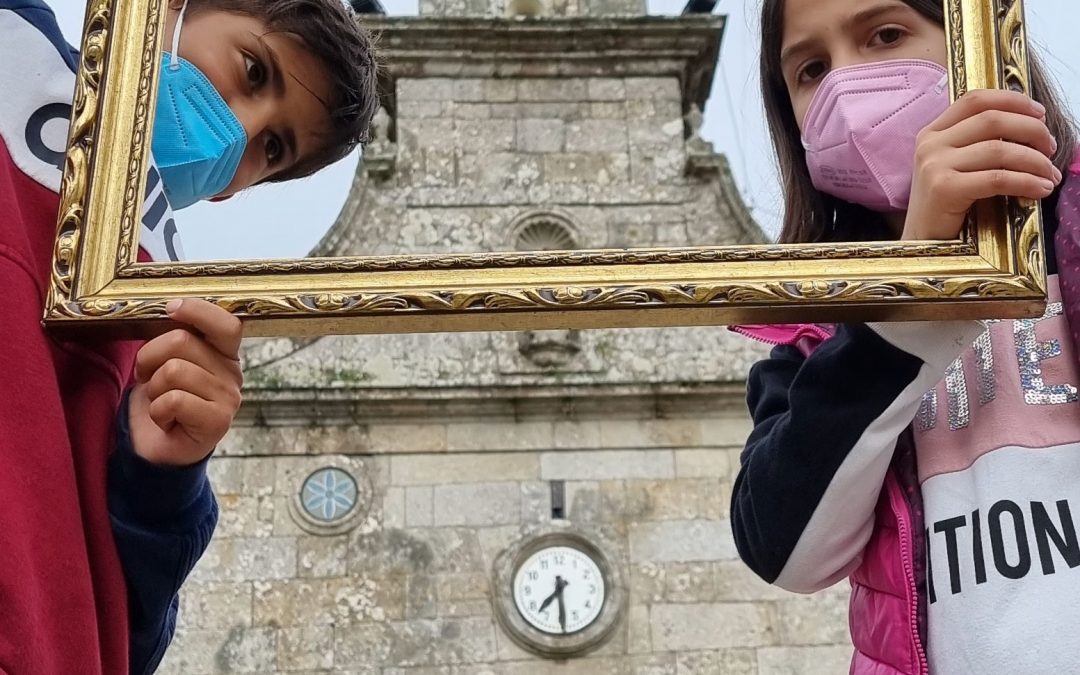
To understand how the inhabitants, both current and future, perceive their town, we will use the following strategy: we set off ‘adrift’ with a large golden frame, so that during our wandering, we frame those urban elements that are important to them (an experience based on the work of O’Grady). Who have been the protagonists of this ‘A Vila do Mañá’ experience? On this occasion, during their wandering, they have reDISCOVERED places in their town, perhaps forgotten ones.
With ‘A Vila do Mañá’, the city in which they live is not an abstract idea, nor a series of small partial images; it begins to be understood as a much more complex and expansive environment, bringing us closer to the notion of habitat: the space that transcends its physical location in a territory where we fulfil our needs, establishing relationships with others and with the environment, both natural and built; involving processes in which it transforms, but in which we are also transformed.

Colour your village

The village or city in which we are working, transformed into a game board, a laboratory of experimentation where children and teenagers can act from a new point of view.

What is your village like? What elements would you highlight?

What is your village like? What elements would you highlight?

sILLEDA 

changing the village through protagonist participation

What is your village like? Which elements would you highlight?

“A good urban acupuncture would be one that enables everyone to know their city. How many people, in reality, truly know their own city? It’s hard to respect what you don’t know. But how can you respect your city if you don’t understand it? Draw your city. […] But how can you improve your city if you don’t even know it well? What do you do for it, if you’re not even able to draw it? That’s the crux of the matter.”

Jaime Lerner


Work begins with PERCEPTION. How do the future inhabitants of the place perceive their village or city? To explore this, participants are invited to use simple drawings to show us which elements they consider fundamental or particularly interesting in their village or city. In this way, we can understand their individual views of the place they live in and begin to build a collective vision shared by all participants.

Colour your village

The village or city in which we are working, transformed into a game board, a laboratory of experimentation where children and teenagers can act from a new point of view.

Tags

Accessible Cities (69) Acoruñanarede (1) Ames (5) Anxel Casal (3) A Pobra do Caramiñal (2) ArchDaily (1) Architecture (159) Arquitectura (40) Arteixo (2) Art magazine - Logopress (2) Arzúa (34) As Pontes (2) Atlántico (1) A Vila do Mañá (256) barbadas.es (1) Barbadás (15) Barbanza Channel (3) Bergantiños Diary (1) Book (8) boys and adolescents (24) Brasil (11) Brazil (5) Bueu (16) Cambados (15) Carballo (40) Childhood (198) City (76) codesign (16) Coia (19) Compostela24horas.com (1) Conference (5) Coronavirus (68) Council of Carballo (1) Covid (69) crtvg (1) Cultural heritage (7) Culture city (1) Curtis (7) derecho a la ciudad (1) Diario de Arousa (4) Diario de Pontevedra (1) Diary of Arousa (29) Ecos da comarca (4) El Comarcal (1) El Correo Gallego (43) ElDiario.es (1) el ideal gallego (1) El progreso (1) enfoques (2) Environment (3) Faro de Vigo (43) Ferrol (19) Ferrol360.es (1) Ferrol Diary (5) Floats (8) Galicia (232) Galicia@PRESS (2) Galician literature (1) Game board (5) Game of goose (5) GDiario (1) Girls (18) Girls, boys and adolescents (133) Green flag (4) Hai Mulleres (2) Heritage (142) High School Alexandre Bóveda (5) Historic city (9) History of Galicia (1) Hoyesarte.com (1) Iberoamerican Biennial (4) Independence square (1) Infancia (14) Inmodiario (1) inquEDU (2) Instituto Alexandre Bóveda (1) International (3) Interview (2) Landscape (131) La Opinión (16) La Región (22) La Voz de Galicia (100) library (1) Lina Bo Bardi (6) Lindeiros (1) Lo Que Yo Te Digo (2) Ludantia (4) Madrid (2) Malpica (5) Master Houses (1) Mobility (2) Mobility Week (2) Mondoñedo (6) Nenas nenos e adolescentes (13) Nets (1) News (185) NH Diary (8) Nius Diary (1) Noticia (14) O Barbanza (2) Observador (1) O Correo de Bergantiños (2) O Porriño (4) Padrón (3) Pandemic (47) Park (2) Participación protagónica (41) Patrimonio cultural (1) Pazo do Martelo (1) PonteAreas (4) Pontevedra (4) PontevedraViva!com (2) Portugal (1) Protagonist participation (85) Protegim-nos (1) Que pasa na Costa (3) RadioValladares (1) Regiao news (1) Region (3) Revista AMSGO! (1) Rianxo (20) Ribadeo (2) Ribeira (8) Right to the city (88) Rías Baixas Channel (3) Rúa (14) Sandra Gonzalez Alvarez (19) Sandra González (131) San Francisco Vilagarcía de Arousa School (3) Santiago's road (46) Santiago de Compostela (12) Sesc Santo Amaro (1) Silleda (30) Social distance (68) Street (96) São Paulo (14) Tactical urbanism (88) Talleres (22) Teixeiro (2) Telecinco (1) Terrachá xá (1) Touro (8) treintayseis (1) TV (3) TV of Galicia (2) Urban garden (7) Urbanism (145) Urbanismo (40) Urbanismo de Guerrilla (142) Urbanismo táctico (42) Venice Biennale (2) Verín (5) Viena (2) Vila (23) Vilagarcía (24) Village (101) Vimianzo (7) Virtual (40) Vía Láctea Communication (1) Workshops (139) XUNTA DE GALICIA (3) zero code (1)

Logo A Vila do Mañá

Proxecto financiado por:

Proxecto financiado pola Deputación da Coruña

Grazas polo teu aporte