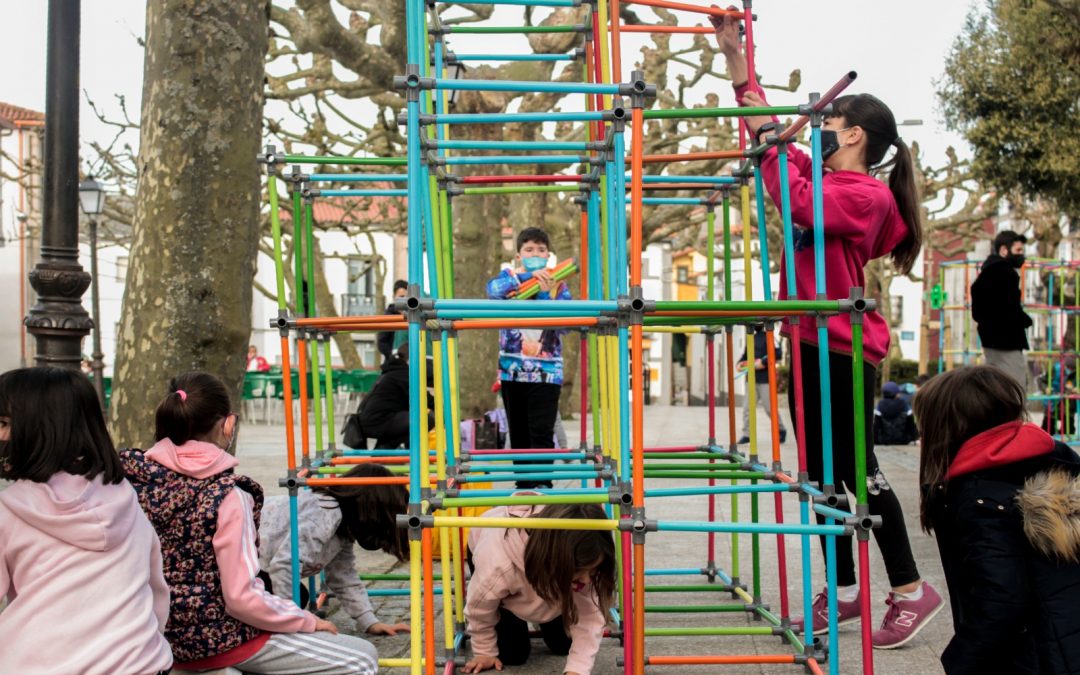
Working with THREE-DIMENSIONAL ELEMENTS

Working with THREE-DIMENSIONAL ELEMENTS

ARZÚA

changing the village through protagonist participation 

Working with three-dimensional elements

“The opportunity for the child to discover his or her own movement is part of the city itself; the city is also a play space. The child uses all the elements of the city, all the built objects, all the surfaces he or she can climb or climb on. Children know how to play with these things very well, even if they are not allowed to.”
Aldo van Eyck

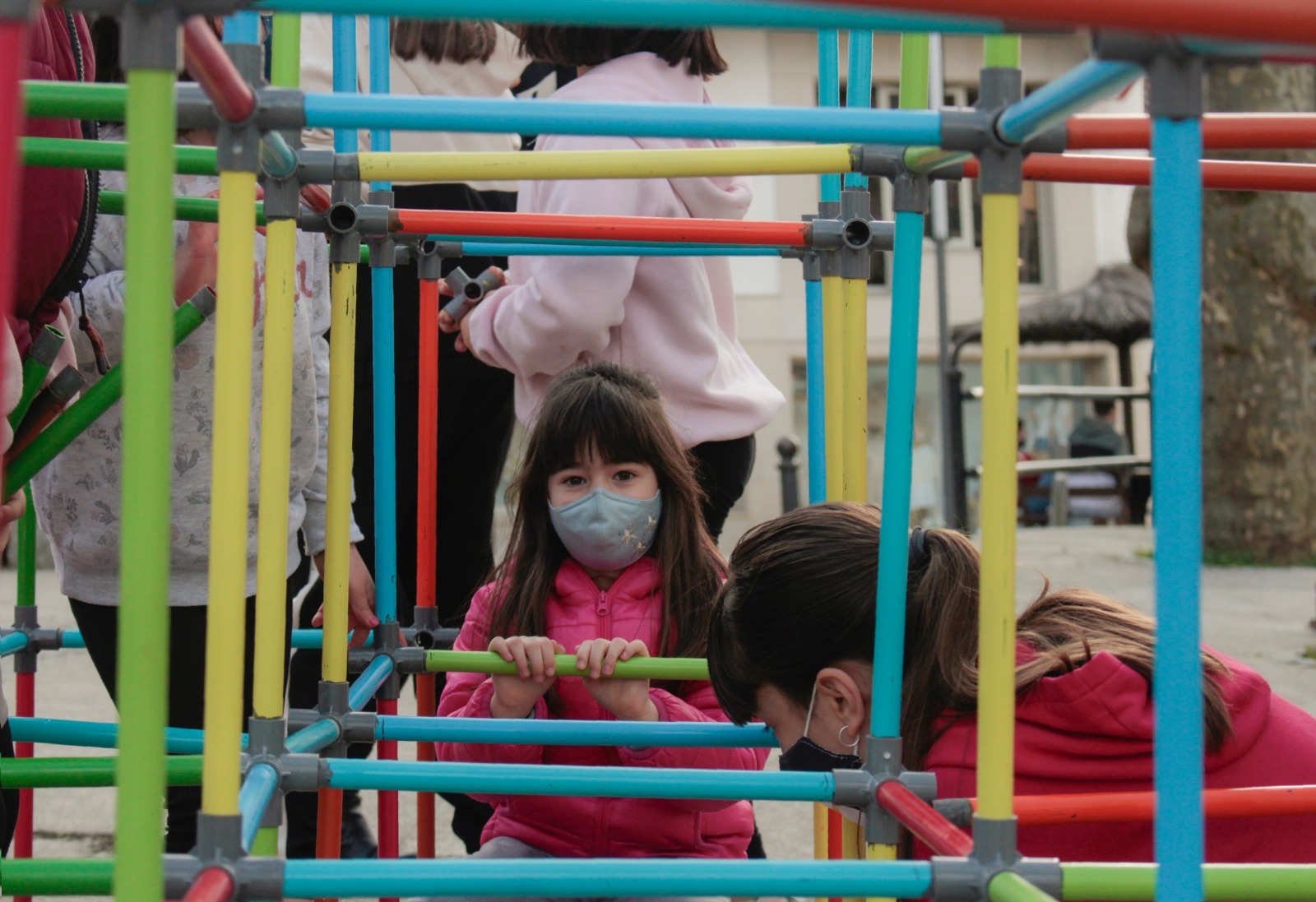
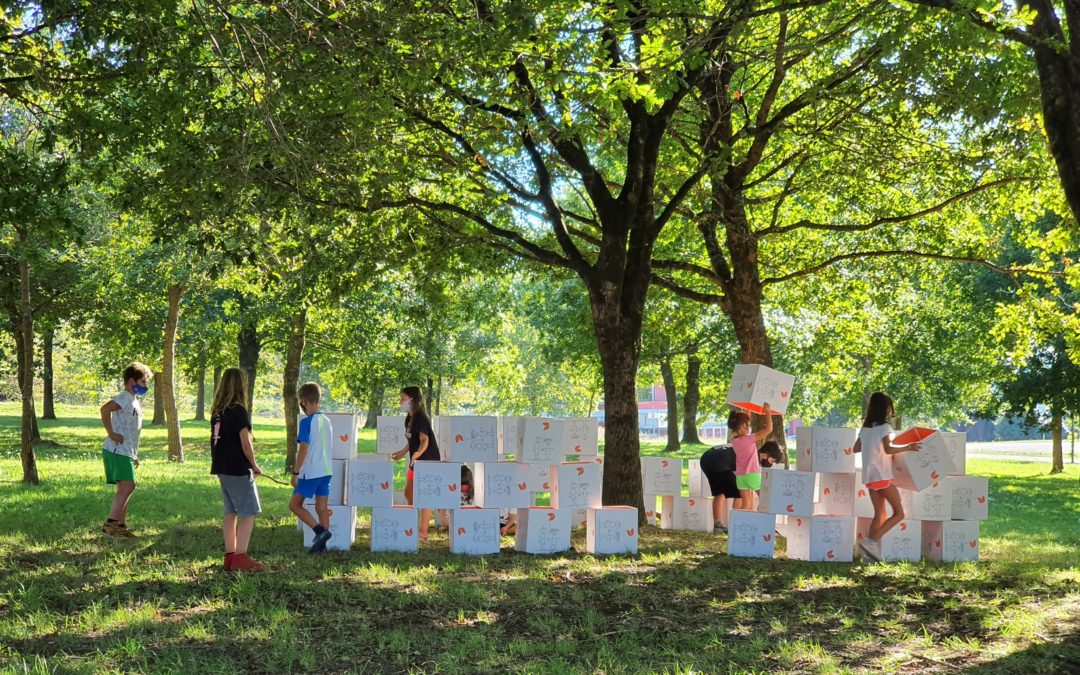
‘A Vila do Maña’ works with three-dimensional elements, based on Froebel’s “third gift”.
In architecture we have Froebel as a reference, through Frank Lloyd Wrigth who was educated with this method. It is a system based on the creativity and intuition of the child through direct experience, play and nature. It creates a pedagogical resource based on ‘gifts’ and ‘occupations’. The ‘gifts’ are pedagogical materials that do not change, but are transformed; the ‘occupations’ are activities in which children play by transforming the objects they manipulate. The ‘gifts’ are precursors of today’s building blocks.

Colour your village

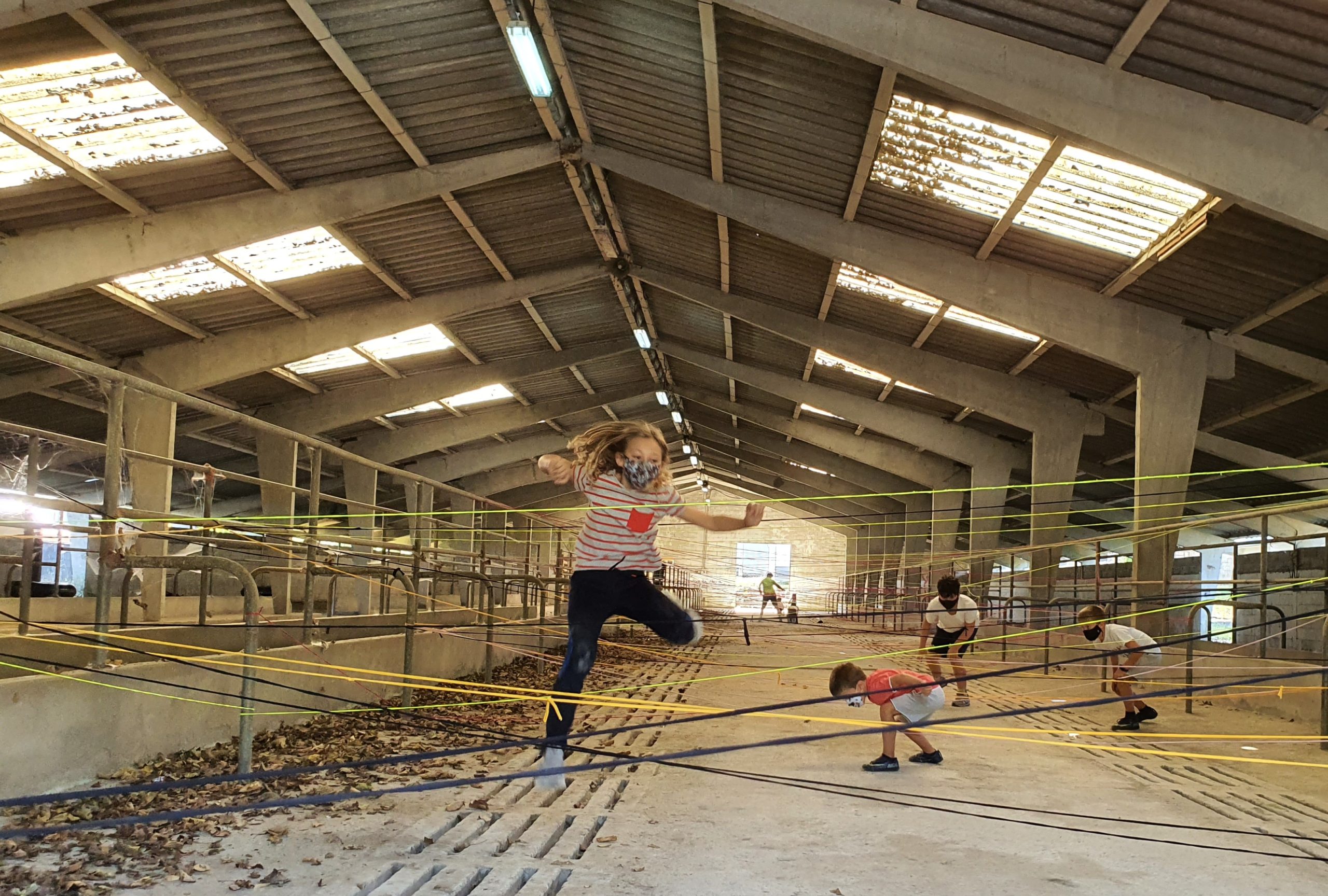
The village or city in which we are working has been turned into a game board, a laboratory of experimentation where children and teenagers can act from a new point of view.

Changing the village working with NATURAL ELEMENTS

Changing the village working with NATURAL ELEMENTS

ARZÚA


Changing the village through protagonist participation

WORKING WITH NATURAL ELEMENTS

The aim of ‘A Vila da Mañá’ is to change the model of town or city, we believe that another one can be possible. This is achieved through the protagonist participation of local children and adolescents who, by working with fundamental concepts through tactical urban planning actions, become active citizens capable of transforming their spaces.

In this case, the village is worked on, like its habitat, its game board to be discovered. Understanding its structure, conformation, morphology, its voids and its fillings, its history, its traditions, and its symbolic and immaterial issues is essential to be able to reflect on how they move from one site to another, the routes, the points important where the lives of the girls, boys and teenagers of the community develop.

COLOUR YOUR village

The village or city in which we are working has been turned into a game board, a laboratory of experimentation where girls, boys and teenagers can act from a new point of view.

Changing the URBAN LANDSCAPE working with the LINE

Changing the URBAN LANDSCAPE working with the LINE

ARZÚA


Changing the village through protagonist participation

Working with the line


The aim of ‘A Vila da Mañá’ is to change the model of town or city, we believe that another one can be possible. This is achieved through the protagonist participation of local children and adolescents who, by working with fundamental concepts through tactical urban planning actions, become active citizens capable of transforming their spaces.

In this case, the landscape is worked on, looking for the interaction between the built, the more natural and the intermediate territories. Understanding how people build and modify the landscape and how we inhabit it, and it builds us and our identity.

COLOUR YOUR village

The village or city in which we are working has been turned into a game board, a laboratory of experimentation where girls, boys and teenagers can act from a new point of view.

Changing the village working with the PLANE

Changing the village working with the PLANE

Carballo


Changing the village through protagonist participation

WORKING WITH THE PLANE

The aim of ‘A Vila da Mañá’ is to change the model of town or city, we believe that another one can be possible. This is achieved through the protagonist participation of local children and adolescents who, by working with fundamental concepts through tactical urban planning actions, become active citizens capable of transforming their spaces.

In this case, the landscape is worked on, looking for an interaction between the built, the more natural and the intermediate territories. Understand how people build and modify the landscape and how we live and build ourselves and our identity.

“Those who have designed, administered and governed them have done so without completing those other dimensions (making one-dimensional cities based on production) and that the definitions of the RAE ignore, and the principle of action has prevailed over their understanding of reality. These cities conceive public space as the space that allows us to get to work from home, without asking if for some the street is synonymous with relationship and encounter and for others it entails exposure and risk”


Izaskun Chinchilla

Color your village

The village or city in which we are working has been turned into a game board, a laboratory of experimentation where girls, boys and teenagers can act from a new point of view.

What is your village like? What elements would you highlight?

What is your village like? What elements would you highlight?

ARZÚA

changing the village through protagonist participation

What is your village like? Which elements would you highlight?

“A good urban acupuncture would be one that enables everyone to know their city. How many people, in reality, truly know their own city? It’s hard to respect what you don’t know. But how can you respect your city if you don’t understand it? Draw your city. […] But how can you improve your city if you don’t even know it well? What do you do for it, if you’re not even able to draw it? That’s the crux of the matter.”

Jaime Lerner

Work begins with PERCEPTION. How do the future inhabitants of the place perceive their village or city? To explore this, participants are invited to use simple drawings to show us which elements they consider fundamental or particularly interesting in their village or city. In this way, we can understand their individual views of the place they live in and begin to build a collective vision shared by all participants.

Colour your village

TThe village or city in which we are working, transformed into a game board, a laboratory of experimentation where children and teenagers can act from a new point of view.

Working with the SCALE. How much is it a metre and a half?

Working with the SCALE. How much is it a metre and a half?

ARZuA


Changing the village through protagonist participation


how much is it a meter and a half? 

The aim of ‘A Vila da Mañá’ is to change the model of town or city, we believe that another one can be possible. This is achieved through the protagonist participation of local children and adolescents who, by working with fundamental concepts through tactical urban planning actions, become active citizens capable of transforming their spaces.

La Opinión A Coruña 07/09/2020

“How much is a meter and a half?”

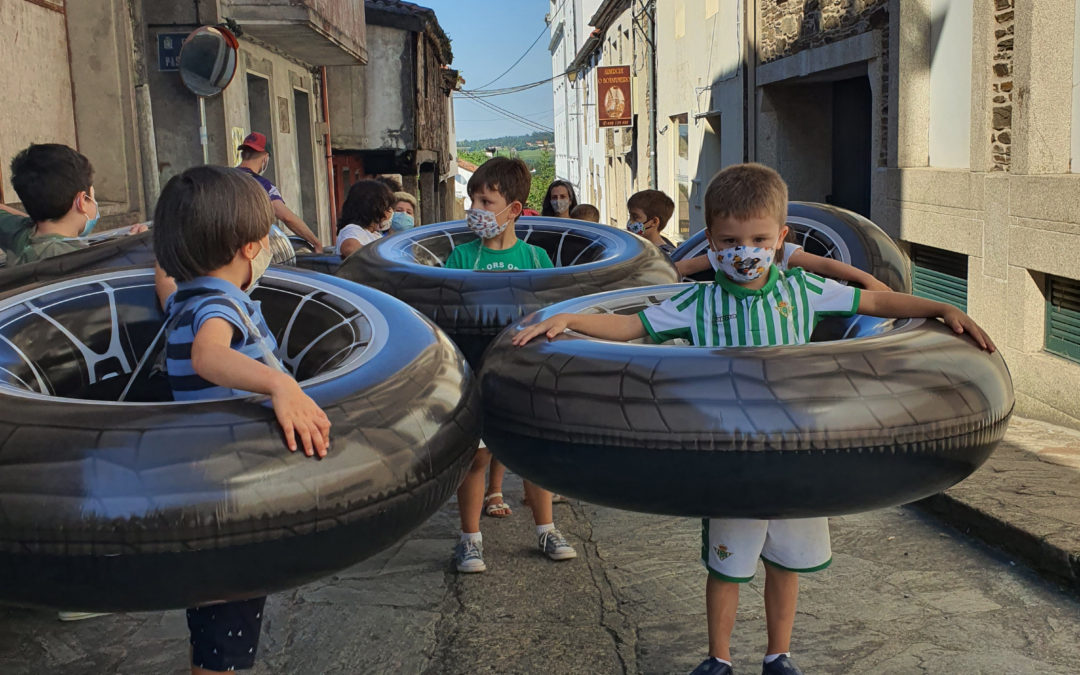
“With the program ‘A Vila do Mañá’, Sandra González analyzes or designs the cities that are adapted to the new measures derived from Covid-19. To verify it, saíu á rúa, in Arzúa, with boys and girls who used floats to measure safety distance. “Many times there are no where to walk”, indicates an architect from Coruña

“How many people know how much is a meter and a half?” asks Coruña architect Sandra González, creator and director of the program A Vila do Mañá, which analyzes, together with the smaller ones, or design of cities and promotes the recovery of spaces for you pawns At the initiative now adds a new condition: keep a safe distance to avoid contagion. “We are in a new situation, a new reality, and we have to see if the cities are adapted to the new measures,” she explains.

To prove it, she walks with boys and girls through streets and avenues. This weekend I went to quenda de Arzúa. As accessories for the walk, mask and float. “Let’s give the participants floats of one meter and 30 centimeters so that they are aware of the distance that they have to keep, especially now that they start or school,” she says.

Moitos were surprised to see or lonxe that they ran into some doutros. But that was not the objective of the activity, except to know if the cities are prepared for this new reality. “Nalgunha small street we didn’t even get in,” reveals the architect, who would like to take this initiative to “bigger cities.”

It is the first time after the lockdown that A Vila do Mañá comes into action, because many activities “had to be cancelled” due to the increase in infections. Sandra González defends that the pandemic showed that “more spaces are needed for the peons.” “It’s time to reformulate cities. Don’t escape to the countryside. A city has to have a new identity. What sex or what does it have to be, that is, for people,” she summarizes.

We seus smaller walks, the architect confirms that “many times there is no where to walk”. “The cities are not adapted. They ask us to become aware of the coronavirus, but in most of the streets it is impossible. The beirarrúas need to be one meter wide, so you have to add the terraces and the cars,” she says.

Thus is born a “new opportunity” for cities. “Like A Coruña, which is trying to criminalize some areas”, she gives as an example, at the same time that she bets on “humanizing everything a little more” so that these places “recover their identity”. An idea that she always transmits to two workshops participating years. Ata o mércores will continue to explore Arzúa and Sandra González xa pensante no seguinte challenge.”

Color your village

The village or city in which we are working has been turned into a game board, a laboratory of experimentation where girls, boys and teenagers can act from a new point of view.

Working with the LINE

Working with the LINE

ARZuA

 changing the village through protagonist participation

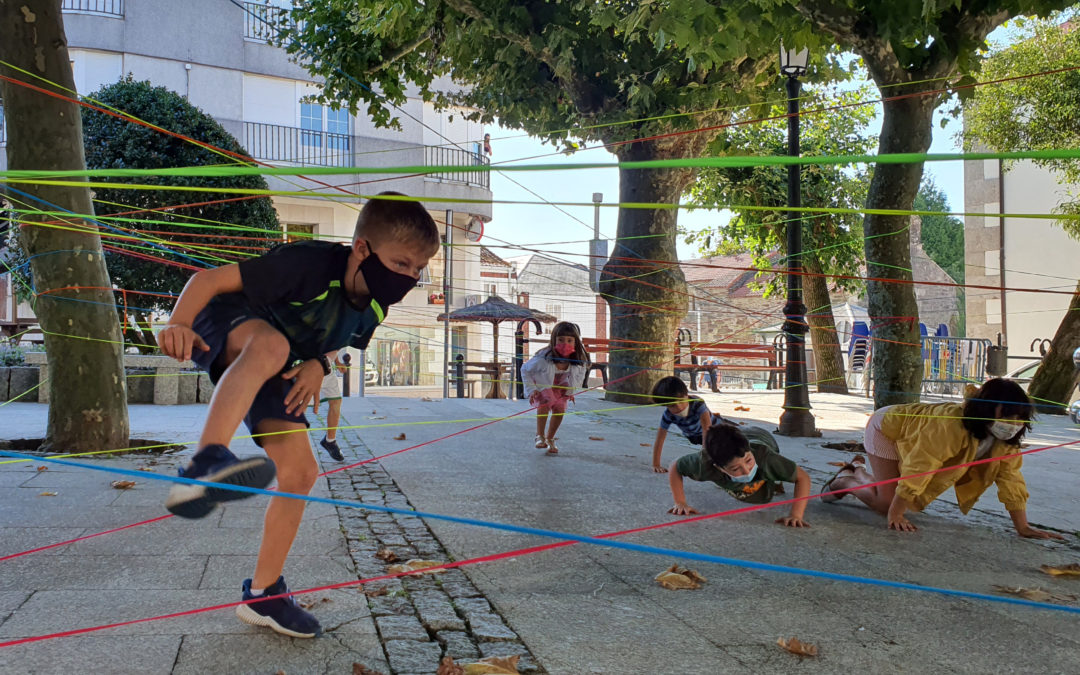
WORKING WITH THE LINE

“To inhabit, for the individual or for the group, is to appropriate something. To appropriate is not to own, but to make it one’s own work, to mould it, to shape it, to put one’s own stamp on it. To inhabit is to appropriate a space […] By this term [appropriation] we do not mean ownership; instead, it is something entirely different; it is the process by which an individual or group appropriates, transforms into their property, something external.”
Henri Lefebvre

‘A Vila do Mañá’ emerges from the right to the city, as defended by Henri Lefebvre, so that the people who live in it have the right to enjoy it, to transform it and to reflect their way of understanding life in the community. From this point of view, how can we not include the right of children and adolescents to their city? For this reason, public space is considered a common space for learning and collective construction in which children and adolescents must also have a place.

Colour your village

The village or city in which we are working has been turned into a game board, a laboratory of experimentation where girls, boys and teenagers can act from a new point of view.

Working with THREE-DIMENSIONAL ELEMENTS

Working with THREE-DIMENSIONAL ELEMENTS

ARZuA

changing the village through protagonist participation 

Working with three-dimensional elements

“The opportunity for the child to discover his or her own movement is part of the city itself; the city is also a play space. The child uses all the elements of the city, all the built objects, all the surfaces he or she can climb or climb on. Children know how to play with these things very well, even if they are not allowed to.”
Aldo van Eyck

‘A Vila do Maña’ works with three-dimensional elements, based on Froebel’s “third gift”.
In architecture we have Froebel as a reference, through Frank Lloyd Wrigth who was educated with this method. It is a system based on the creativity and intuition of the child through direct experience, play and nature. It creates a pedagogical resource based on ‘gifts’ and ‘occupations’. The ‘gifts’ are pedagogical materials that do not change, but are transformed; the ‘occupations’ are activities in which children play by transforming the objects they manipulate. The ‘gifts’ are precursors of today’s building blocks.

Colour your village

The village or city in which we are working has been turned into a game board, a laboratory of experimentation where children and teenagers can act from a new point of view.
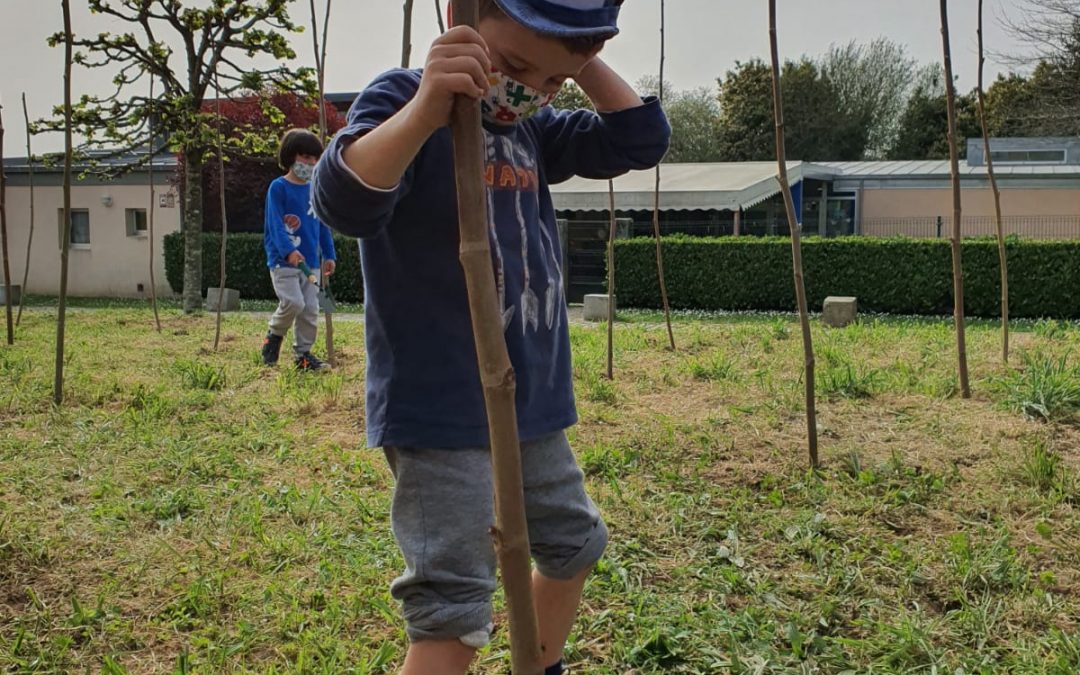
Changing the village working with NATURAL ELEMENTS

Changing the village working with NATURAL ELEMENTS

ARZuA


Changing the village through protagonist participation

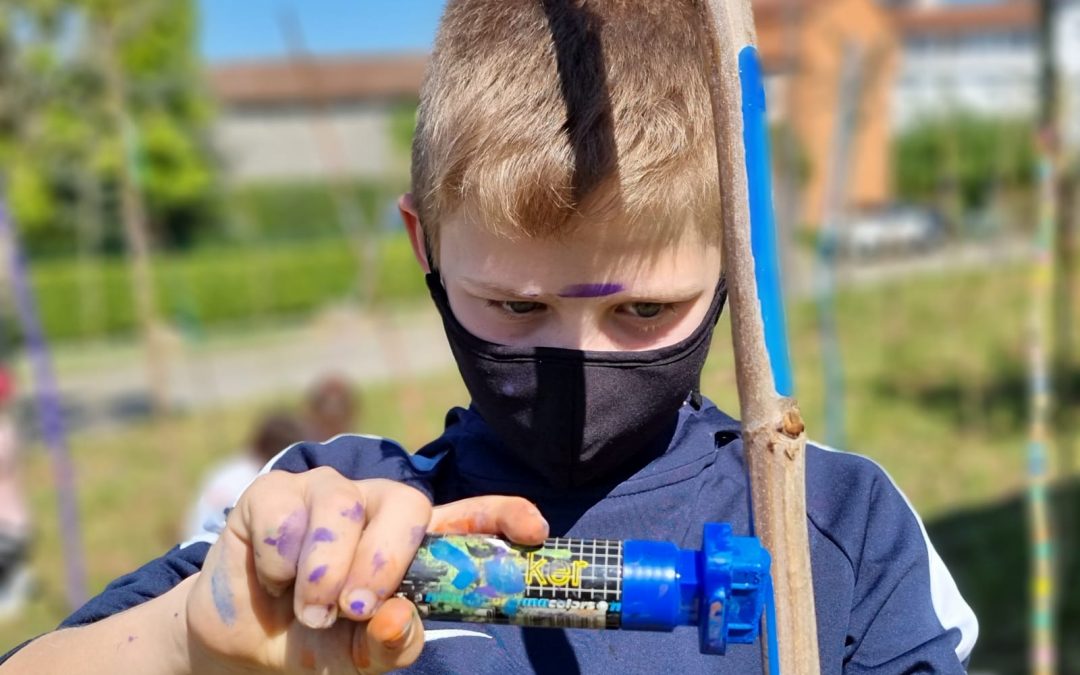
working WITH natural elements

The aim of ‘A Vila da Mañá’ is to change the model of town or city, we believe that another one can be possible. This is achieved through the protagonist participation of local children and adolescents who, by working with fundamental concepts through tactical urban planning actions, become active citizens capable of transforming their spaces.

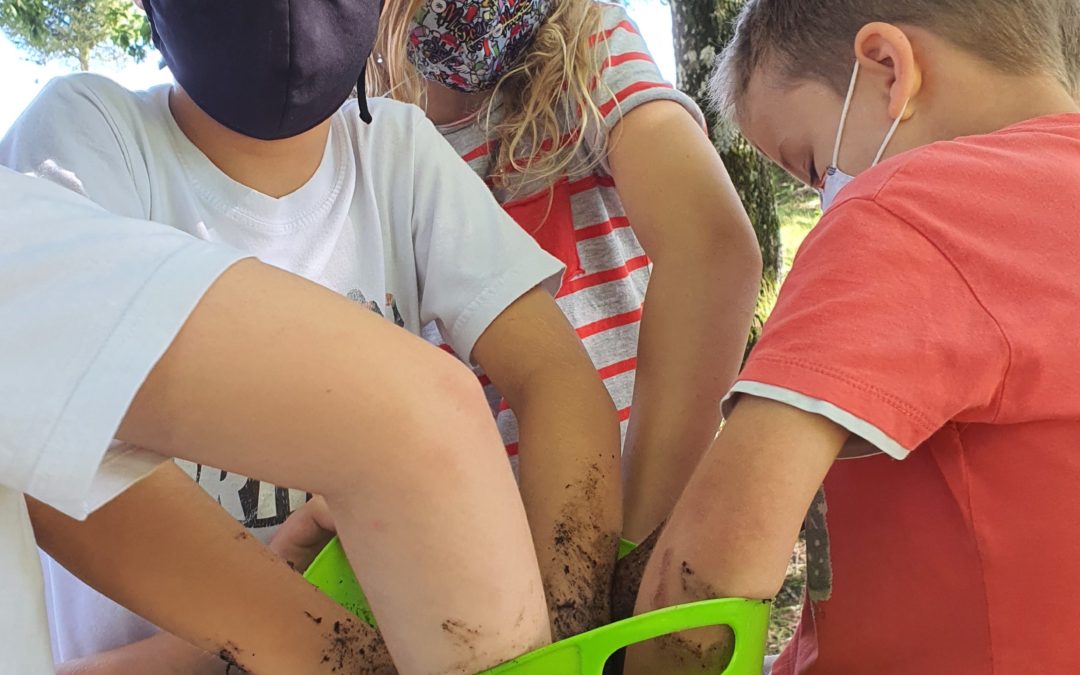
In this case we work with sustainability, reflecting on the way in which we relate to the planet and making girls, boys, and teenagers aware that what is sustainable consists of a balance between what allows us to develop our lives and what does not compromise the survival of future generations. And so, realizing that we only have one planet with limited resources that must be taken care of.

To raise awareness about the inclusion of green in the city, girls, boys, and teenagers are proposed to create these bombs, which are made up of a part of clay, natural fertilizer, and a mixture of complementary seeds, in this case the so-called Aztec or pre-Columbian mixture was used (beans, corn, pumpkin…), developed by the Japanese Masanobu Fukuoka.

Color your village

The village or city in which we are working has been turned into a game board, a laboratory of experimentation where girls, boys and teenagers can act from a new point of view.

Changing the village working with the PLANE

Changing the village working with the PLANE

ARZuA


Changing the village through protagonist participation

working with the plane

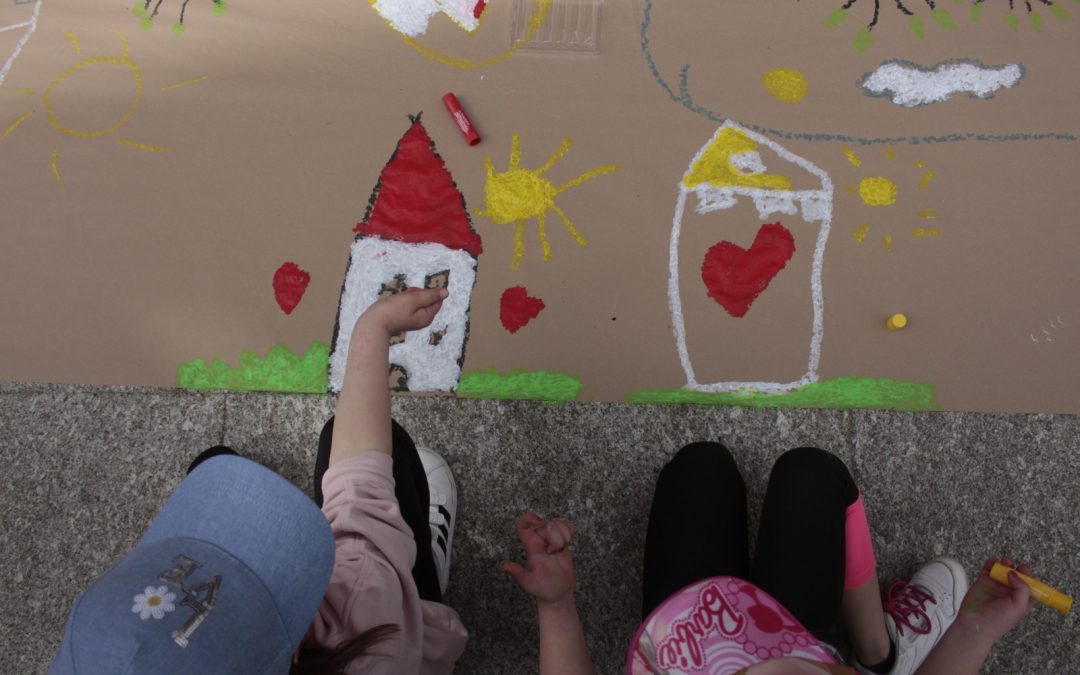
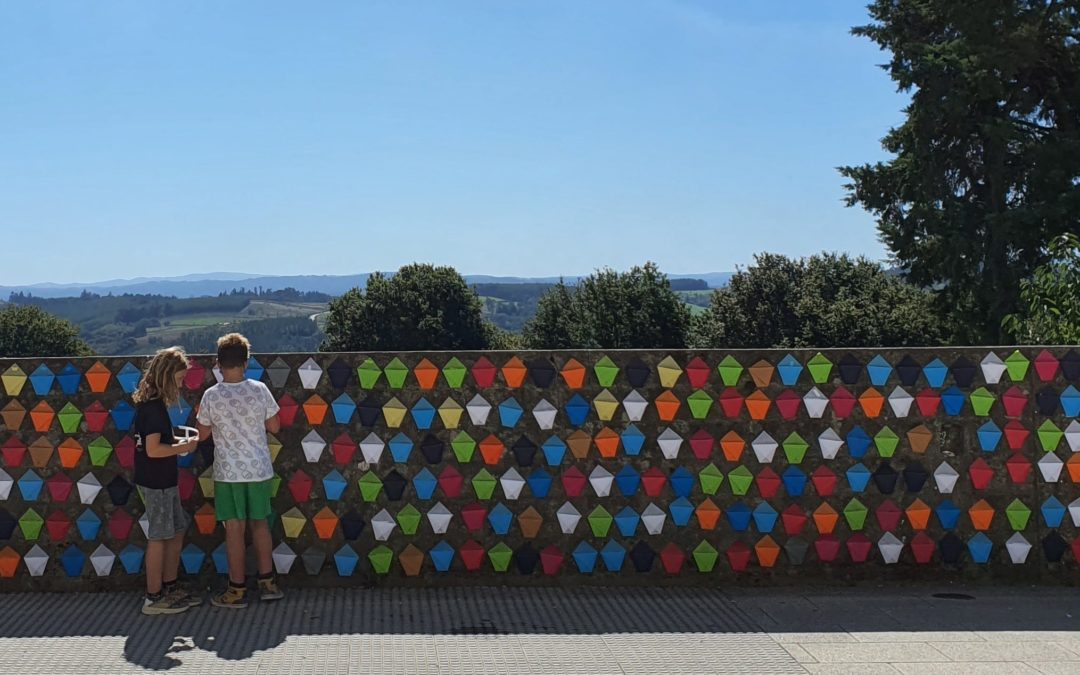
The aim of ‘A Vila da Mañá’ is to change the model of town or city, we believe that another one can be possible. This is achieved through the protagonist participation of local children and adolescents who, by working with fundamental concepts through tactical urban planning actions, become active citizens capable of transforming their spaces.

In this case, the landscape is worked on, looking for the interaction between the built, the more natural and the intermediate territories. Understanding how people build and modify the landscape and how we inhabit it, and it builds us and our identity.

With all this, a colourful mural is created thanks to the coloured geotextile envelopes, in which earth, water and the pumps are introduced, and which will gradually be complemented by the green of the plants born, prepared by themselves.

Color your village

The village or city in which we are working has been turned into a game board, a laboratory of experimentation where girls, boys and teenagers can act from a new point of view.

Tags

Accessible Cities (69) Acoruñanarede (1) Ames (5) Anxel Casal (3) A Pobra do Caramiñal (2) ArchDaily (1) Architecture (159) Arquitectura (40) Arteixo (2) Art magazine - Logopress (2) Arzúa (34) As Pontes (2) Atlántico (1) A Vila do Mañá (256) barbadas.es (1) Barbadás (15) Barbanza Channel (3) Bergantiños Diary (1) Book (8) boys and adolescents (24) Brasil (11) Brazil (5) Bueu (16) Cambados (15) Carballo (40) Childhood (198) City (76) codesign (16) Coia (19) Compostela24horas.com (1) Conference (5) Coronavirus (68) Council of Carballo (1) Covid (69) crtvg (1) Cultural heritage (7) Culture city (1) Curtis (7) derecho a la ciudad (1) Diario de Arousa (4) Diario de Pontevedra (1) Diary of Arousa (29) Ecos da comarca (4) El Comarcal (1) El Correo Gallego (43) ElDiario.es (1) el ideal gallego (1) El progreso (1) enfoques (2) Environment (3) Faro de Vigo (43) Ferrol (19) Ferrol360.es (1) Ferrol Diary (5) Floats (8) Galicia (232) Galicia@PRESS (2) Galician literature (1) Game board (5) Game of goose (5) GDiario (1) Girls (18) Girls, boys and adolescents (133) Green flag (4) Hai Mulleres (2) Heritage (142) High School Alexandre Bóveda (5) Historic city (9) History of Galicia (1) Hoyesarte.com (1) Iberoamerican Biennial (4) Independence square (1) Infancia (14) Inmodiario (1) inquEDU (2) Instituto Alexandre Bóveda (1) International (3) Interview (2) Landscape (131) La Opinión (16) La Región (22) La Voz de Galicia (100) library (1) Lina Bo Bardi (6) Lindeiros (1) Lo Que Yo Te Digo (2) Ludantia (4) Madrid (2) Malpica (5) Master Houses (1) Mobility (2) Mobility Week (2) Mondoñedo (6) Nenas nenos e adolescentes (13) Nets (1) News (185) NH Diary (8) Nius Diary (1) Noticia (14) O Barbanza (2) Observador (1) O Correo de Bergantiños (2) O Porriño (4) Padrón (3) Pandemic (47) Park (2) Participación protagónica (41) Patrimonio cultural (1) Pazo do Martelo (1) PonteAreas (4) Pontevedra (4) PontevedraViva!com (2) Portugal (1) Protagonist participation (85) Protegim-nos (1) Que pasa na Costa (3) RadioValladares (1) Regiao news (1) Region (3) Revista AMSGO! (1) Rianxo (20) Ribadeo (2) Ribeira (8) Right to the city (88) Rías Baixas Channel (3) Rúa (14) Sandra Gonzalez Alvarez (19) Sandra González (131) San Francisco Vilagarcía de Arousa School (3) Santiago's road (46) Santiago de Compostela (12) Sesc Santo Amaro (1) Silleda (30) Social distance (68) Street (96) São Paulo (14) Tactical urbanism (88) Talleres (22) Teixeiro (2) Telecinco (1) Terrachá xá (1) Touro (8) treintayseis (1) TV (3) TV of Galicia (2) Urban garden (7) Urbanism (145) Urbanismo (40) Urbanismo de Guerrilla (142) Urbanismo táctico (42) Venice Biennale (2) Verín (5) Viena (2) Vila (23) Vilagarcía (24) Village (101) Vimianzo (7) Virtual (40) Vía Láctea Communication (1) Workshops (139) XUNTA DE GALICIA (3) zero code (1)

Logo A Vila do Mañá

Proxecto financiado por:

Proxecto financiado pola Deputación da Coruña

Grazas polo teu aporte