Tactical urbanism for traffic calming

Tactical urbanism for traffic calming

SILLEDA

Transforming the Village Through Protagonist Participation

Tactical Urbanism for Traffic Calming


“streets   /   Girls and boys, in their mute solitudes   /   they cross the streets of bitter cities   /   Vertiginous rhythms modulate his walk   /   There are no rest stops, there is no time   /   There is no time to recover, and look and feel   /   to observe, to learn   /   to want Inhospitable urban spaces, of senseless wars   /   forgotten values and excessive ambitions   /   they mislead their people   /   And between broken memories, foul-smelling containers   /   traffic lights, cars, vomit and urine   /   children’s tears also wet the streets”

Adriana Bisquert

It is a simple and powerful formula of URBAN TRANSFORMATION, followed by VILAS and CITIES in the whole world, which allows to change spaces through actions with ephemeral and economic elements.

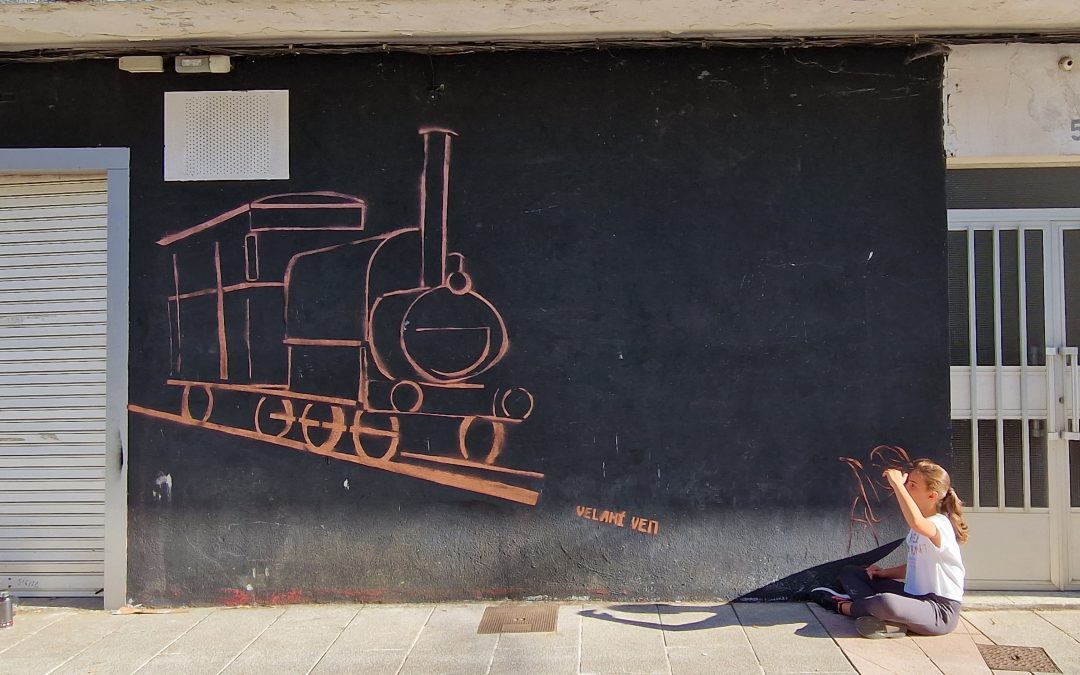
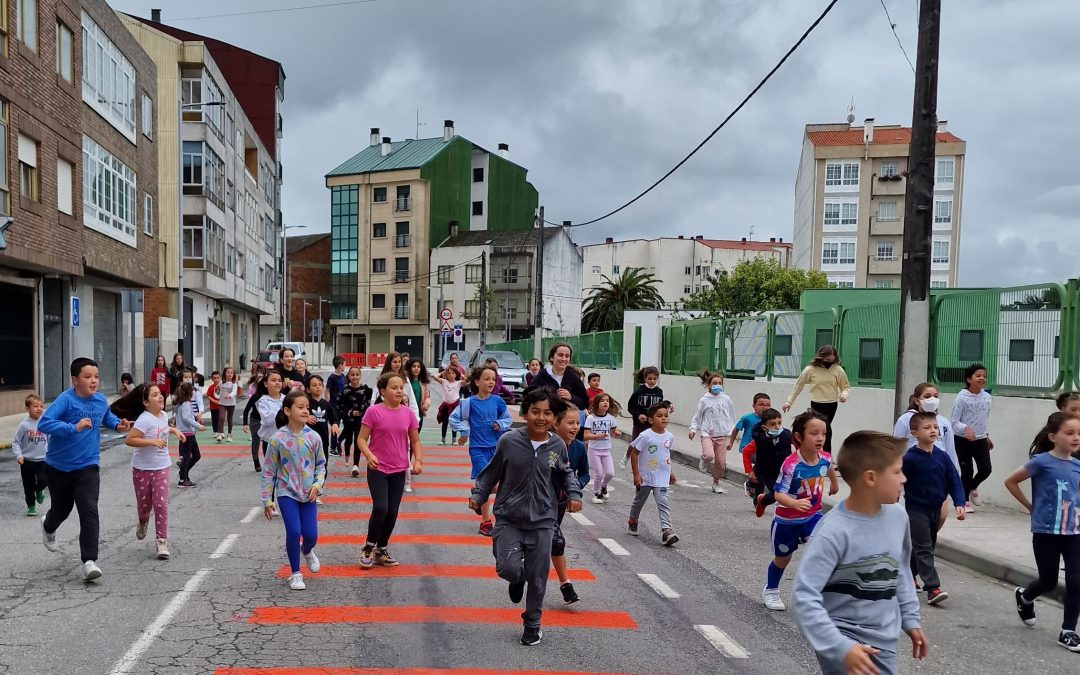
In this way, it is possible to TRANSFORM mere SPACES of transit or parking into ZONES of LIFE and social interaction, creating meeting places for the community and above all designed by and for children and adolescents, where they are the protagonists. 

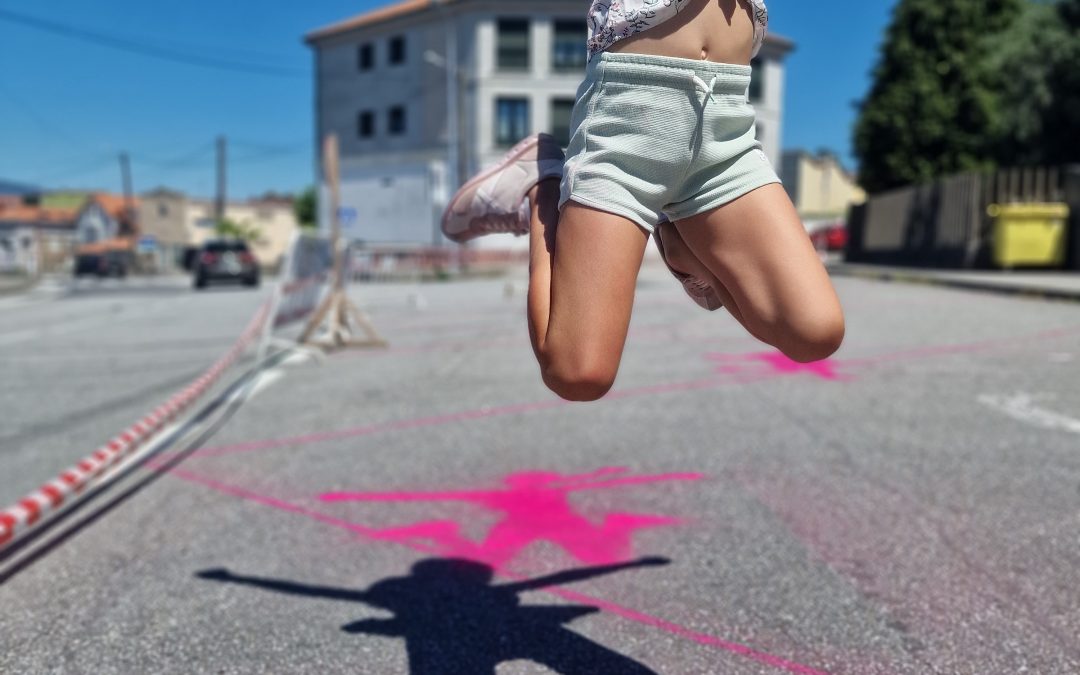
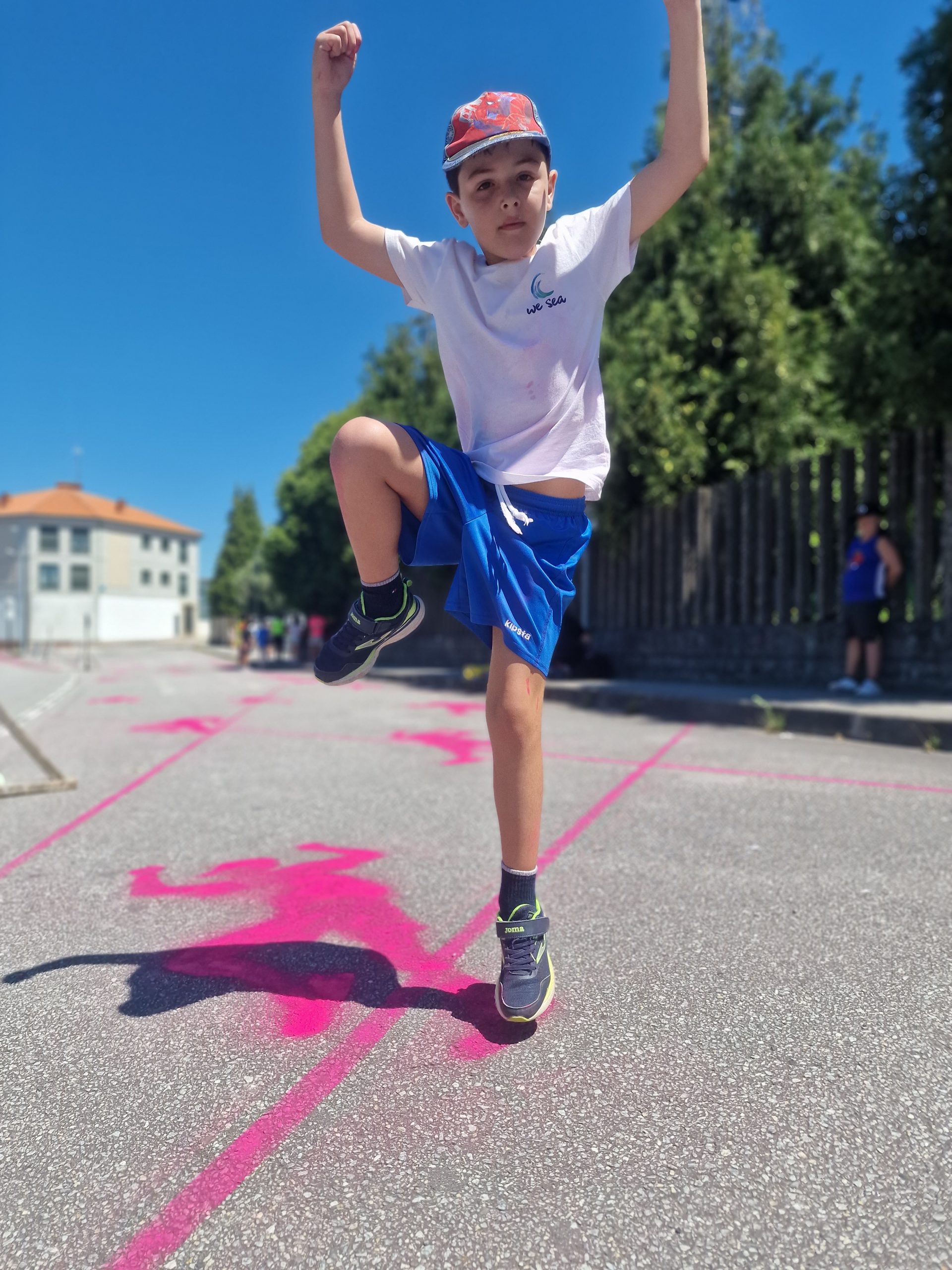
Protagonistic participation of children and adolescents in transforming the streets of their schools through tactical urban planning actions. The aim is to change the current model that produces road insecurity and transform the school environment into a safe place. These small actions are intended to calm traffic in school zones.

COLOUR YOUR VILLAGE

The village or city in which we are working, transformed into a game board, a laboratory of experimentation where children and teenagers can act from a new point of view.
Protagonist participation with the work of Rosalía de Castro.

Protagonist participation with the work of Rosalía de Castro.

SILLEDA

CHANGING THE VILLAGE THROUGH PROTAGONIST PARTICIPATION

Protagonist participation with the work of Rosalía de Castro.

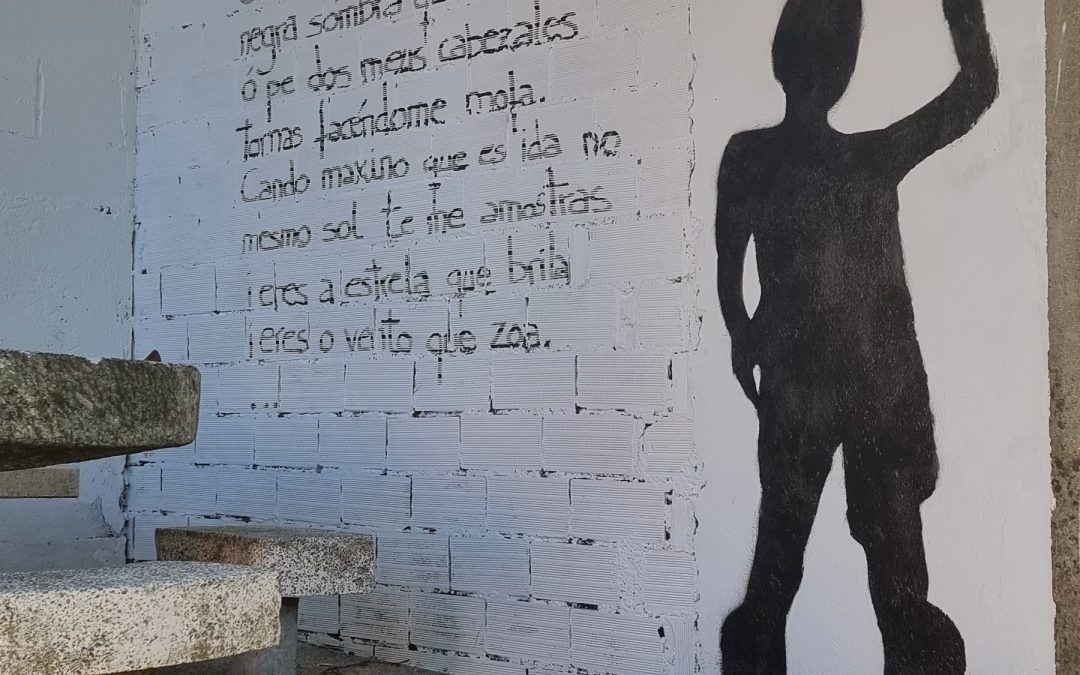
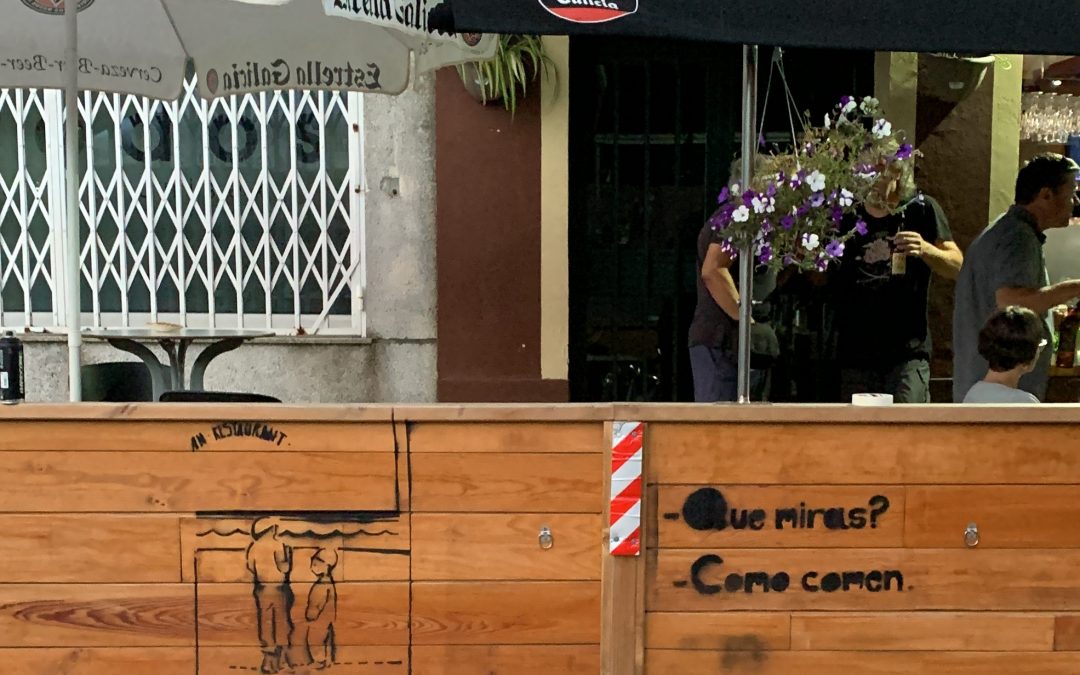
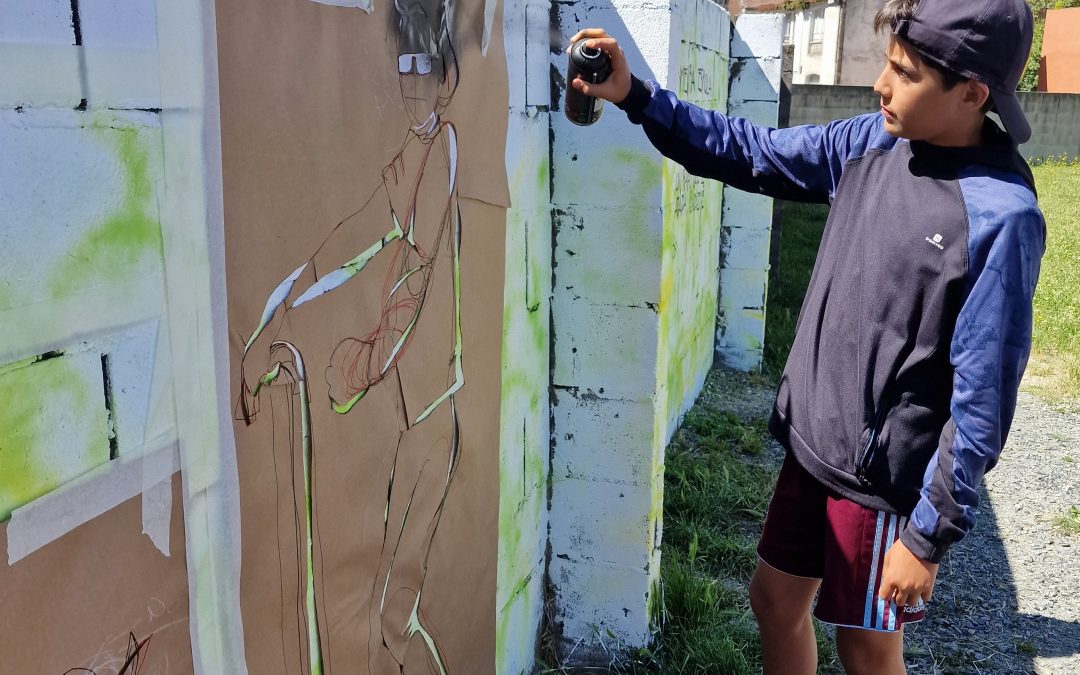
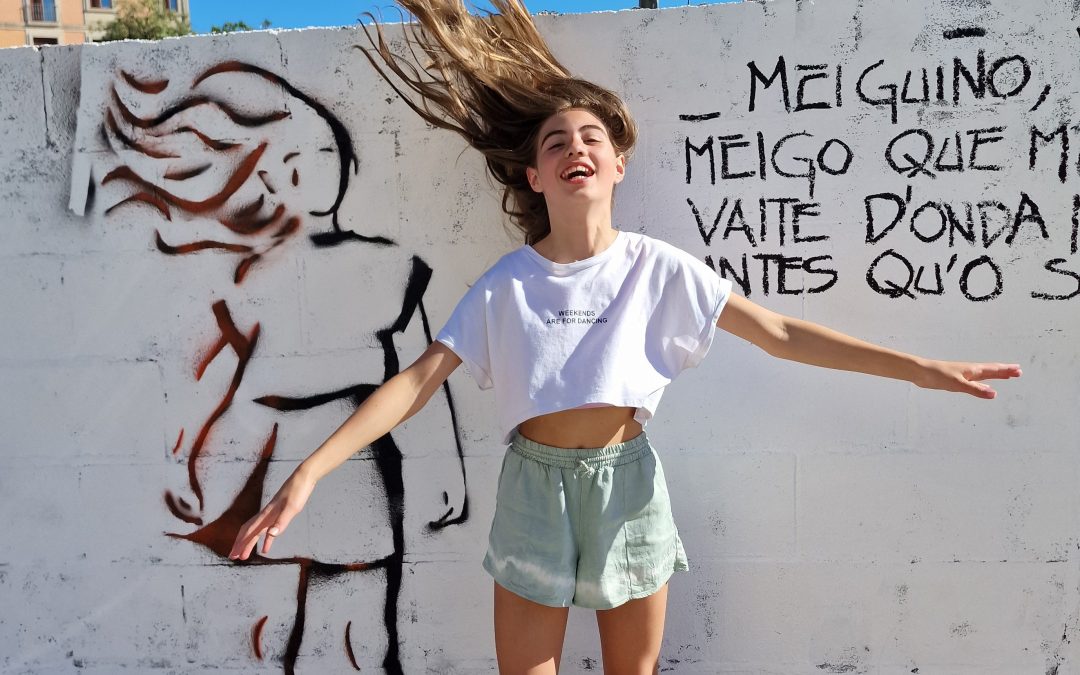
The figures of children and teenagers themselves (their silhouettes, bodies, and gestures) become the visual protagonists of the urban space. The aim is not to represent them, but to allow them to inscribe themselves into the landscape with their scale, their language, and their living presence. Their image occupies façades, walls, and partitions, intervening in the urban environment with their collective identity and symbolic power

Cantan os galos pr’ó dia

Erguete, meu ben, e vaite.
 — Como m’ ei d’ ir queridiña,
 Como m’ ei d’ ir e deixarte.

 —D’ eses teus olliños negros
 Como doas relumbrantes,
 Hastr’ as nosas maus unidas
 As vagoas ardentes caen.
 ¿Como m’ ei d’ ir si te quero?
 Como m’ ei d’ ir e deixarte,
 Si cá lengua me desvotas
 E có coraçon me atraes?
 N’ un corruncho do teu leito
 Cariñosa m’ abrigaches
 Có teu manso caloriño
 Os frios pés me quentastes;
 E d’ aqui xuntos miramos
 Por antr’ ó verde ramaxe,
 Cal iba correndo á lua
 Por enriba dos pinares.
 ¿Como queres que te deixe
 Como que de ti m’ aparte,
 Si mais qu’ á mel eres dulce
 E mais qu’ as froles soave?

      —Meiguiño, meiguiño meigo,
 Meigo que me namoraste,
 Baite d’ onda min meiguiño
 Antes qu’ ó sol se levante.

      —Ainda dorme, queridiña,
 Antr’ as ondiñas do mare,
 Dorme por que m’ acariñes
 E por qu’ amante me chames,
 Que sol’ onda tí, meniña,
 Pódo contento folgare.

      —Xa cantan os paxariños,
 Erguete, meu ben, qu’ é tarde.

      —Deixa que canten, Marica,
 Marica deixa que canten…
 Si tí sintes que me vaya,
 Eu relouco por quedarme.

      —Conmigo, meu queridiño,
 Mitá dá noite pasaches.

      —Mais en tanto ti dormias
 Contenteime con mirarte,
 Qu’ asi sorind’ entre soños
 Coidaba qu’ eras un anxel,
 E non con tanta pureza
 O pé d’ un anxel velase.

      —Asi te quero, meu ben,
 Com’ un santo dos altares,
 Mais fuxe… qu’ ó sol dourado
 Por riba dos montes saye.

      —Irey, mais dame un biquiño
 Antes que de tí m’ aparte;
 Qu’ eses labiños de rosa
 Inda non sei como saben.

      —Con mil amores chó dera,
 Mais teño que confesarme,
 E moita vergonza fora
 Ter un pecado tan grande.

      —Pois confesate, Marica,
 Que cando casar nos casen,
 Non ch’ an de valer, meniña,
 Nin confesores nin frades.
 Adios, cariña de rosa!

Rosalía de Castro

COLOUR YOUR VILLAGE

The village or city in which we are working, transformed into a game board, a laboratory of experimentation where children and teenagers can act from a new point of view.

Working with Galician Literature, Rosalía de Castro

Working with Galician Literature, Rosalía de Castro

TOURO

CHANGING THE VILLAGE THROUGH PROTAGONIST PARTICIPATION

Working with Galician Literature, Rosalía de Castro

In a place lacking strong identity references (where the main element of collective memory was a disused nightclub), the project begins with a latent infrastructure: the town’s street map, whose names pay tribute to authors of Galician literature. Based on this cultural cartography, A Vila do Mañá turns words into infrastructure and literature into a tool for urban activation.

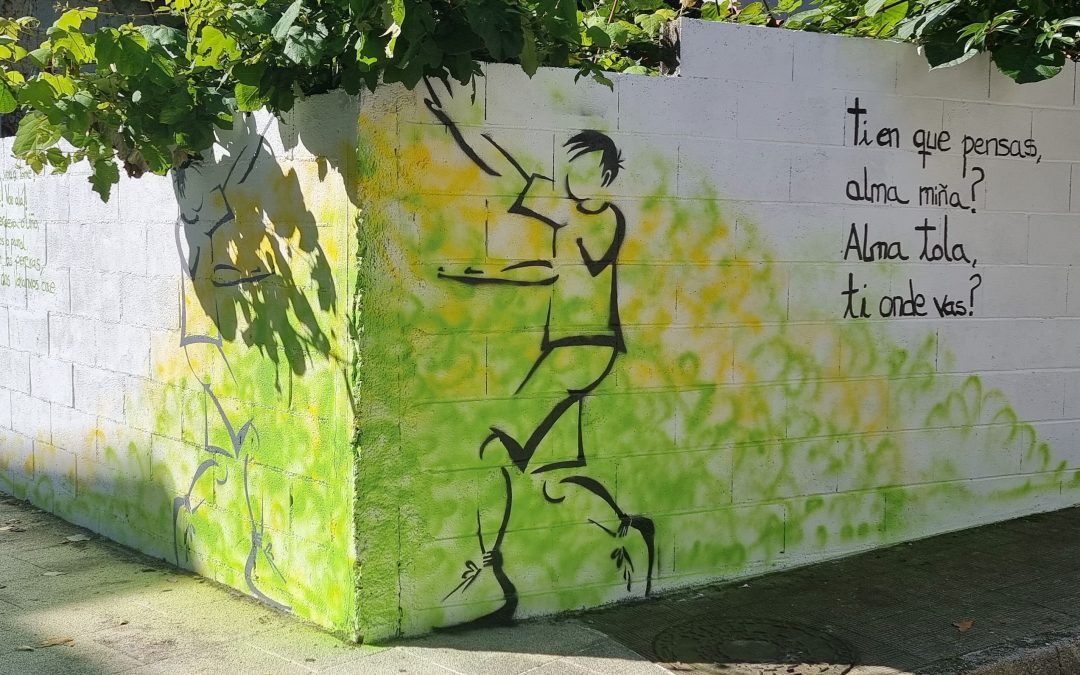
The figures of children and teenagers themselves (their silhouettes, bodies, and gestures) become the visual protagonists of the urban space. The aim is not to represent them, but to allow them to inscribe themselves into the landscape with their scale, their language, and their living presence. Their image occupies façades, walls, and partitions, intervening in the rural environment with their collective identity and symbolic power.

Cando penso que te fuches
negra sombra que me asombras,
ó pe dos meus cabezales
tornas facéndome mofa.

Cando maxino que es ida
no mesmo sol te me amostras
i eres a estrela que brila
i eres o vento que zoa.

Si cantan, es ti que cantas
si choran, es ti que choras
i es o marmurio do río
i es a noite, i es a aurora.

En todo estás e ti es todo
pra min i en min mesma moras,
nin me abandonarás nunca,
sombra que sempre me asombras.

Rosalía de Castro

COLOUR YOUR VILLAGE

The village or city in which we are working, transformed into a game board, a laboratory of experimentation where children and teenagers can act from a new point of view.

Working with Galician Literature, Ramón Cabanillas

Working with Galician Literature, Ramón Cabanillas

TOURO

CHANGING THE VILLAGE THROUGH PROTAGONIST PARTICIPATION

Working with Galician Literature, Ramón Cabanillas

In a place lacking strong identity references (where the main element of collective memory was a disused nightclub), the project begins with a latent infrastructure: the town’s street map, whose names pay tribute to authors of Galician literature. Based on this cultural cartography, A Vila do Mañá turns words into infrastructure and literature into a tool for urban activation.

The figures of children and teenagers themselves (their silhouettes, bodies, and gestures) become the visual protagonists of the urban space. The aim is not to represent them, but to allow them to inscribe themselves into the landscape with their scale, their language, and their living presence. Their image occupies façades, walls, and partitions, intervening in the rural environment with their collective identity and symbolic power.

– ¿Tí en qué pensas, alma miña?
¿Alma tola, ti onde vas?

– ¡Meu corpiño, vou lonxe!
¡Onde sempre! ¡Vou alá!
Vou ver si verdexa o liño,
si ten gomos o parral,
si afollaron as pereiras,
si a fror dos laranxos cai.

Vou ver como creba o río
nas areas seus cristás,
si hai botóns roxos no trebo
e pendóns no milleiral
e si pintan as cereixas
e si callan as mazáns.

Vou ver si atopo receda
nos mallóns do salgueiral
e a cachear as silveiras,
anque me firan as mans,
buscando negras amorias
e niños de paspallás.

Quero ouír o barulleiro
ruxe-ruxe do pinal,
mollar os pés nos regueiros,
sentarme á veira do lar,
a estumballarme na erba
miuda do castañal
e andar a rolos entre ela
bicando o nativo chan.

Quero ouír cantar o cuco,
sentir o oubeo dos cans
e escoitar na lonxanía
aturuxos e alalás,
ó erguerse a lúa de prata
sobre a esmeralda do mar.

Quero rubir ós penedos,
canta que te cantarás,
cando o sol morno da tarde
doura os verdores do val,
e baixar, ó vir a noite,
camiño do meu fogar,
cando tocan as oracións
melancólicas campás…

¡Vou a ver os meus amores
que por min chamando están!
¡Vou a darlle un bico á lousa
onde dorme miña nai!
¡Vaite, almiña tola, vaite!
¡Ai, quén poidera voar!

Ramón Cabanillas

COLOUR YOUR VILLAGE

The village or city in which we are working, transformed into a game board, a laboratory of experimentation where children and teenagers can act from a new point of view.

Working with Galician Literature, Castelao

Working with Galician Literature, Castelao

TOURO

CHANGING THE VILLAGE THROUGH PROTAGONIST PARTICIPATION

Working with Galician Literature, Castelao

In a place lacking strong identity references (where the main element of collective memory was a disused nightclub), the project begins with a latent infrastructure: the town’s street map, whose names pay tribute to authors of Galician literature. Based on this cultural cartography, A Vila do Mañá turns words into infrastructure and literature into a tool for urban activation.

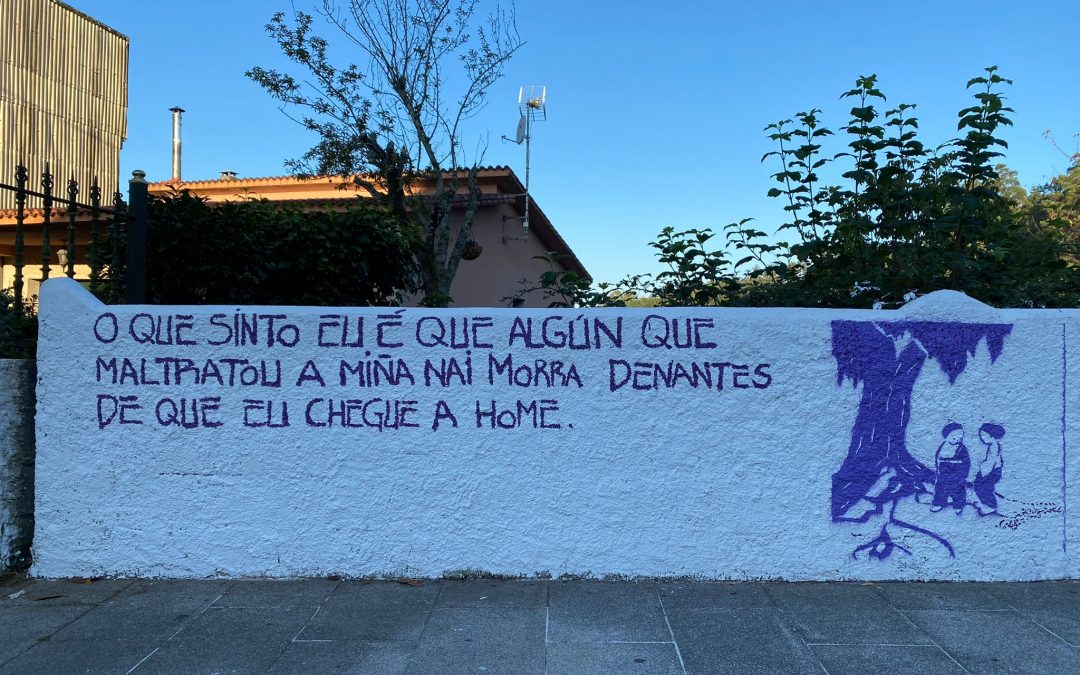
The figures of children and teenagers themselves (their silhouettes, bodies, and gestures) become the visual protagonists of the urban space. The aim is not to represent them, but to allow them to inscribe themselves into the landscape with their scale, their language, and their living presence. Their image occupies façades, walls, and partitions, intervening in the rural environment with their collective identity and symbolic power.

O que sinto eu é que algún que maltratou a miña nai morra denantes de que eu chegue a home.

Castelao

COLOUR YOUR VILLAGE

The village or city in which we are working, transformed into a game board, a laboratory of experimentation where children and teenagers can act from a new point of view.

Working with Galician Literature, Ramón Cabanillas

Working with Galician Literature, Ramón Cabanillas

TOURO

CHANGING THE VILLAGE THROUGH PROTAGONIST PARTICIPATION

Working with Galician Literature, Ramón Cabanillas

In a place lacking strong identity references (where the main element of collective memory was a disused nightclub), the project begins with a latent infrastructure: the town’s street map, whose names pay tribute to authors of Galician literature. Based on this cultural cartography, A Vila do Mañá turns words into infrastructure and literature into a tool for urban activation.

The figures of children and teenagers themselves (their silhouettes, bodies, and gestures) become the visual protagonists of the urban space. The aim is not to represent them, but to allow them to inscribe themselves into the landscape with their scale, their language, and their living presence. Their image occupies façades, walls, and partitions, intervening in the urban environment with their collective identity and symbolic power

COLOUR YOUR VILLAGE

The village or city in which we are working, transformed into a game board, a laboratory of experimentation where children and teenagers can act from a new point of view.

Working with Galician Literature, Curros Enríquez

Working with Galician Literature, Curros Enríquez

TOURO

CHANGING THE VILLAGE THROUGH PROTAGONIST PARTICIPATION

Working with Galician Literature, Curros Enríquez

In a place lacking strong identity references (where the main element of collective memory was a disused nightclub), the project begins with a latent infrastructure: the town’s street map, whose names pay tribute to authors of Galician literature. Based on this cultural cartography, A Vila do Mañá turns words into infrastructure and literature into a tool for urban activation.

The figures of children and teenagers themselves (their silhouettes, bodies, and gestures) become the visual protagonists of the urban space. The aim is not to represent them, but to allow them to inscribe themselves into the landscape with their scale, their language, and their living presence. Their image occupies façades, walls, and partitions, intervening in the urban environment with their collective identity and symbolic power.

COLOUR YOUR VILLAGE

The village or city in which we are working, transformed into a game board, a laboratory of experimentation where children and teenagers can act from a new point of view.

Working with Galician Literature, Castelao

Working with Galician Literature, Castelao

TOURO

CHANGING THE VILLAGE THROUGH PROTAGONIST PARTICIPATION

Working with Galician Literature, Castelao

In a place lacking strong identity references (where the main element of collective memory was a disused nightclub), the project begins with a latent infrastructure: the town’s street map, whose names pay tribute to authors of Galician literature. Based on this cultural cartography, A Vila do Mañá turns words into infrastructure and literature into a tool for urban activation.

The figures of children and teenagers themselves (their silhouettes, bodies, and gestures) become the visual protagonists of the urban space. The aim is not to represent them, but to allow them to inscribe themselves into the landscape with their scale, their language, and their living presence. Their image occupies façades, walls, and partitions, intervening in the urban environment with their collective identity and symbolic power.

COLOUR YOUR VILLAGE

The village or city in which we are working, transformed into a game board, a laboratory of experimentation where children and teenagers can act from a new point of view.

Tactical urban planning for traffic calming

Tactical urban planning for traffic calming

RIANXO


Changing the village through protagonist participation

protagonist participation and tactical urbanism

The right of children and adolescents to PARTICIPATE in the CONSTRUCTION of their TOWN or CITY as part of an ACTIVE CITIZENSHIP, in such a way that they are participants and executors of the changes in their surroundings.

For this protagonist to exist, CHILDREN and ADOLESCENTS must reflect on their surroundings (the space in which they develop their lives), their context and propose solutions for change become aware of what it means to be a legal entitlement and the importance that their participation can have as a driving force for change in the rest of society.

Canal Barbanza 09/07/2022

The project ‘A Vila do Maña’ is located in Rianxo.

Vila do Maña has returned to Rianxo, where they have been working with various groups of children over the last few days. It is an educational project whose aim is that from childhood and youth, and through play, awareness of all scales of the common: architecture, heritage, urbanism and landscape, encouraging protagonist participation as part of active citizenship.

Color YOUR village

The village or city in which we are working has been turned into a game board, a laboratory of experimentation where girls, boys and teenagers can act from a new point of view.

Protagonist participation with the work of Alonso Ríos

Protagonist participation with the work of Alonso Ríos

SILLEDA

CHANGING THE VILLAGE THROUGH PROTAGONIST PARTICIPATION

Protagonist participation with the work of Alonso Ríos

The figures of children and teenagers themselves (their silhouettes, bodies, and gestures) become the visual protagonists of the urban space. The aim is not to represent them, but to allow them to inscribe themselves into the landscape with their scale, their language, and their living presence. Their image occupies façades, walls, and partitions, intervening in the urban environment with their collective identity and symbolic power

O rapás a pirmeira esmola

(…) camiño adiante, xa á vista do pobo de As Neves, un rapás que levaba unha cabra atada púxoseme a facer preguntas:

-E logo, canda a pedire?

-Si, ando a  pedire.

-Mais leva un folico pequeno.

Antón Alonso Ríos

COLOUR YOUR VILLAGE

The village or city in which we are working, transformed into a game board, a laboratory of experimentation where children and teenagers can act from a new point of view.

Tags

Accessible Cities (69) Acoruñanarede (1) Ames (5) Anxel Casal (3) A Pobra do Caramiñal (2) ArchDaily (1) Architecture (159) Arquitectura (40) Arteixo (2) Art magazine - Logopress (2) Arzúa (34) As Pontes (2) Atlántico (1) A Vila do Mañá (256) barbadas.es (1) Barbadás (15) Barbanza Channel (3) Bergantiños Diary (1) Book (8) boys and adolescents (24) Brasil (11) Brazil (5) Bueu (16) Cambados (15) Carballo (40) Childhood (198) City (76) codesign (16) Coia (19) Compostela24horas.com (1) Conference (5) Coronavirus (68) Council of Carballo (1) Covid (69) crtvg (1) Cultural heritage (7) Culture city (1) Curtis (7) derecho a la ciudad (1) Diario de Arousa (4) Diario de Pontevedra (1) Diary of Arousa (29) Ecos da comarca (4) El Comarcal (1) El Correo Gallego (43) ElDiario.es (1) el ideal gallego (1) El progreso (1) enfoques (2) Environment (3) Faro de Vigo (43) Ferrol (19) Ferrol360.es (1) Ferrol Diary (5) Floats (8) Galicia (232) Galicia@PRESS (2) Galician literature (1) Game board (5) Game of goose (5) GDiario (1) Girls (18) Girls, boys and adolescents (133) Green flag (4) Hai Mulleres (2) Heritage (142) High School Alexandre Bóveda (5) Historic city (9) History of Galicia (1) Hoyesarte.com (1) Iberoamerican Biennial (4) Independence square (1) Infancia (14) Inmodiario (1) inquEDU (2) Instituto Alexandre Bóveda (1) International (3) Interview (2) Landscape (131) La Opinión (16) La Región (22) La Voz de Galicia (100) library (1) Lina Bo Bardi (6) Lindeiros (1) Lo Que Yo Te Digo (2) Ludantia (4) Madrid (2) Malpica (5) Master Houses (1) Mobility (2) Mobility Week (2) Mondoñedo (6) Nenas nenos e adolescentes (13) Nets (1) News (185) NH Diary (8) Nius Diary (1) Noticia (14) O Barbanza (2) Observador (1) O Correo de Bergantiños (2) O Porriño (4) Padrón (3) Pandemic (47) Park (2) Participación protagónica (41) Patrimonio cultural (1) Pazo do Martelo (1) PonteAreas (4) Pontevedra (4) PontevedraViva!com (2) Portugal (1) Protagonist participation (85) Protegim-nos (1) Que pasa na Costa (3) RadioValladares (1) Regiao news (1) Region (3) Revista AMSGO! (1) Rianxo (20) Ribadeo (2) Ribeira (8) Right to the city (88) Rías Baixas Channel (3) Rúa (14) Sandra Gonzalez Alvarez (19) Sandra González (131) San Francisco Vilagarcía de Arousa School (3) Santiago's road (46) Santiago de Compostela (12) Sesc Santo Amaro (1) Silleda (30) Social distance (68) Street (96) São Paulo (14) Tactical urbanism (88) Talleres (22) Teixeiro (2) Telecinco (1) Terrachá xá (1) Touro (8) treintayseis (1) TV (3) TV of Galicia (2) Urban garden (7) Urbanism (145) Urbanismo (40) Urbanismo de Guerrilla (142) Urbanismo táctico (42) Venice Biennale (2) Verín (5) Viena (2) Vila (23) Vilagarcía (24) Village (101) Vimianzo (7) Virtual (40) Vía Láctea Communication (1) Workshops (139) XUNTA DE GALICIA (3) zero code (1)

Logo A Vila do Mañá

Proxecto financiado por:

Proxecto financiado pola Deputación da Coruña

Grazas polo teu aporte