Working with Galician Literature, Eduardo Blanco Amor

Working with Galician Literature, Eduardo Blanco Amor

TOURO

CHANGING THE VILLAGE THROUGH PROTAGONIST PARTICIPATION

Working with Galician Literature, Eduardo Blanco Amor

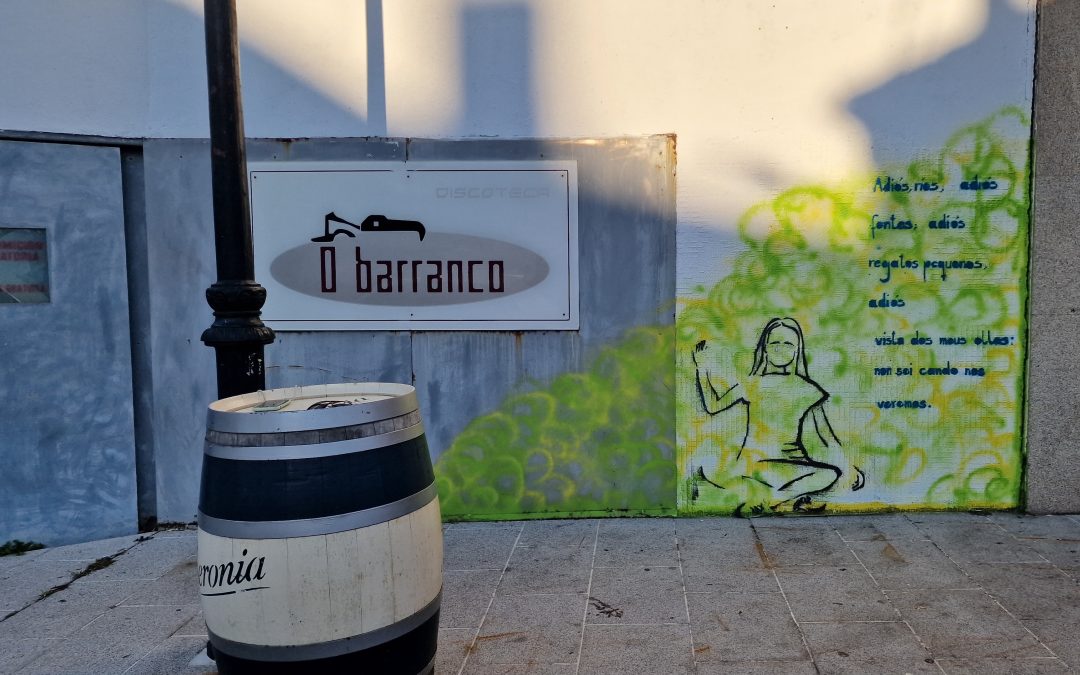
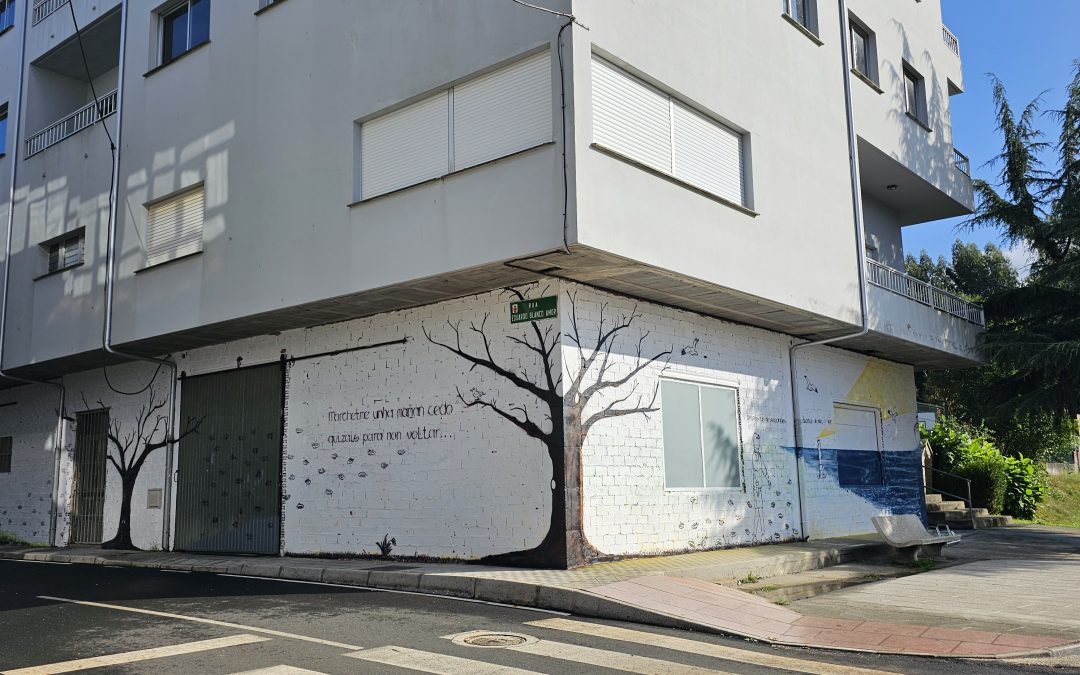
In a place lacking strong identity references (where the main element of collective memory was a disused nightclub), the project begins with a latent infrastructure: the town’s street map, whose names pay tribute to authors of Galician literature. Based on this cultural cartography, A Vila do Mañá turns words into infrastructure and literature into a tool for urban activation.

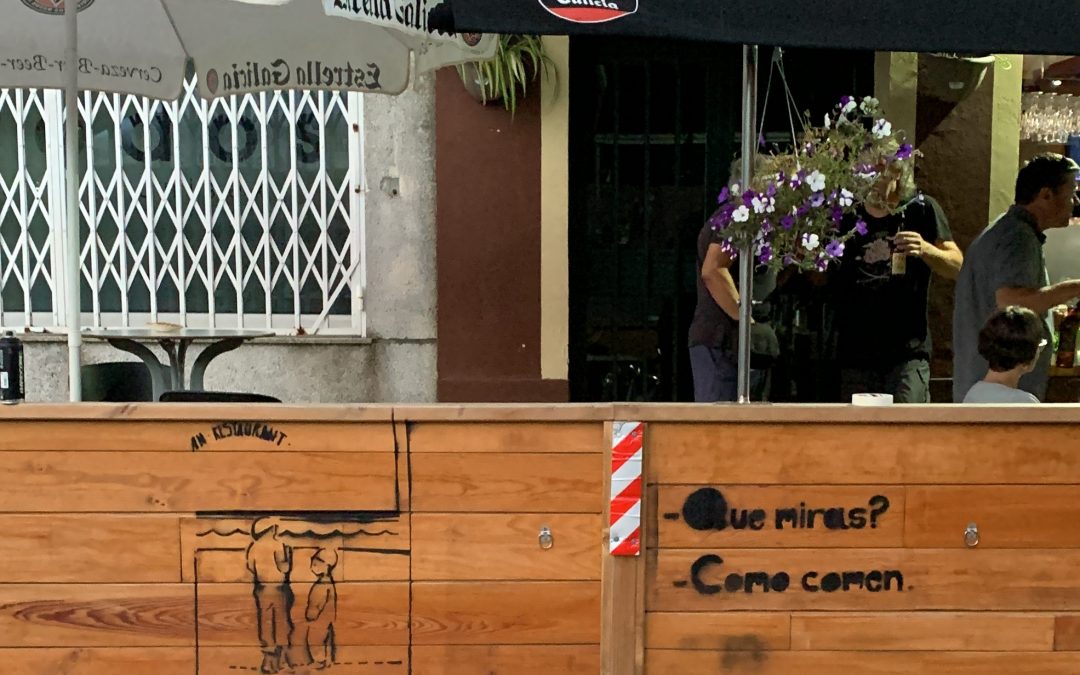
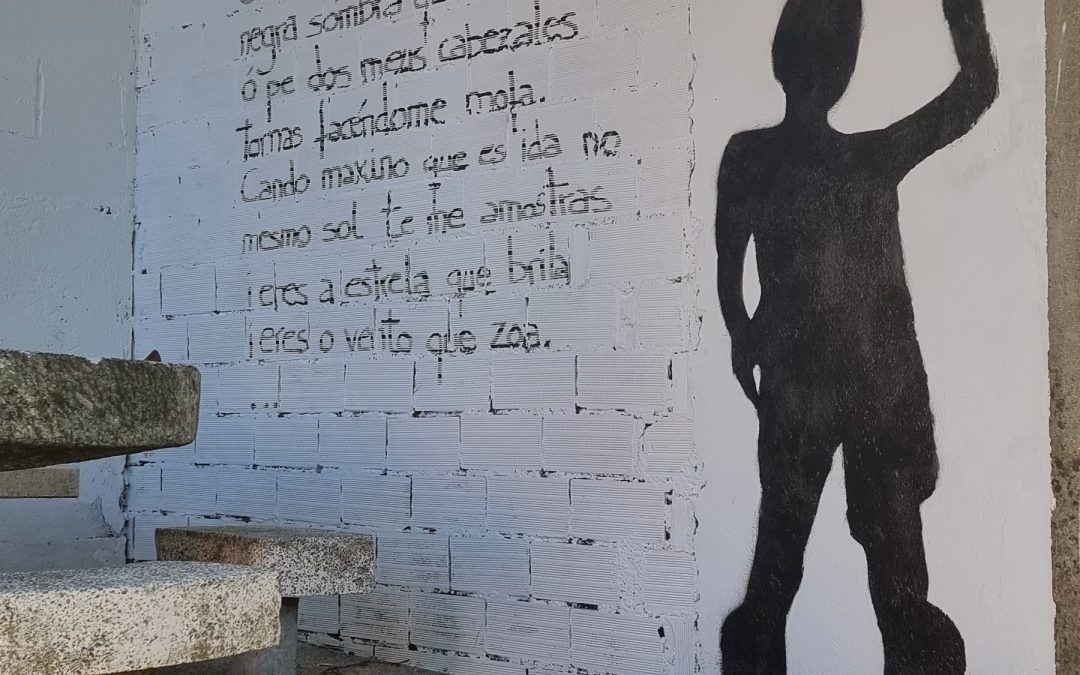
The figures of children and teenagers themselves (their silhouettes, bodies, and gestures) become the visual protagonists of the urban space. The aim is not to represent them, but to allow them to inscribe themselves into the landscape with their scale, their language, and their living presence. Their image occupies façades, walls, and partitions, intervening in the urban environment with their collective identity and symbolic power.

COLOUR YOUR VILLAGE

The village or city in which we are working, transformed into a game board, a laboratory of experimentation where children and teenagers can act from a new point of view.

Working with Galician Literature, Rosalía de Castro

Working with Galician Literature, Rosalía de Castro

TOURO

CHANGING THE VILLAGE THROUGH PROTAGONIST PARTICIPATION

Working with Galician Literature, Rosalía de Castro

In a place lacking strong identity references (where the main element of collective memory was a disused nightclub), the project begins with a latent infrastructure: the town’s street map, whose names pay tribute to authors of Galician literature. Based on this cultural cartography, A Vila do Mañá turns words into infrastructure and literature into a tool for urban activation.

The figures of children and teenagers themselves (their silhouettes, bodies, and gestures) become the visual protagonists of the urban space. The aim is not to represent them, but to allow them to inscribe themselves into the landscape with their scale, their language, and their living presence. Their image occupies façades, walls, and partitions, intervening in the rural environment with their collective identity and symbolic power.

Cando penso que te fuches
negra sombra que me asombras,
ó pe dos meus cabezales
tornas facéndome mofa.

Cando maxino que es ida
no mesmo sol te me amostras
i eres a estrela que brila
i eres o vento que zoa.

Si cantan, es ti que cantas
si choran, es ti que choras
i es o marmurio do río
i es a noite, i es a aurora.

En todo estás e ti es todo
pra min i en min mesma moras,
nin me abandonarás nunca,
sombra que sempre me asombras.

Rosalía de Castro

COLOUR YOUR VILLAGE

The village or city in which we are working, transformed into a game board, a laboratory of experimentation where children and teenagers can act from a new point of view.

Working with Galician Literature, Ramón Cabanillas

Working with Galician Literature, Ramón Cabanillas

TOURO

CHANGING THE VILLAGE THROUGH PROTAGONIST PARTICIPATION

Working with Galician Literature, Ramón Cabanillas

In a place lacking strong identity references (where the main element of collective memory was a disused nightclub), the project begins with a latent infrastructure: the town’s street map, whose names pay tribute to authors of Galician literature. Based on this cultural cartography, A Vila do Mañá turns words into infrastructure and literature into a tool for urban activation.

The figures of children and teenagers themselves (their silhouettes, bodies, and gestures) become the visual protagonists of the urban space. The aim is not to represent them, but to allow them to inscribe themselves into the landscape with their scale, their language, and their living presence. Their image occupies façades, walls, and partitions, intervening in the rural environment with their collective identity and symbolic power.

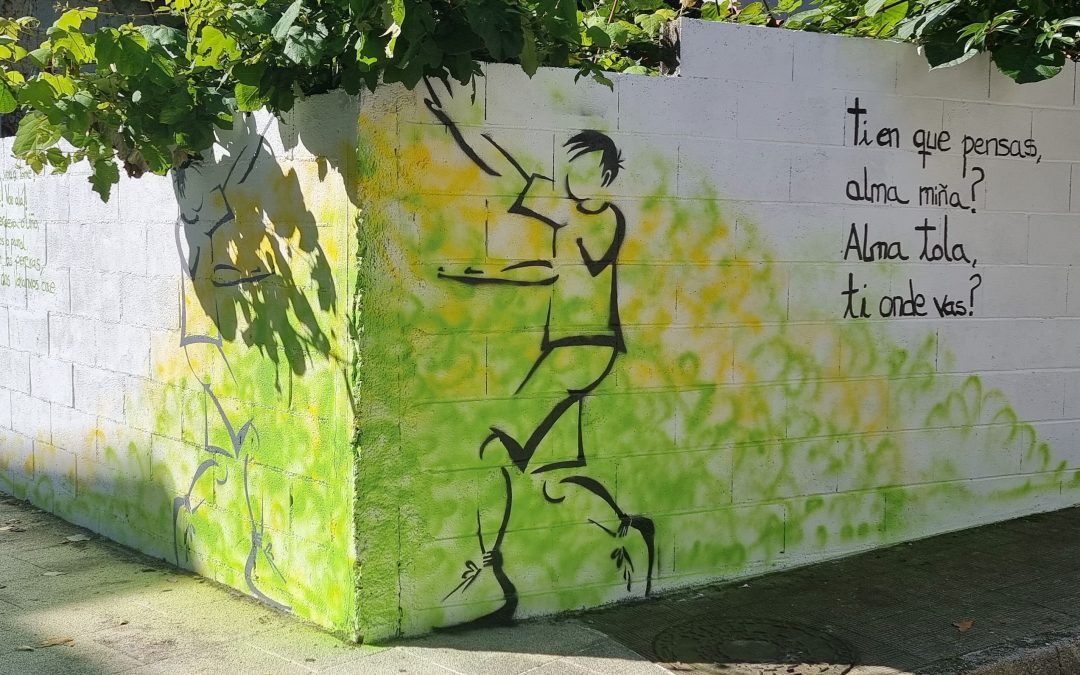
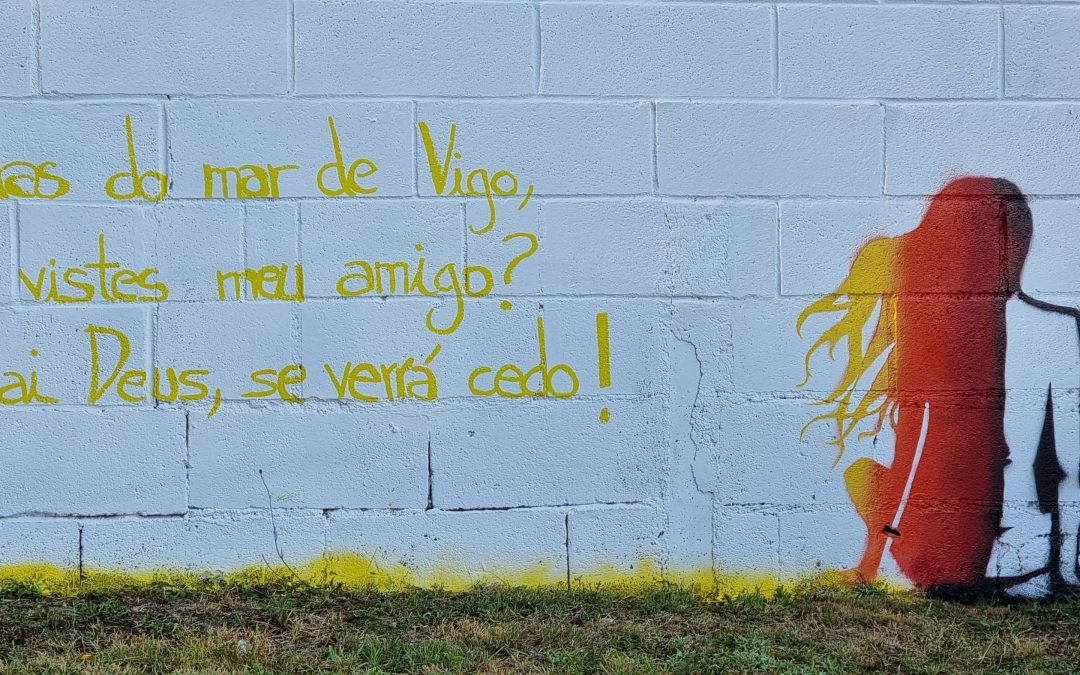
– ¿Tí en qué pensas, alma miña?
¿Alma tola, ti onde vas?

– ¡Meu corpiño, vou lonxe!
¡Onde sempre! ¡Vou alá!
Vou ver si verdexa o liño,
si ten gomos o parral,
si afollaron as pereiras,
si a fror dos laranxos cai.

Vou ver como creba o río
nas areas seus cristás,
si hai botóns roxos no trebo
e pendóns no milleiral
e si pintan as cereixas
e si callan as mazáns.

Vou ver si atopo receda
nos mallóns do salgueiral
e a cachear as silveiras,
anque me firan as mans,
buscando negras amorias
e niños de paspallás.

Quero ouír o barulleiro
ruxe-ruxe do pinal,
mollar os pés nos regueiros,
sentarme á veira do lar,
a estumballarme na erba
miuda do castañal
e andar a rolos entre ela
bicando o nativo chan.

Quero ouír cantar o cuco,
sentir o oubeo dos cans
e escoitar na lonxanía
aturuxos e alalás,
ó erguerse a lúa de prata
sobre a esmeralda do mar.

Quero rubir ós penedos,
canta que te cantarás,
cando o sol morno da tarde
doura os verdores do val,
e baixar, ó vir a noite,
camiño do meu fogar,
cando tocan as oracións
melancólicas campás…

¡Vou a ver os meus amores
que por min chamando están!
¡Vou a darlle un bico á lousa
onde dorme miña nai!
¡Vaite, almiña tola, vaite!
¡Ai, quén poidera voar!

Ramón Cabanillas

COLOUR YOUR VILLAGE

The village or city in which we are working, transformed into a game board, a laboratory of experimentation where children and teenagers can act from a new point of view.

Working with Galician Literature, Martín Codax

Working with Galician Literature, Martín Codax

TOURO

CHANGING THE VILLAGE THROUGH PROTAGONIST PARTICIPATION

Working with Galician Literature, Martín Codax

In a place lacking strong identity references (where the main element of collective memory was a disused nightclub), the project begins with a latent infrastructure: the town’s street map, whose names pay tribute to authors of Galician literature. Based on this cultural cartography, A Vila do Mañá turns words into infrastructure and literature into a tool for urban activation.

The figures of children and teenagers themselves (their silhouettes, bodies, and gestures) become the visual protagonists of the urban space. The aim is not to represent them, but to allow them to inscribe themselves into the landscape with their scale, their language, and their living presence. Their image occupies façades, walls, and partitions, intervening in the rural environment with their collective identity and symbolic power.

COLOUR YOUR VILLAGE

The village or city in which we are working, transformed into a game board, a laboratory of experimentation where children and teenagers can act from a new point of view.

Working with Galician Literature, Castelao

Working with Galician Literature, Castelao

TOURO

CHANGING THE VILLAGE THROUGH PROTAGONIST PARTICIPATION

Working with Galician Literature, Castelao

In a place lacking strong identity references (where the main element of collective memory was a disused nightclub), the project begins with a latent infrastructure: the town’s street map, whose names pay tribute to authors of Galician literature. Based on this cultural cartography, A Vila do Mañá turns words into infrastructure and literature into a tool for urban activation.

The figures of children and teenagers themselves (their silhouettes, bodies, and gestures) become the visual protagonists of the urban space. The aim is not to represent them, but to allow them to inscribe themselves into the landscape with their scale, their language, and their living presence. Their image occupies façades, walls, and partitions, intervening in the rural environment with their collective identity and symbolic power.

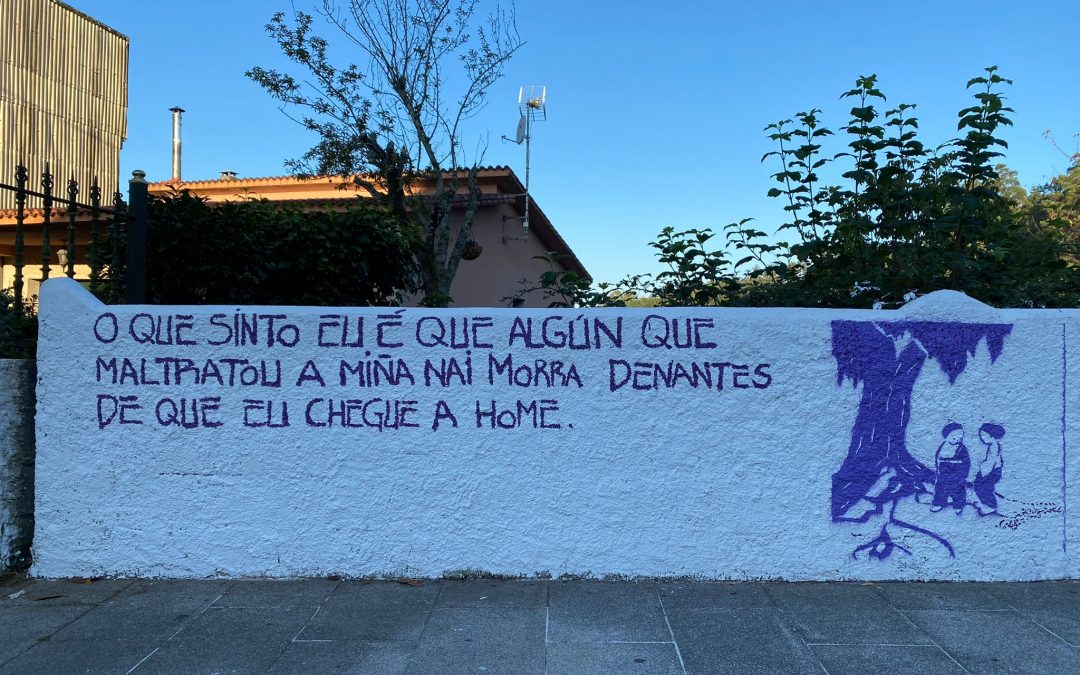
O que sinto eu é que algún que maltratou a miña nai morra denantes de que eu chegue a home.

Castelao

COLOUR YOUR VILLAGE

The village or city in which we are working, transformed into a game board, a laboratory of experimentation where children and teenagers can act from a new point of view.

Working with Galician Literature, Ramón Cabanillas

Working with Galician Literature, Ramón Cabanillas

TOURO

CHANGING THE VILLAGE THROUGH PROTAGONIST PARTICIPATION

Working with Galician Literature, Ramón Cabanillas

In a place lacking strong identity references (where the main element of collective memory was a disused nightclub), the project begins with a latent infrastructure: the town’s street map, whose names pay tribute to authors of Galician literature. Based on this cultural cartography, A Vila do Mañá turns words into infrastructure and literature into a tool for urban activation.

The figures of children and teenagers themselves (their silhouettes, bodies, and gestures) become the visual protagonists of the urban space. The aim is not to represent them, but to allow them to inscribe themselves into the landscape with their scale, their language, and their living presence. Their image occupies façades, walls, and partitions, intervening in the urban environment with their collective identity and symbolic power

COLOUR YOUR VILLAGE

The village or city in which we are working, transformed into a game board, a laboratory of experimentation where children and teenagers can act from a new point of view.

Working with Galician Literature, Curros Enríquez

Working with Galician Literature, Curros Enríquez

TOURO

CHANGING THE VILLAGE THROUGH PROTAGONIST PARTICIPATION

Working with Galician Literature, Curros Enríquez

In a place lacking strong identity references (where the main element of collective memory was a disused nightclub), the project begins with a latent infrastructure: the town’s street map, whose names pay tribute to authors of Galician literature. Based on this cultural cartography, A Vila do Mañá turns words into infrastructure and literature into a tool for urban activation.

The figures of children and teenagers themselves (their silhouettes, bodies, and gestures) become the visual protagonists of the urban space. The aim is not to represent them, but to allow them to inscribe themselves into the landscape with their scale, their language, and their living presence. Their image occupies façades, walls, and partitions, intervening in the urban environment with their collective identity and symbolic power.

COLOUR YOUR VILLAGE

The village or city in which we are working, transformed into a game board, a laboratory of experimentation where children and teenagers can act from a new point of view.

Working with Galician Literature, Castelao

Working with Galician Literature, Castelao

TOURO

CHANGING THE VILLAGE THROUGH PROTAGONIST PARTICIPATION

Working with Galician Literature, Castelao

In a place lacking strong identity references (where the main element of collective memory was a disused nightclub), the project begins with a latent infrastructure: the town’s street map, whose names pay tribute to authors of Galician literature. Based on this cultural cartography, A Vila do Mañá turns words into infrastructure and literature into a tool for urban activation.

The figures of children and teenagers themselves (their silhouettes, bodies, and gestures) become the visual protagonists of the urban space. The aim is not to represent them, but to allow them to inscribe themselves into the landscape with their scale, their language, and their living presence. Their image occupies façades, walls, and partitions, intervening in the urban environment with their collective identity and symbolic power.

COLOUR YOUR VILLAGE

The village or city in which we are working, transformed into a game board, a laboratory of experimentation where children and teenagers can act from a new point of view.

Working with Galician Literature, Rosalía de Castro

Working with Galician Literature, Rosalía de Castro

TOURO

CHANGING THE VILLAGE THROUGH PROTAGONIST PARTICIPATION

Working with Galician Literature, Rosalía de Castro

In a place lacking strong identity references (where the main element of collective memory was a disused nightclub), the project begins with a latent infrastructure: the town’s street map, whose names pay tribute to authors of Galician literature. Based on this cultural cartography, A Vila do Mañá turns words into infrastructure and literature into a tool for urban activation.

The figures of children and teenagers themselves (their silhouettes, bodies, and gestures) become the visual protagonists of the urban space. The aim is not to represent them, but to allow them to inscribe themselves into the landscape with their scale, their language, and their living presence. Their image occupies façades, walls, and partitions, intervening in the urban environment with their collective identity and symbolic power.

COLOUR YOUR VILLAGE

The village or city in which we are working, transformed into a game board, a laboratory of experimentation where children and teenagers can act from a new point of view.
Tags

Accessible Cities (69) Acoruñanarede (1) Ames (5) Anxel Casal (3) A Pobra do Caramiñal (2) ArchDaily (1) Architecture (159) Arquitectura (40) Arteixo (2) Art magazine - Logopress (2) Arzúa (34) As Pontes (2) Atlántico (1) A Vila do Mañá (256) barbadas.es (1) Barbadás (15) Barbanza Channel (3) Bergantiños Diary (1) Book (8) boys and adolescents (24) Brasil (11) Brazil (5) Bueu (16) Cambados (15) Carballo (40) Childhood (198) City (76) codesign (16) Coia (19) Compostela24horas.com (1) Conference (5) Coronavirus (68) Council of Carballo (1) Covid (69) crtvg (1) Cultural heritage (7) Culture city (1) Curtis (7) derecho a la ciudad (1) Diario de Arousa (4) Diario de Pontevedra (1) Diary of Arousa (29) Ecos da comarca (4) El Comarcal (1) El Correo Gallego (43) ElDiario.es (1) el ideal gallego (1) El progreso (1) enfoques (2) Environment (3) Faro de Vigo (43) Ferrol (19) Ferrol360.es (1) Ferrol Diary (5) Floats (8) Galicia (232) Galicia@PRESS (2) Galician literature (1) Game board (5) Game of goose (5) GDiario (1) Girls (18) Girls, boys and adolescents (133) Green flag (4) Hai Mulleres (2) Heritage (142) High School Alexandre Bóveda (5) Historic city (9) History of Galicia (1) Hoyesarte.com (1) Iberoamerican Biennial (4) Independence square (1) Infancia (14) Inmodiario (1) inquEDU (2) Instituto Alexandre Bóveda (1) International (3) Interview (2) Landscape (131) La Opinión (16) La Región (22) La Voz de Galicia (100) library (1) Lina Bo Bardi (6) Lindeiros (1) Lo Que Yo Te Digo (2) Ludantia (4) Madrid (2) Malpica (5) Master Houses (1) Mobility (2) Mobility Week (2) Mondoñedo (6) Nenas nenos e adolescentes (13) Nets (1) News (185) NH Diary (8) Nius Diary (1) Noticia (14) O Barbanza (2) Observador (1) O Correo de Bergantiños (2) O Porriño (4) Padrón (3) Pandemic (47) Park (2) Participación protagónica (41) Patrimonio cultural (1) Pazo do Martelo (1) PonteAreas (4) Pontevedra (4) PontevedraViva!com (2) Portugal (1) Protagonist participation (85) Protegim-nos (1) Que pasa na Costa (3) RadioValladares (1) Regiao news (1) Region (3) Revista AMSGO! (1) Rianxo (20) Ribadeo (2) Ribeira (8) Right to the city (88) Rías Baixas Channel (3) Rúa (14) Sandra Gonzalez Alvarez (19) Sandra González (131) San Francisco Vilagarcía de Arousa School (3) Santiago's road (46) Santiago de Compostela (12) Sesc Santo Amaro (1) Silleda (30) Social distance (68) Street (96) São Paulo (14) Tactical urbanism (88) Talleres (22) Teixeiro (2) Telecinco (1) Terrachá xá (1) Touro (8) treintayseis (1) TV (3) TV of Galicia (2) Urban garden (7) Urbanism (145) Urbanismo (40) Urbanismo de Guerrilla (142) Urbanismo táctico (42) Venice Biennale (2) Verín (5) Viena (2) Vila (23) Vilagarcía (24) Village (101) Vimianzo (7) Virtual (40) Vía Láctea Communication (1) Workshops (139) XUNTA DE GALICIA (3) zero code (1)

Logo A Vila do Mañá

Proxecto financiado por:

Proxecto financiado pola Deputación da Coruña

Grazas polo teu aporte