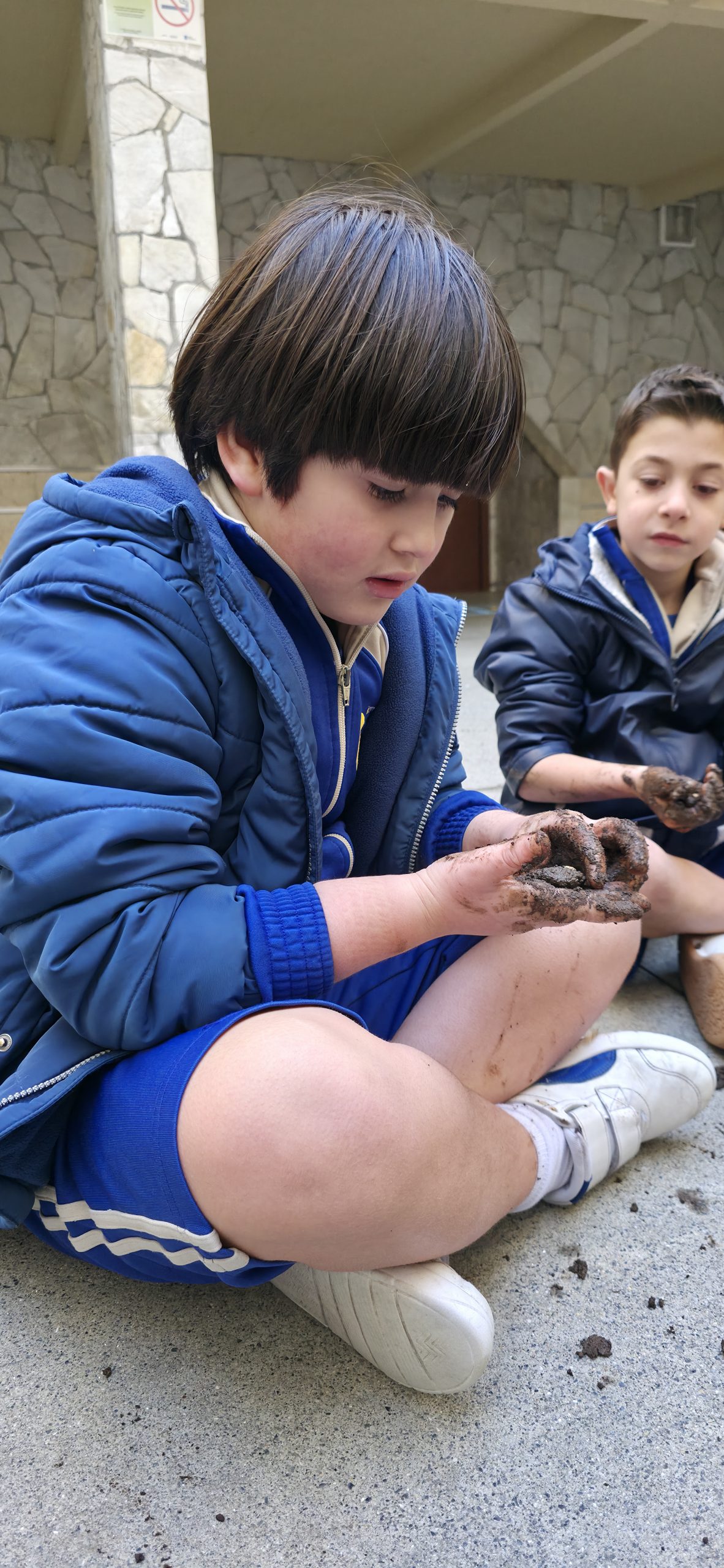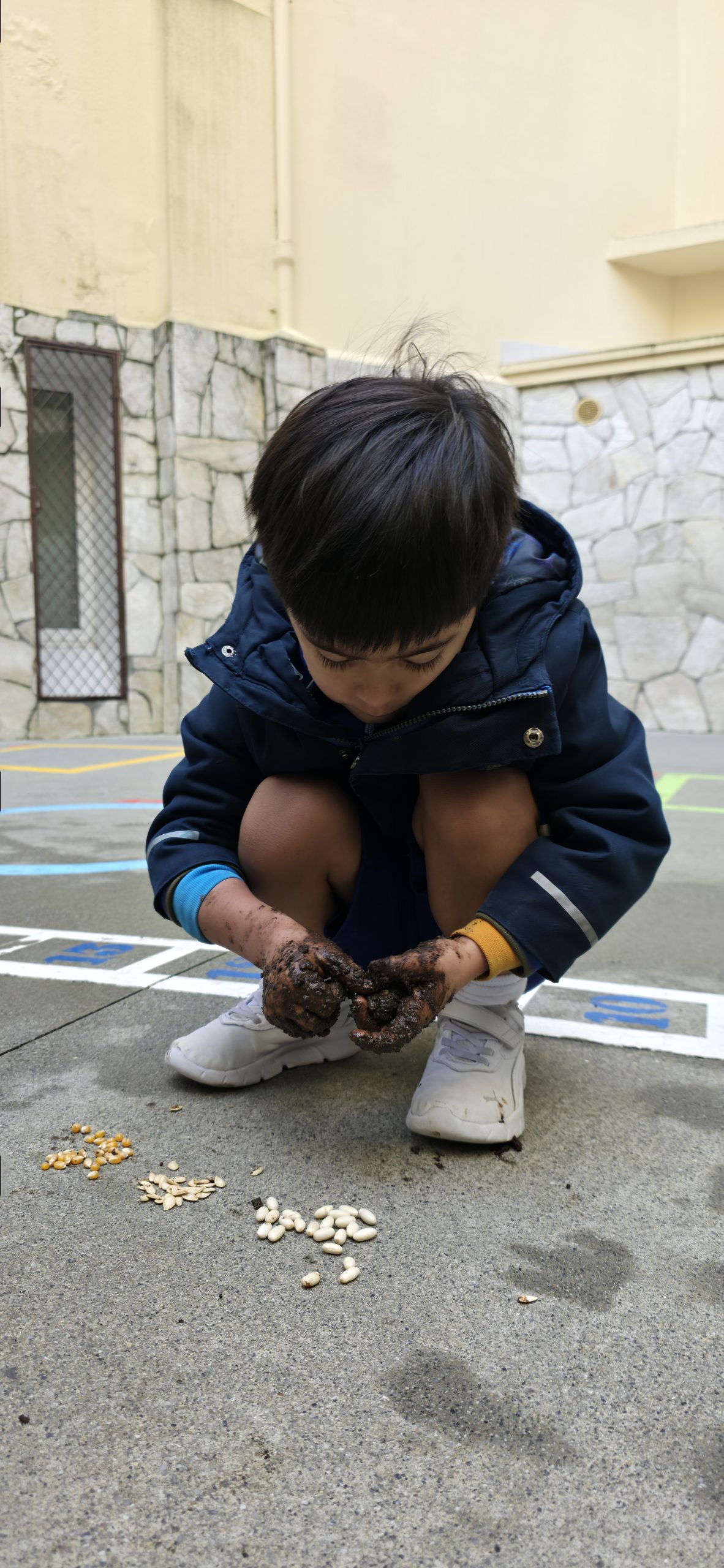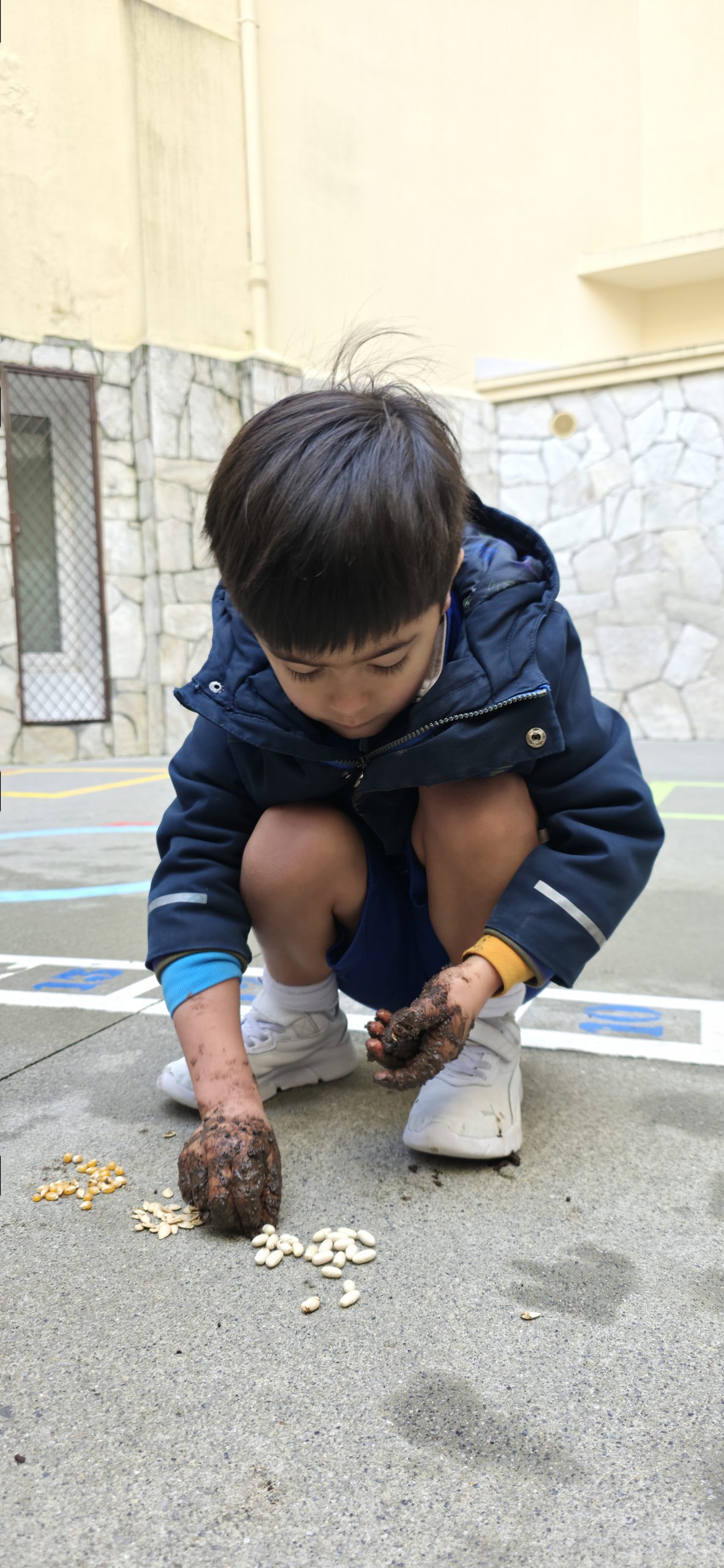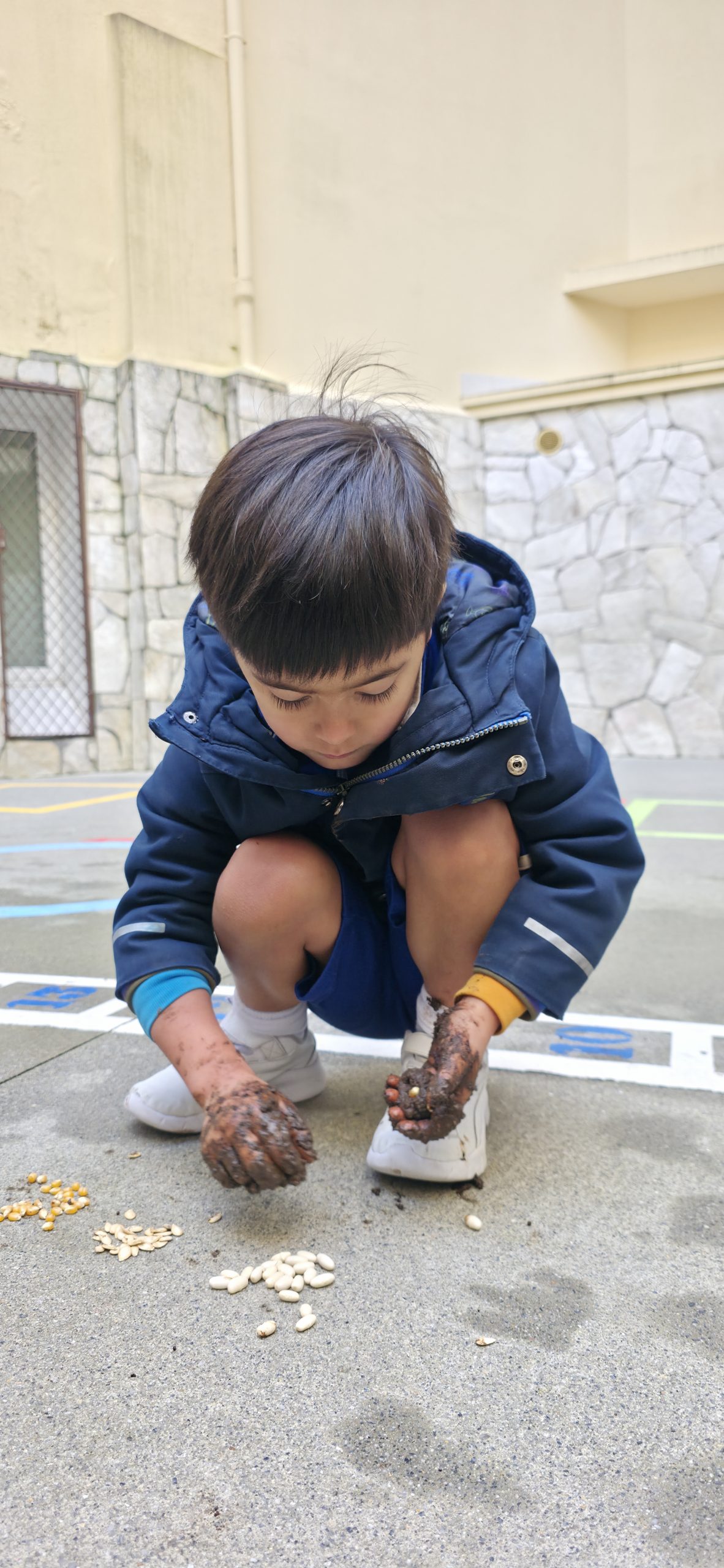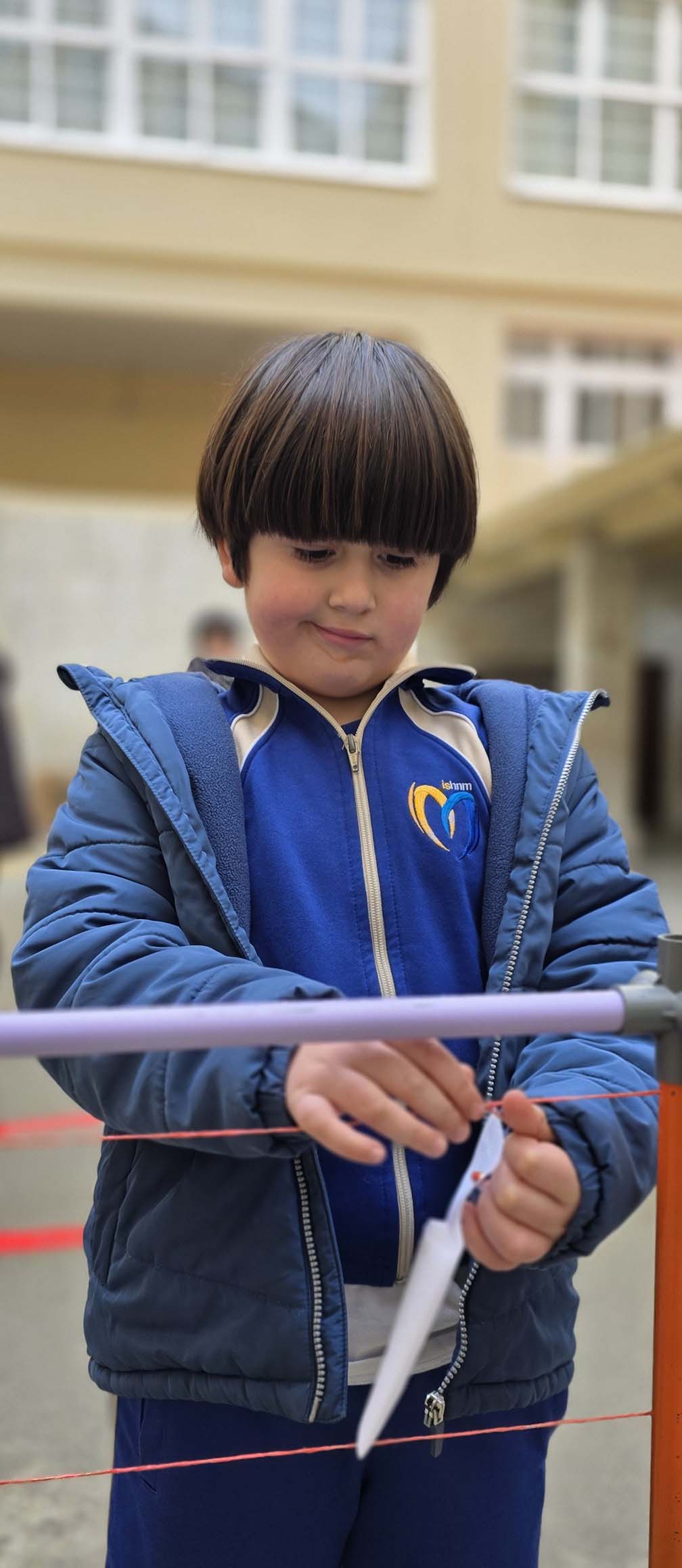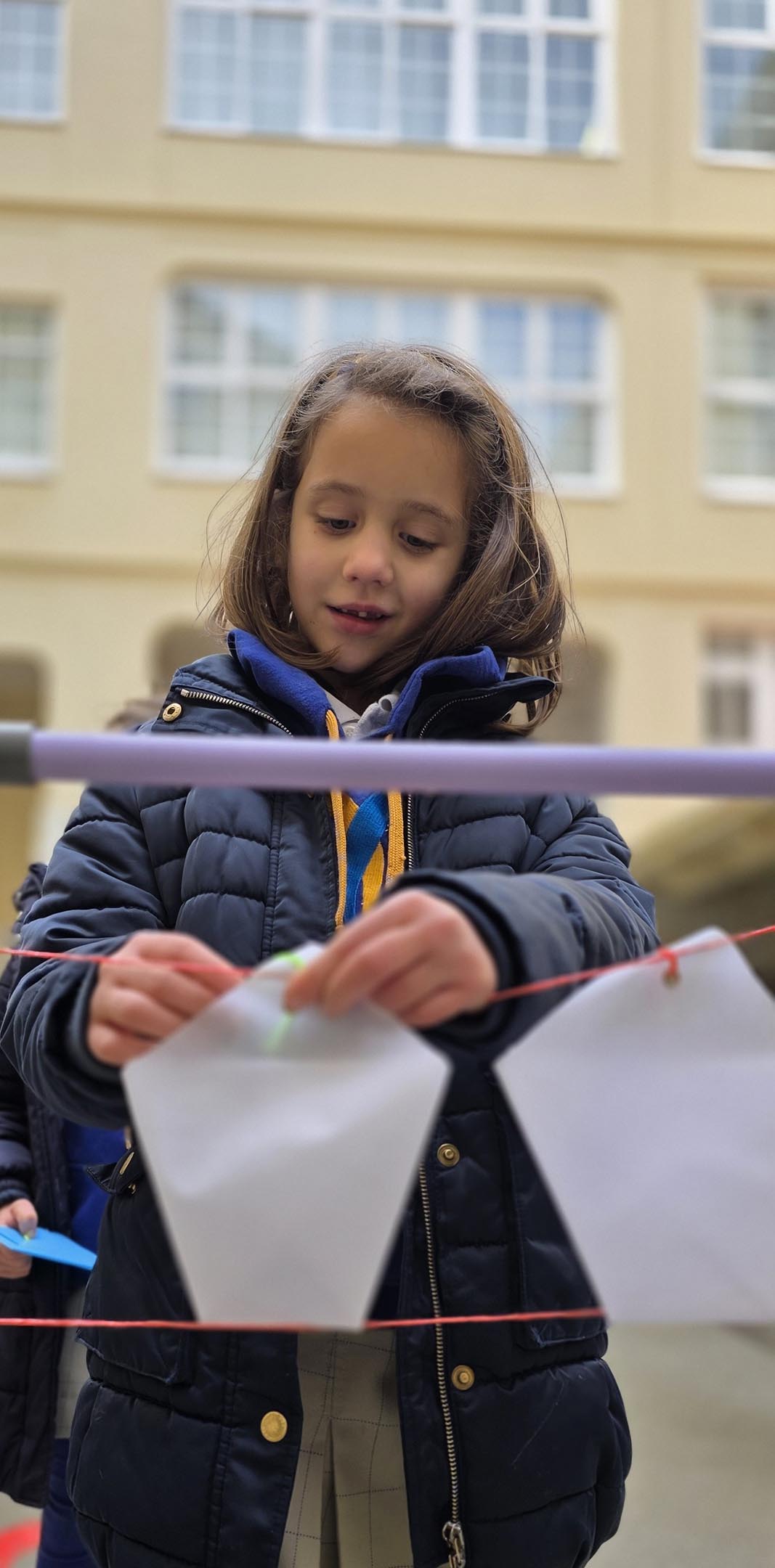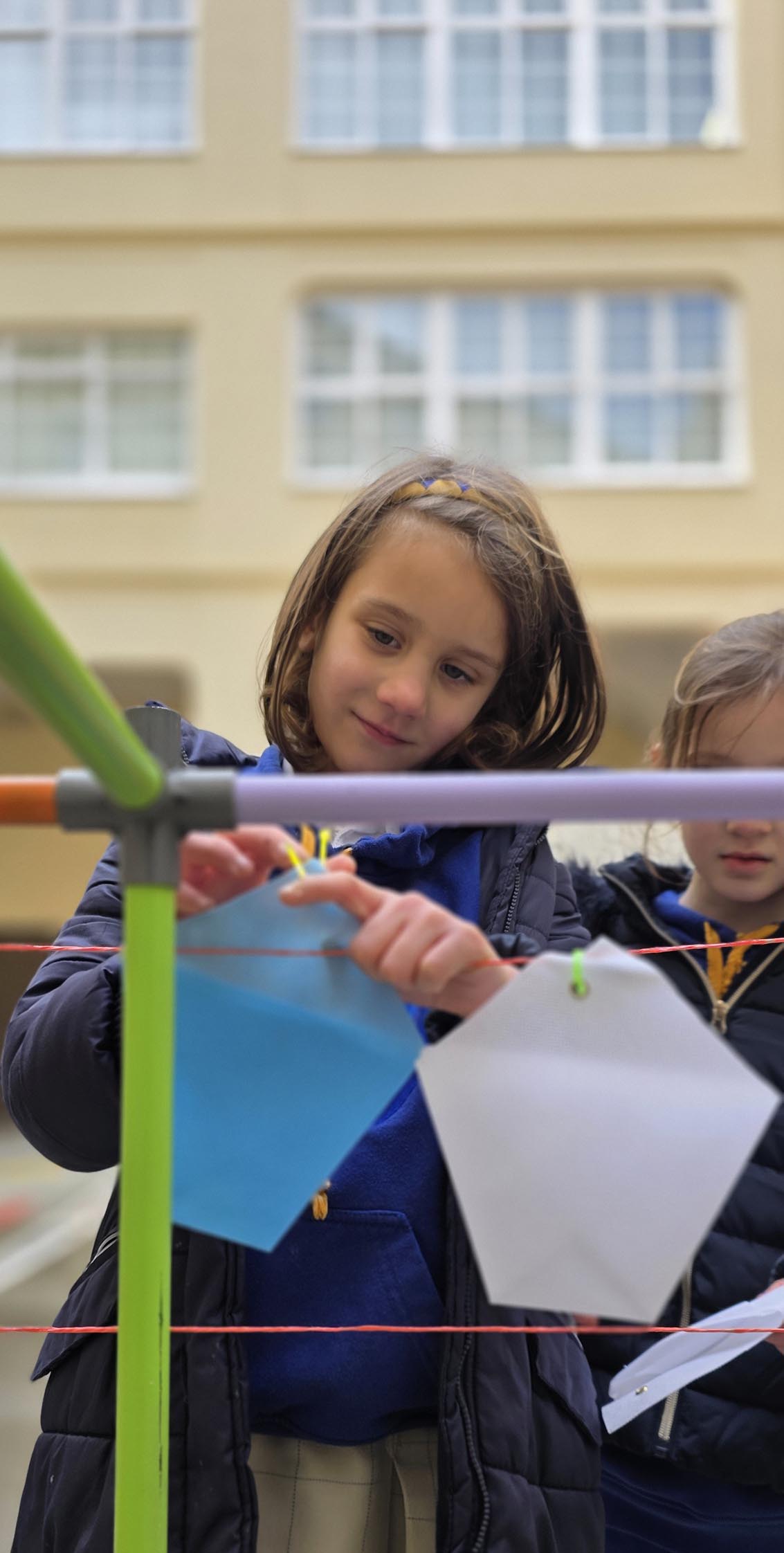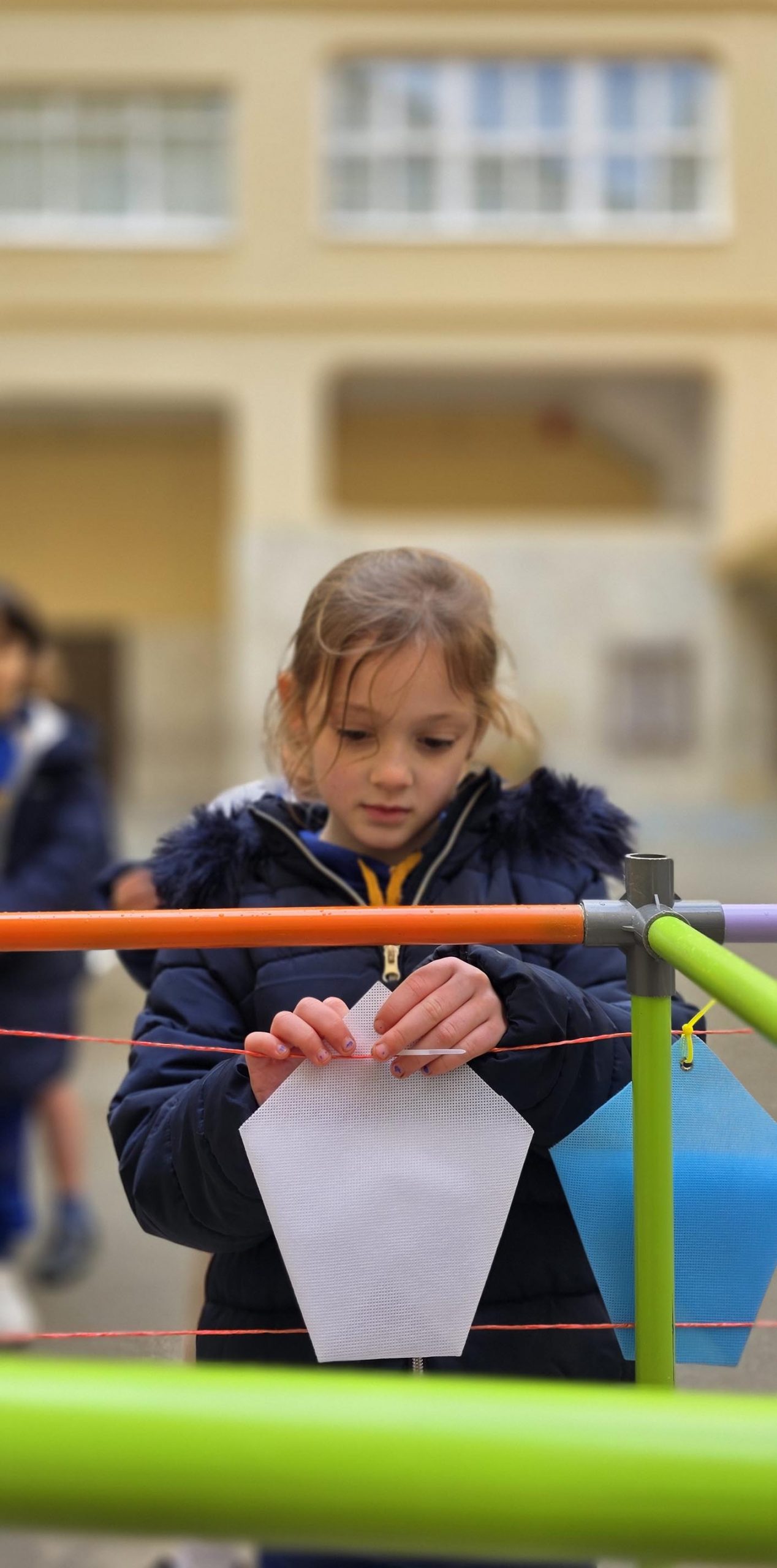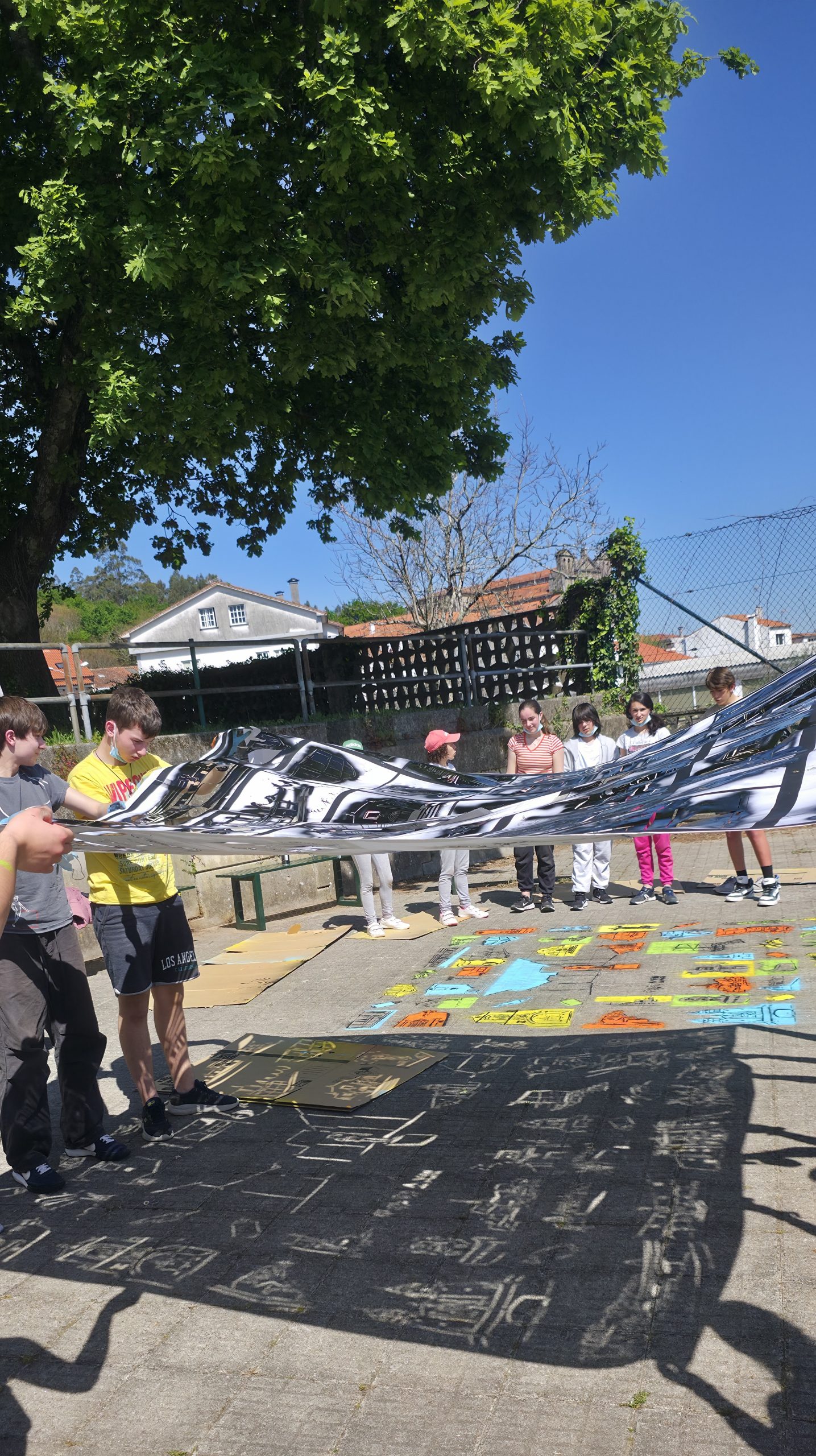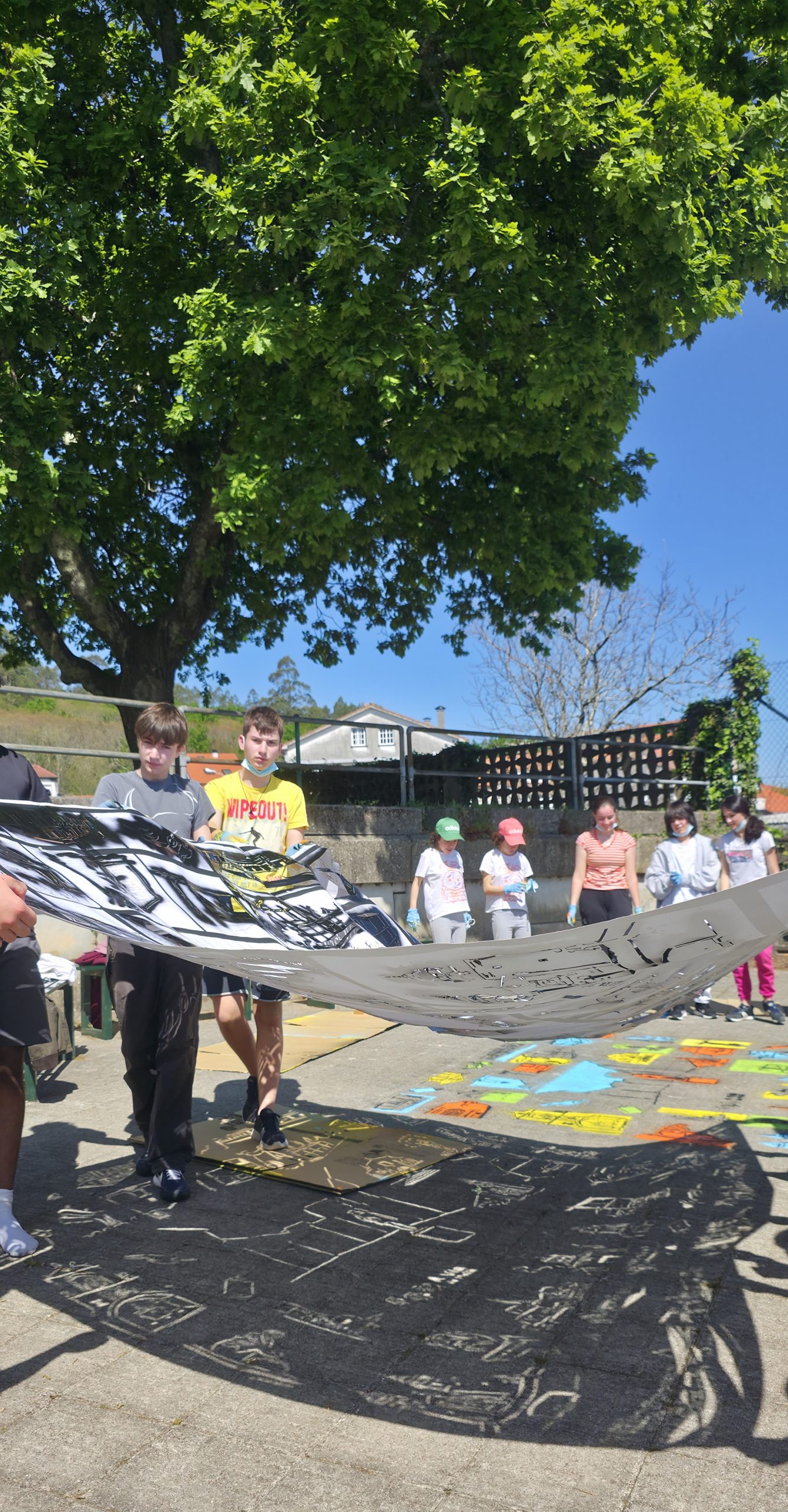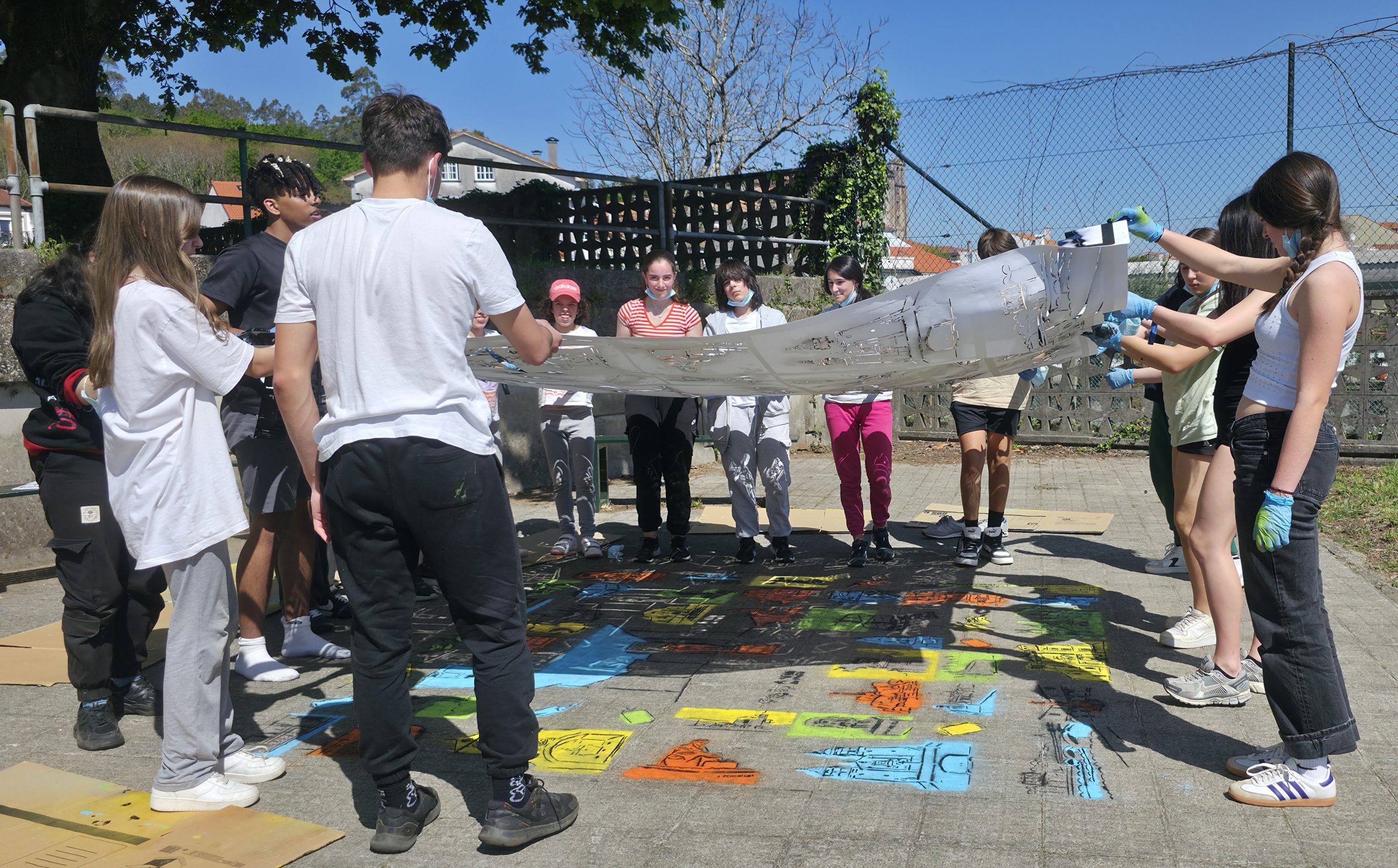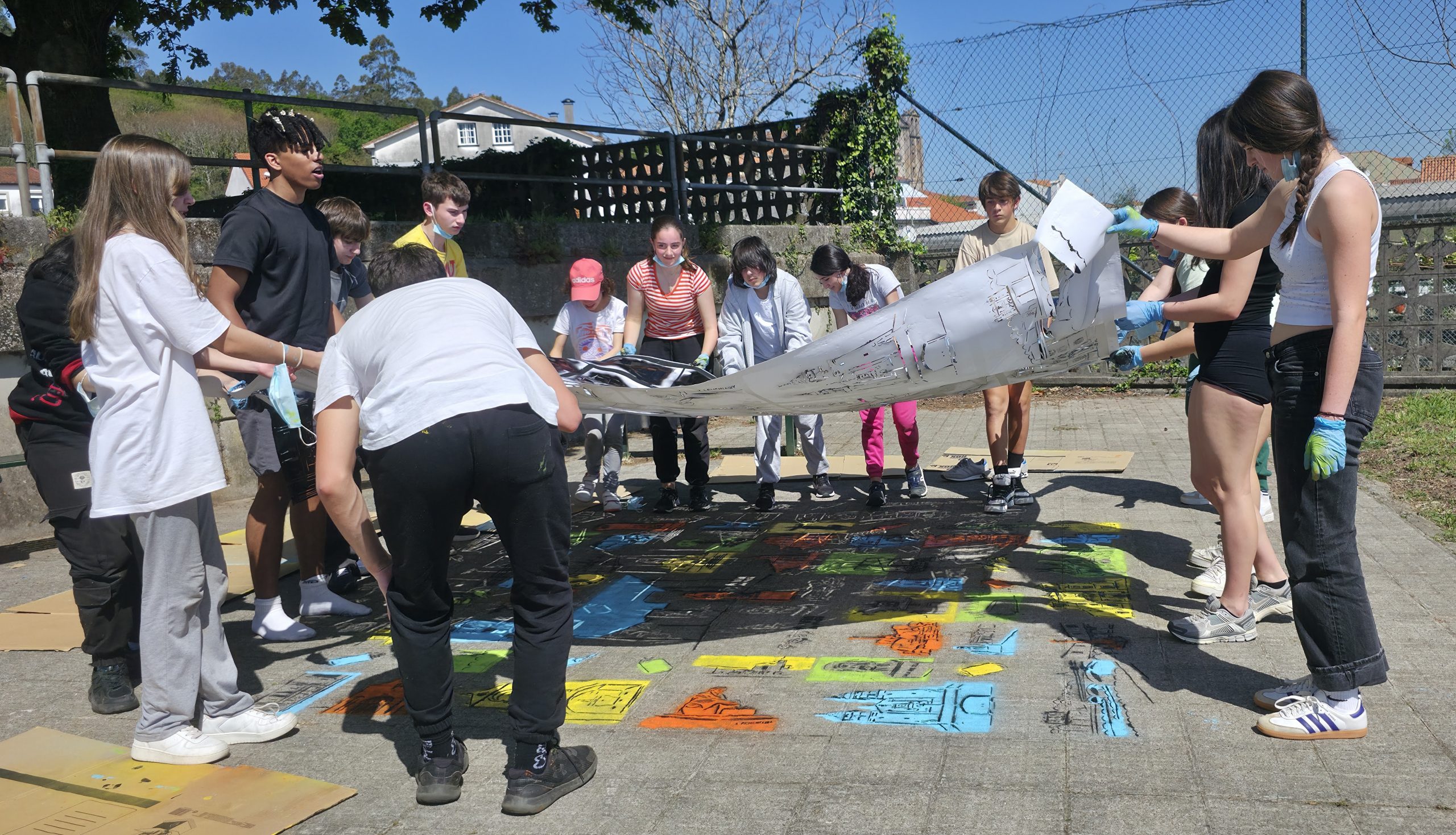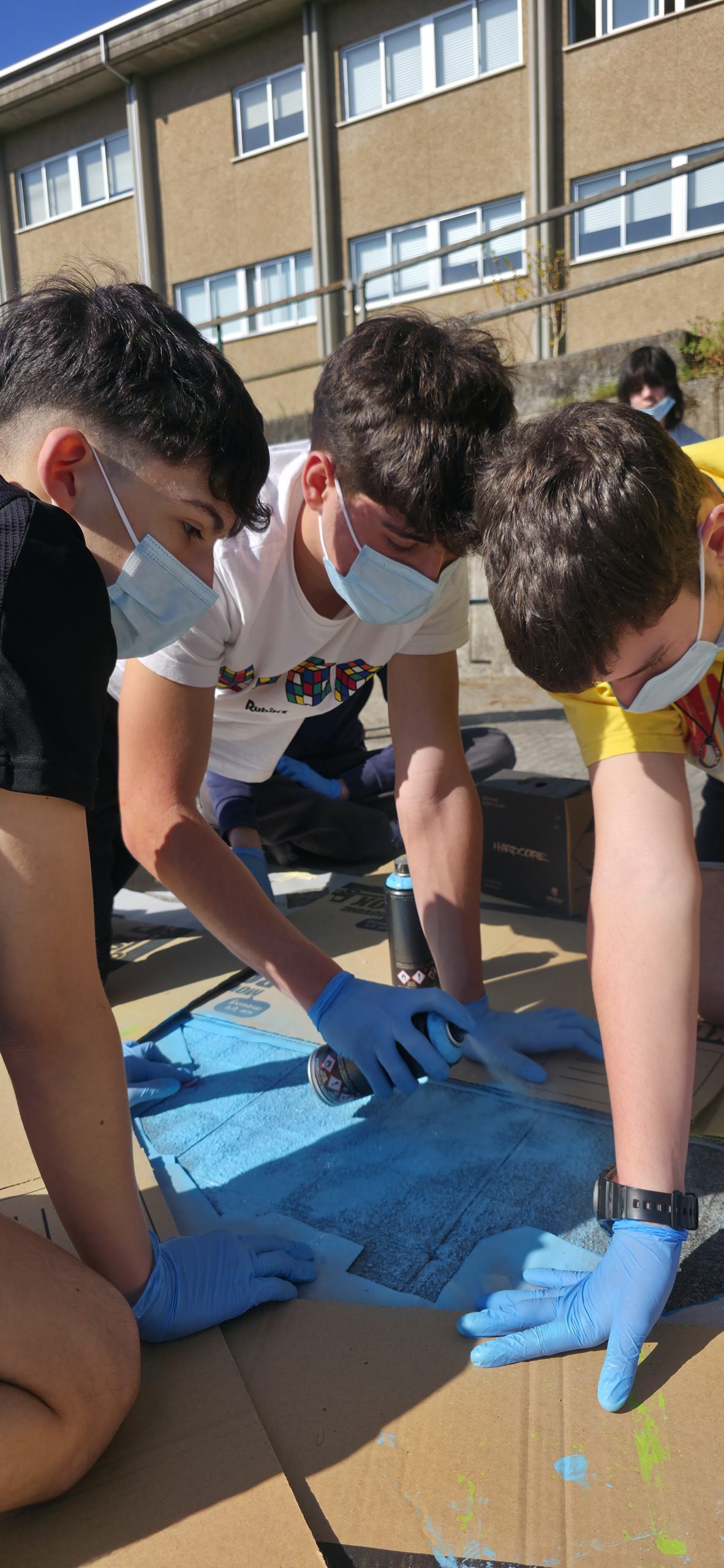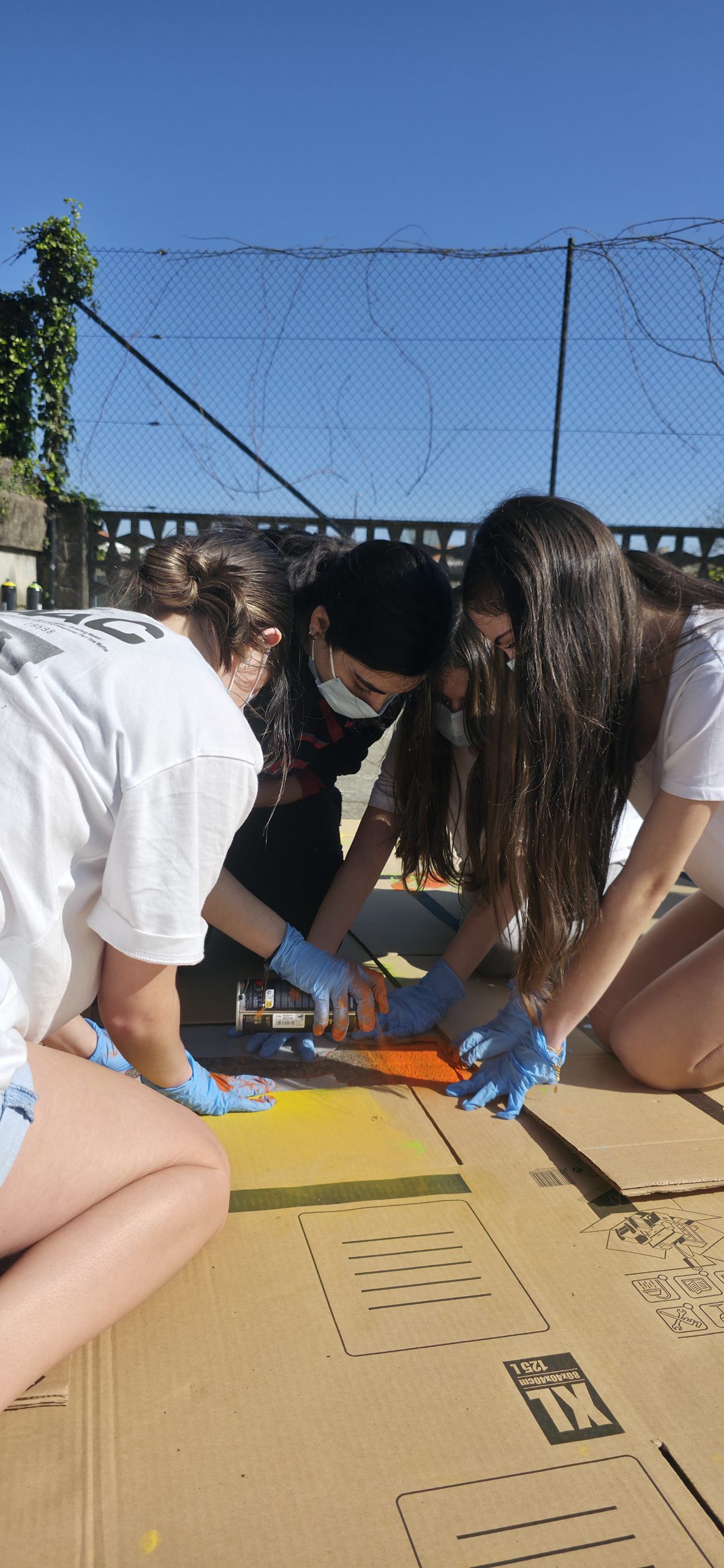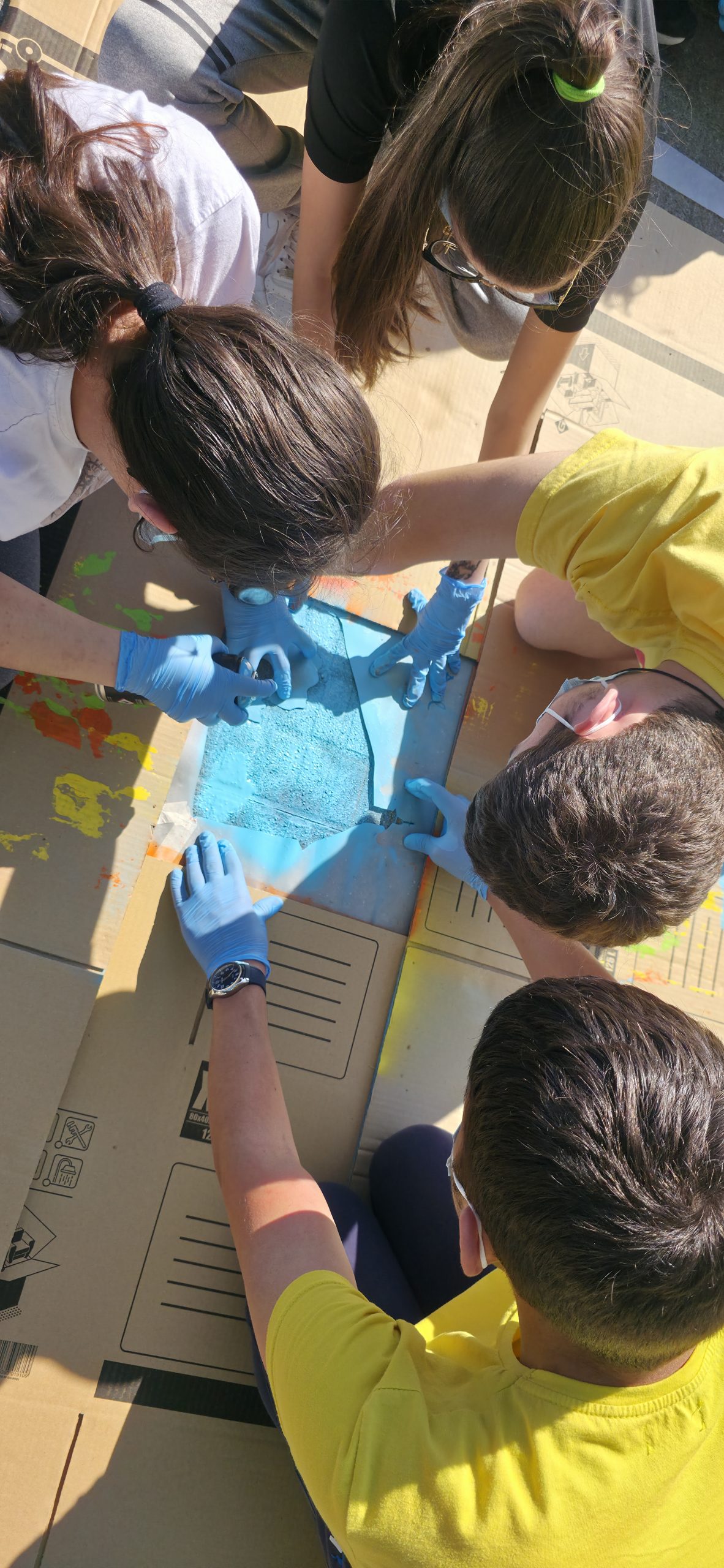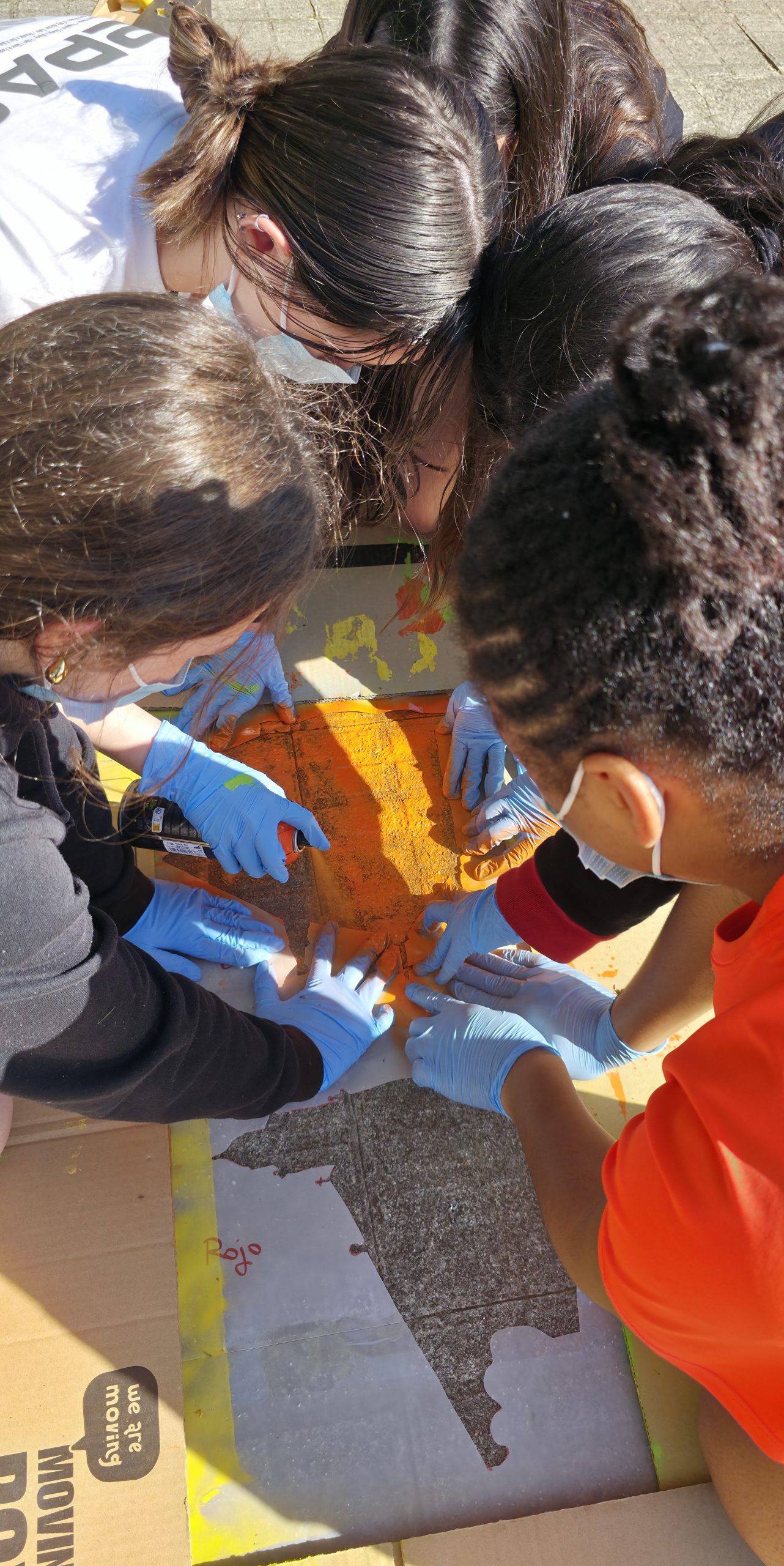

Transform the yard working whith THREE- DIMENSIONAL ELEMENTS

Transform the yard working whith THREE- DIMENSIONAL ELEMENTS

A Coruña


Changing the village through protagonist participation

 

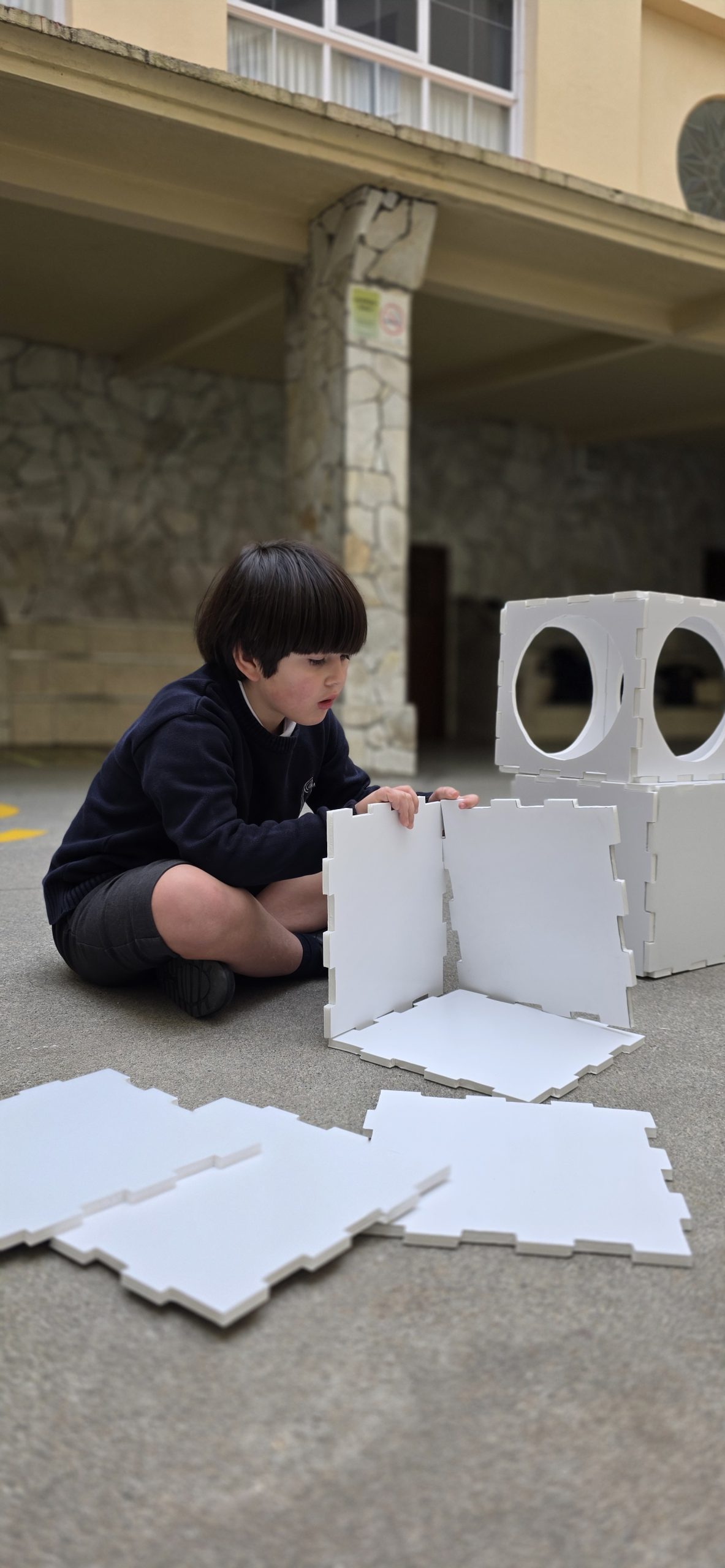
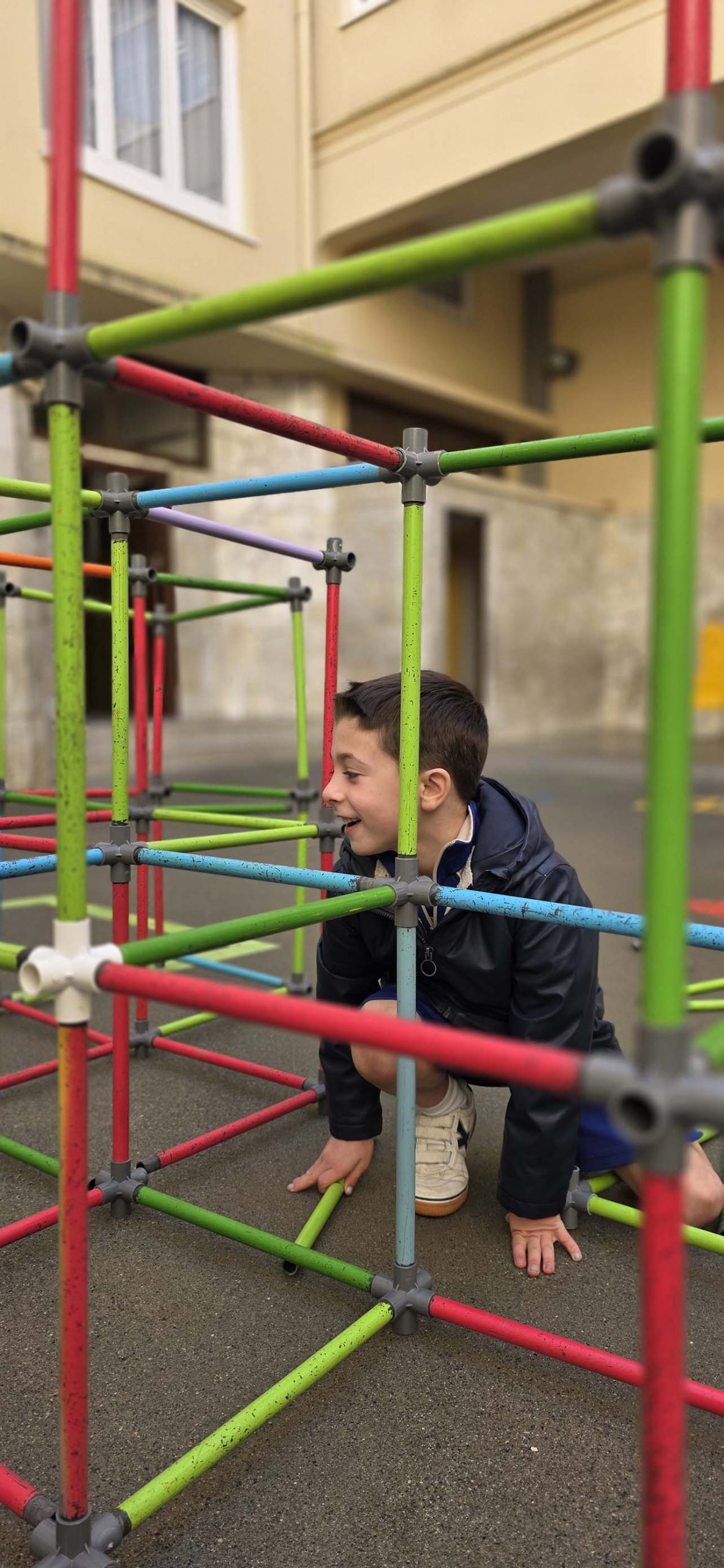
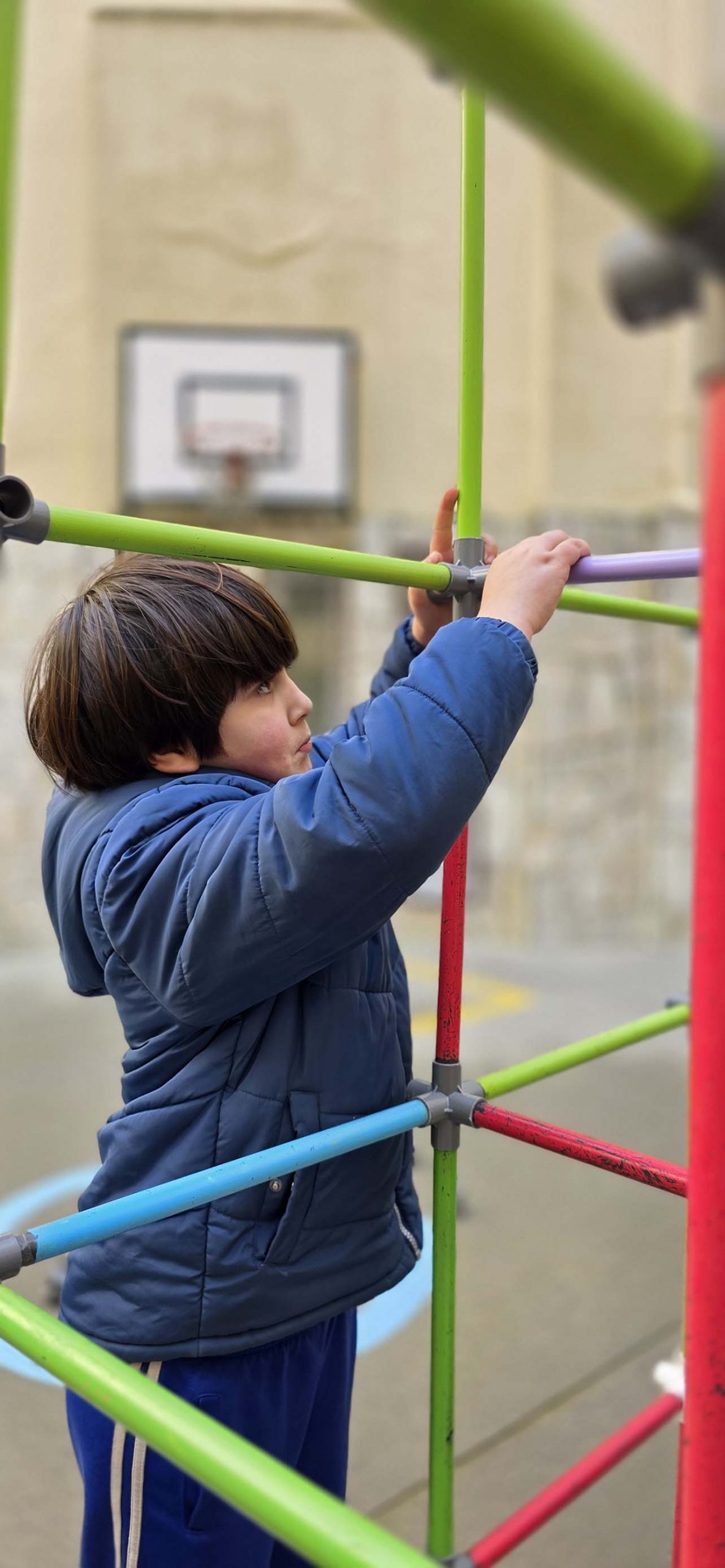
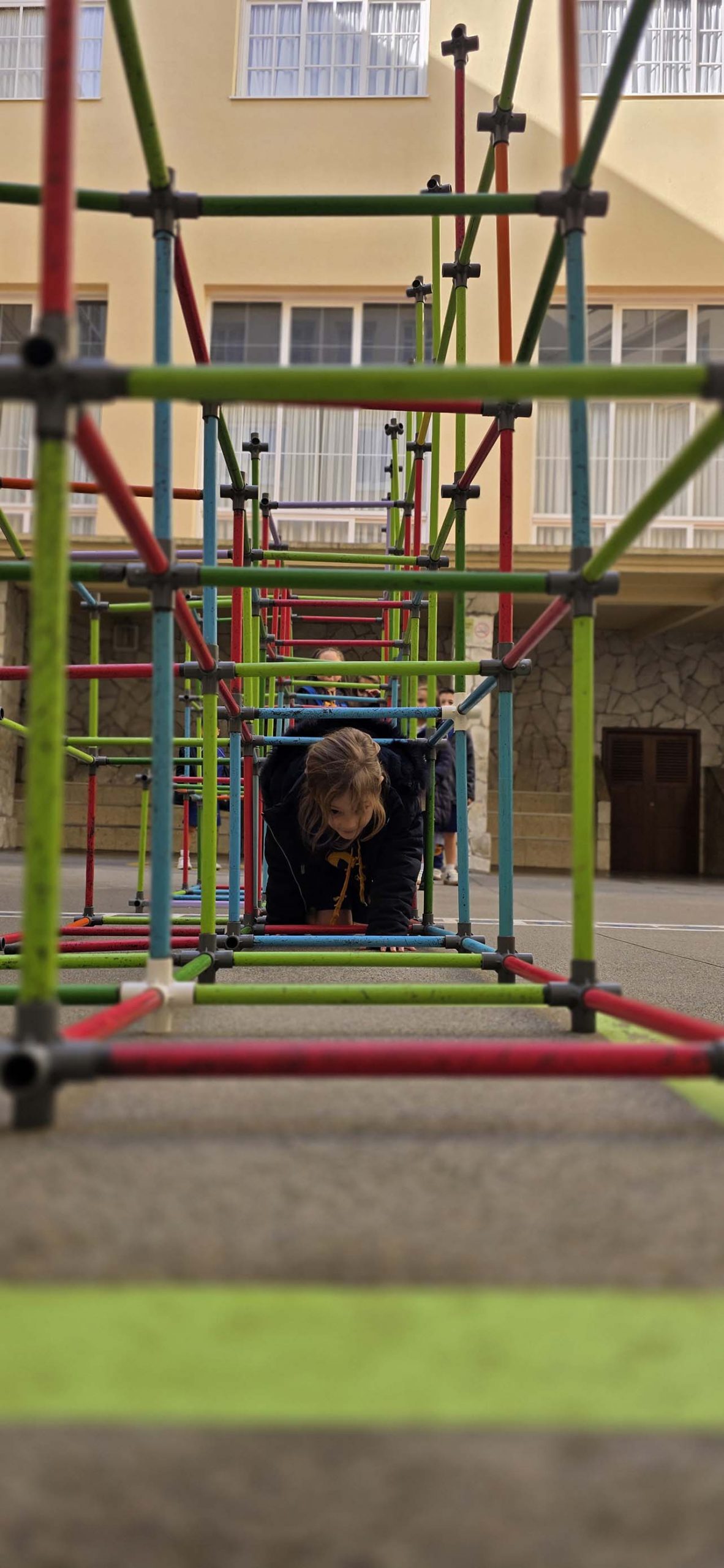
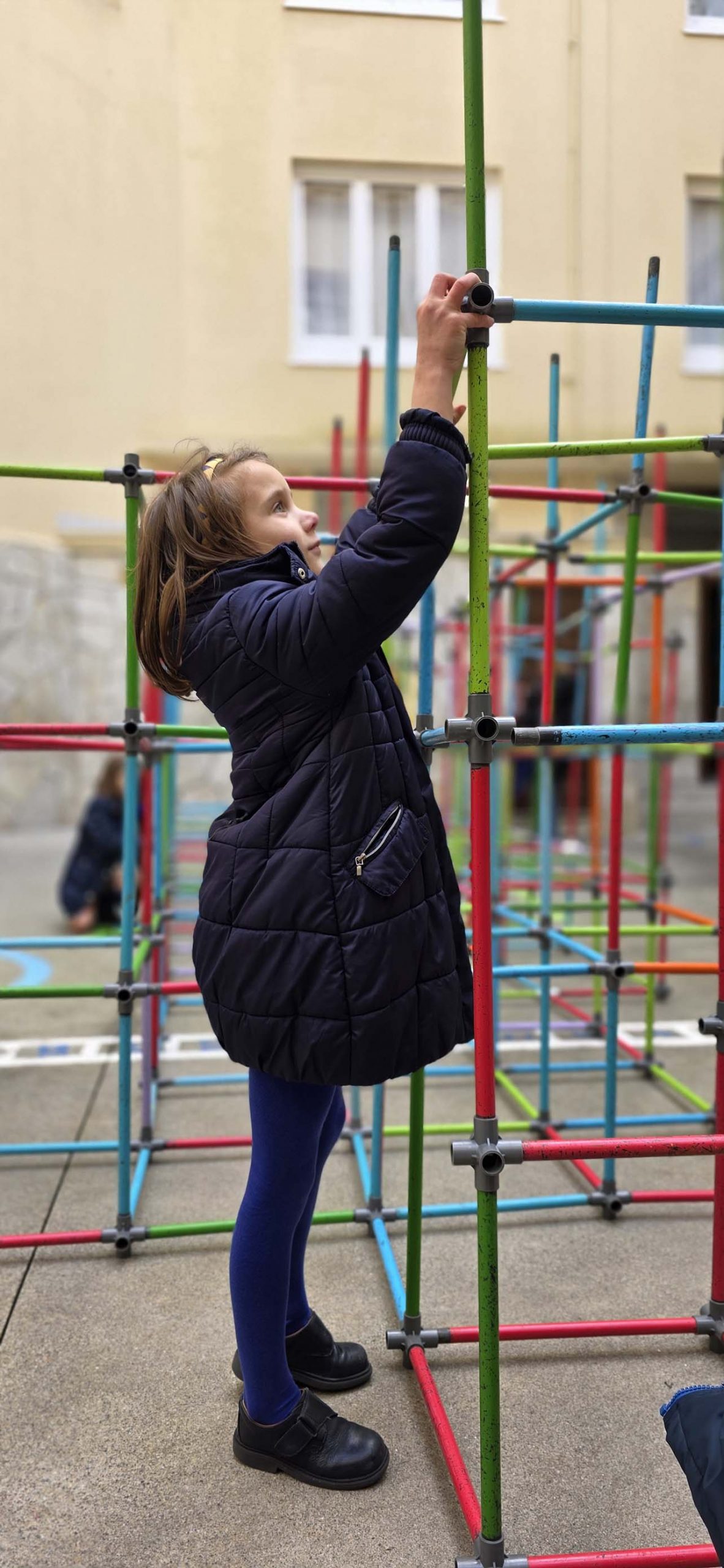
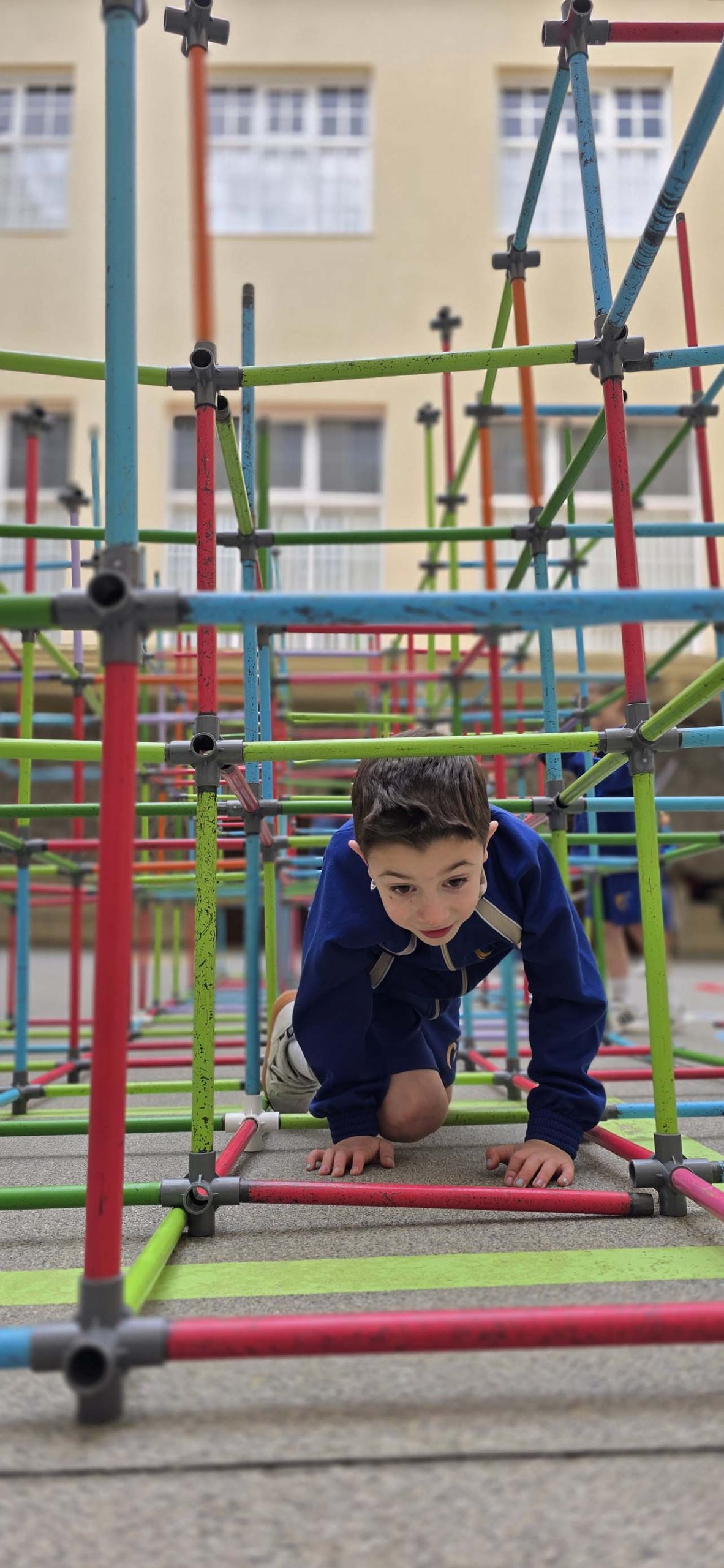
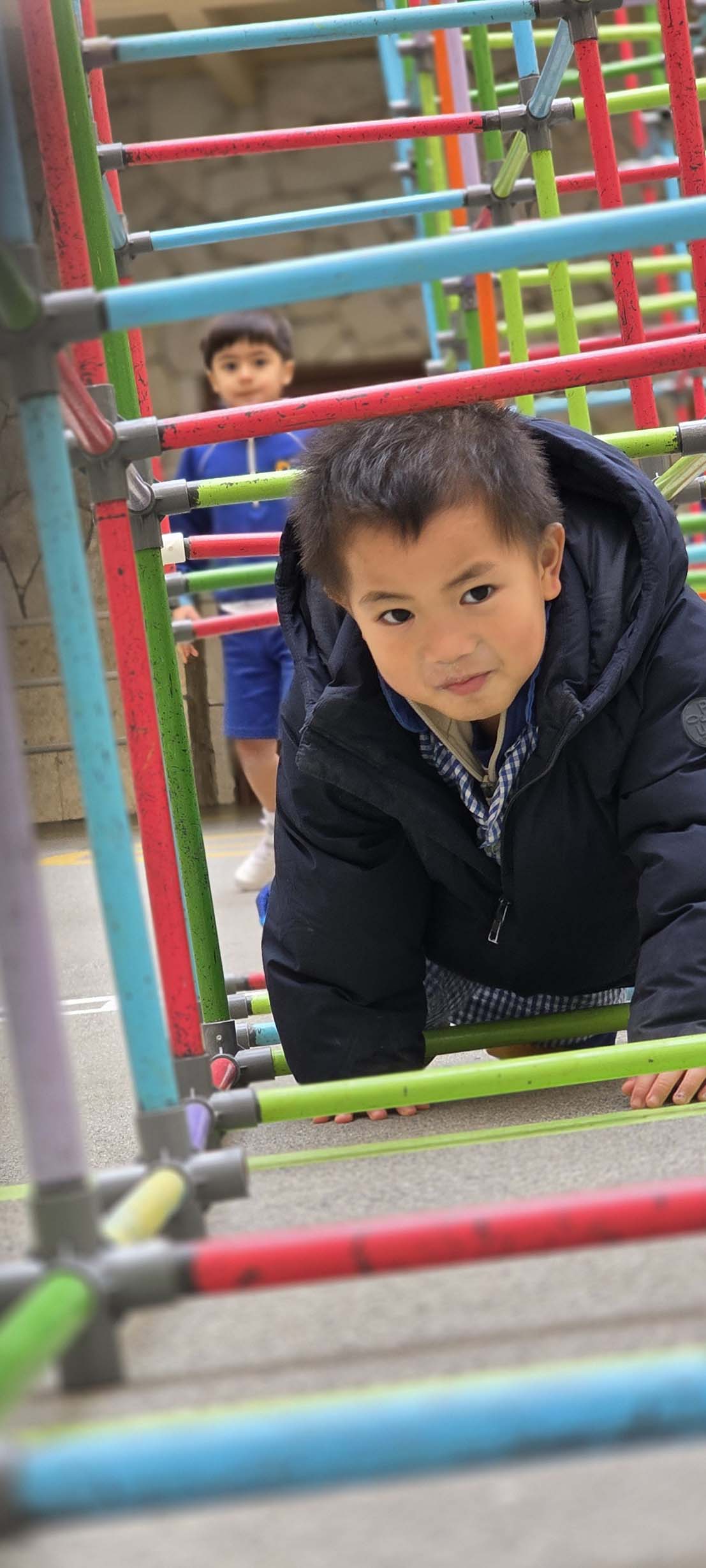
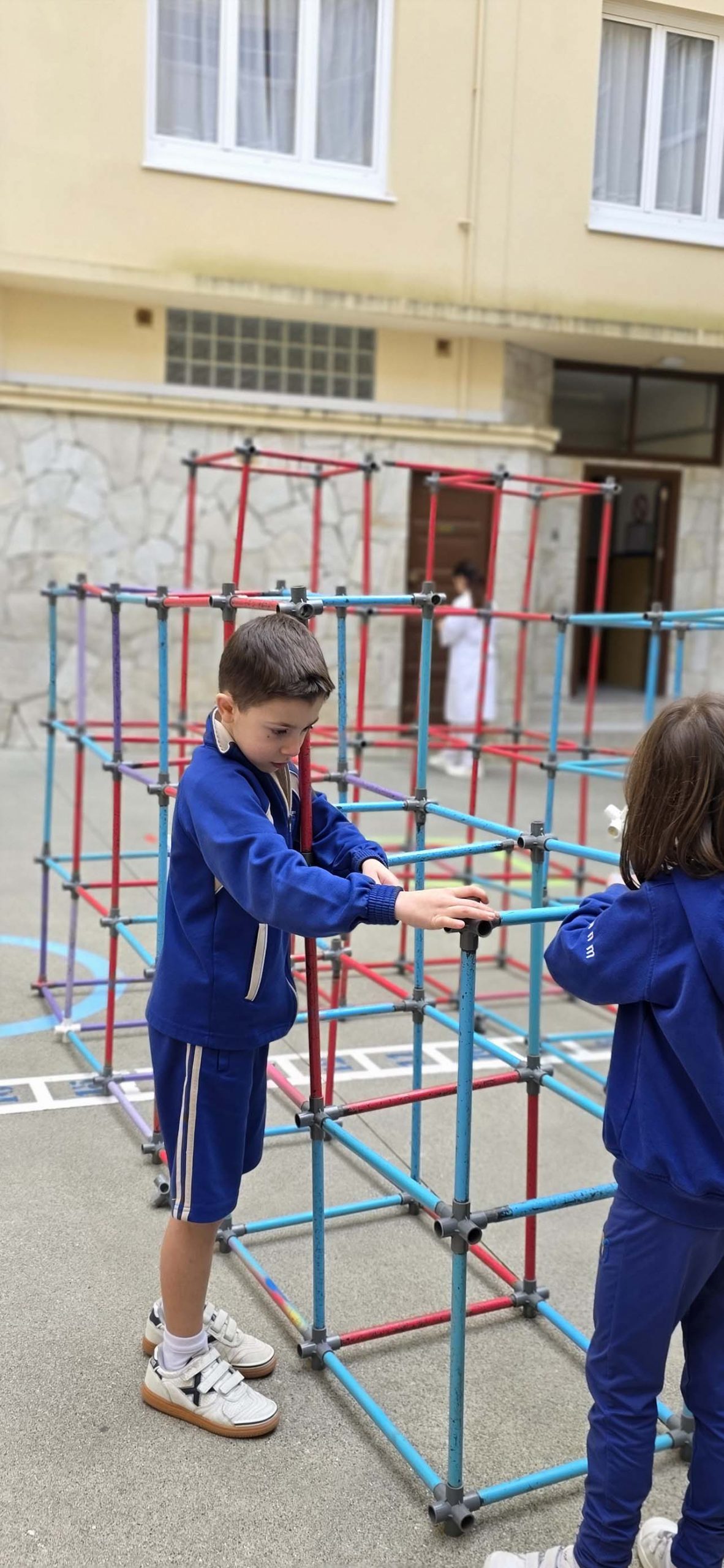
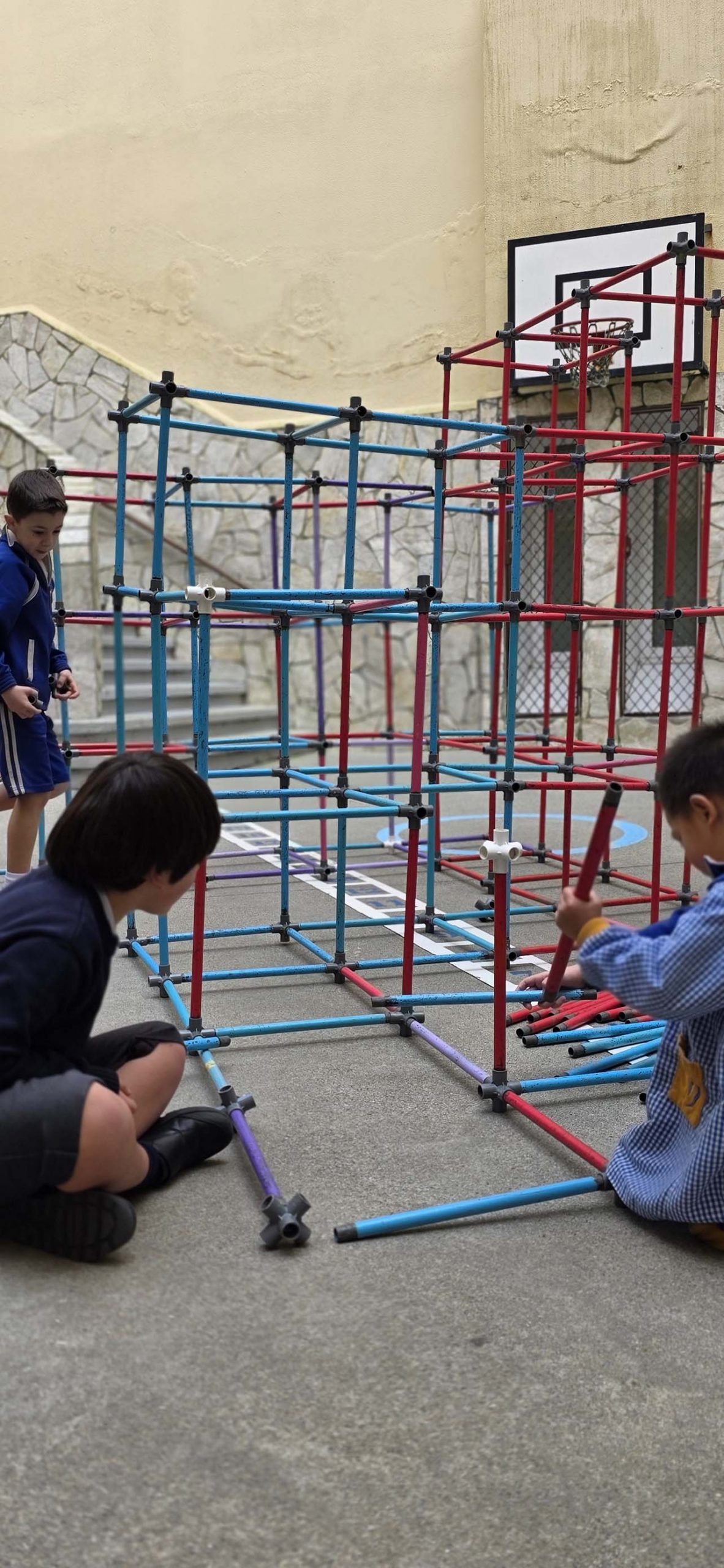
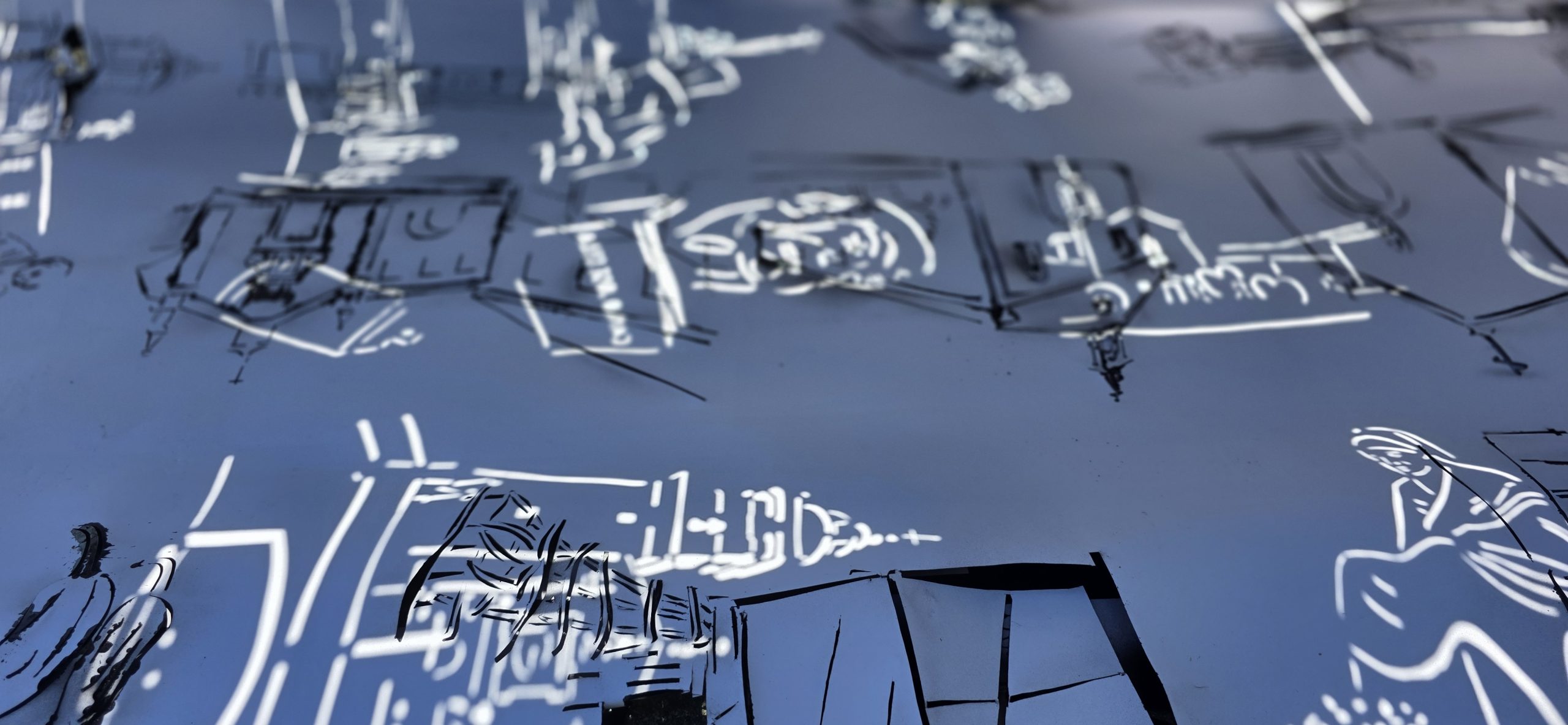
Working with three-dimension elements


“The opportunity for the child to discover his or her own movement is part of the city itself; the city is also a play space. The child uses all the elements of the city, all the built objects, all the surfaces he or she can climb or climb on. Children know how to play with these things very well, even if they are not allowed to.”

Aldo van Eyck
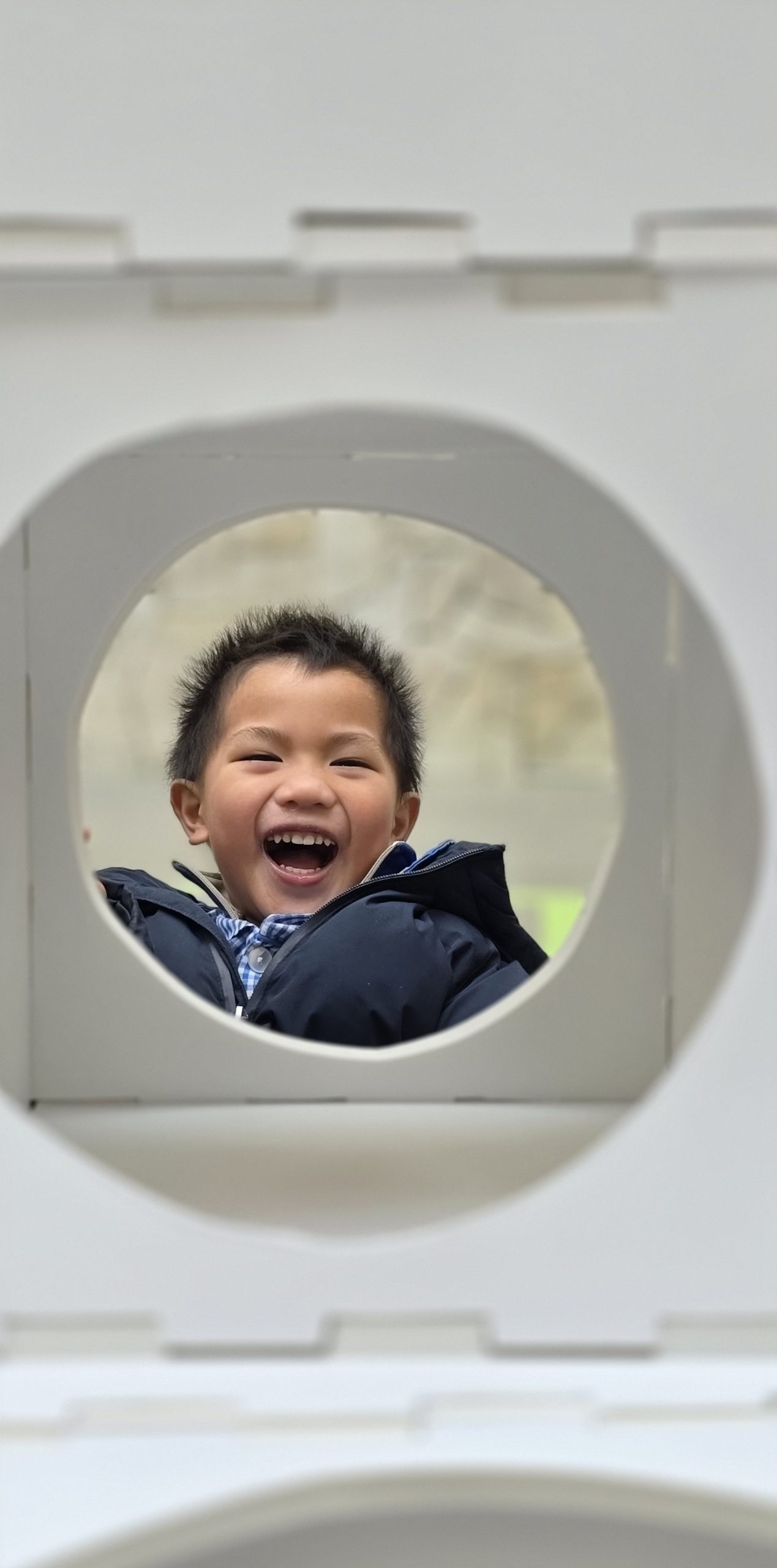


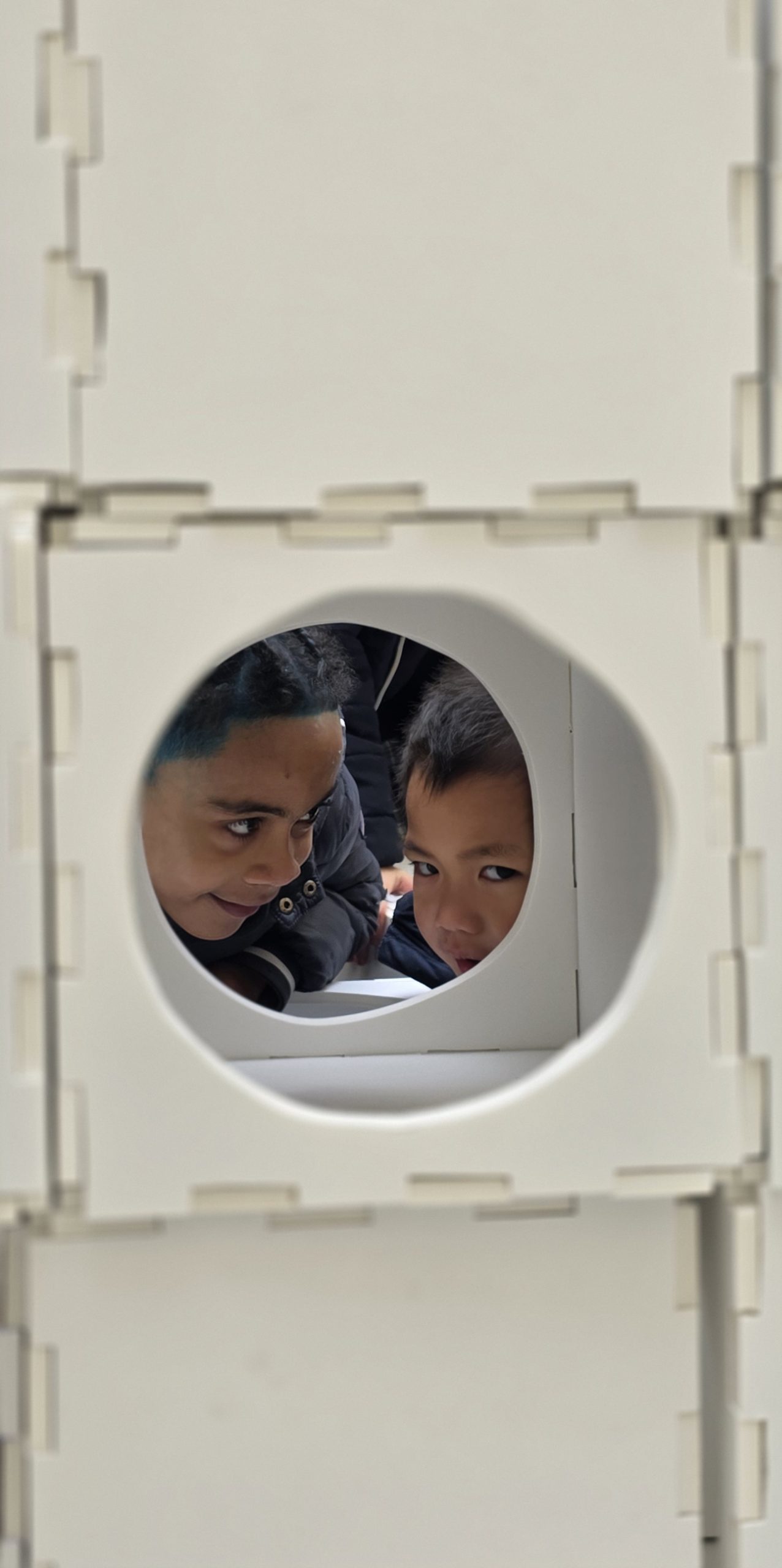
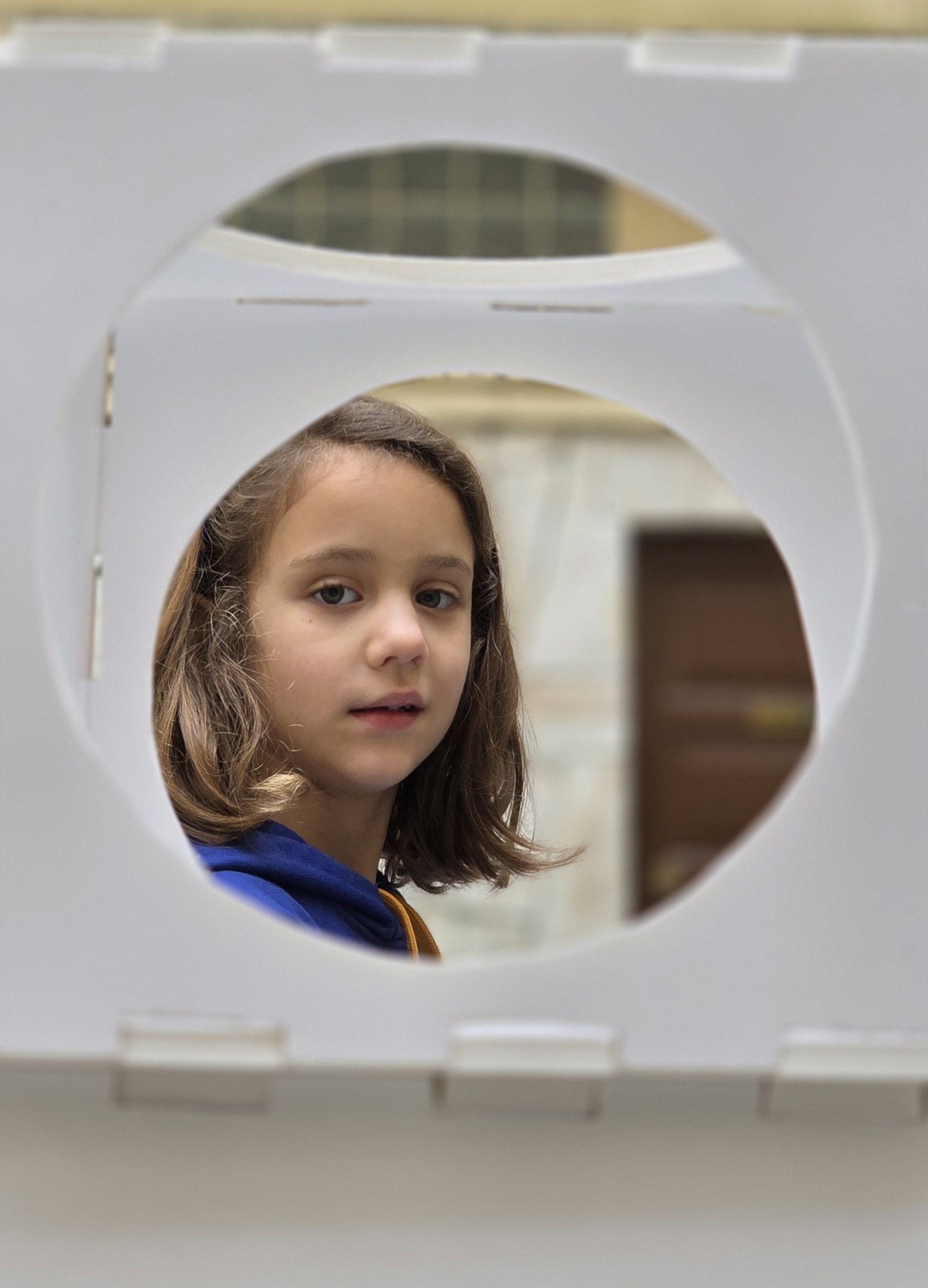
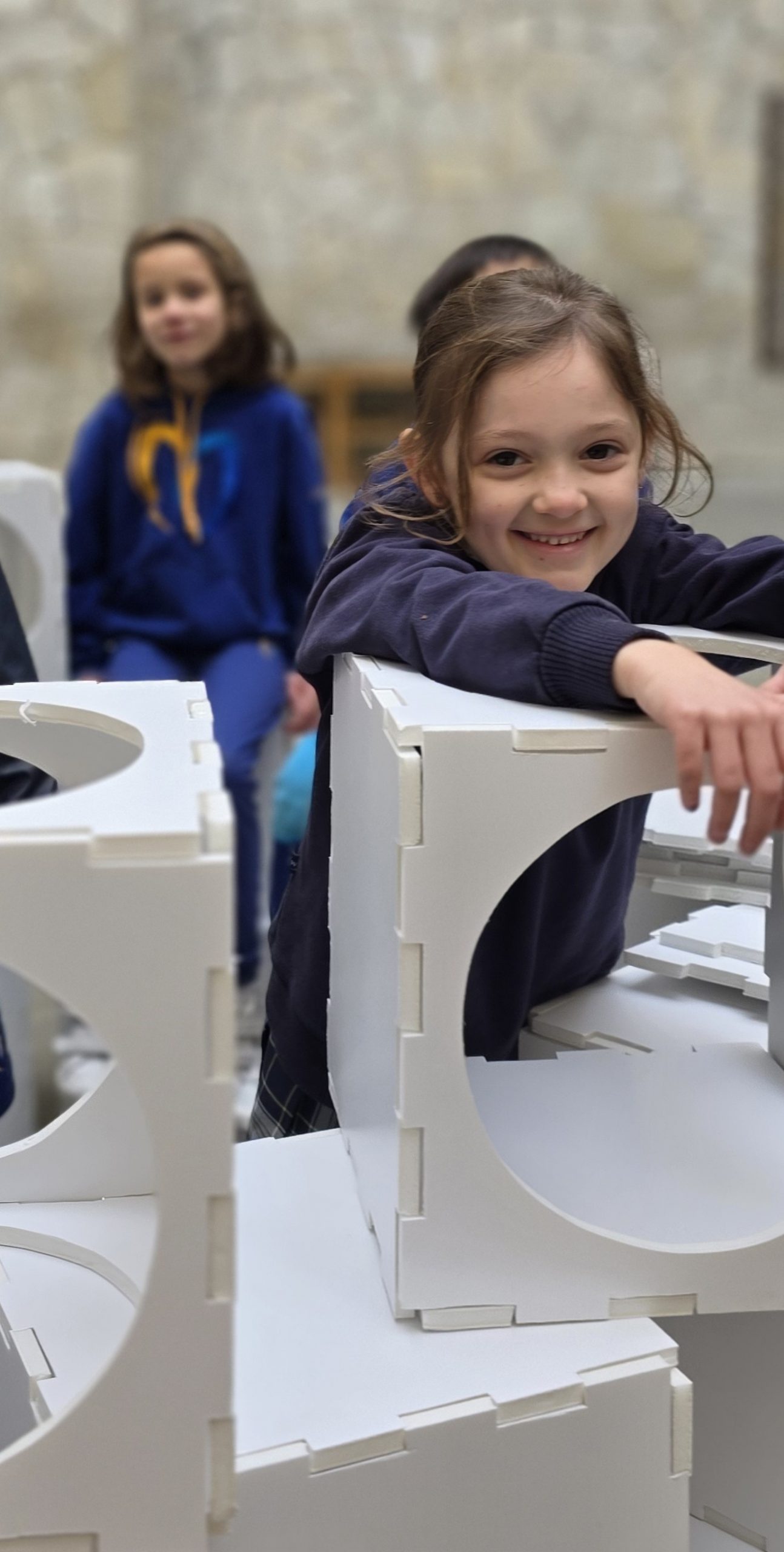
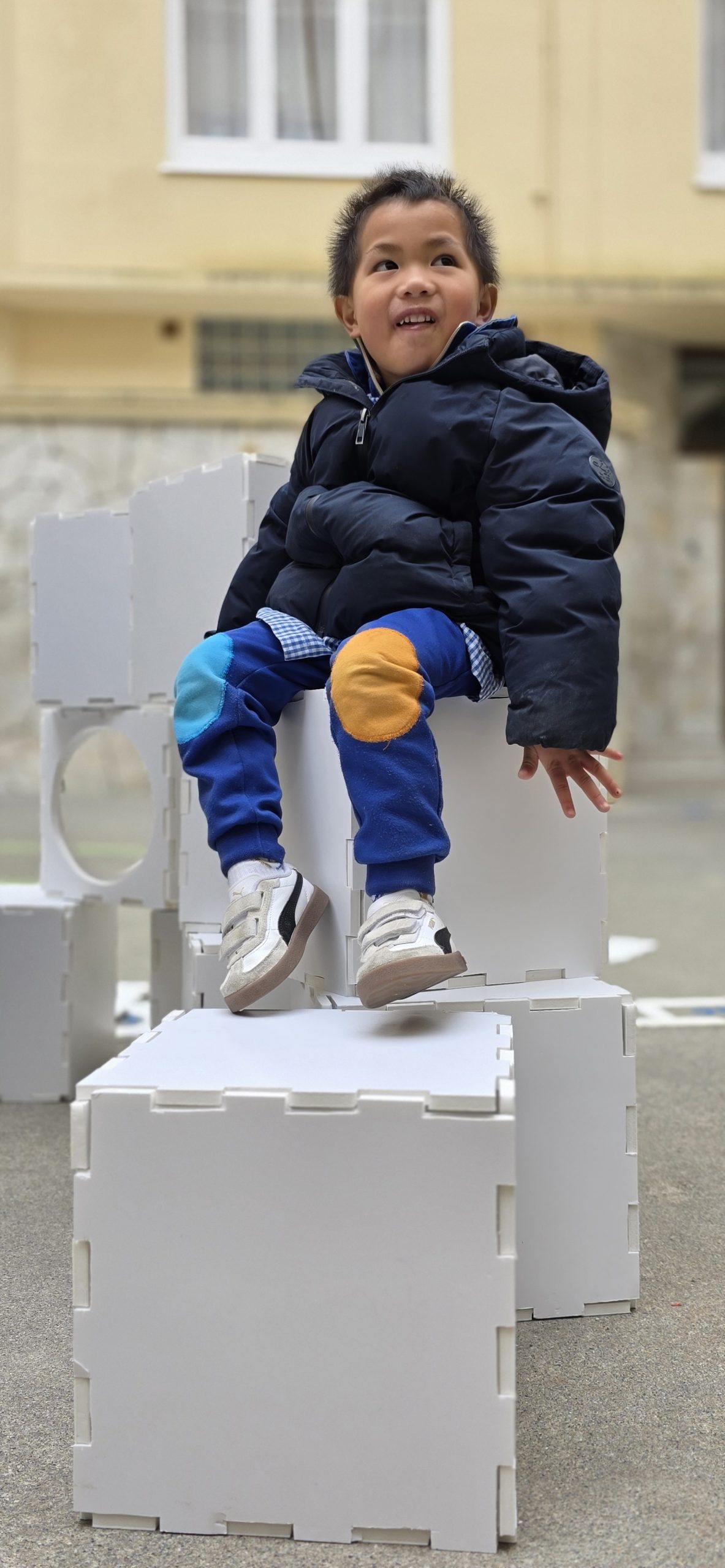
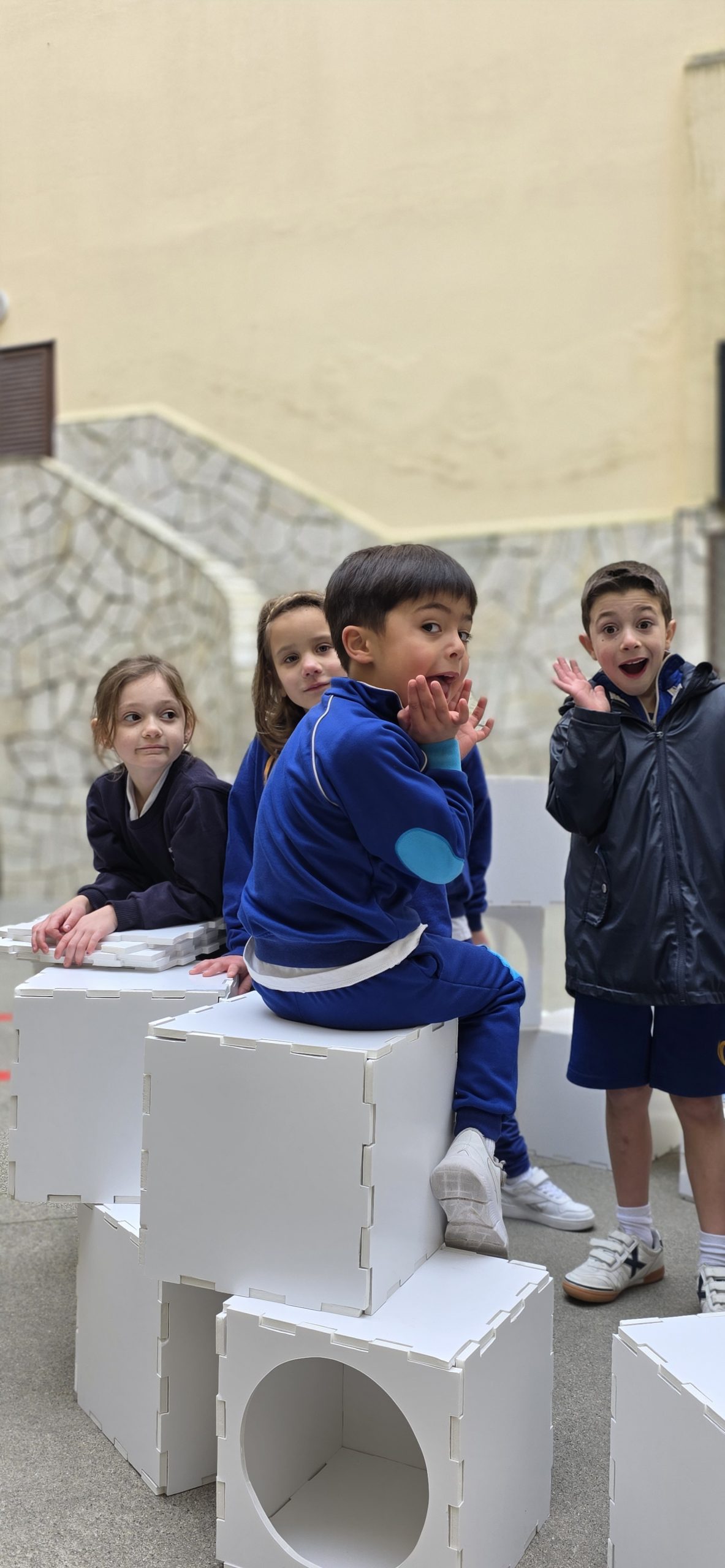
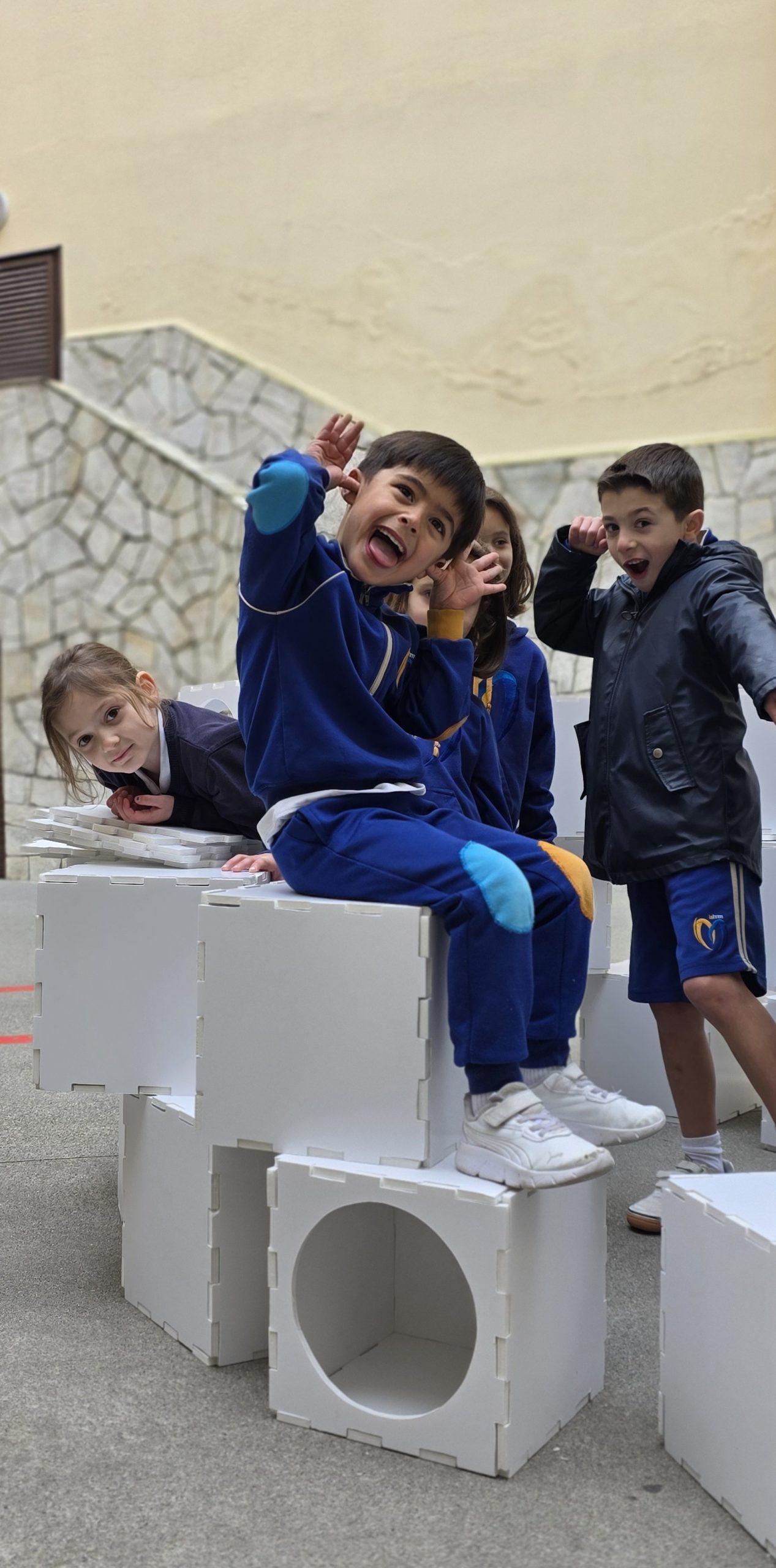
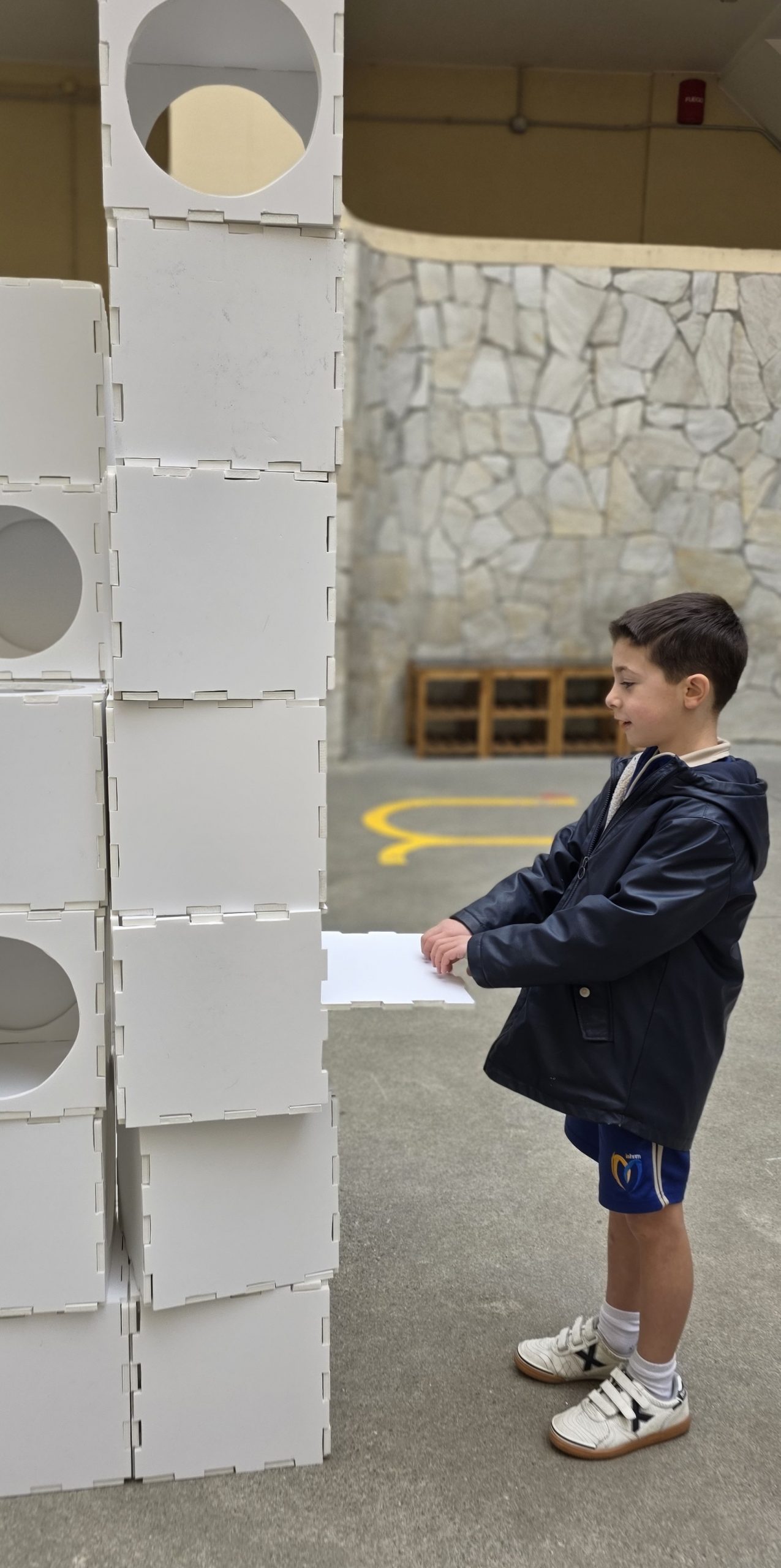
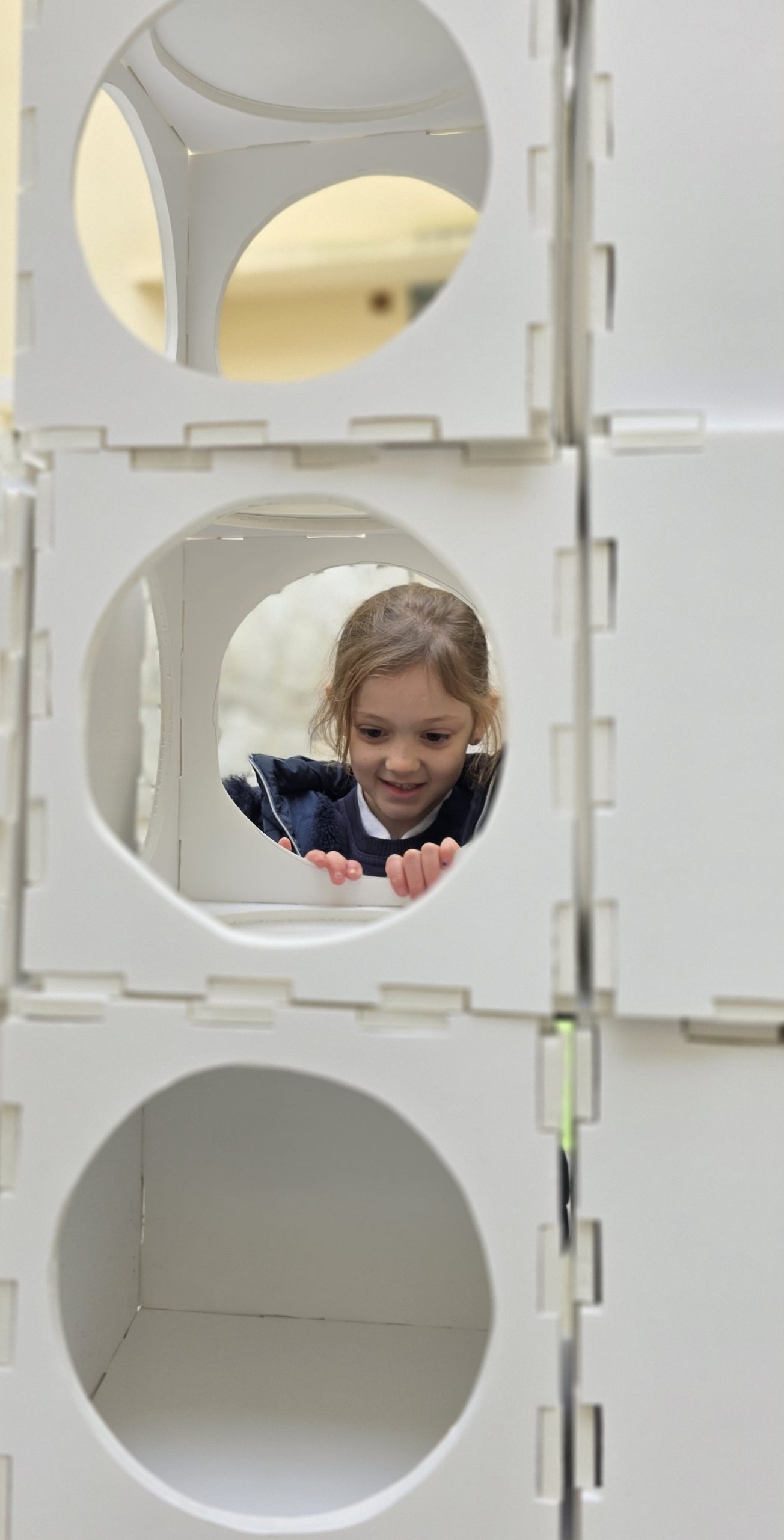
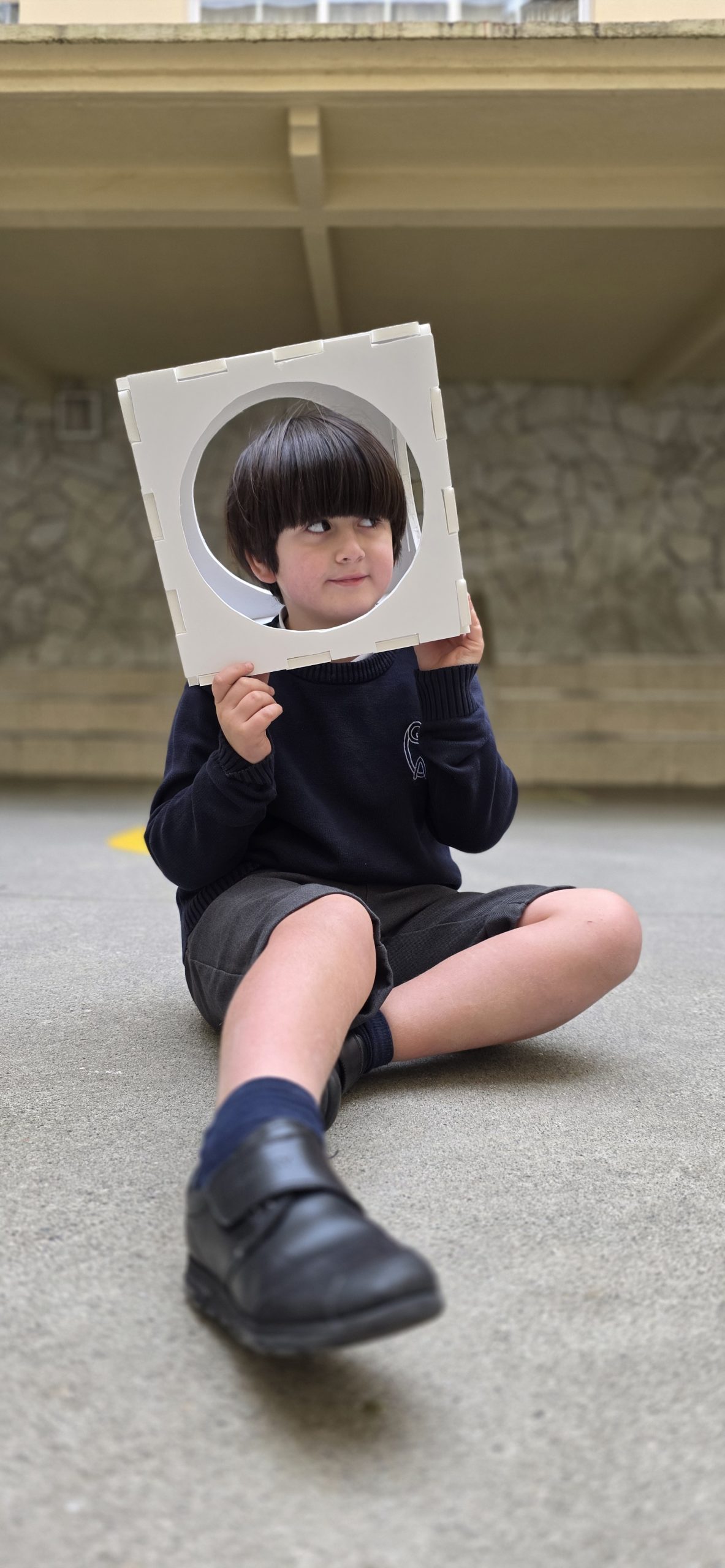
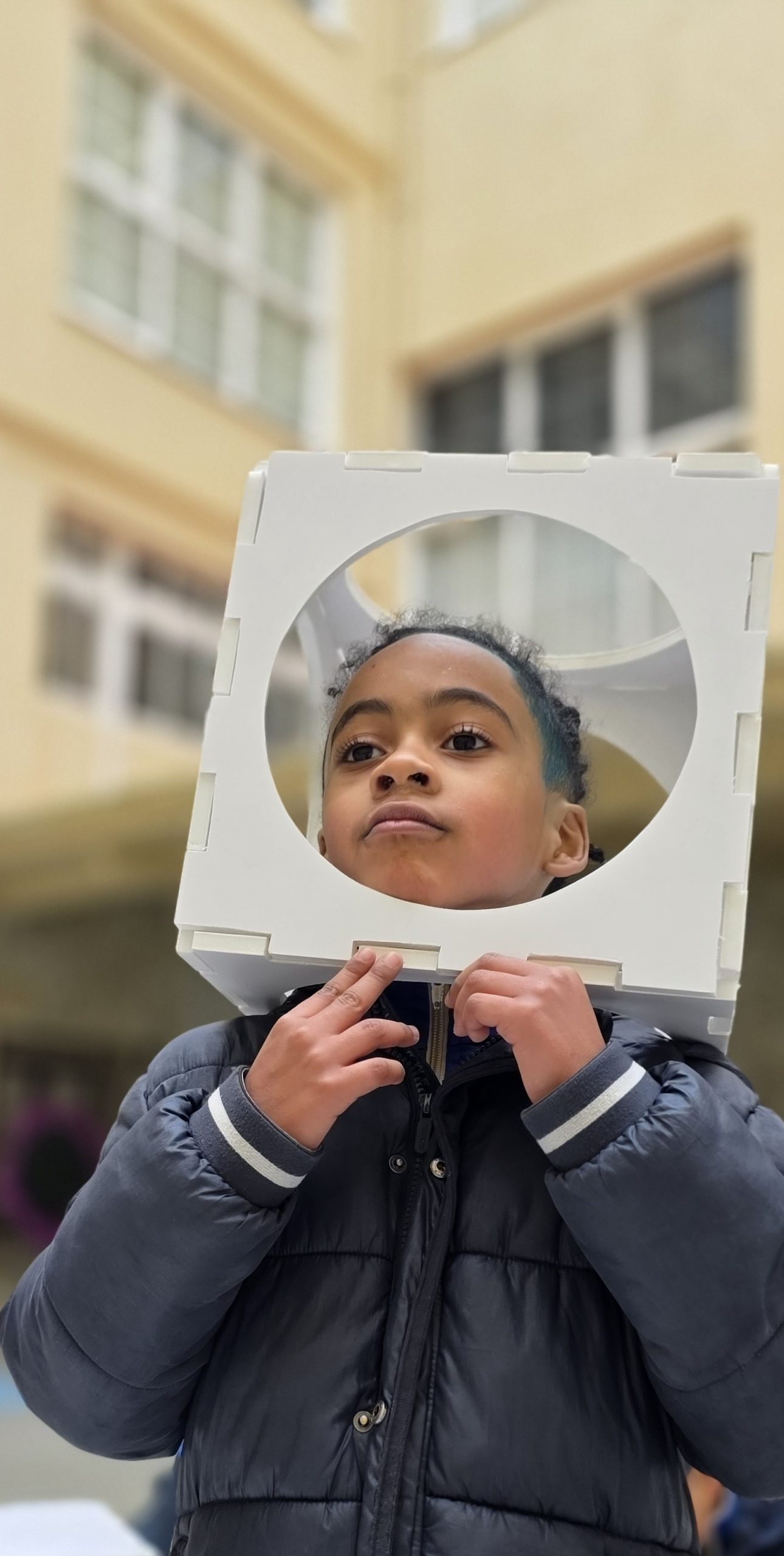
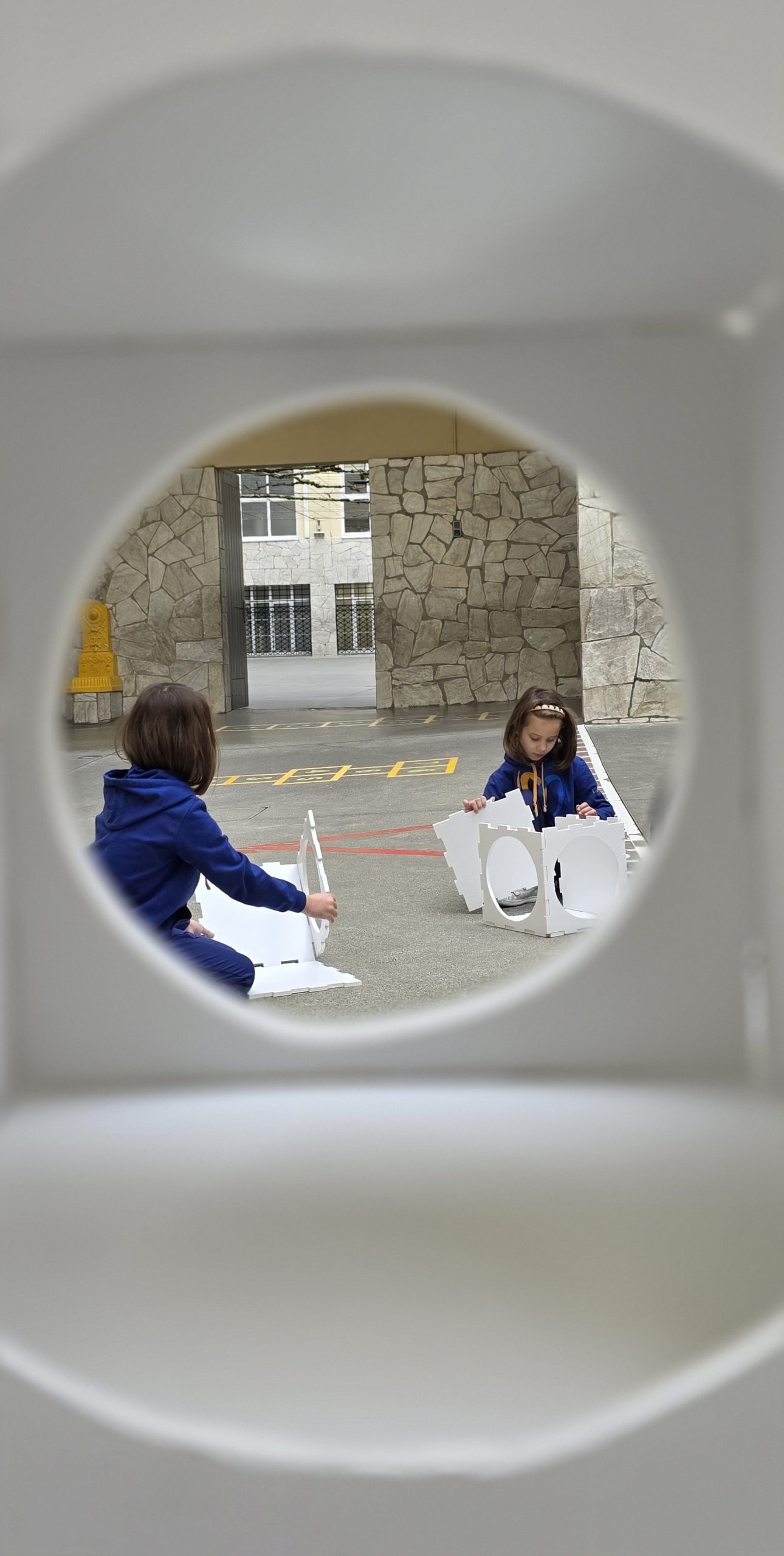
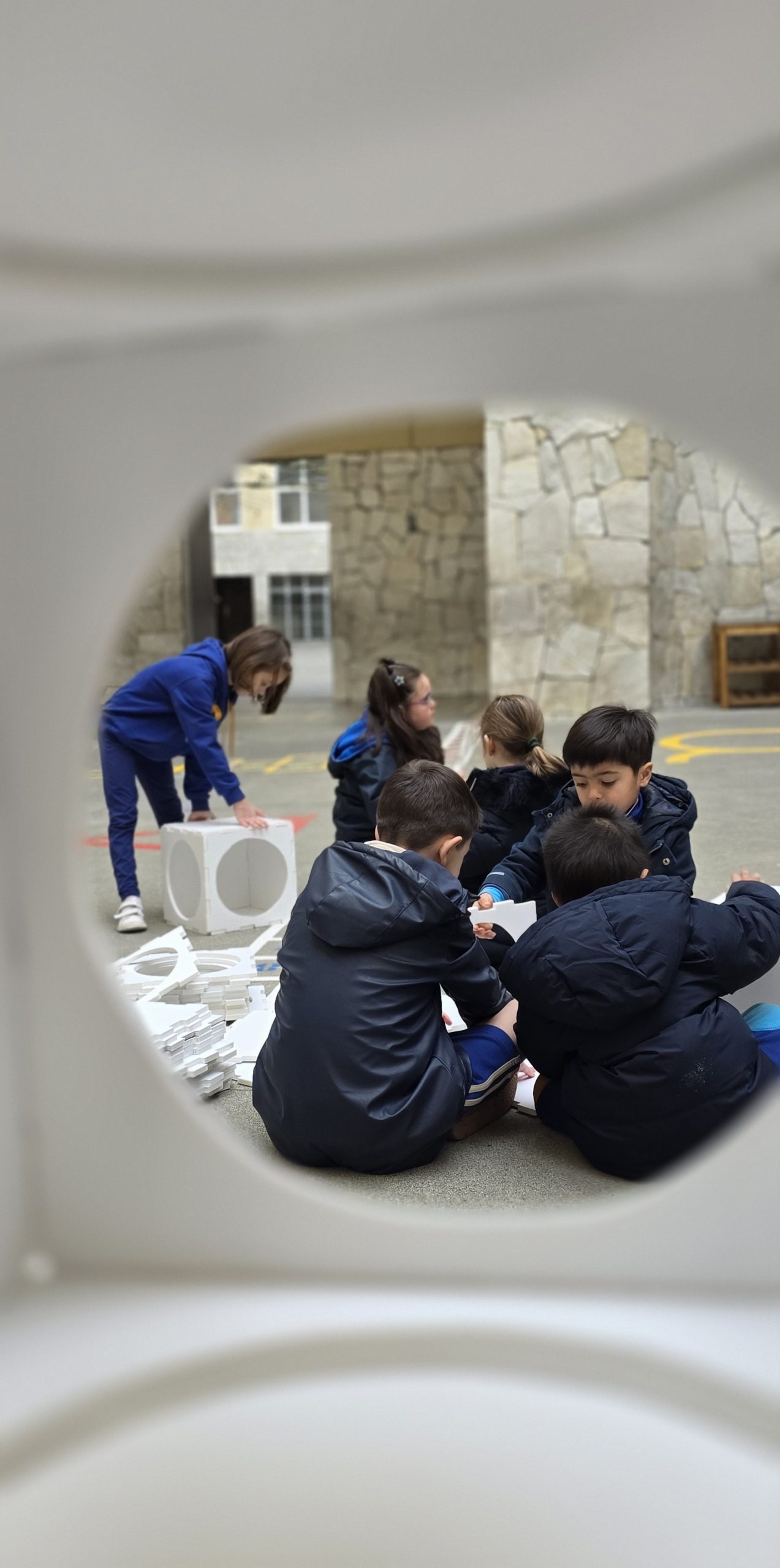
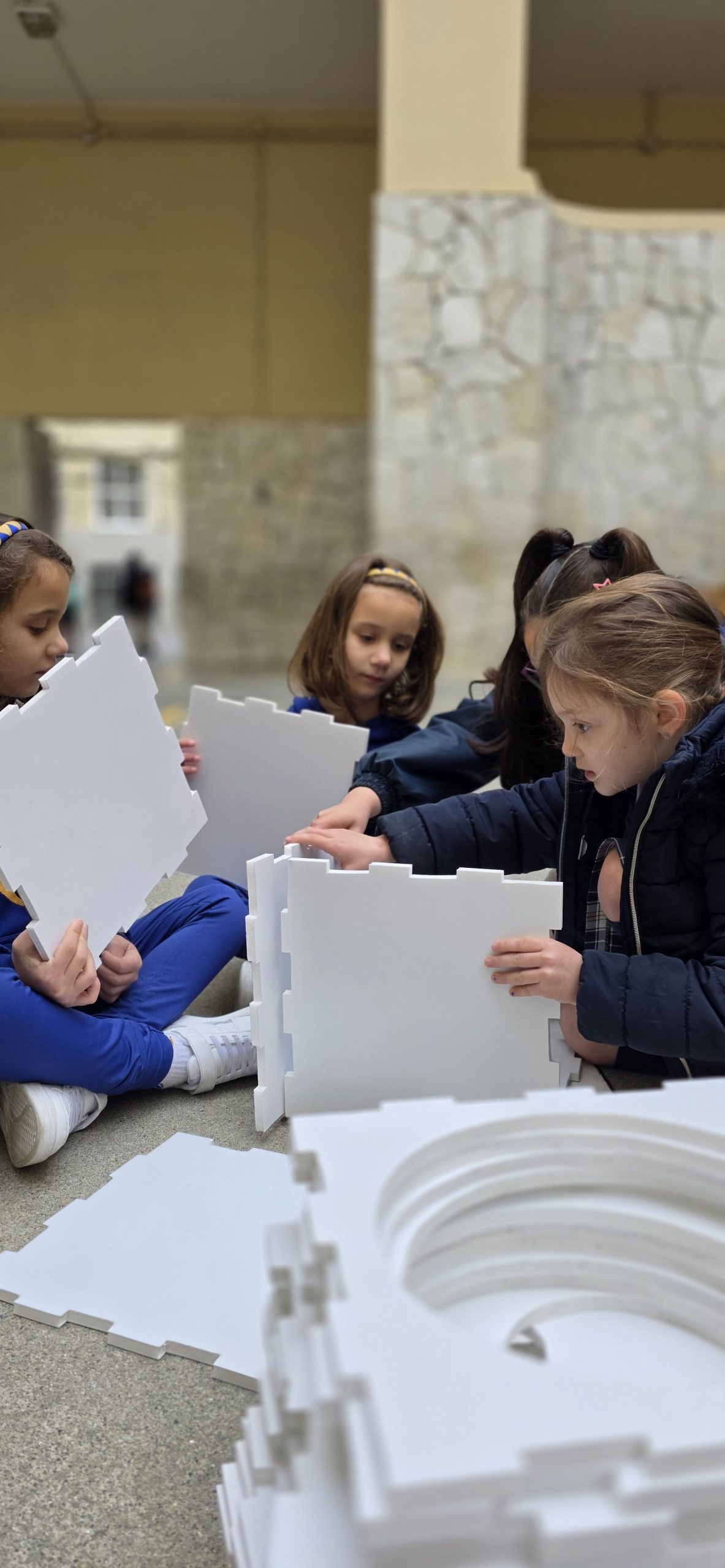
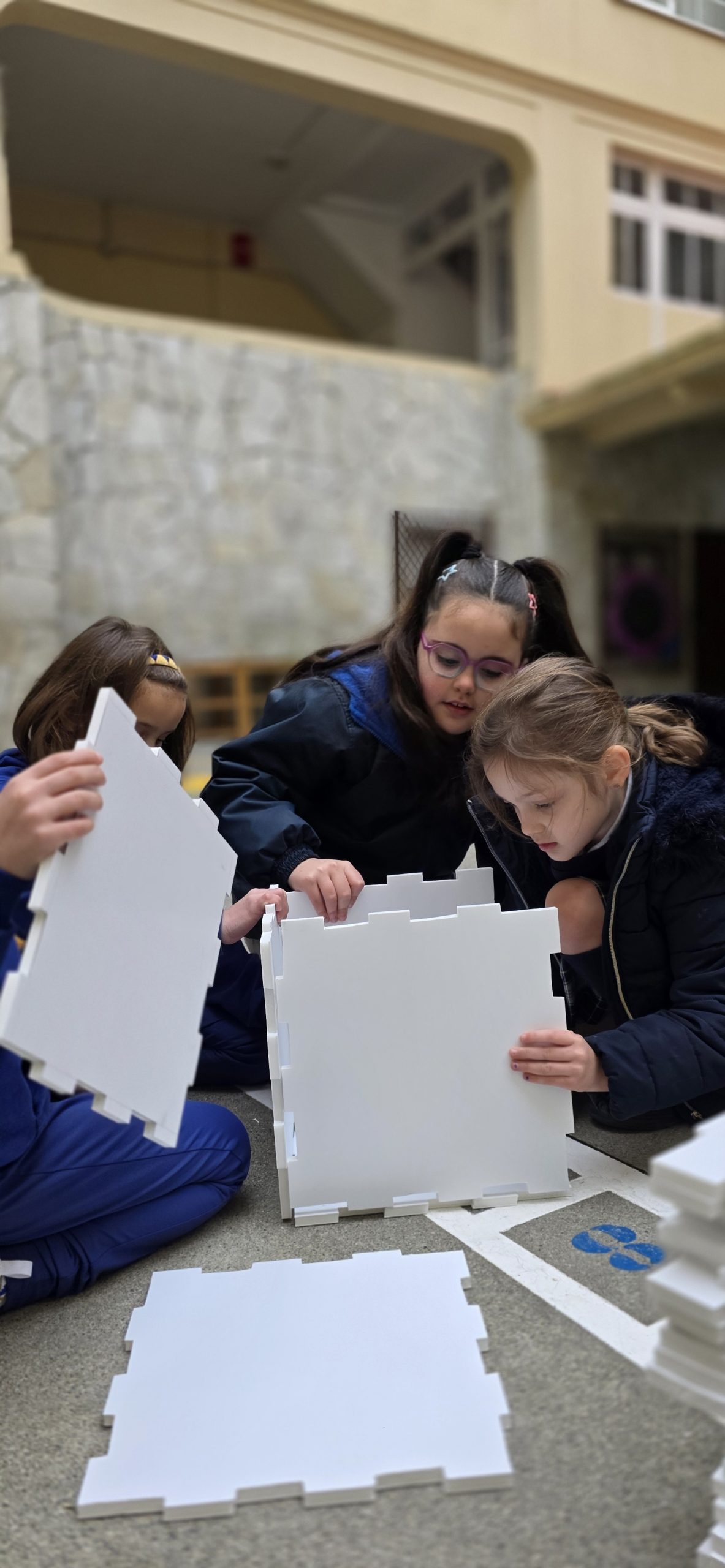
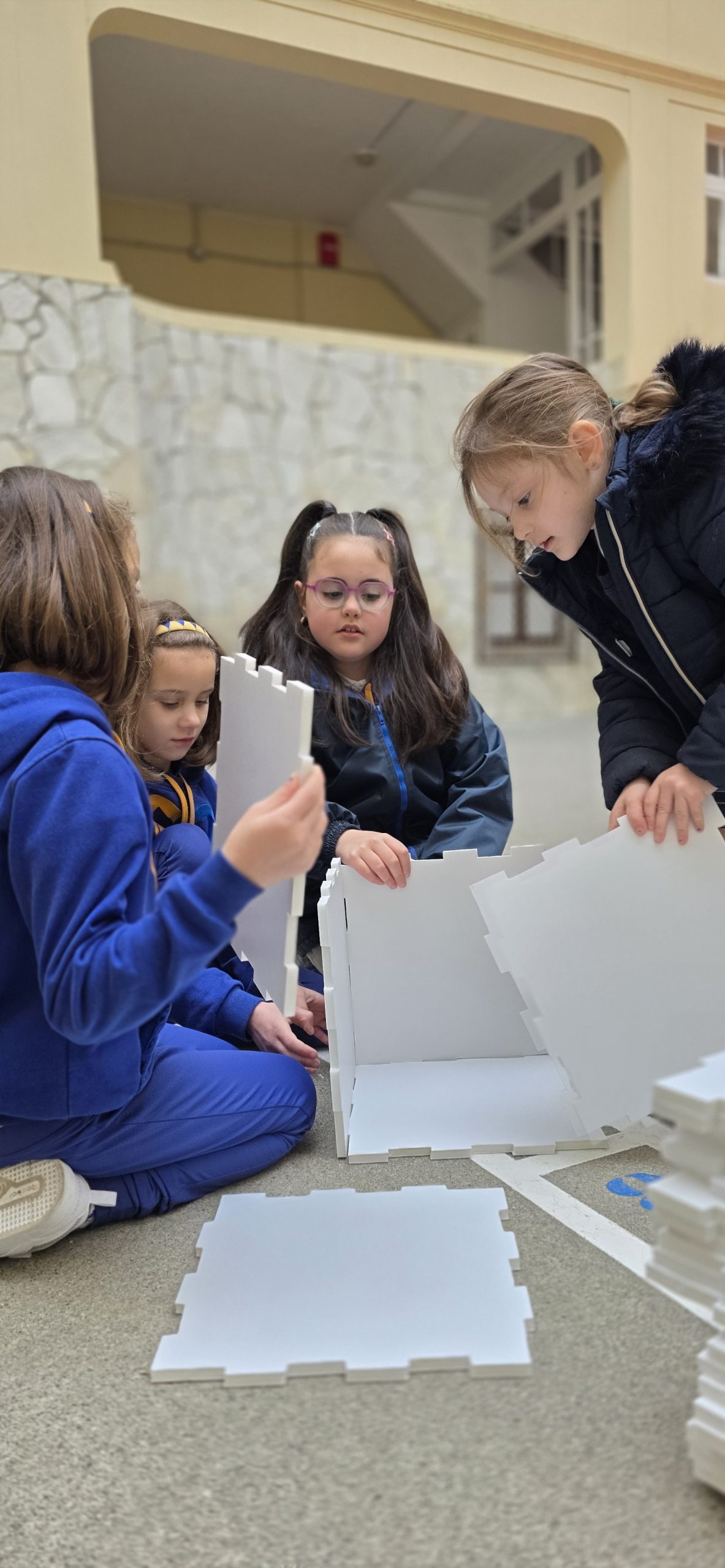
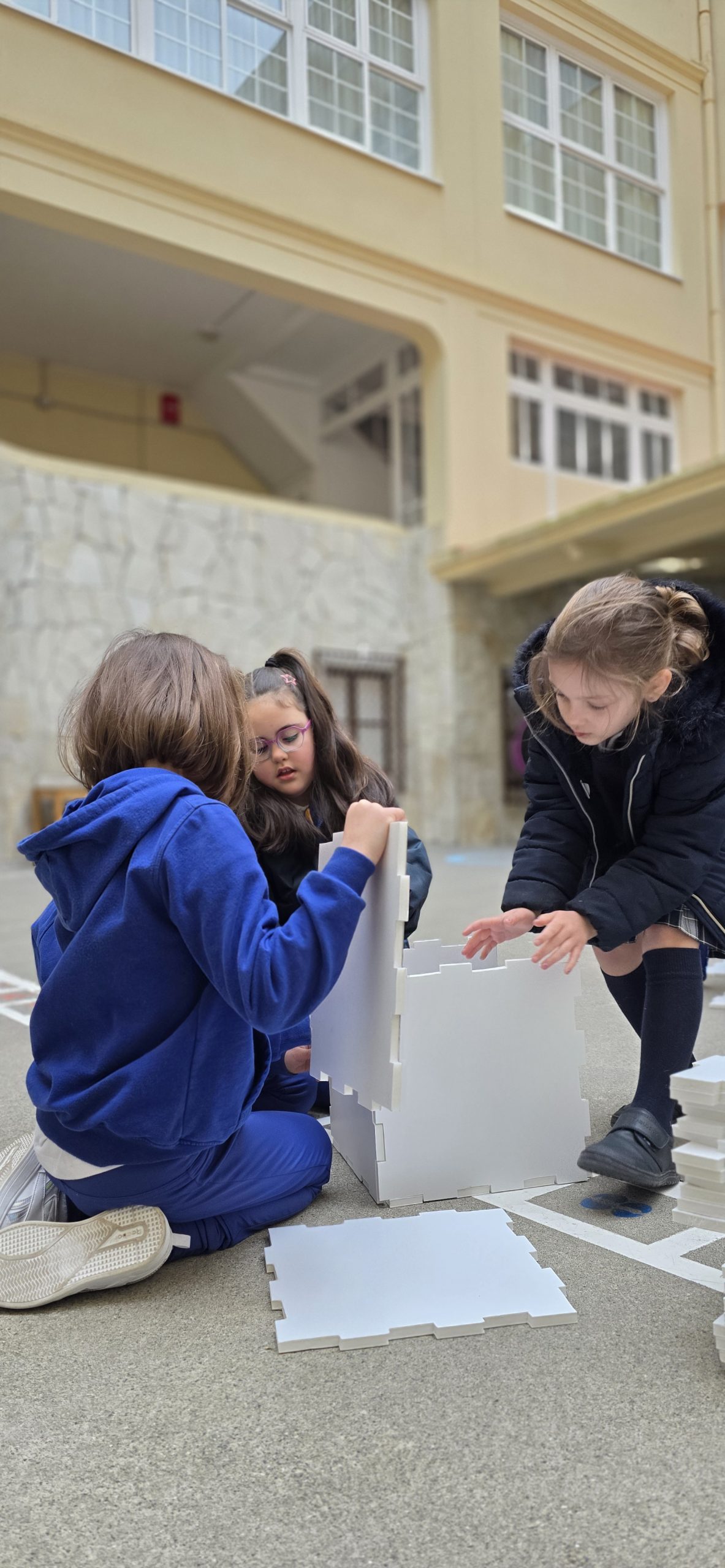
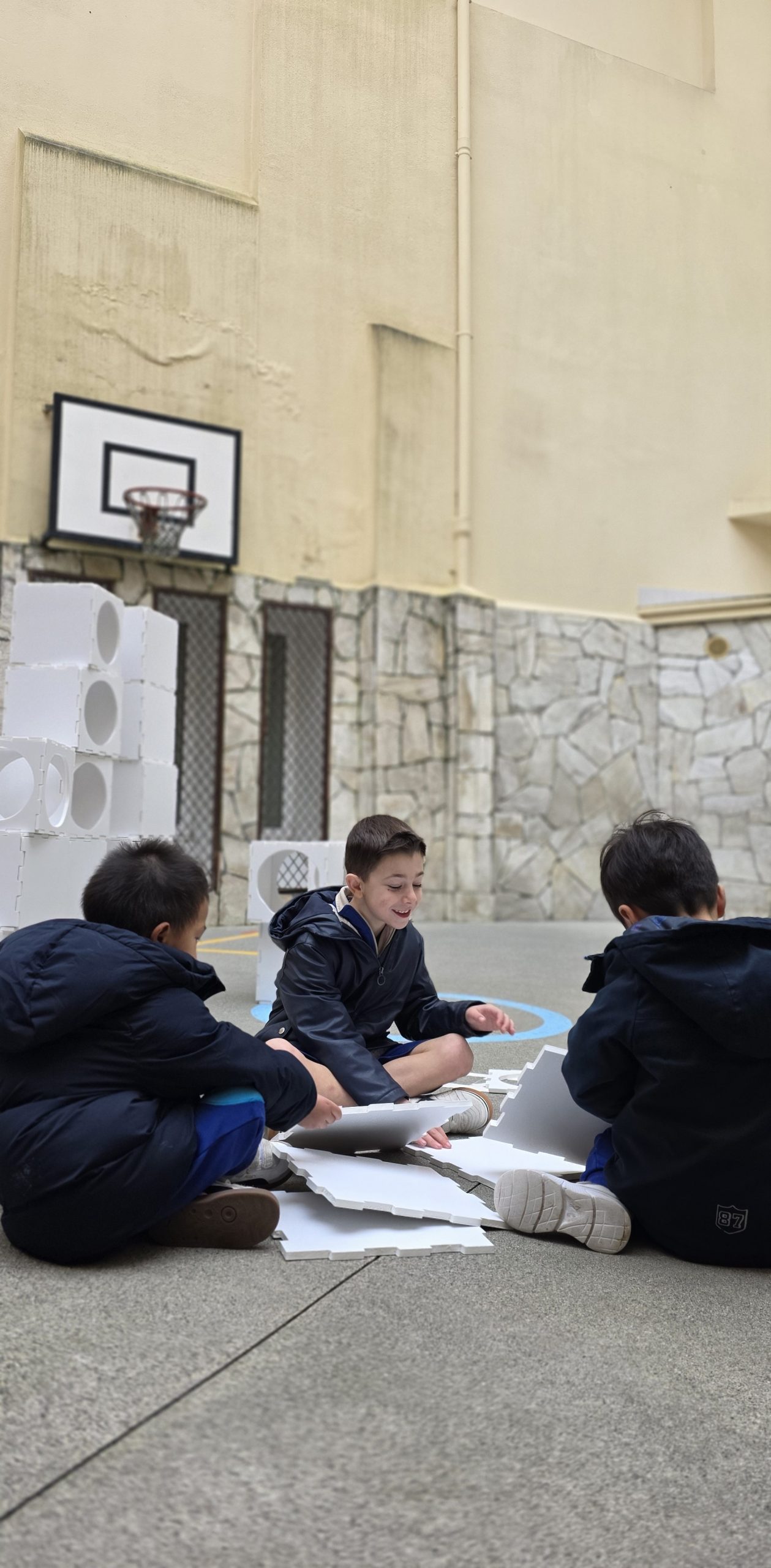
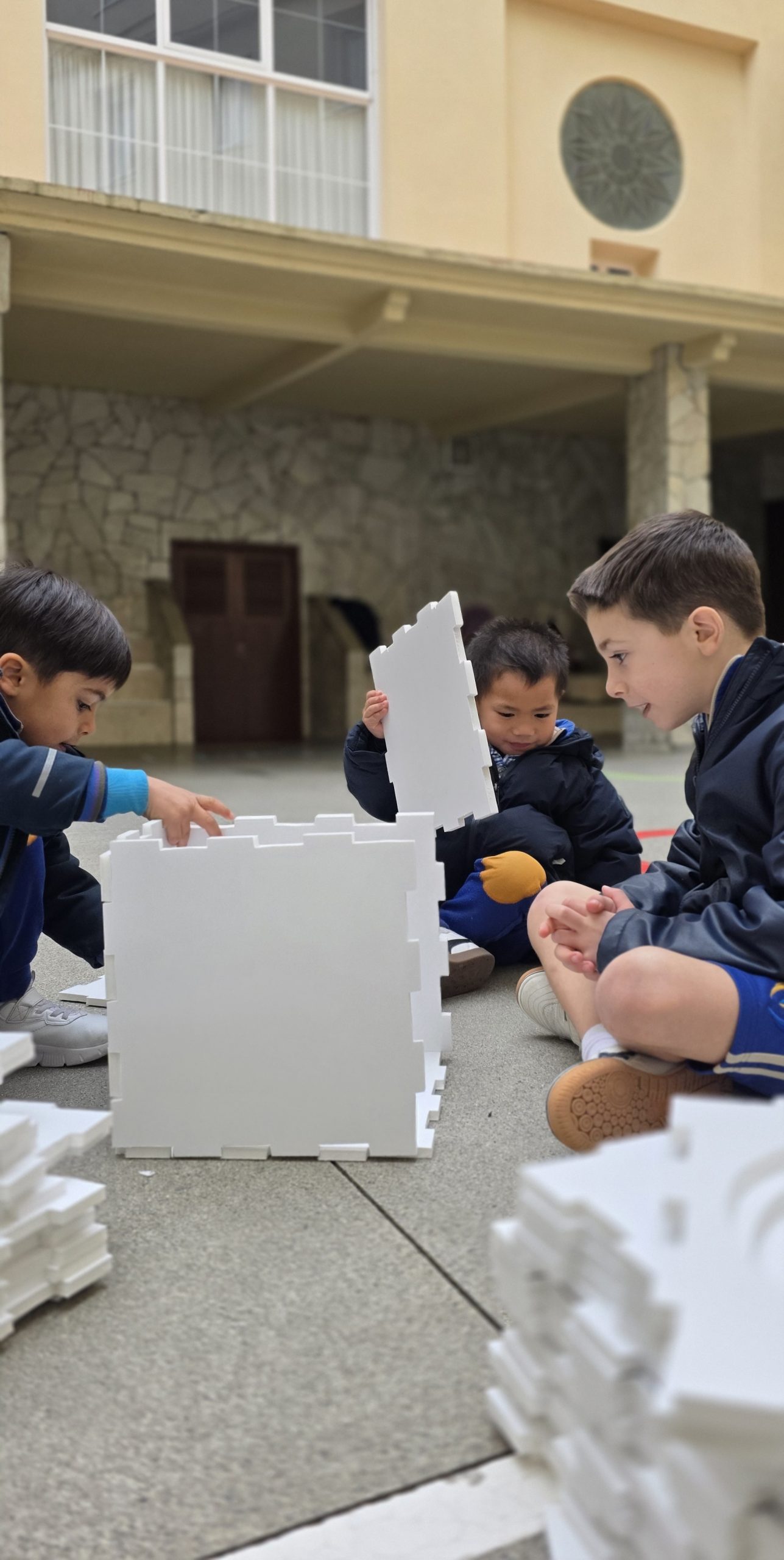
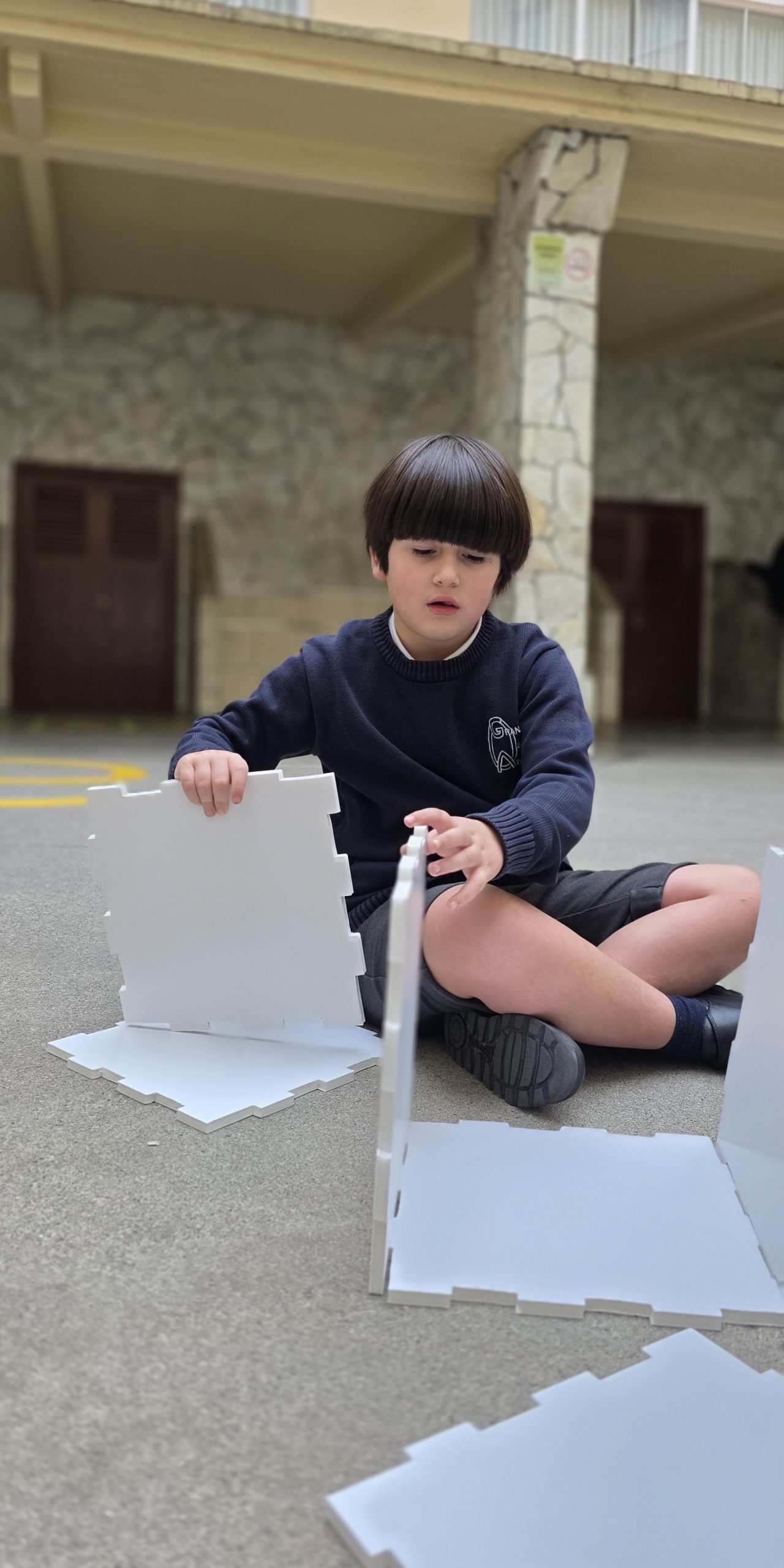
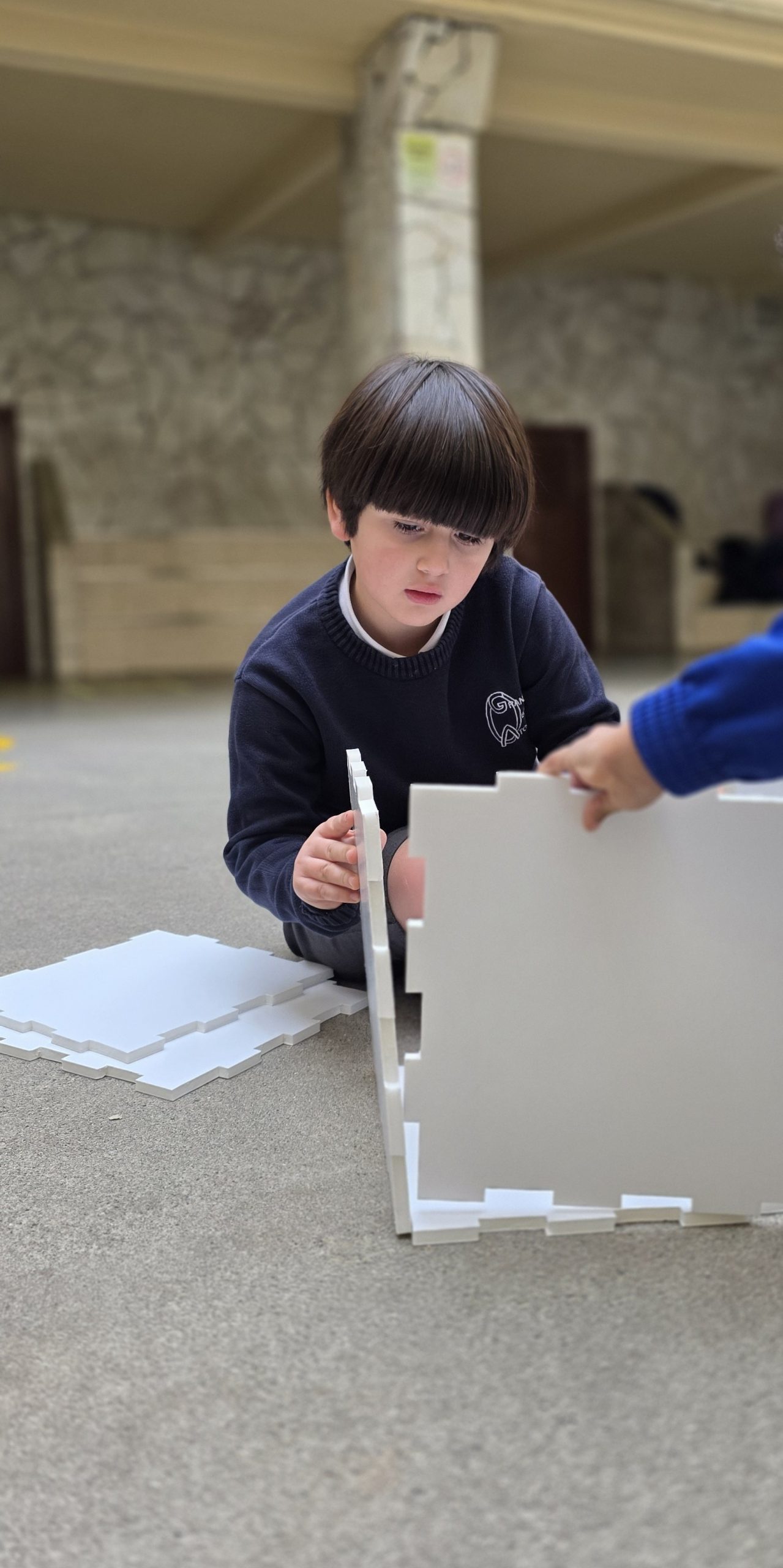
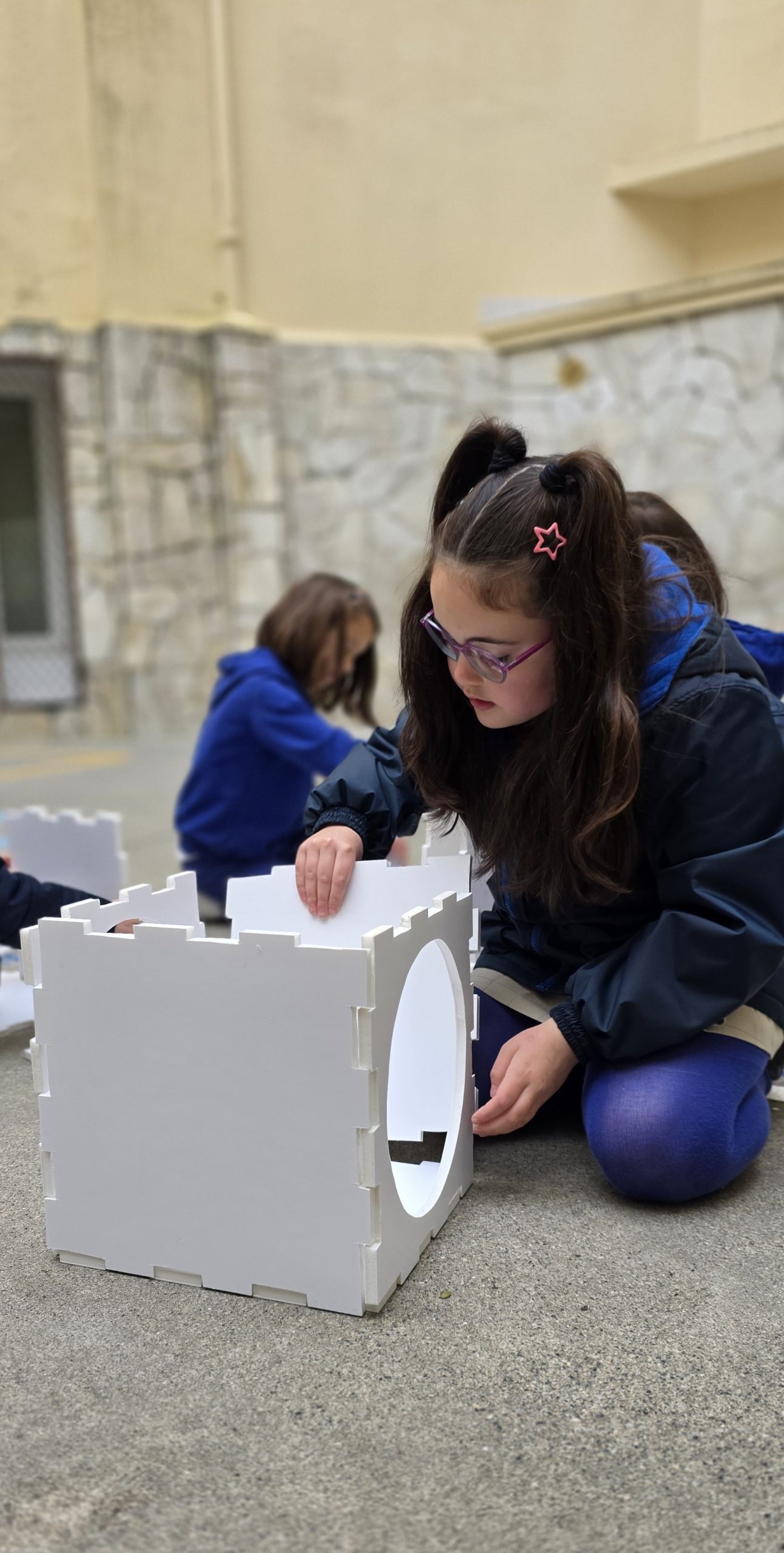
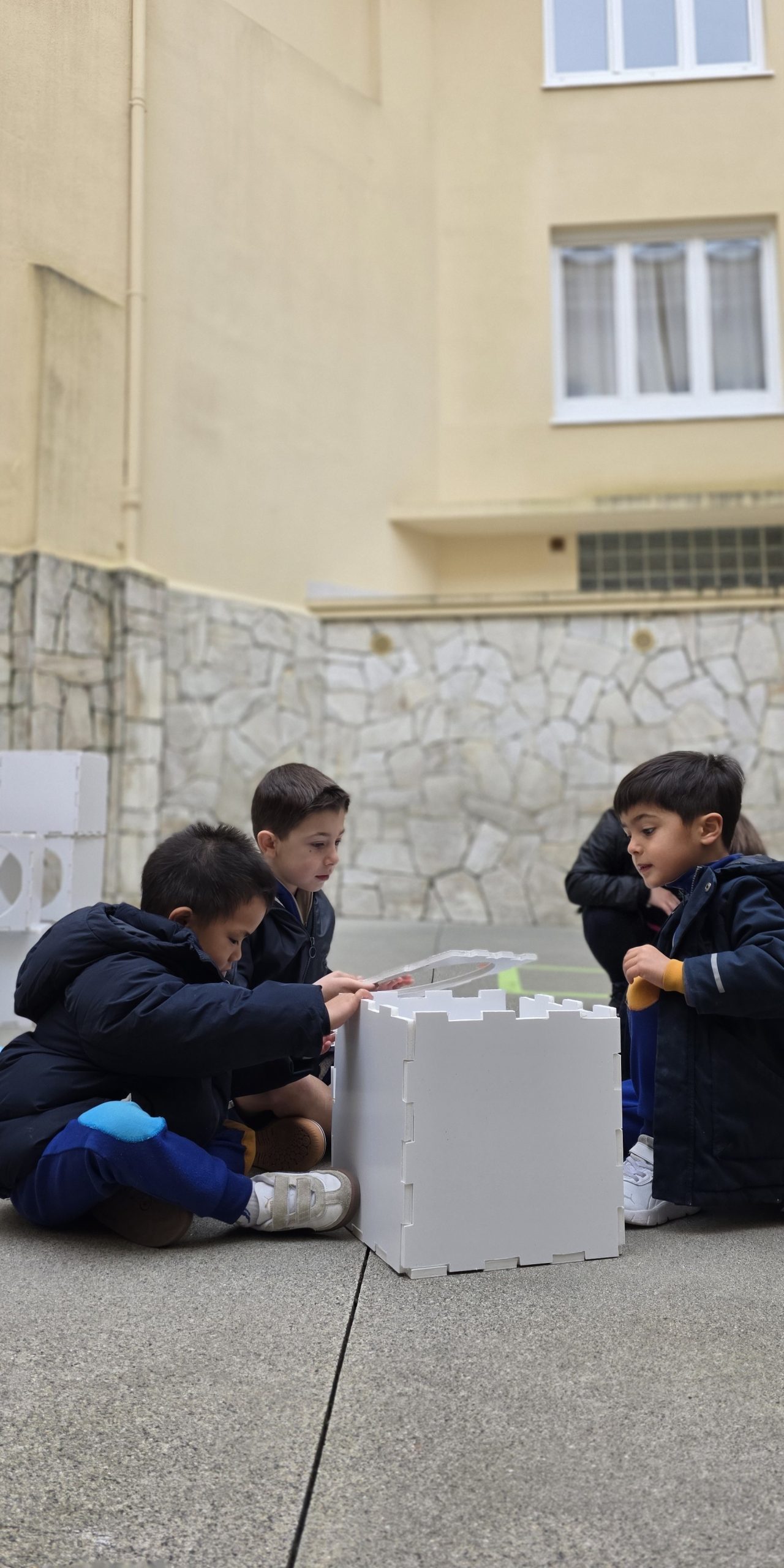
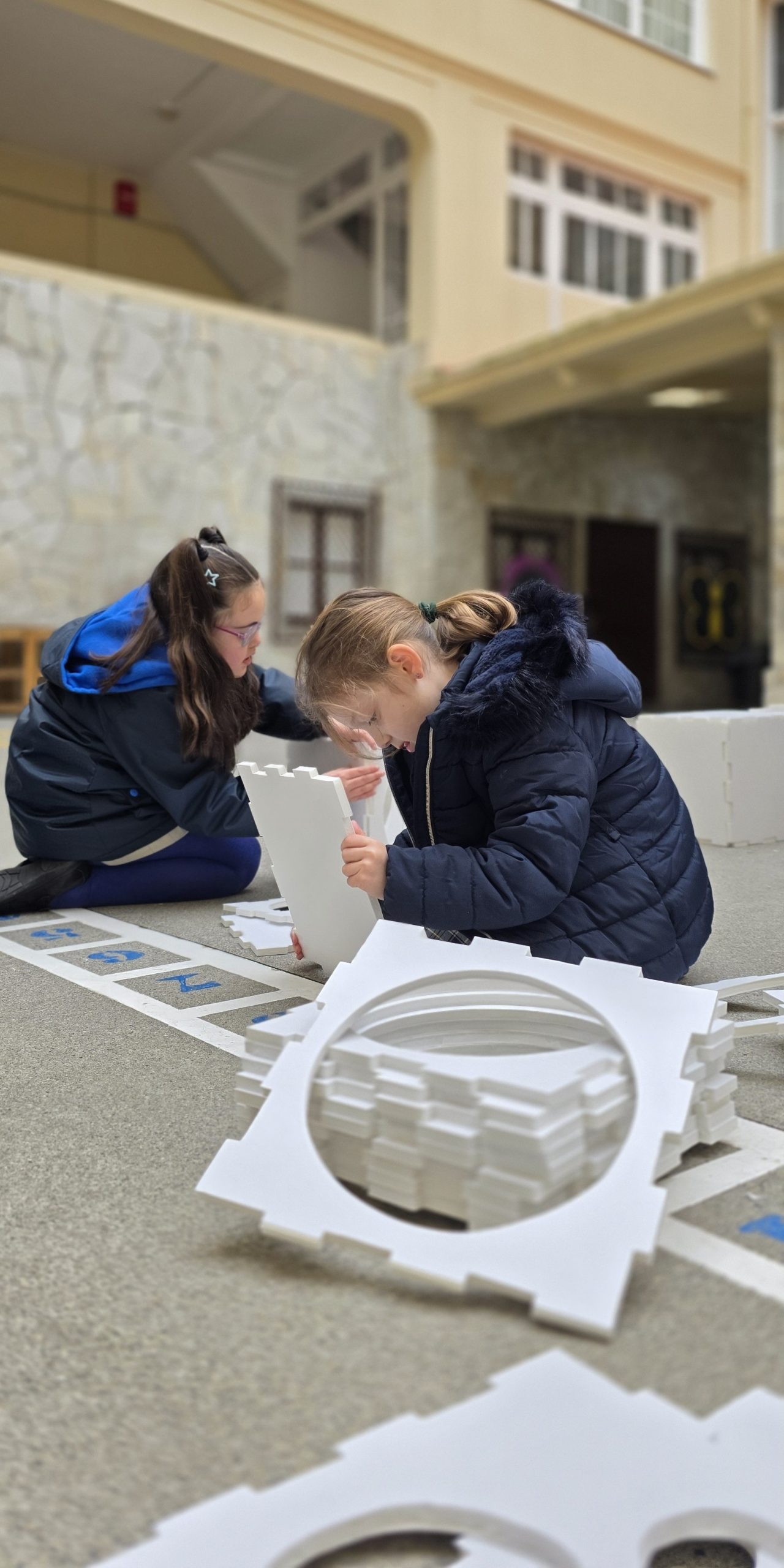
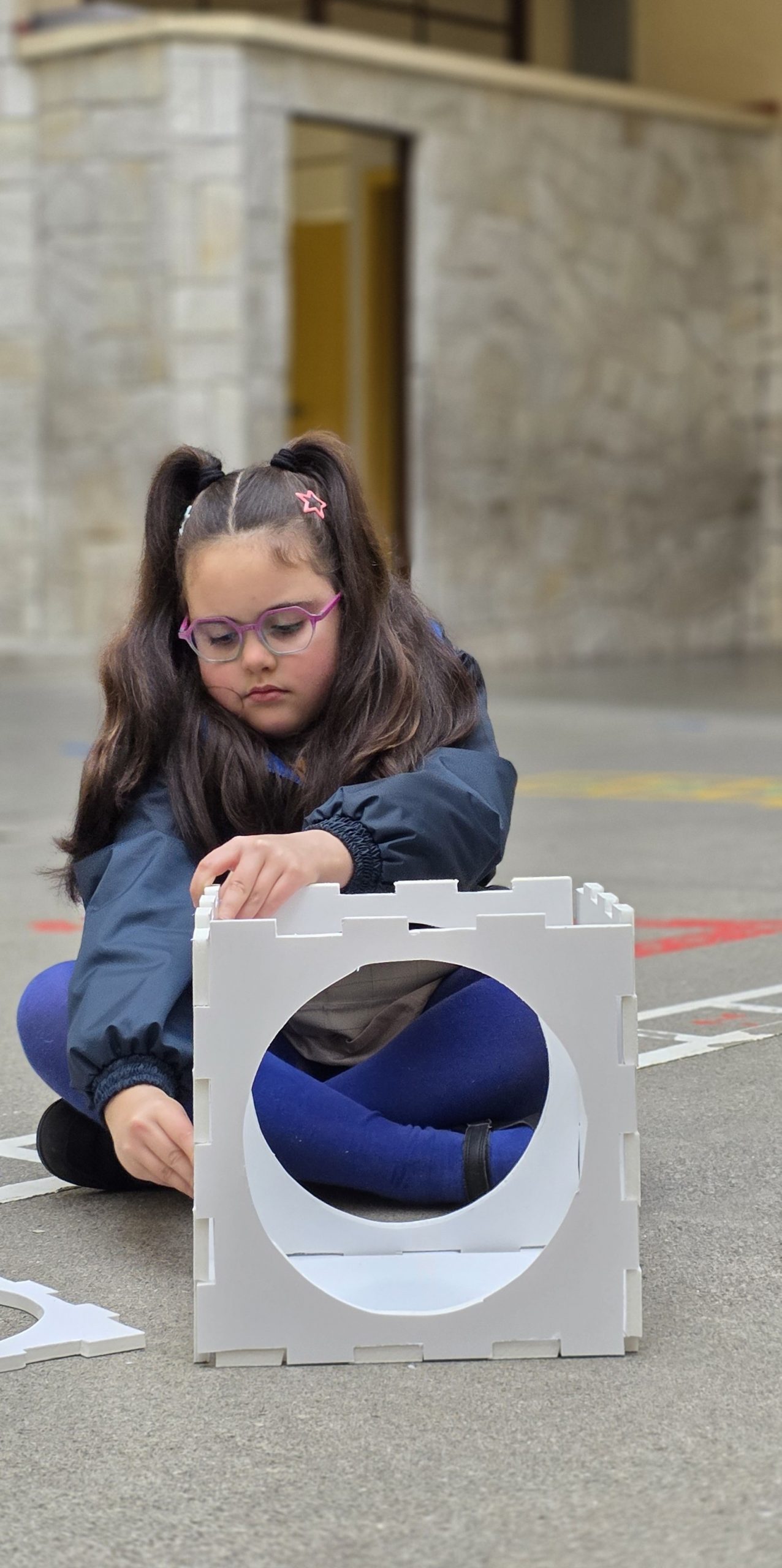
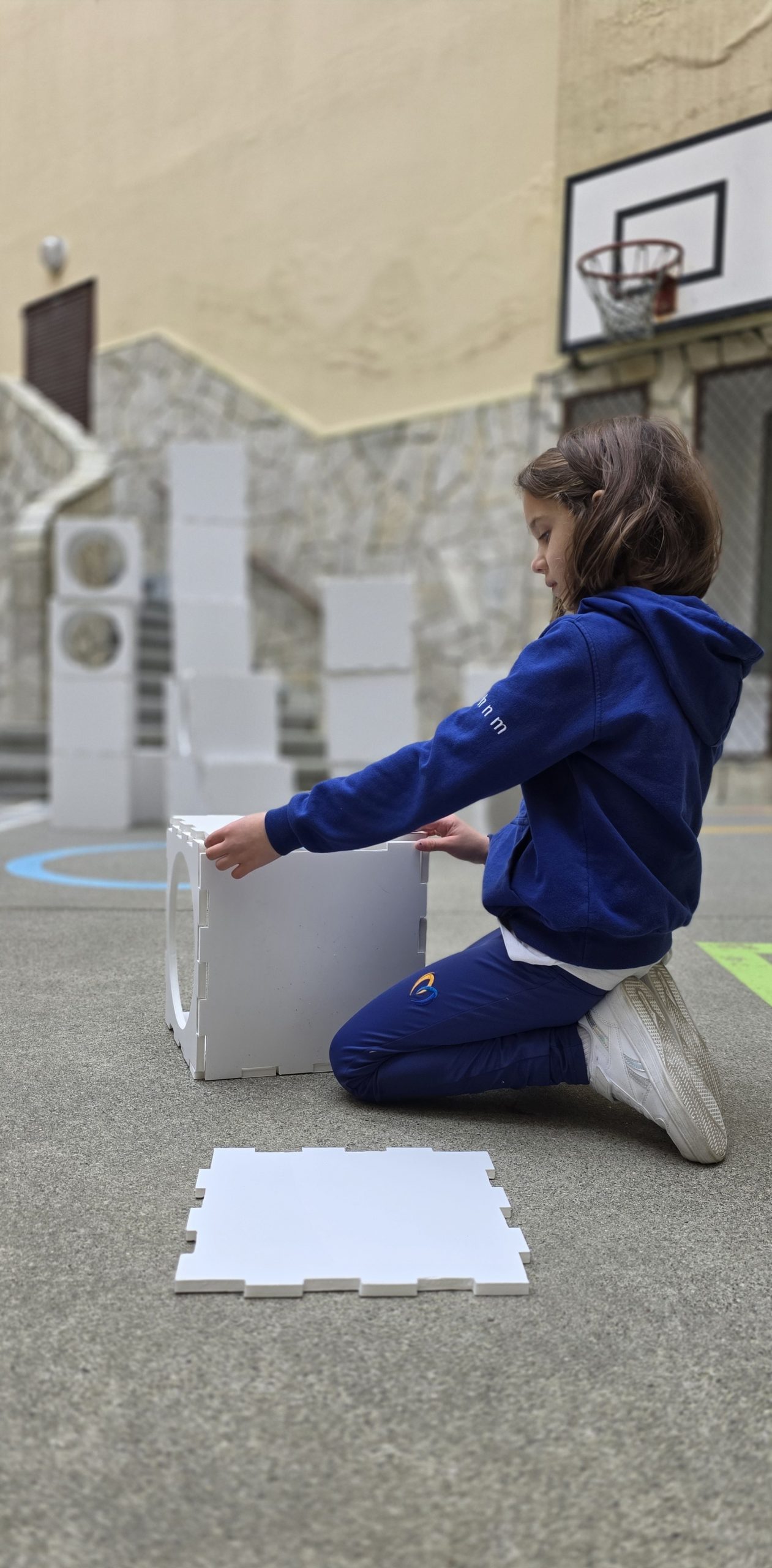
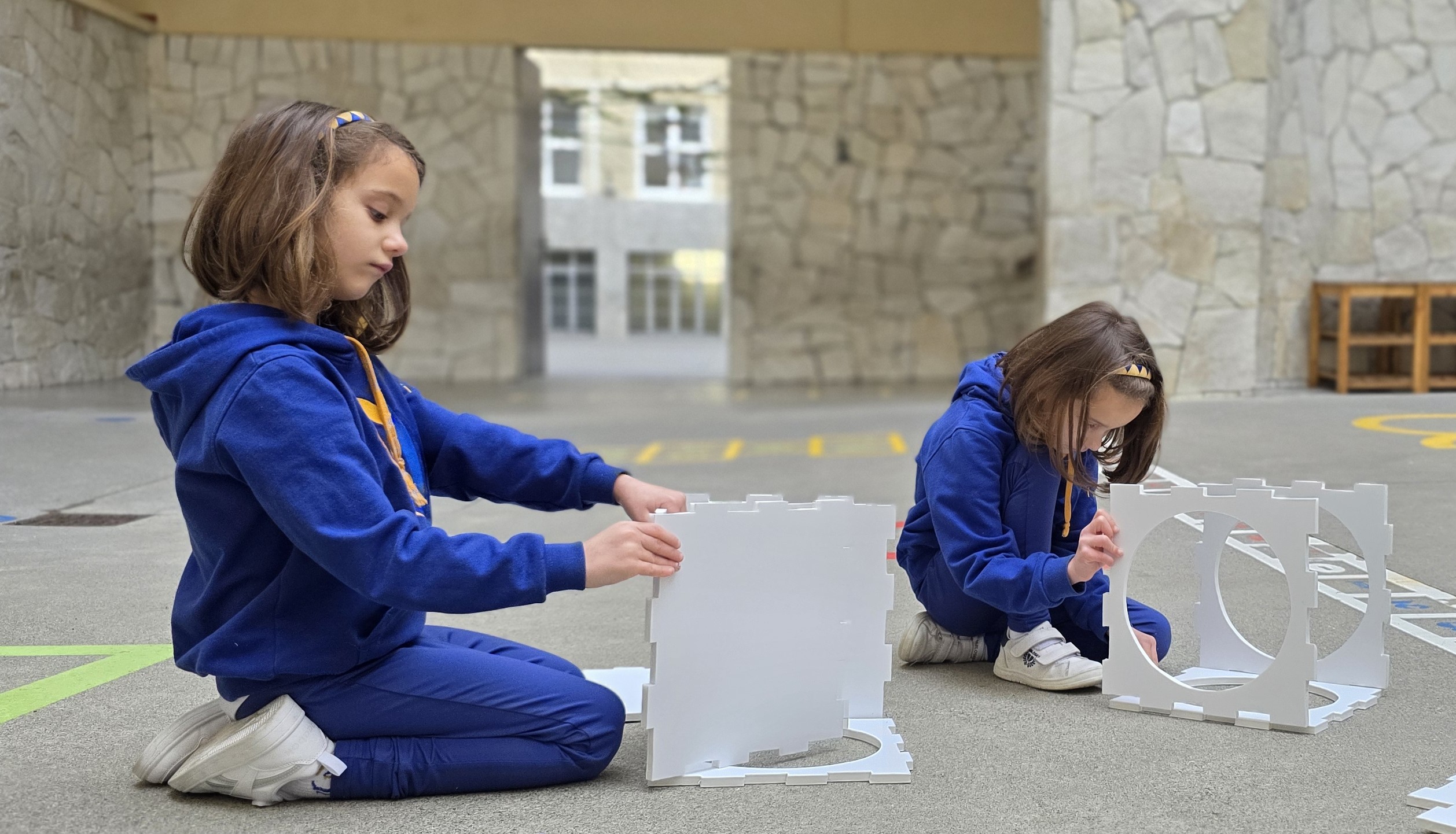
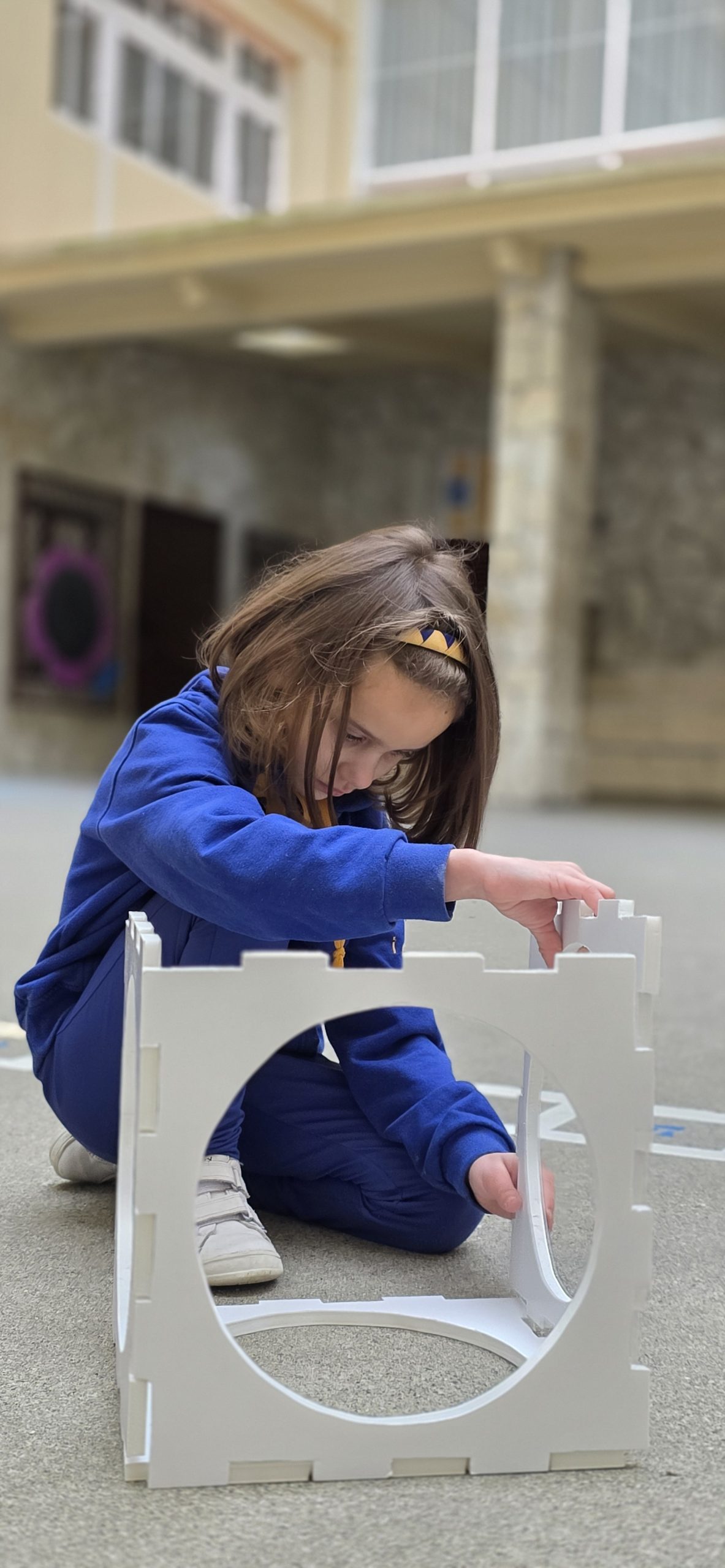
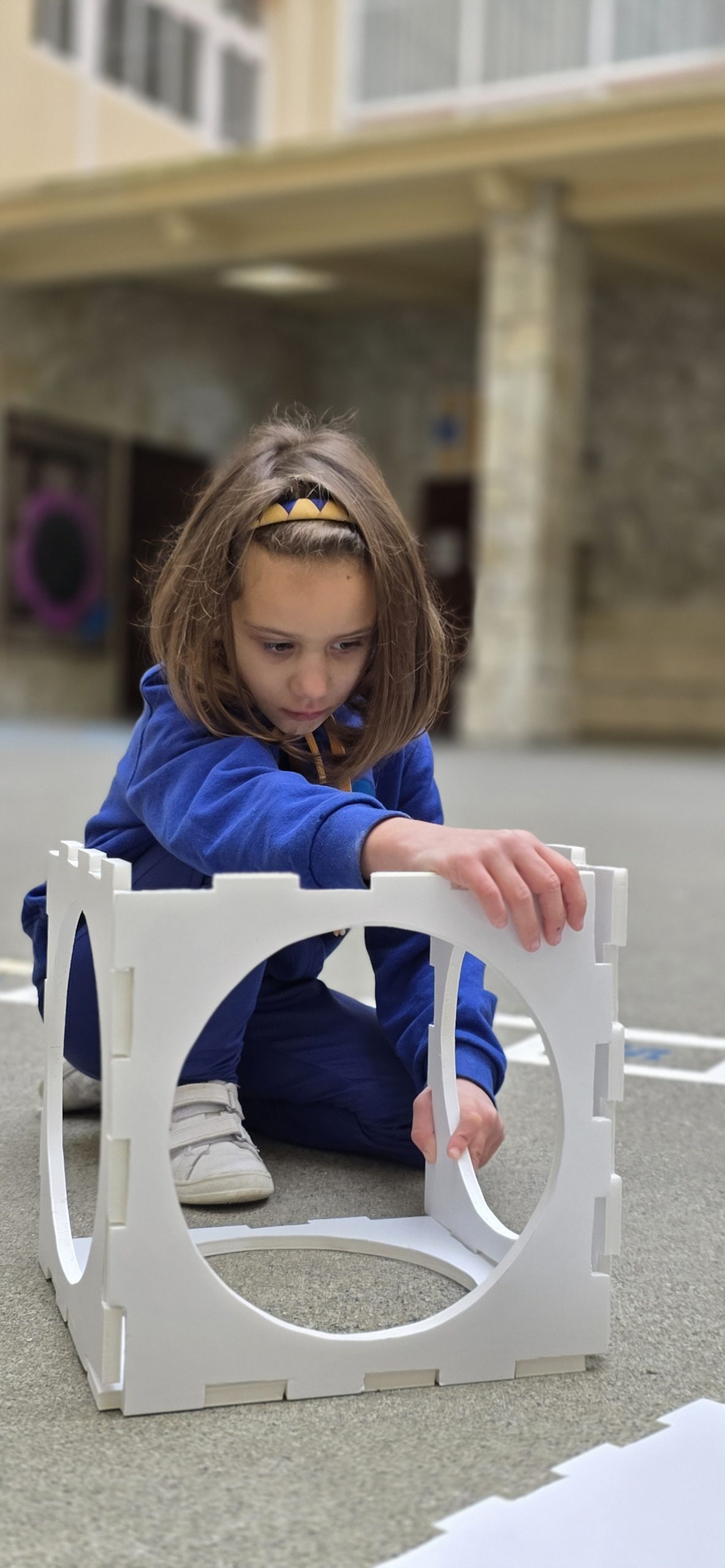
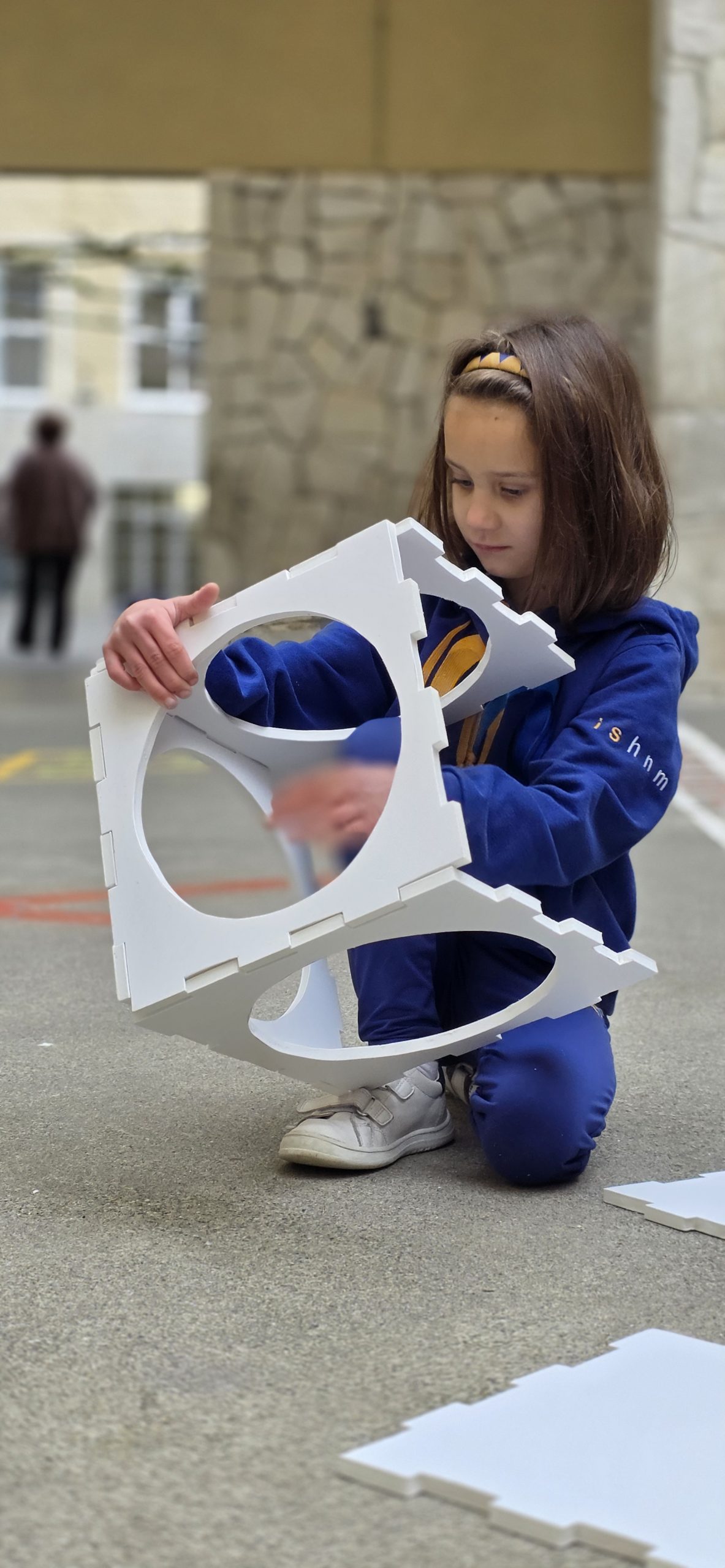
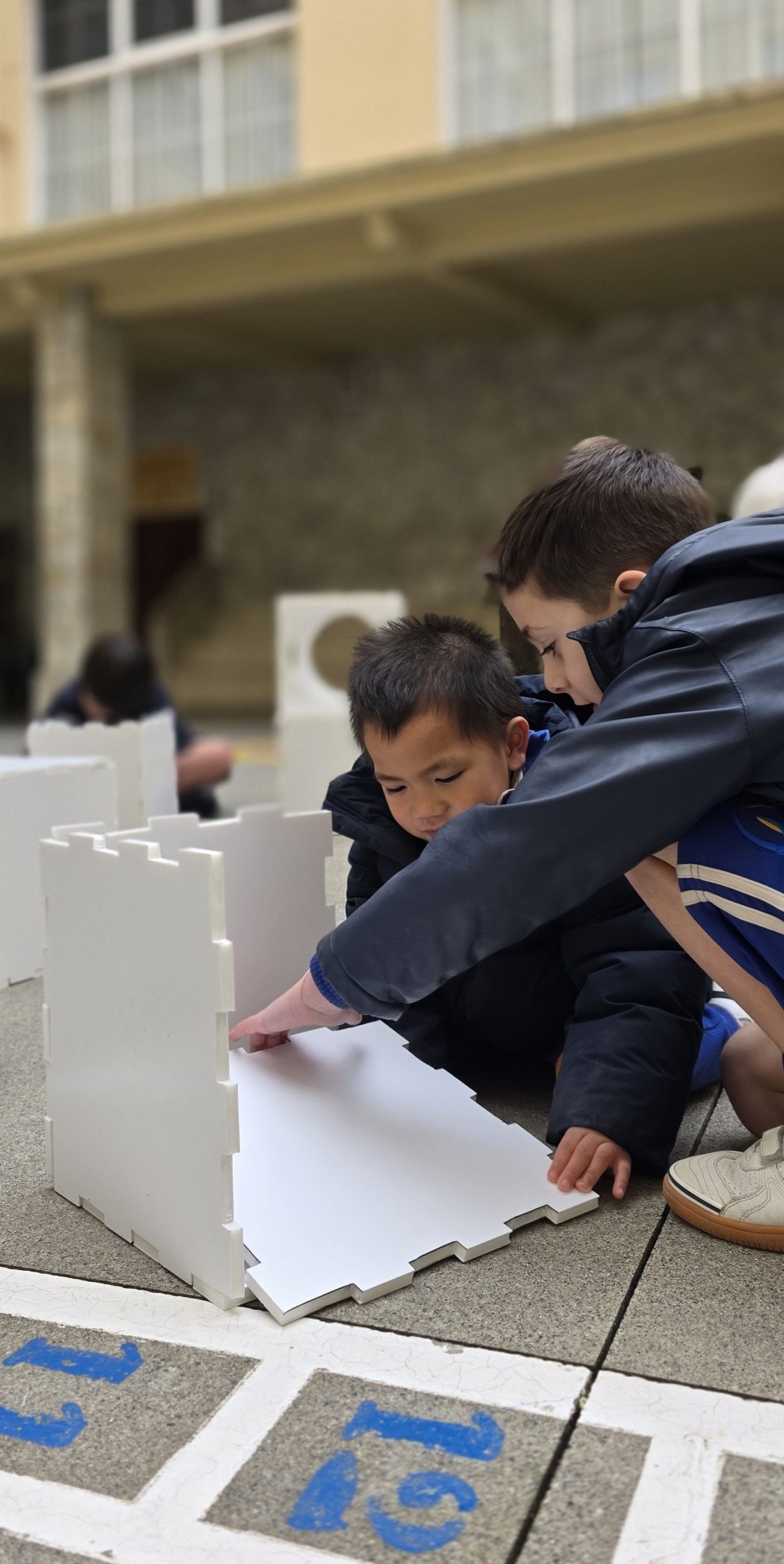
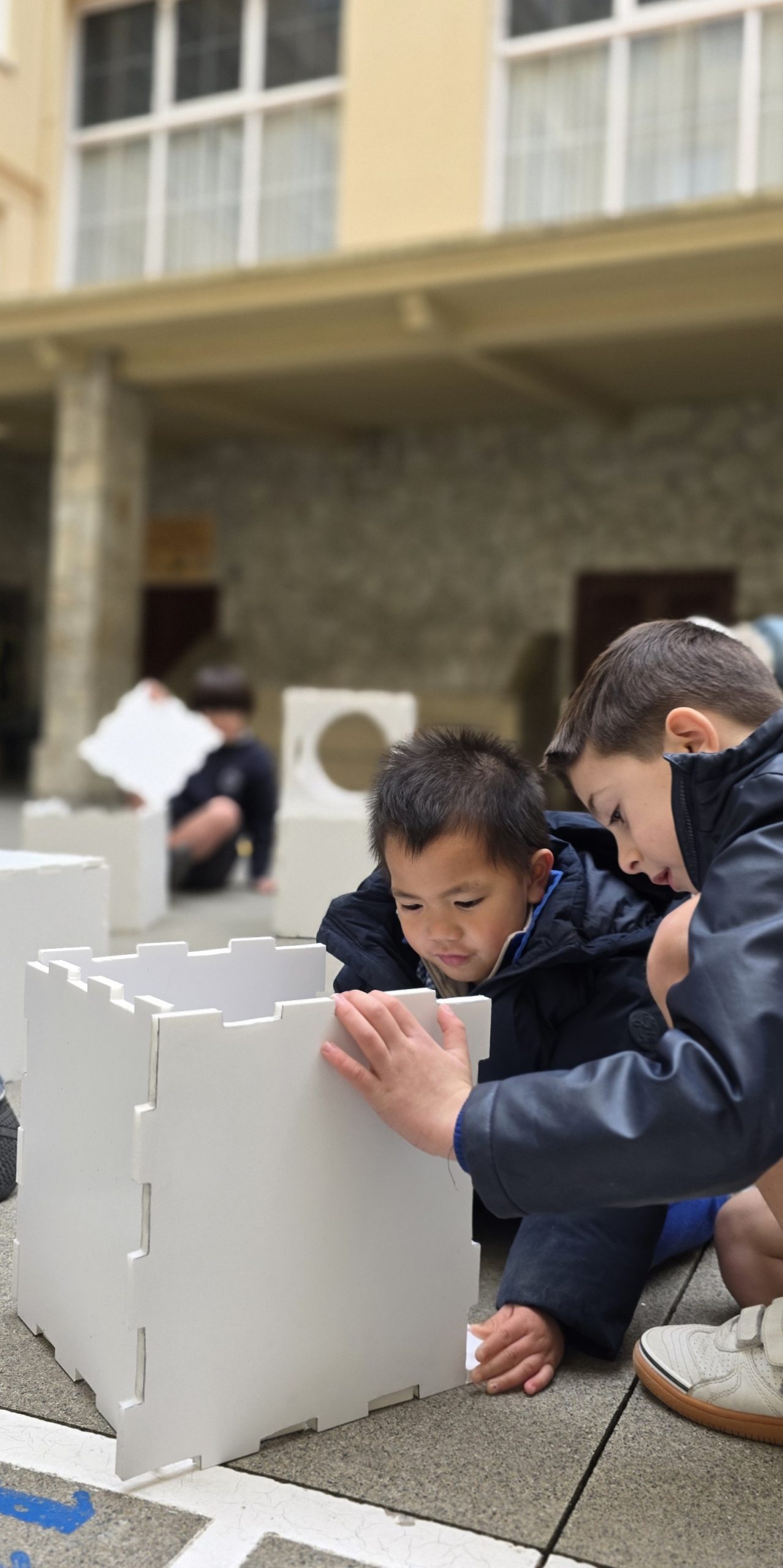
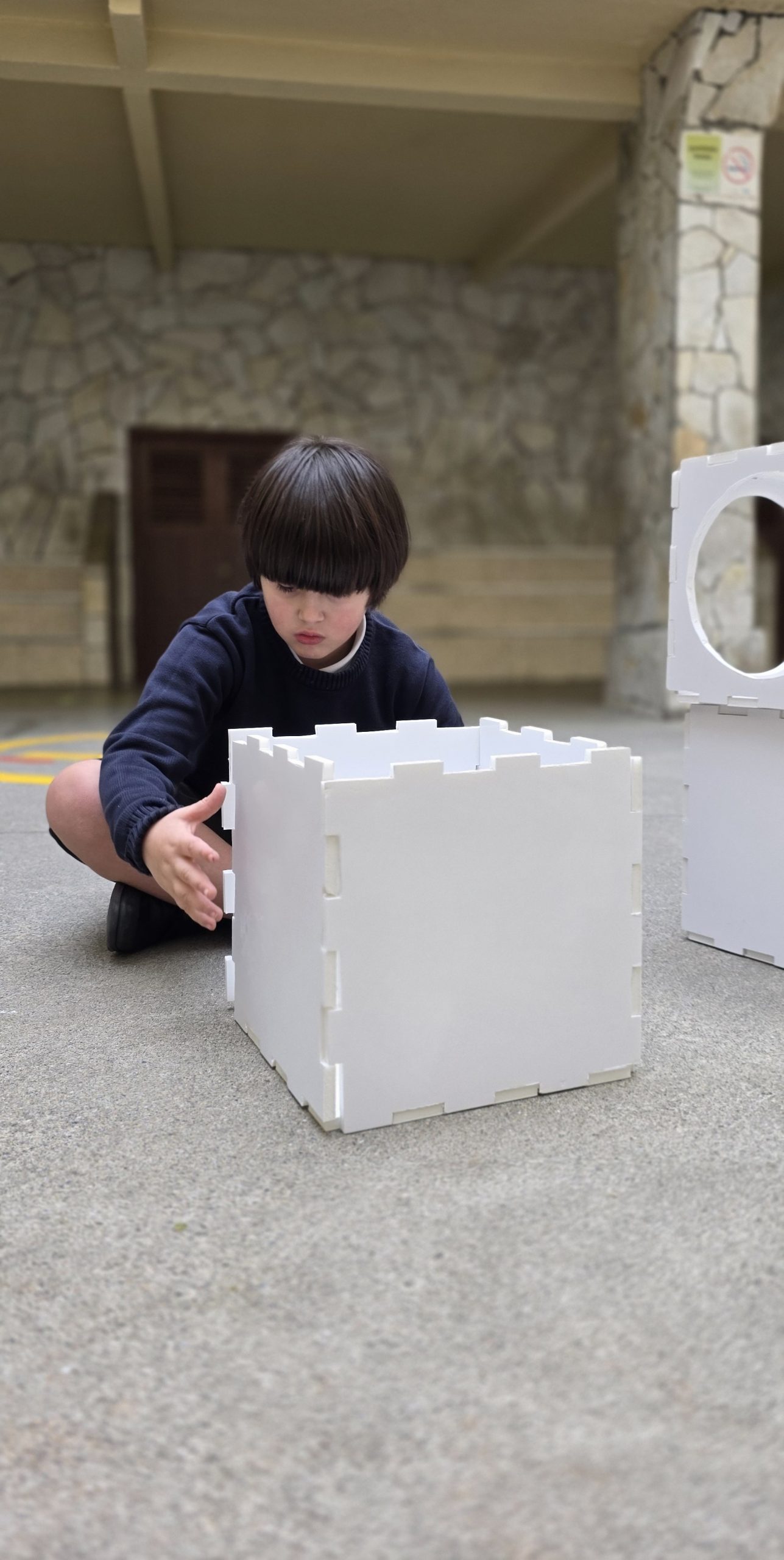
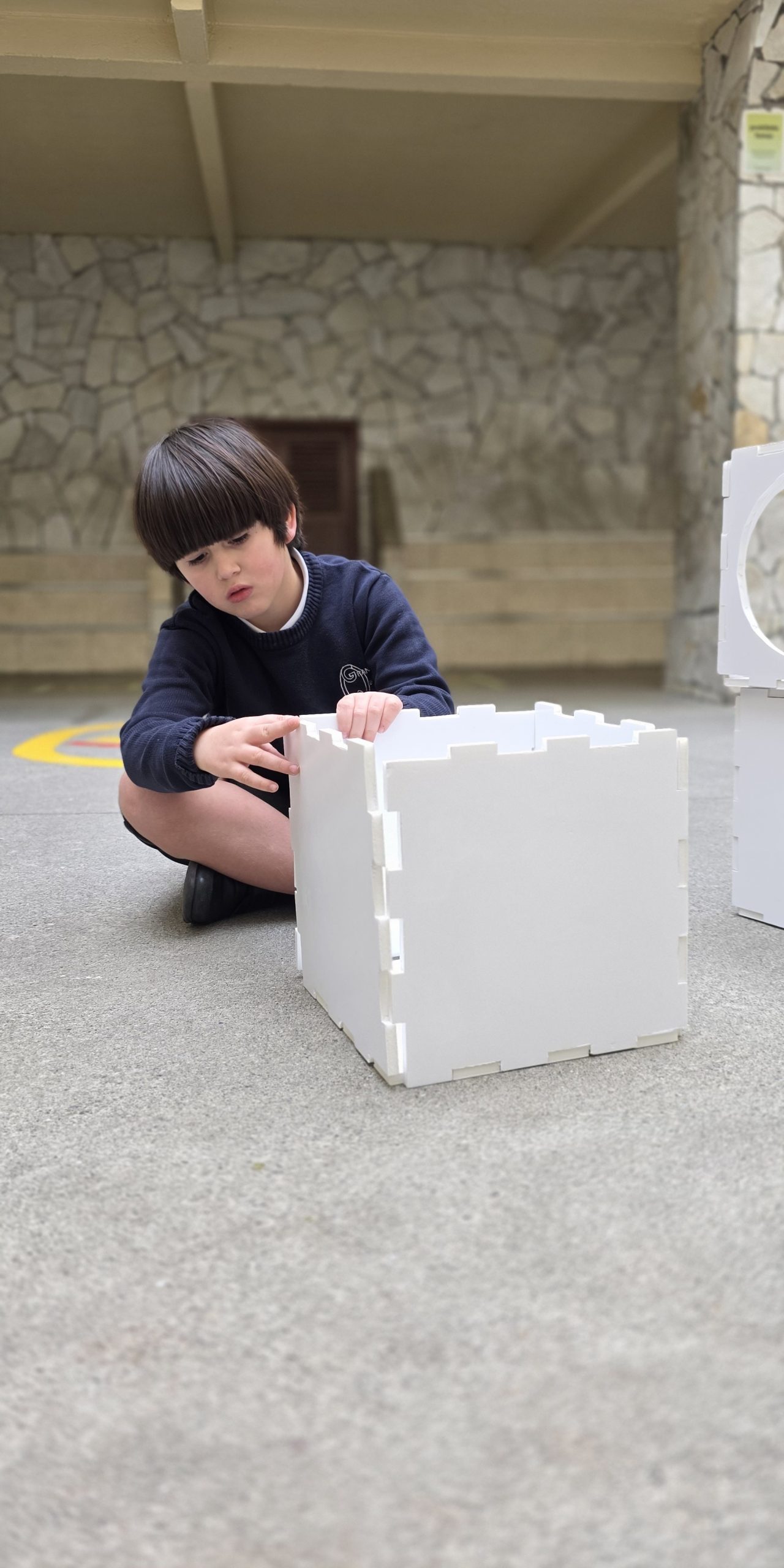
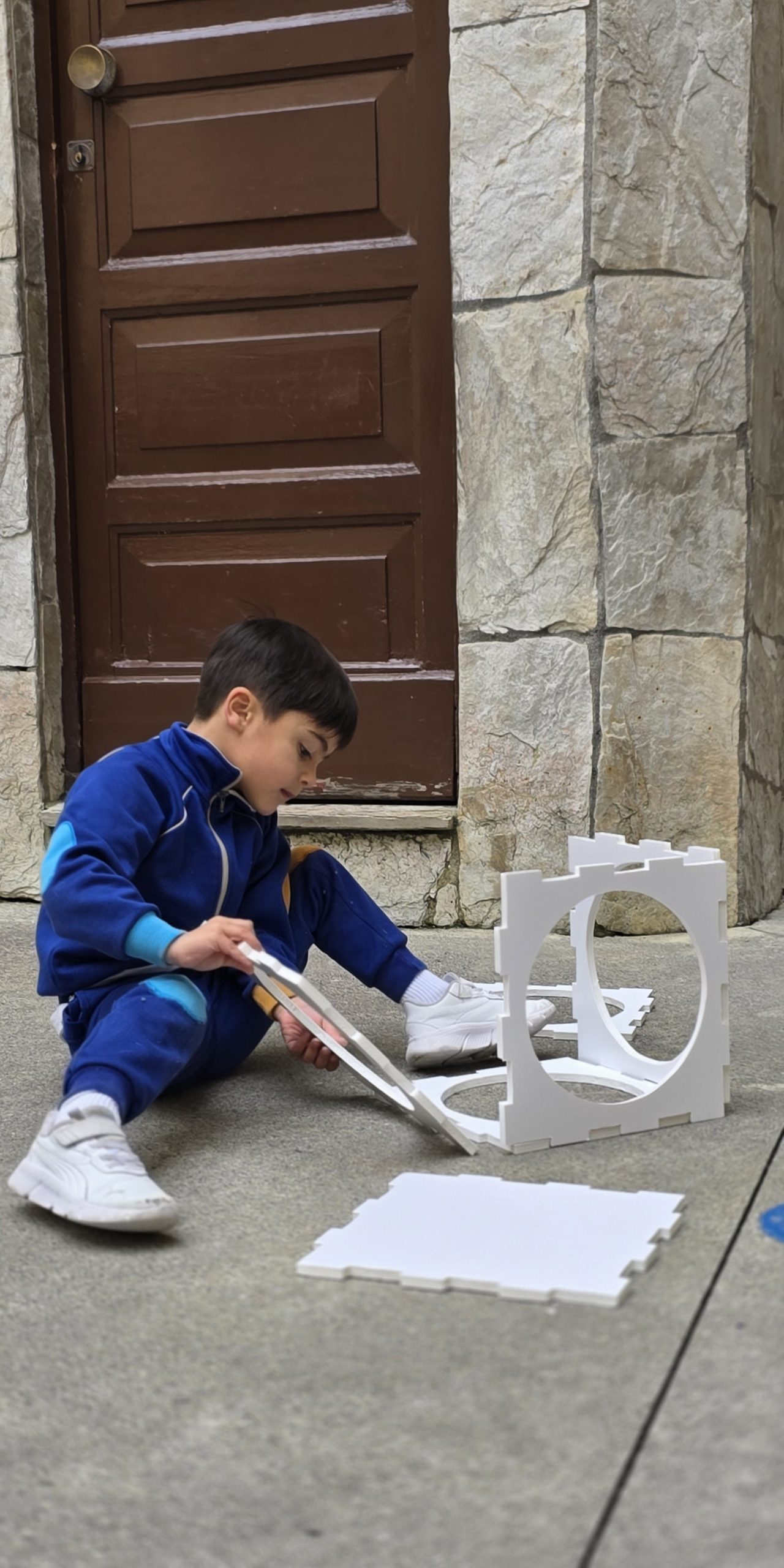
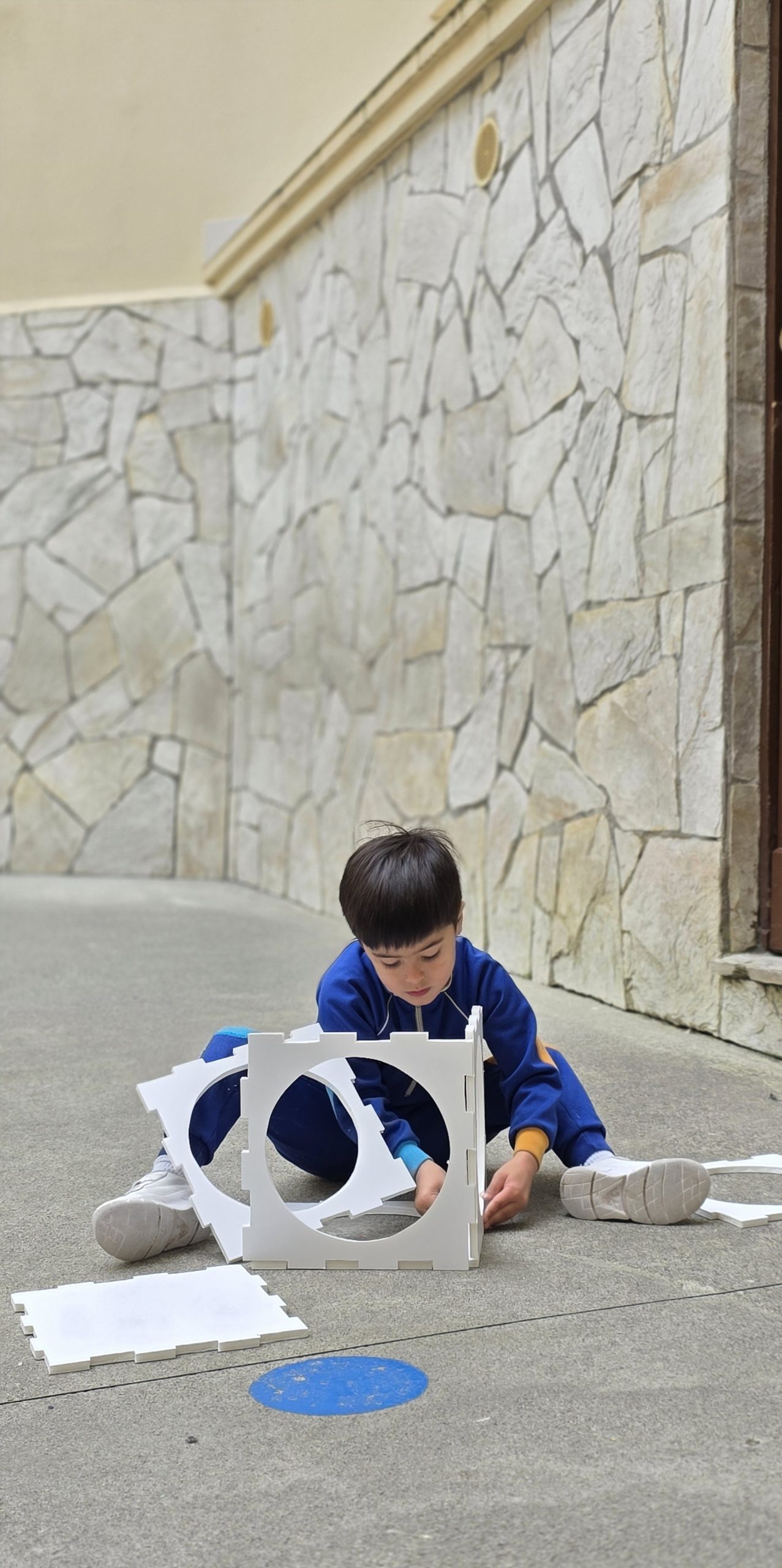
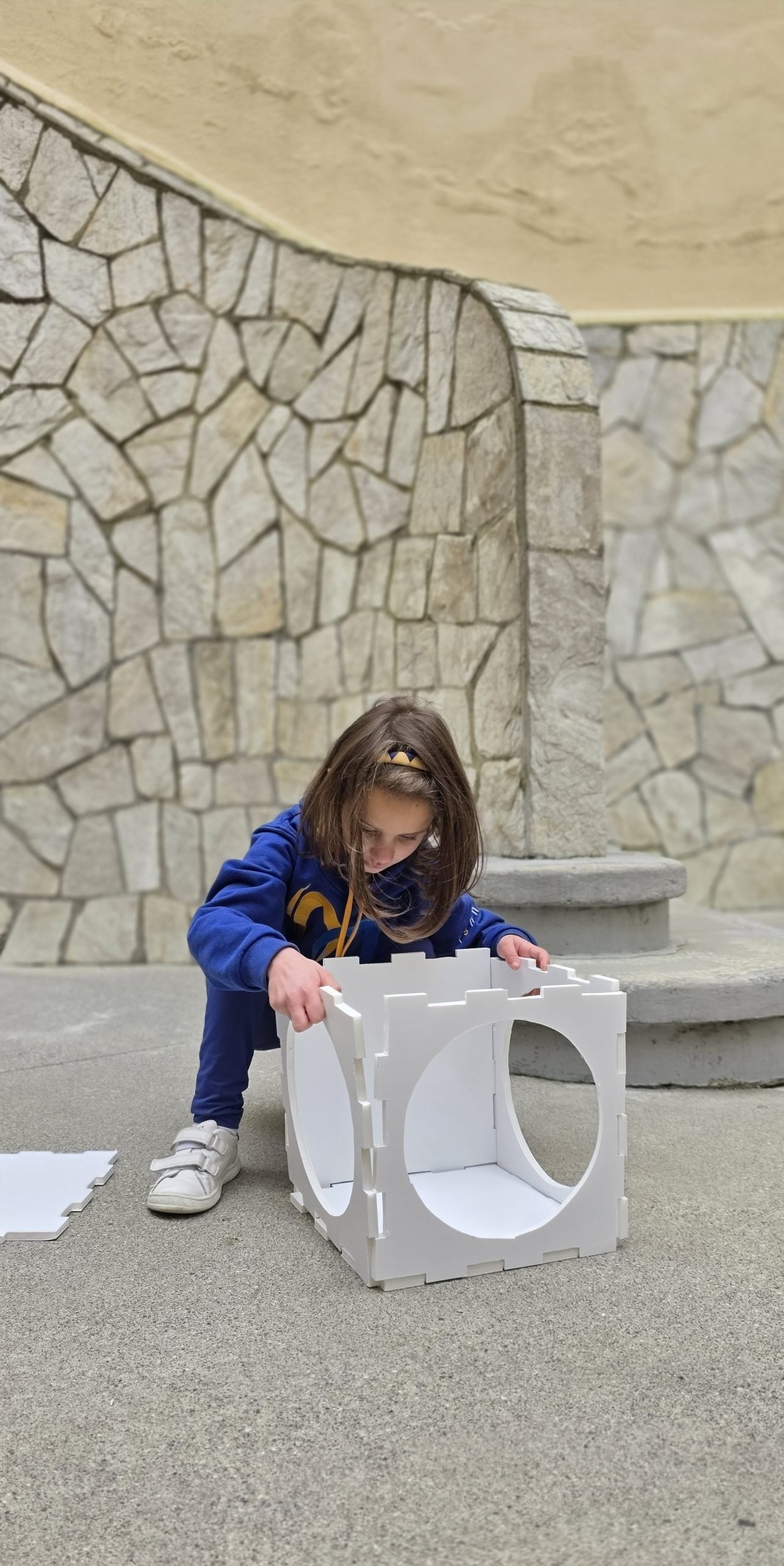
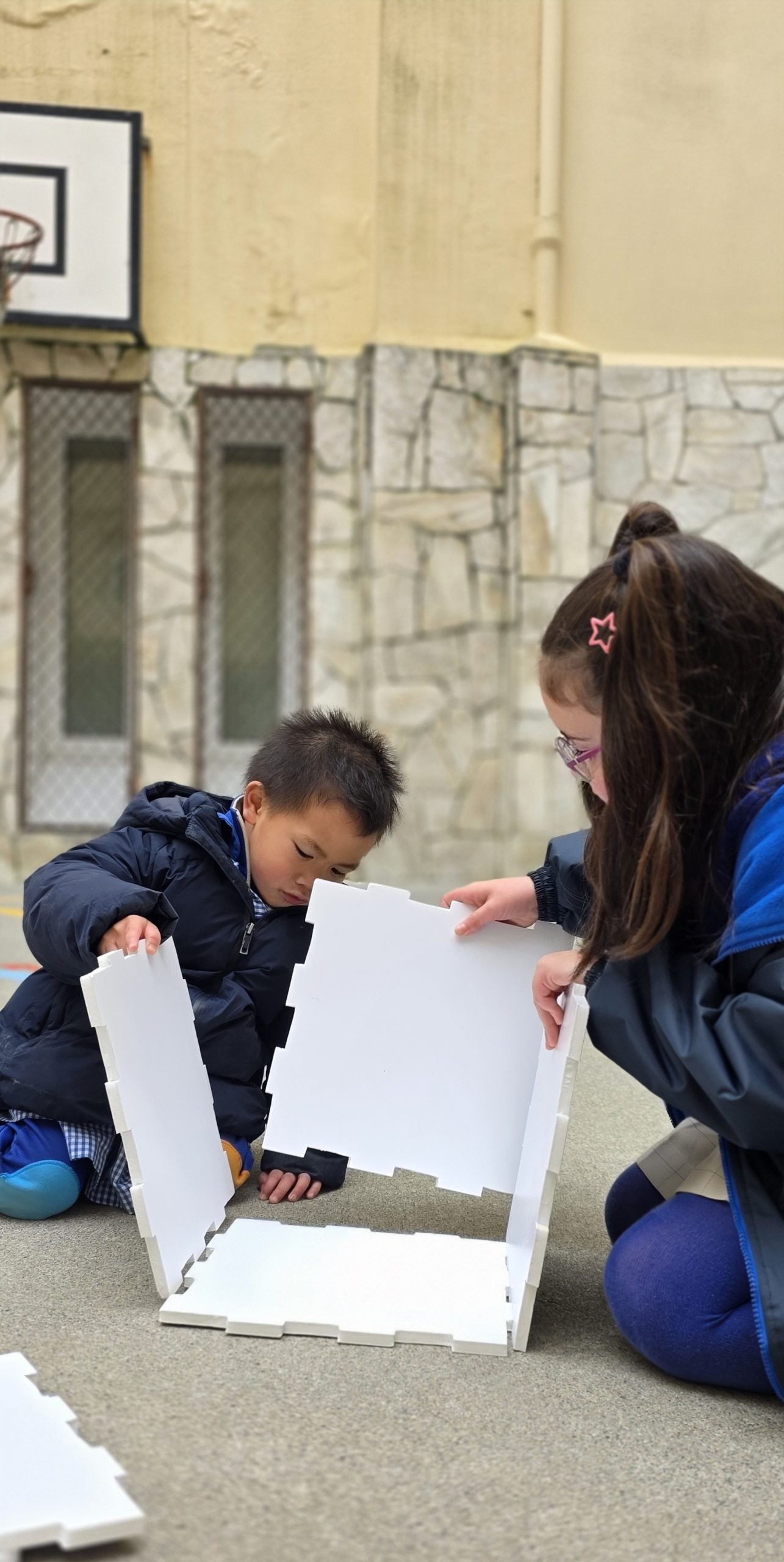
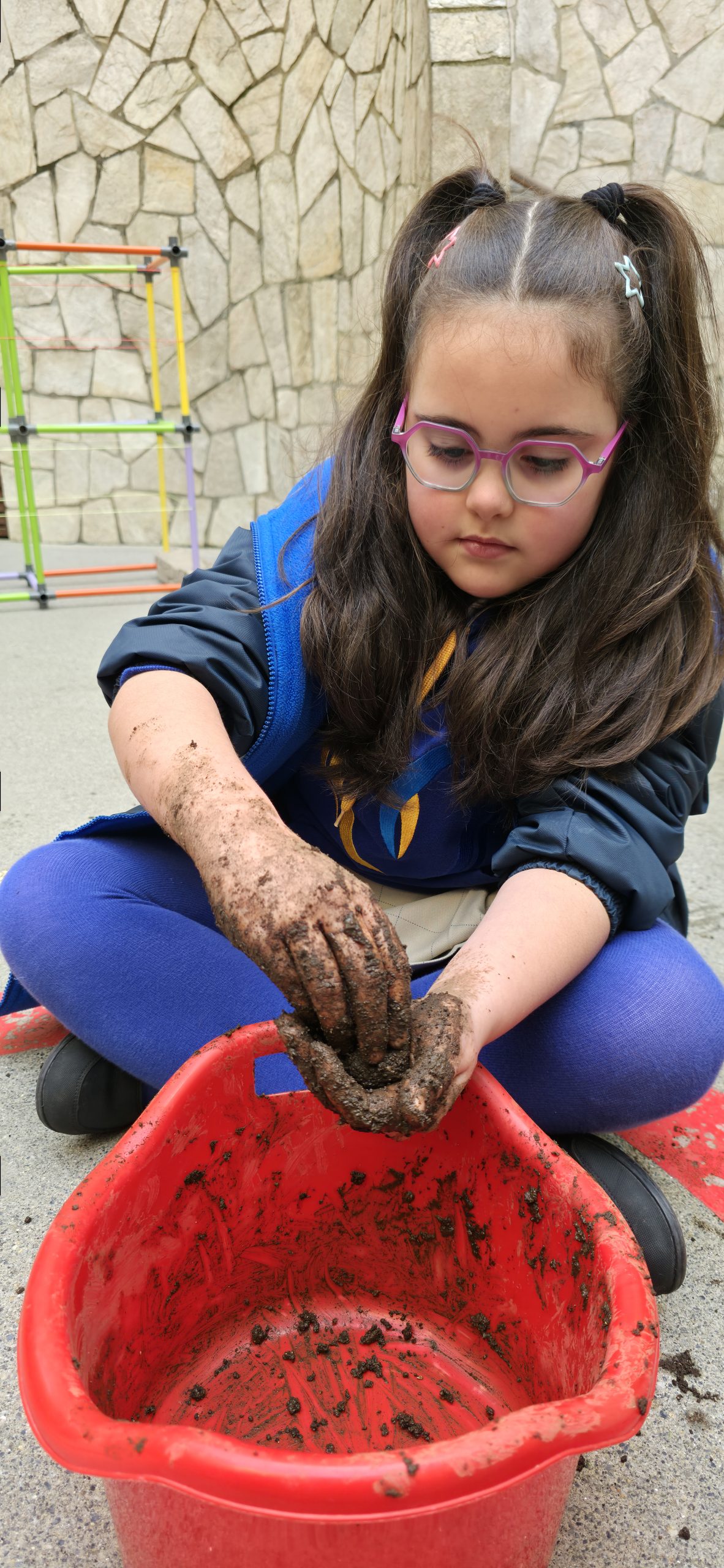
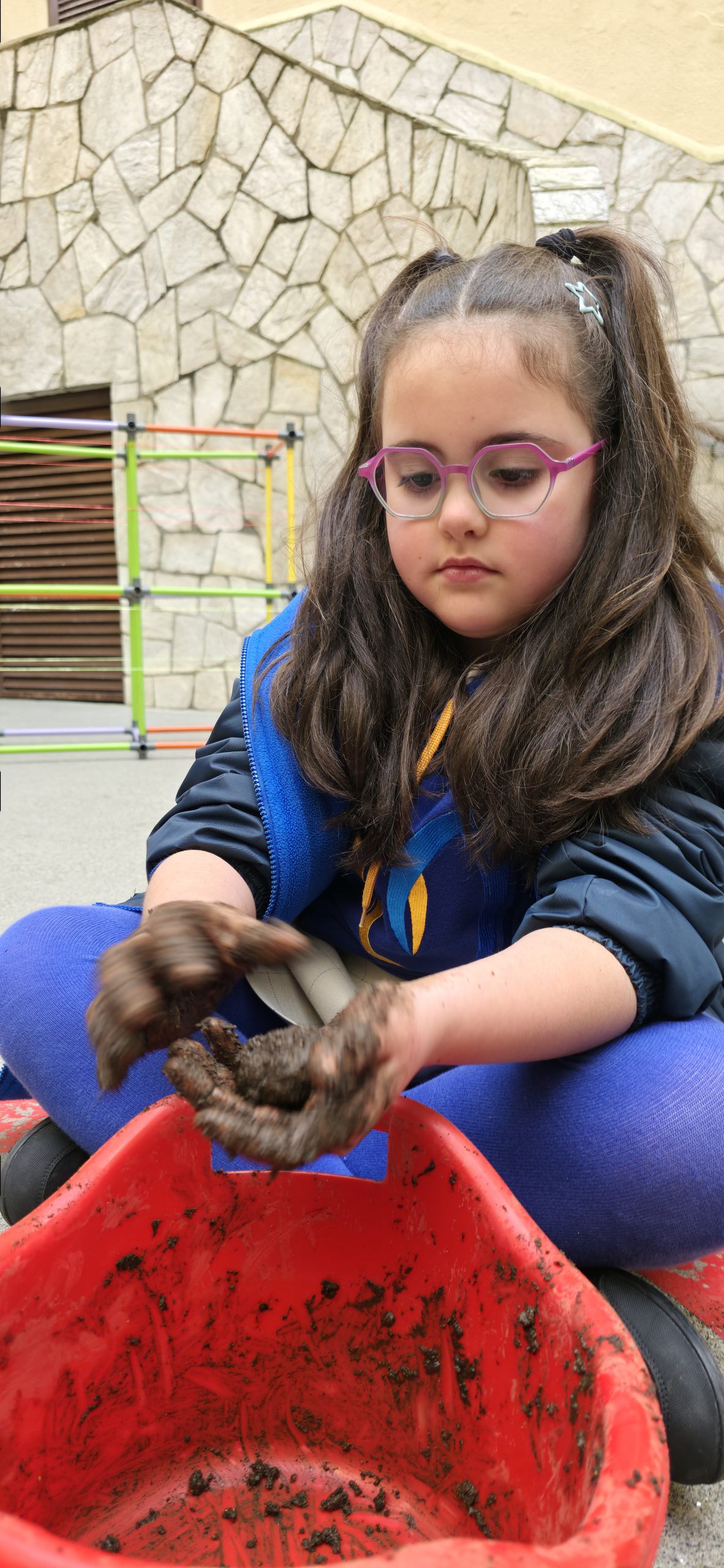
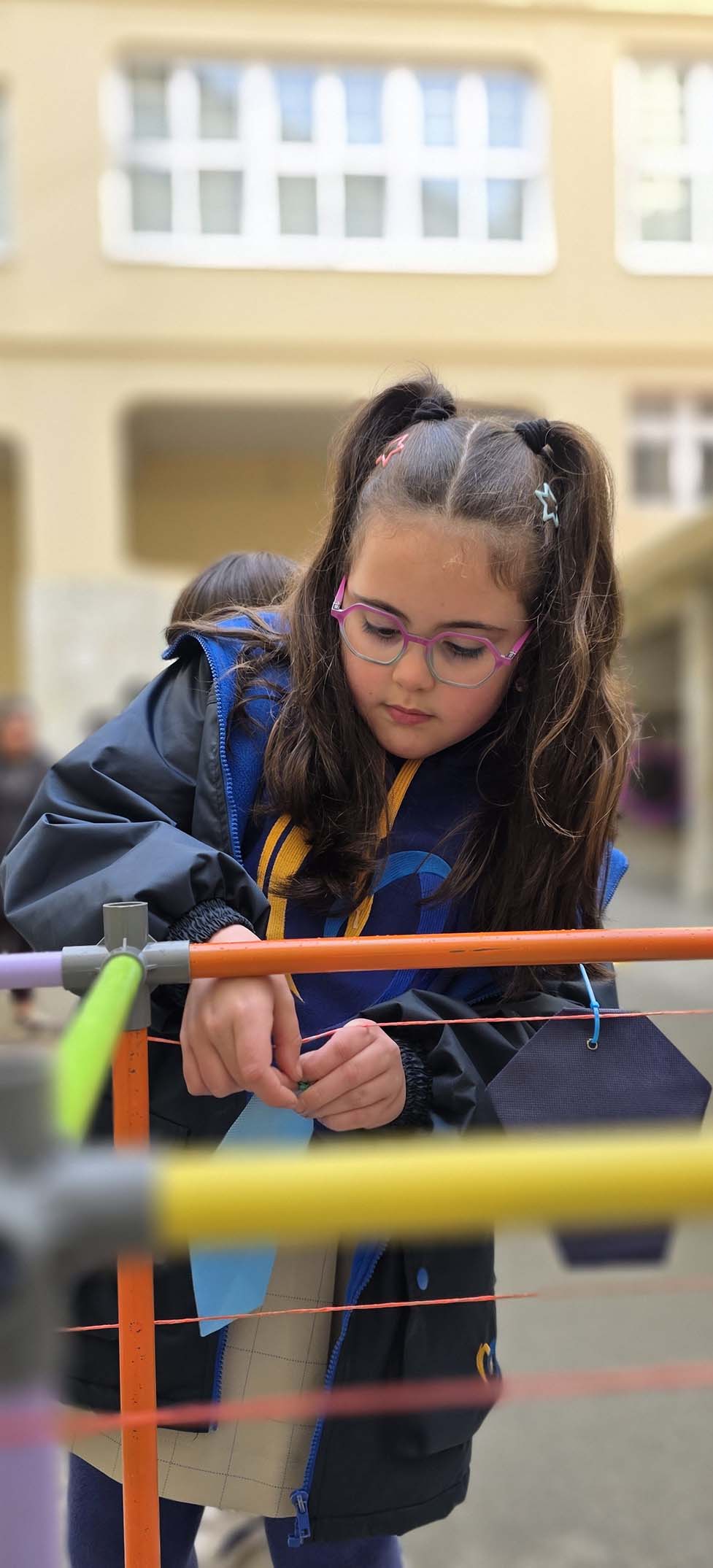
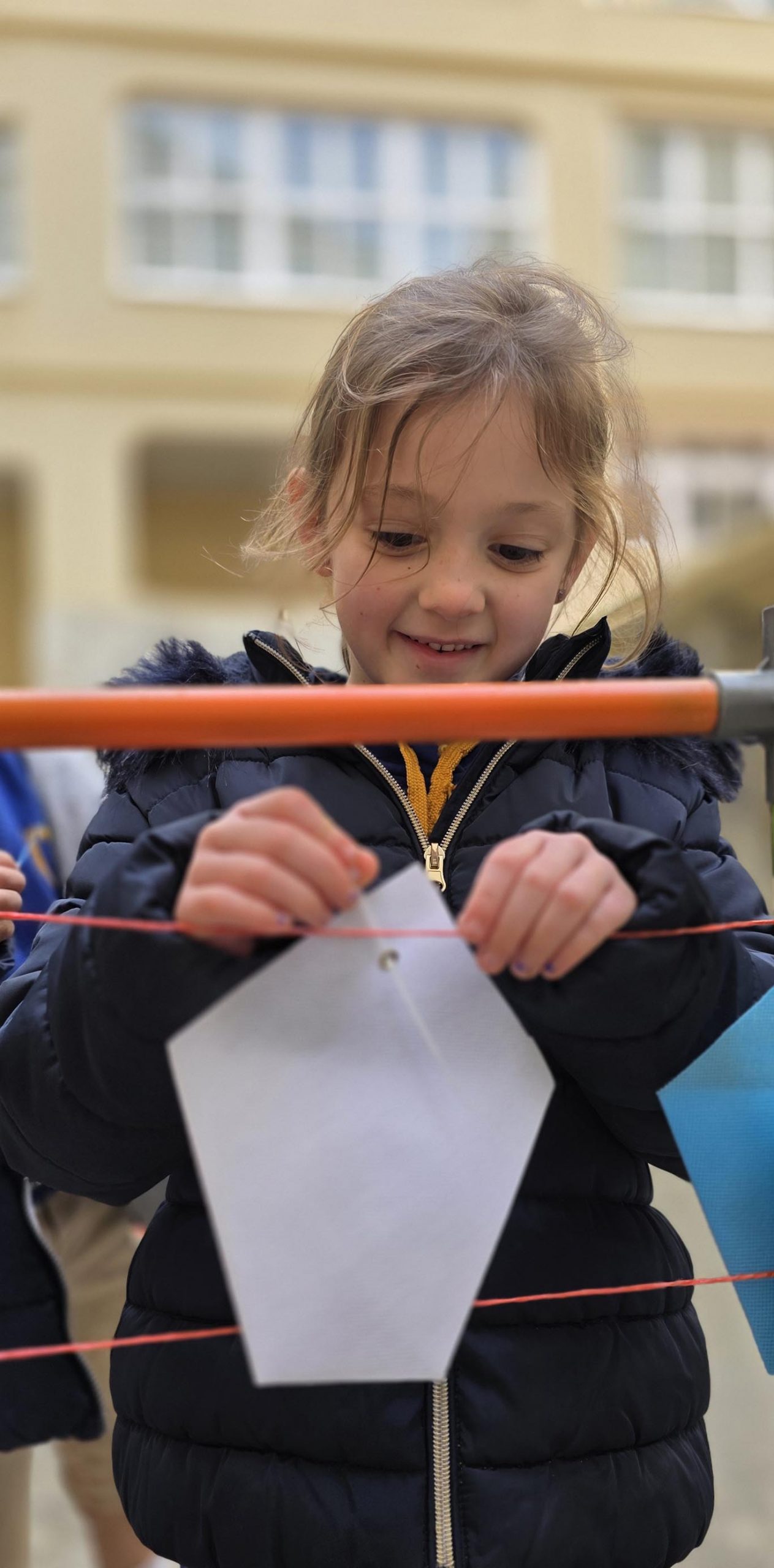
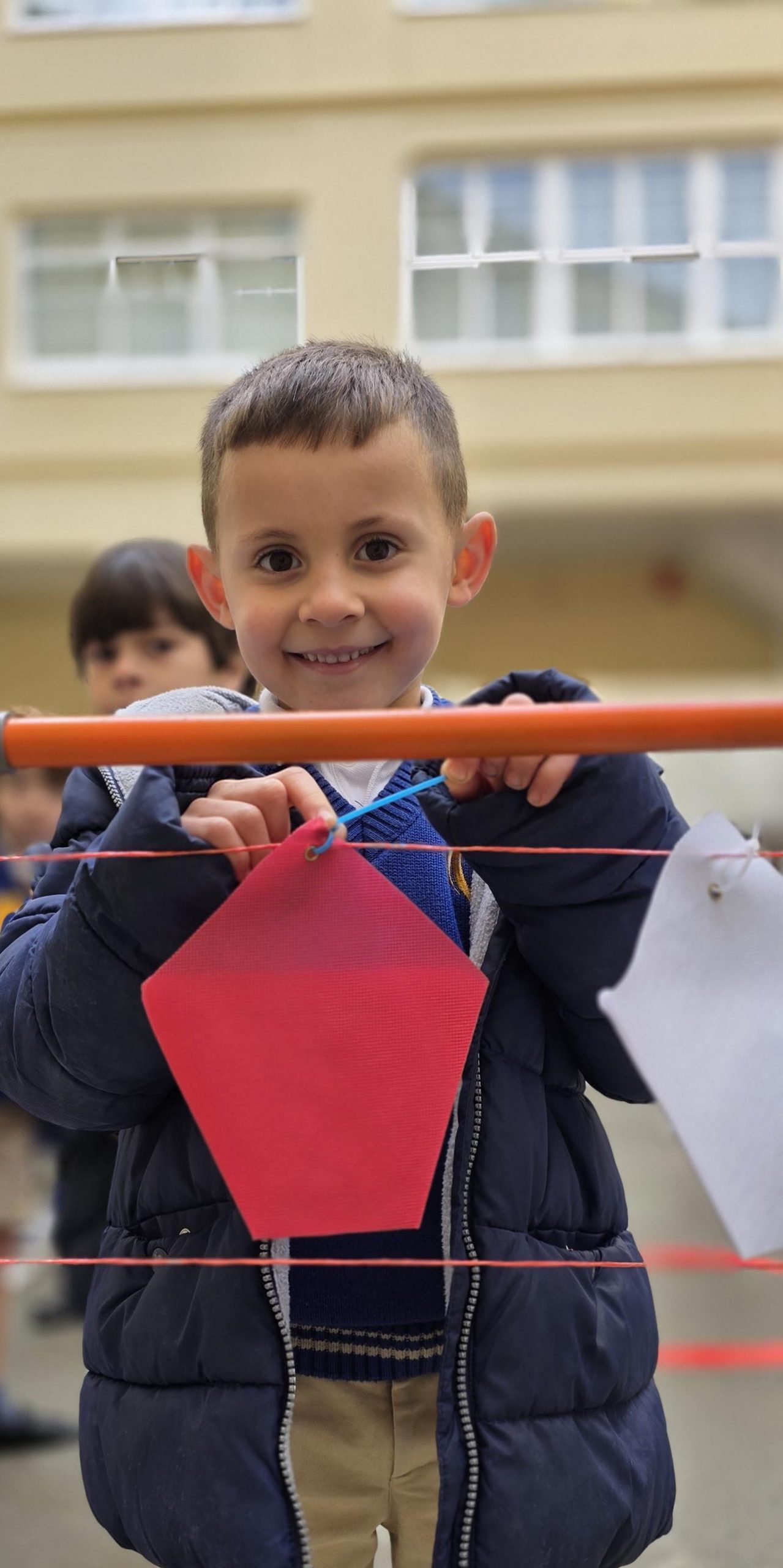
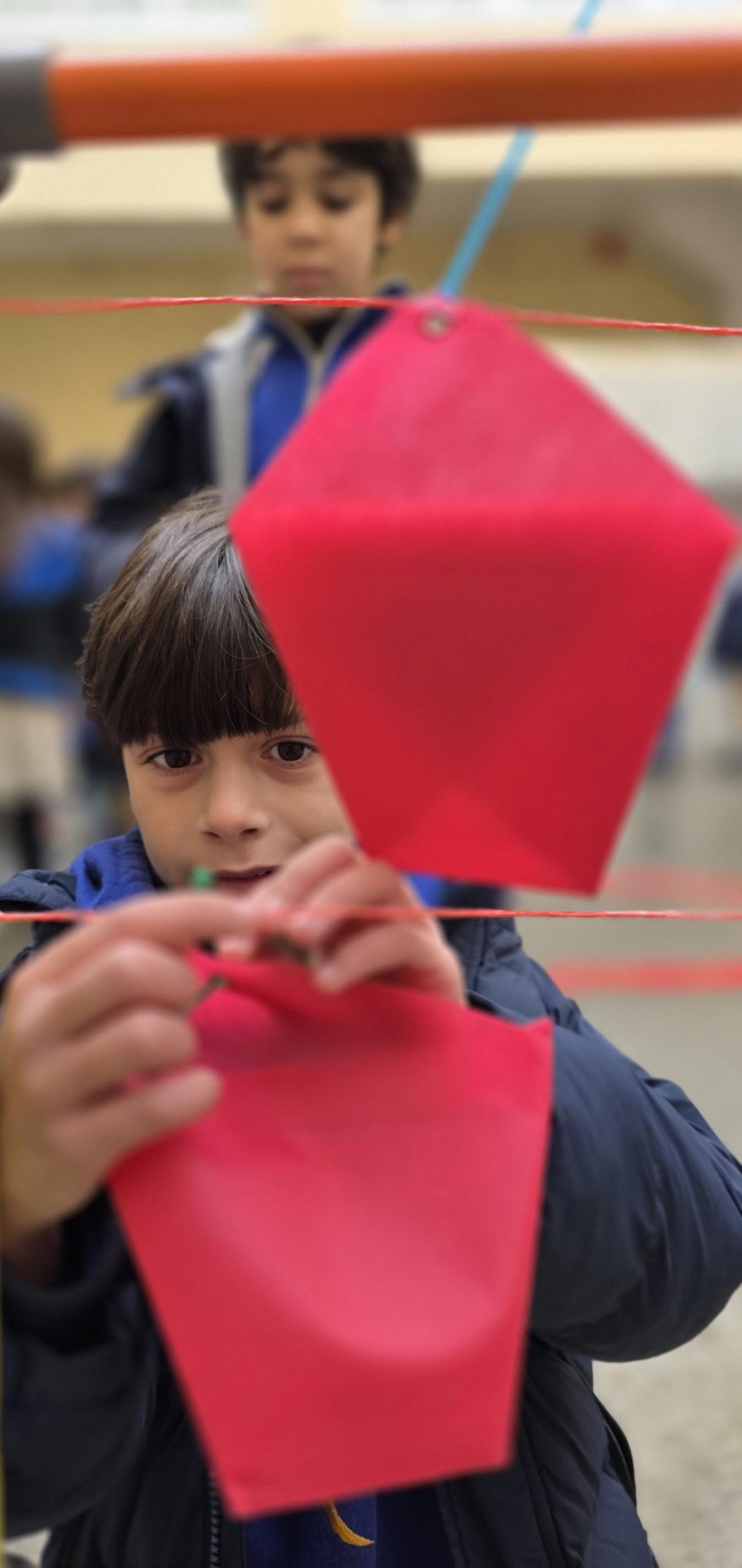
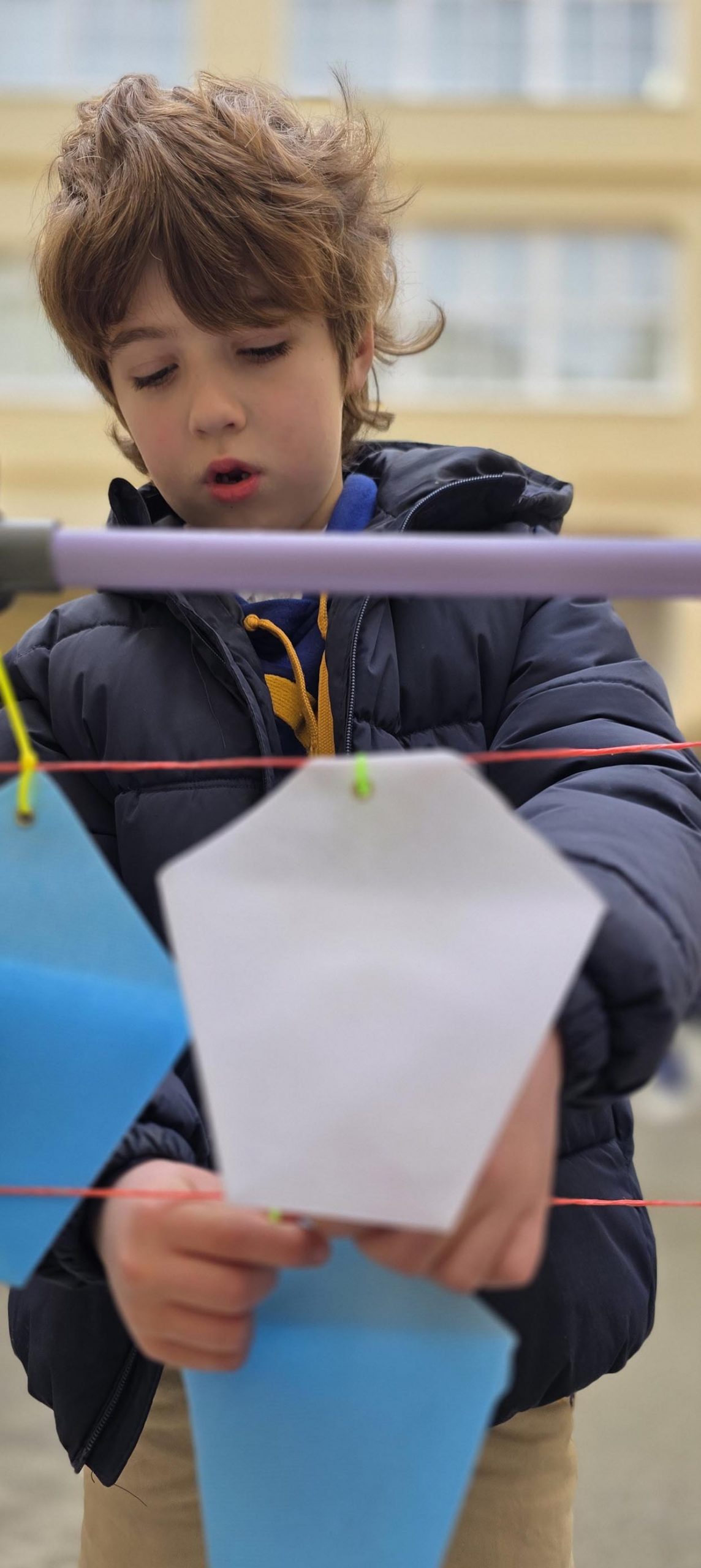
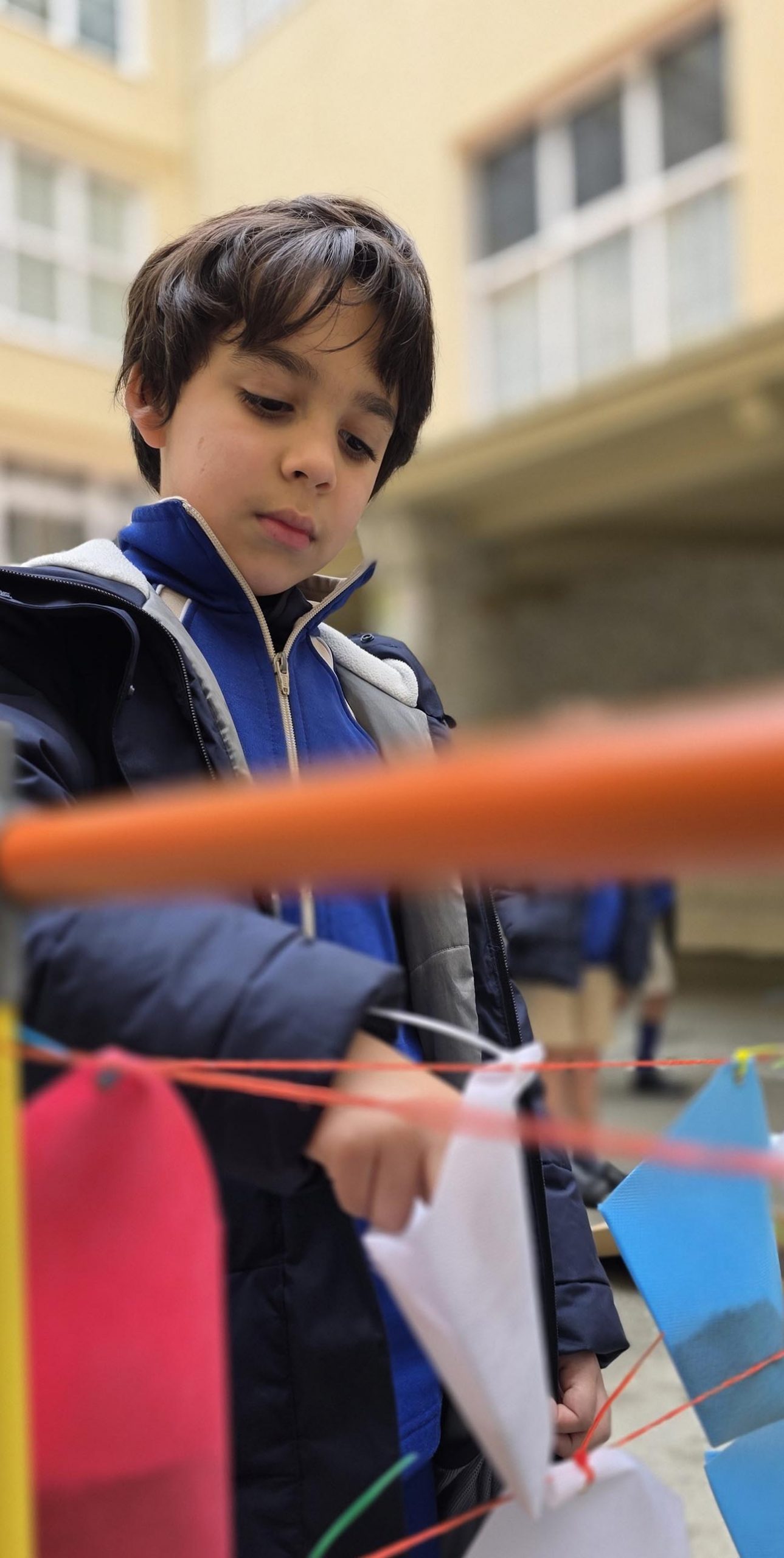
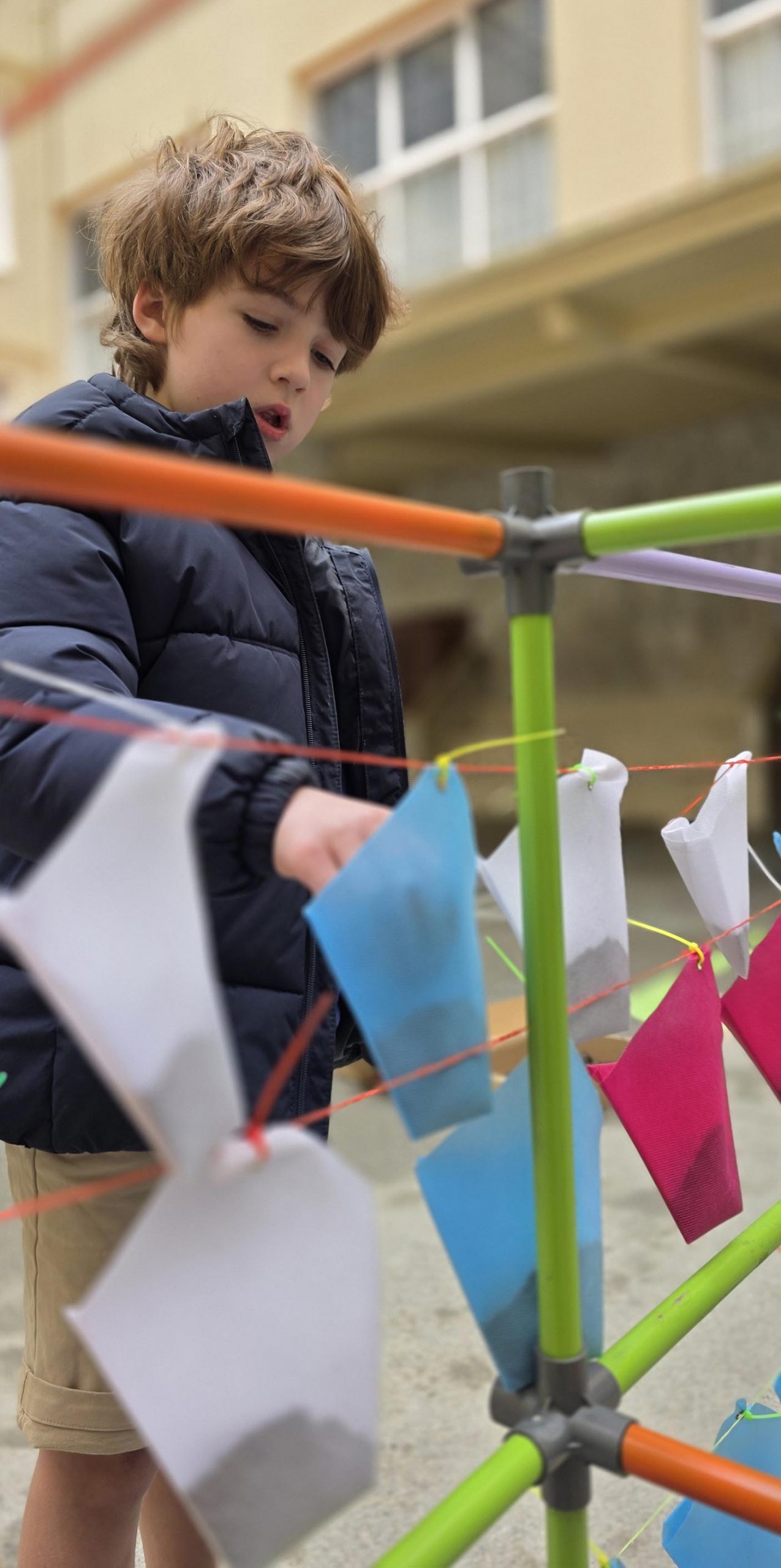
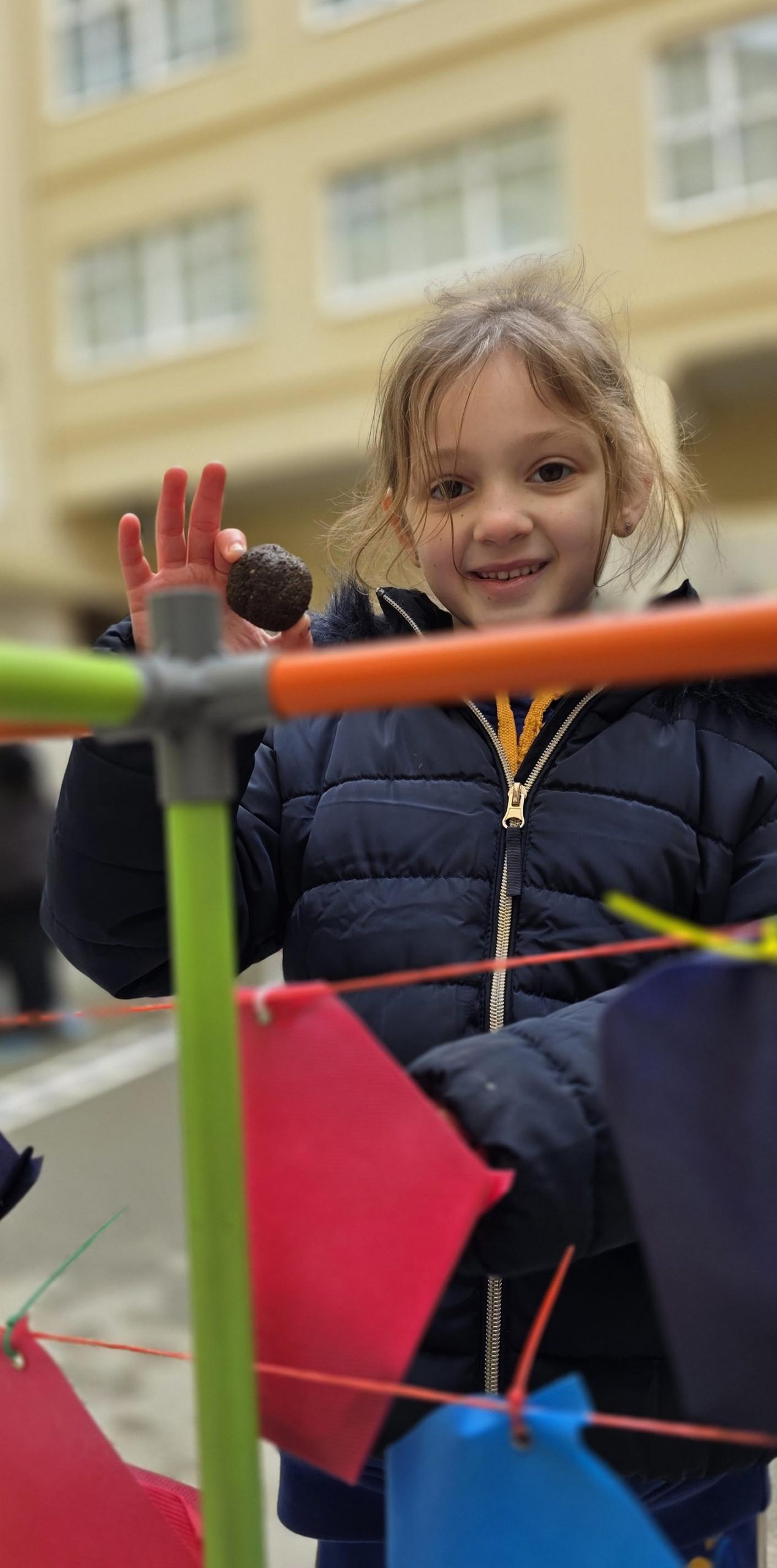
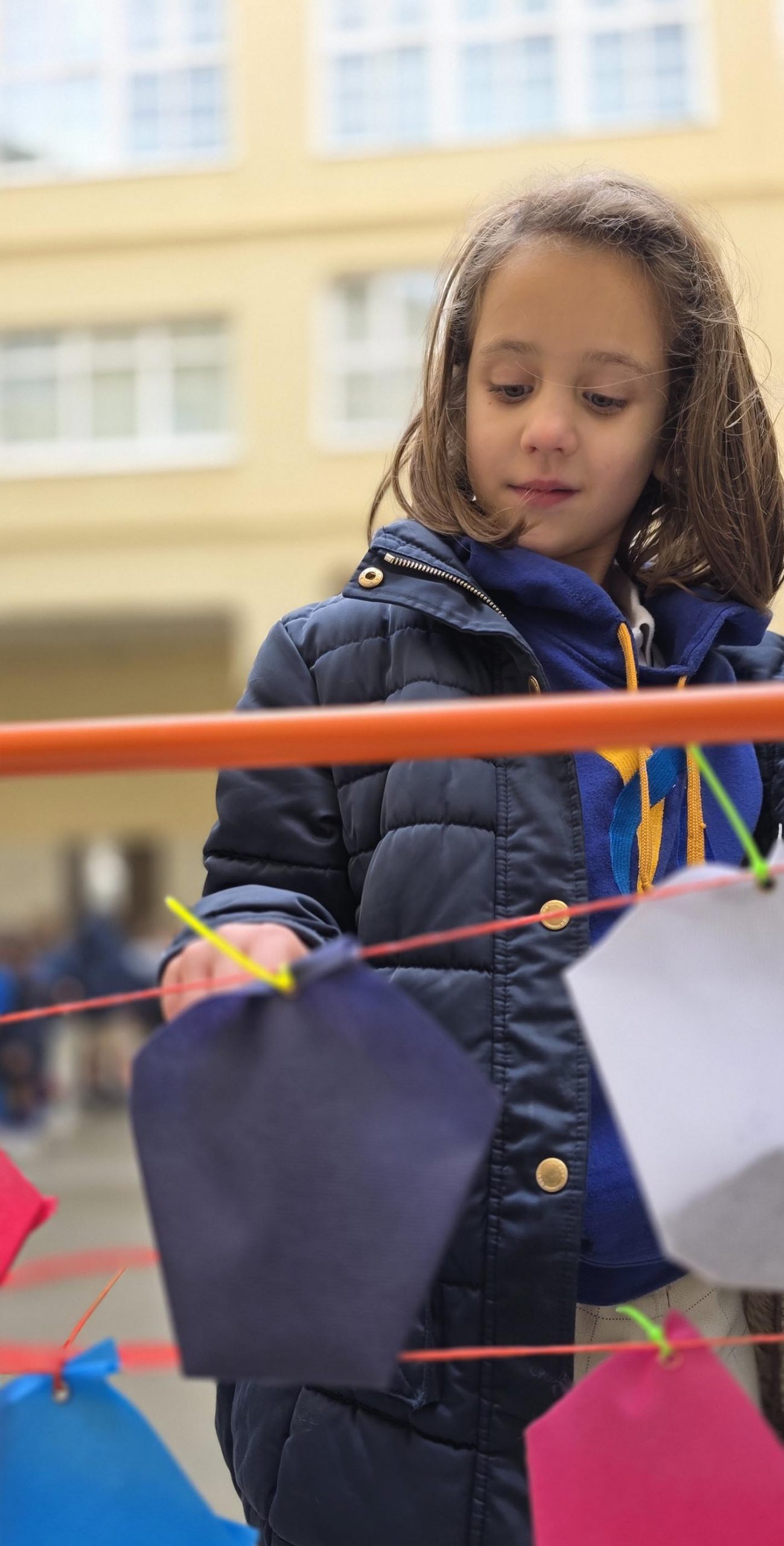
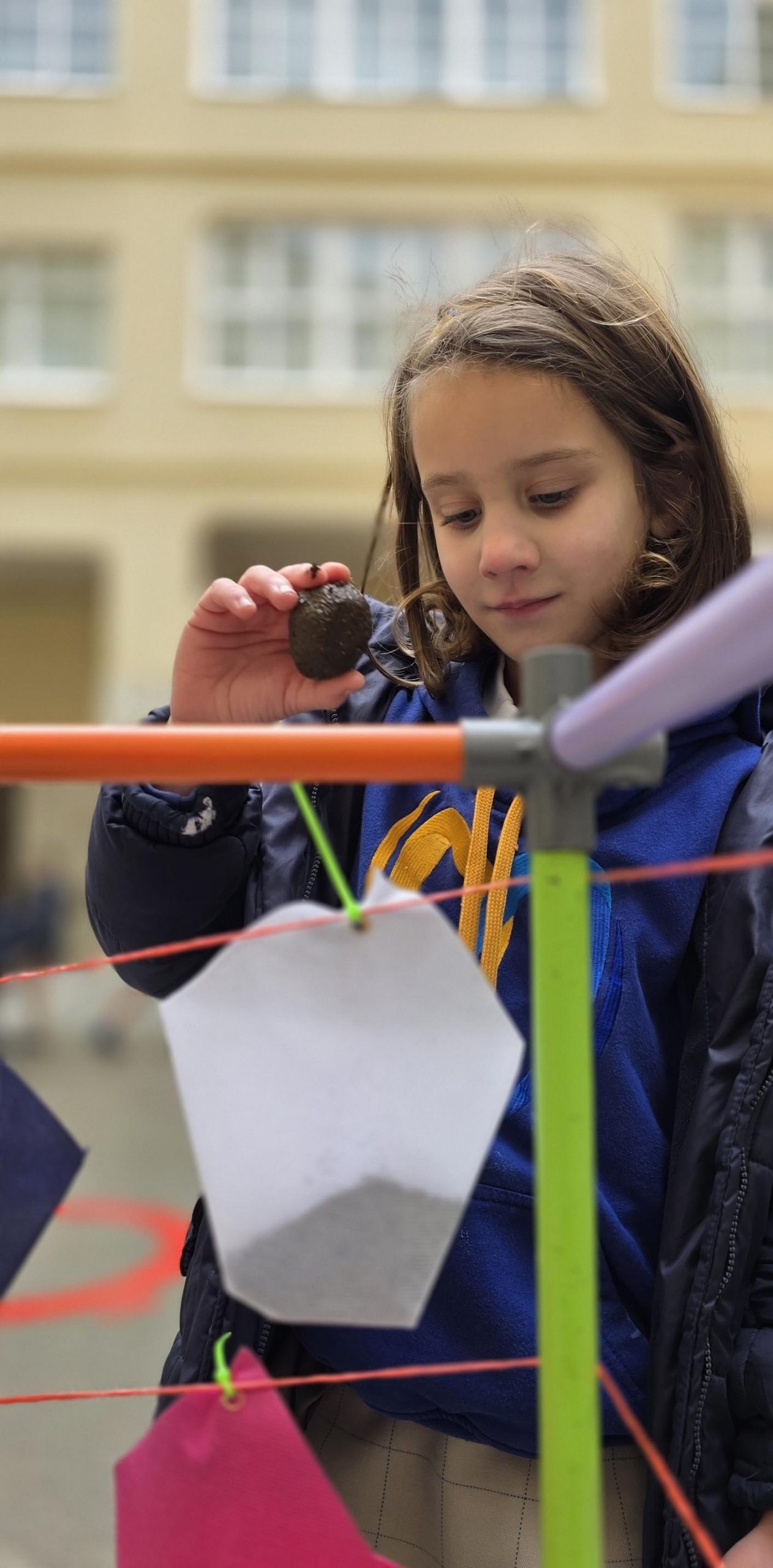
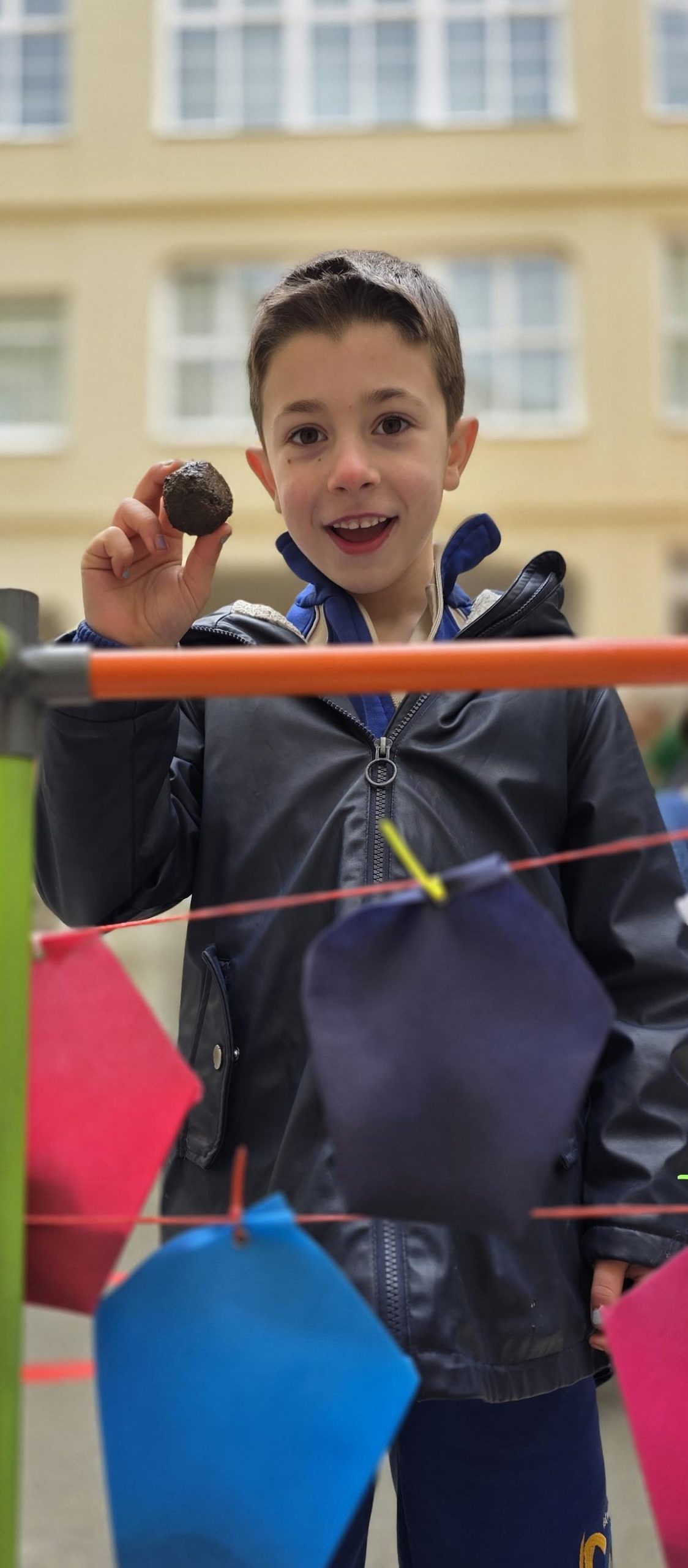
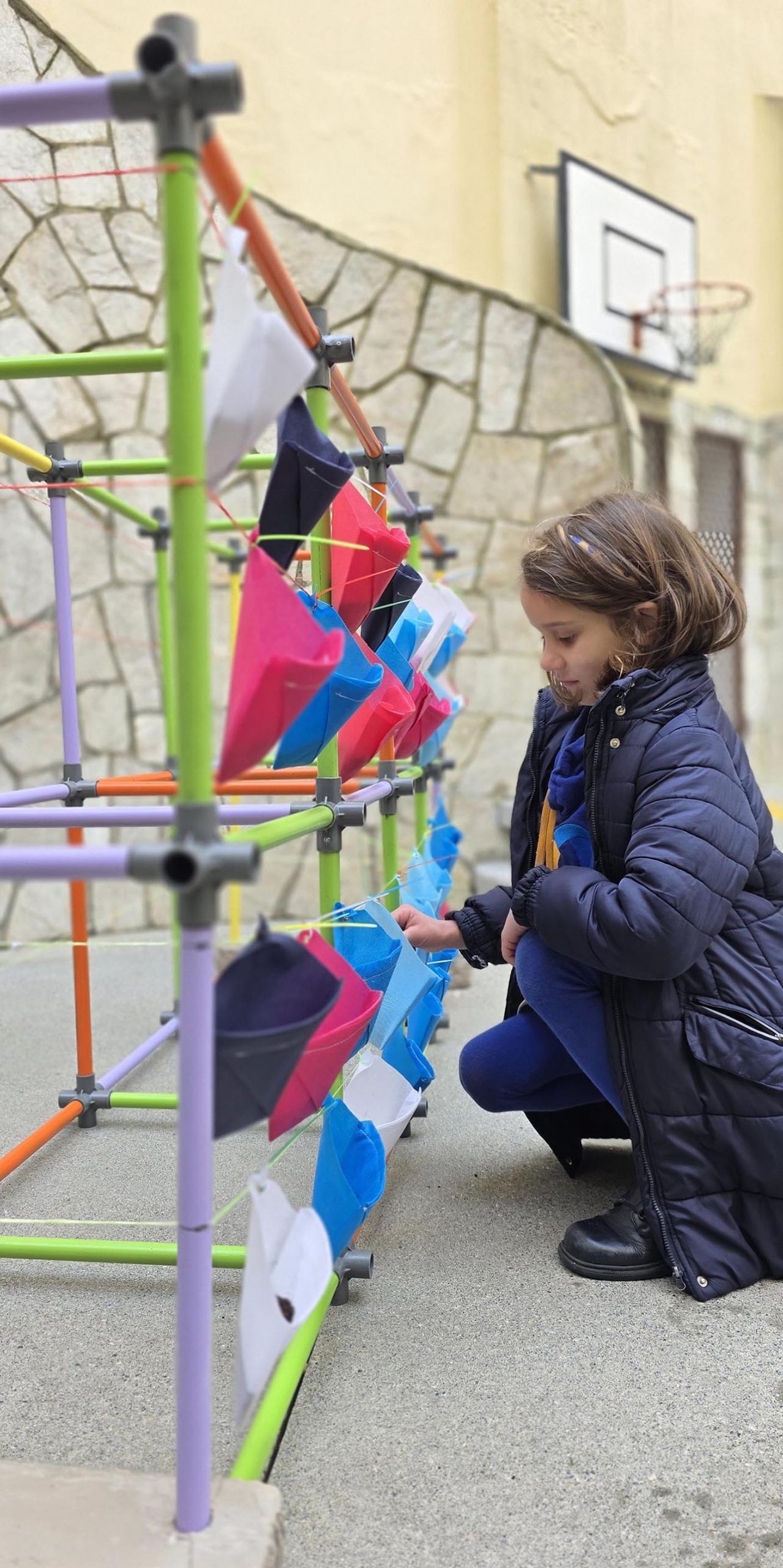
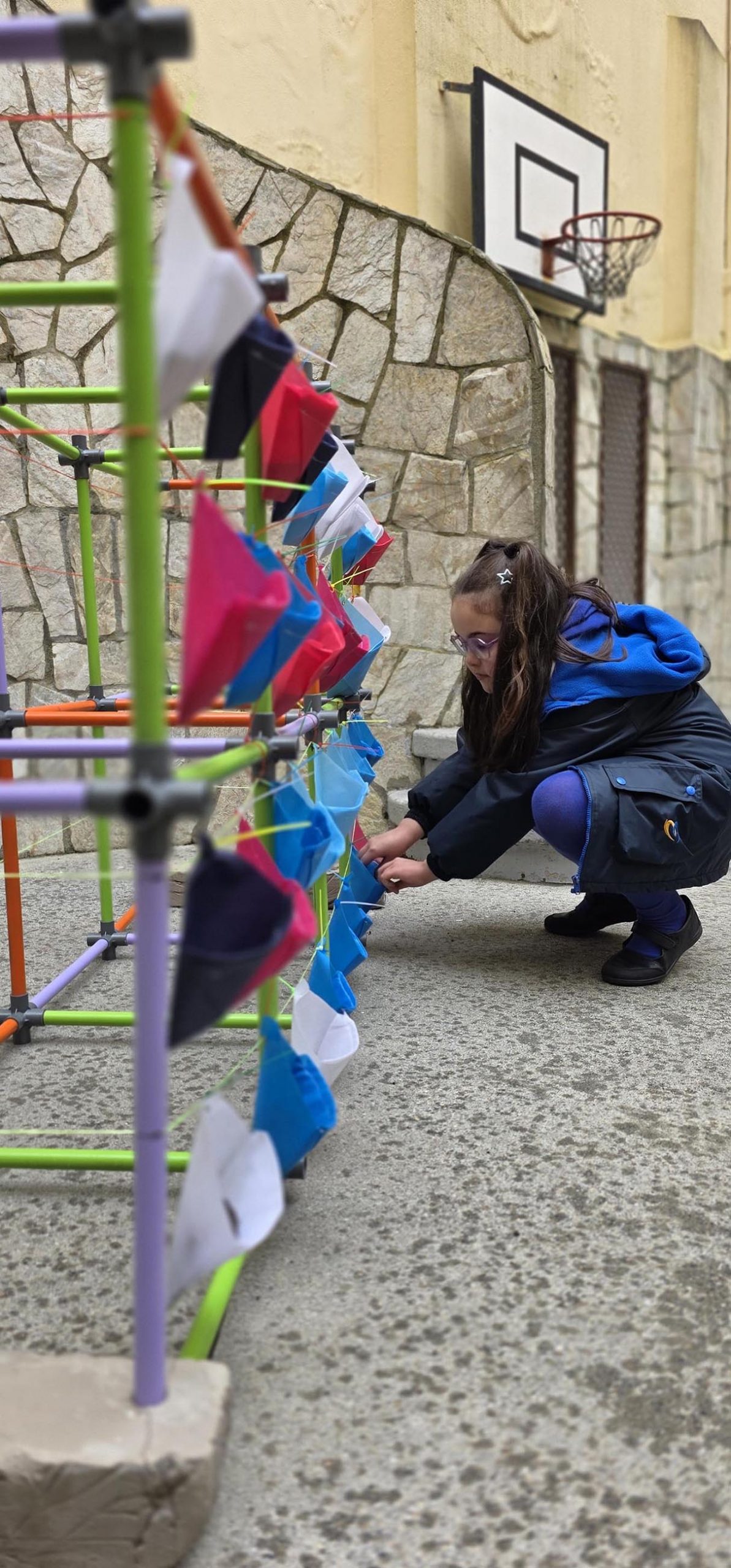
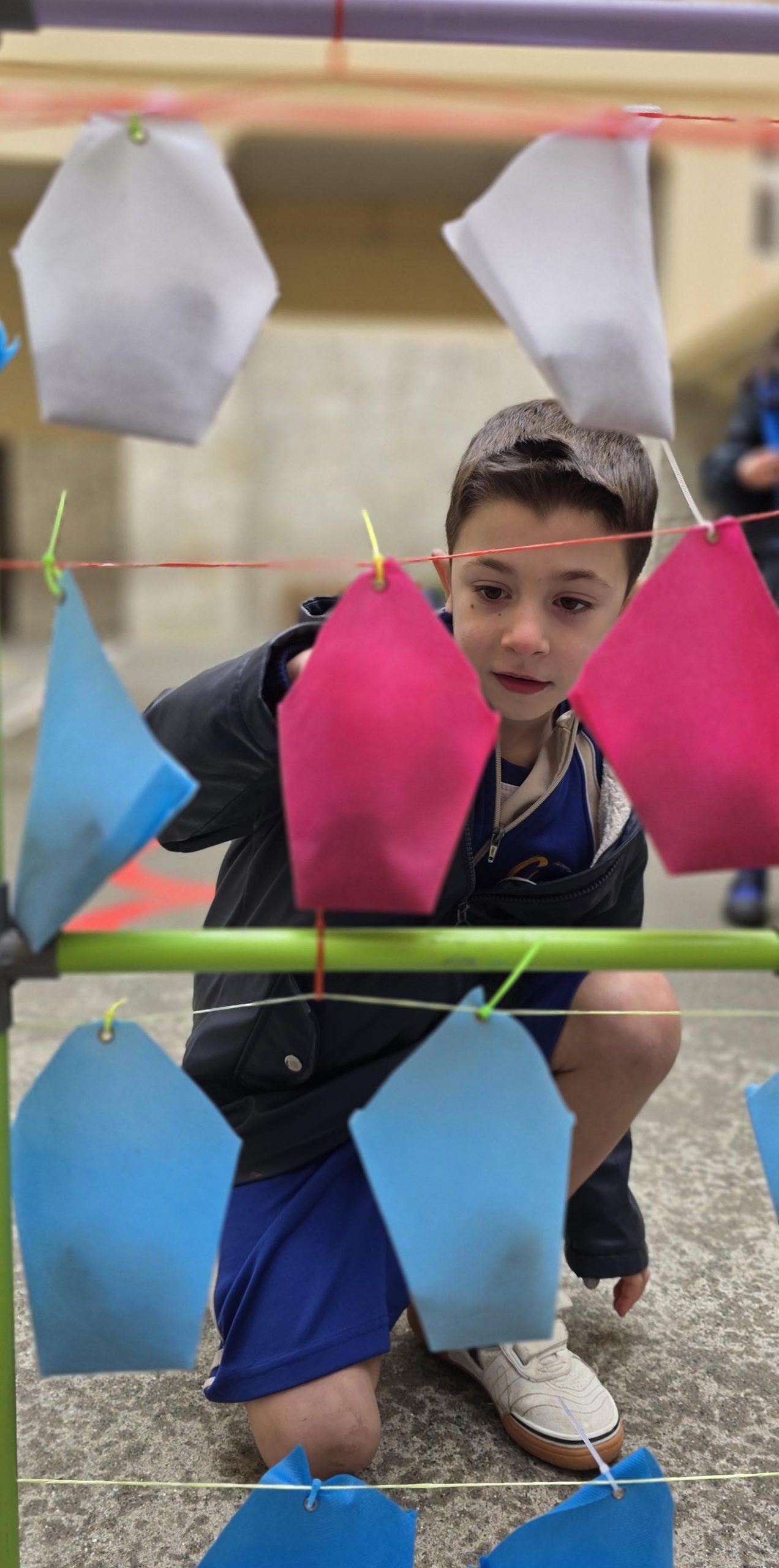
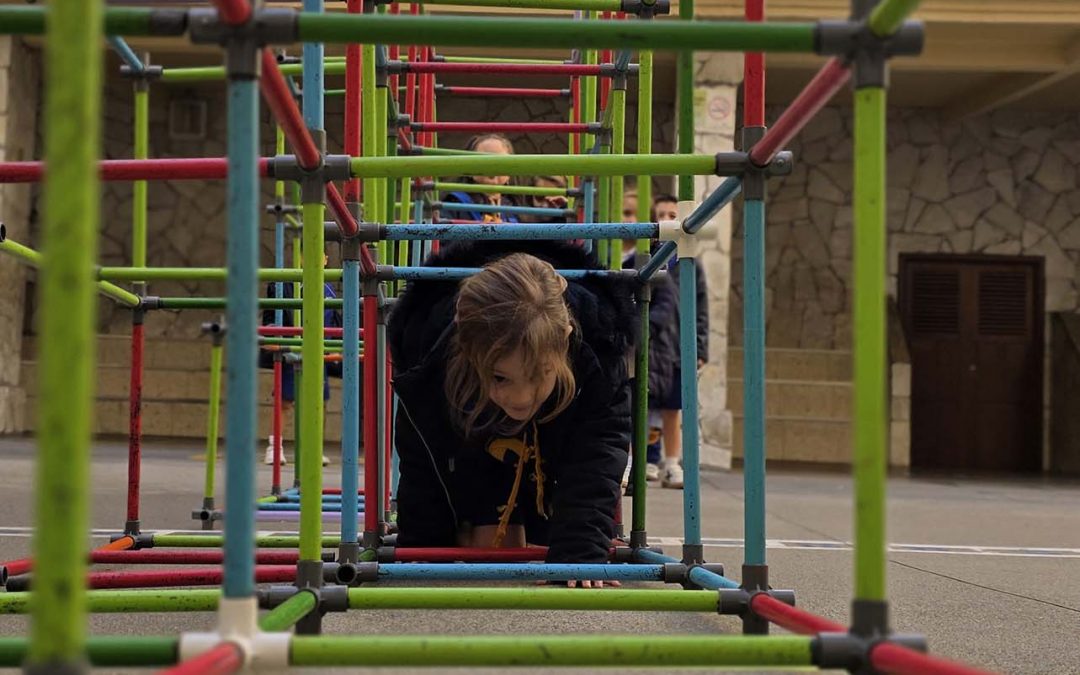
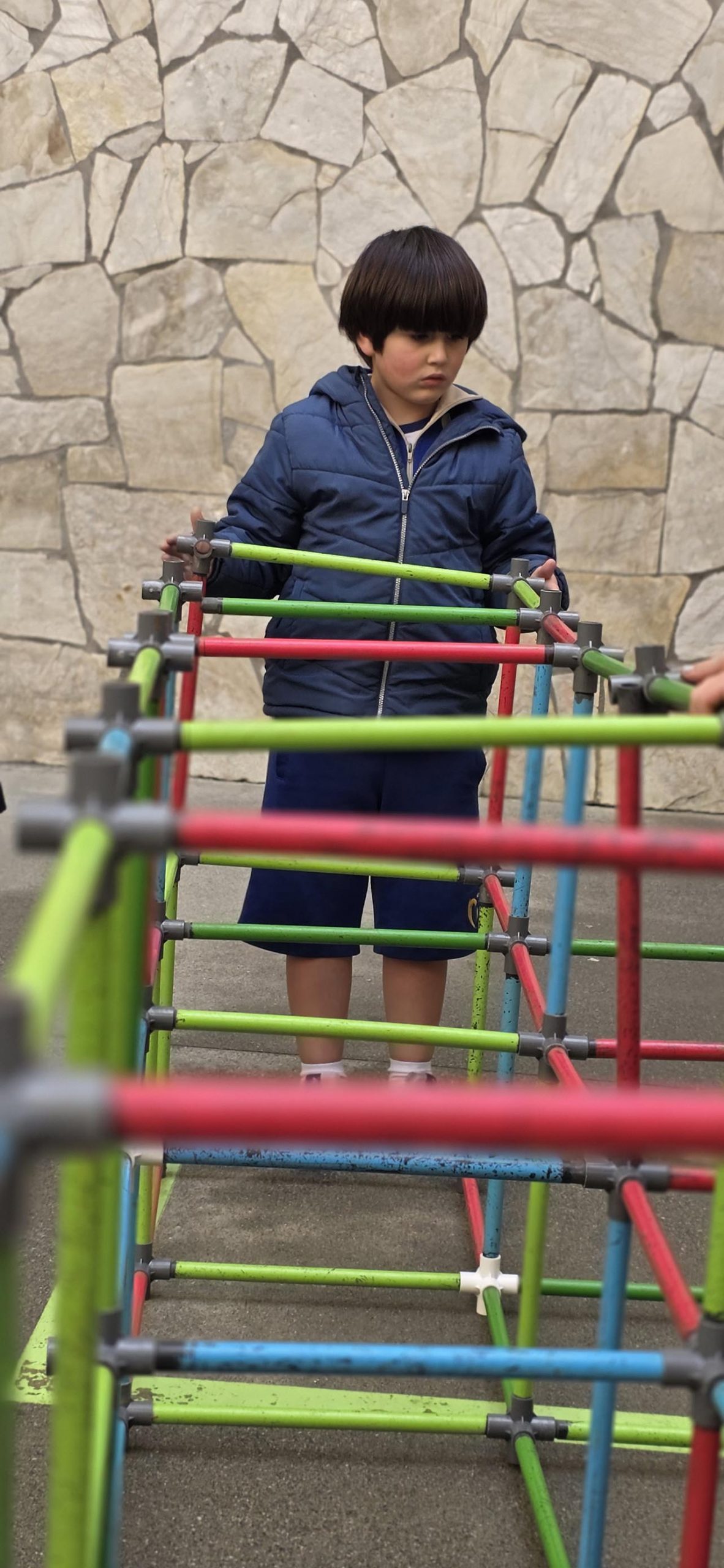
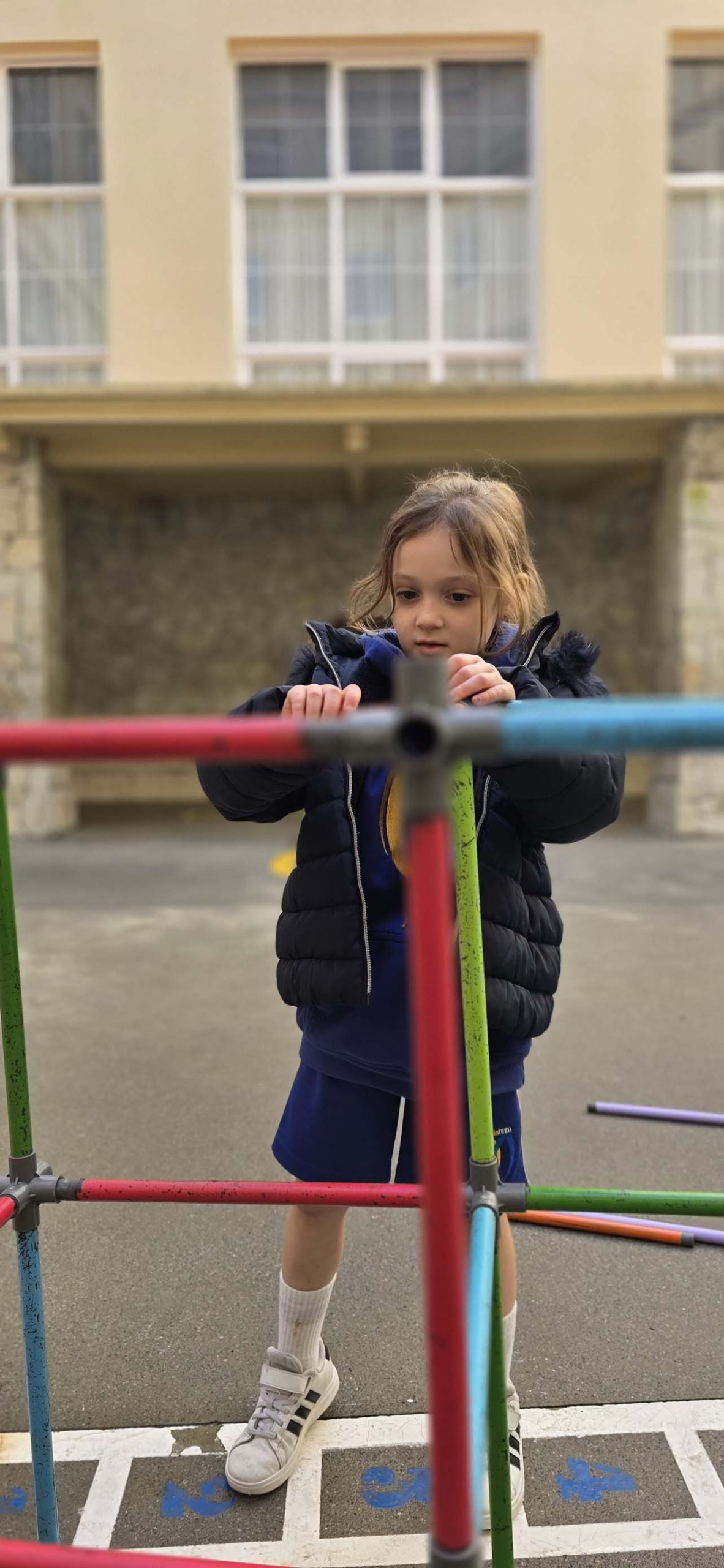
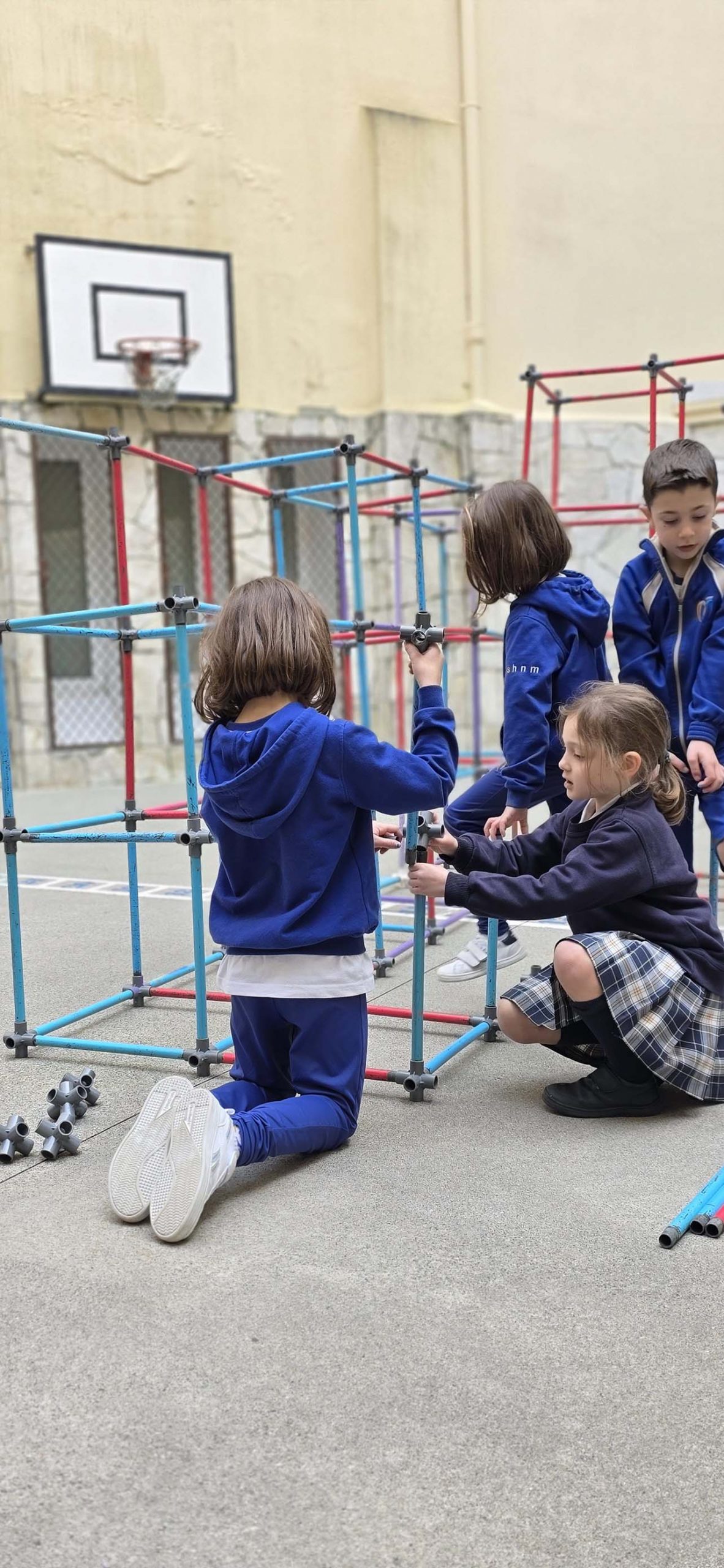
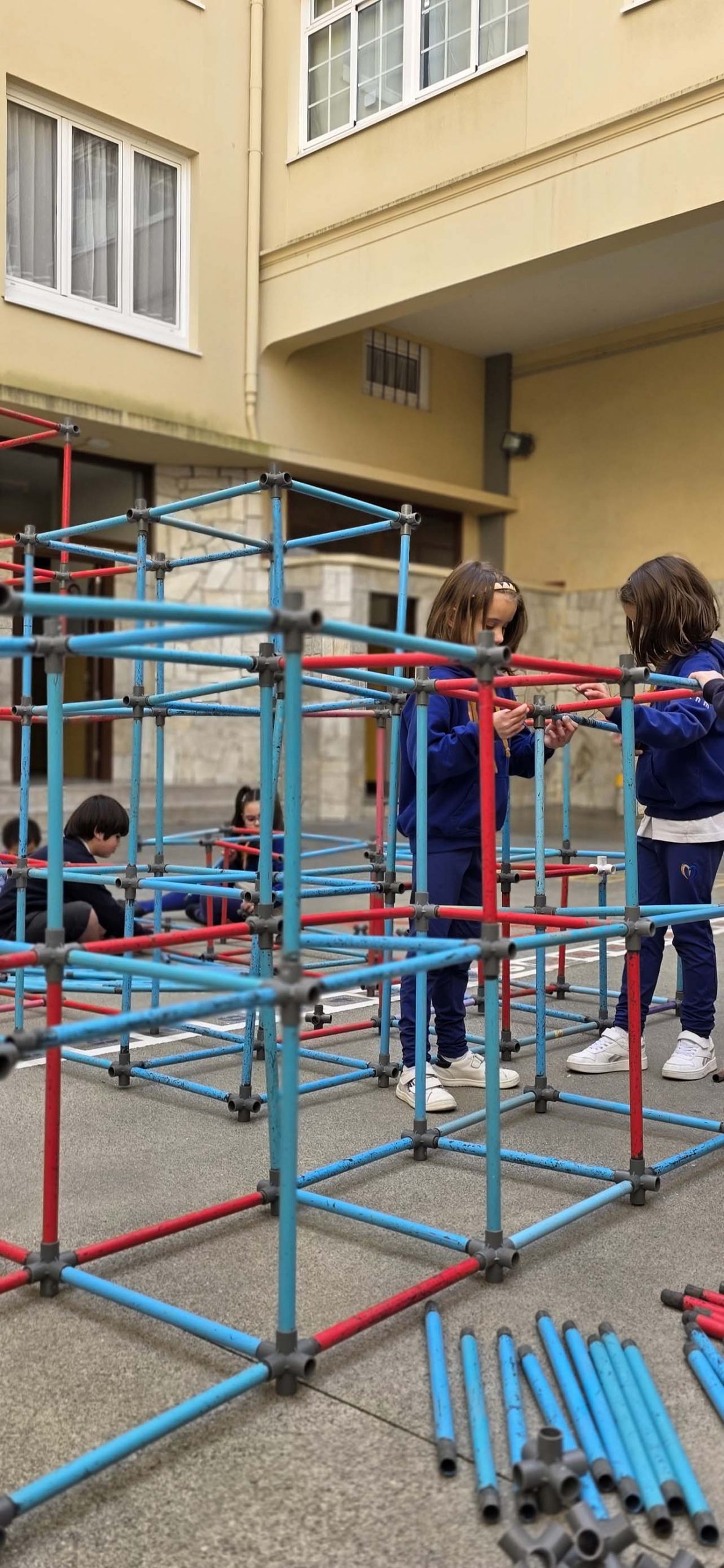
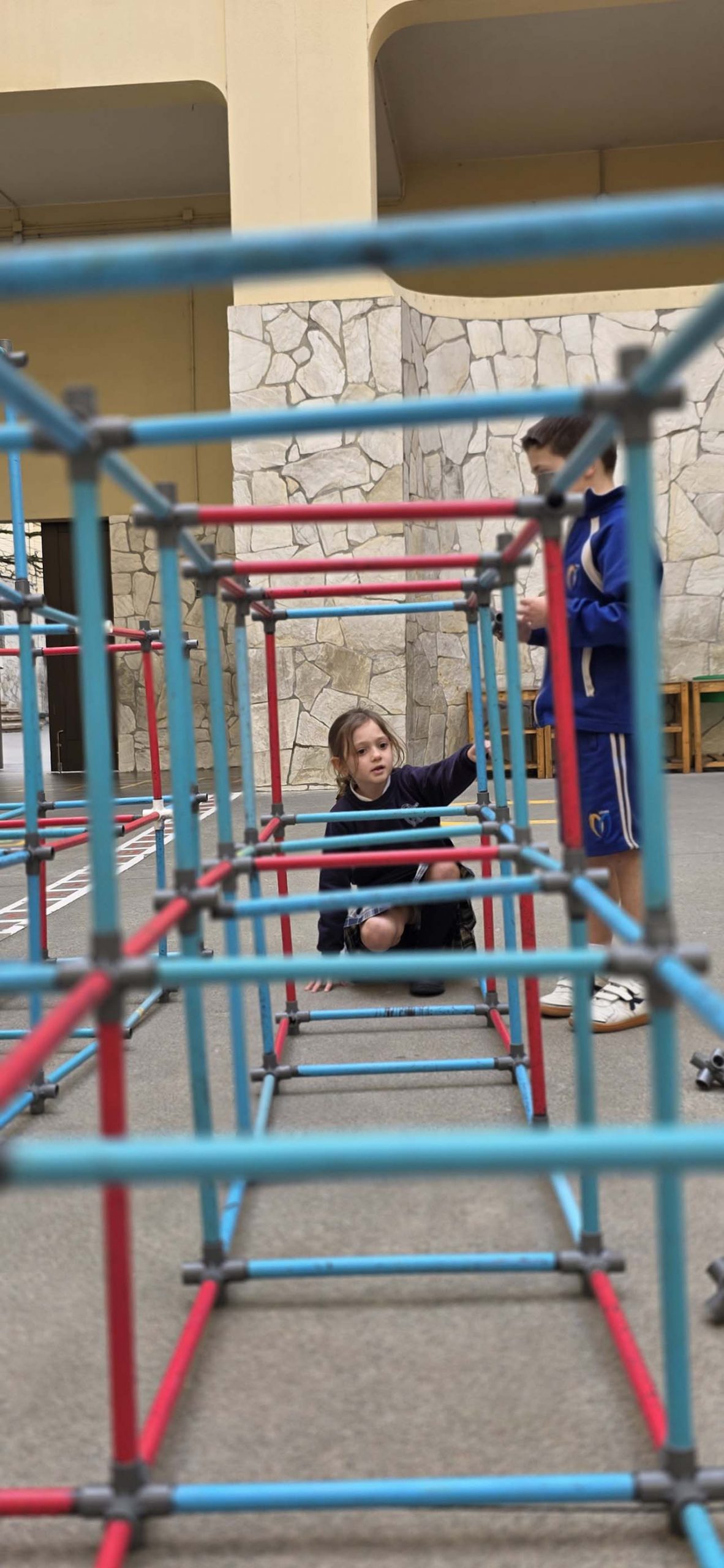
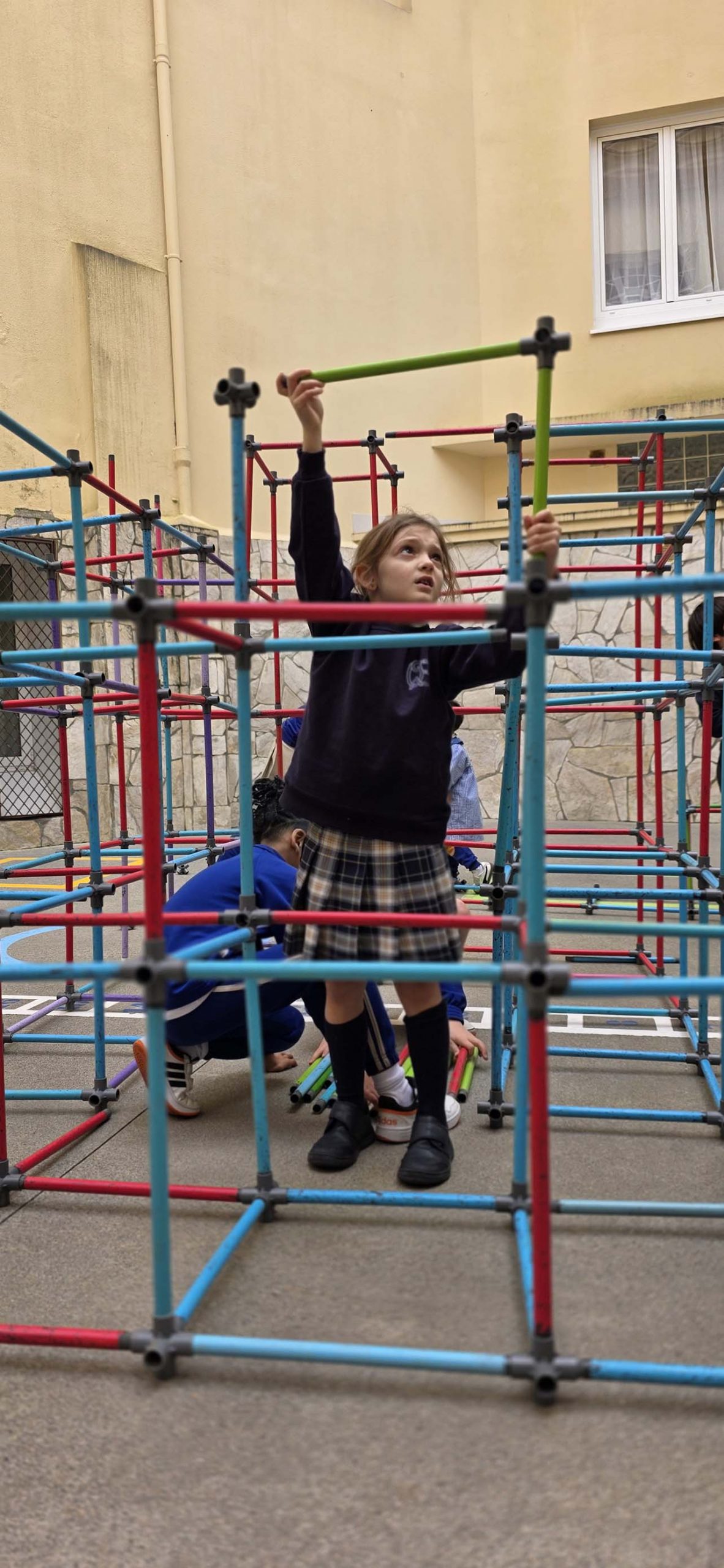
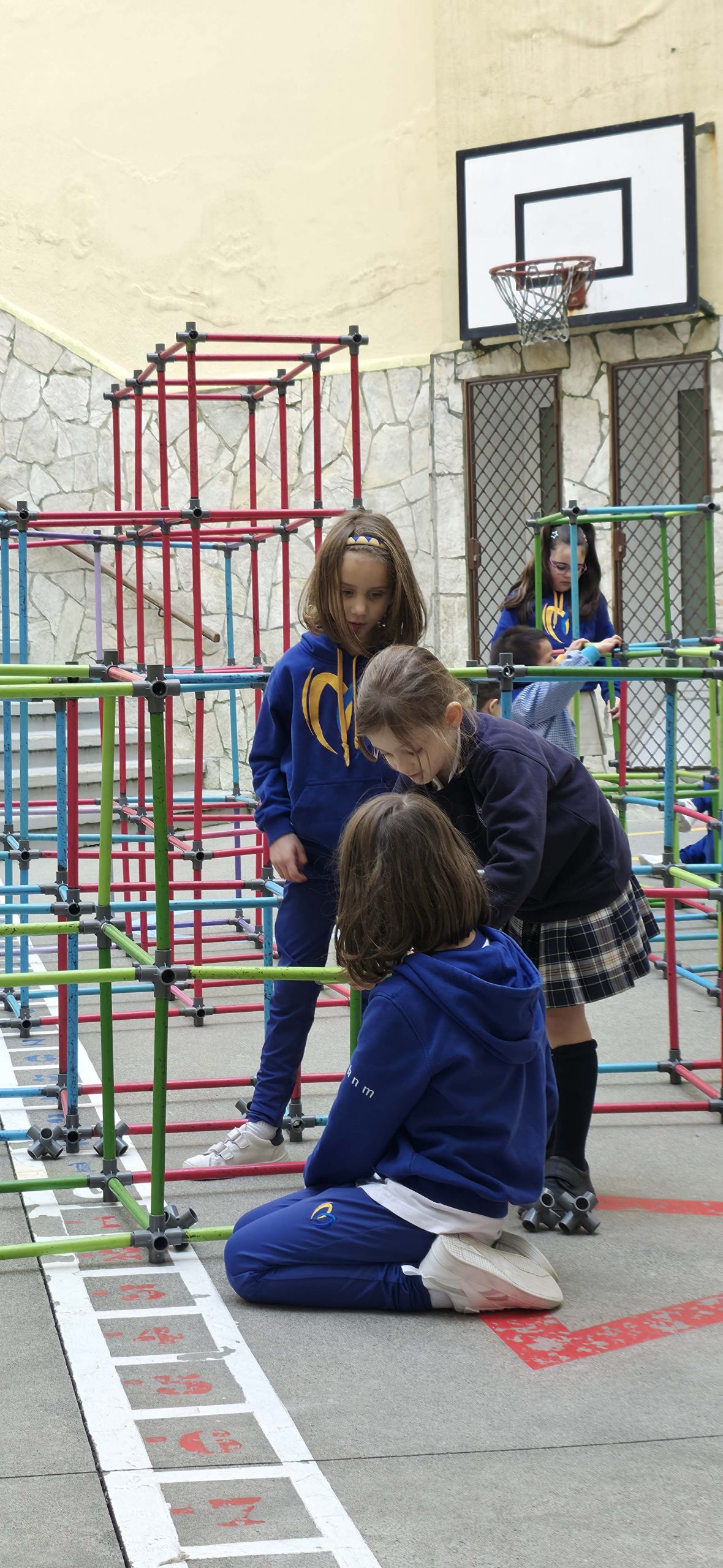
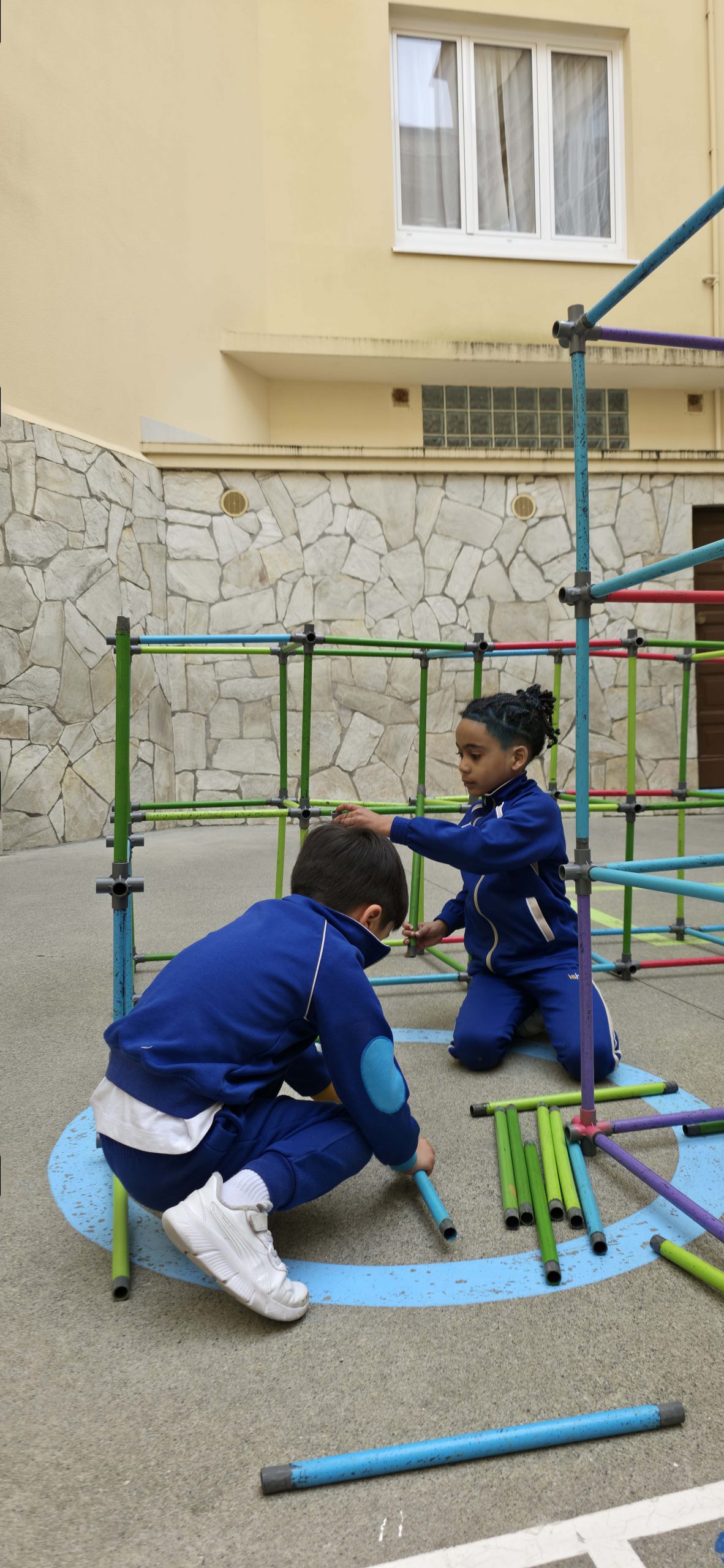
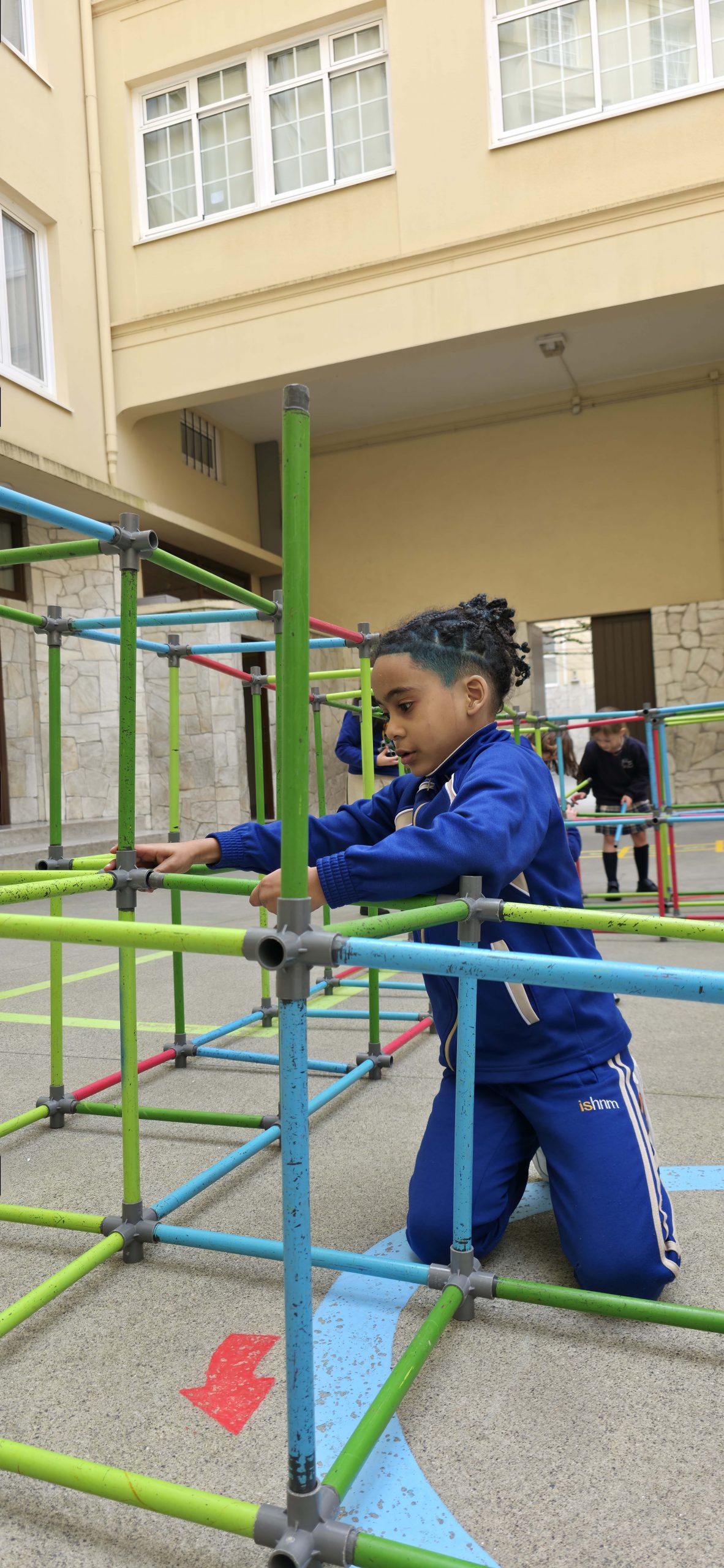
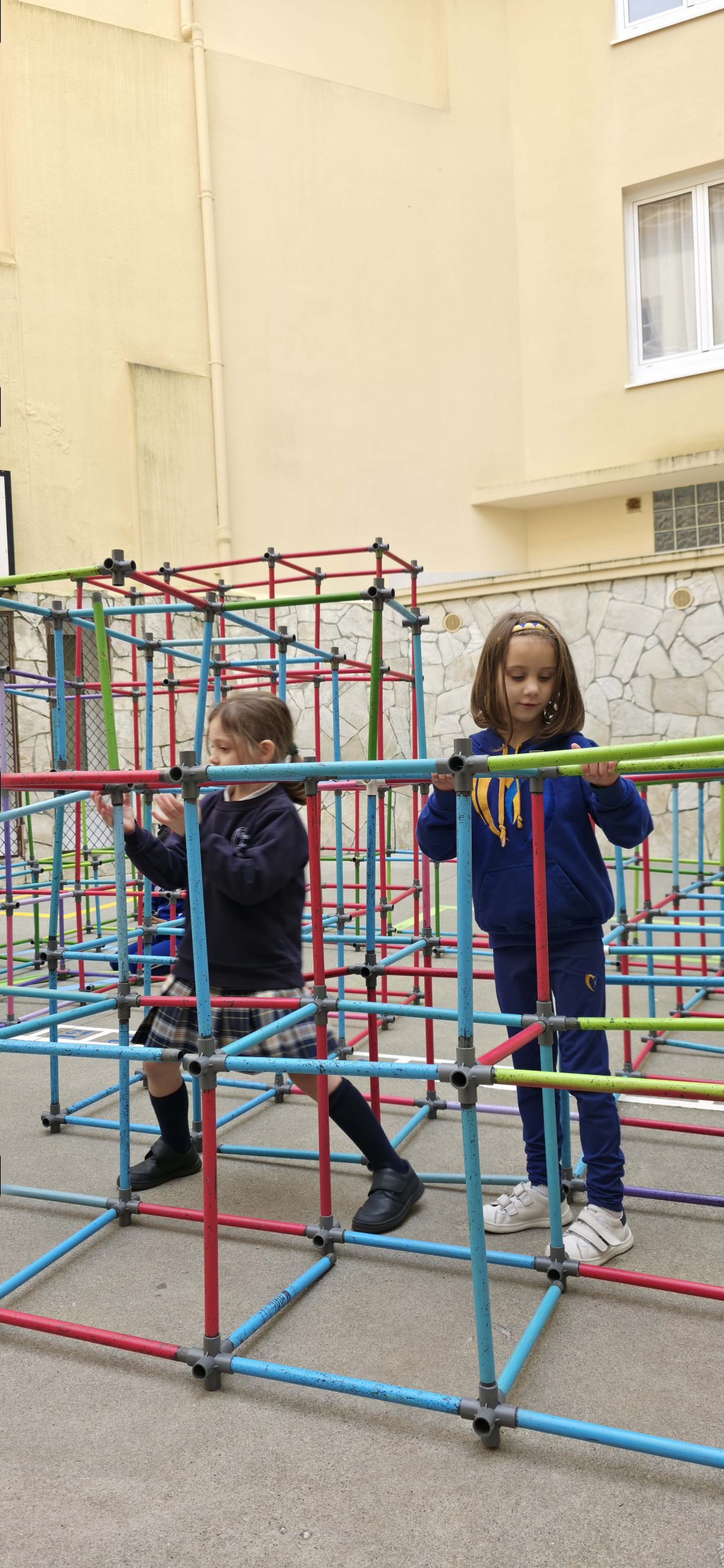
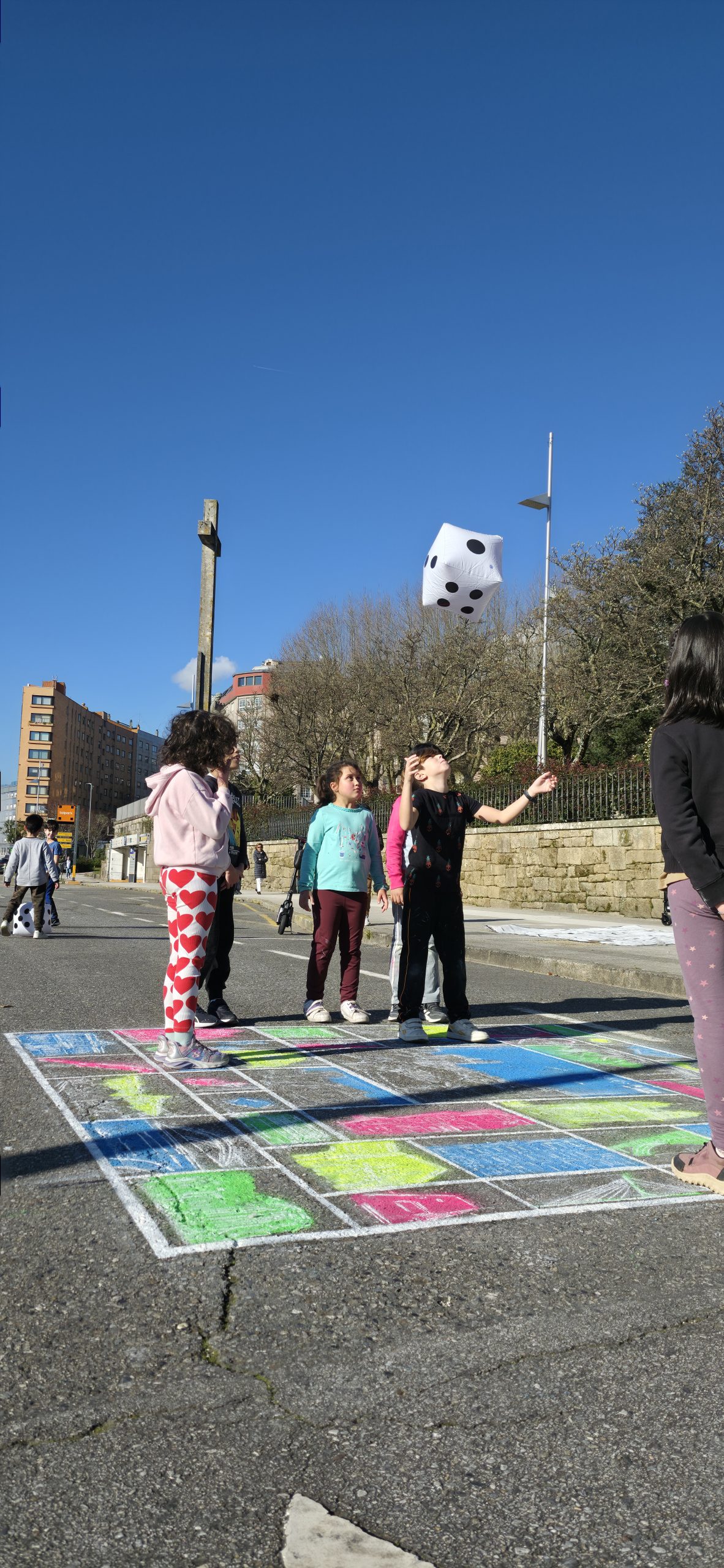
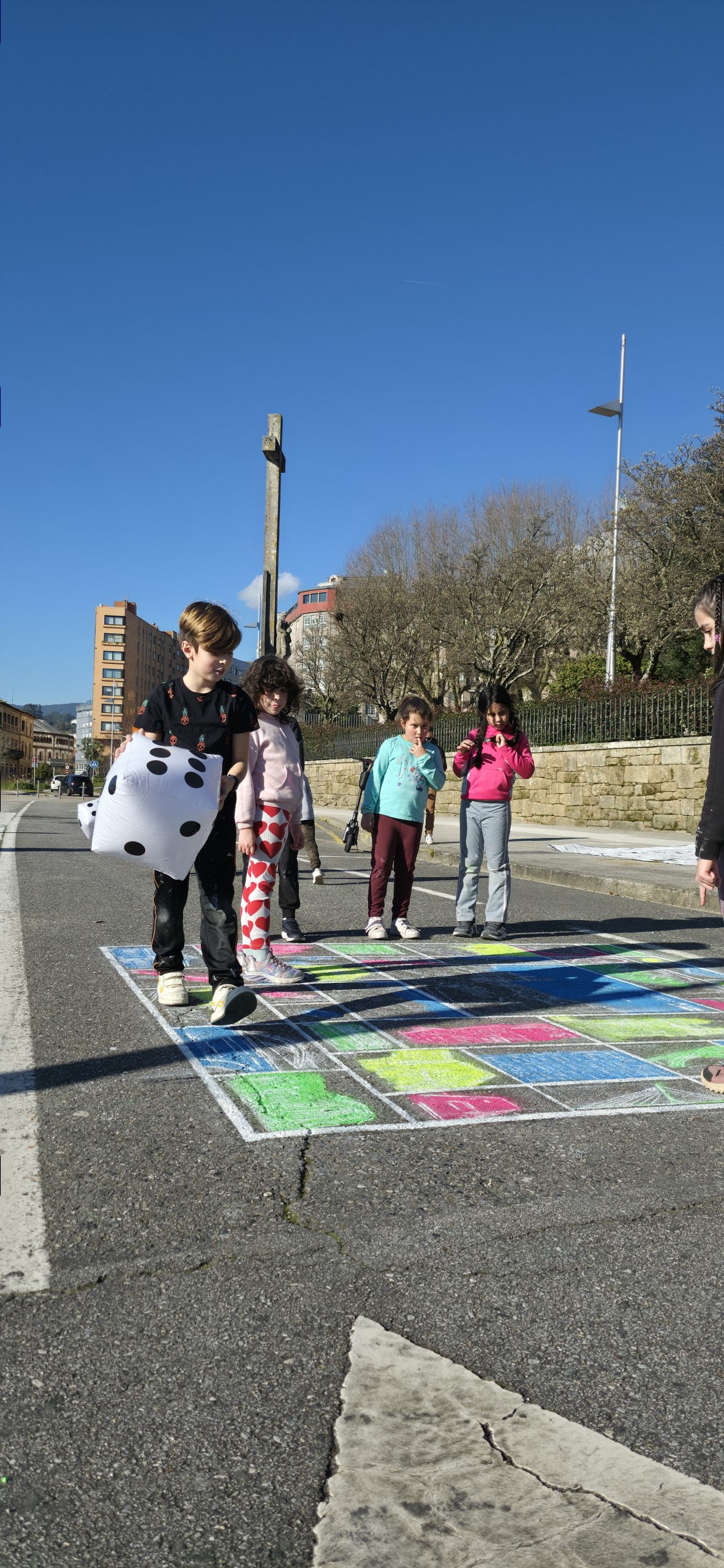
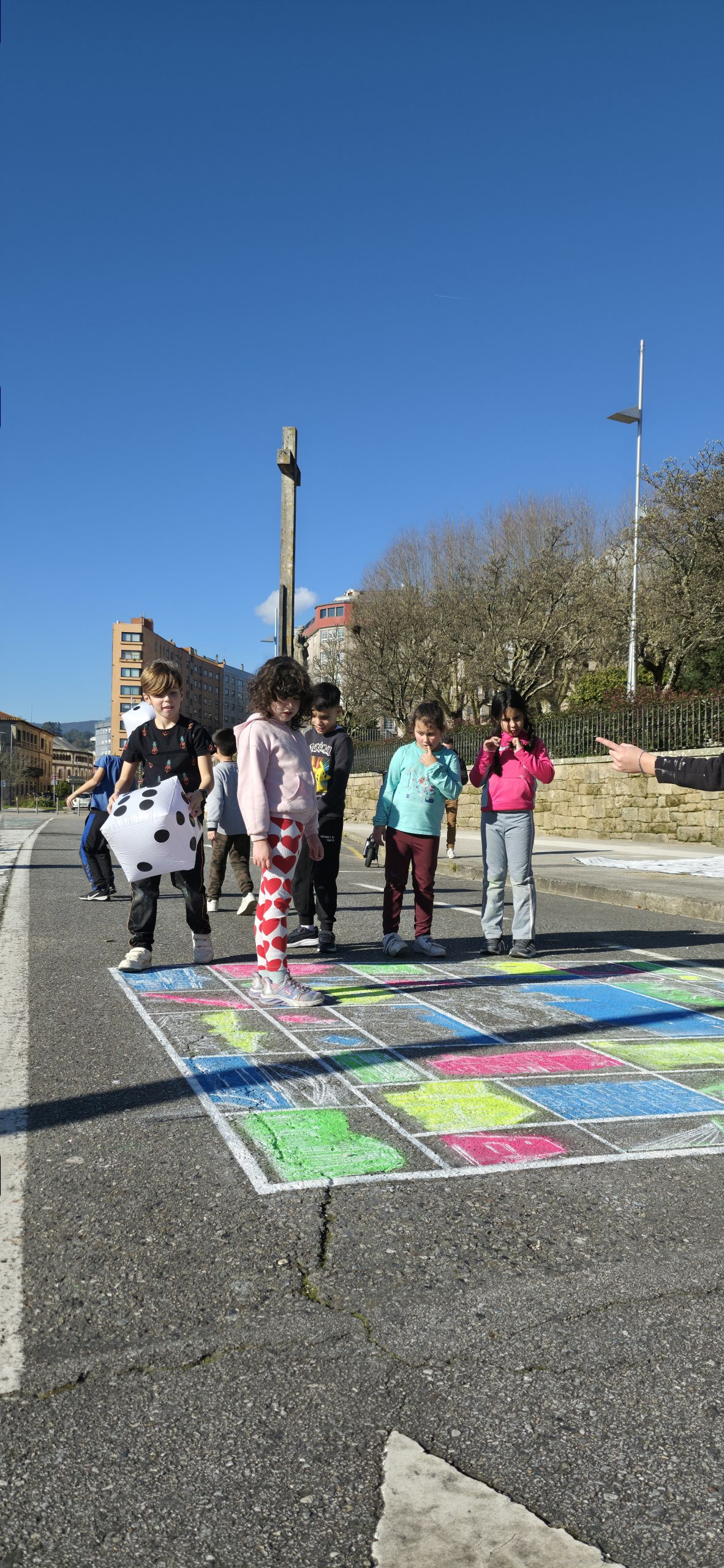
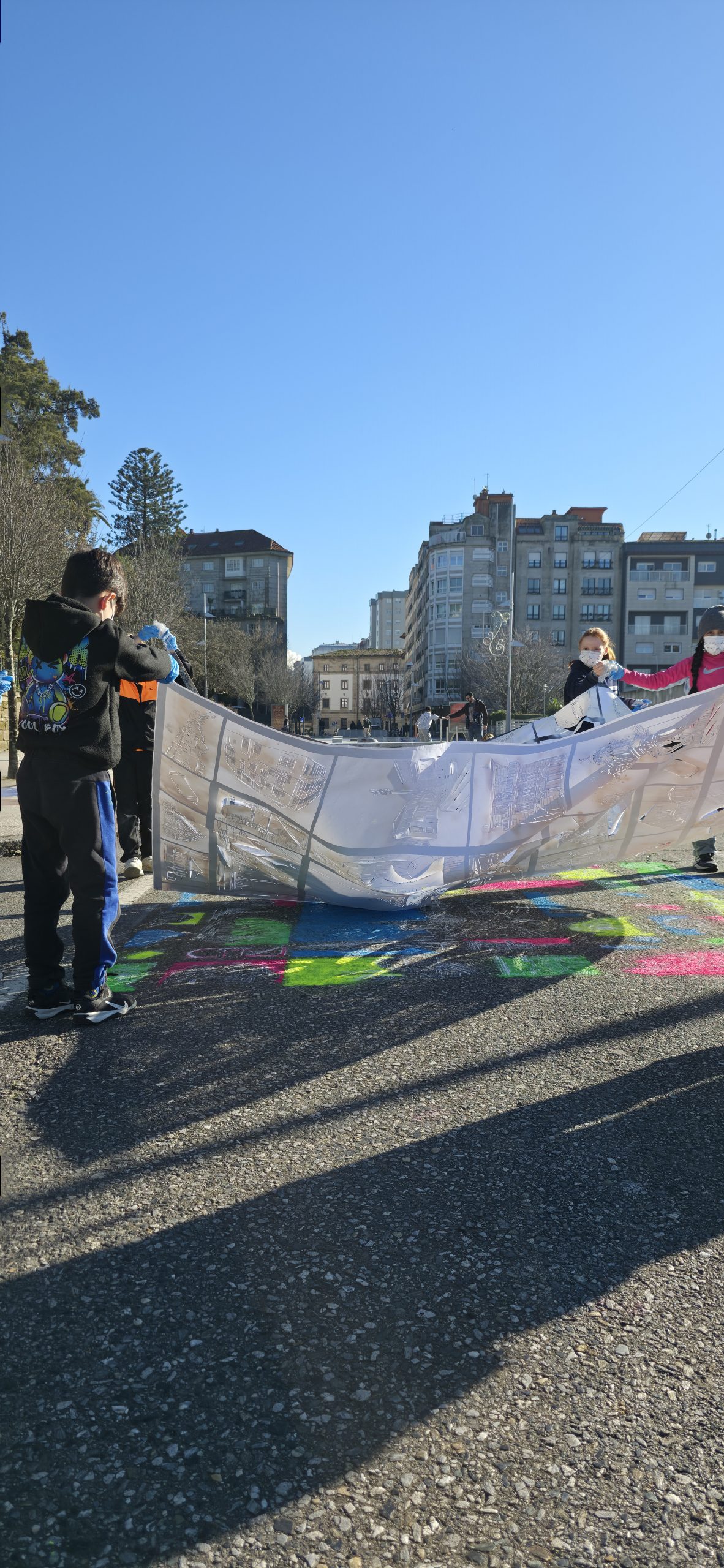
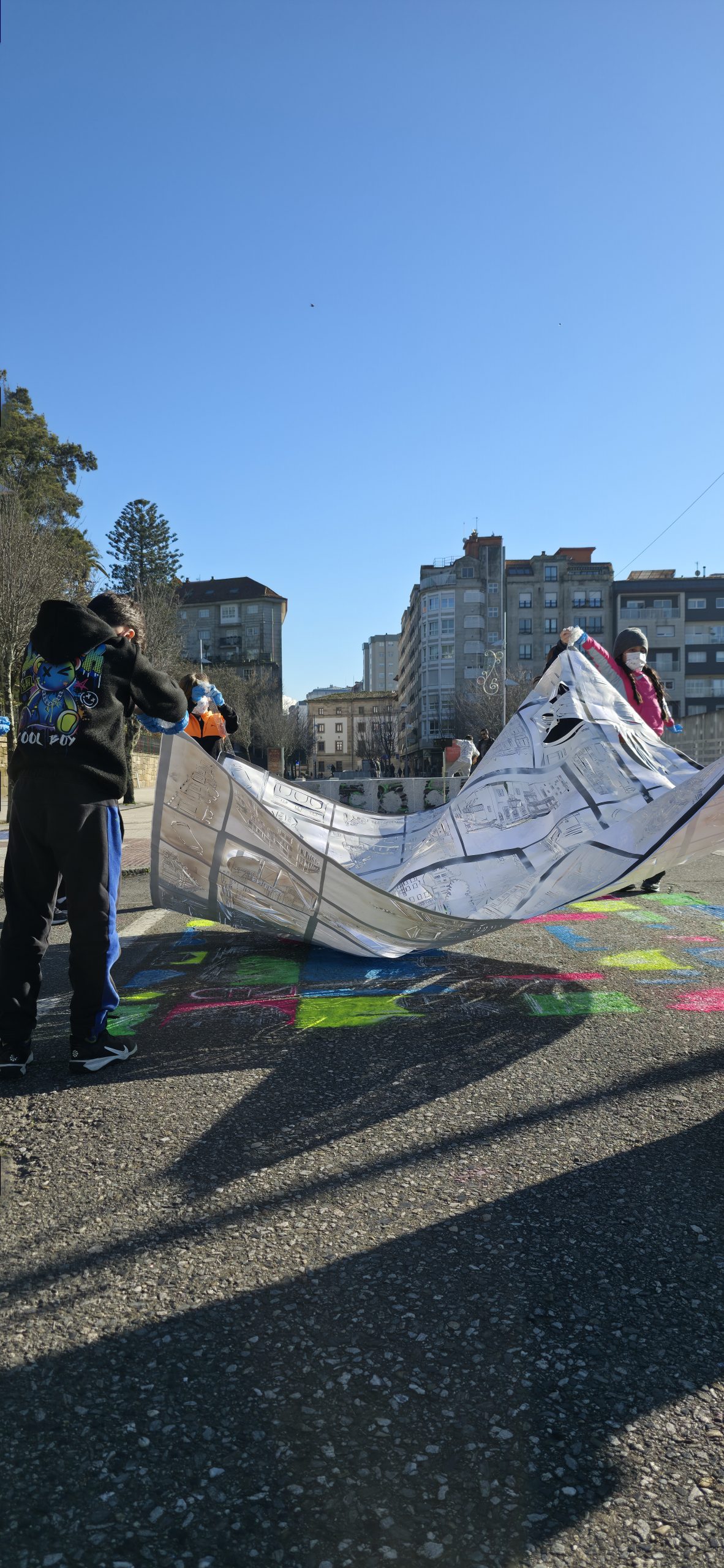
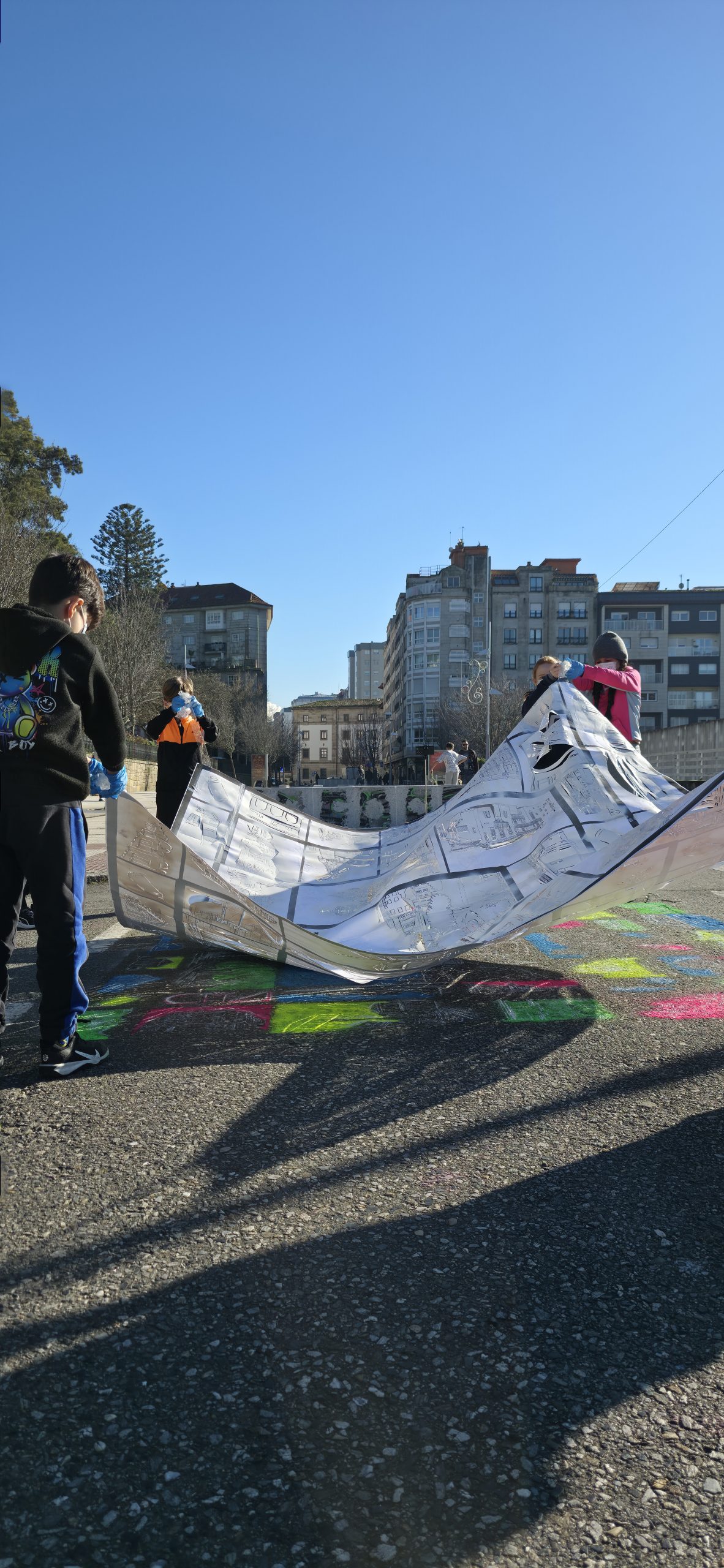
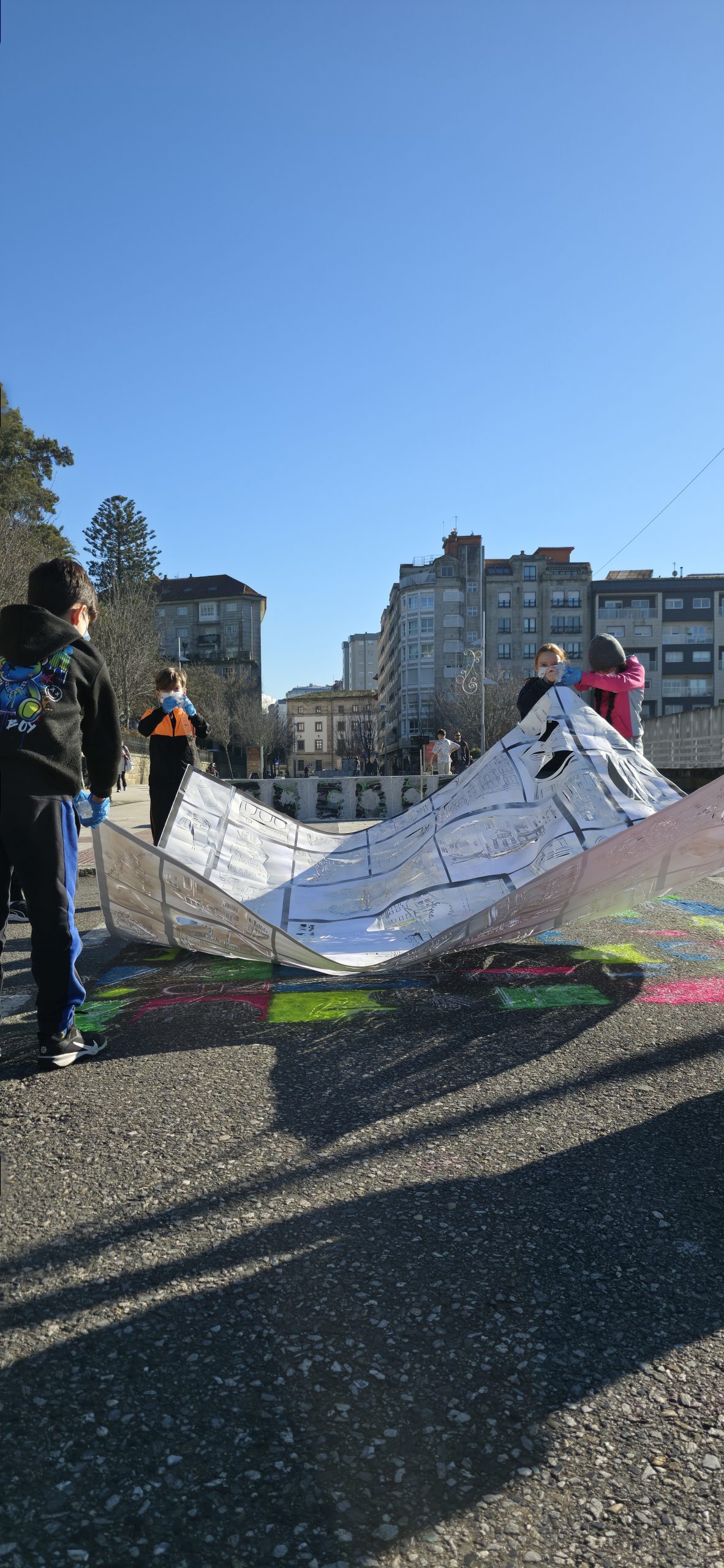
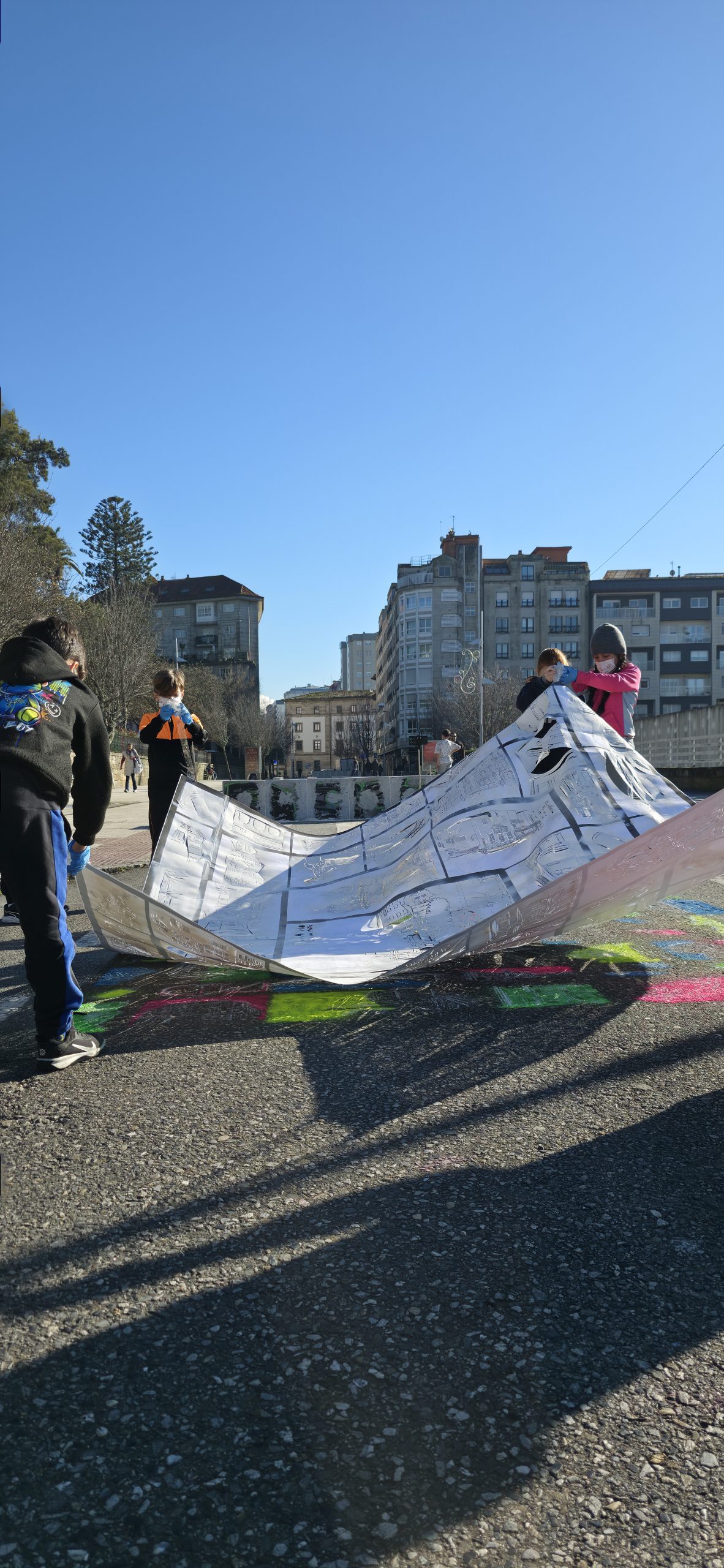
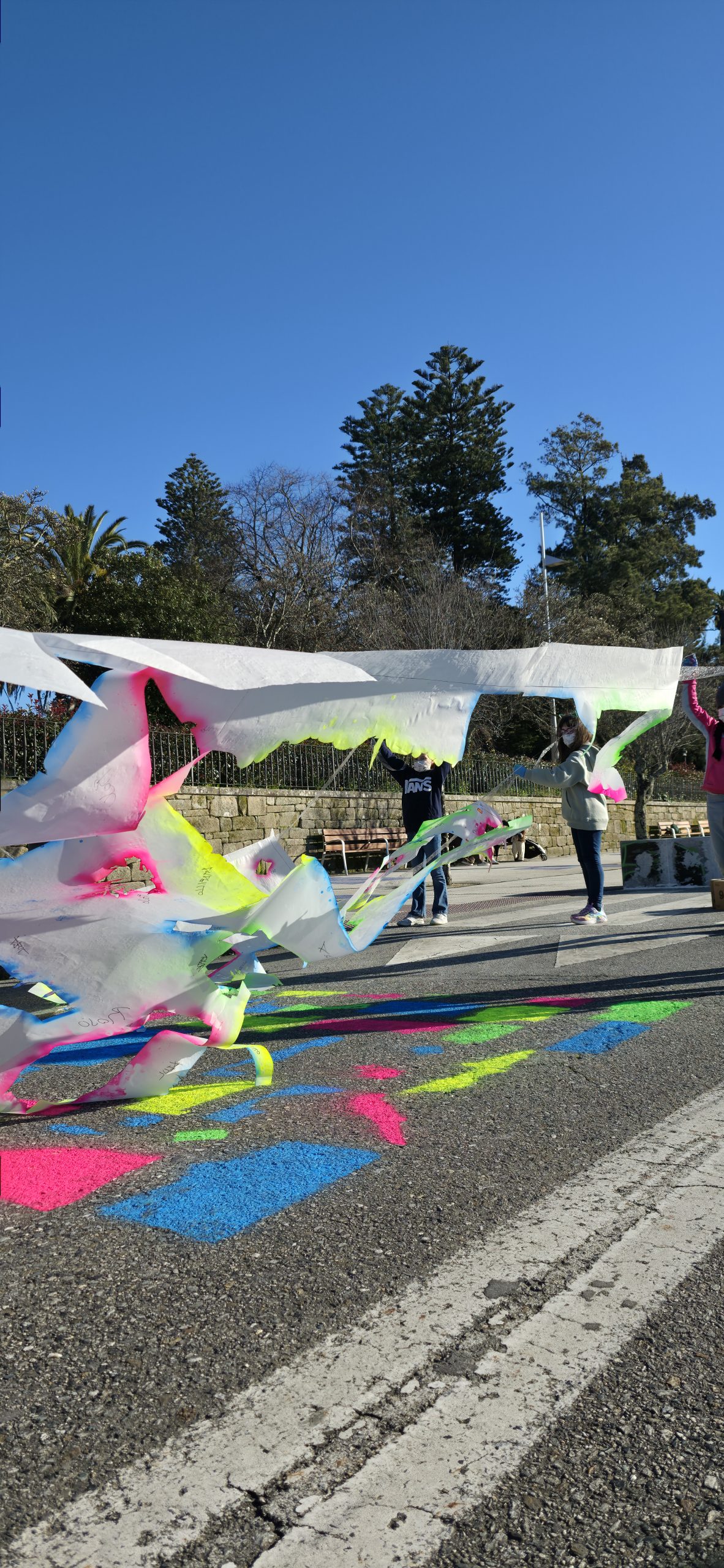
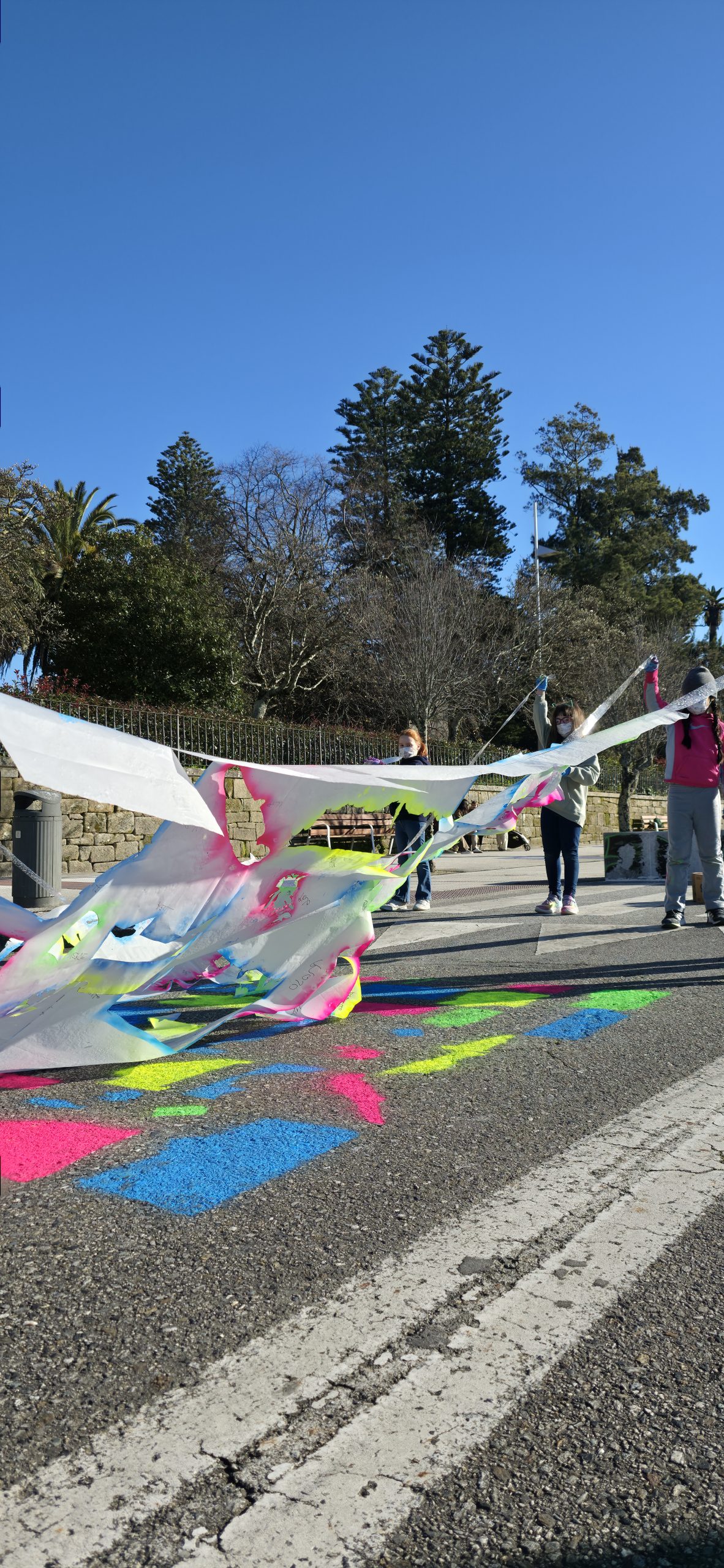
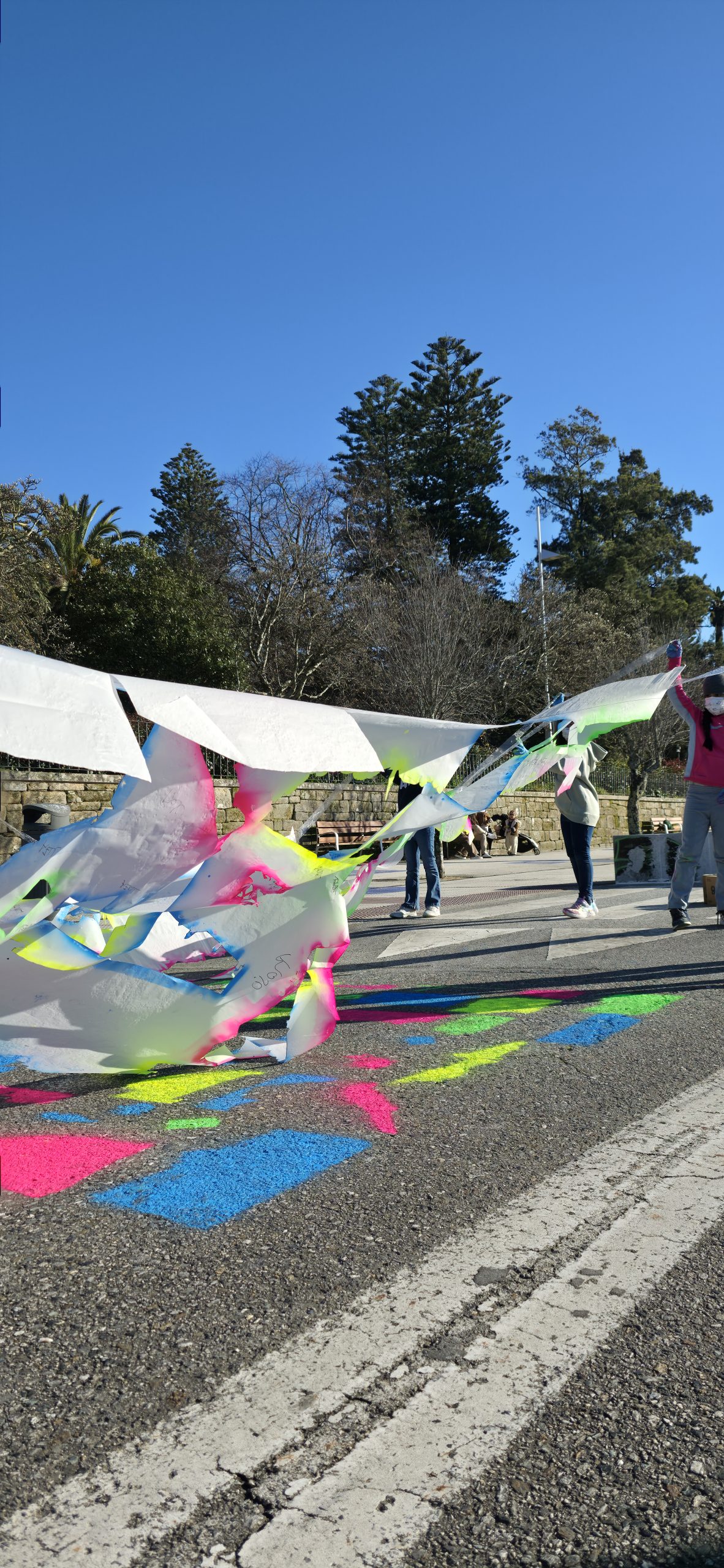
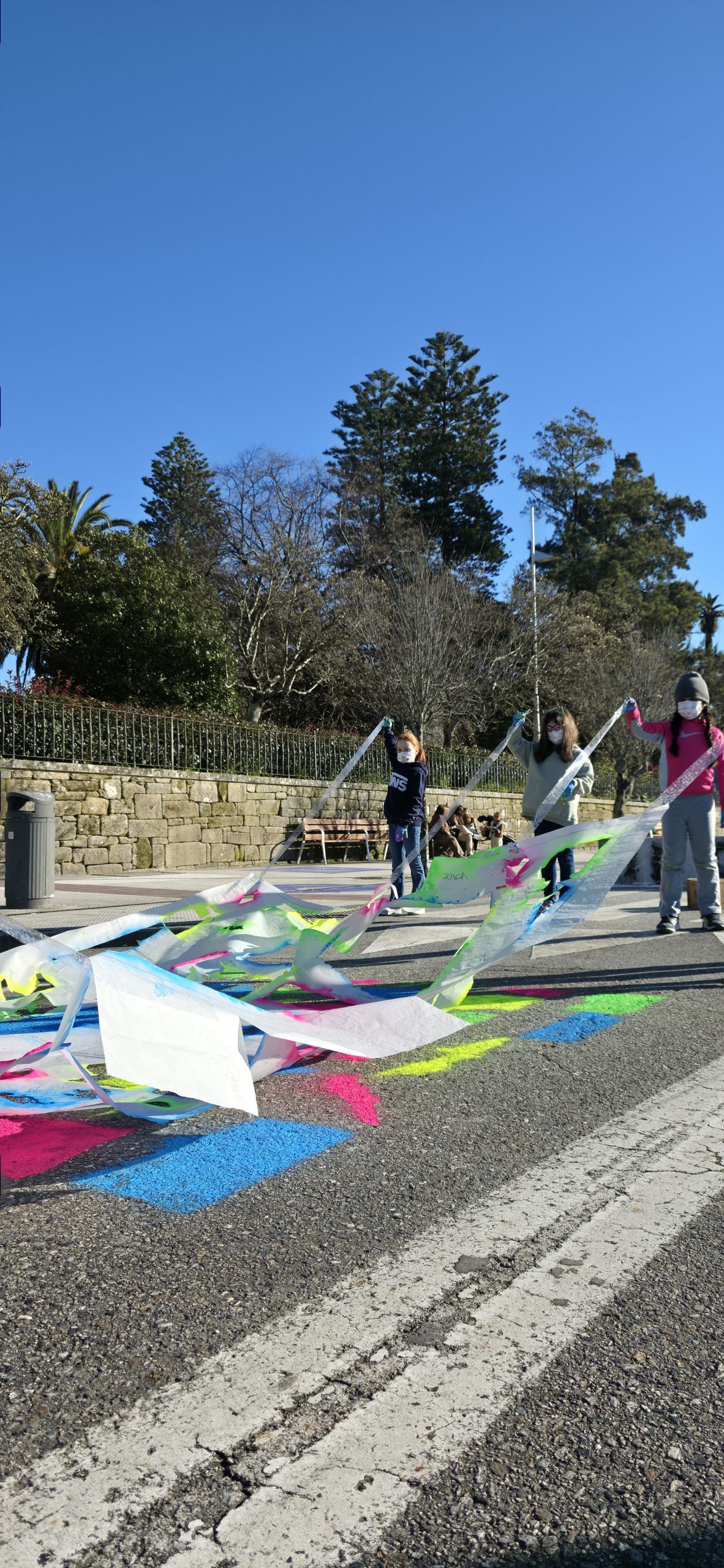
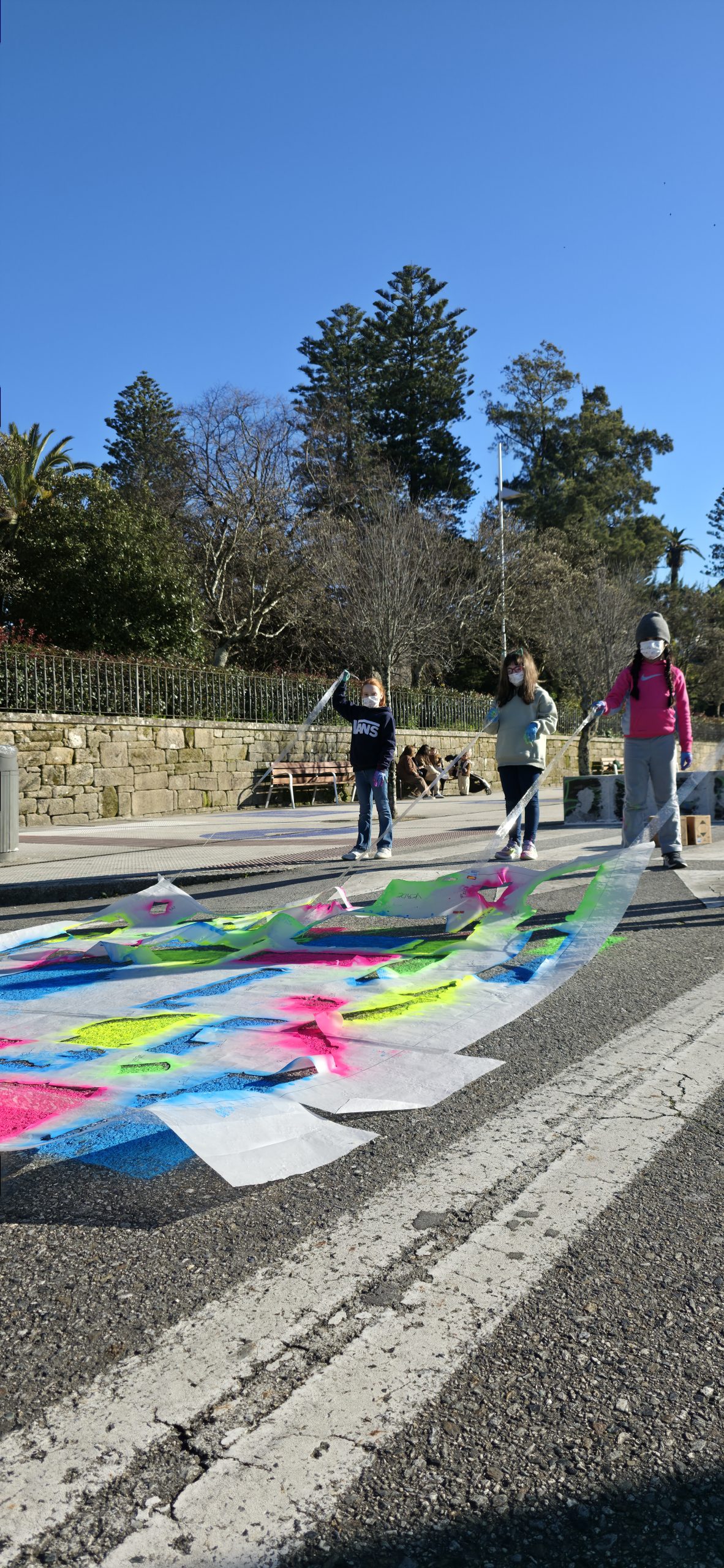
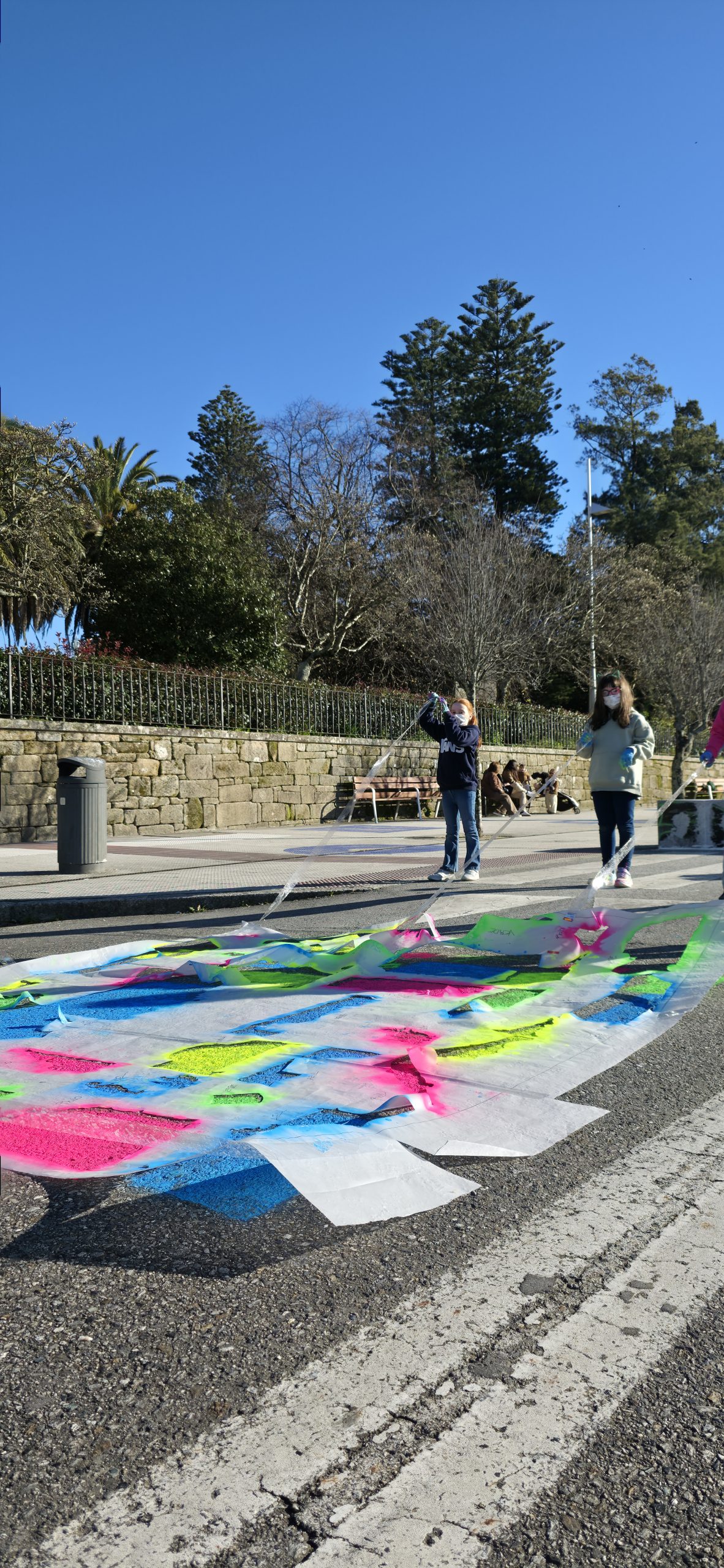
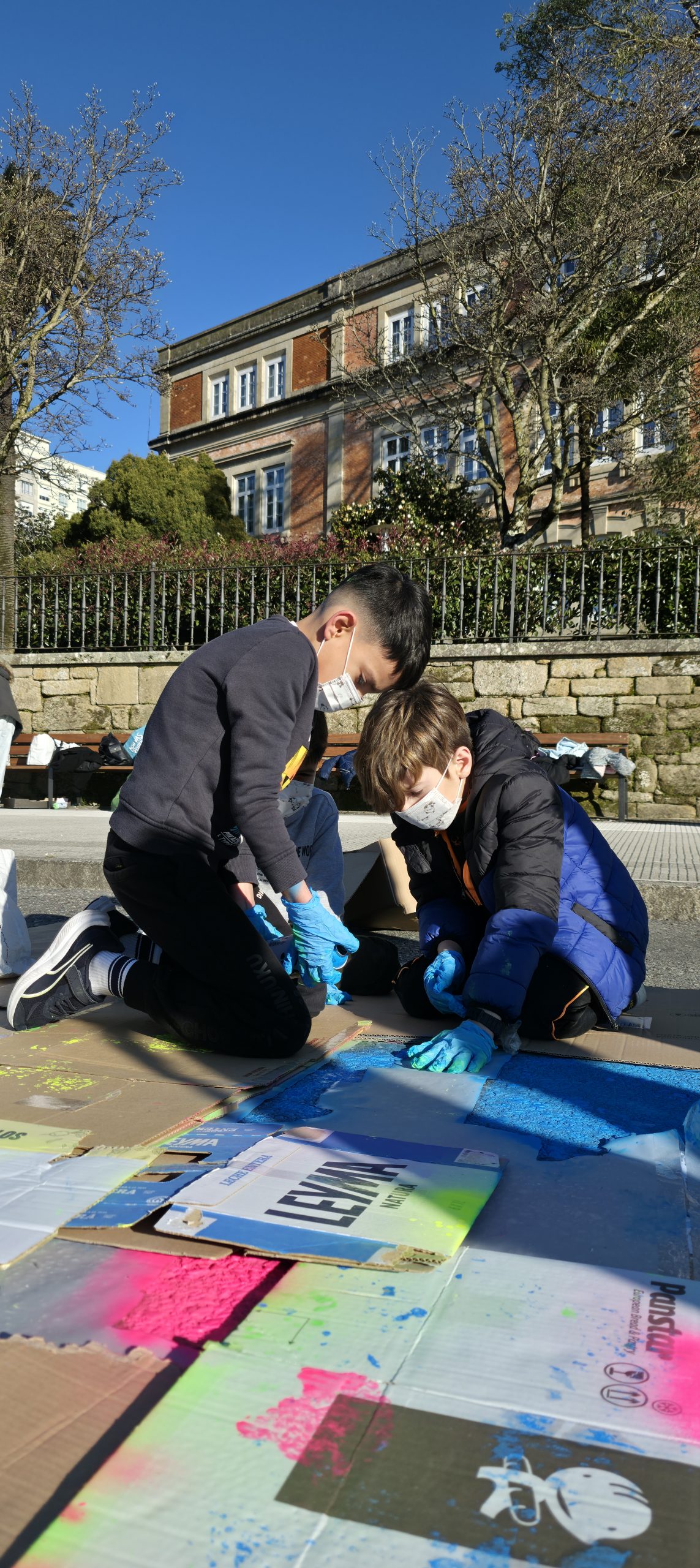
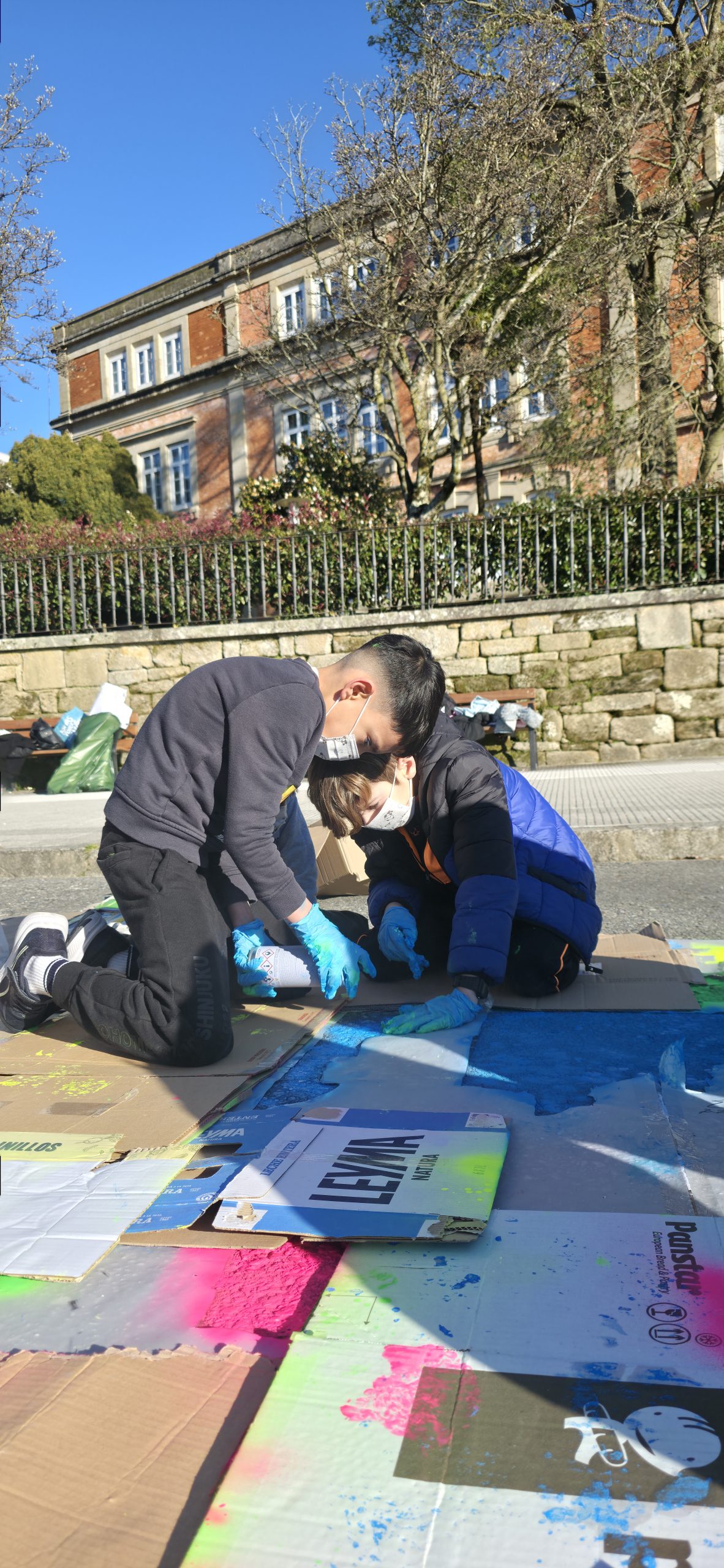
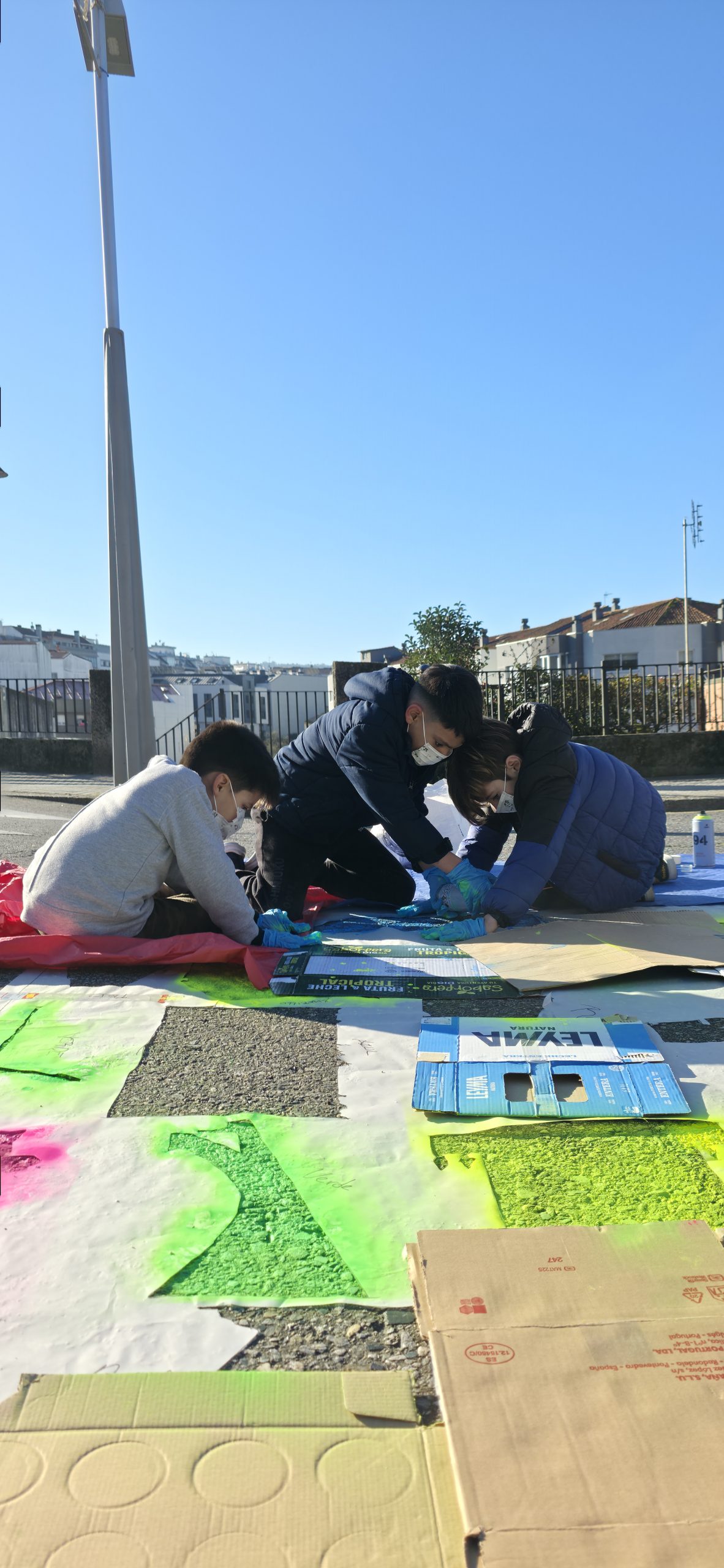
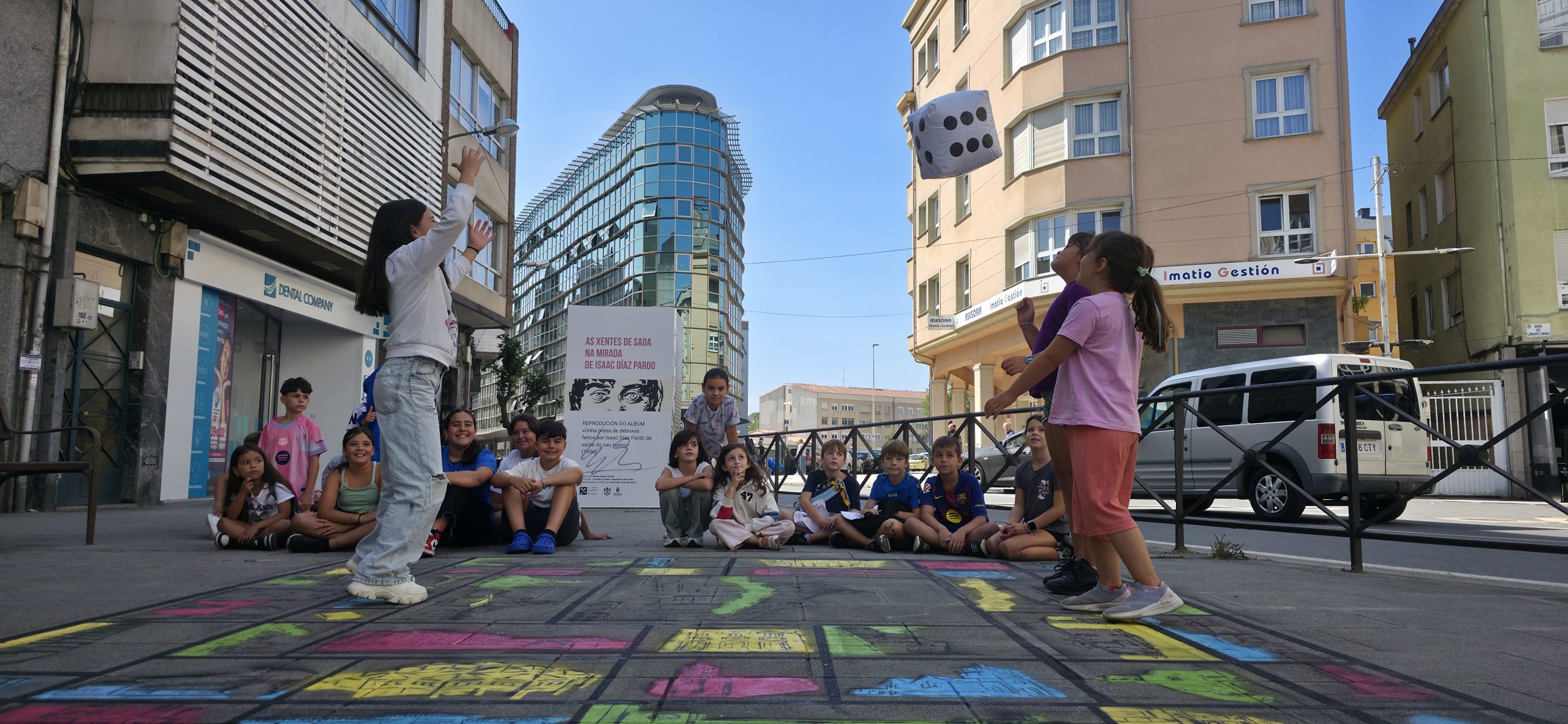
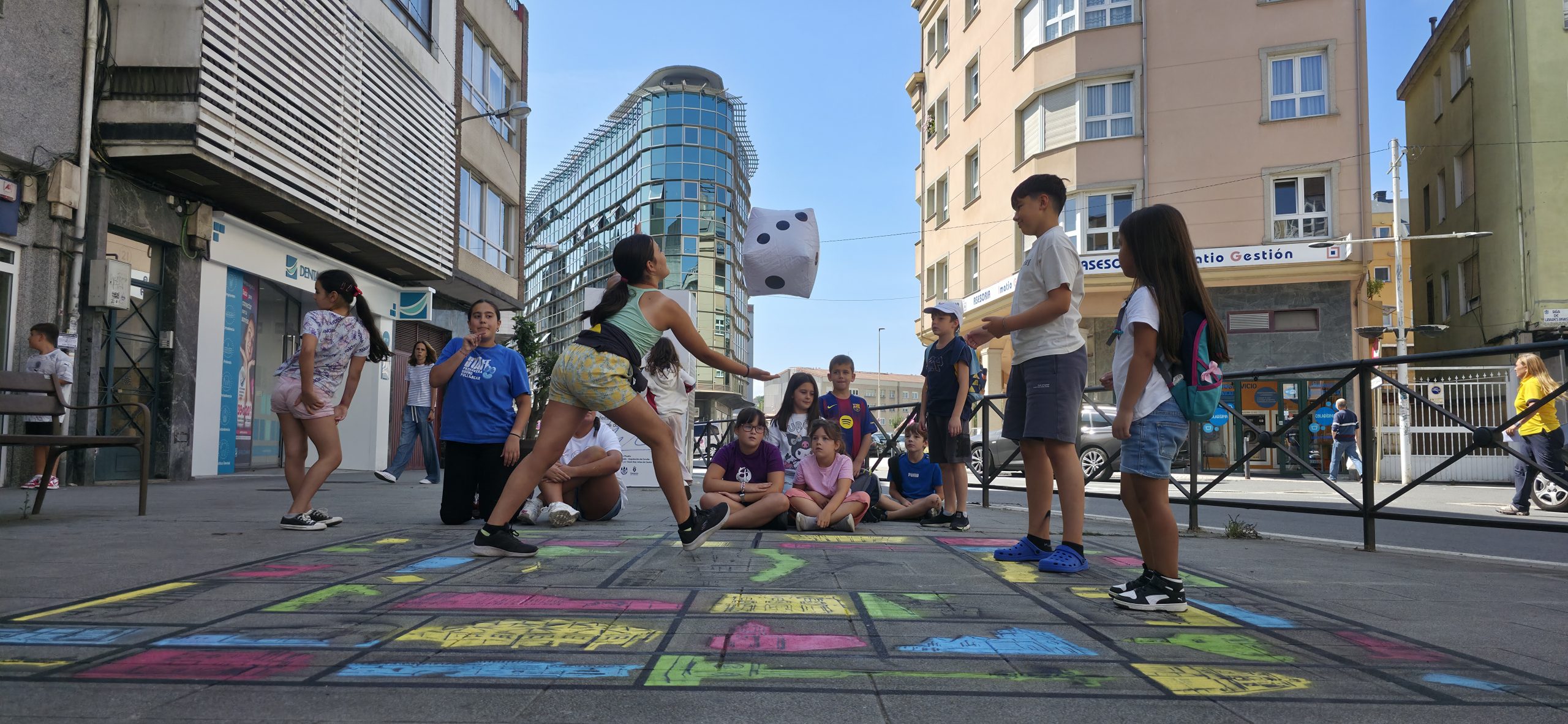
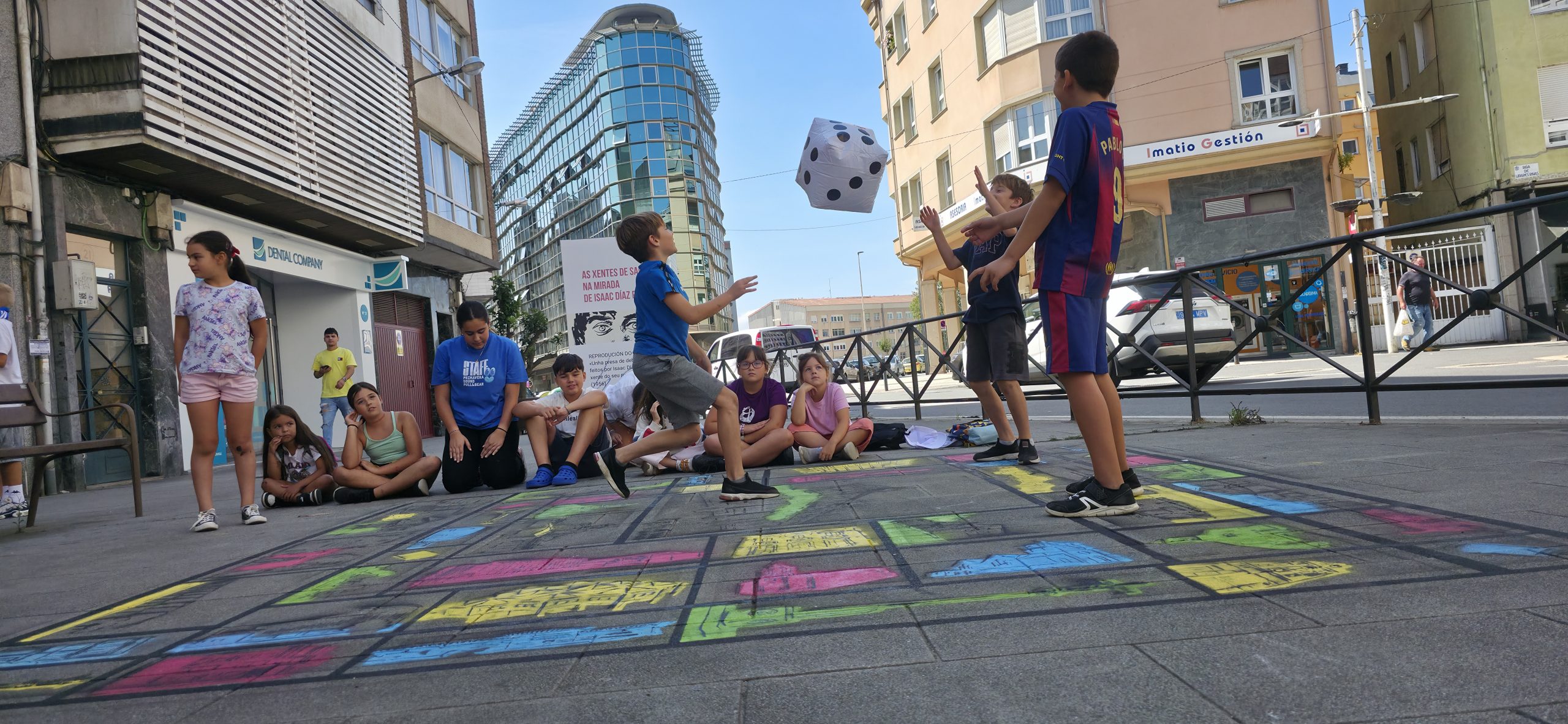
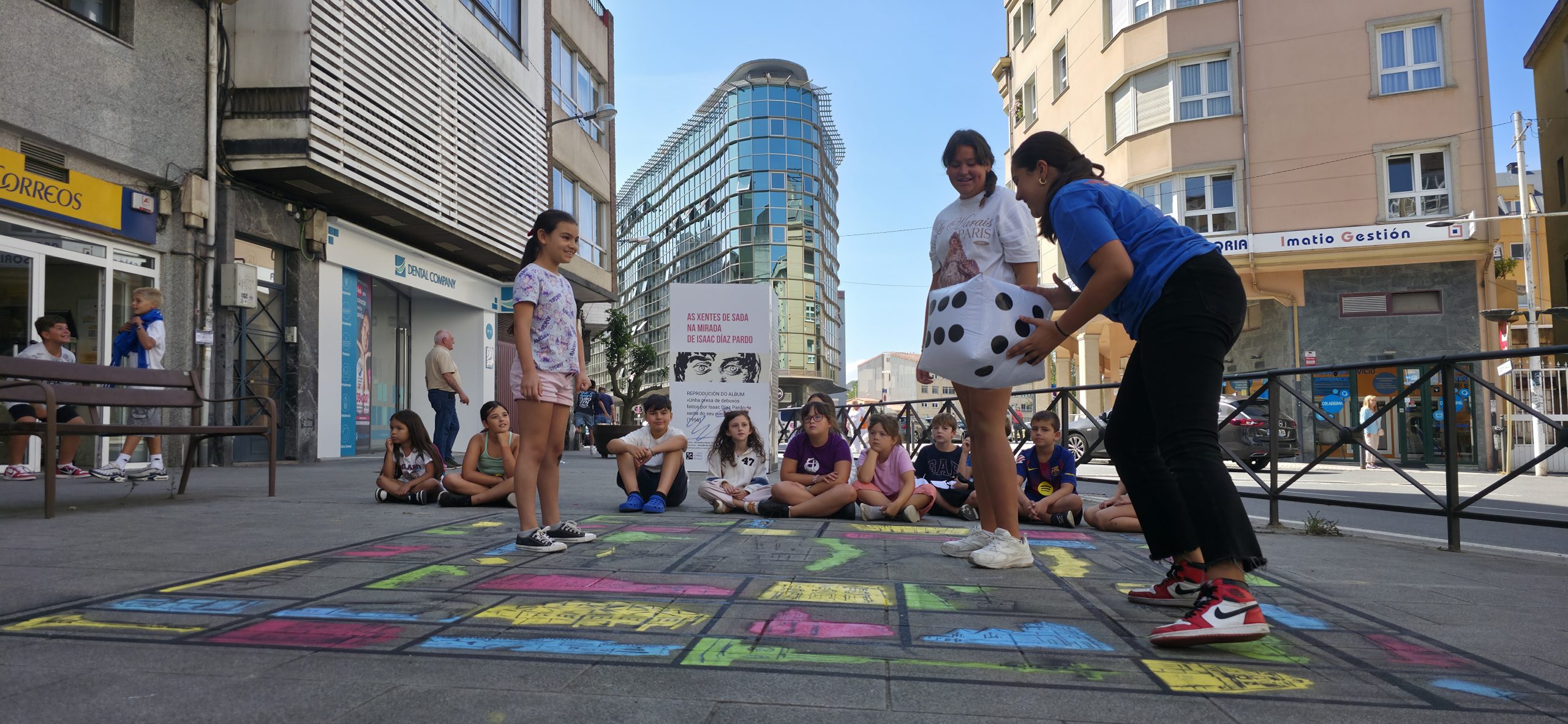
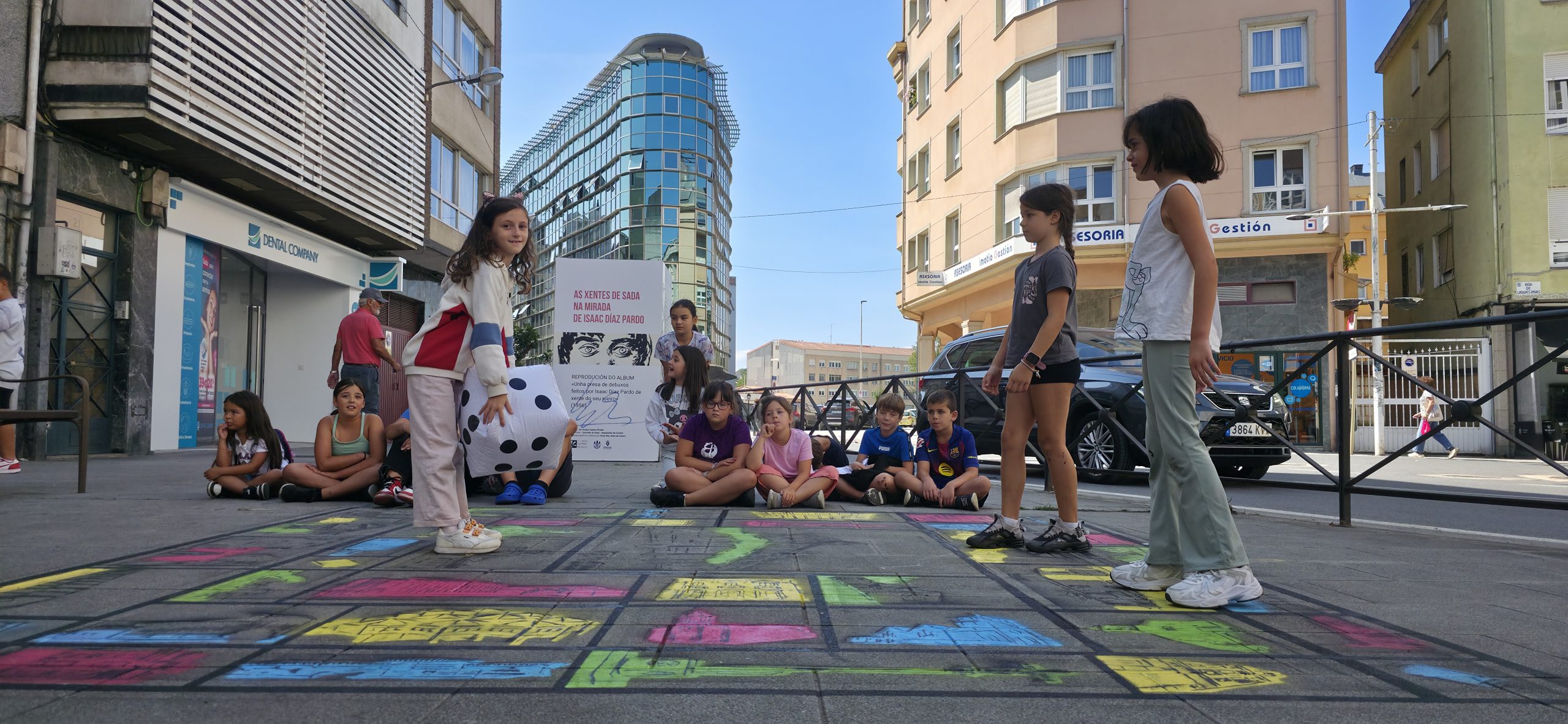
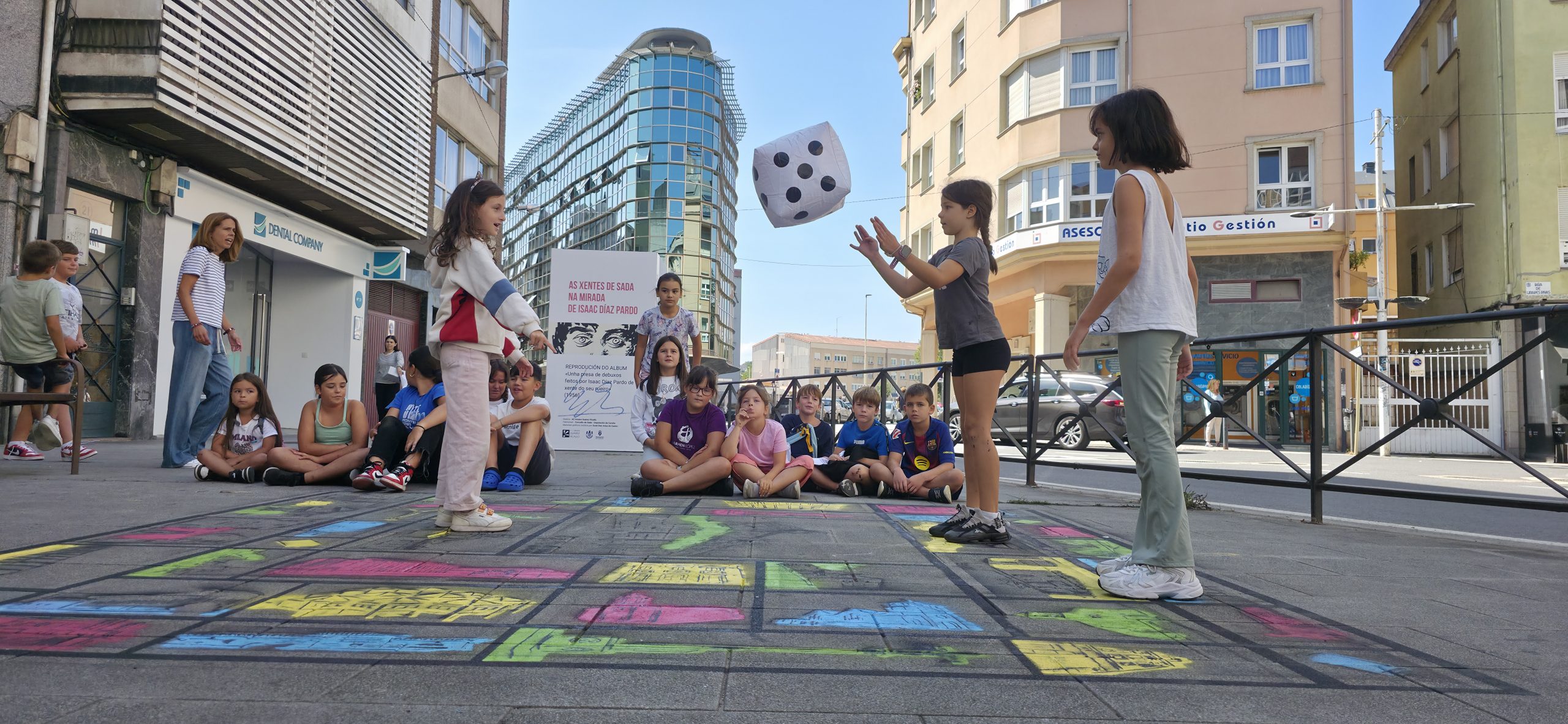
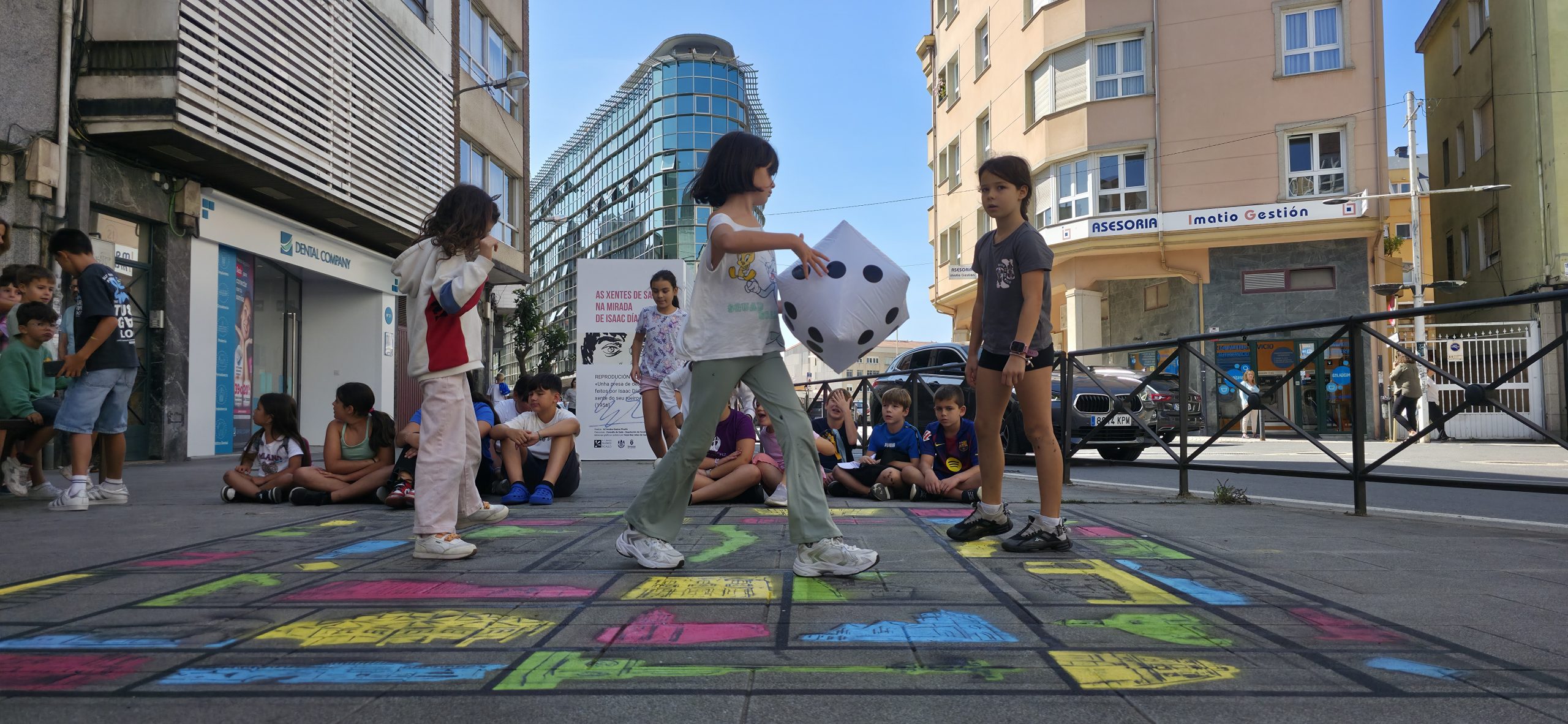
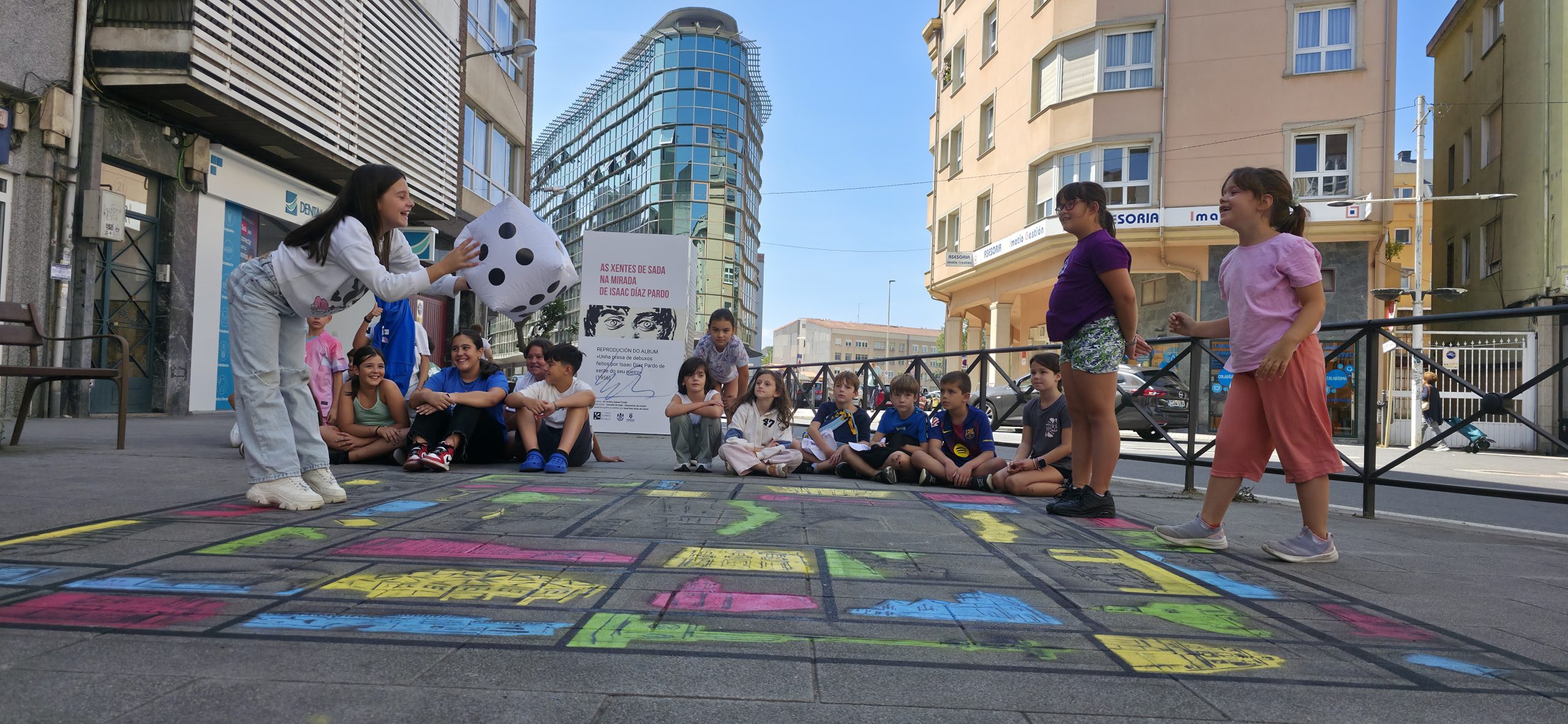
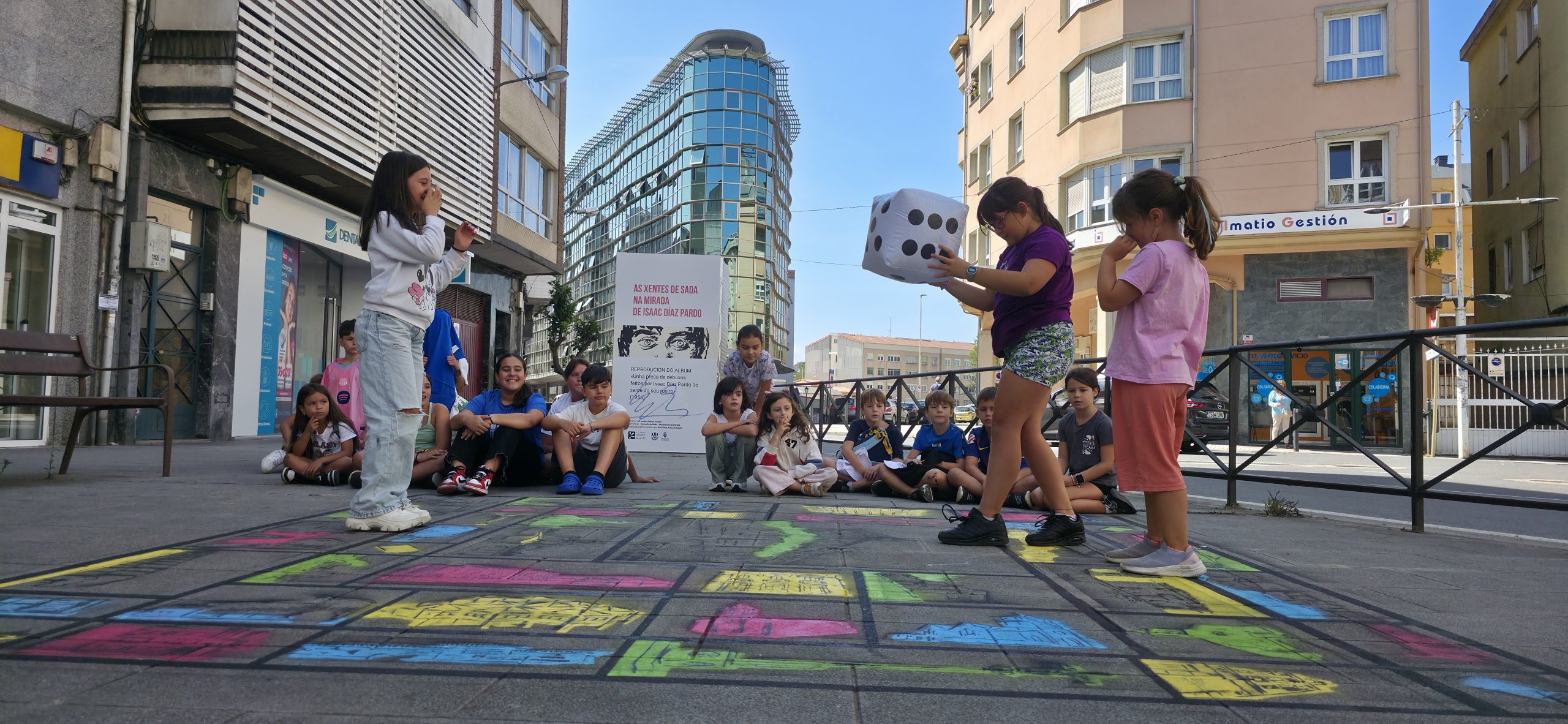
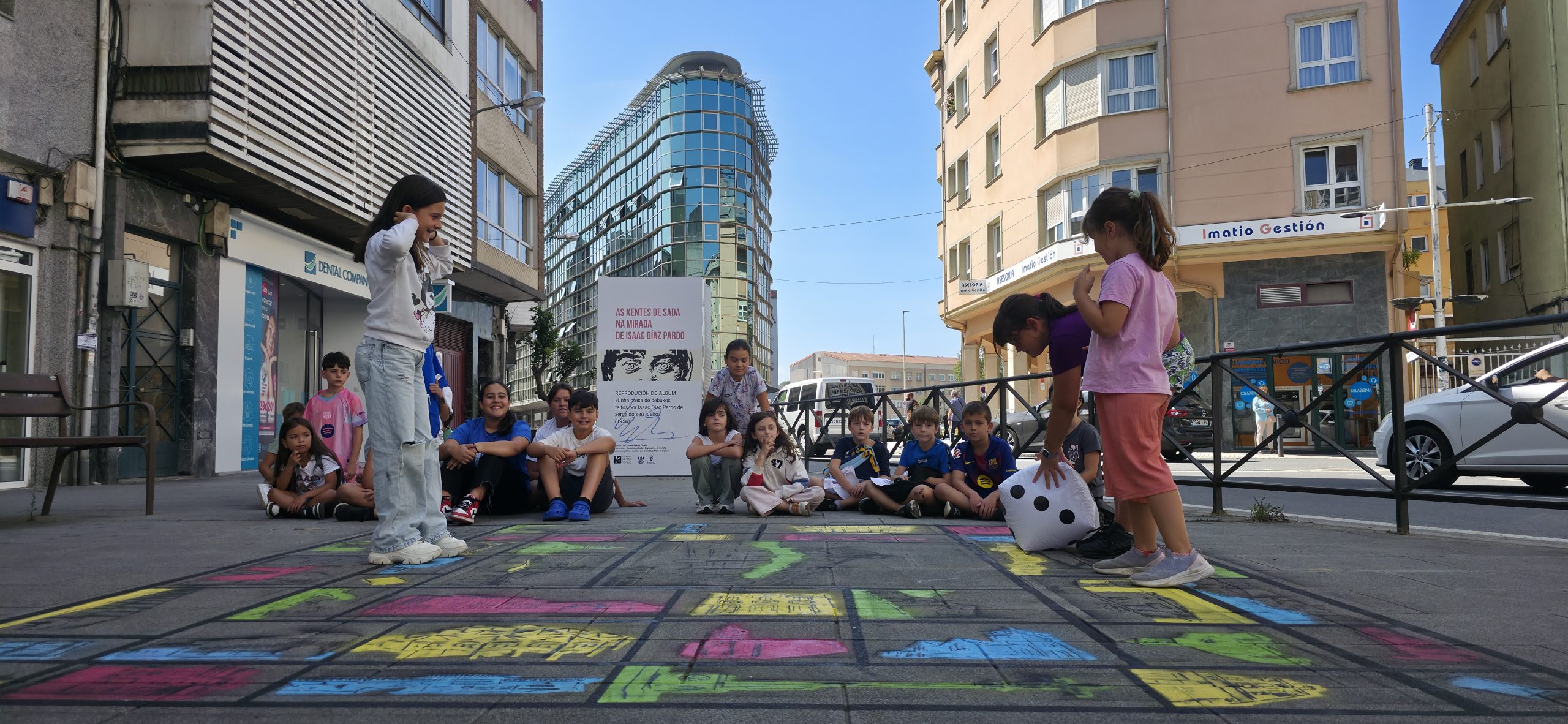
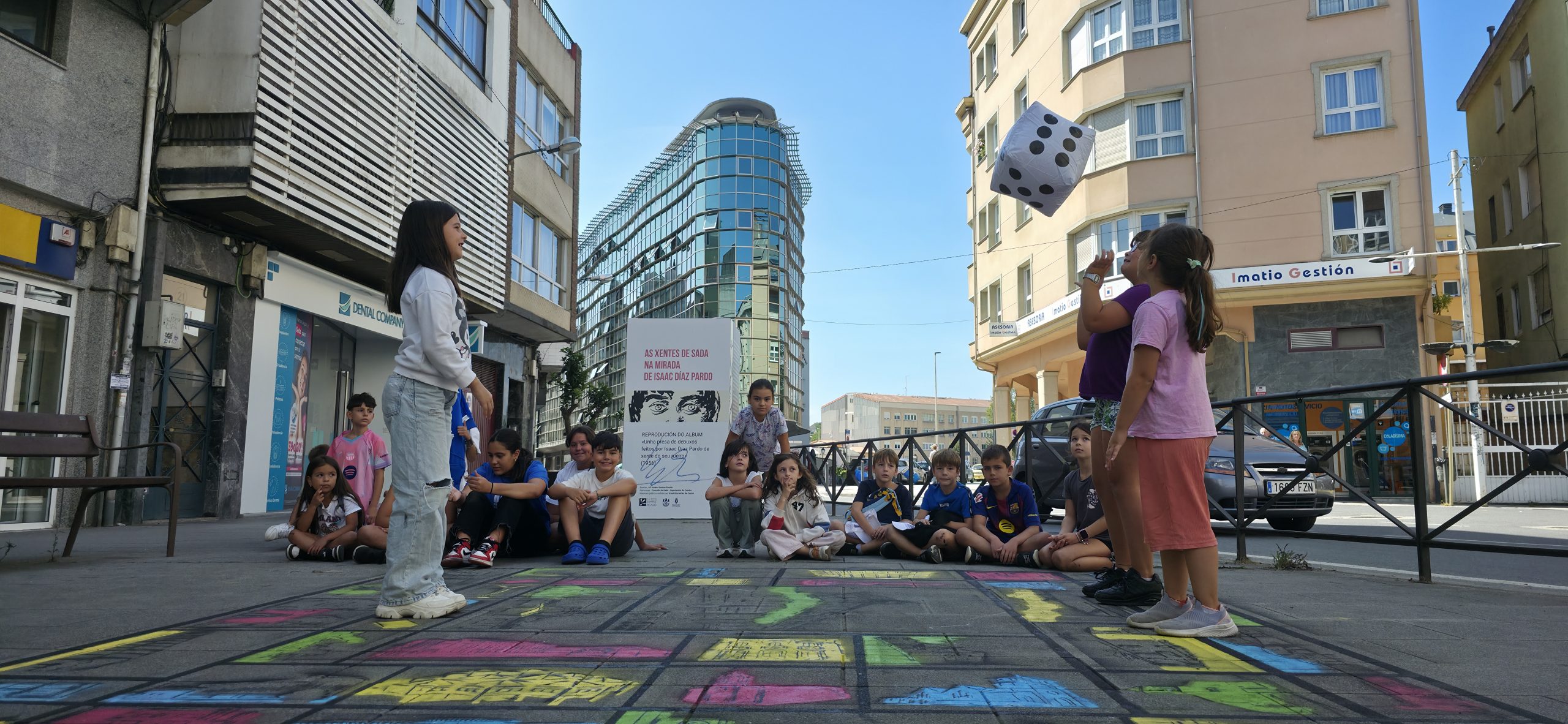
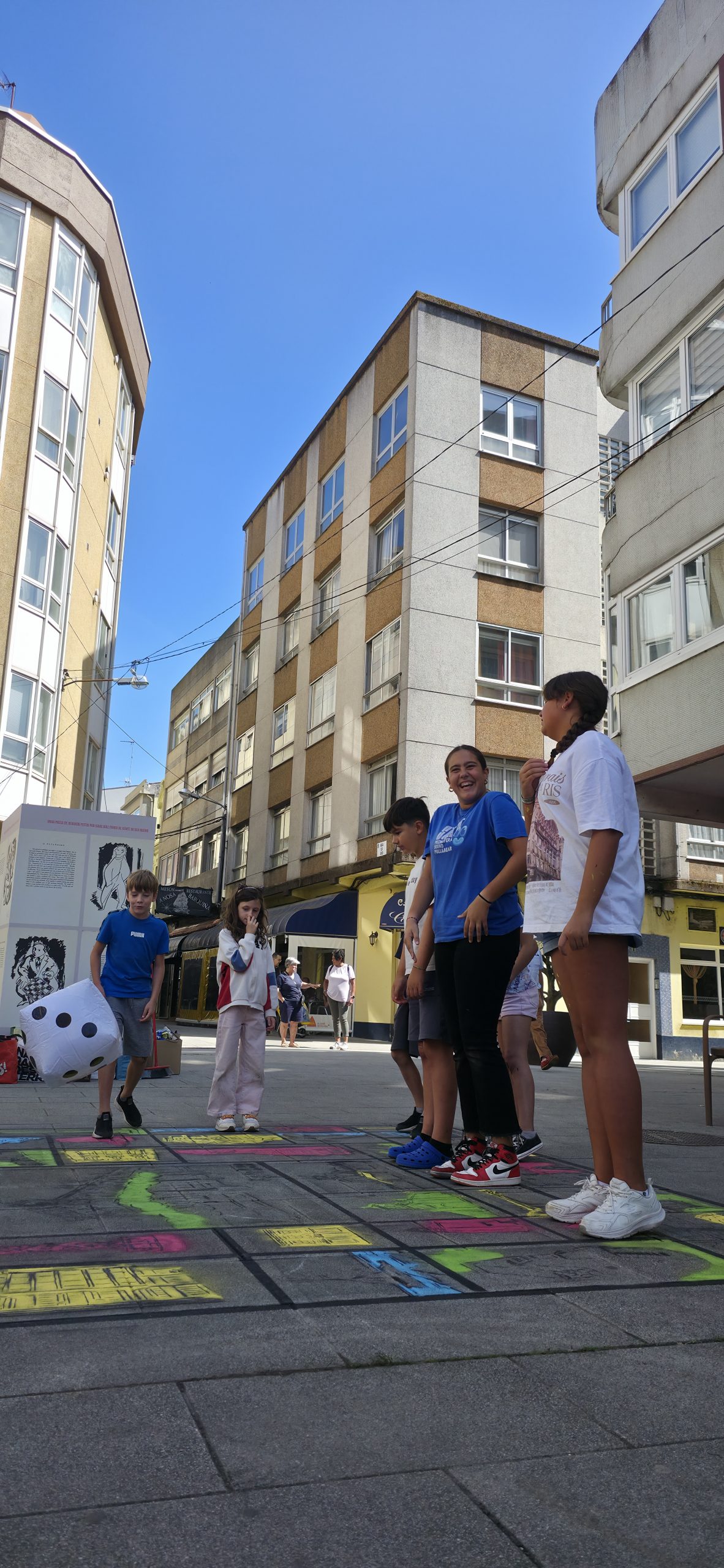
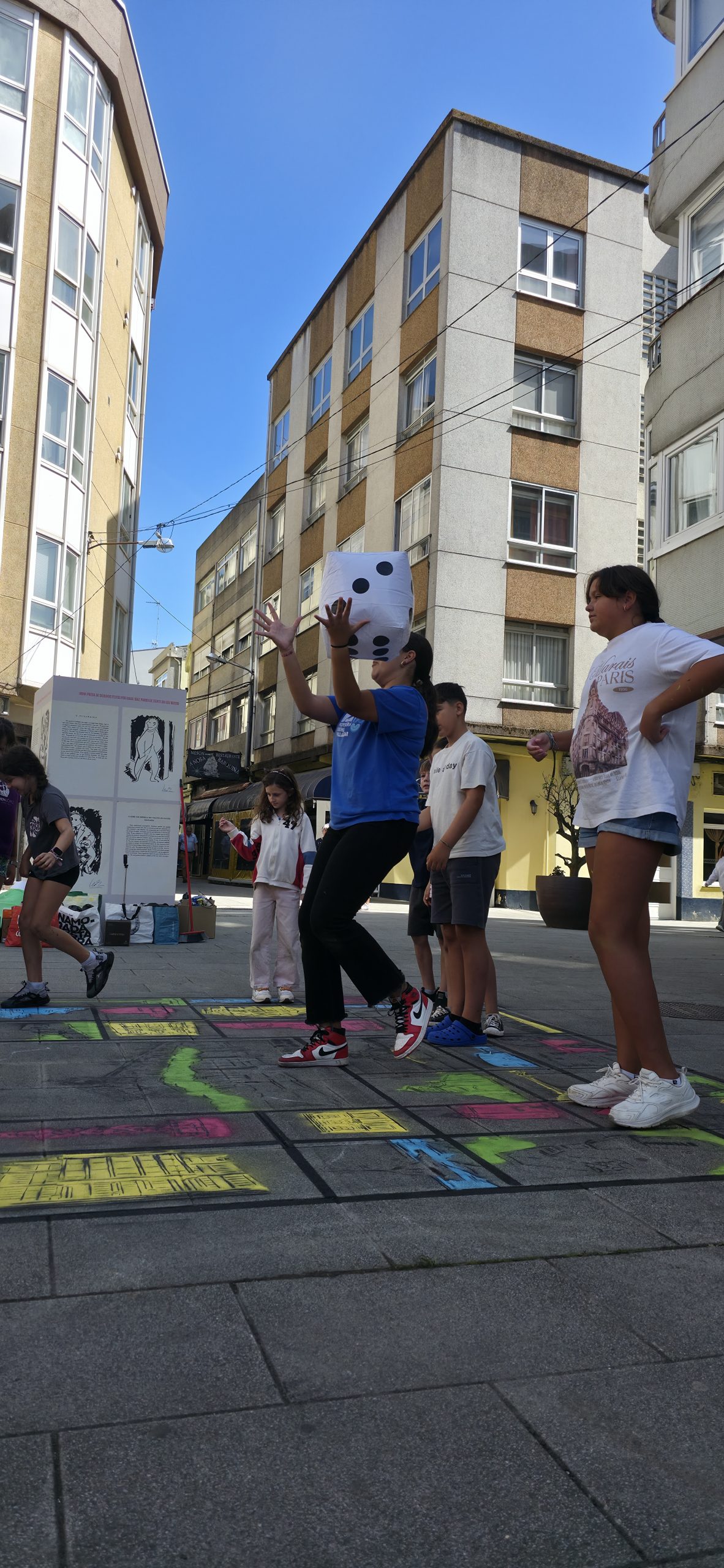
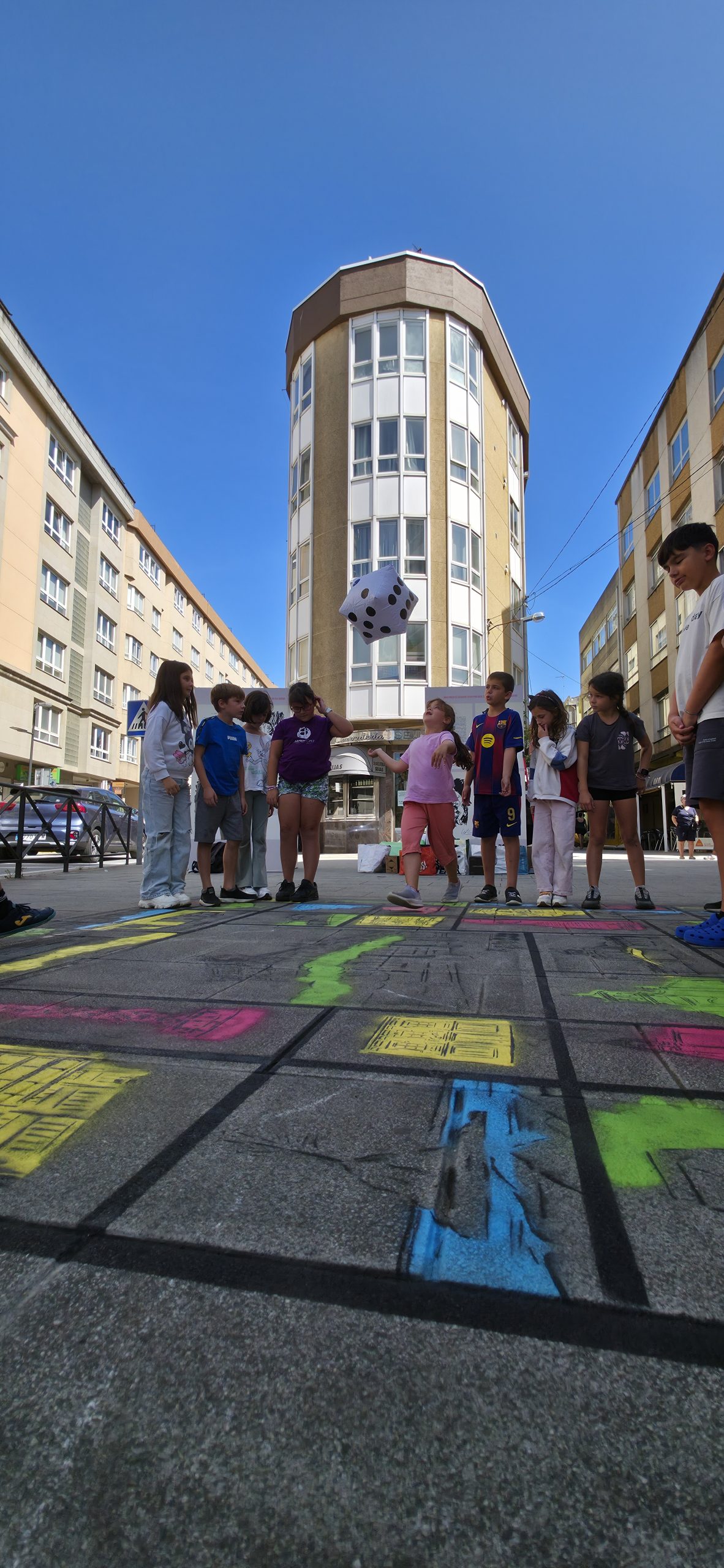
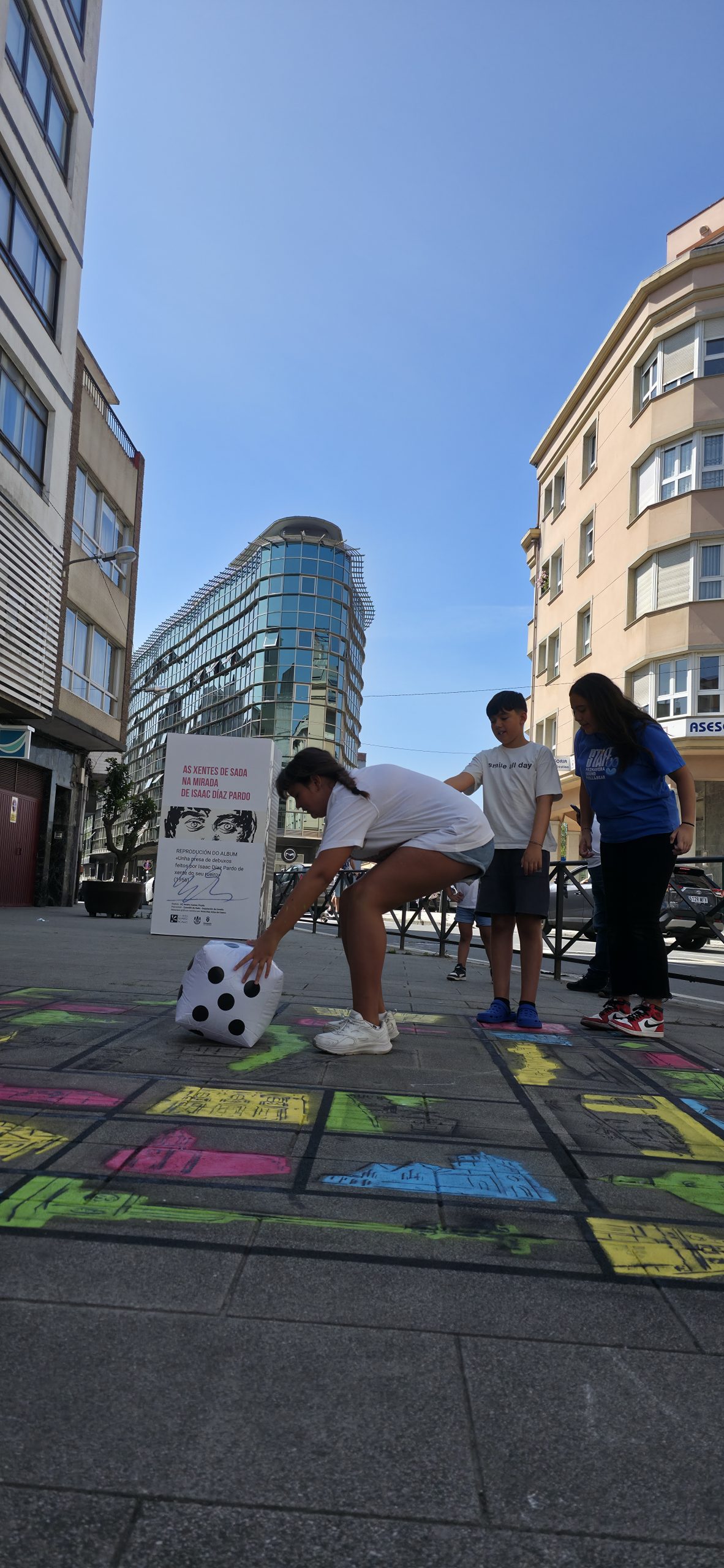
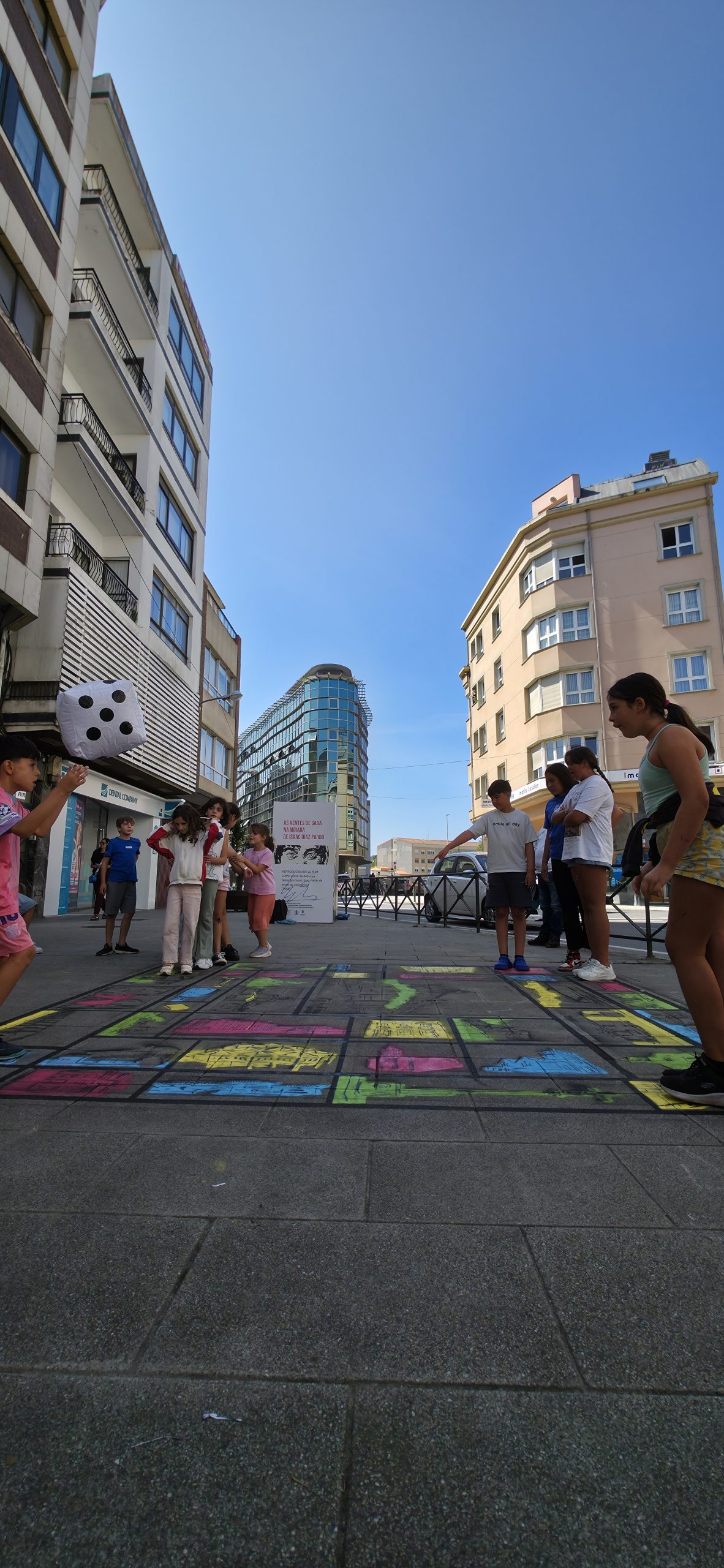
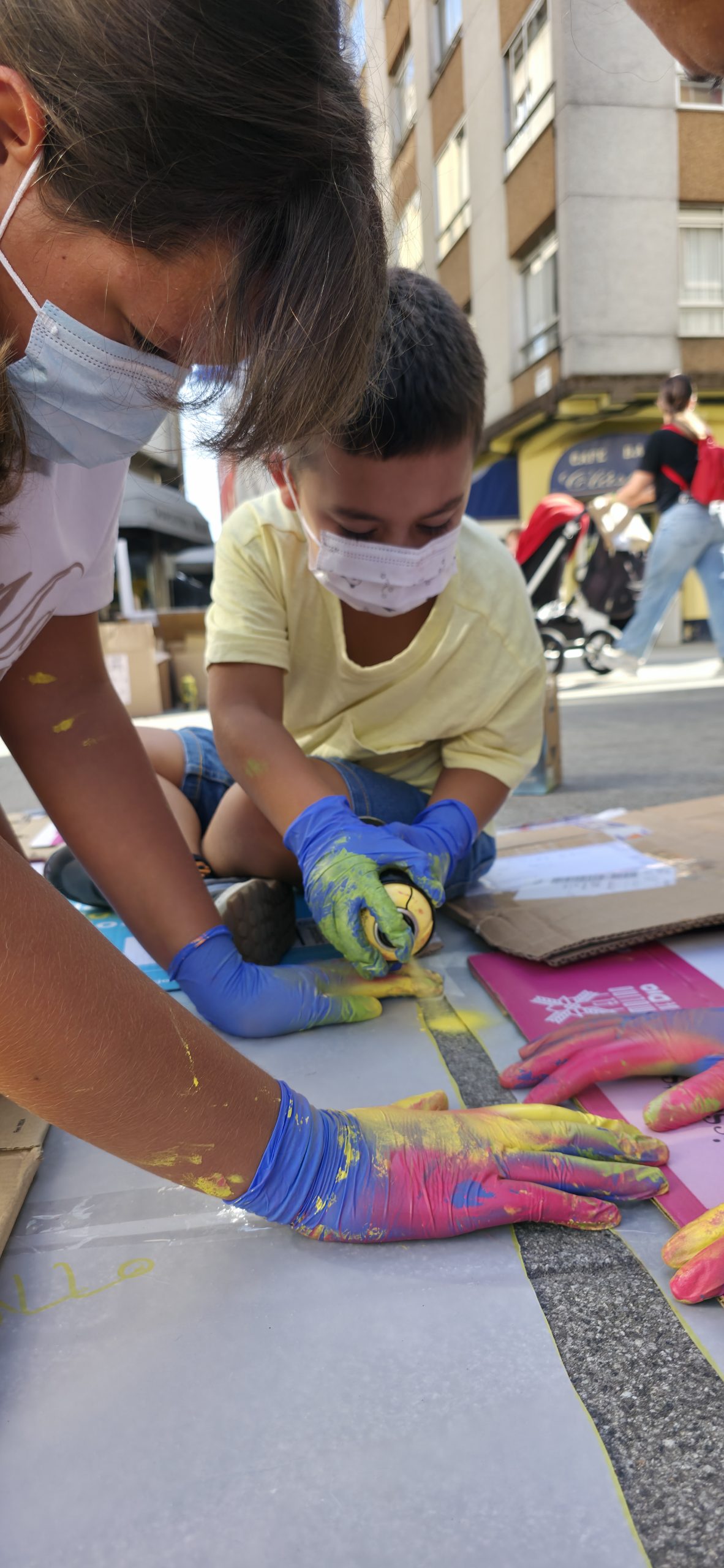
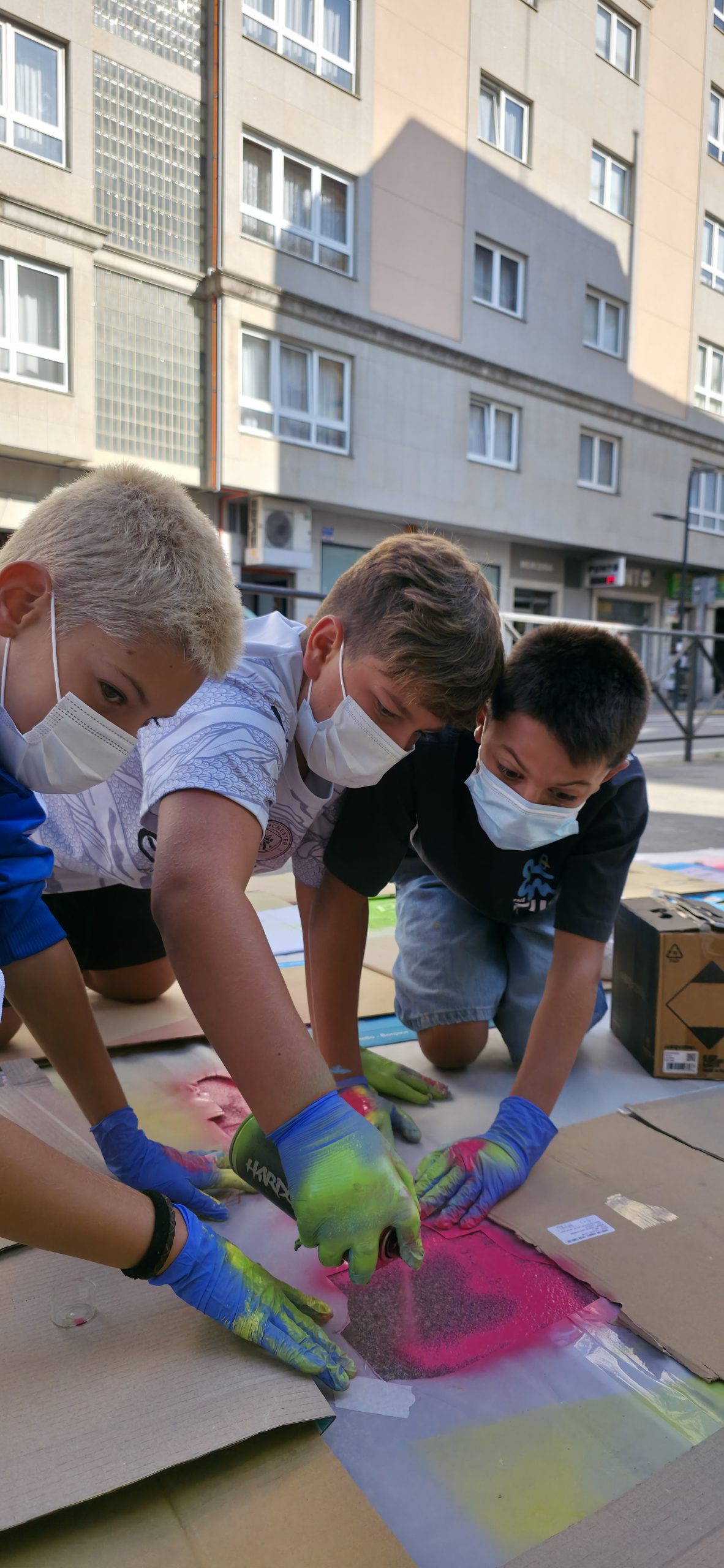
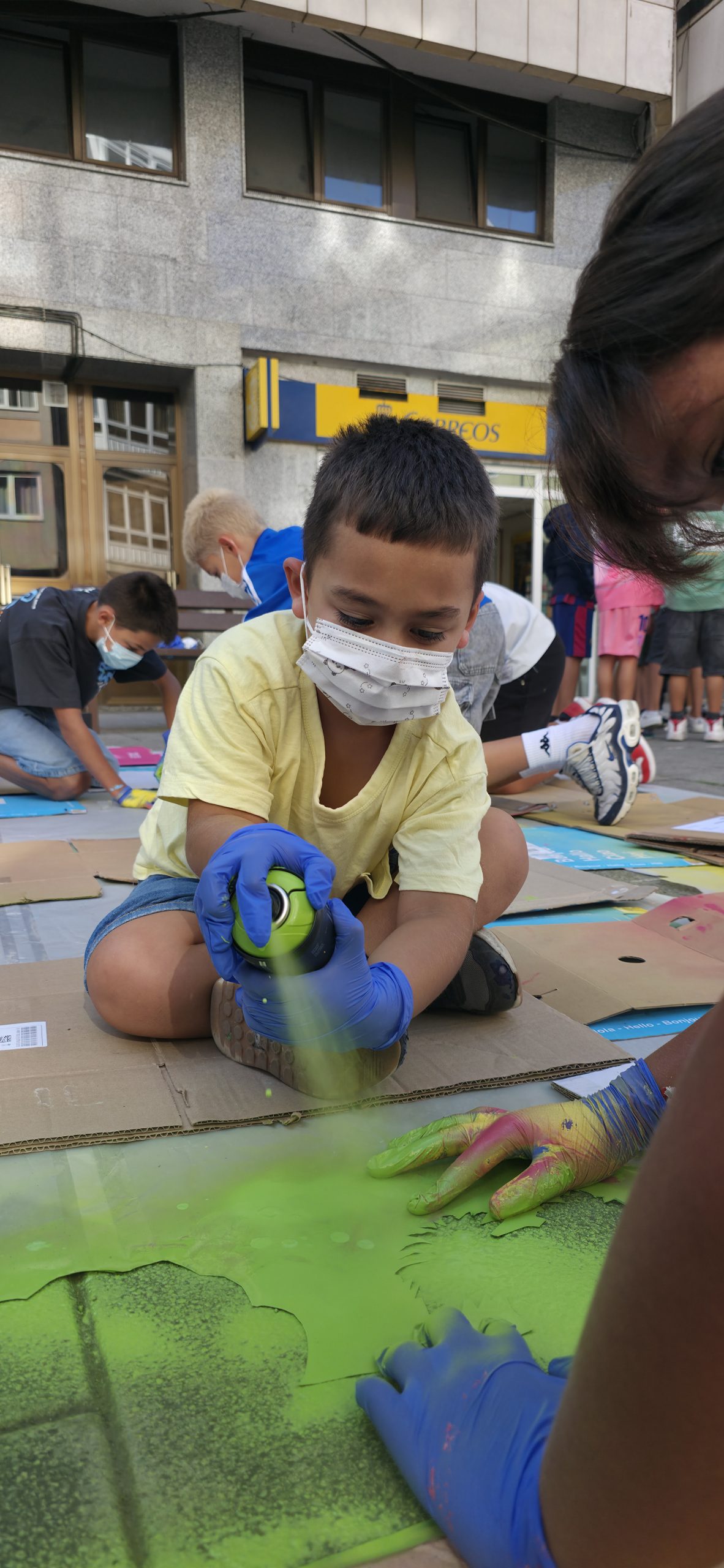
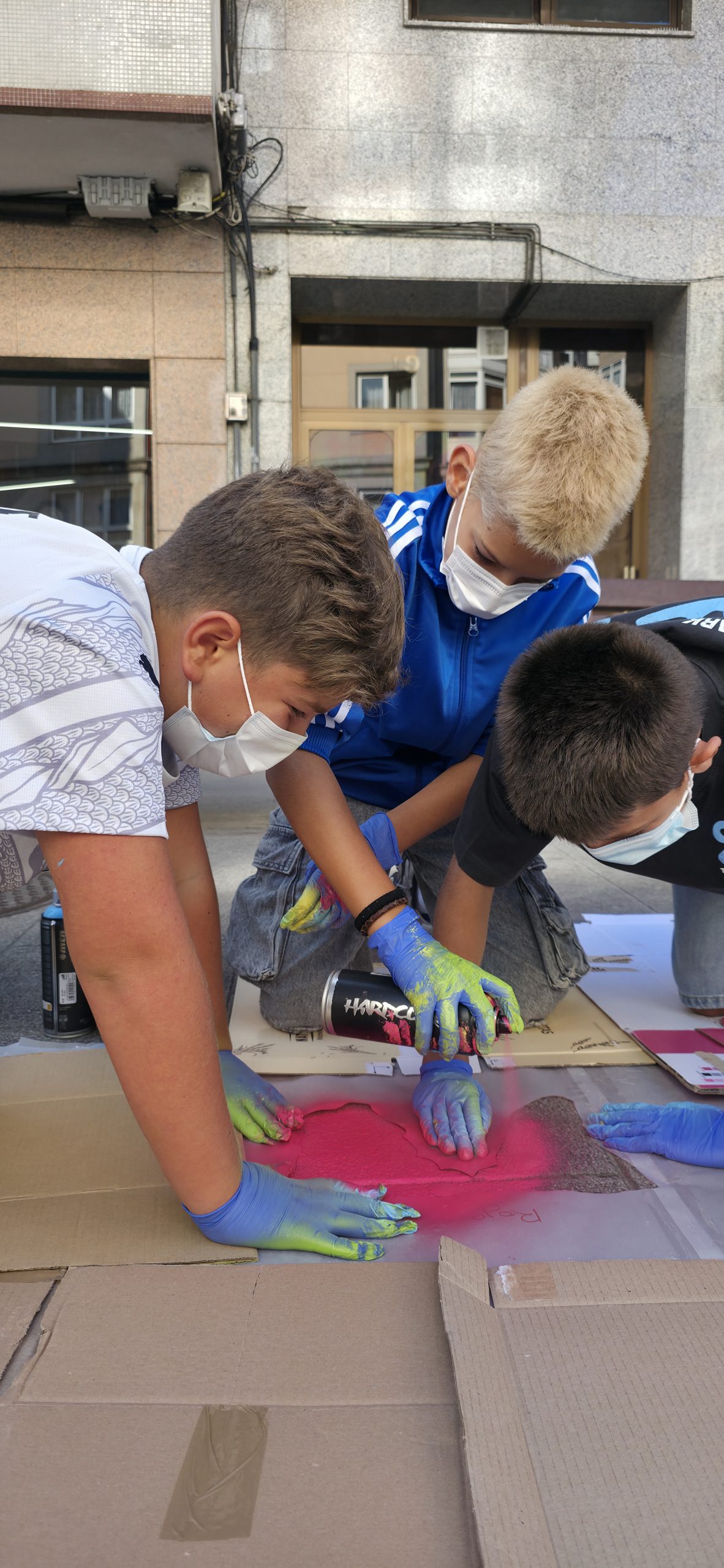
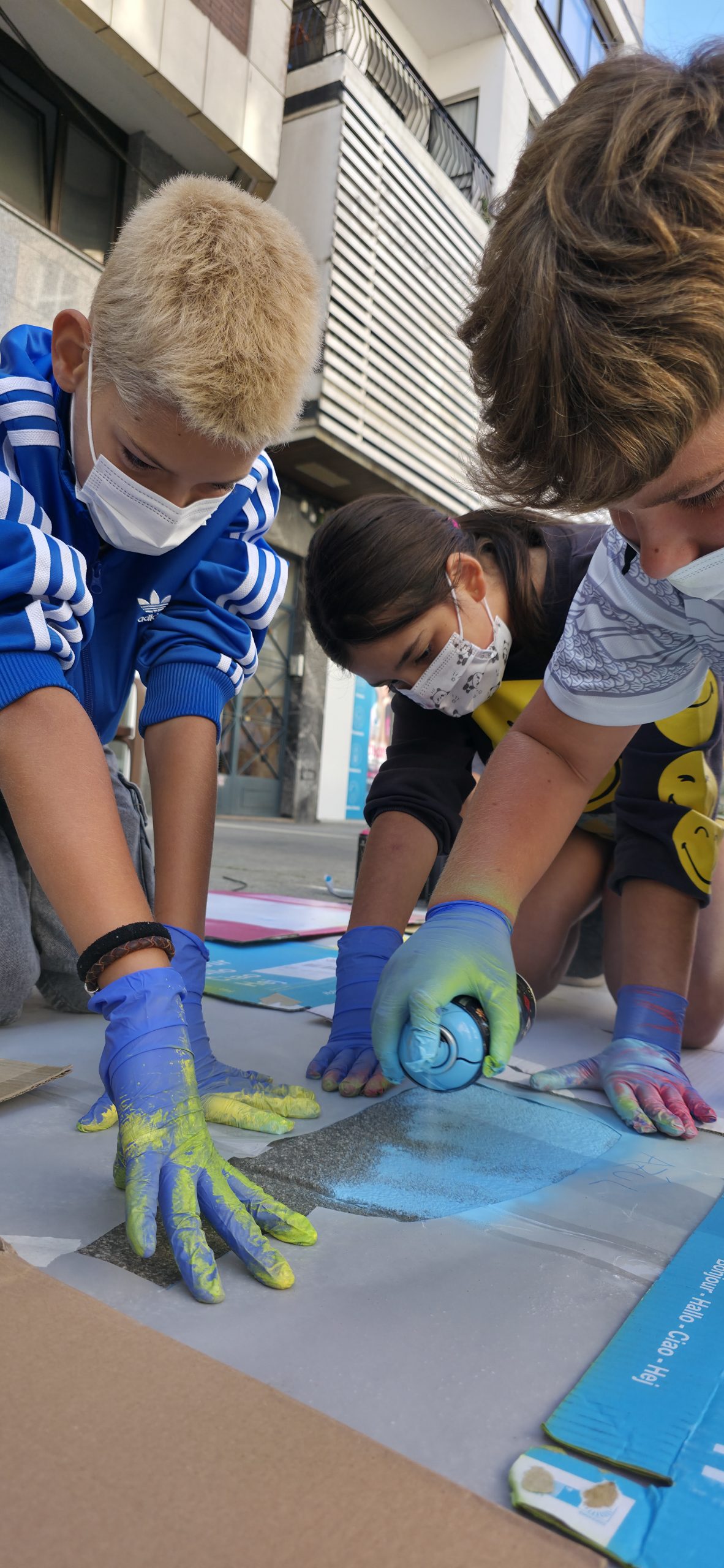
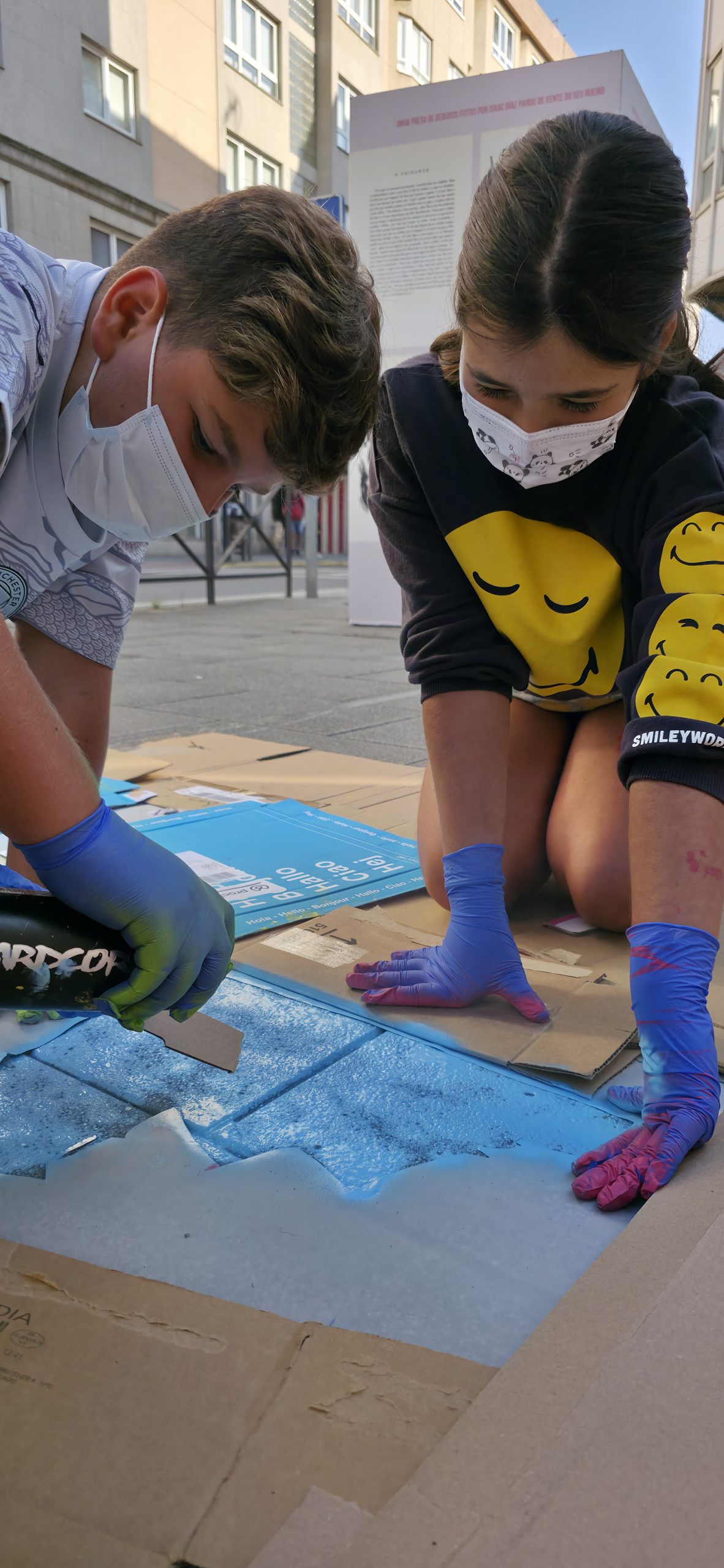
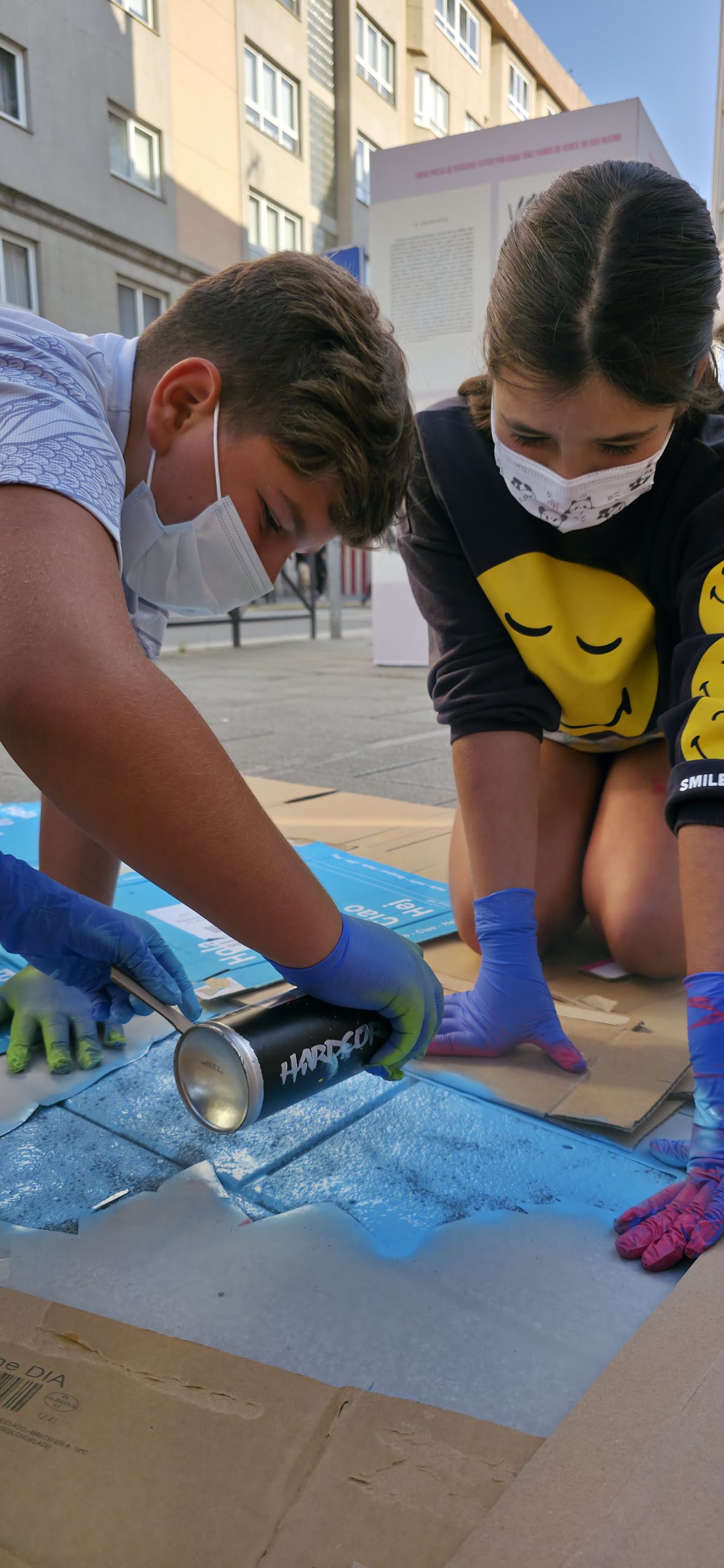
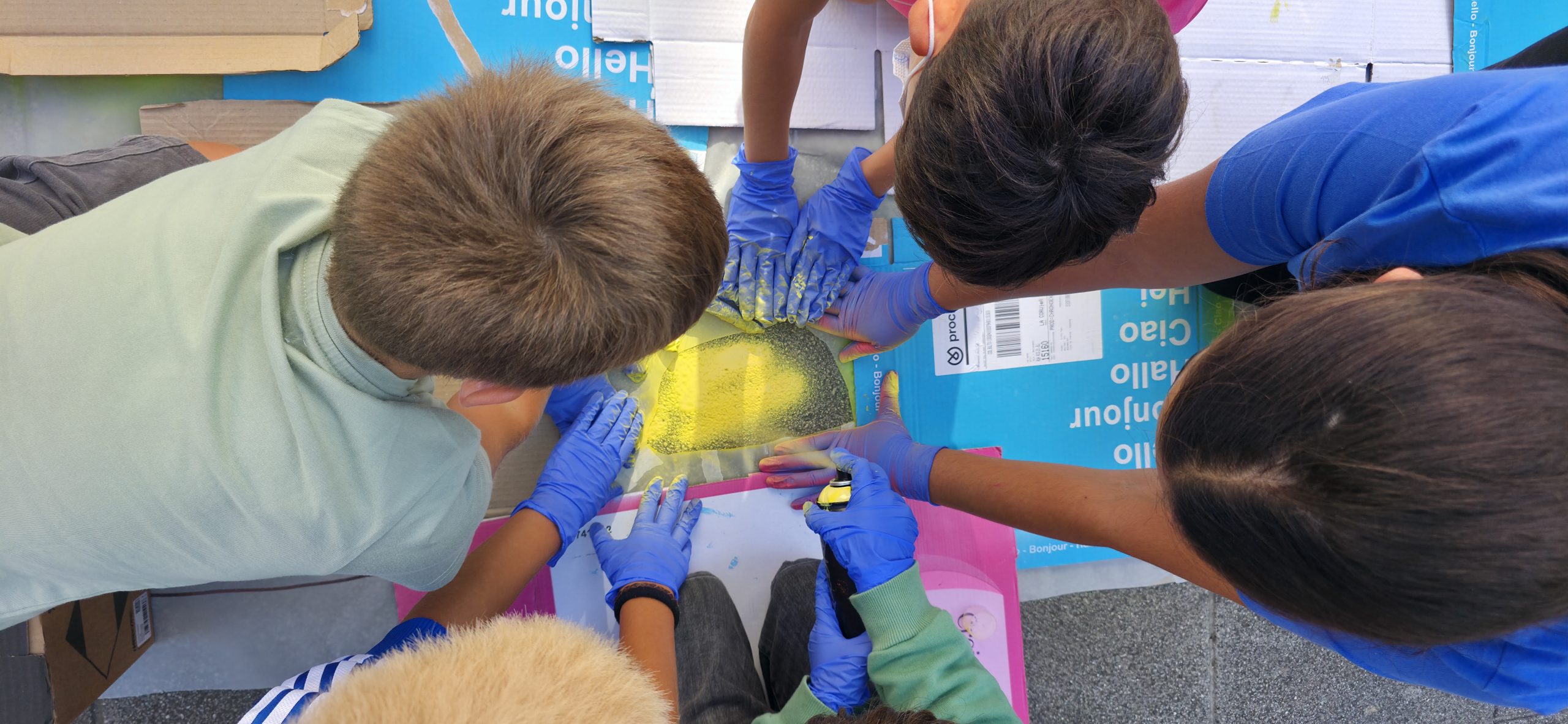
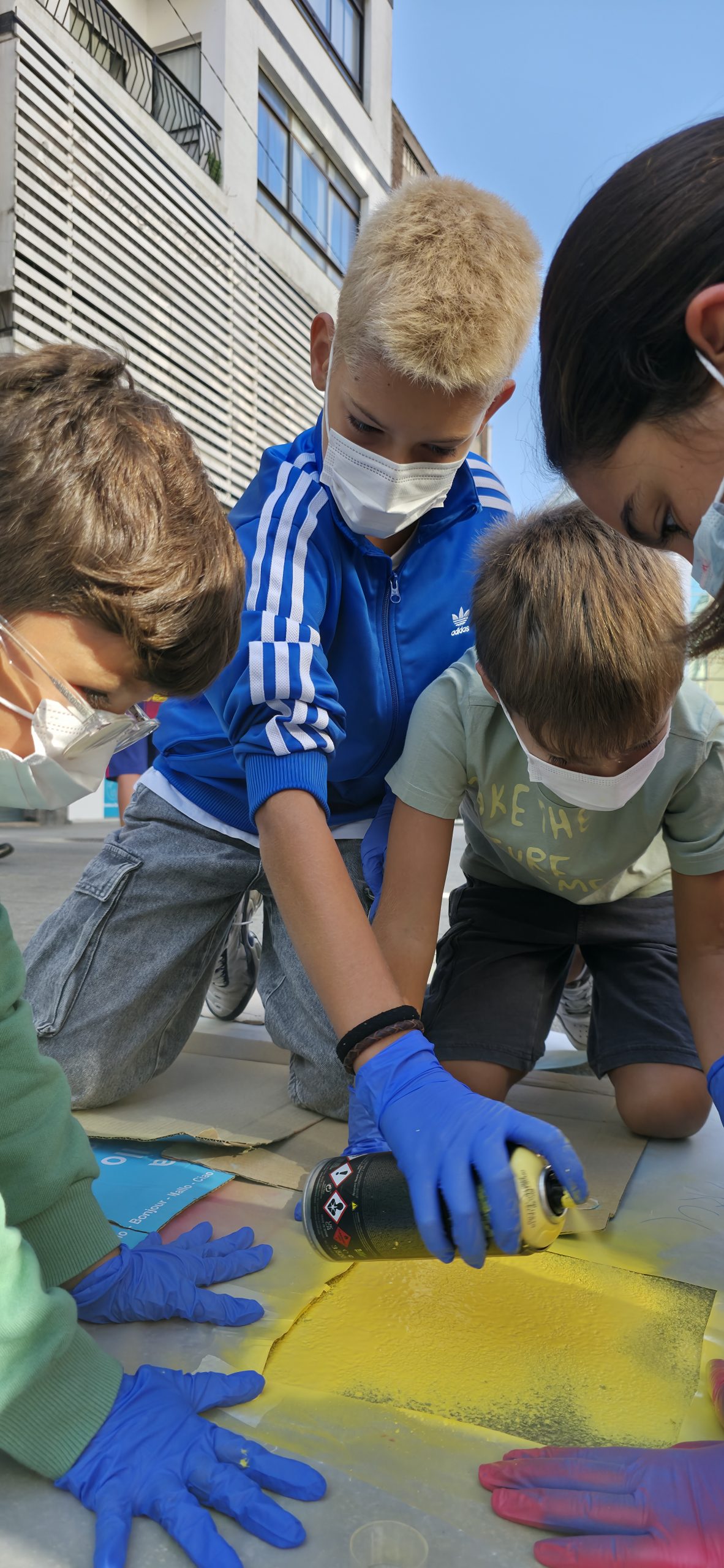
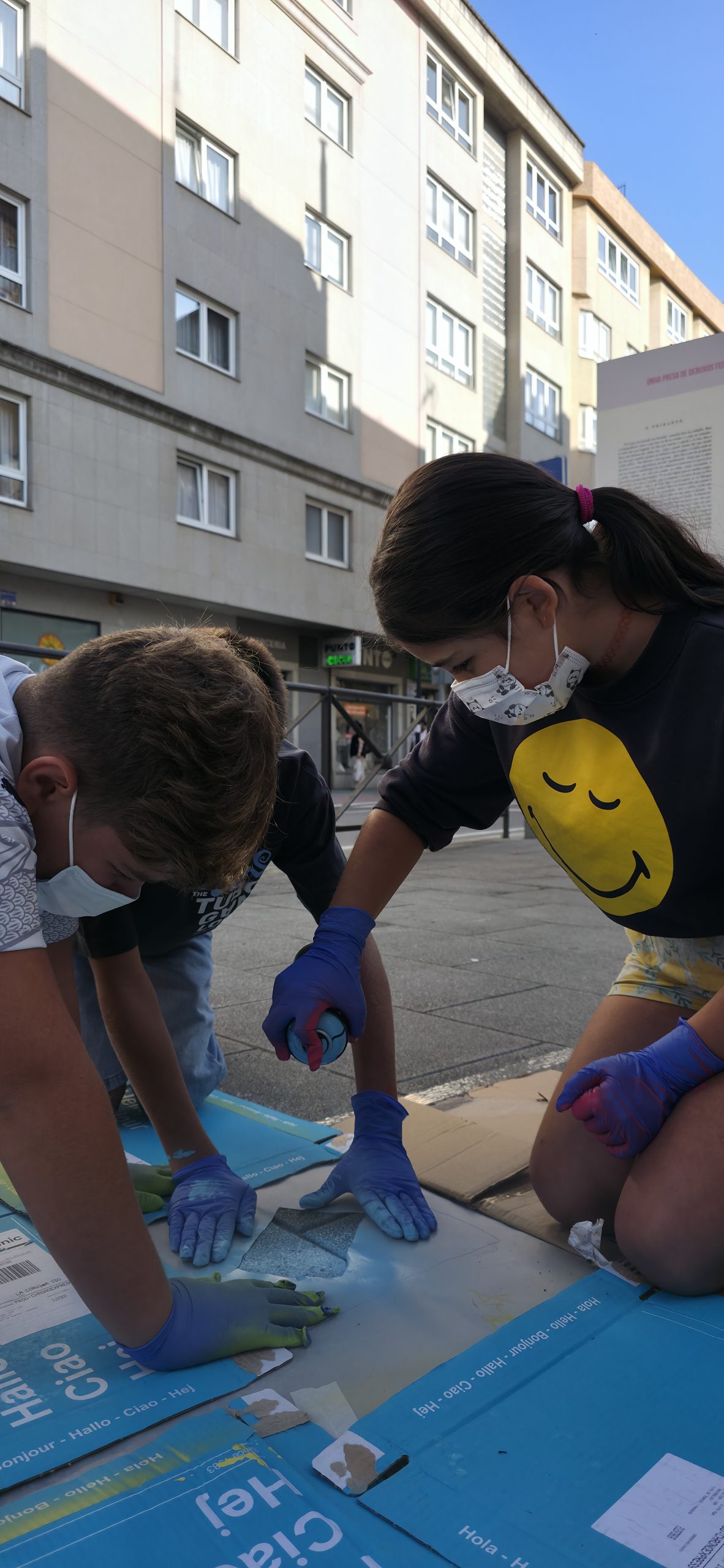
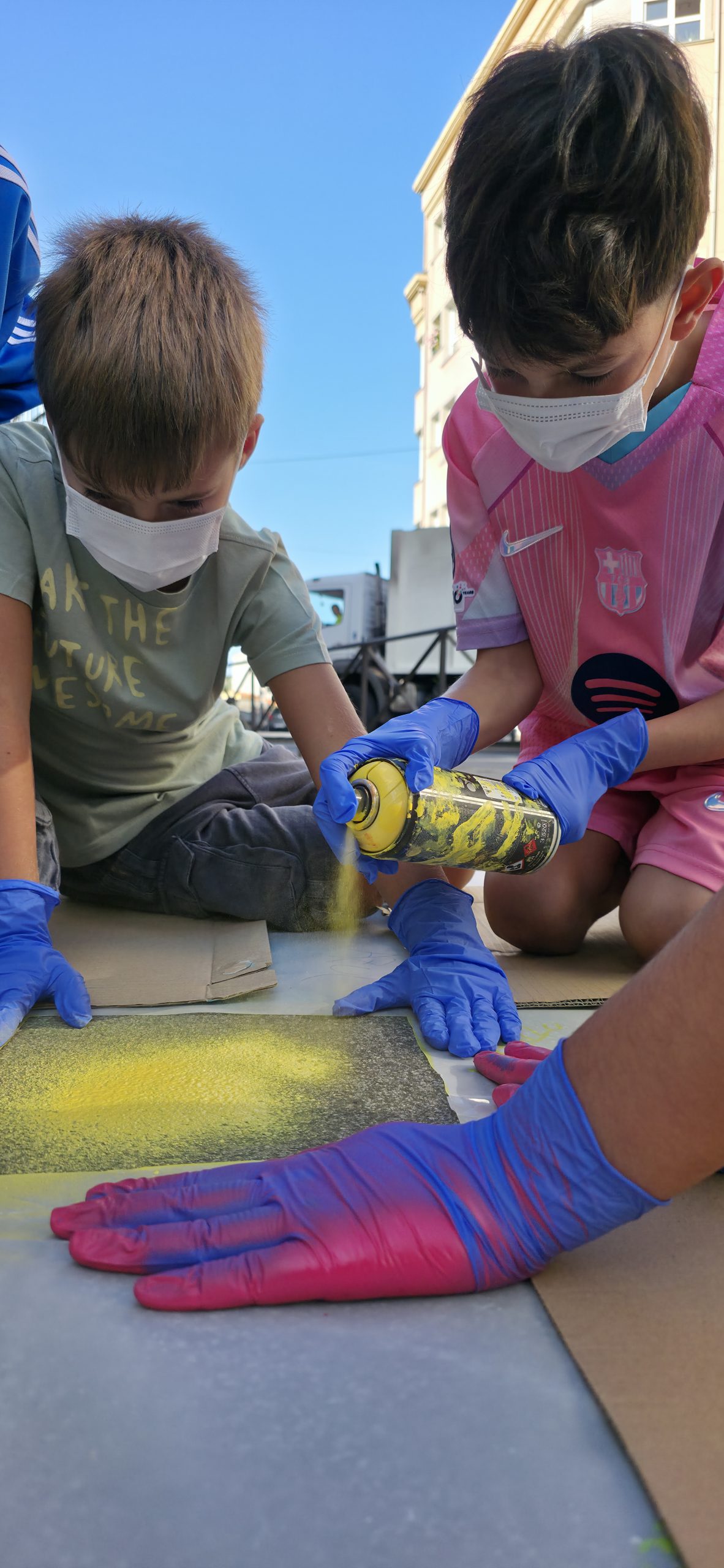
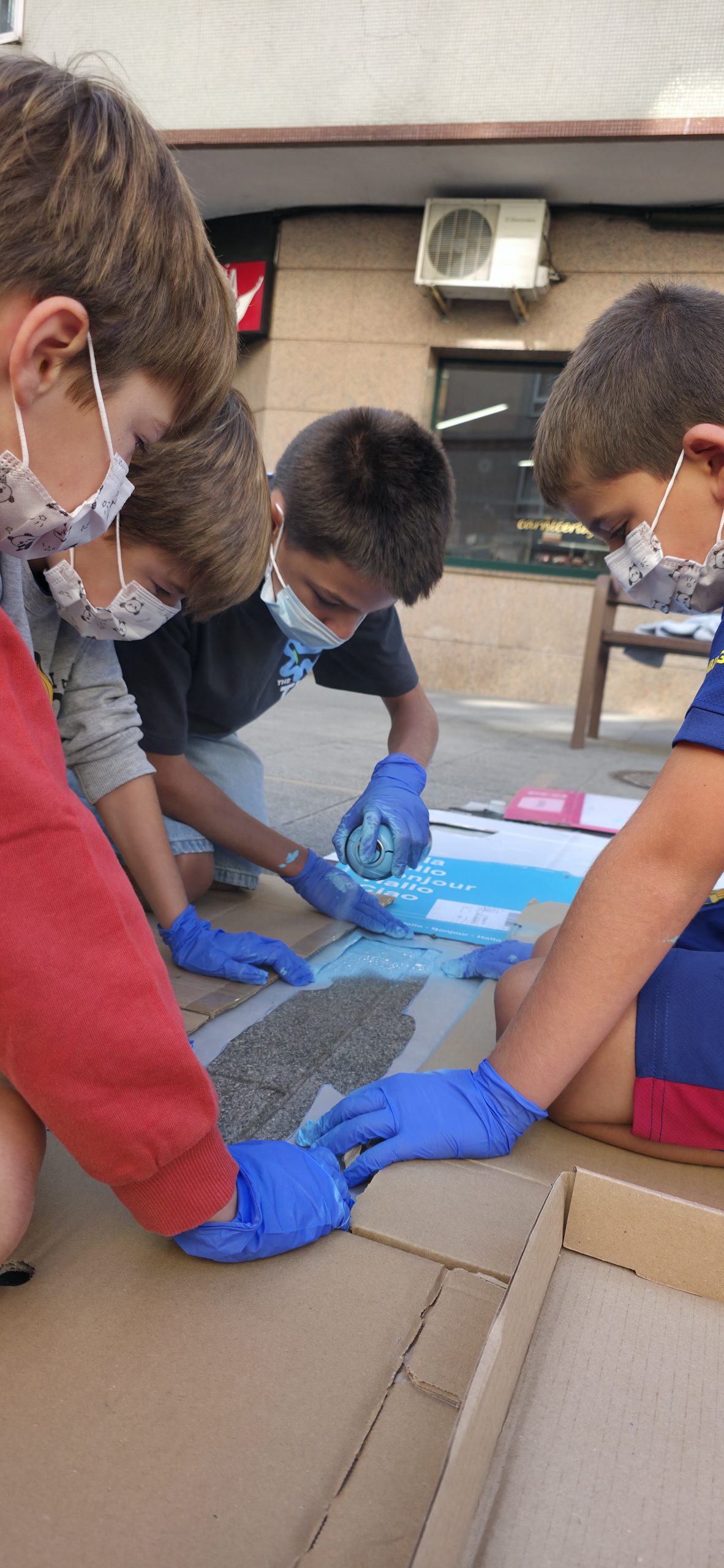
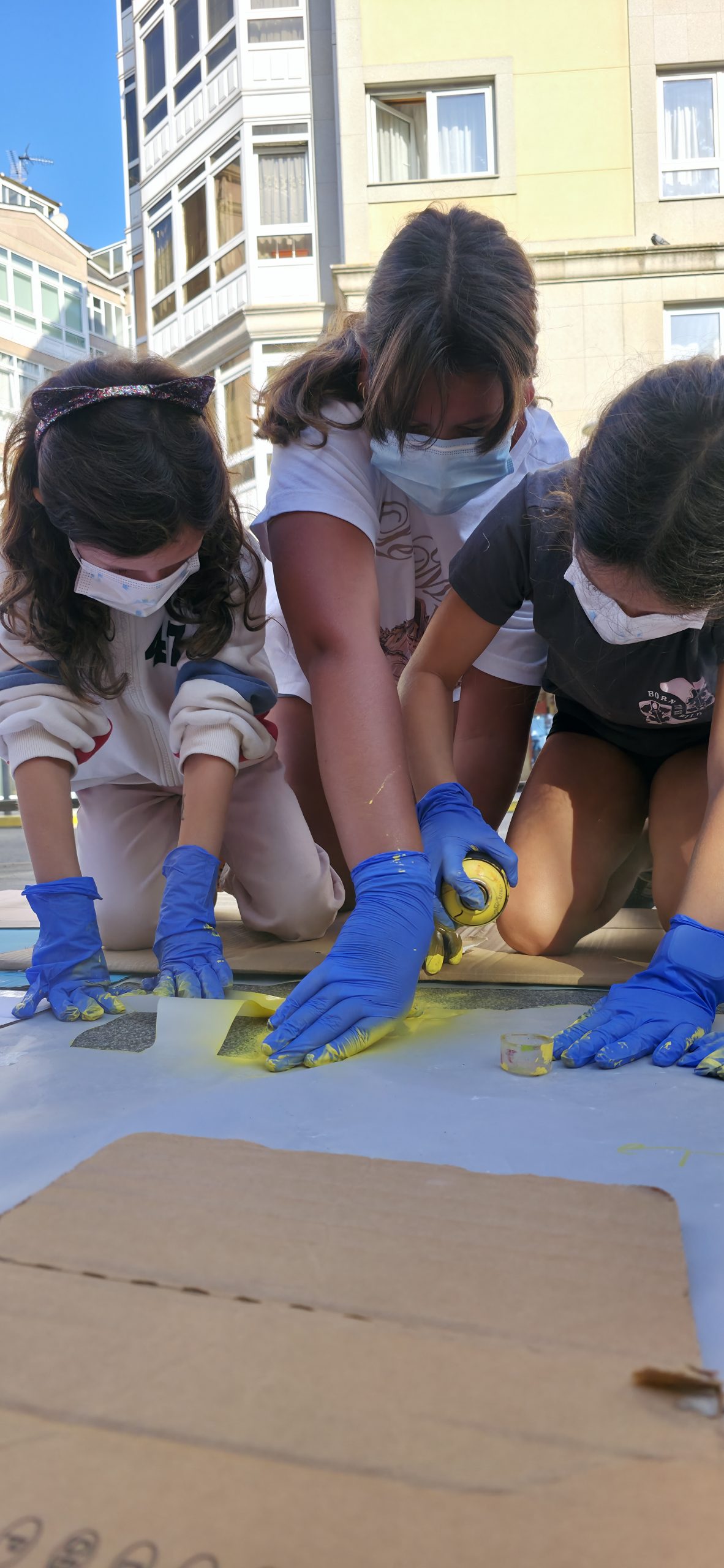
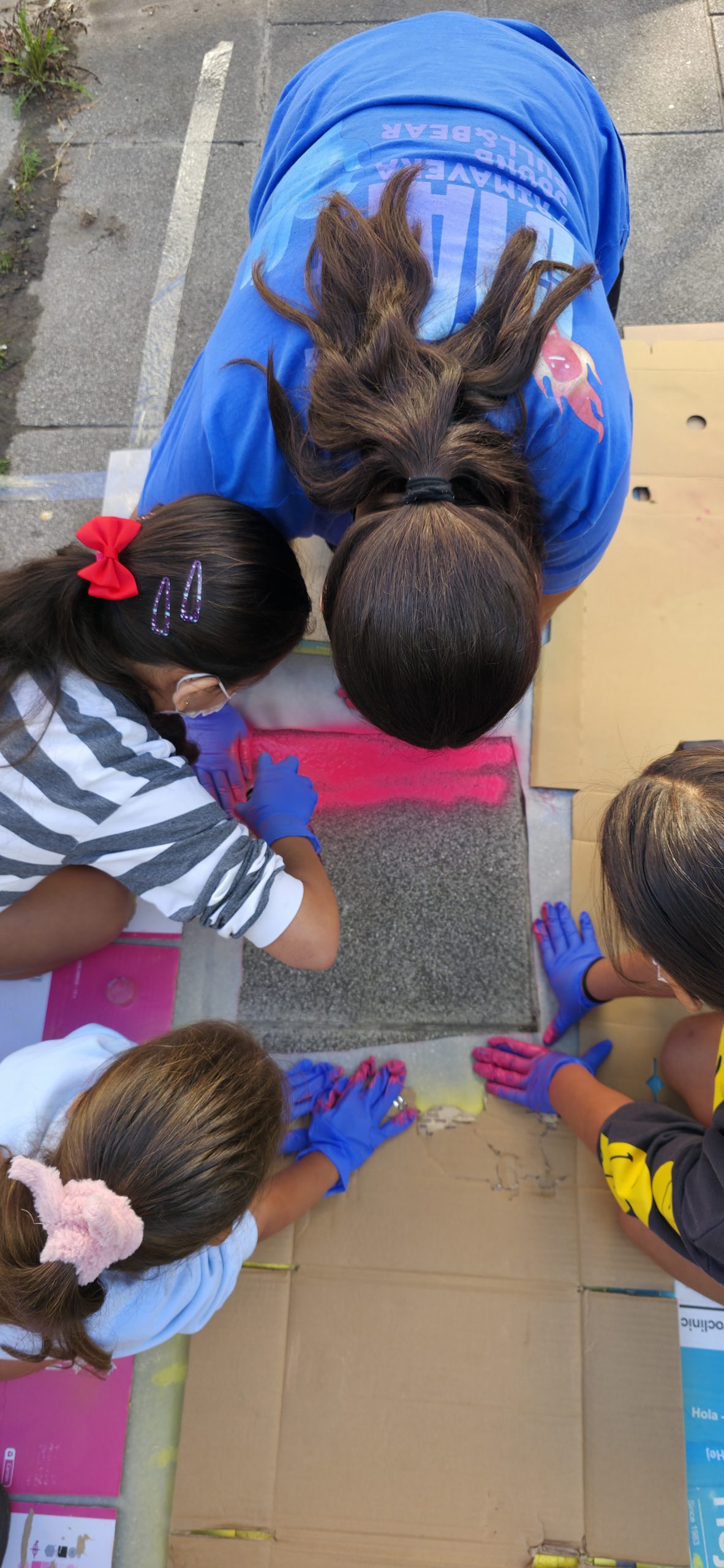
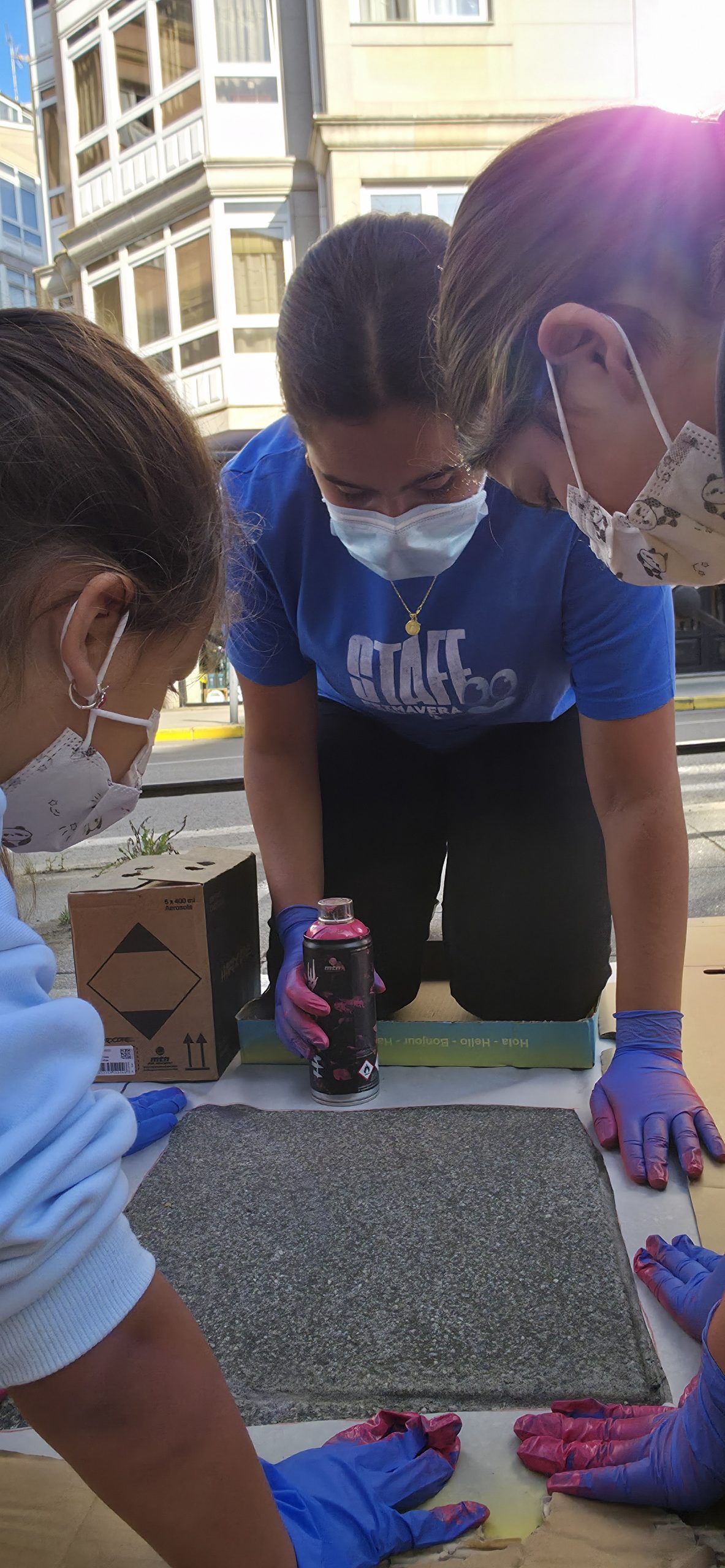
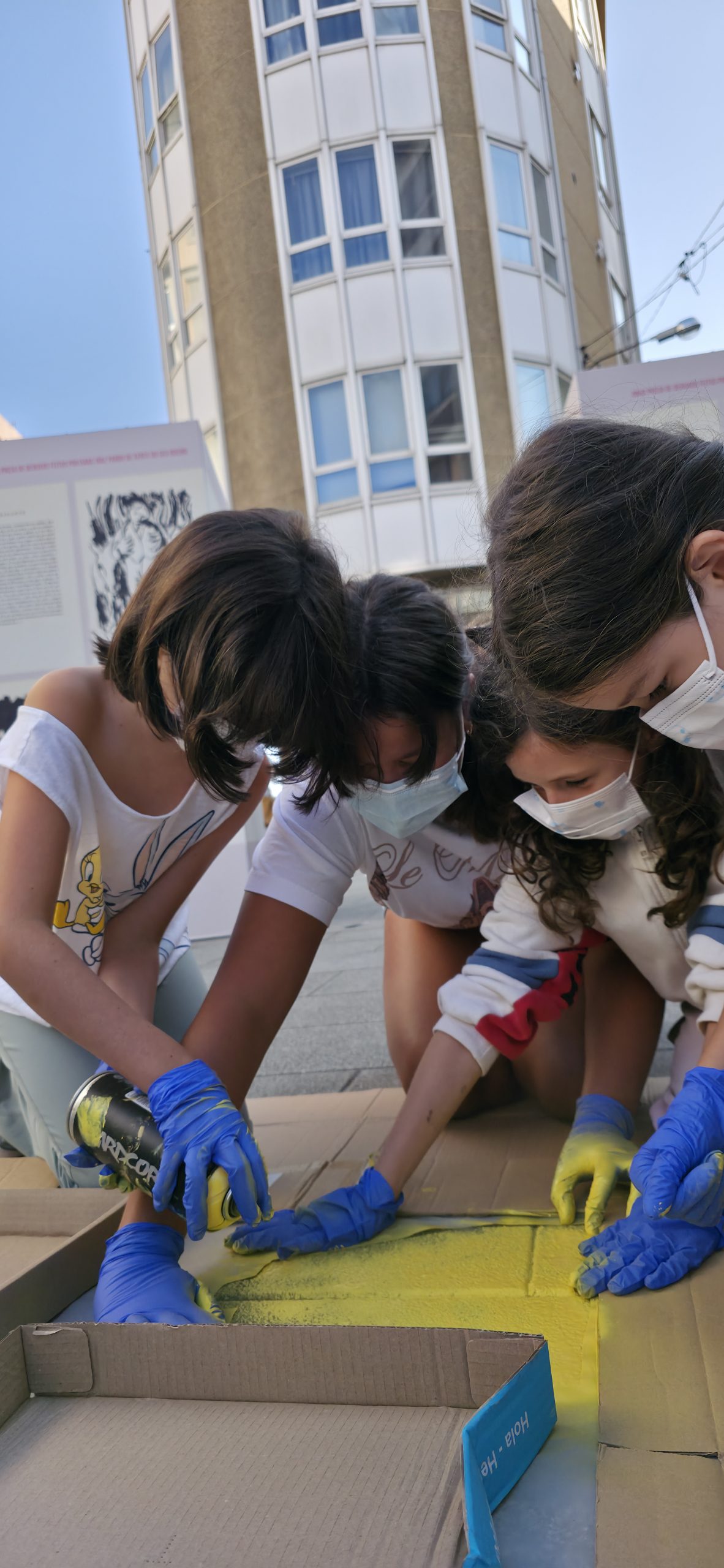
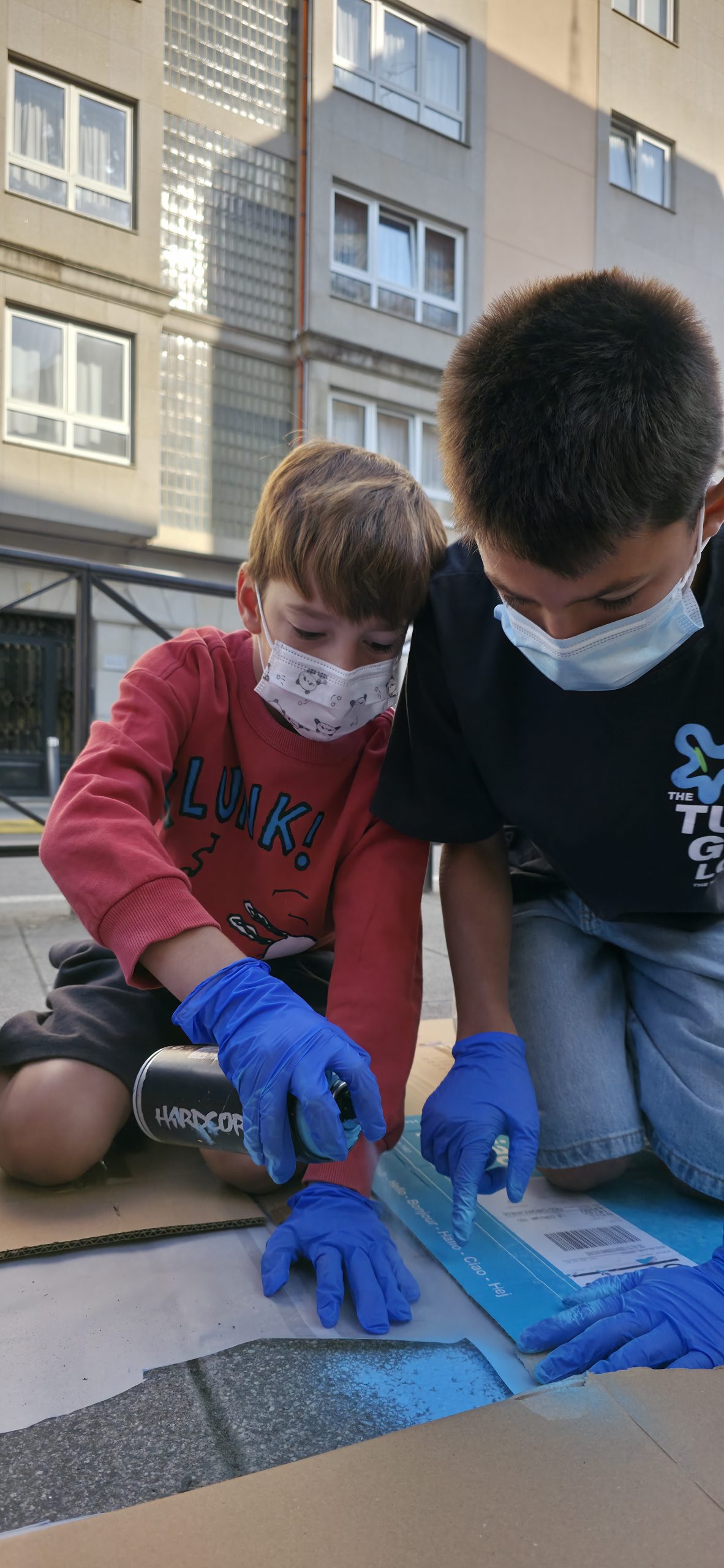
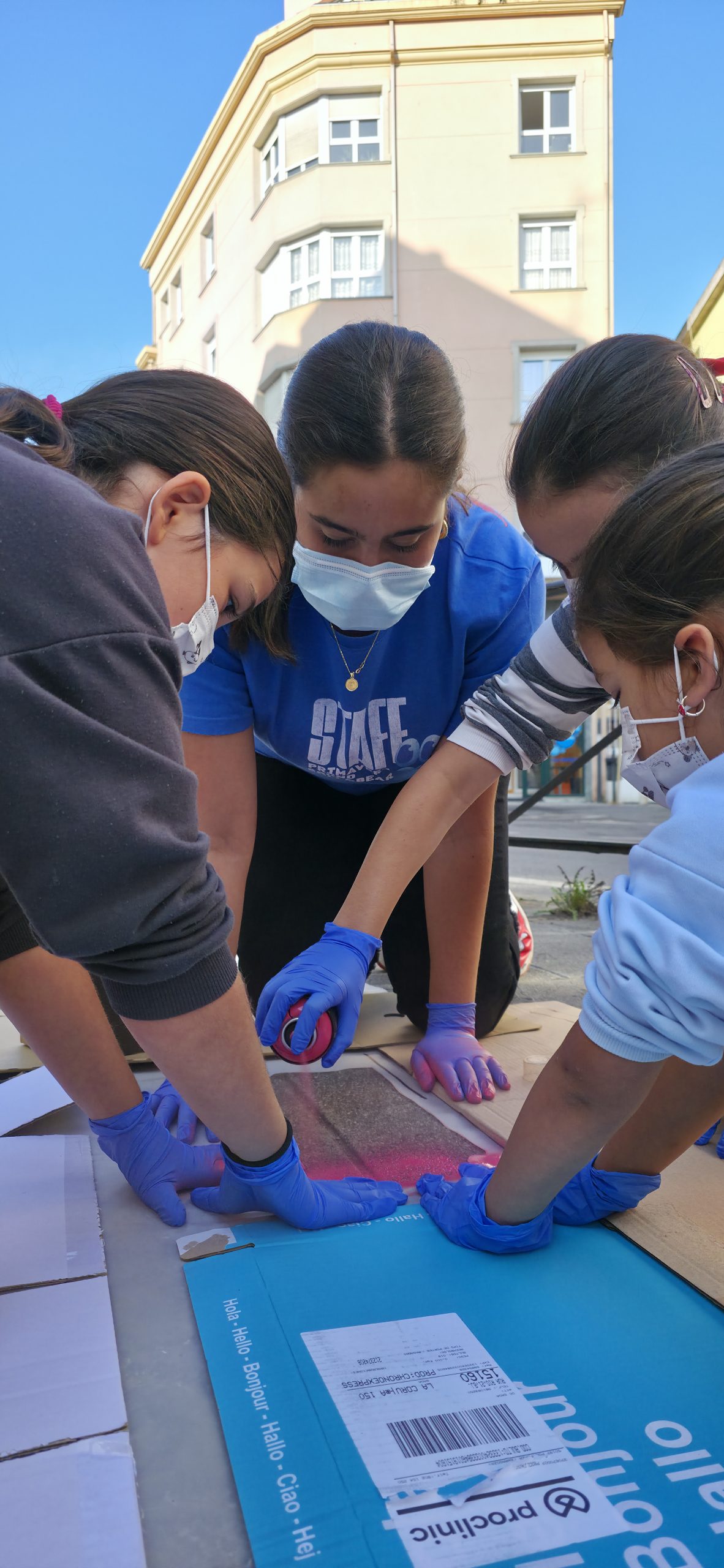
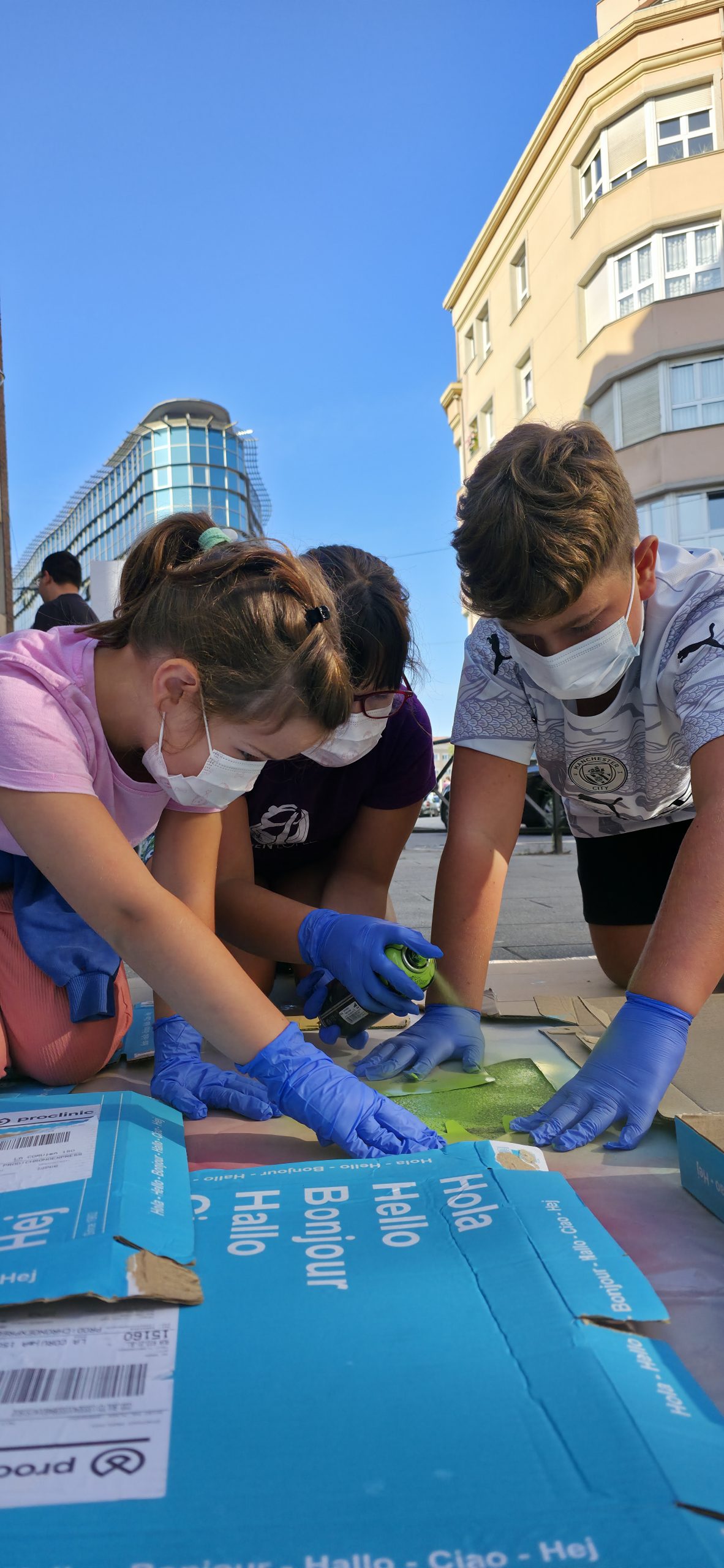
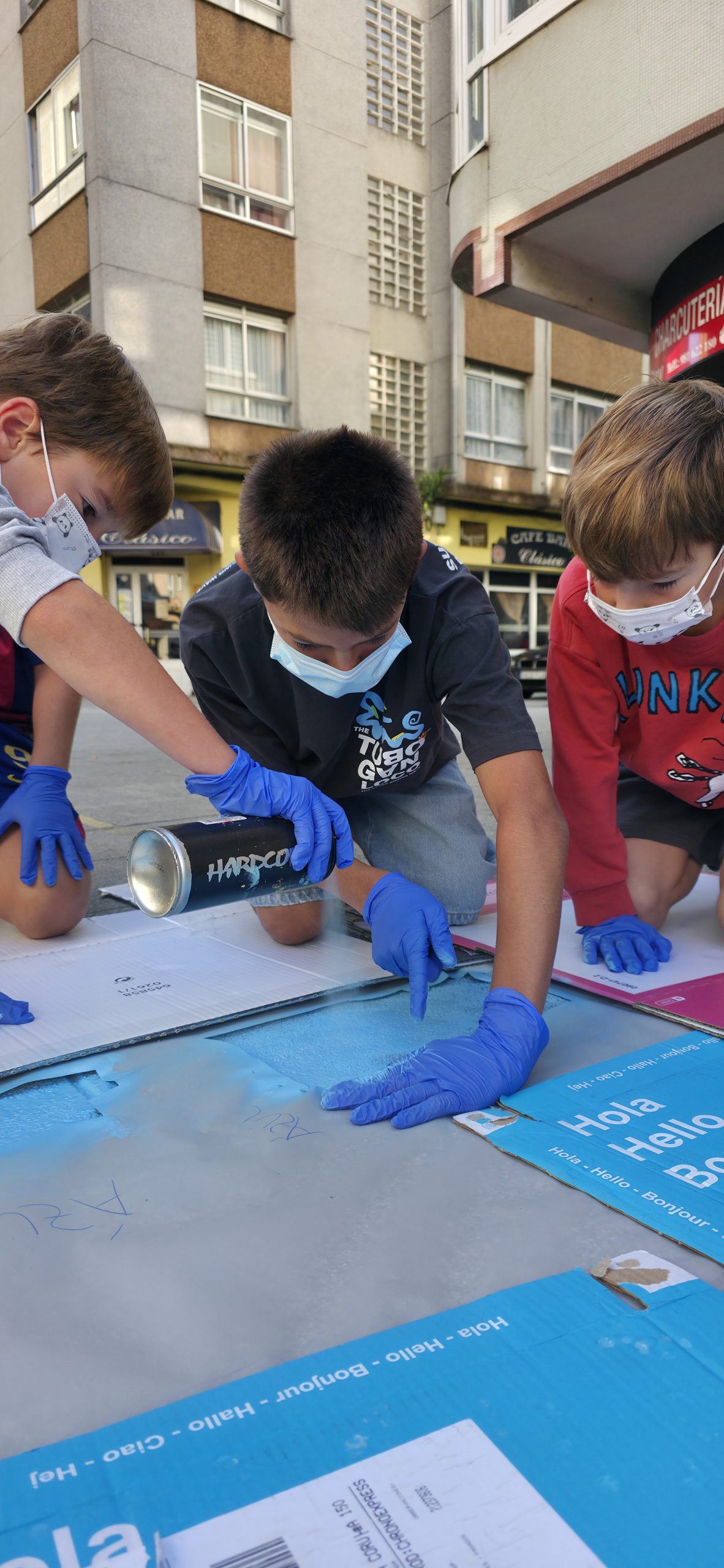
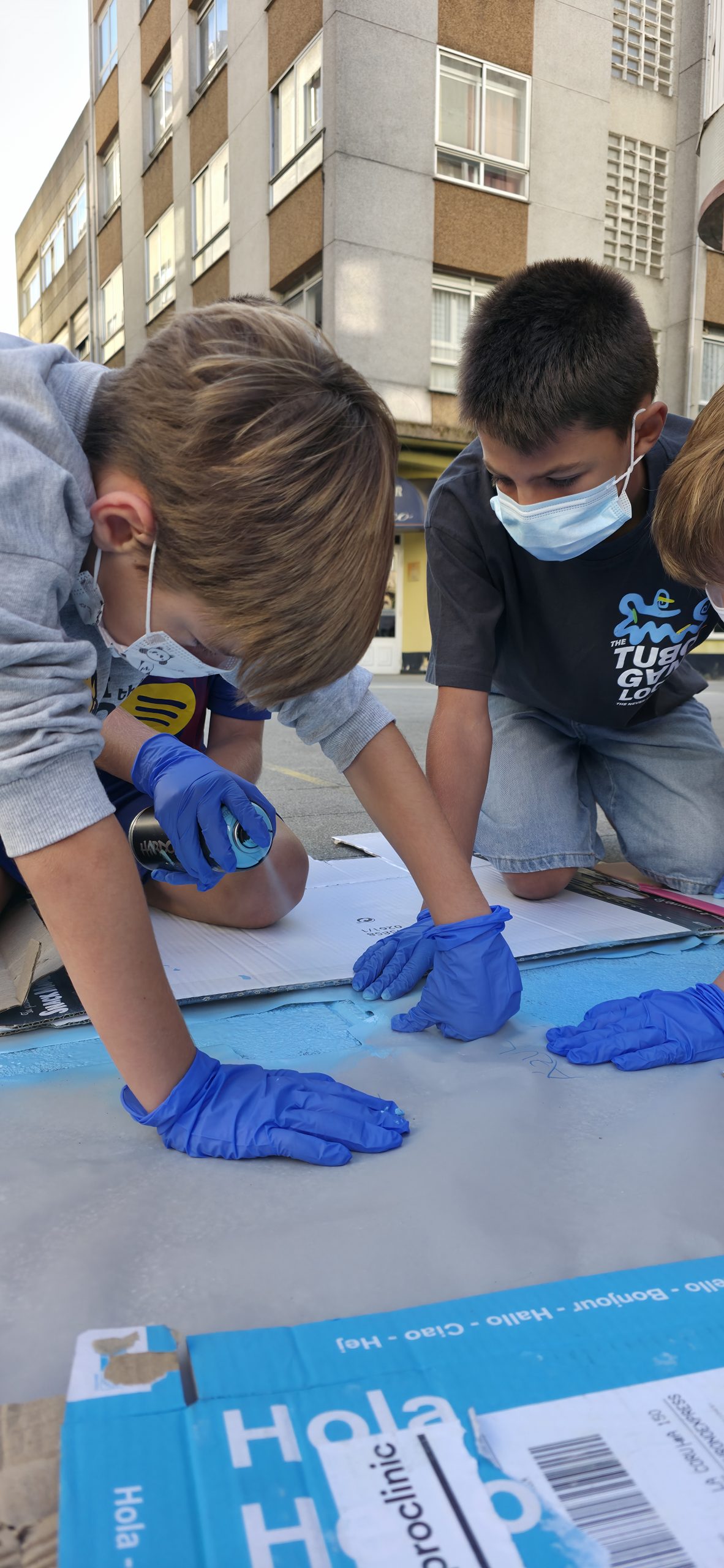
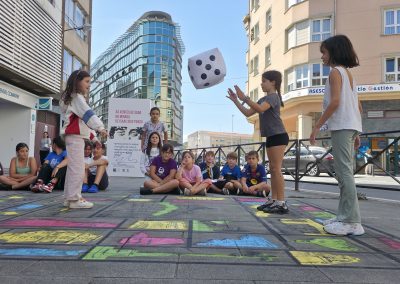
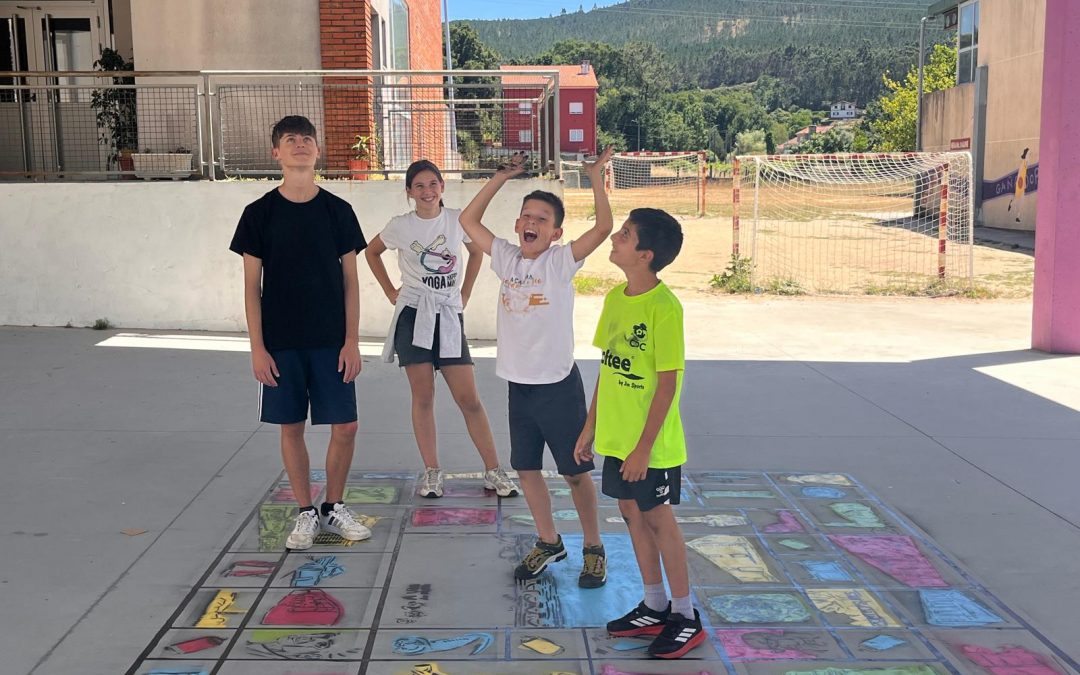
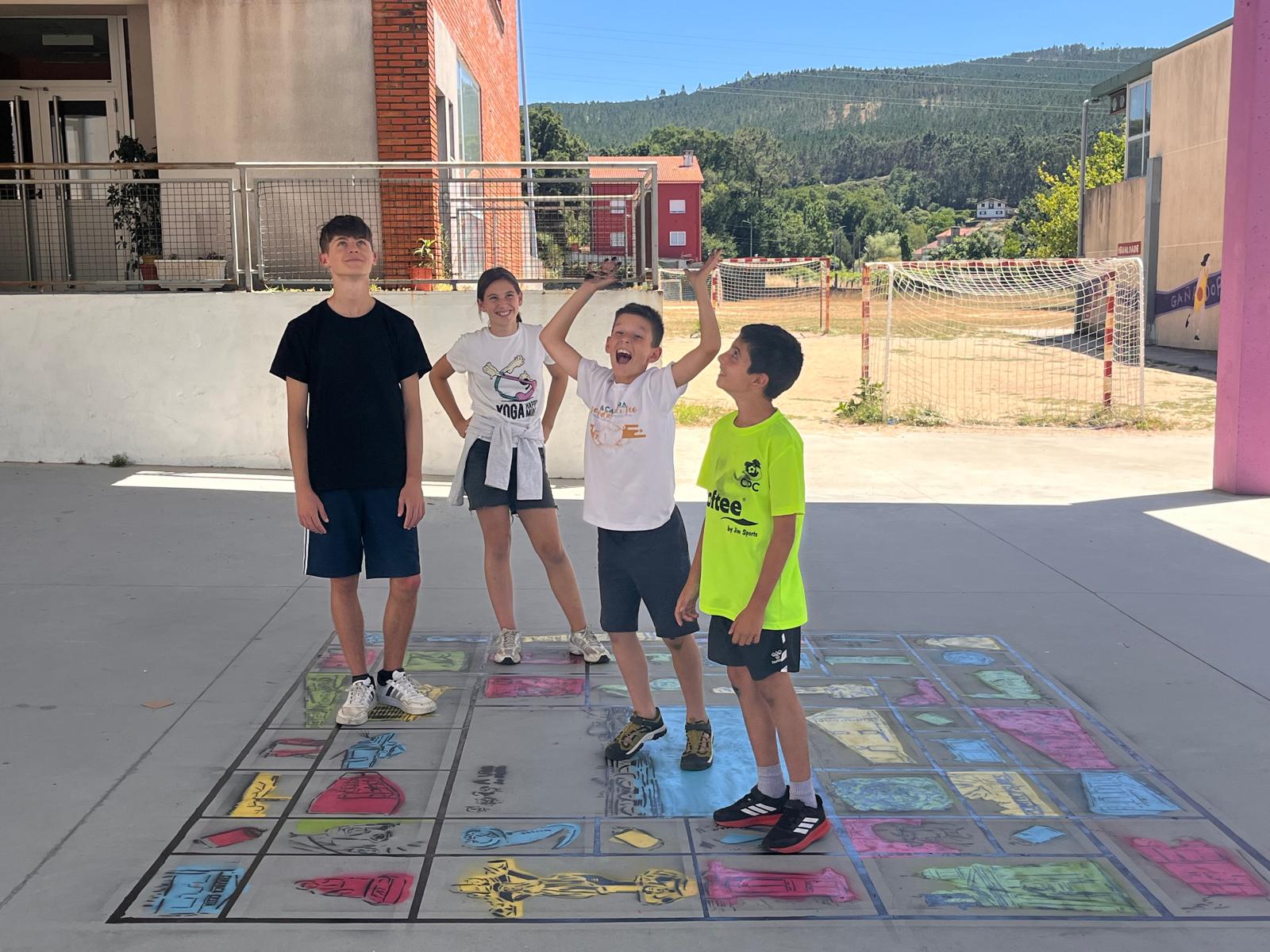
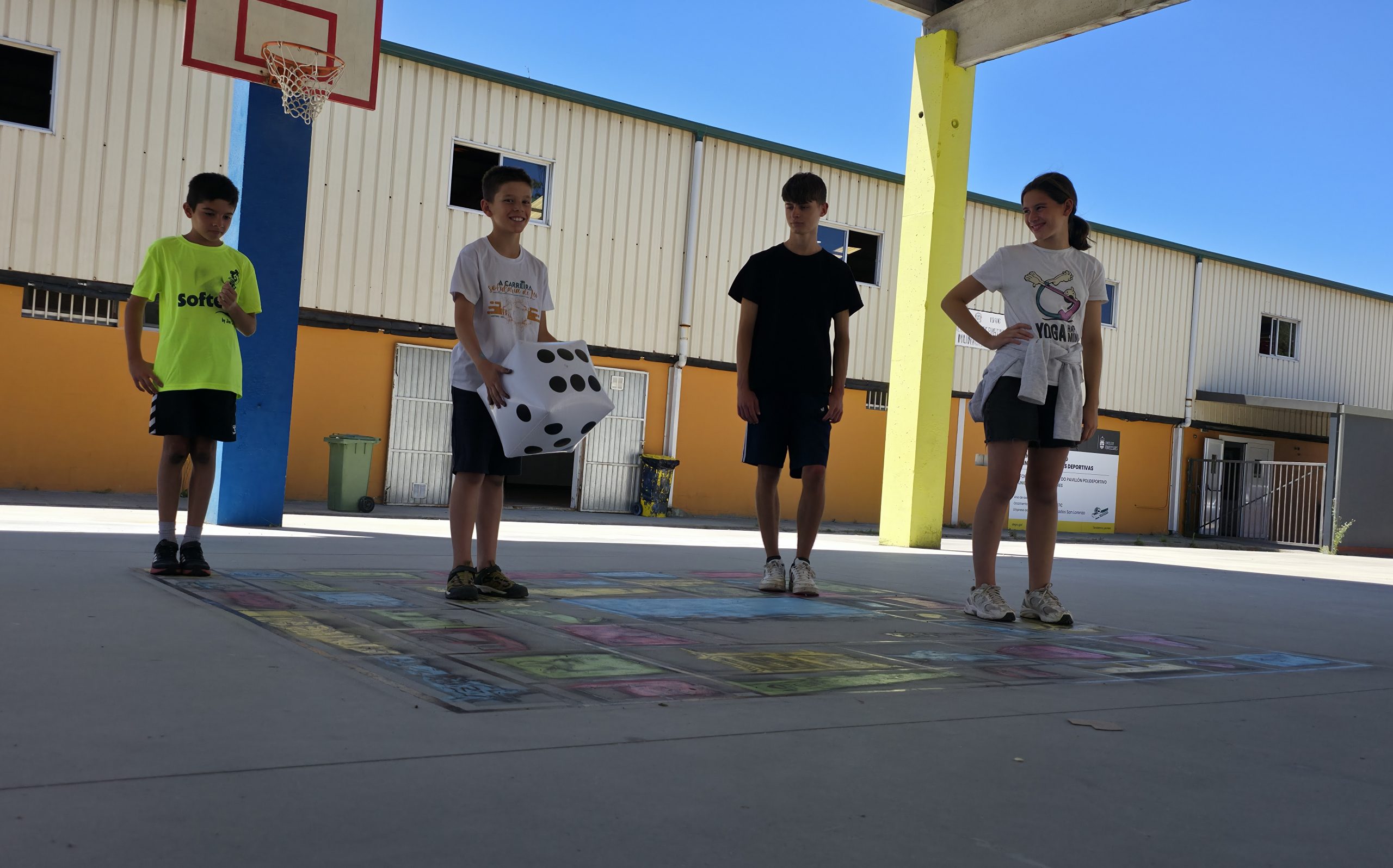
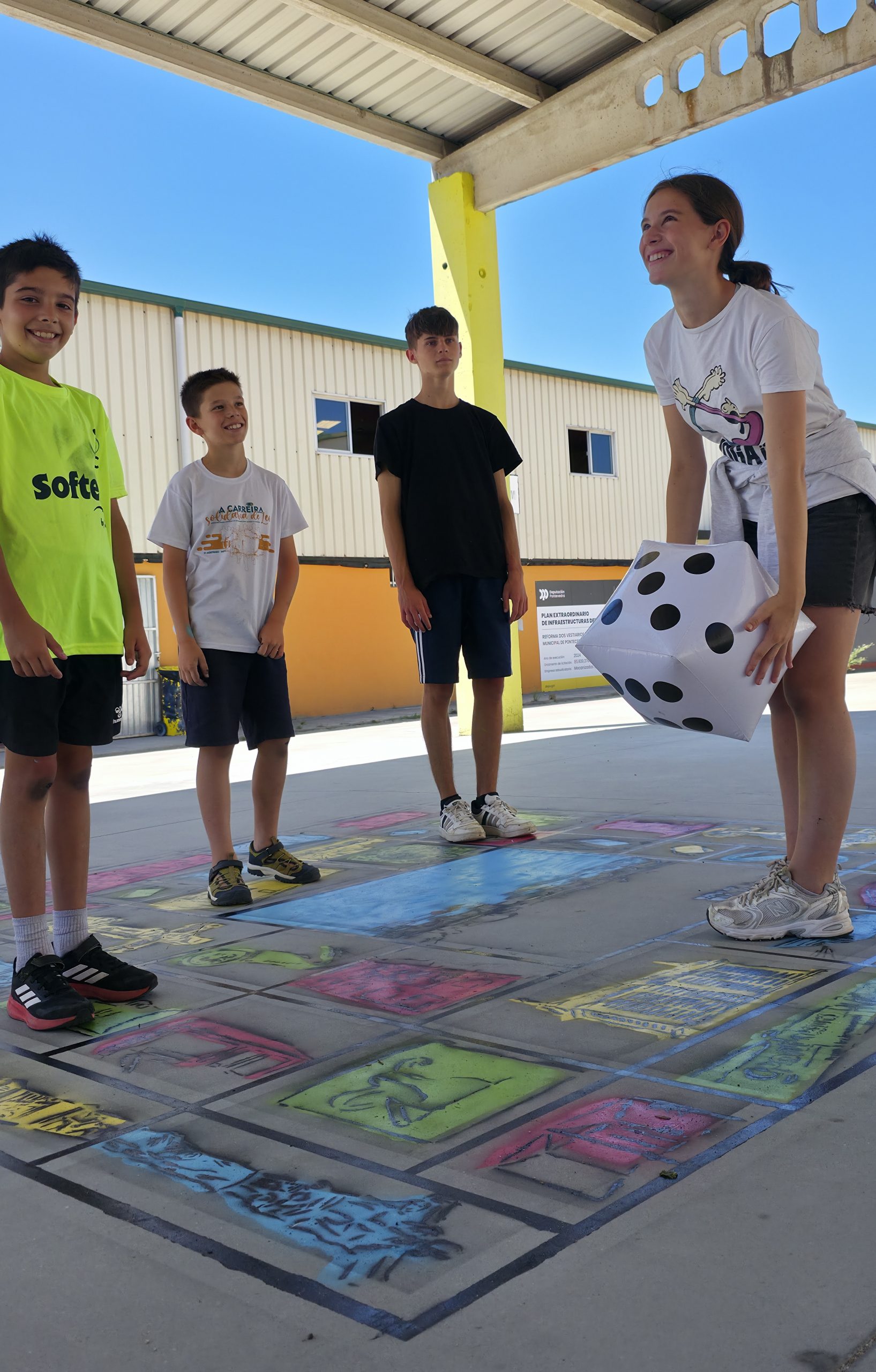
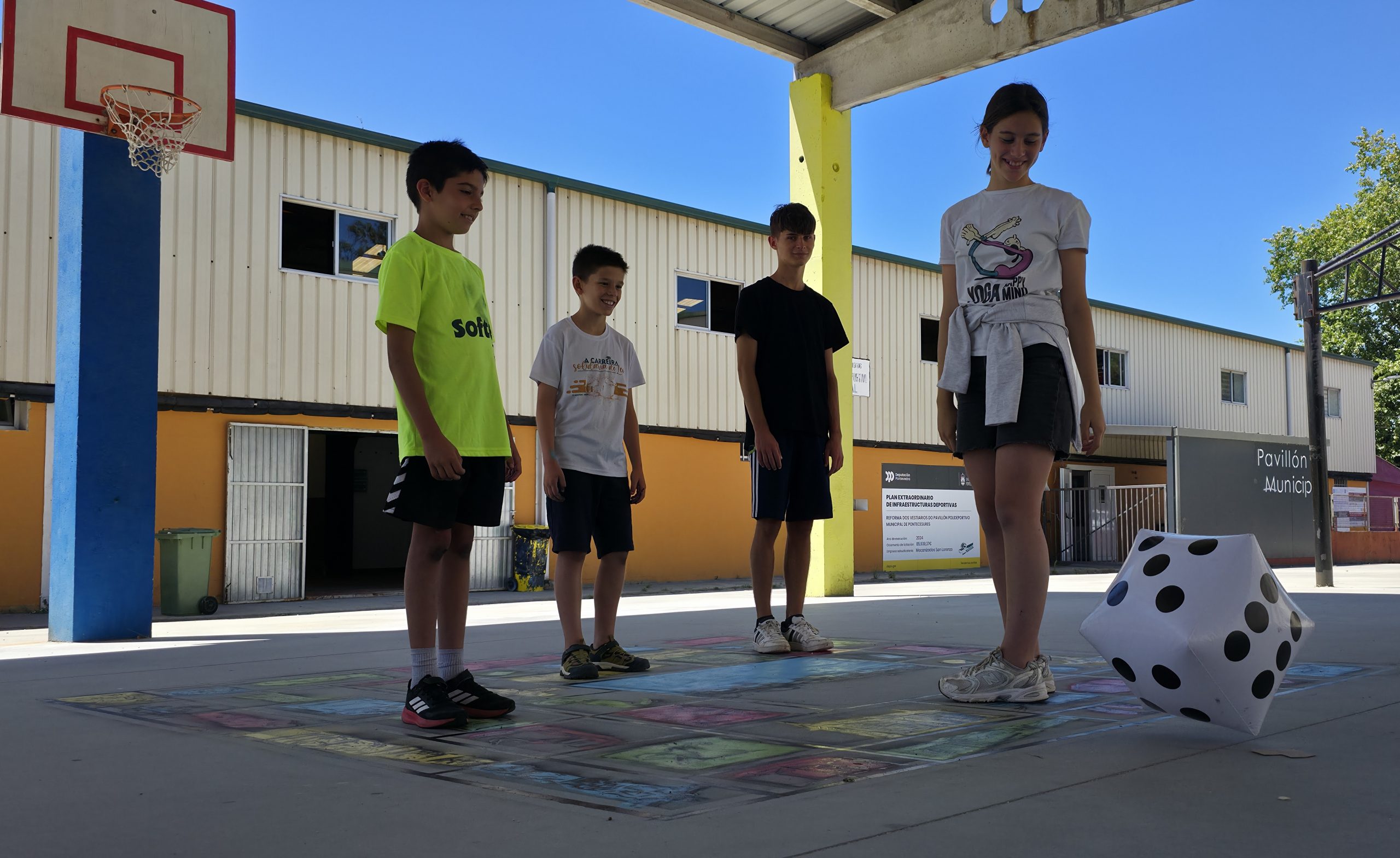
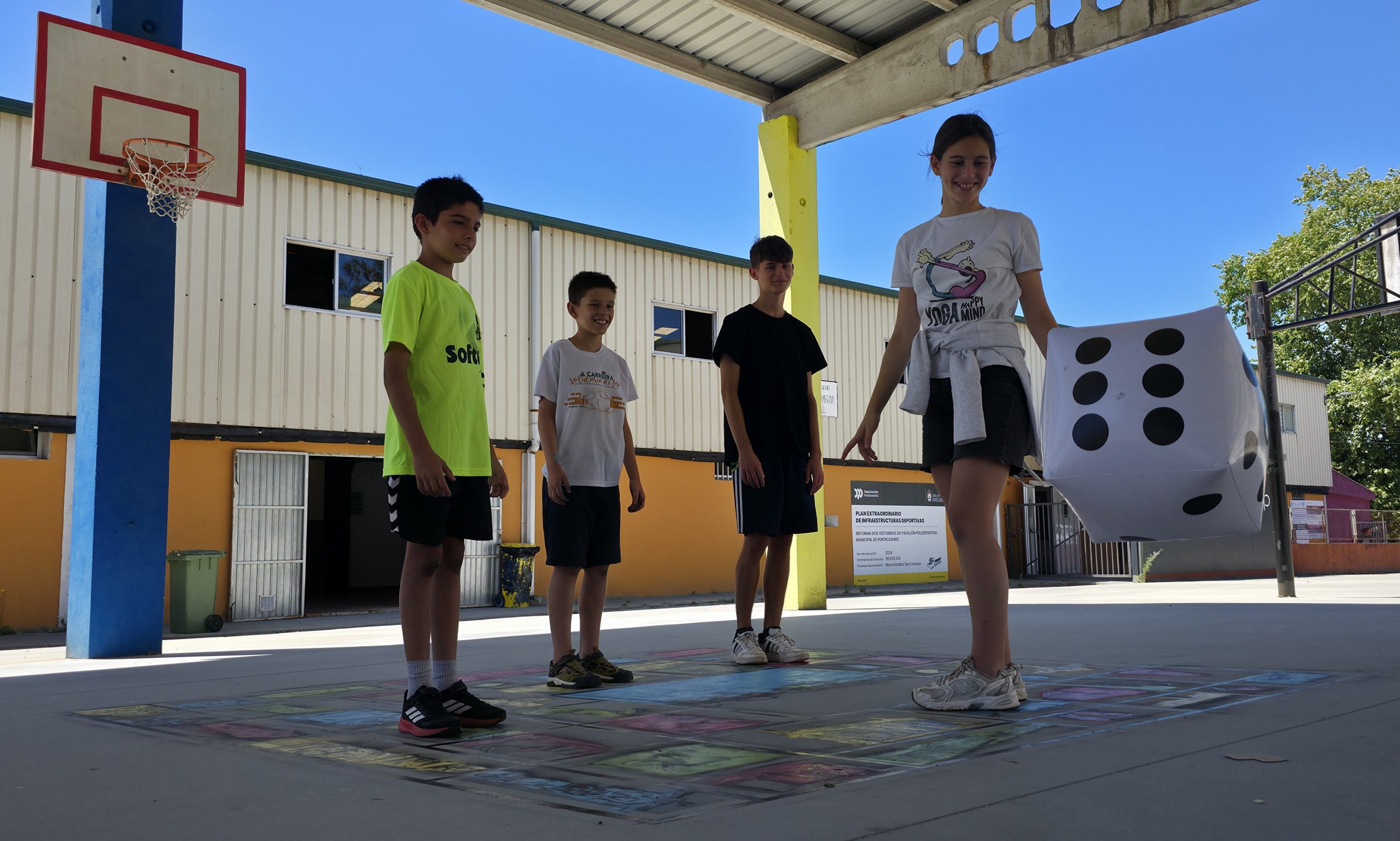
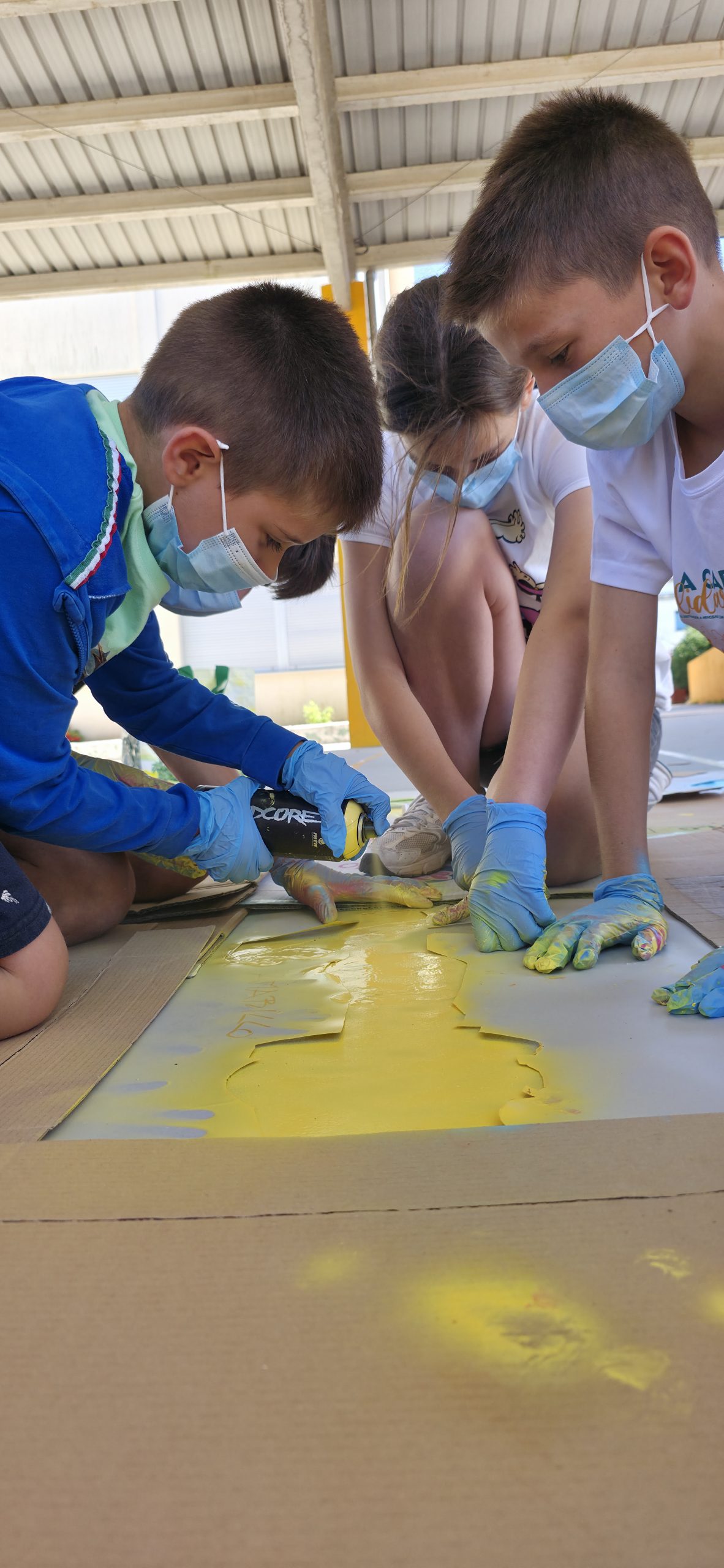
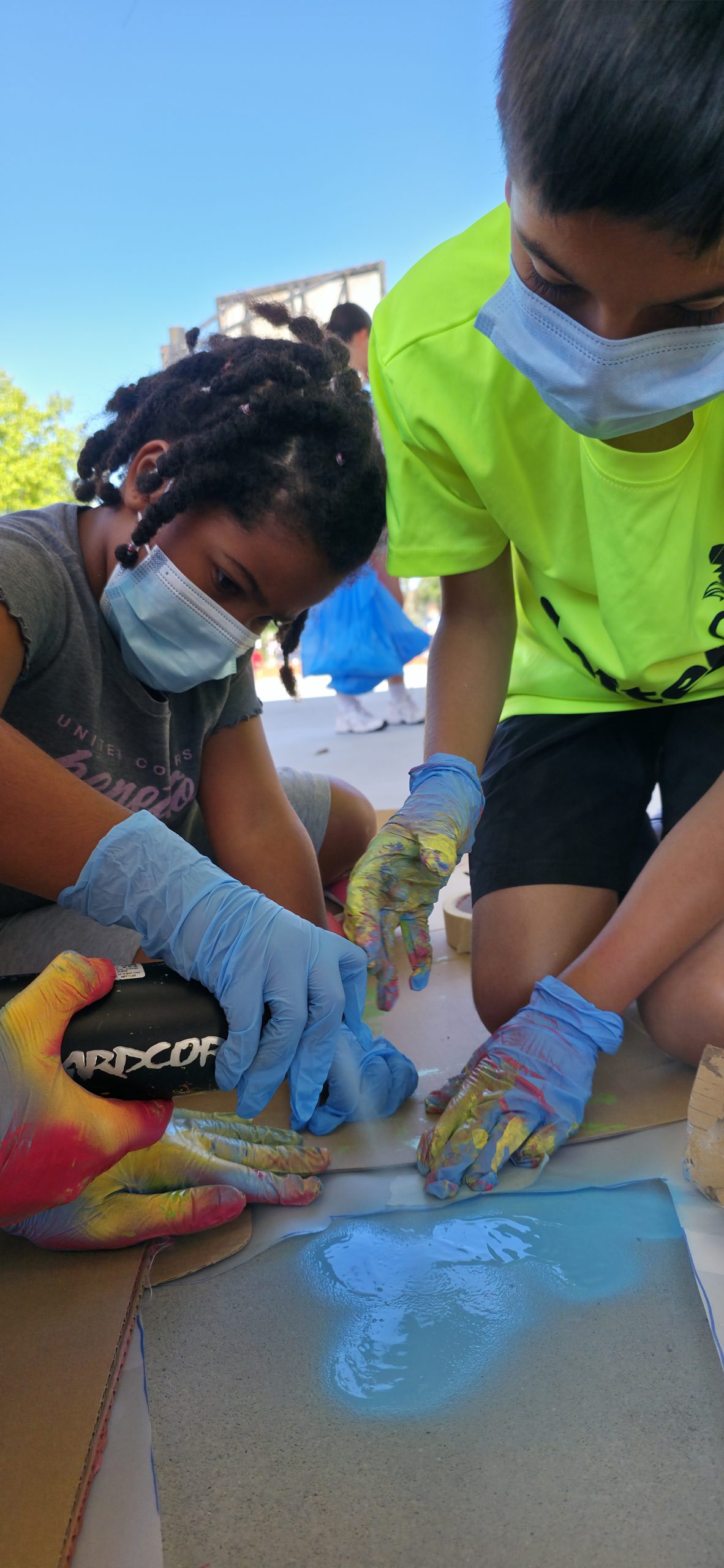
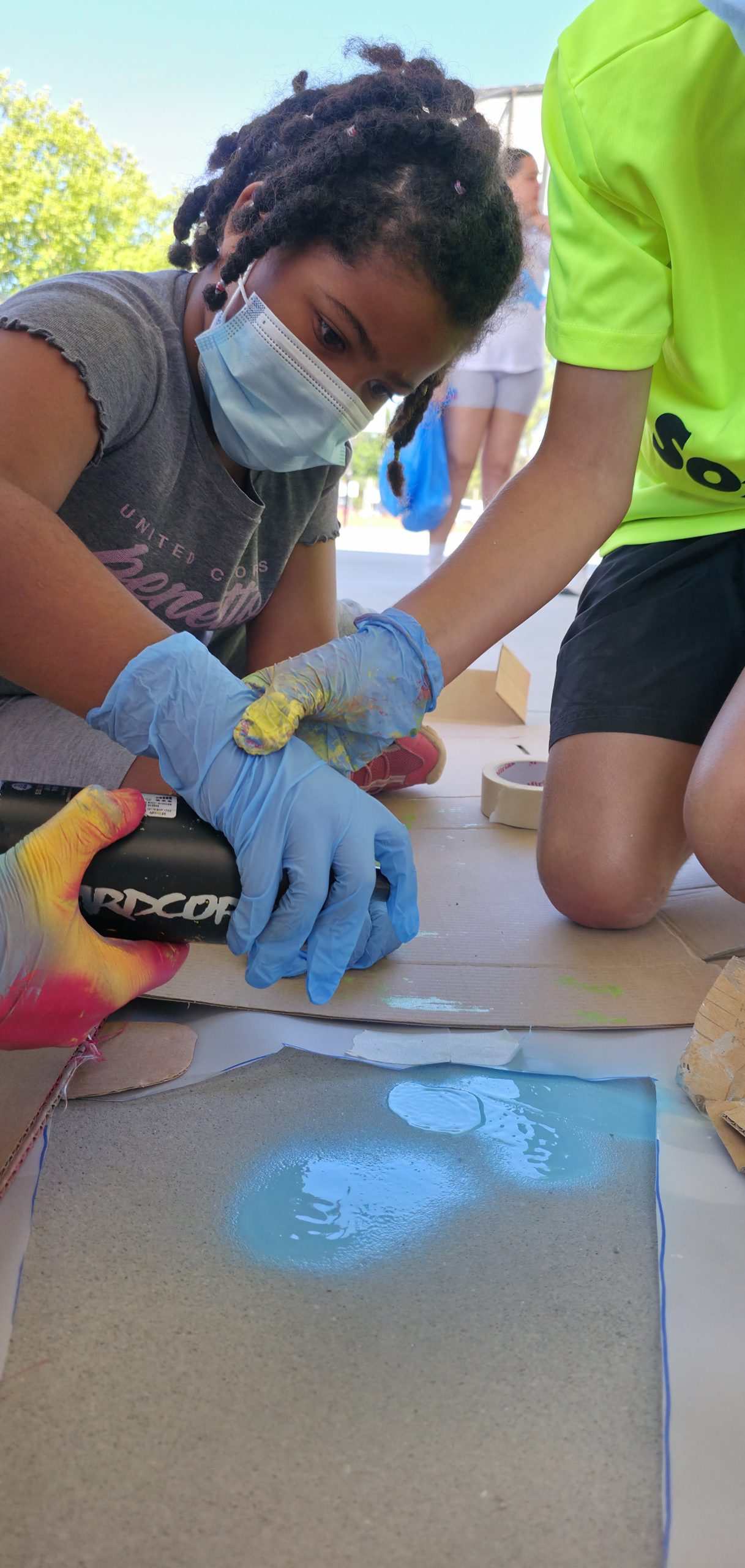
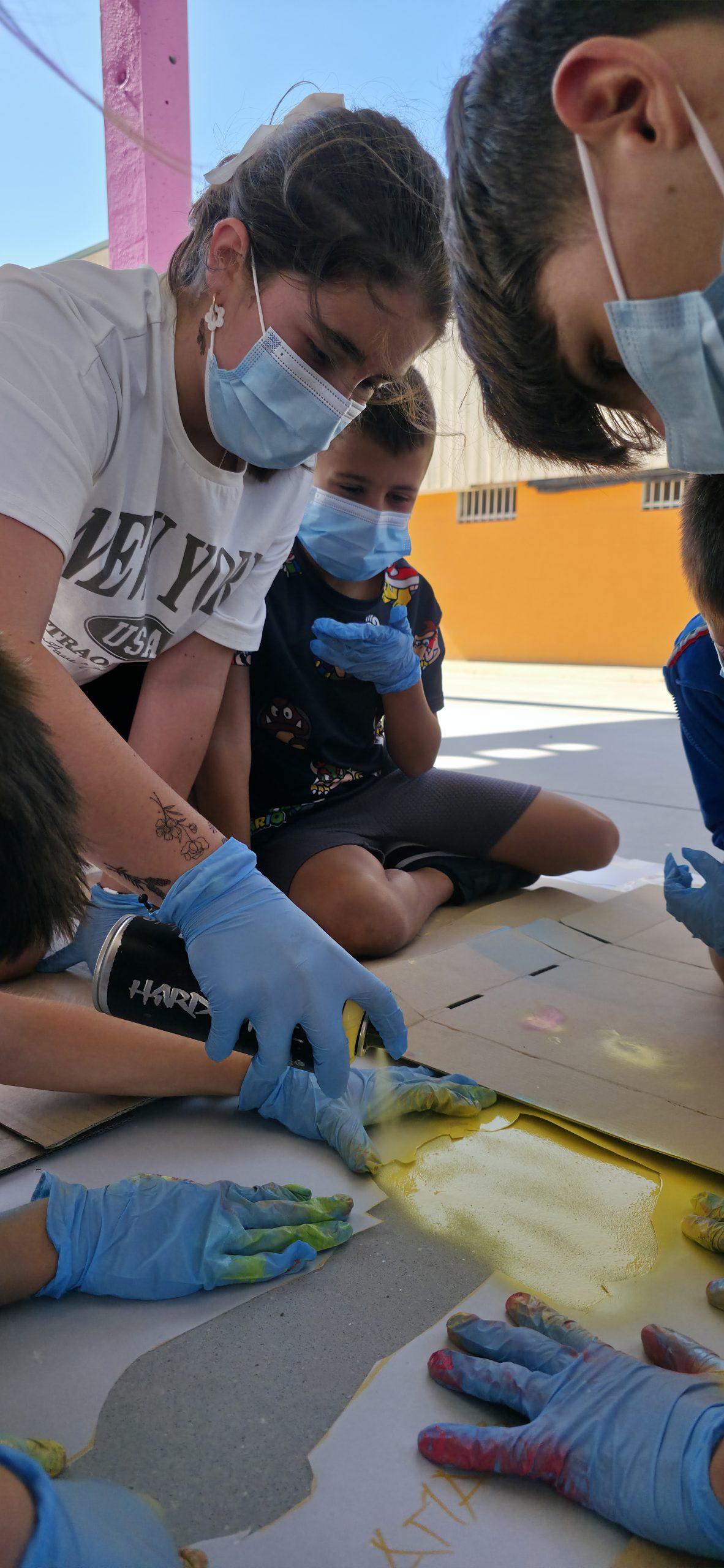
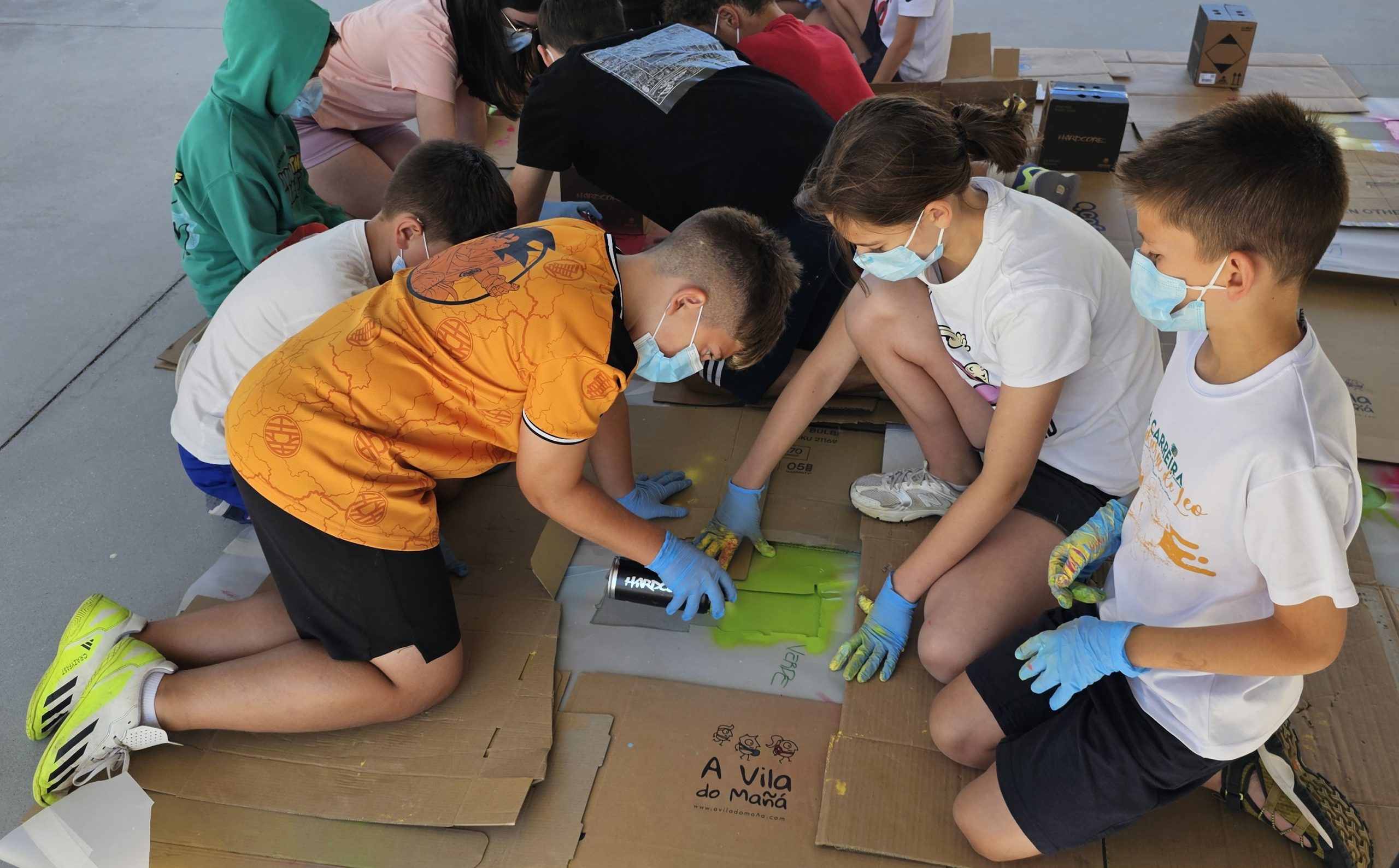
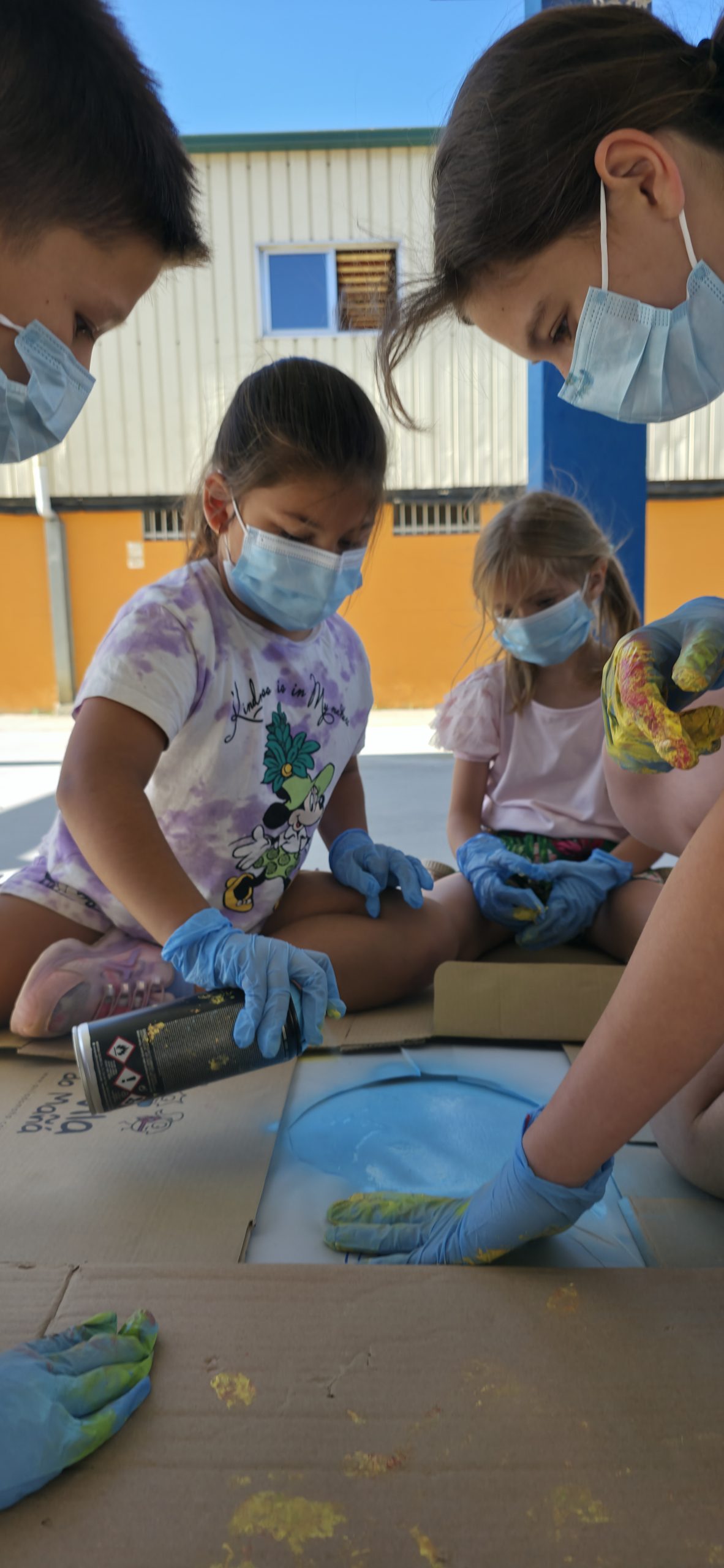
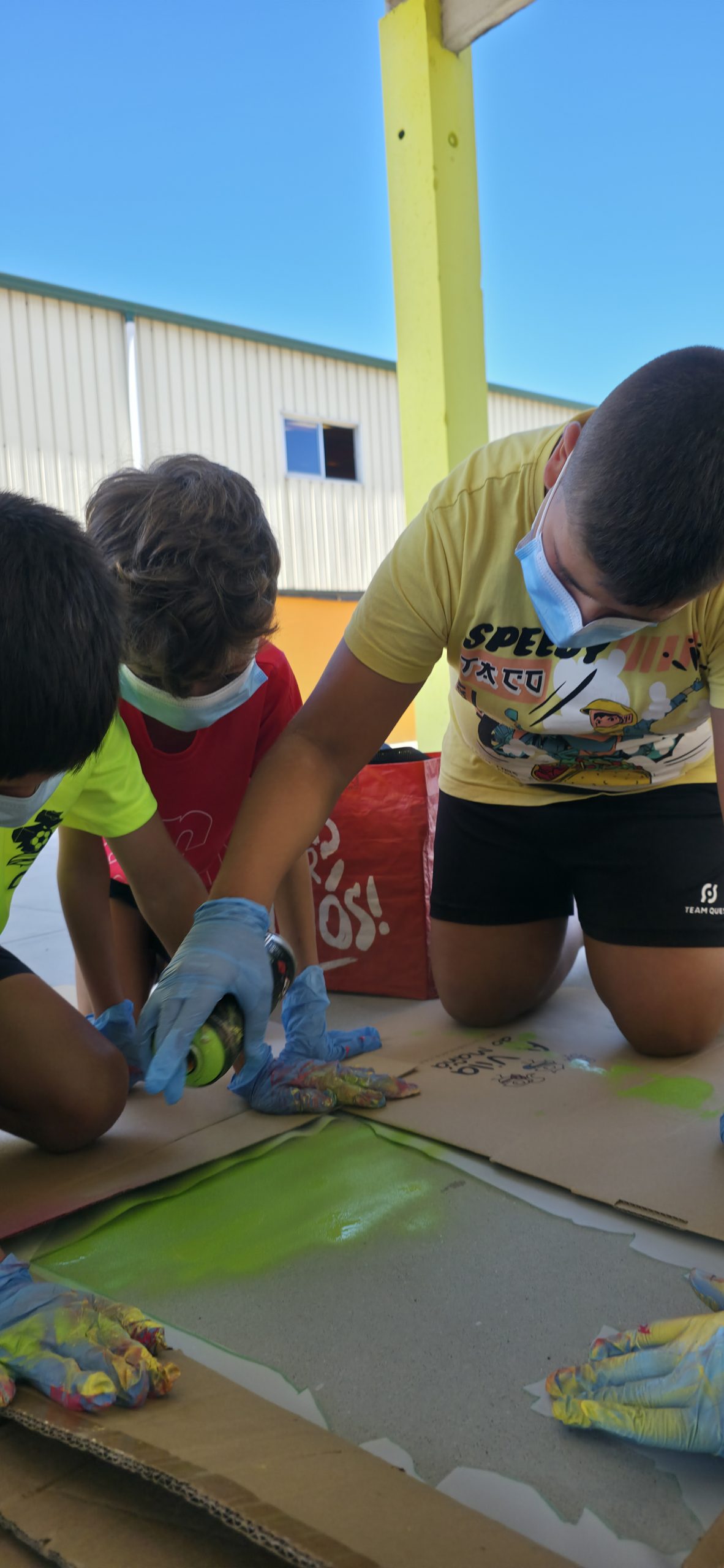
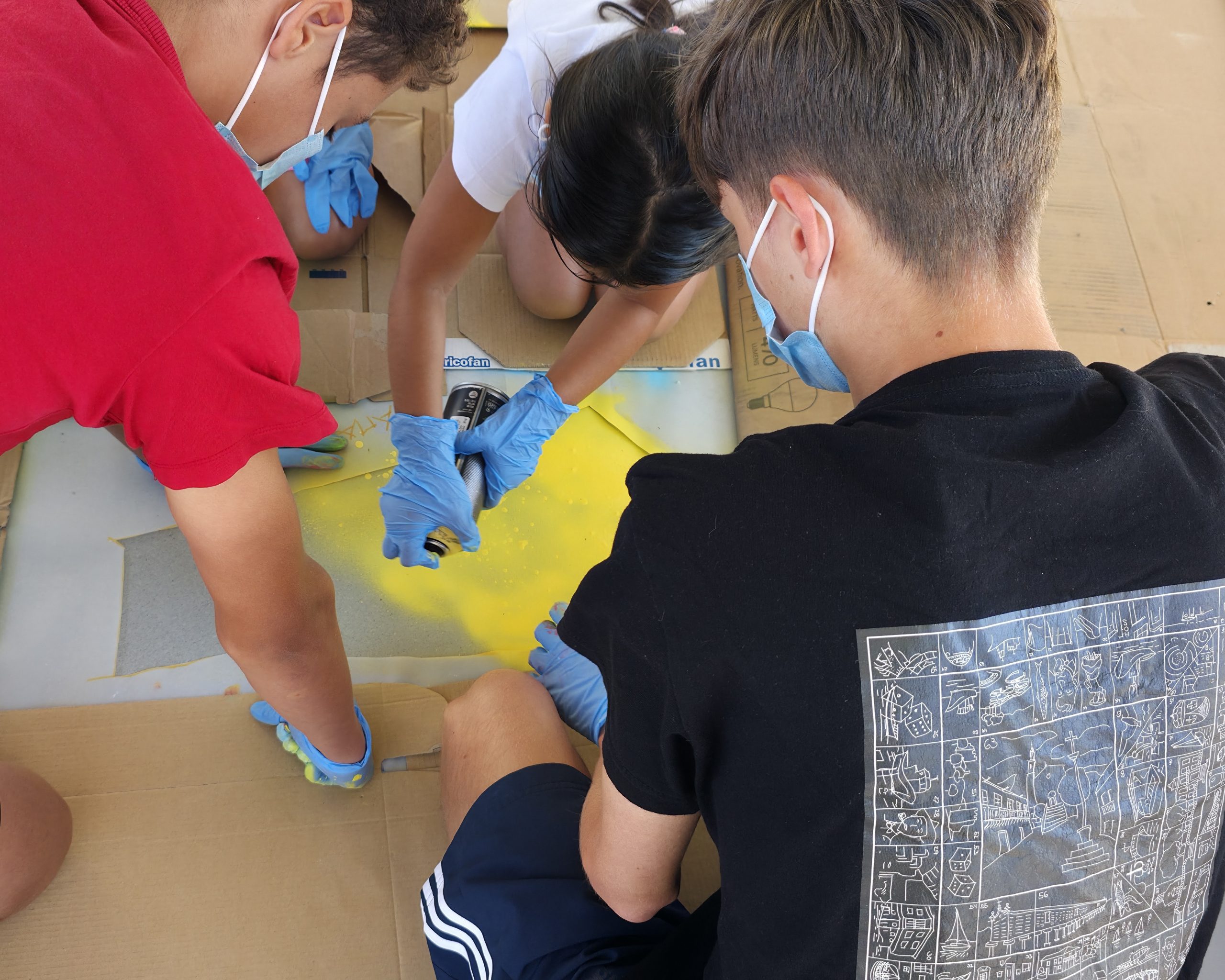
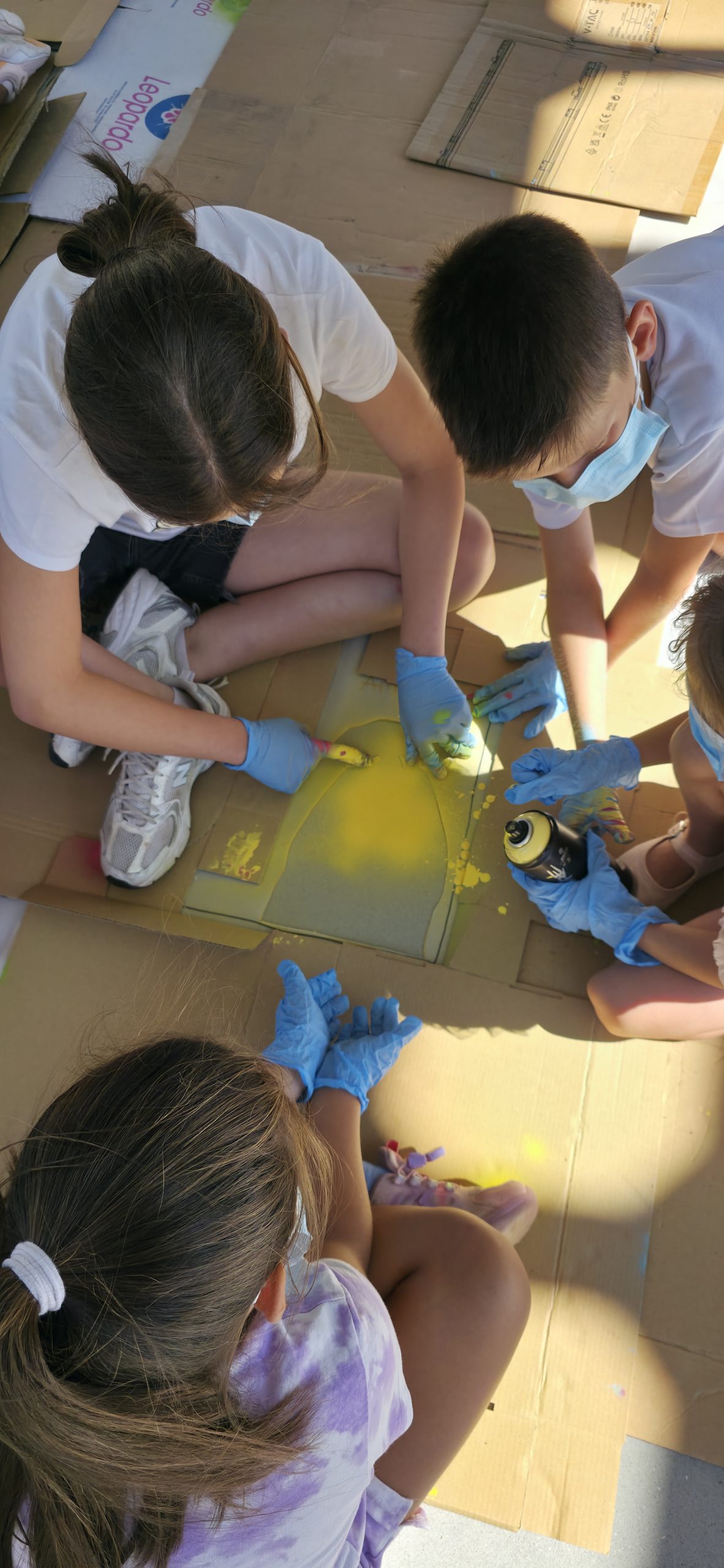
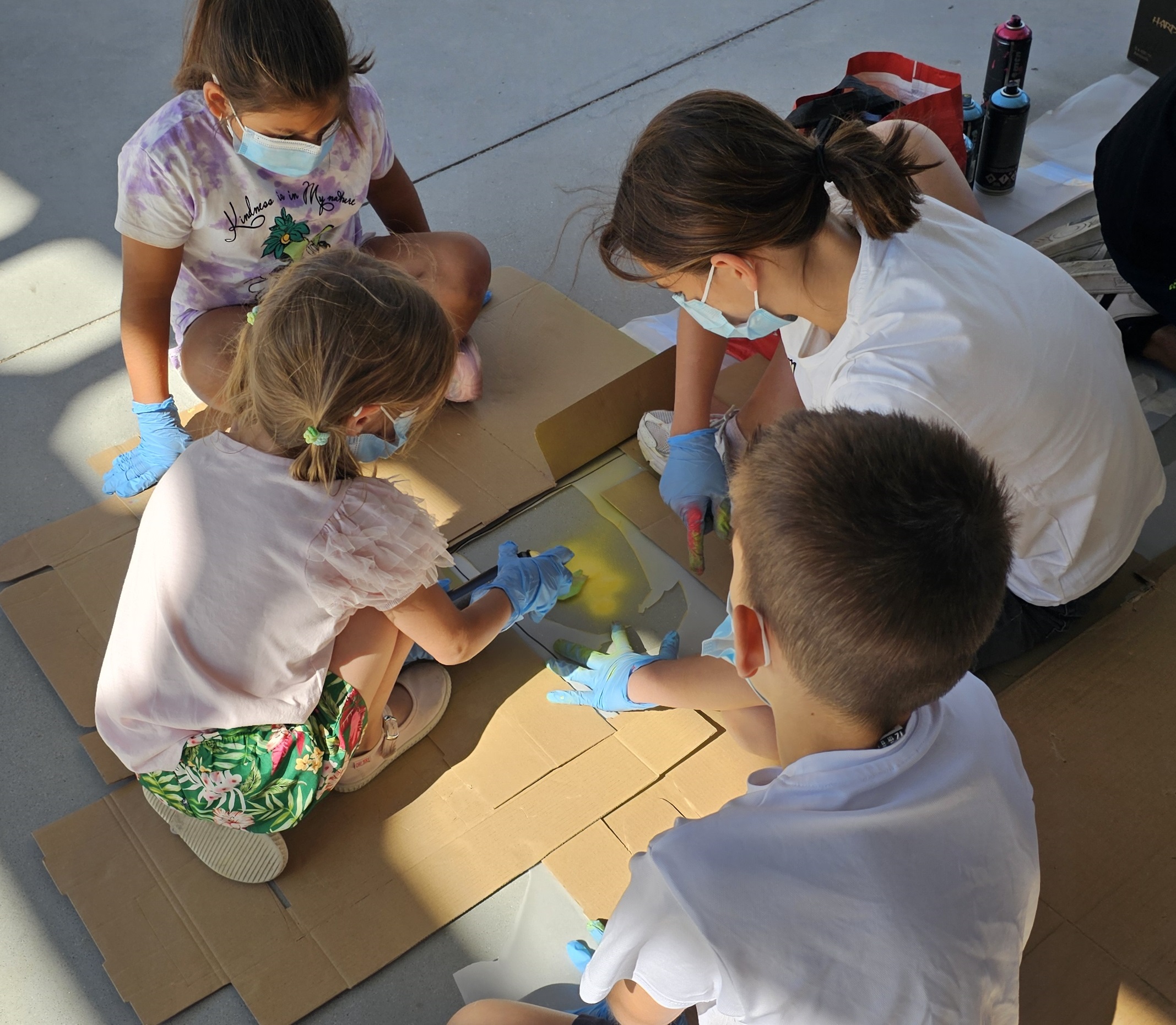
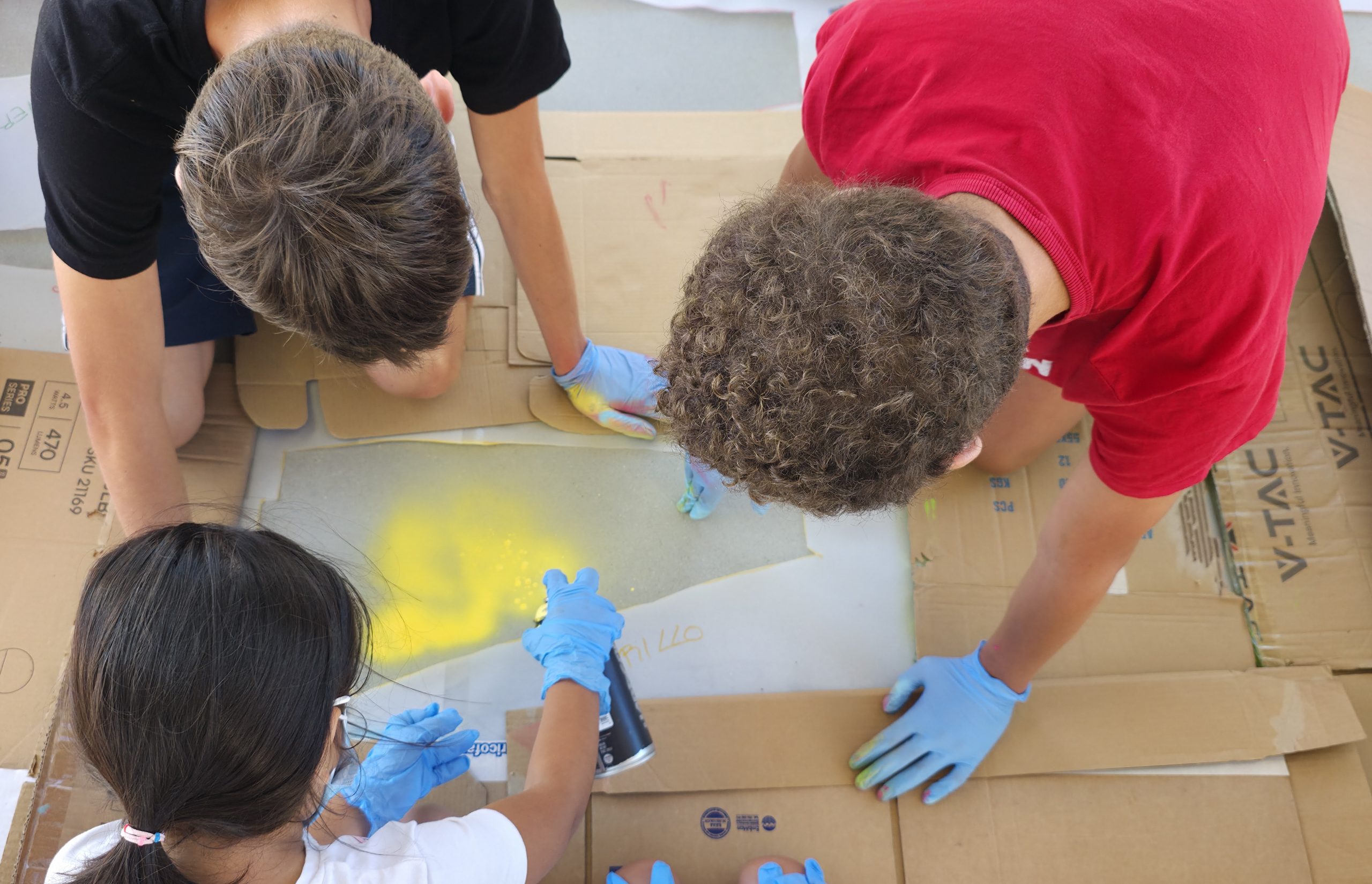
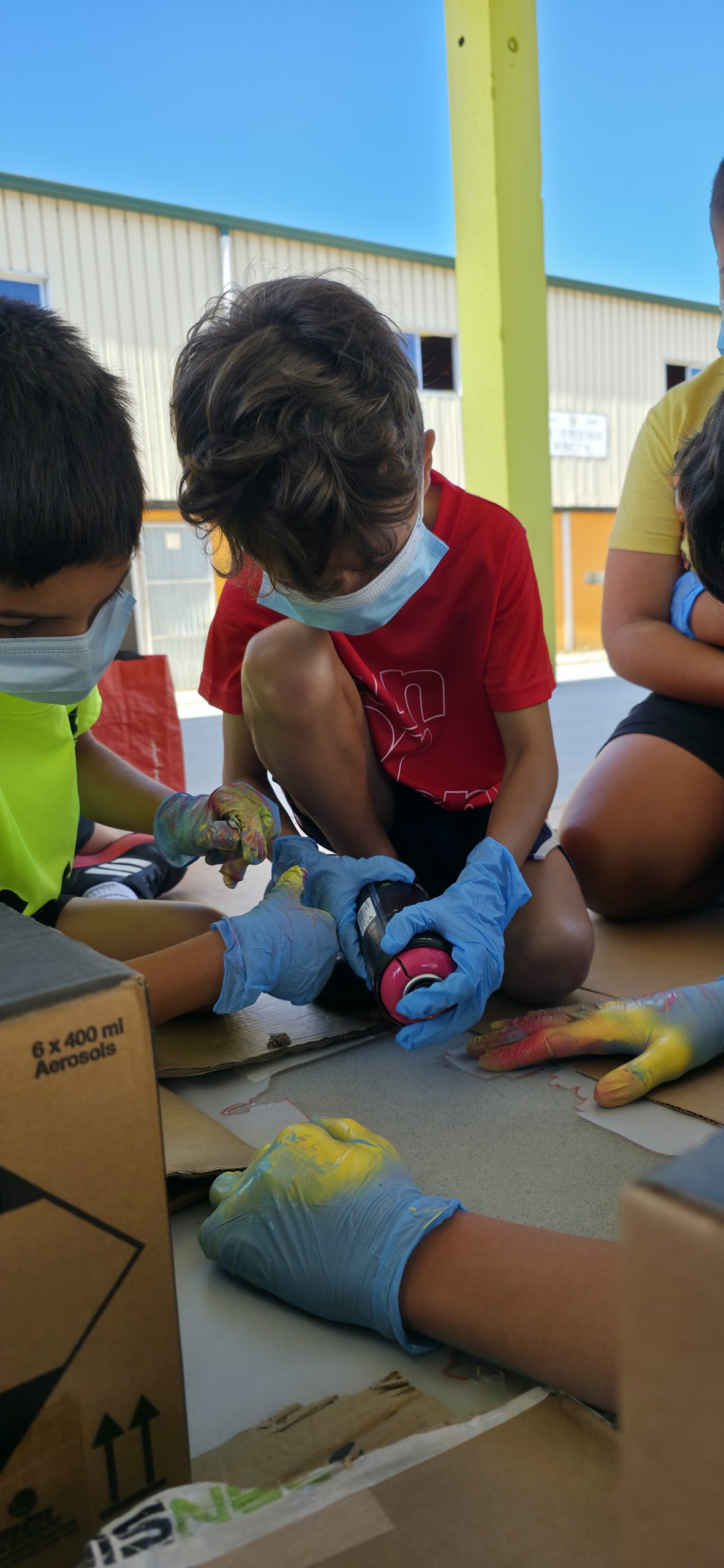
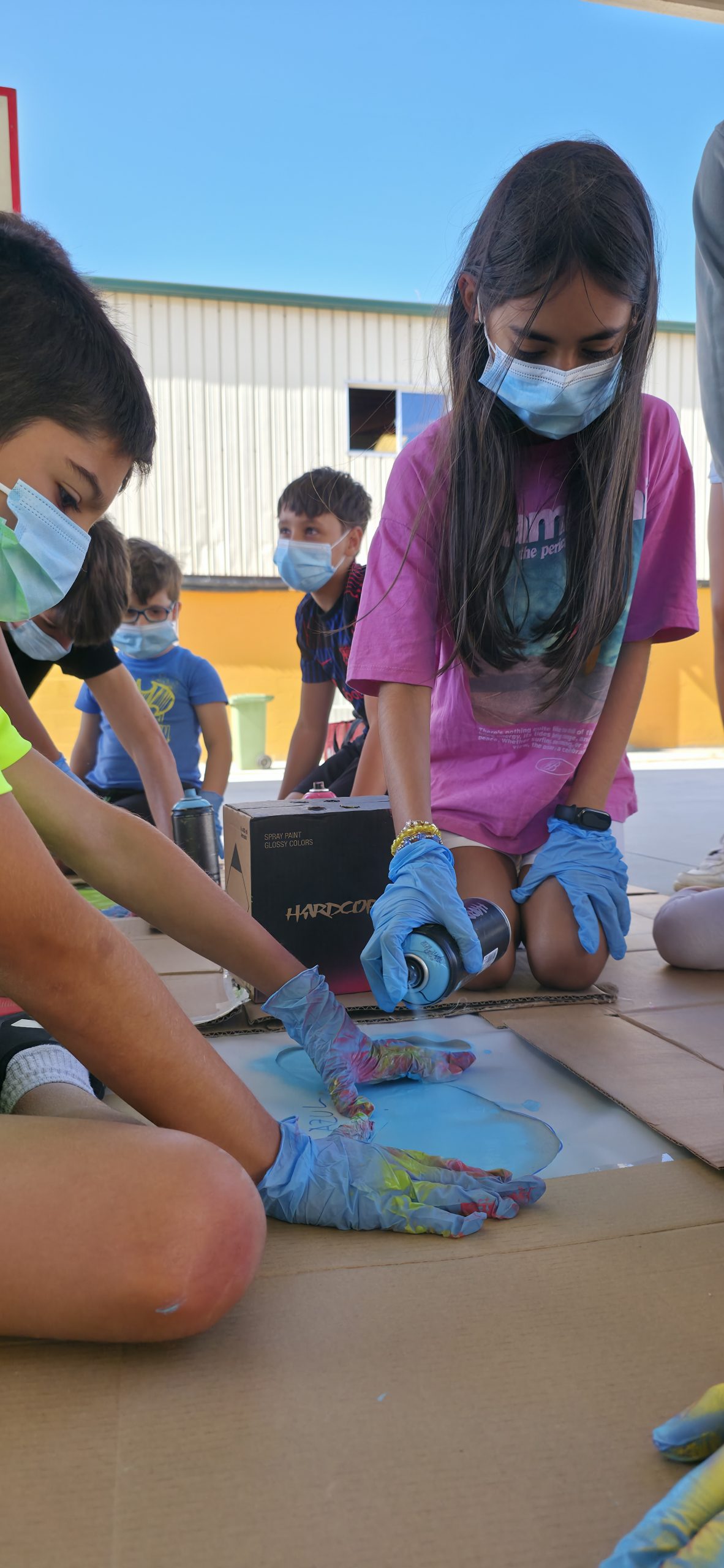
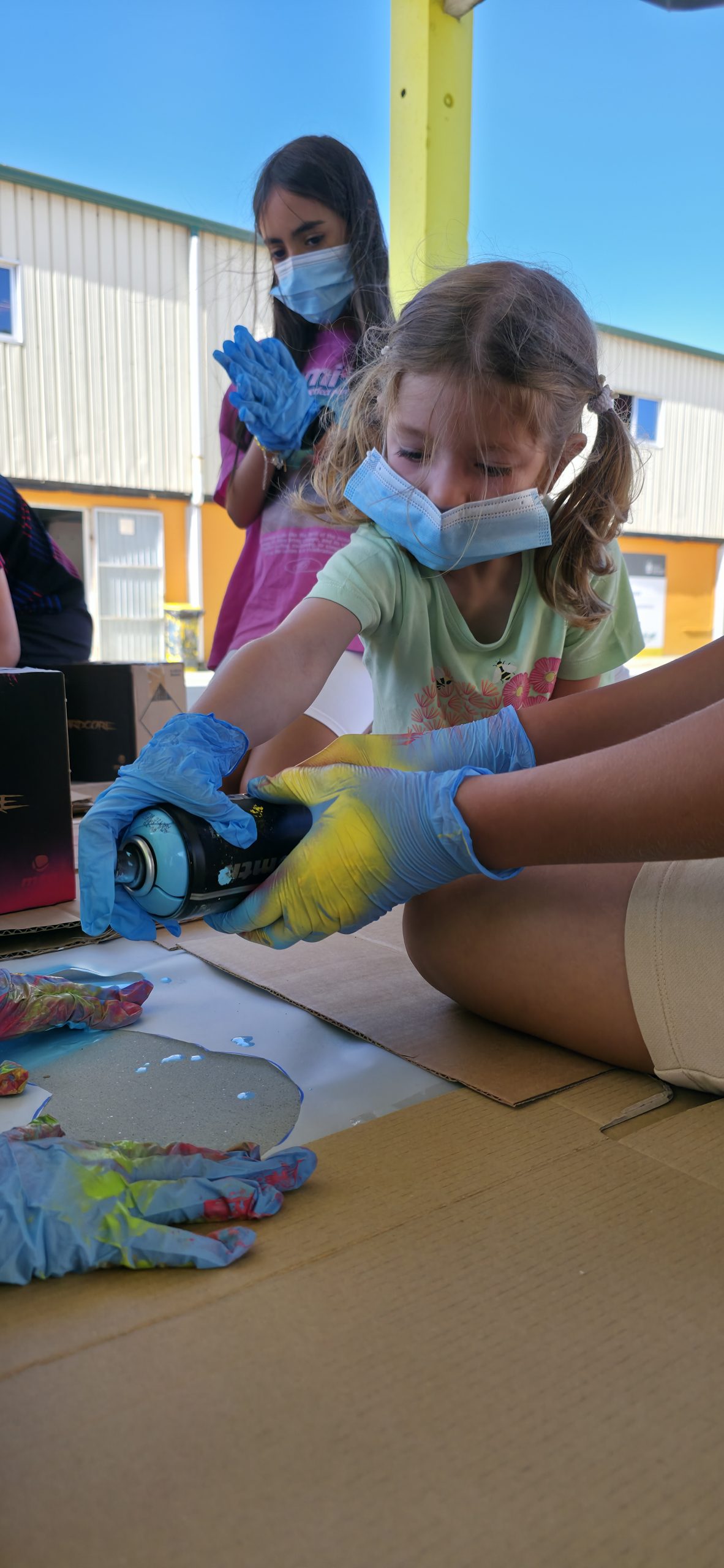
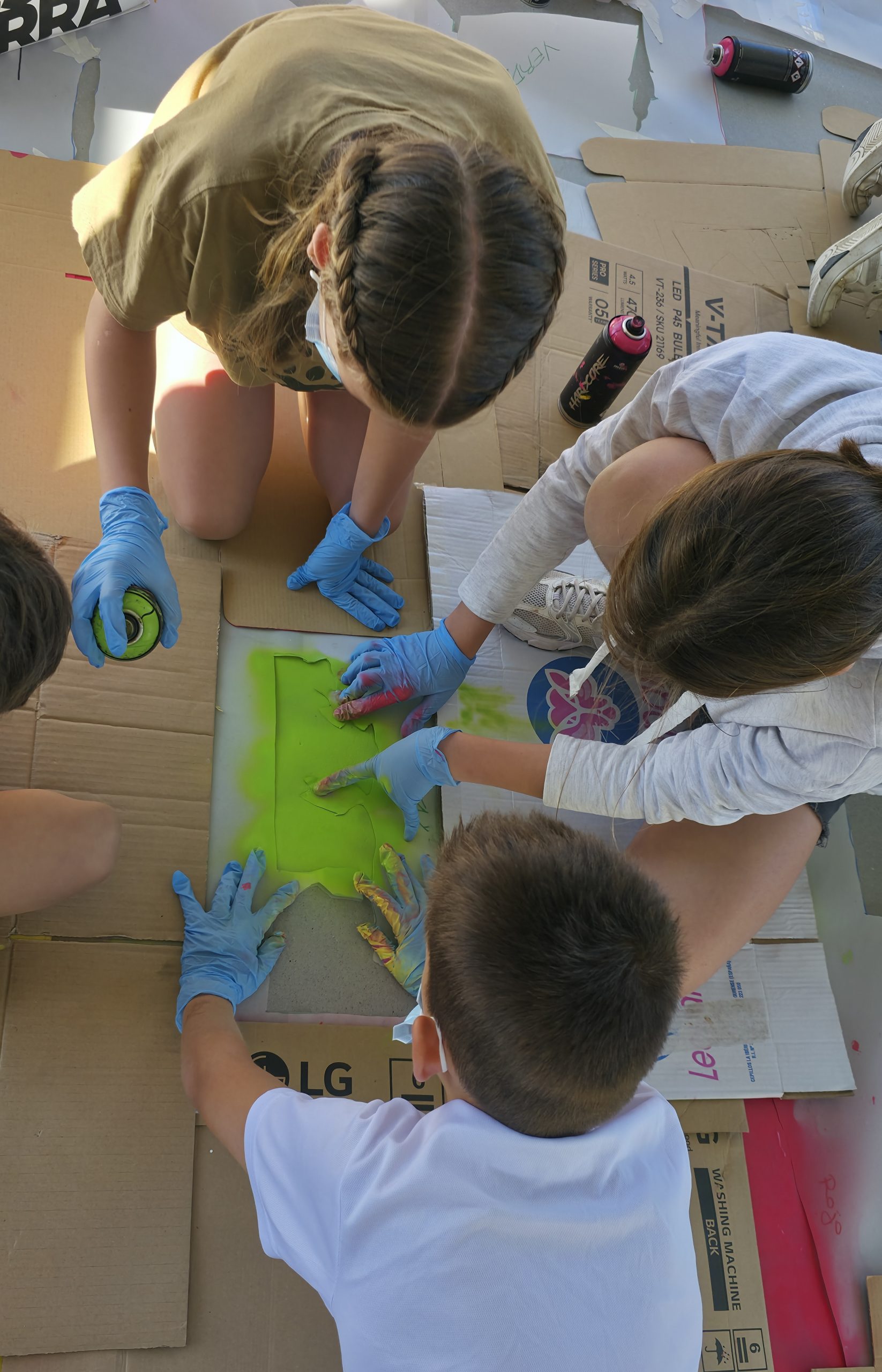
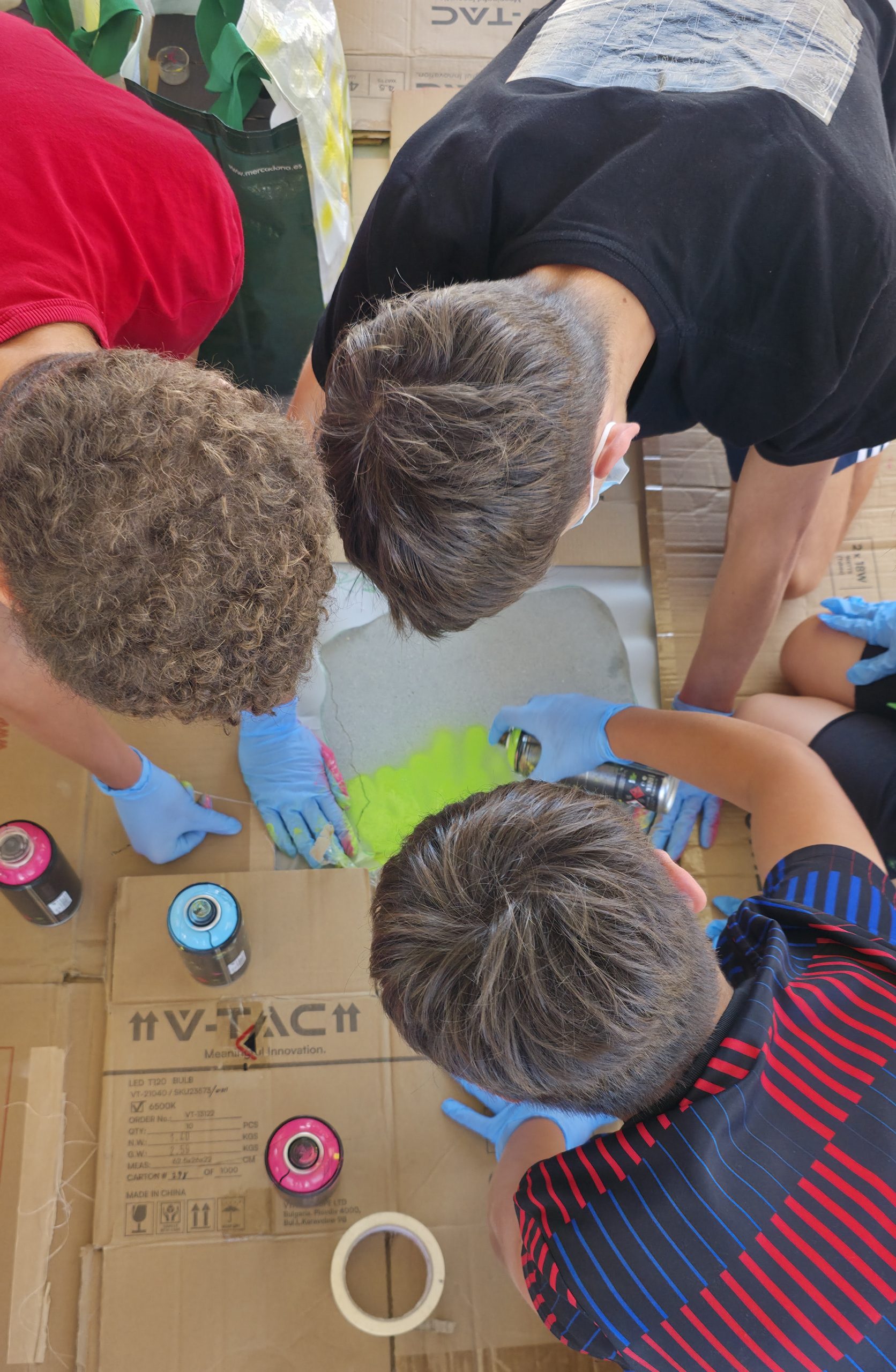
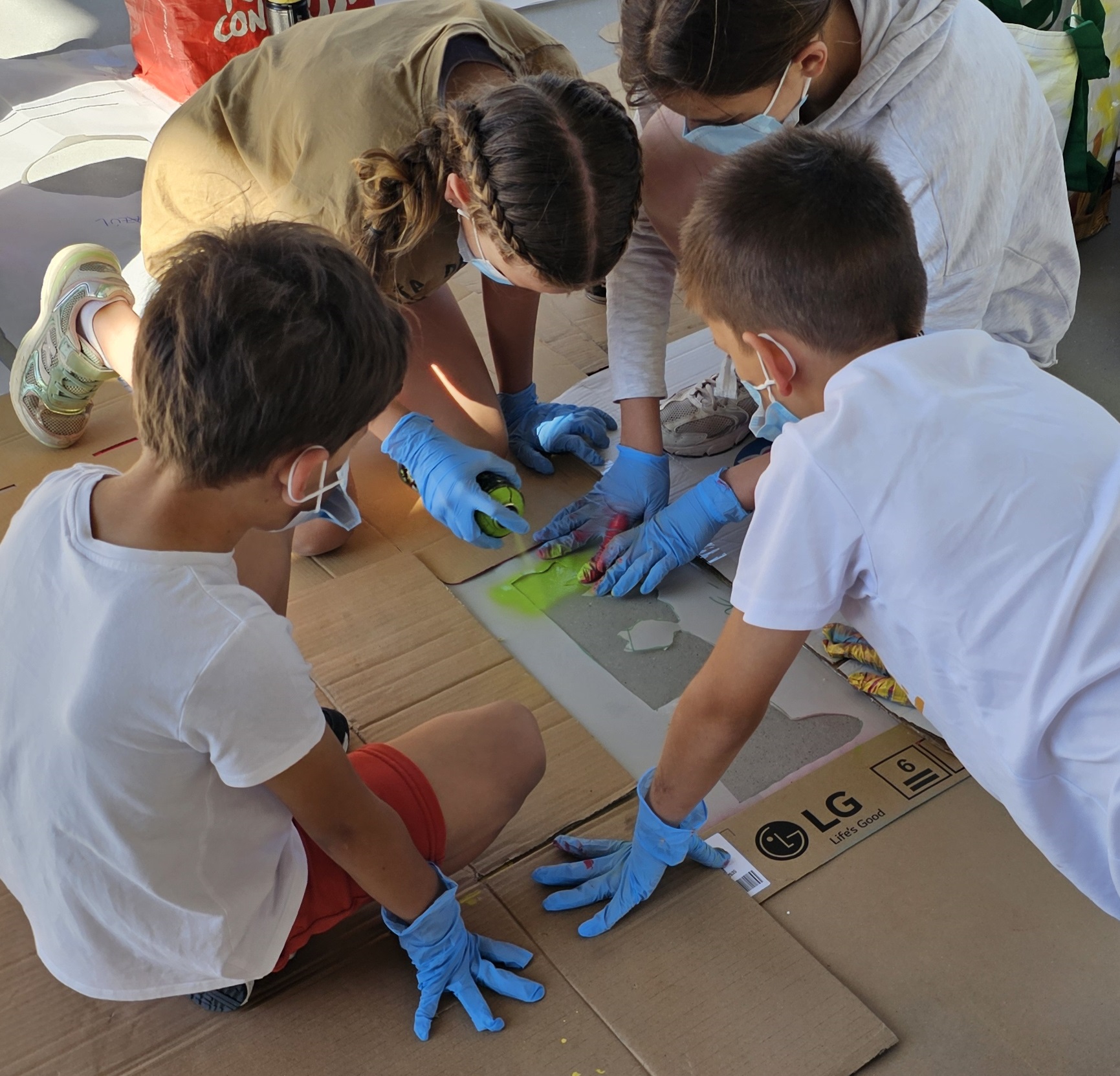
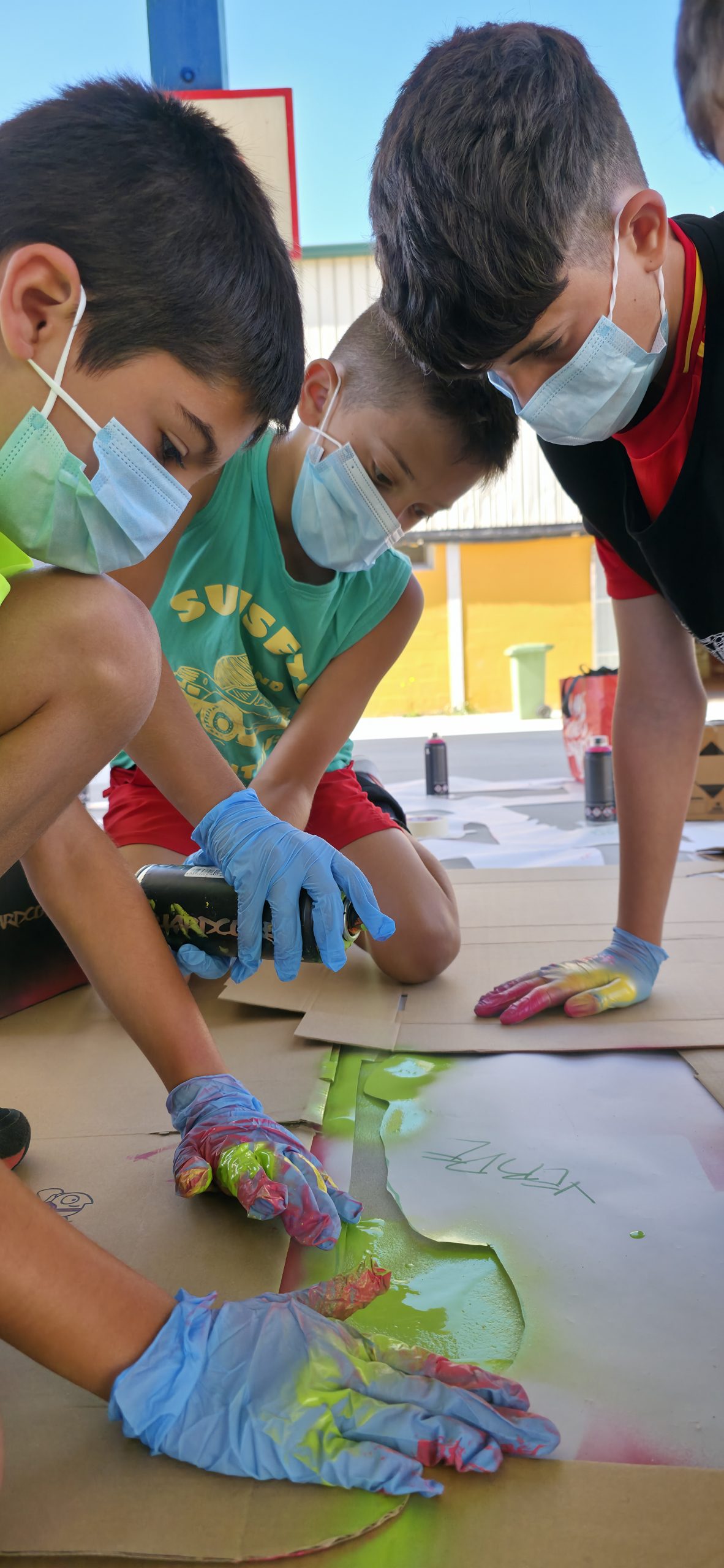
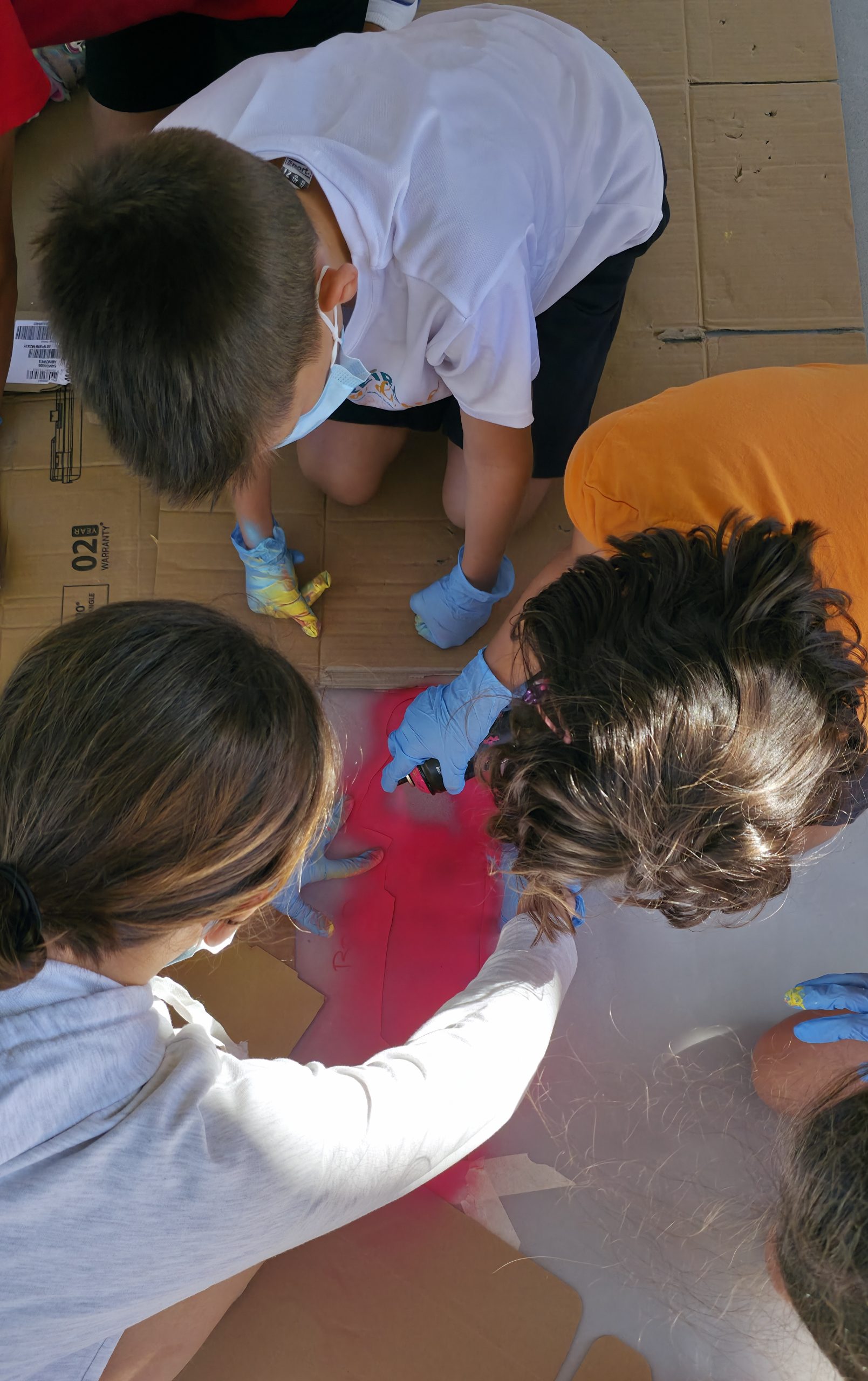
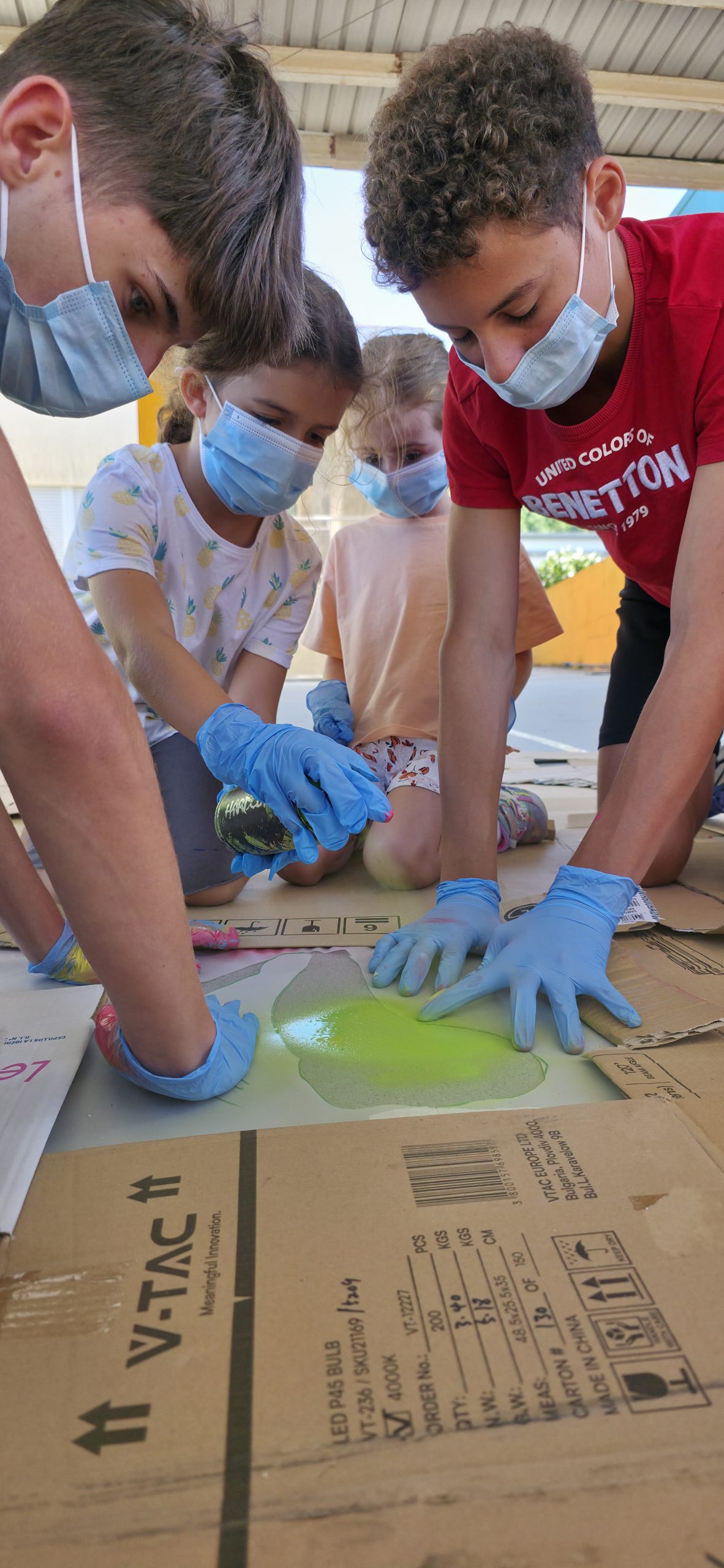
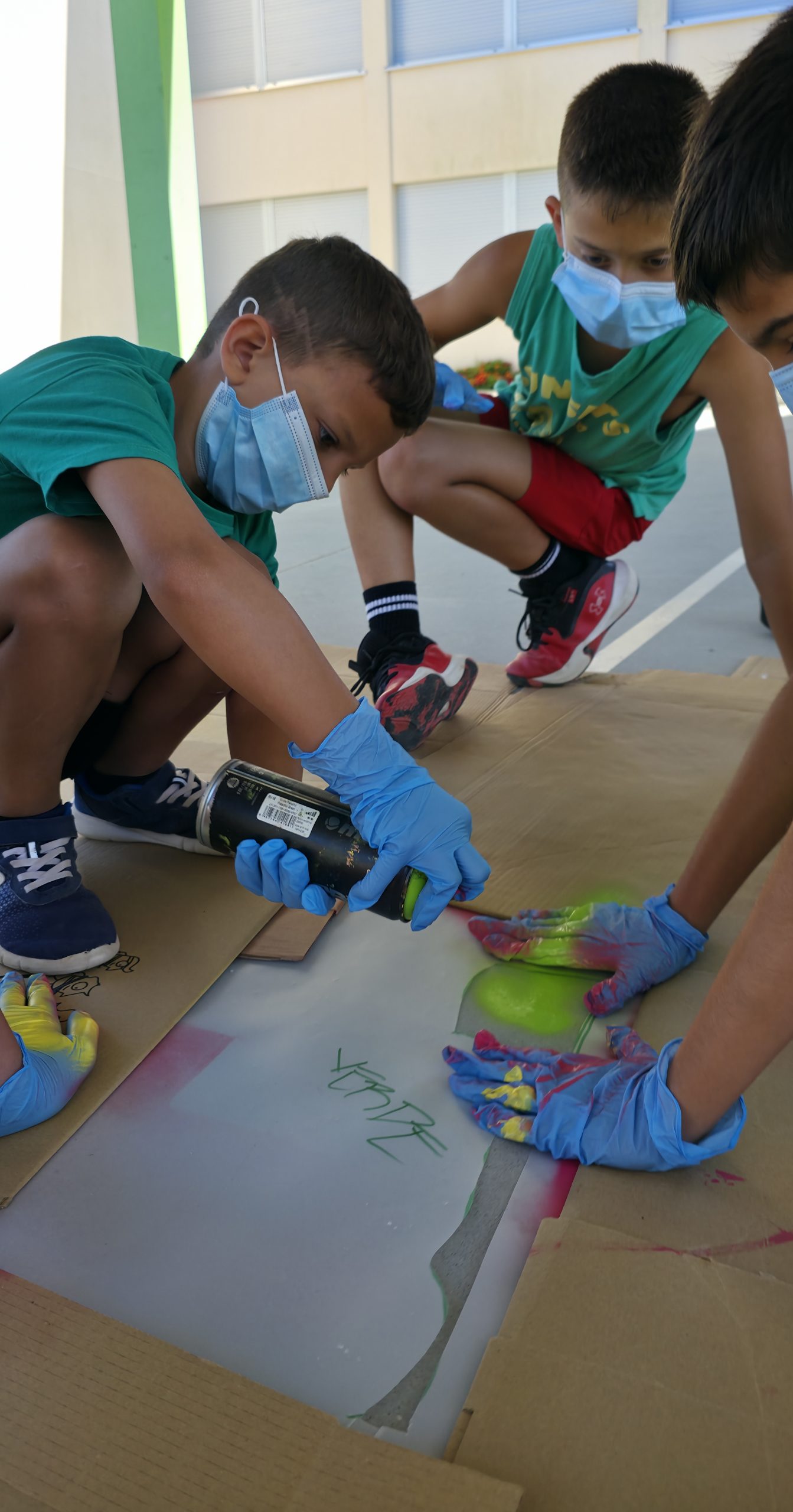
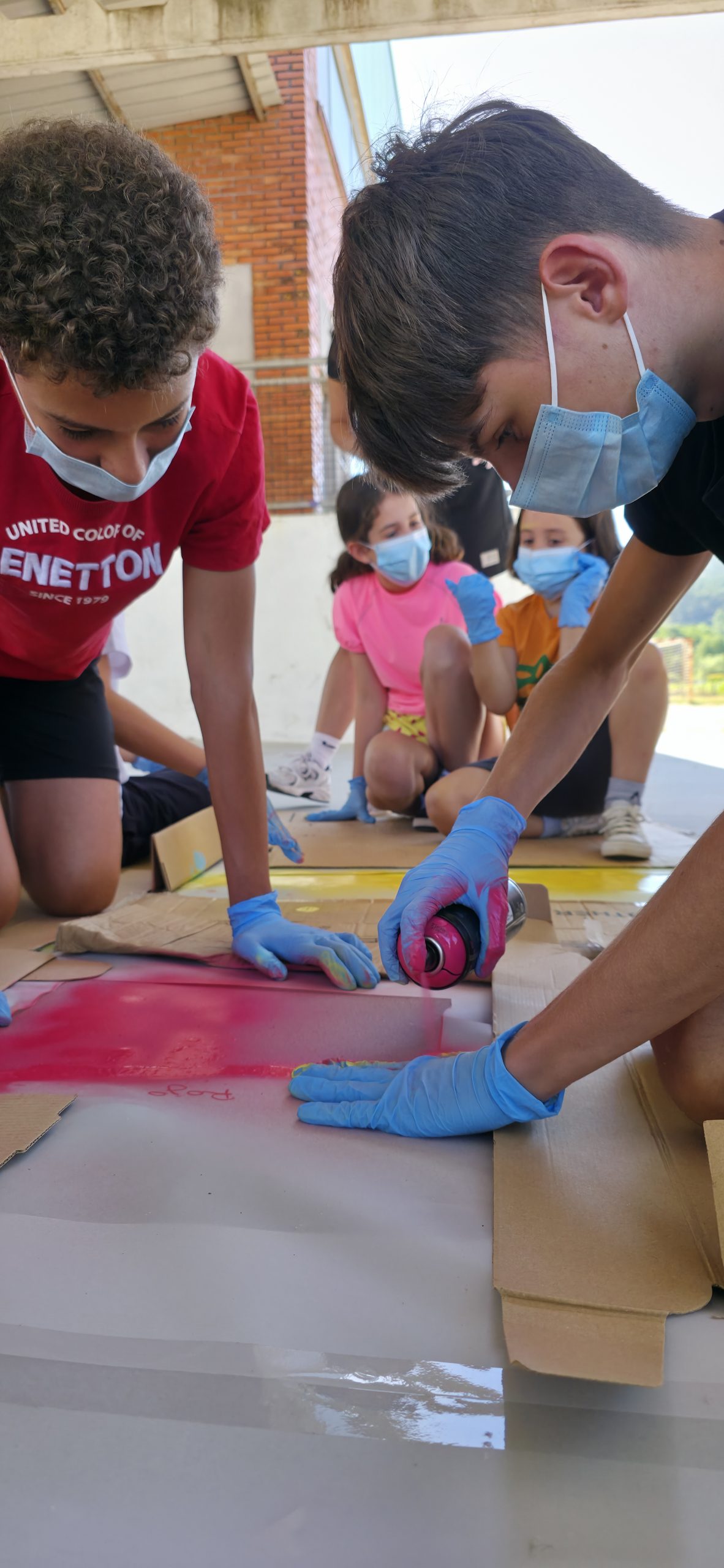
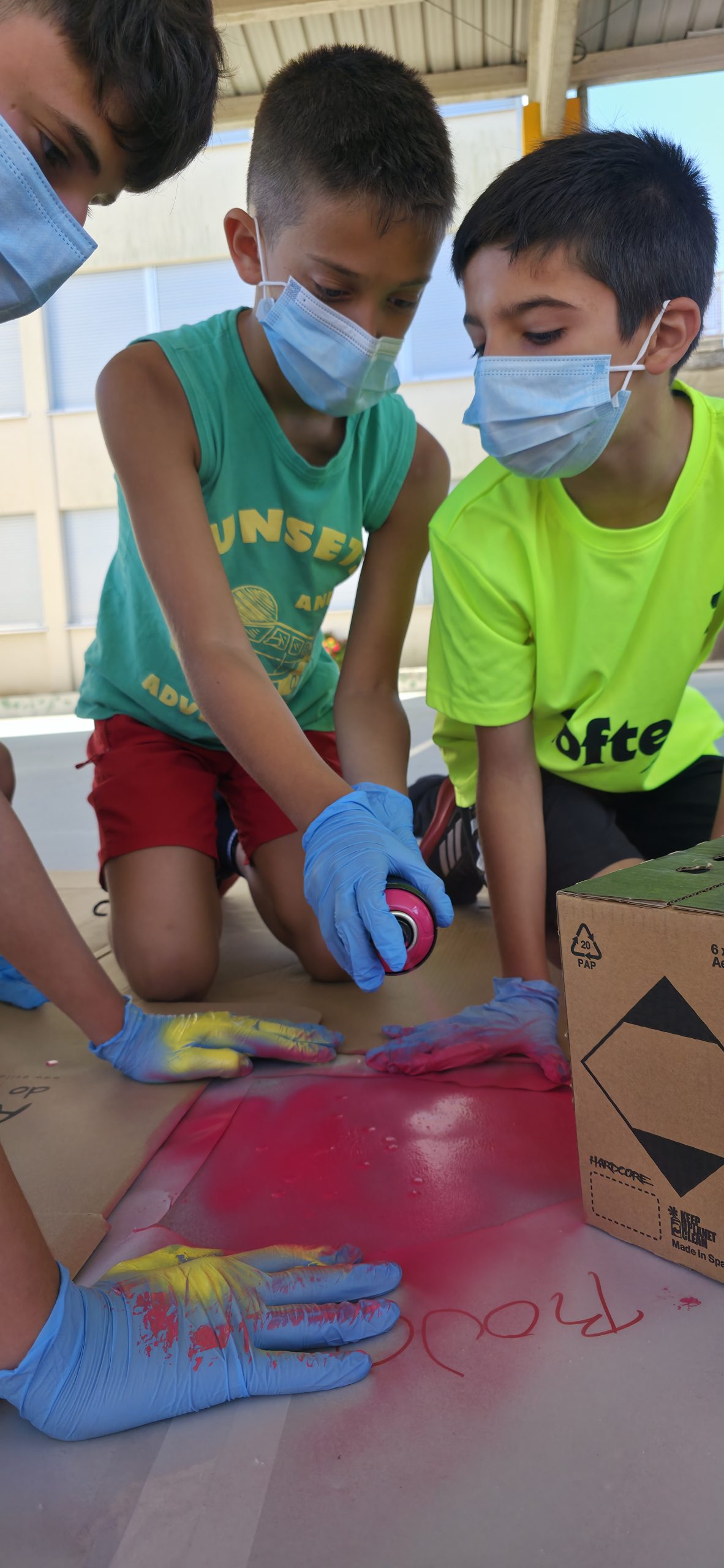
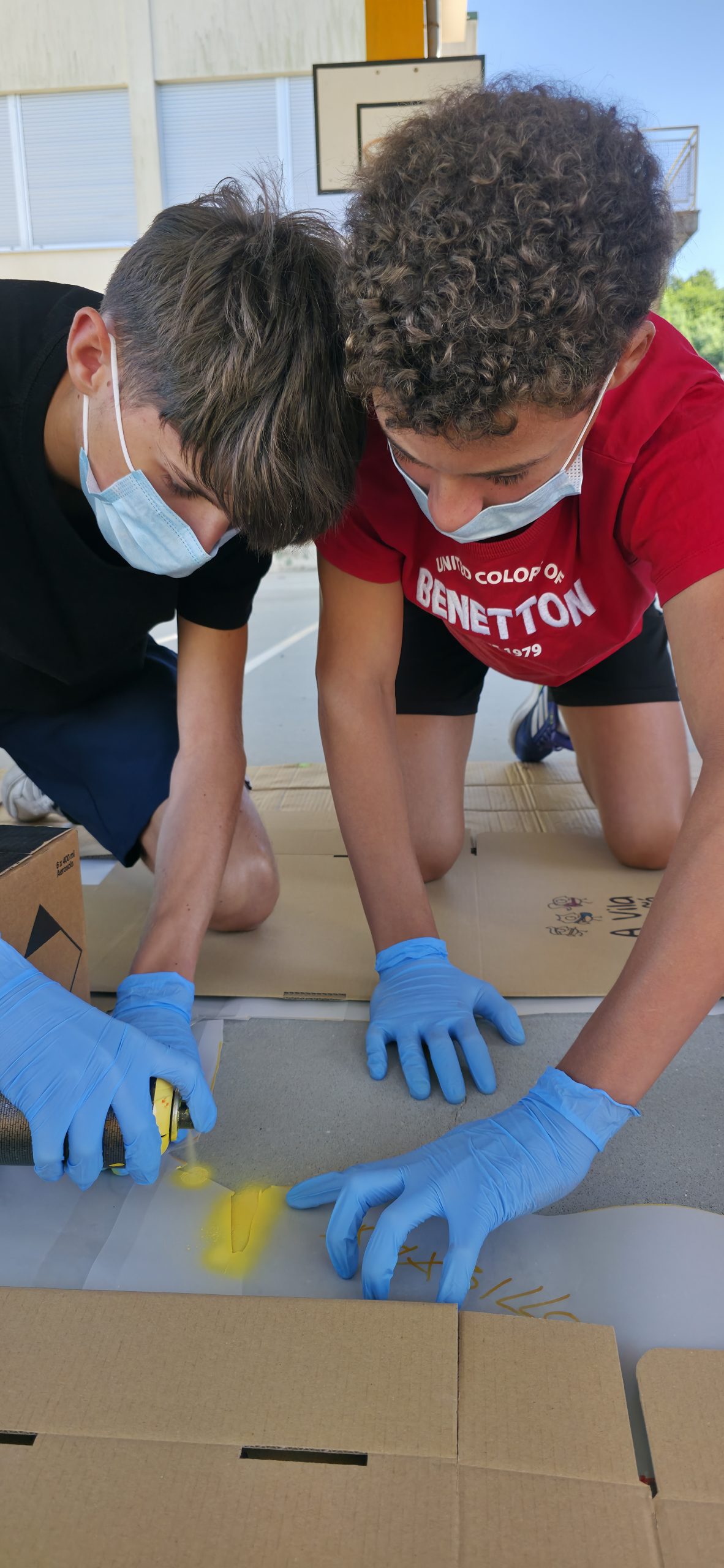
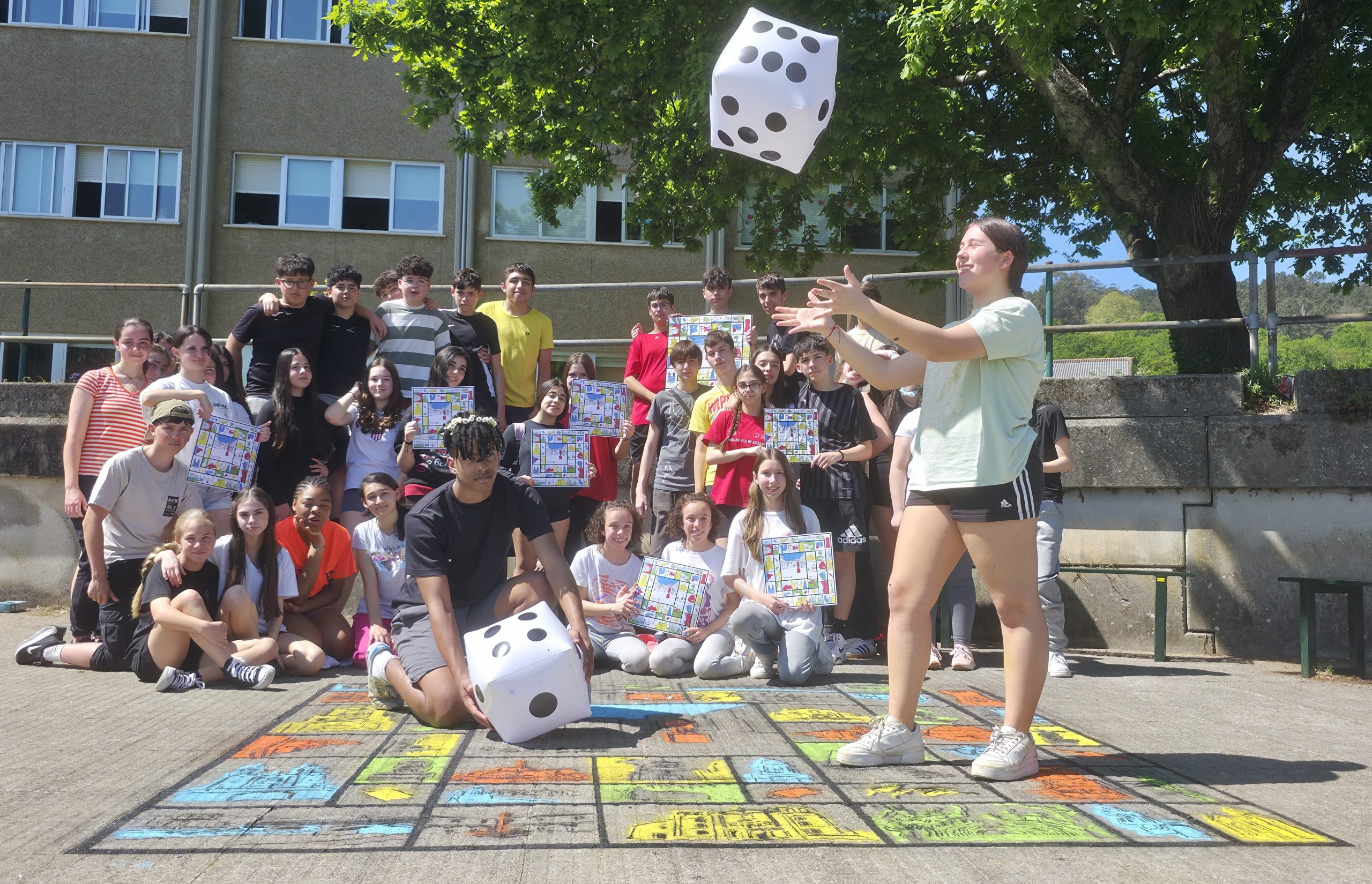
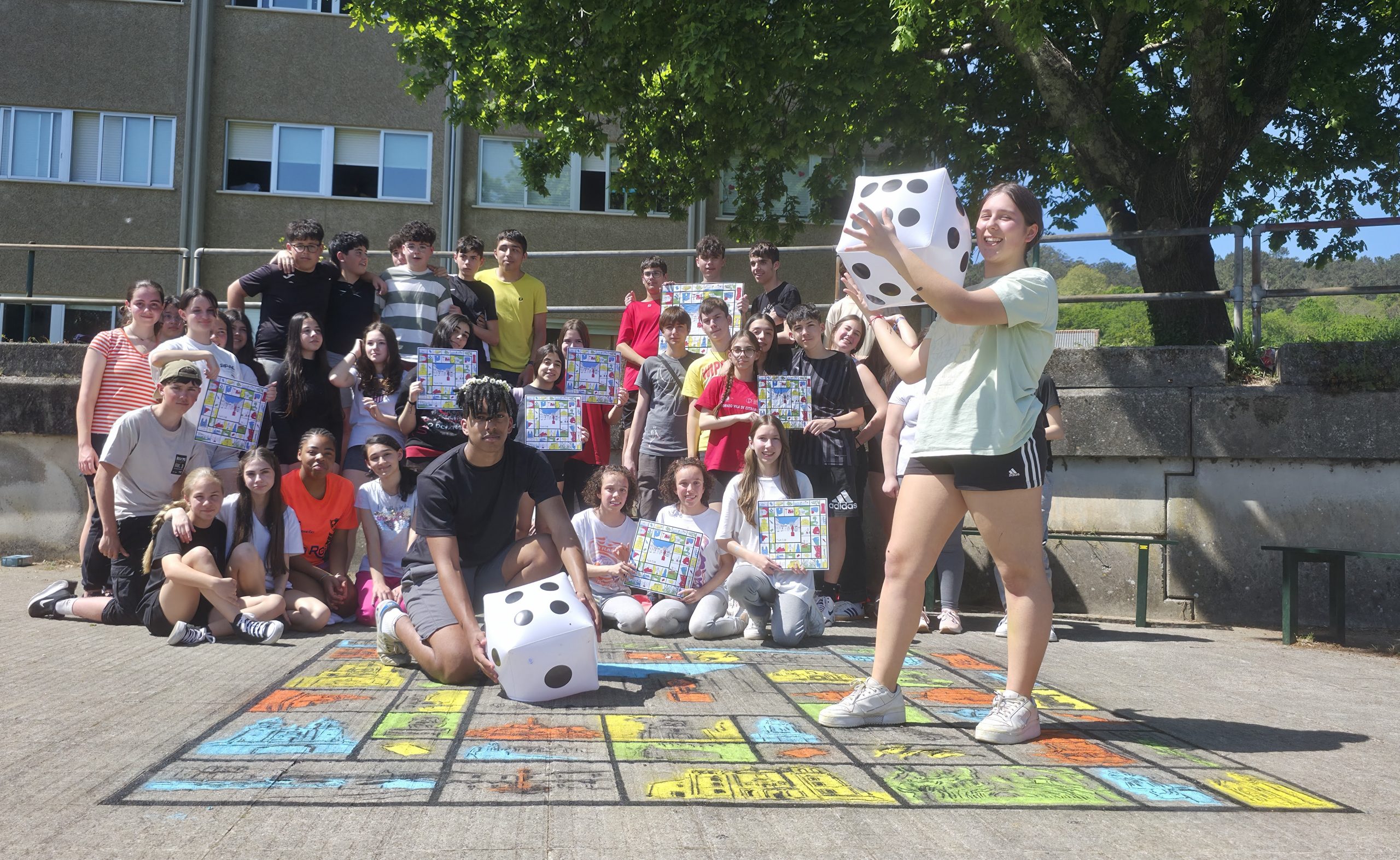
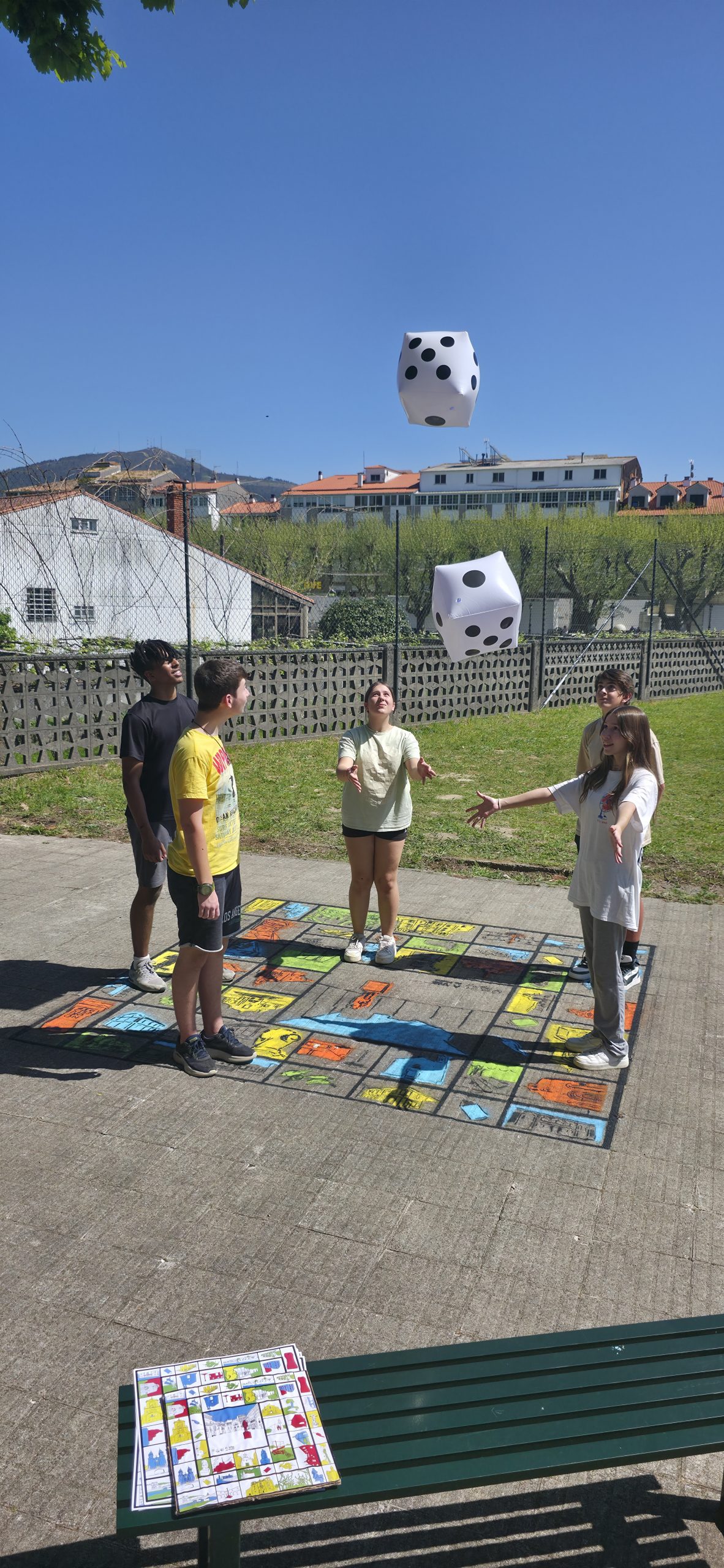
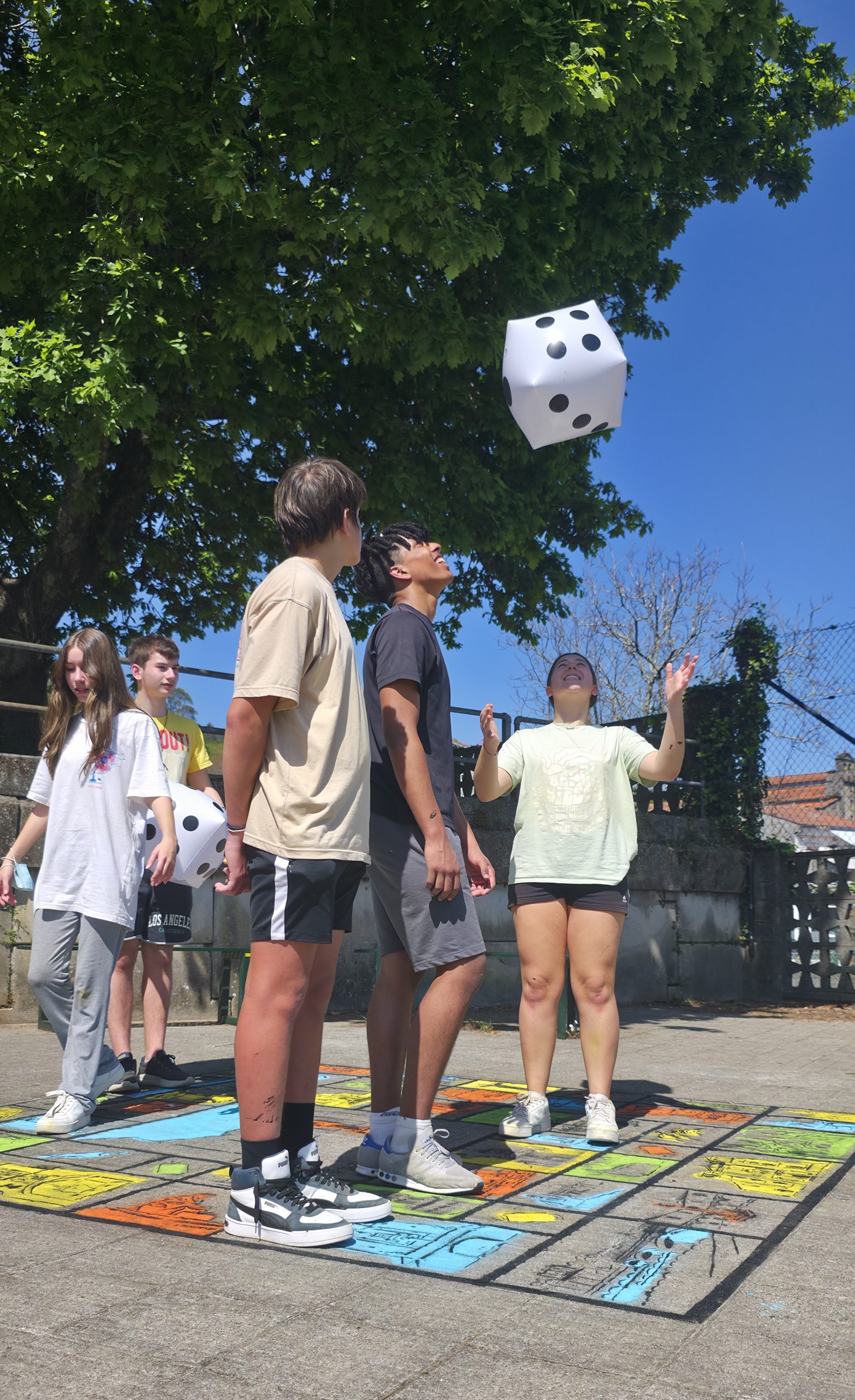
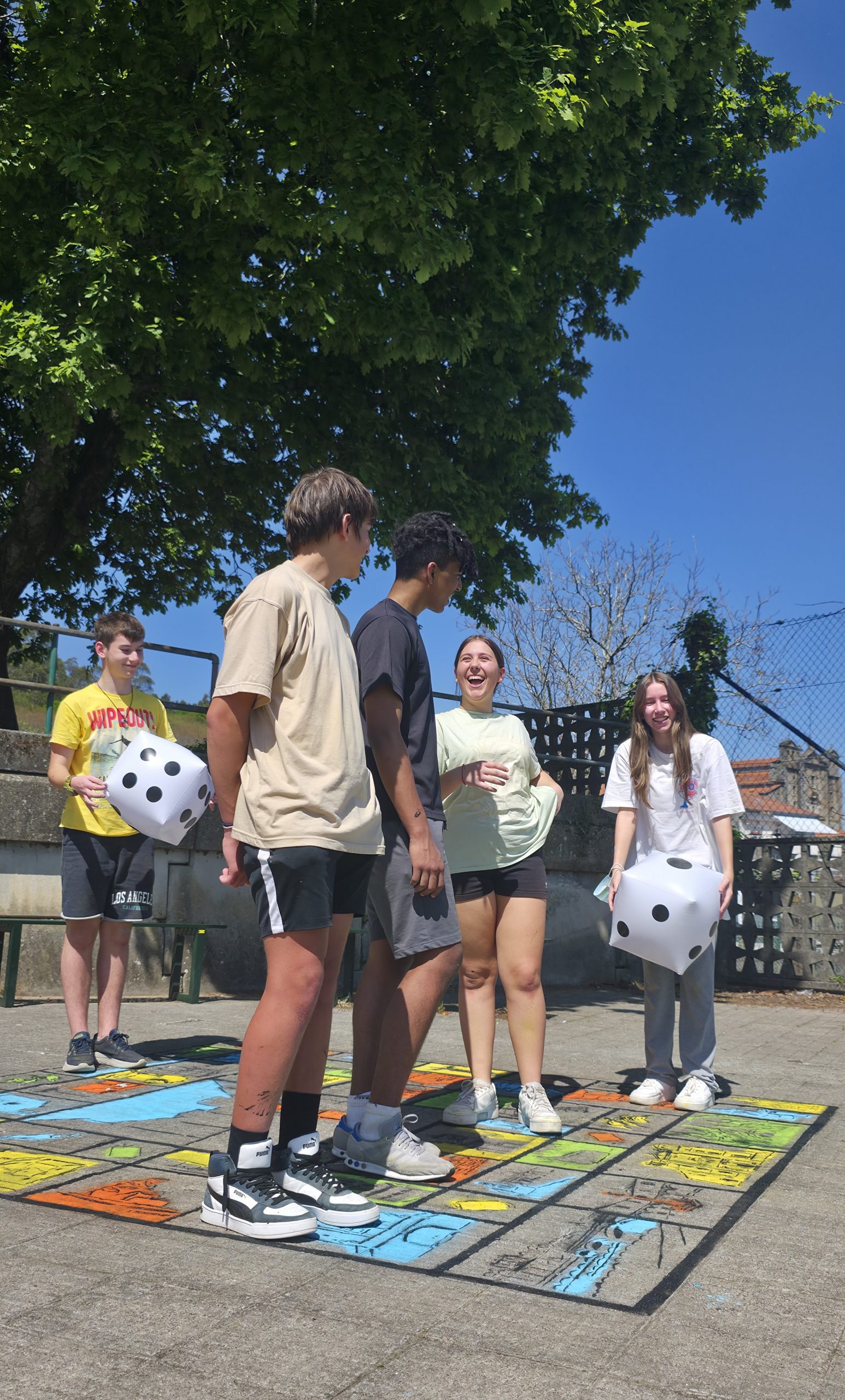
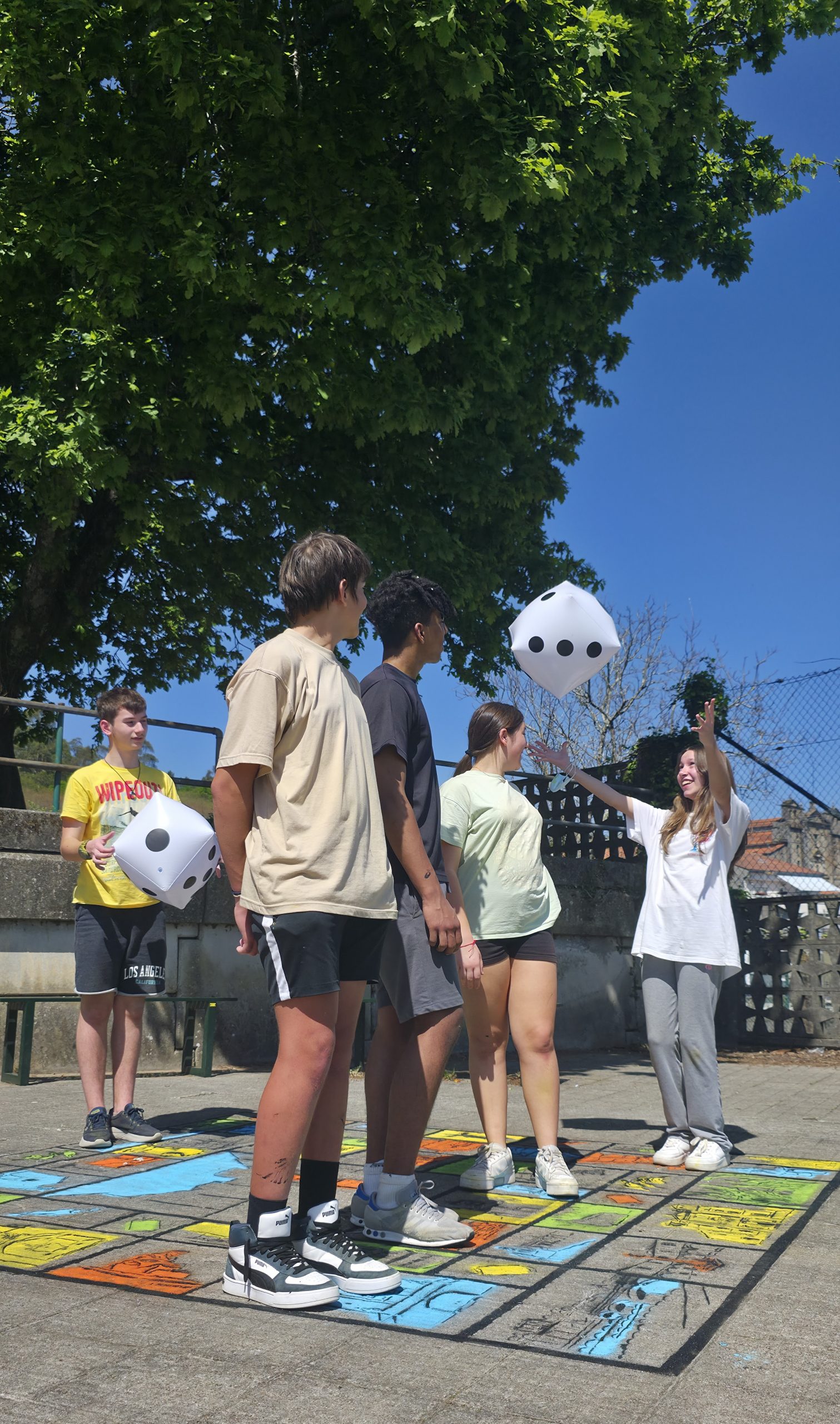
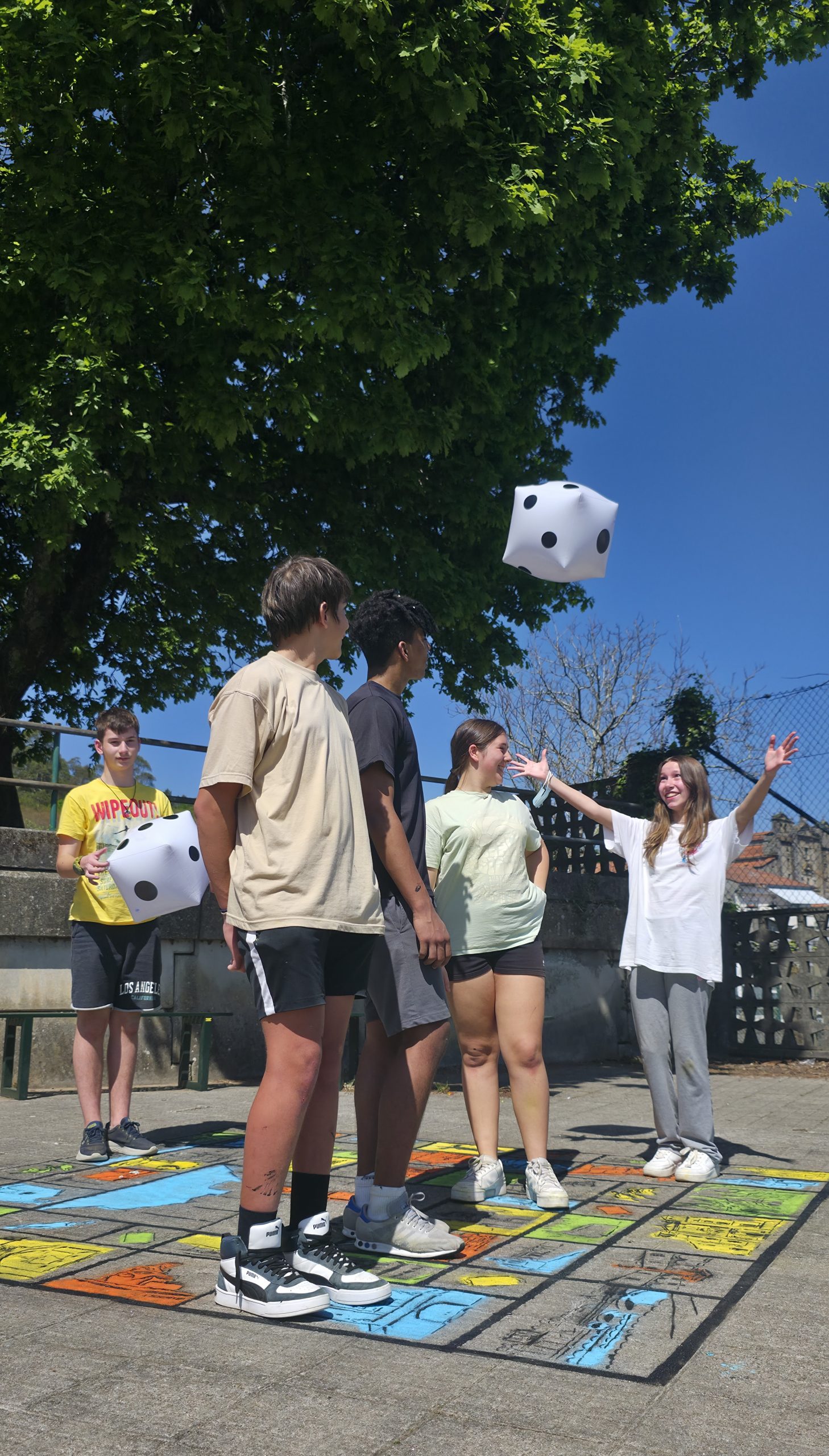
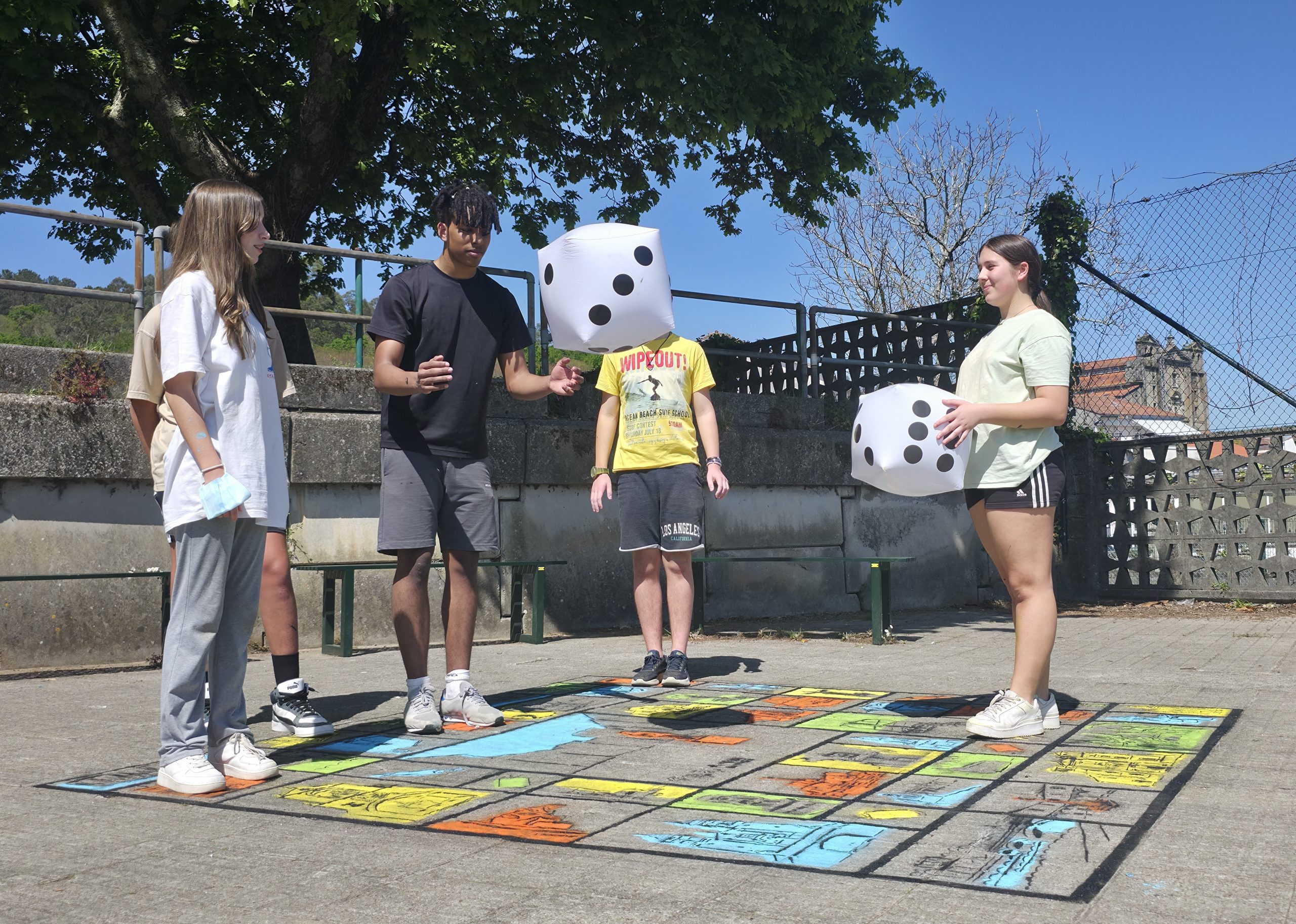
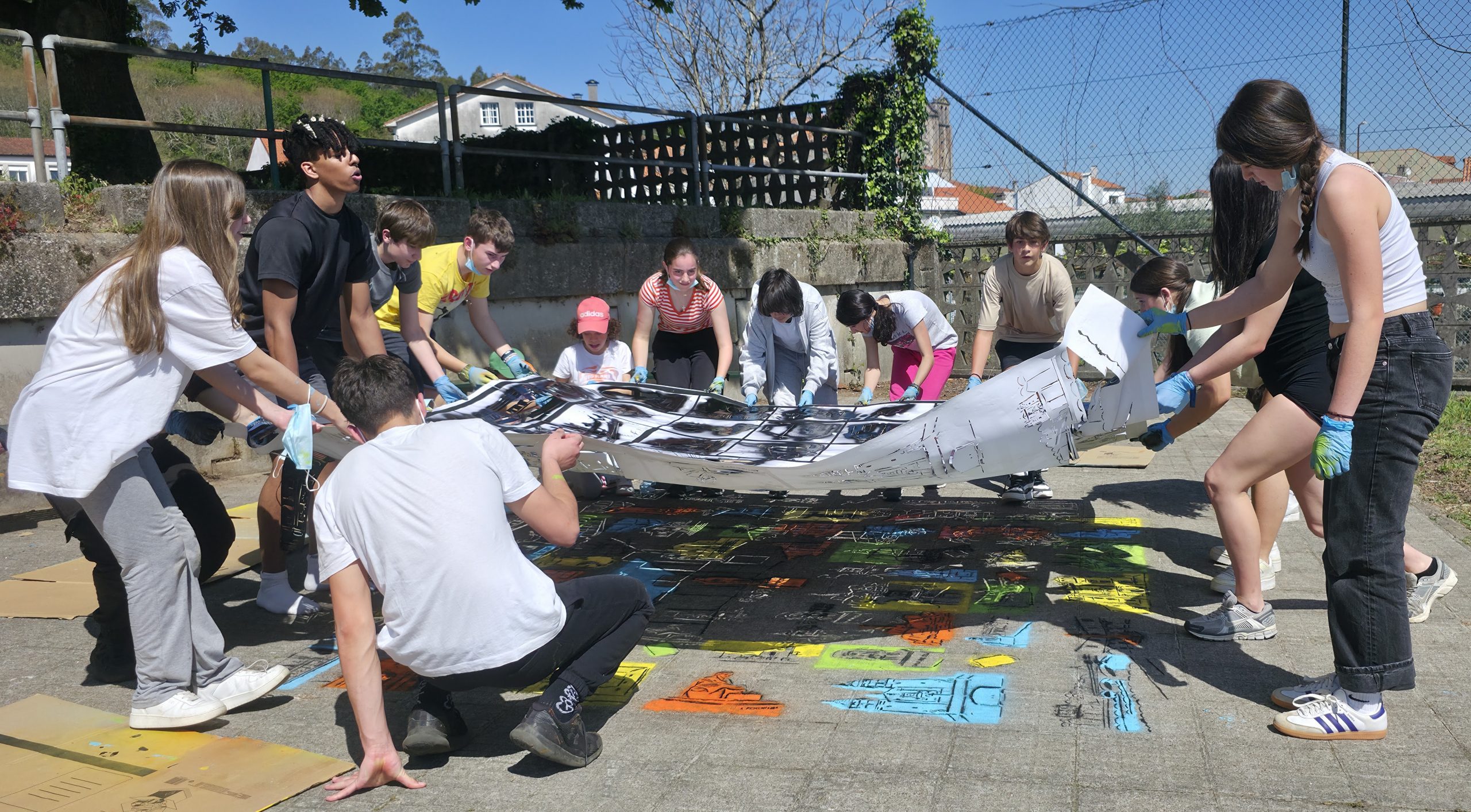
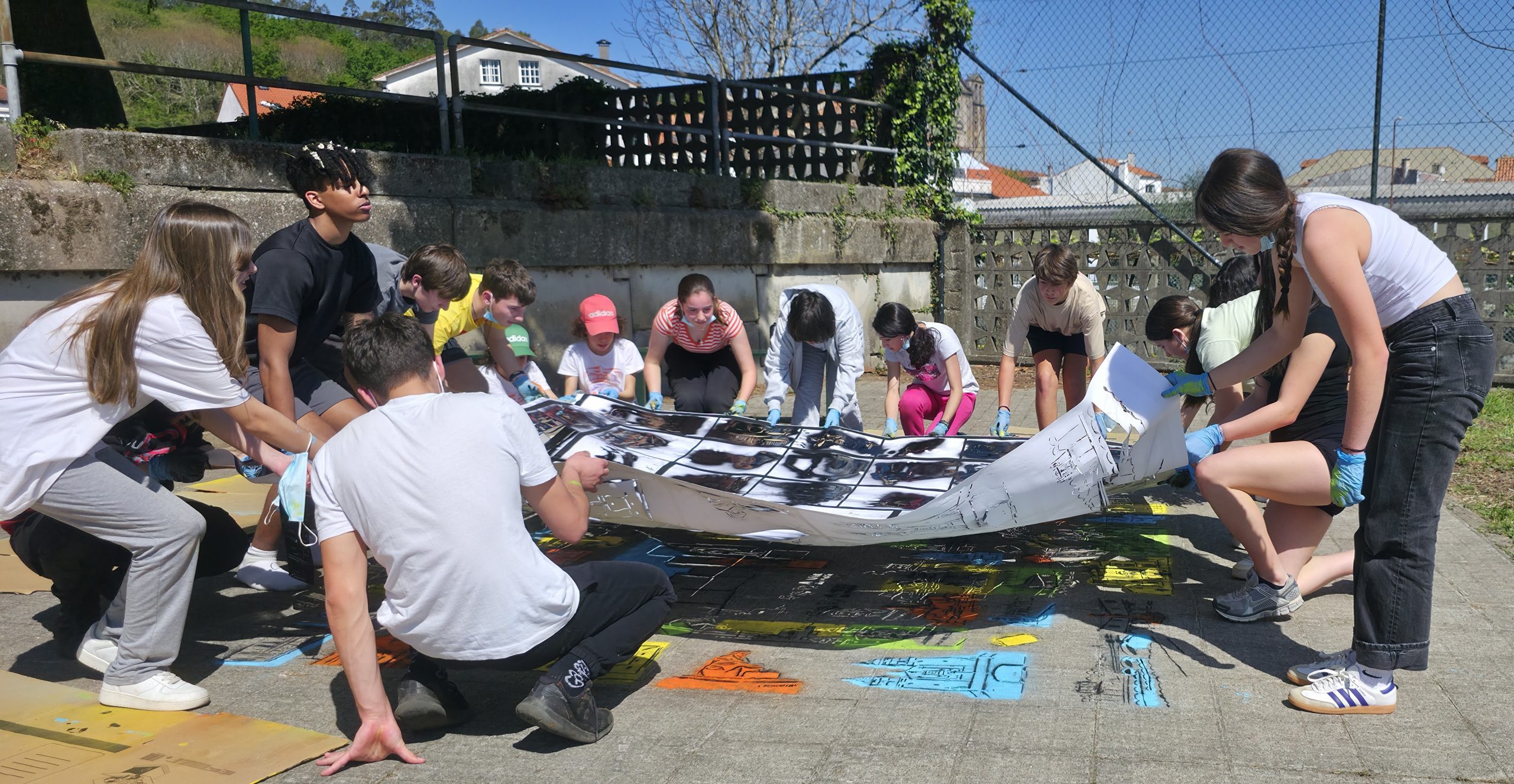
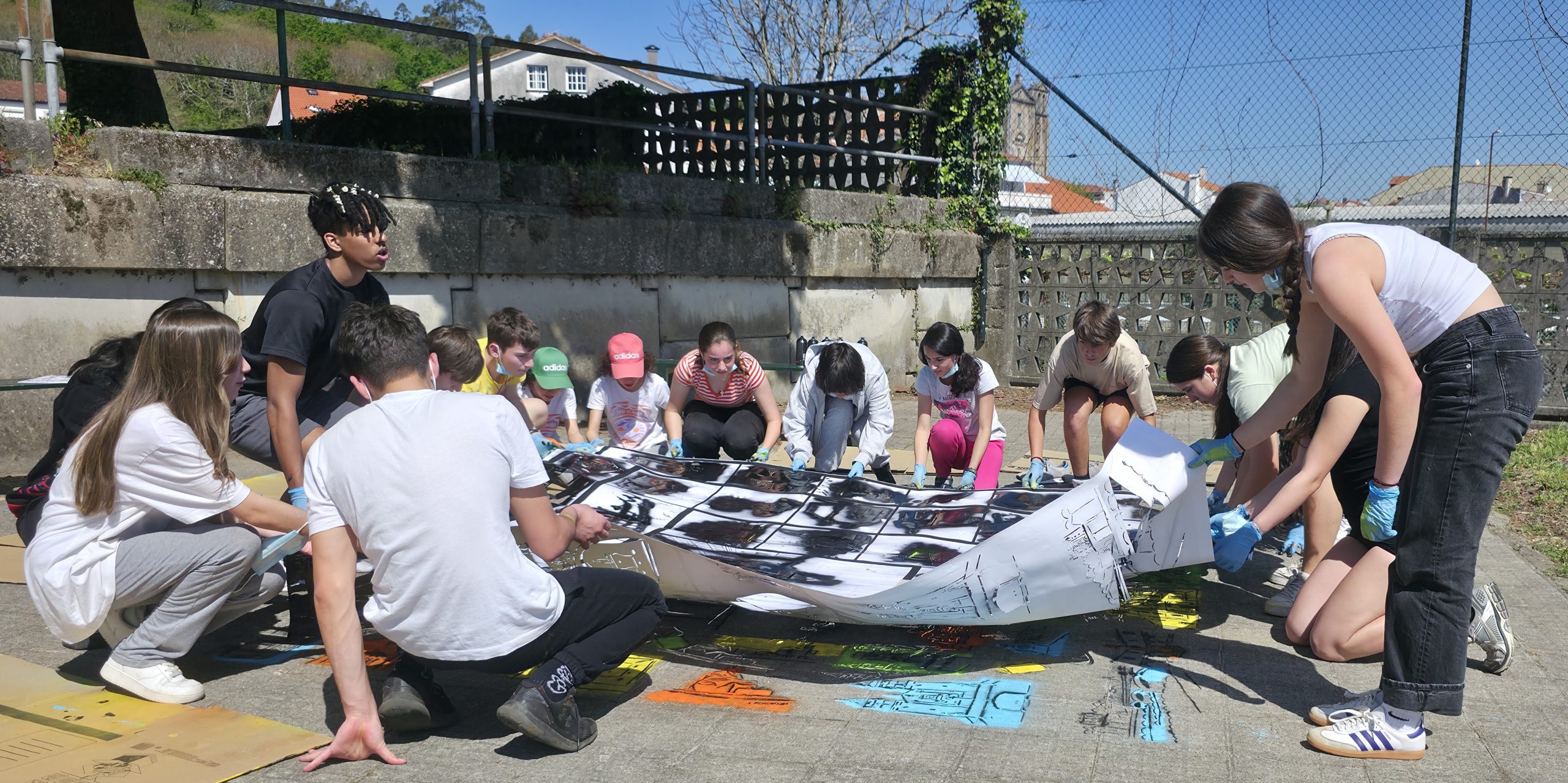
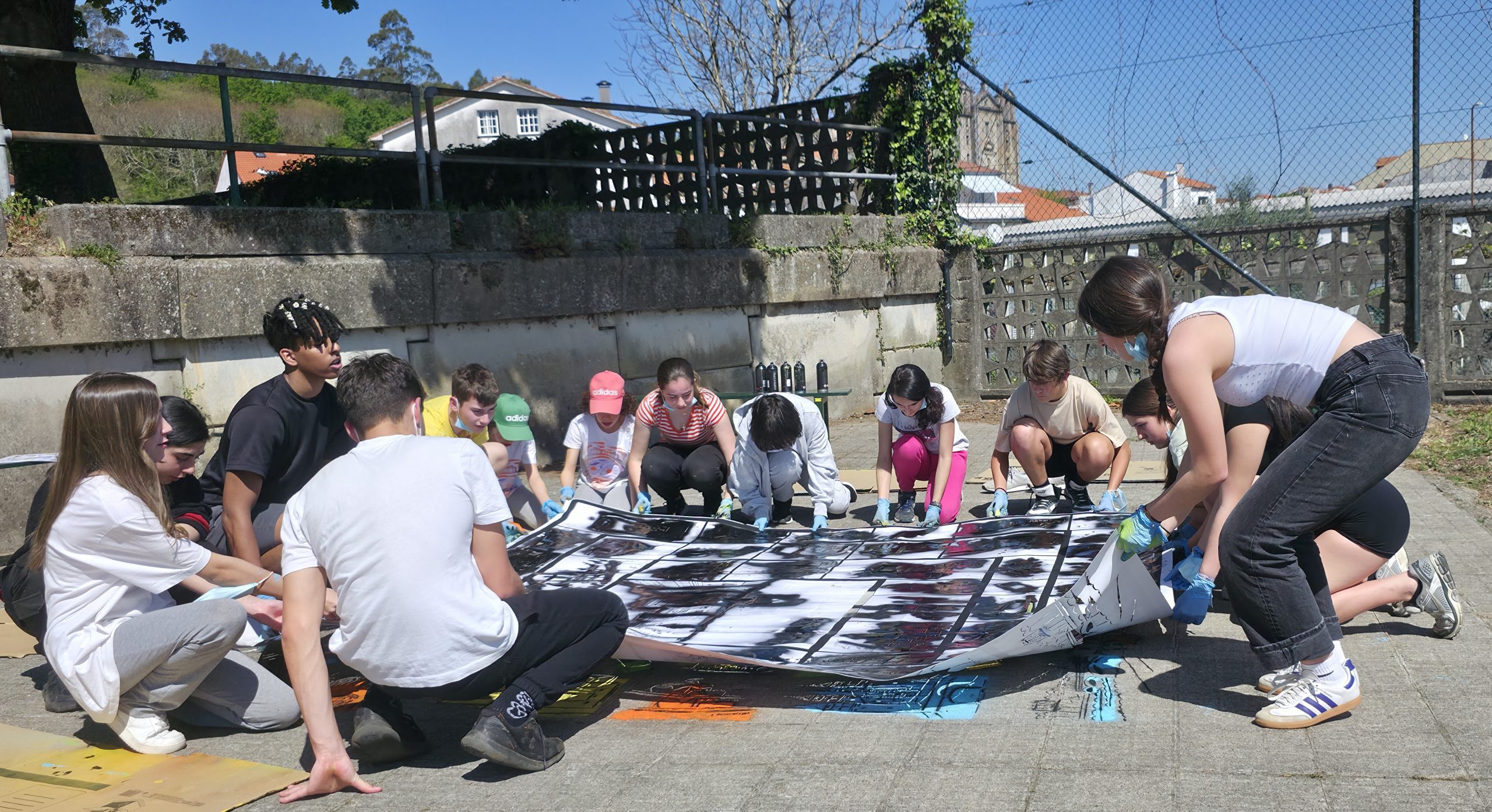
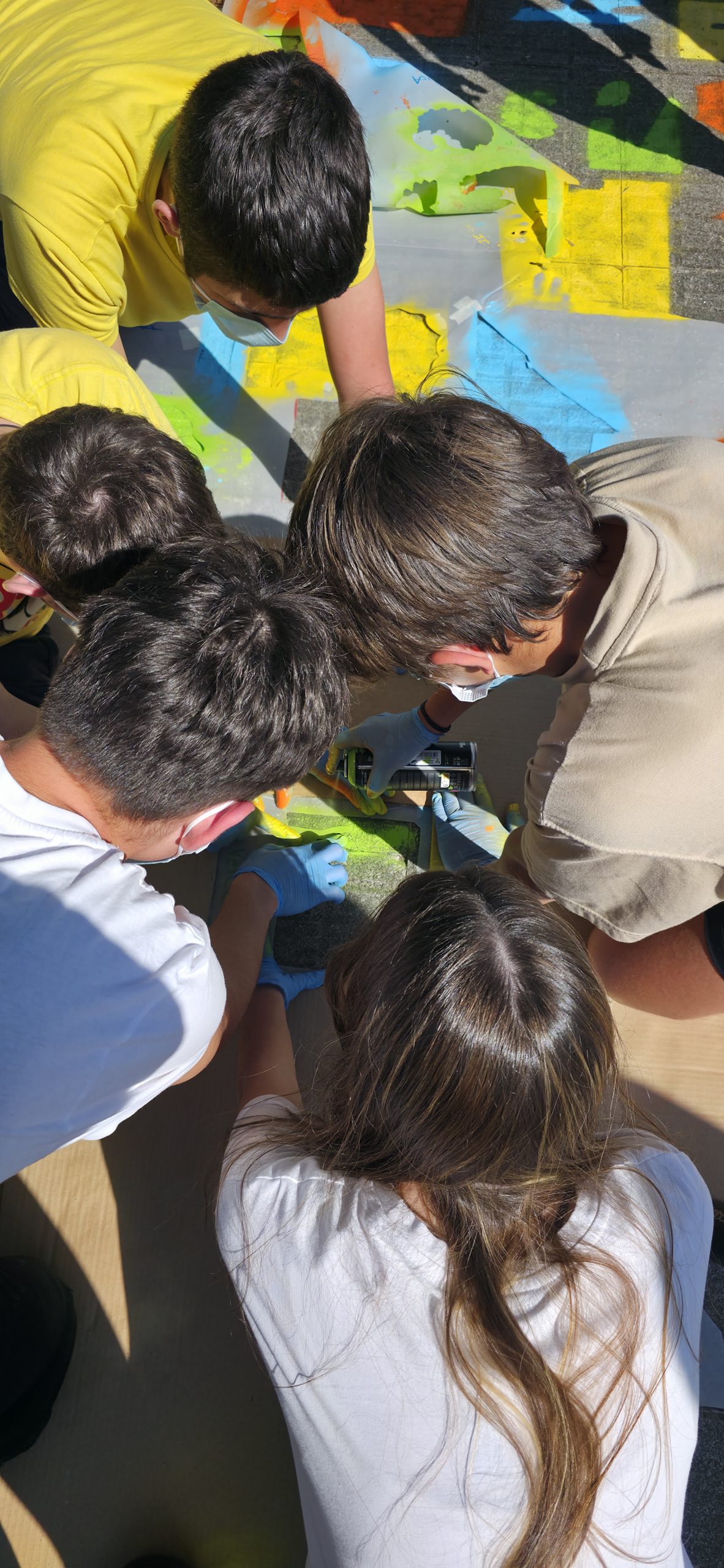
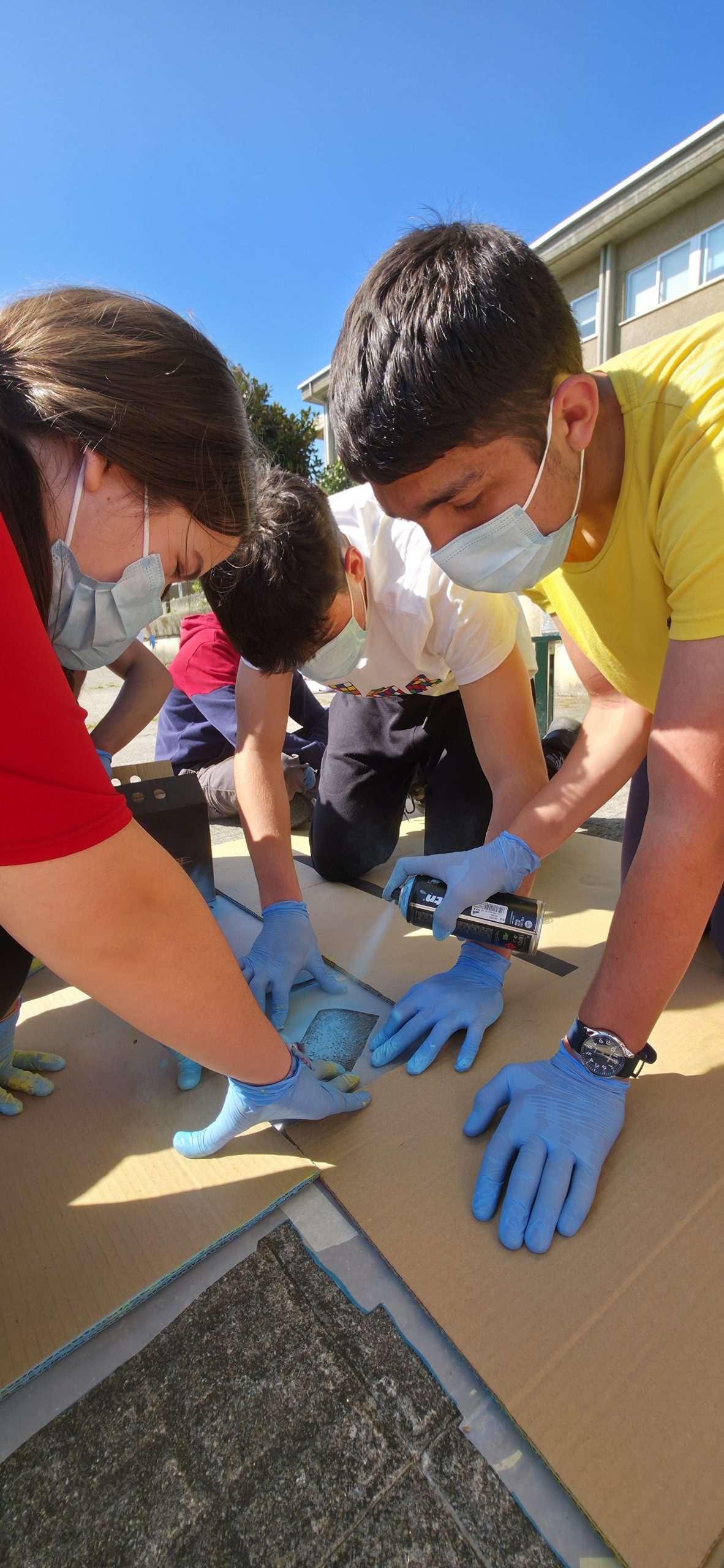
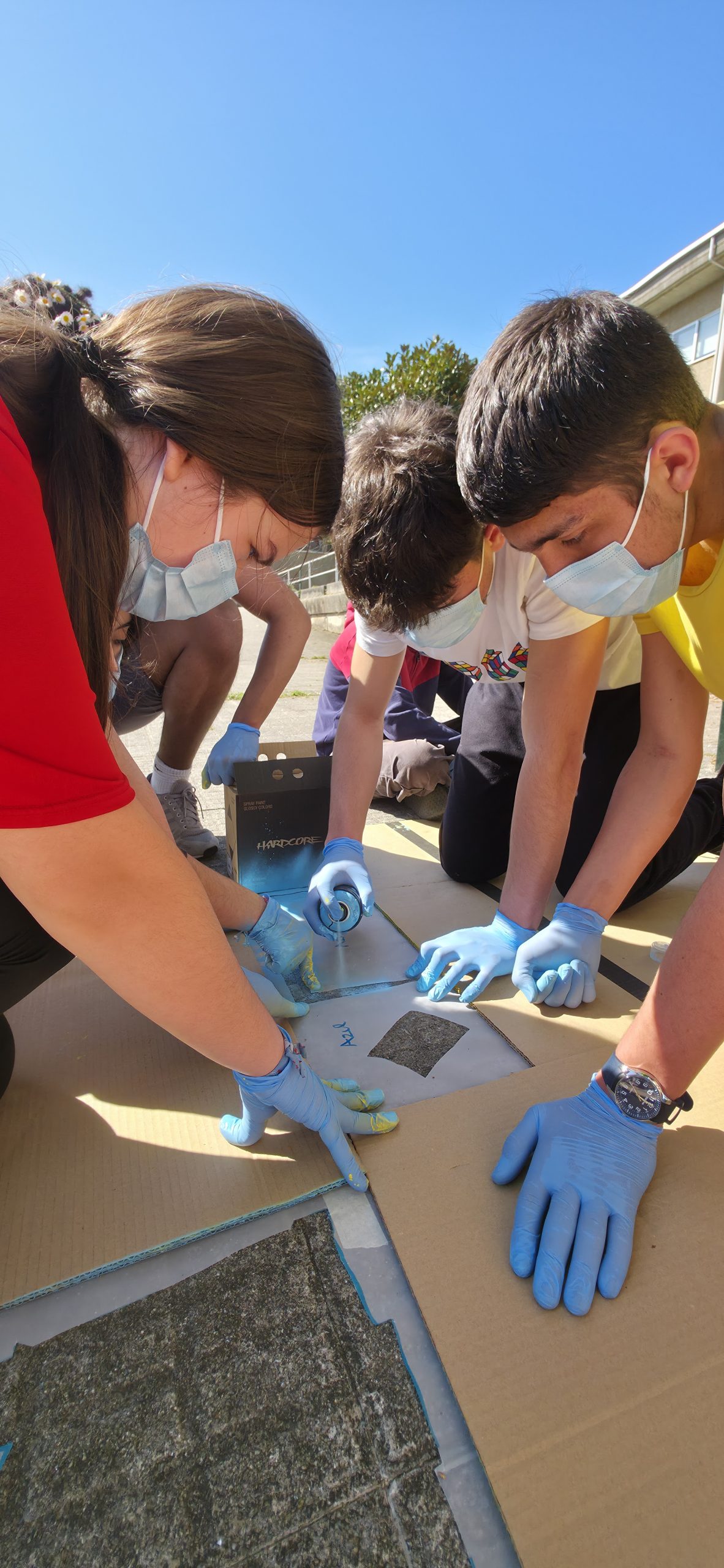
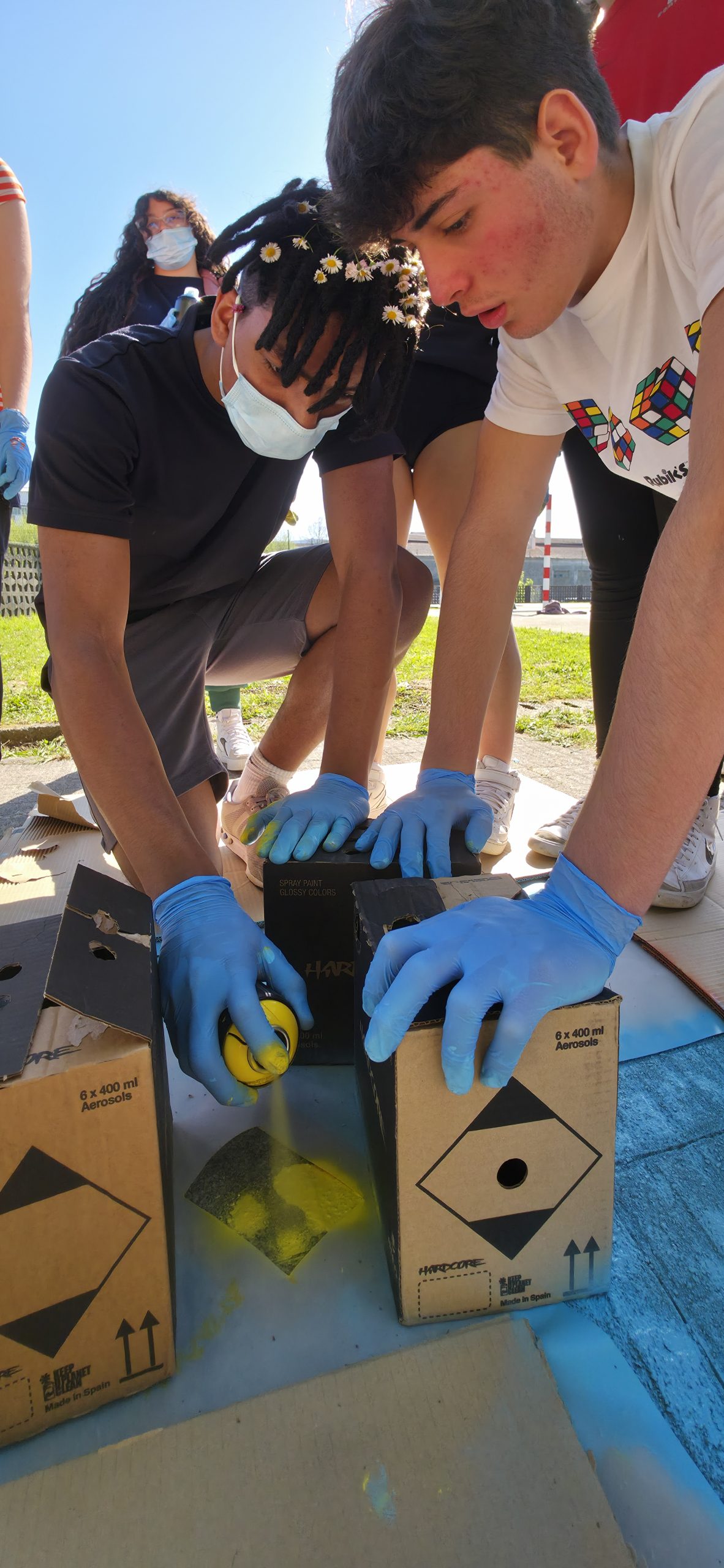
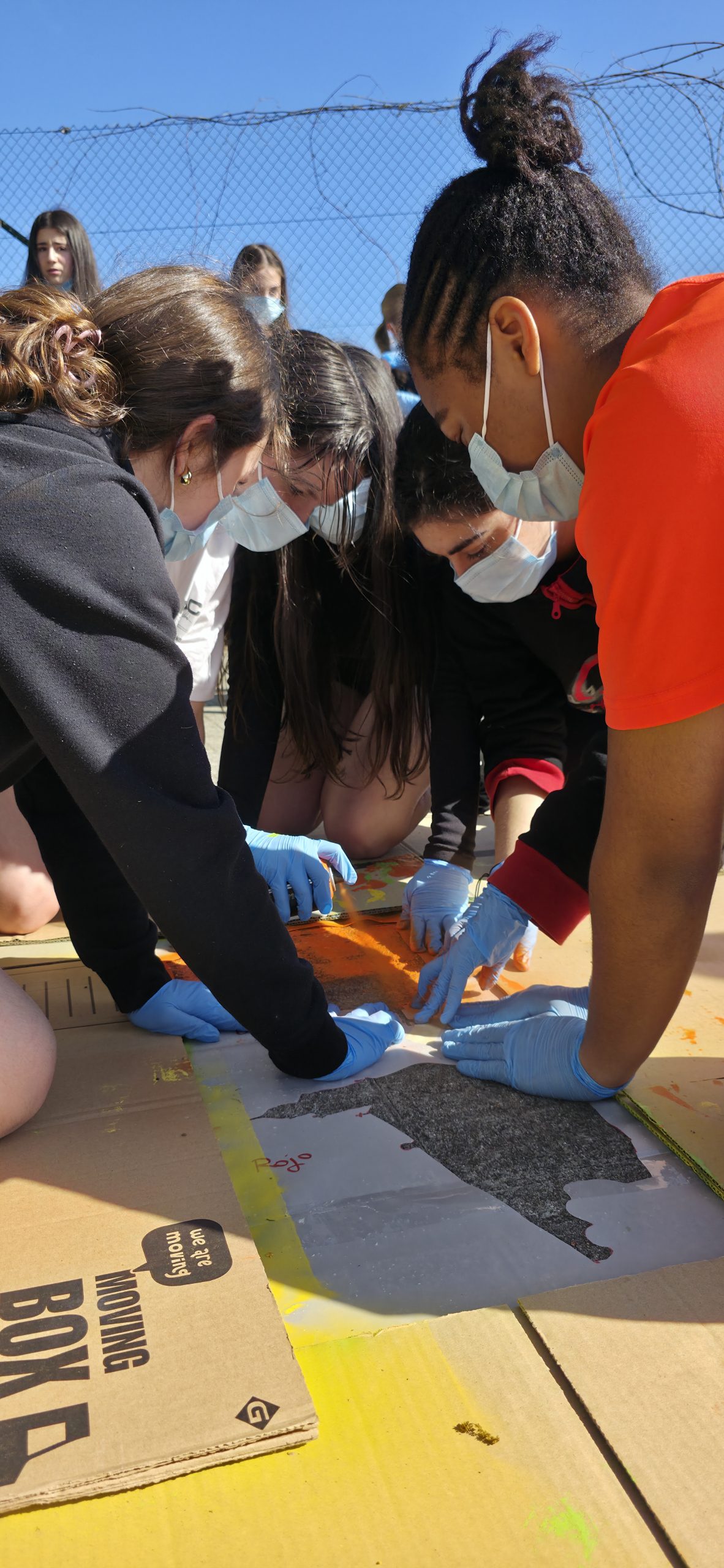
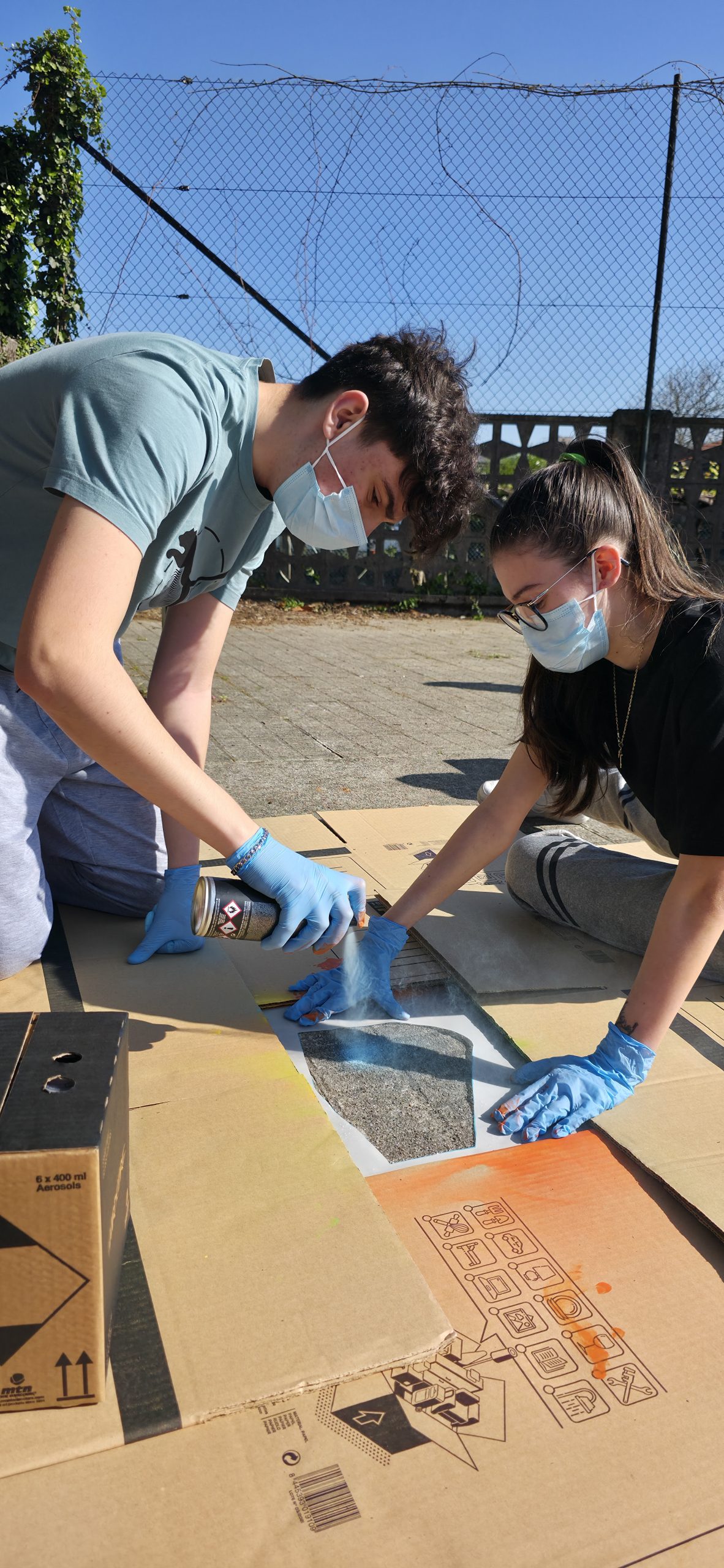
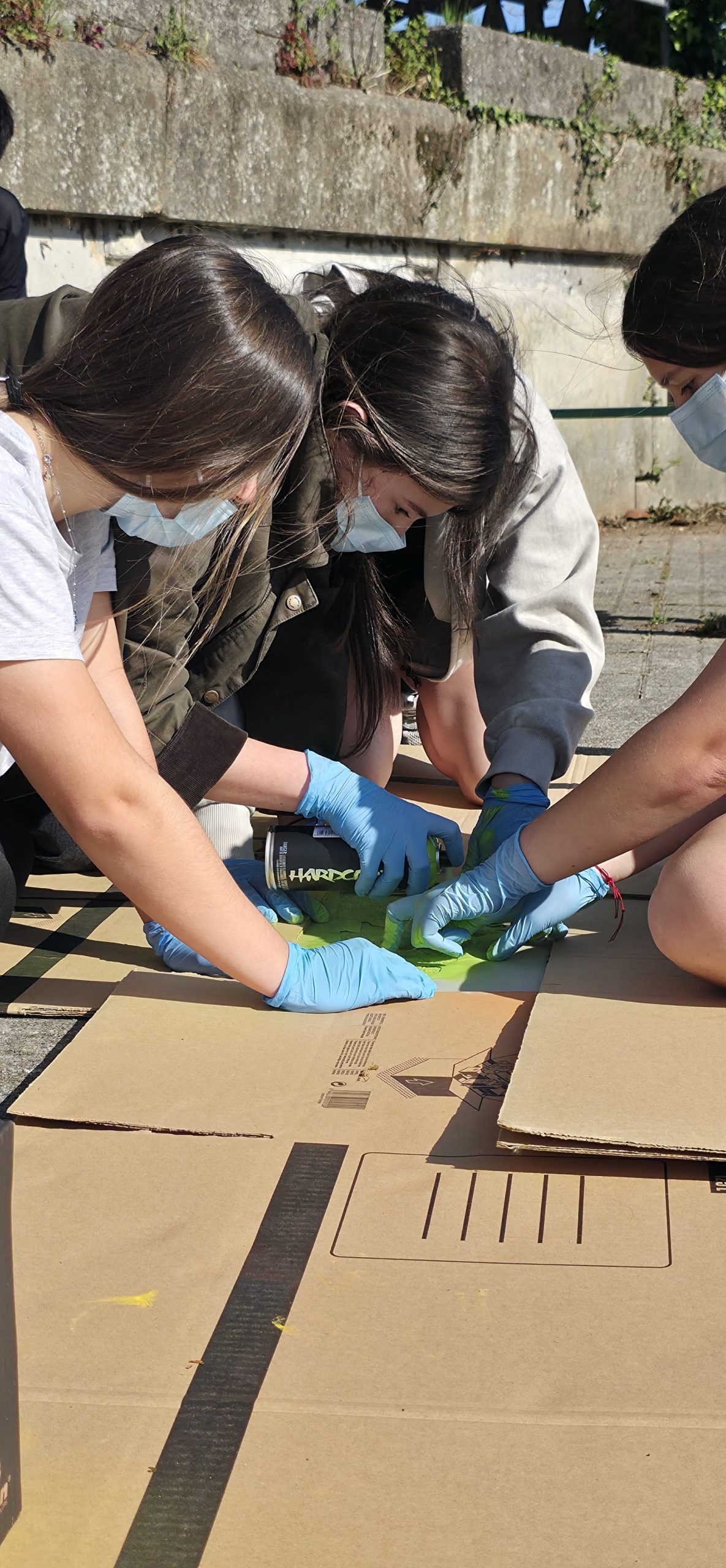
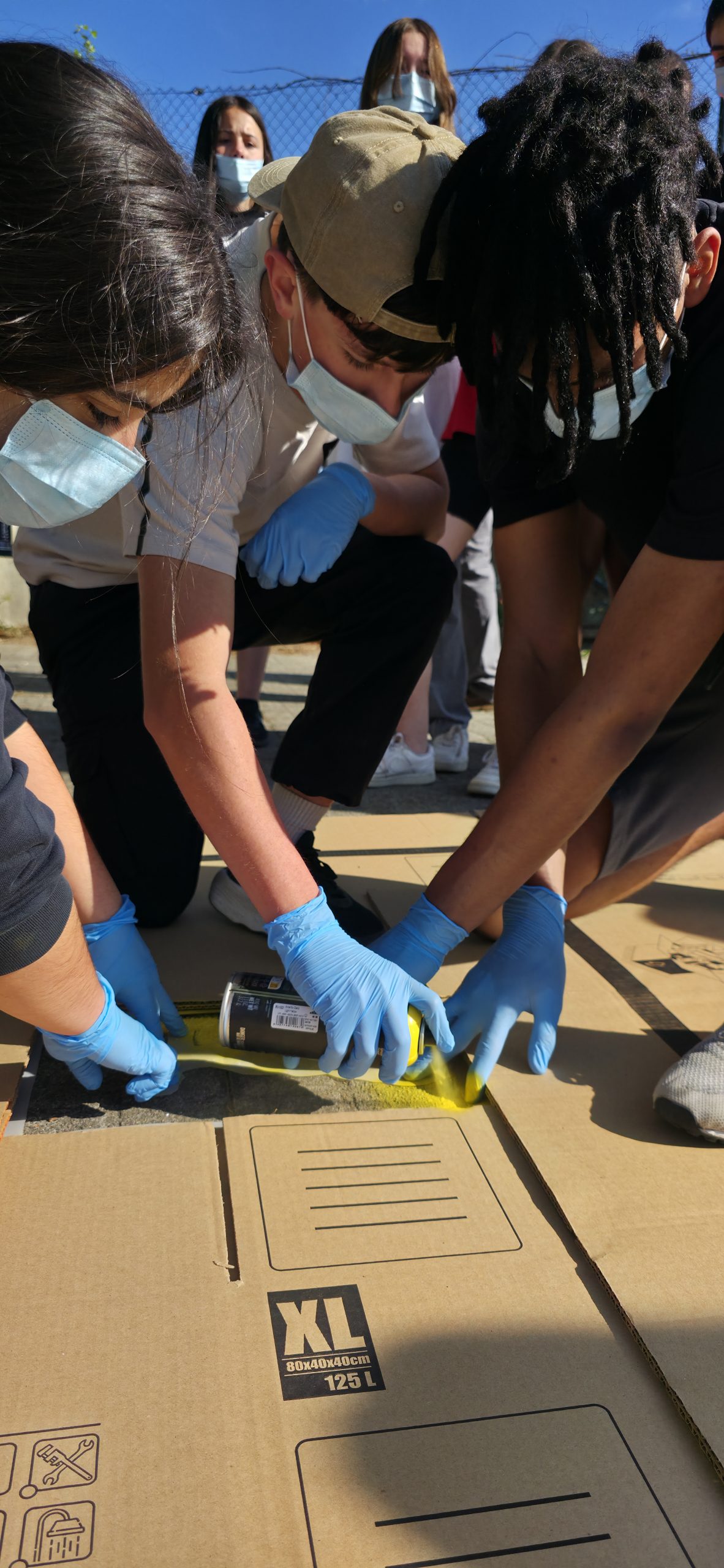
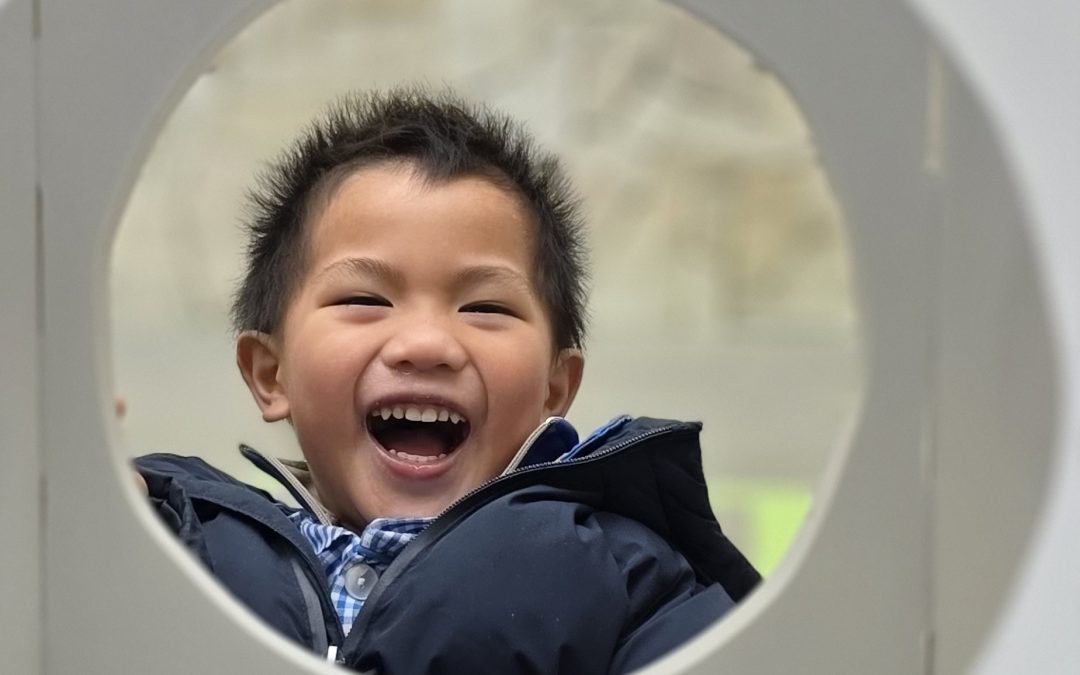
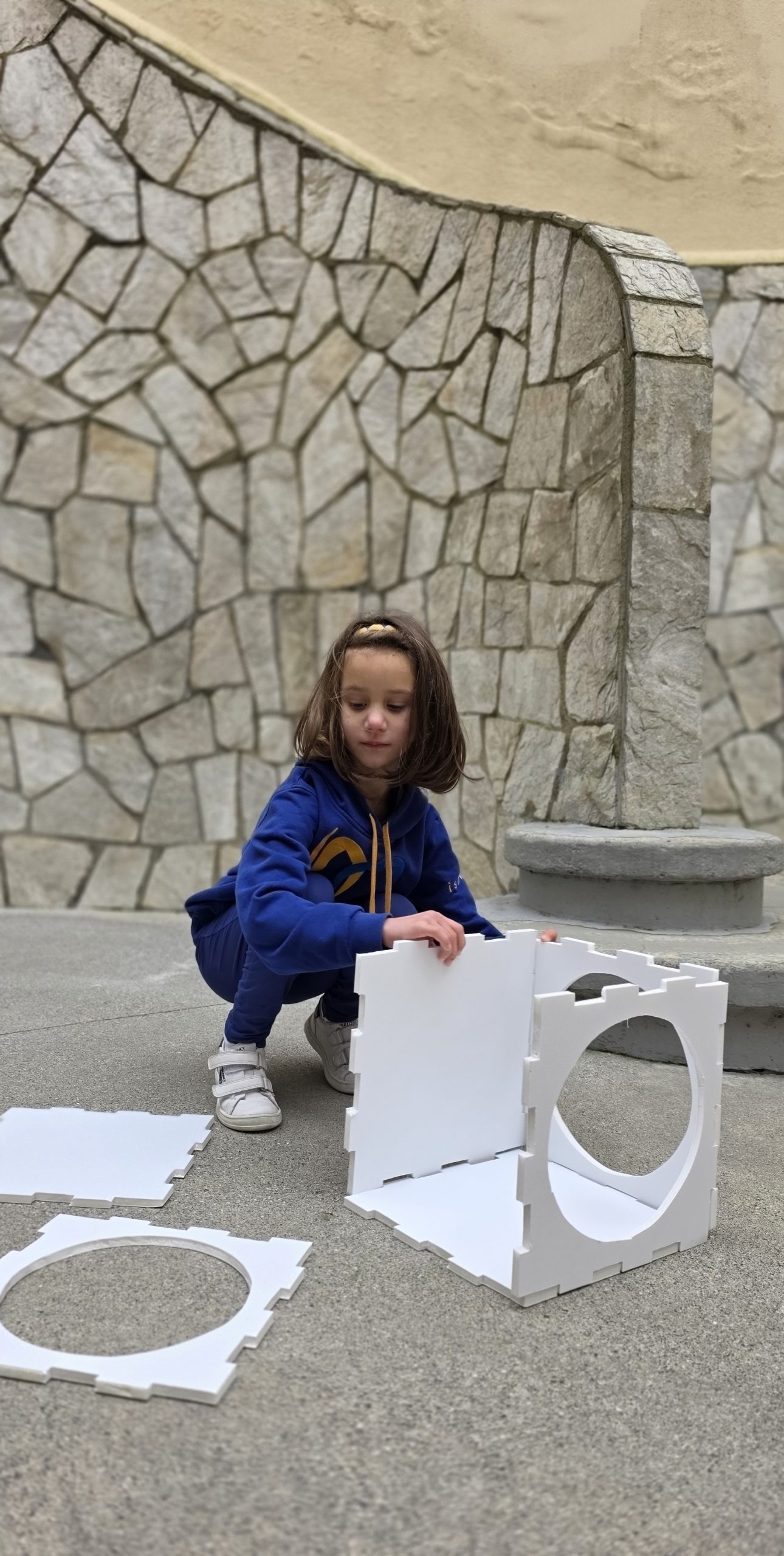
‘A Vila do Maña’ works with three-dimensional elements, based on Froebel’s “third gift”.
In architecture we have Froebel as a reference, through Frank Lloyd Wrigth who was educated with this method. It is a system based on the creativity and intuition of the child through direct experience, play and nature. It creates a pedagogical resource based on ‘gifts’ and ‘occupations’. The ‘gifts’ are pedagogical materials that do not change, but are transformed; the ‘occupations’ are activities in which children play by transforming the objects they manipulate. The ‘gifts’ are precursors of today’s building blocks.

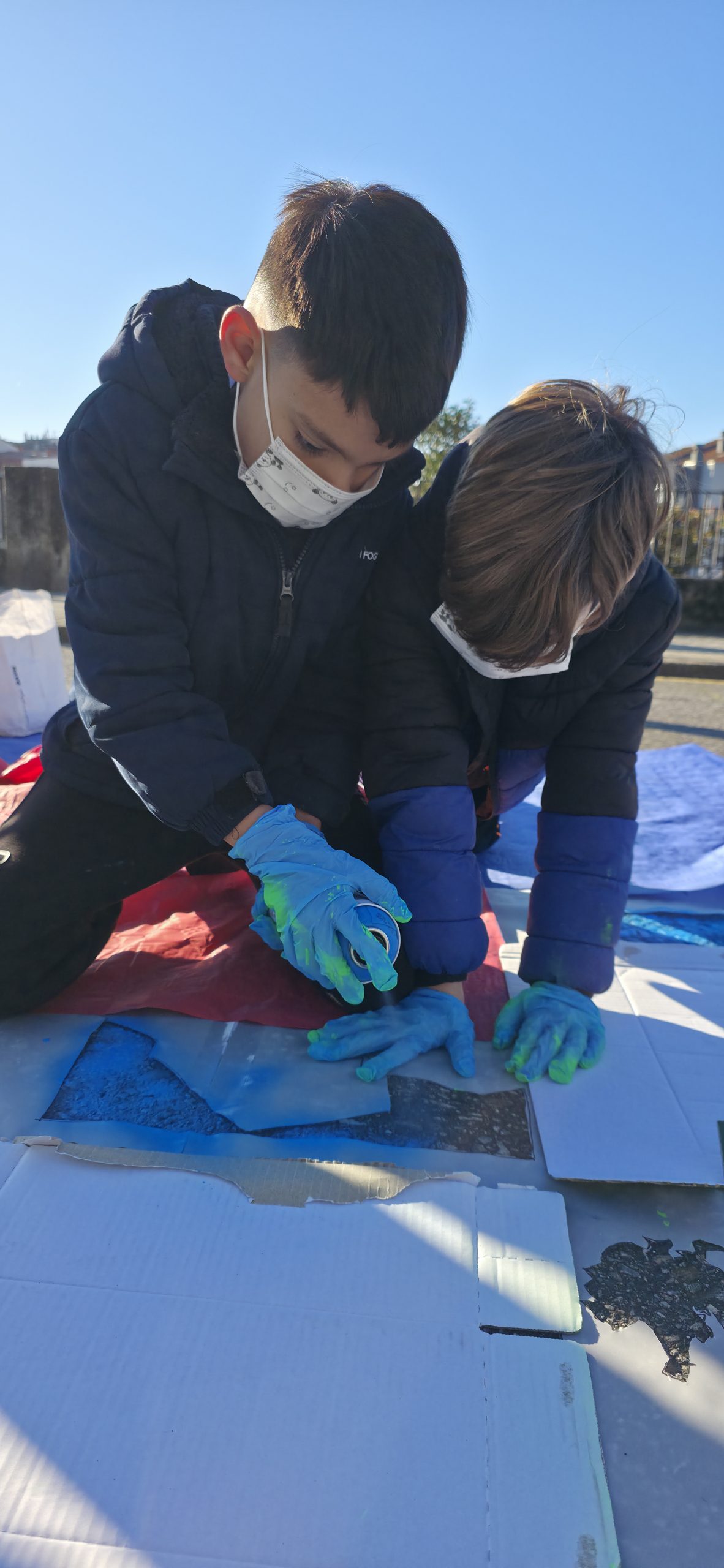
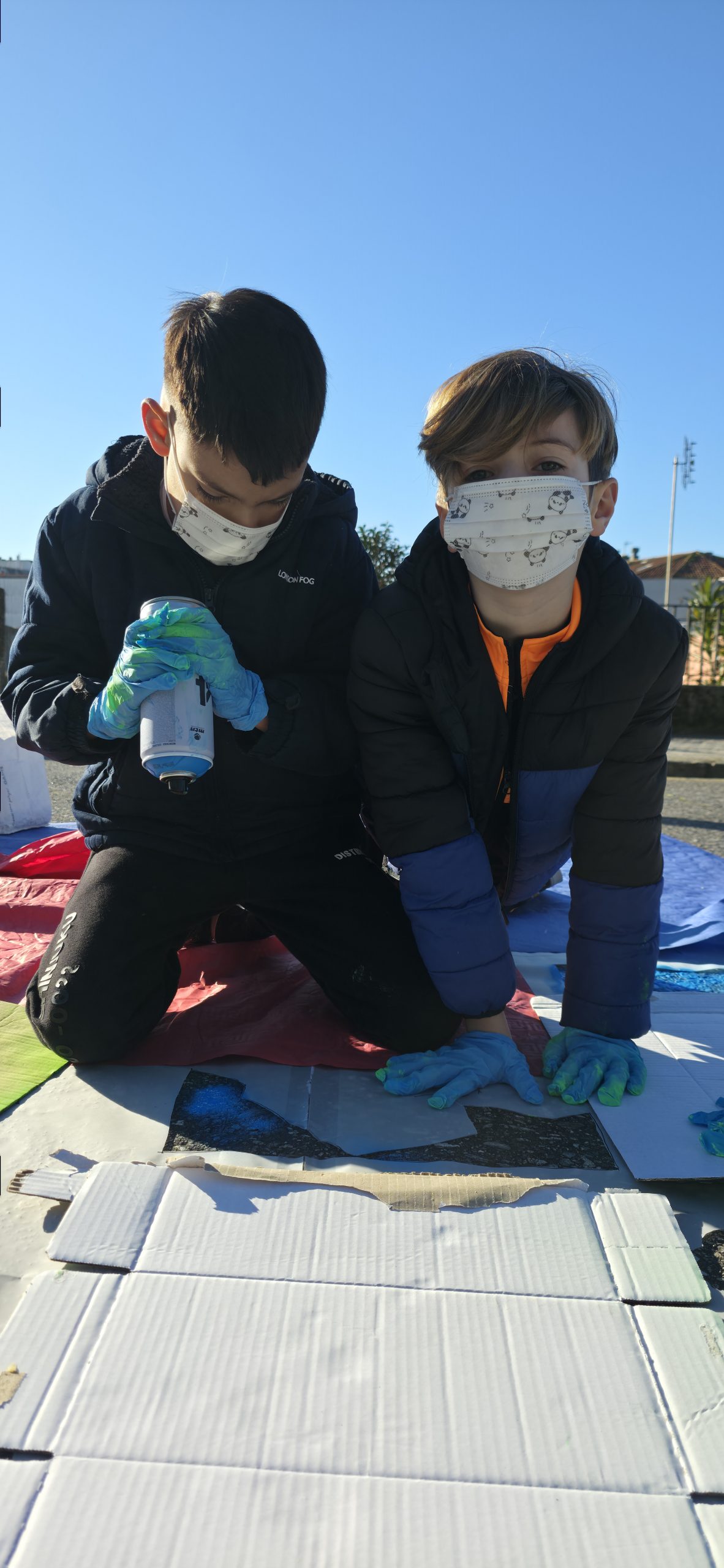
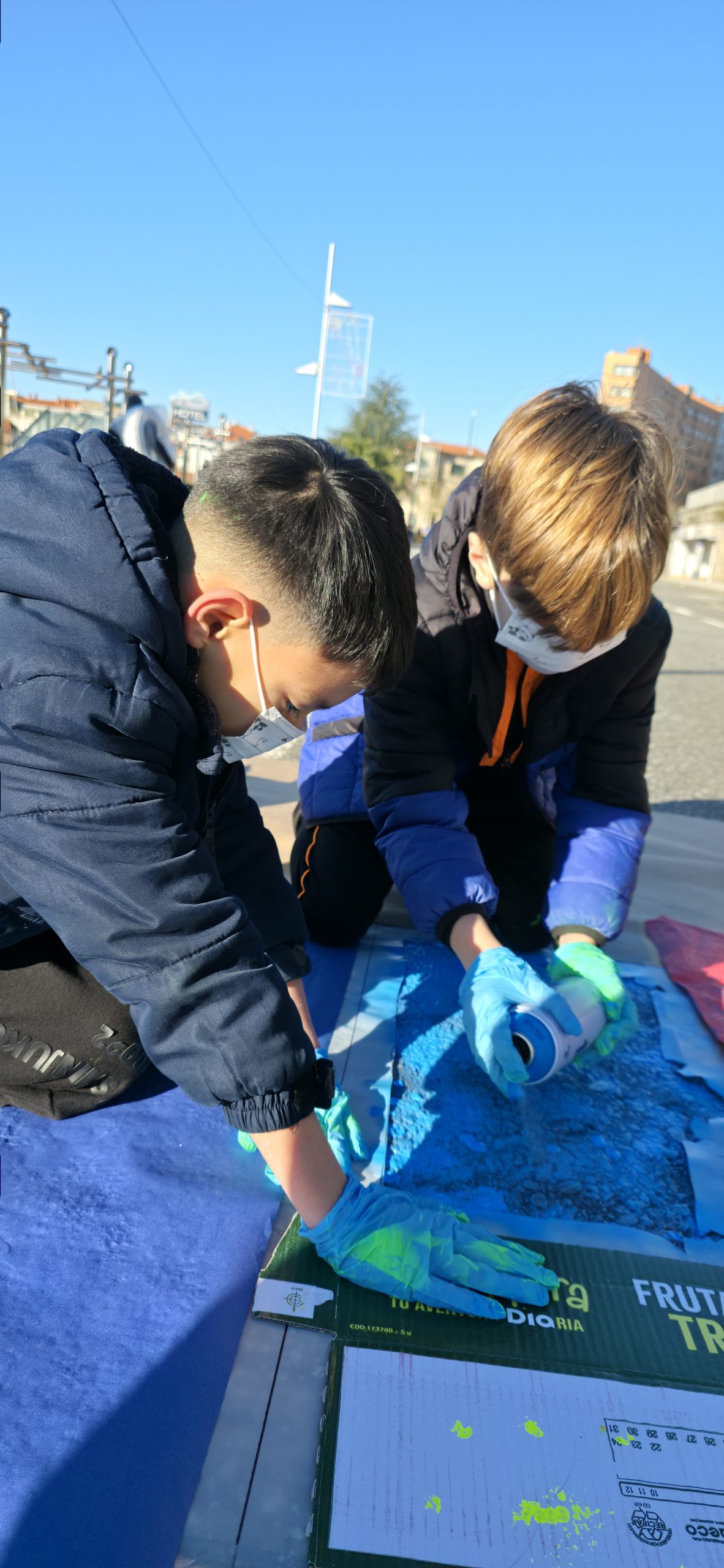
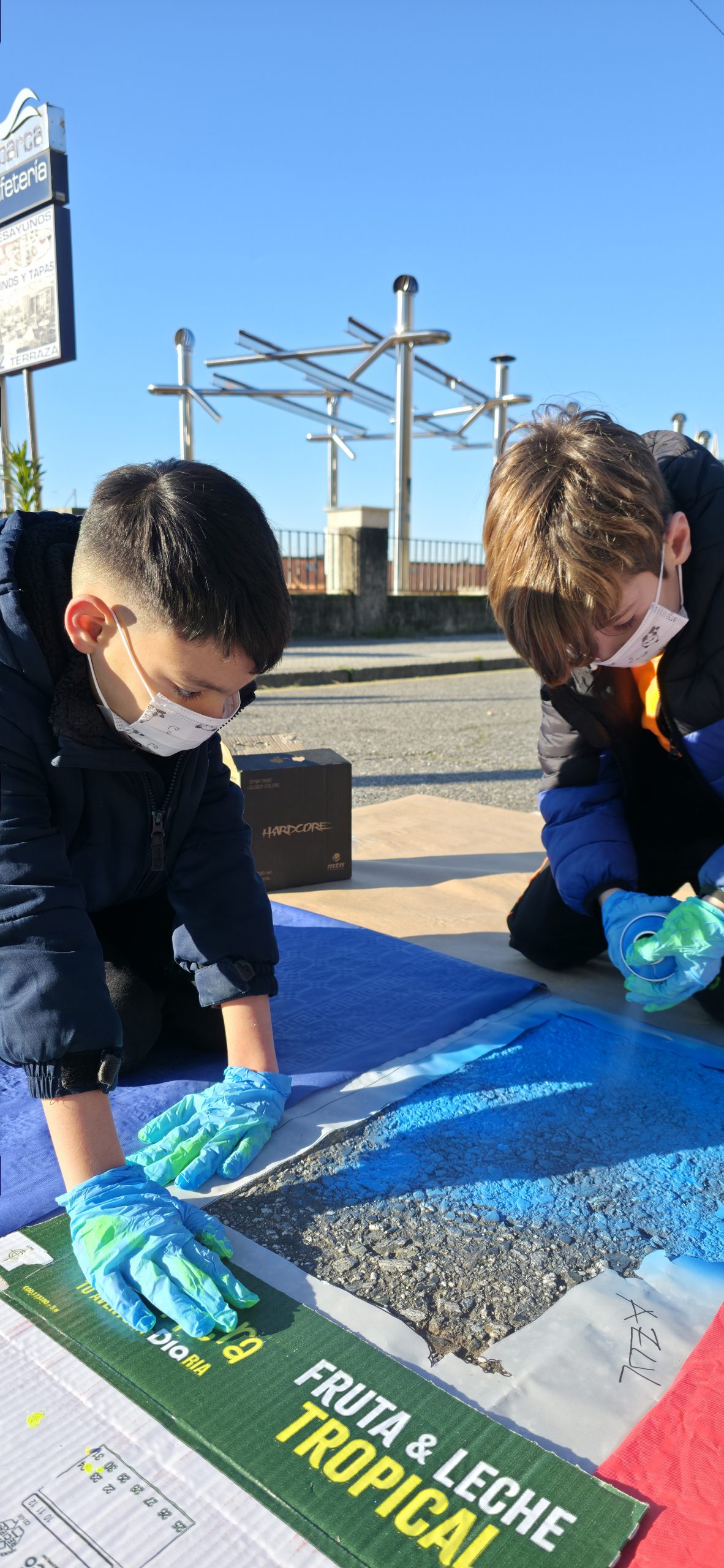
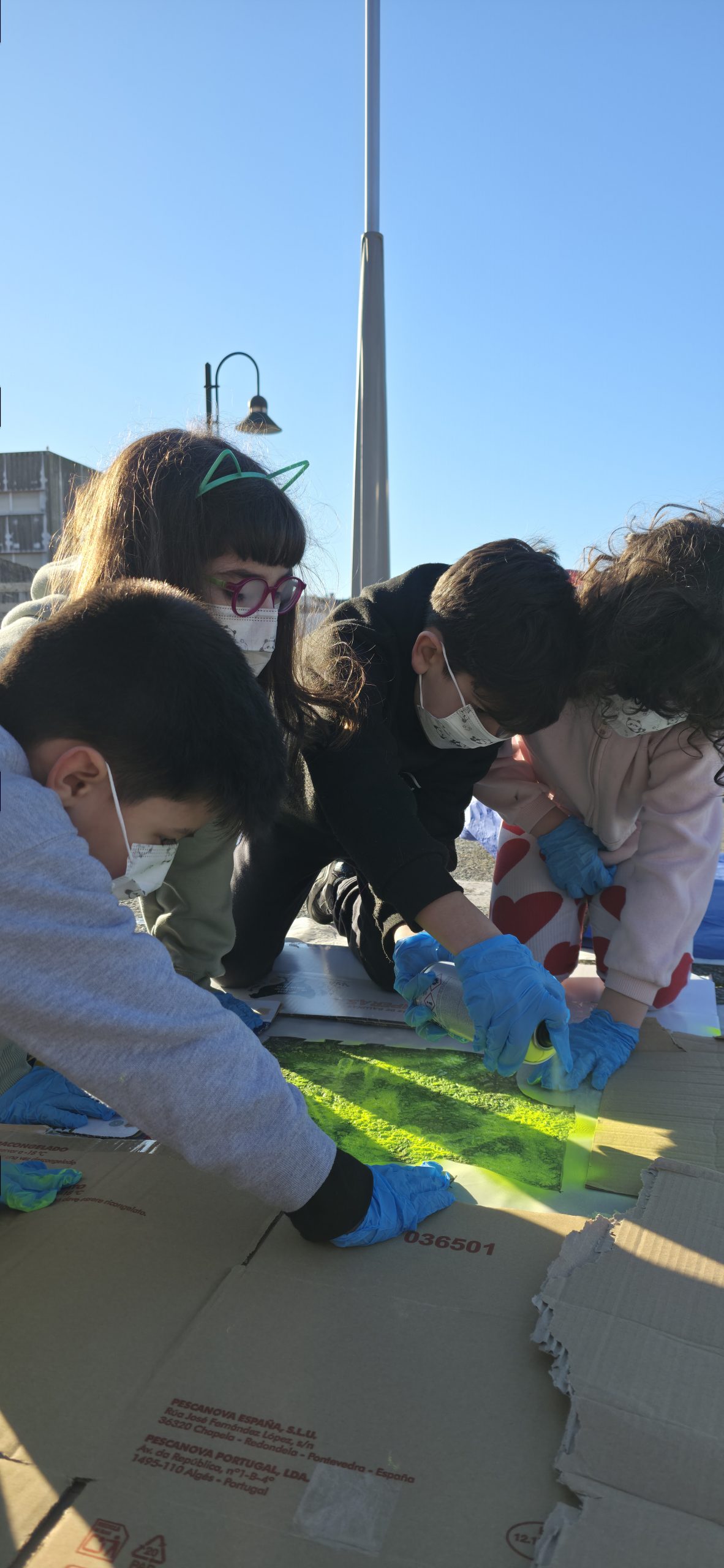
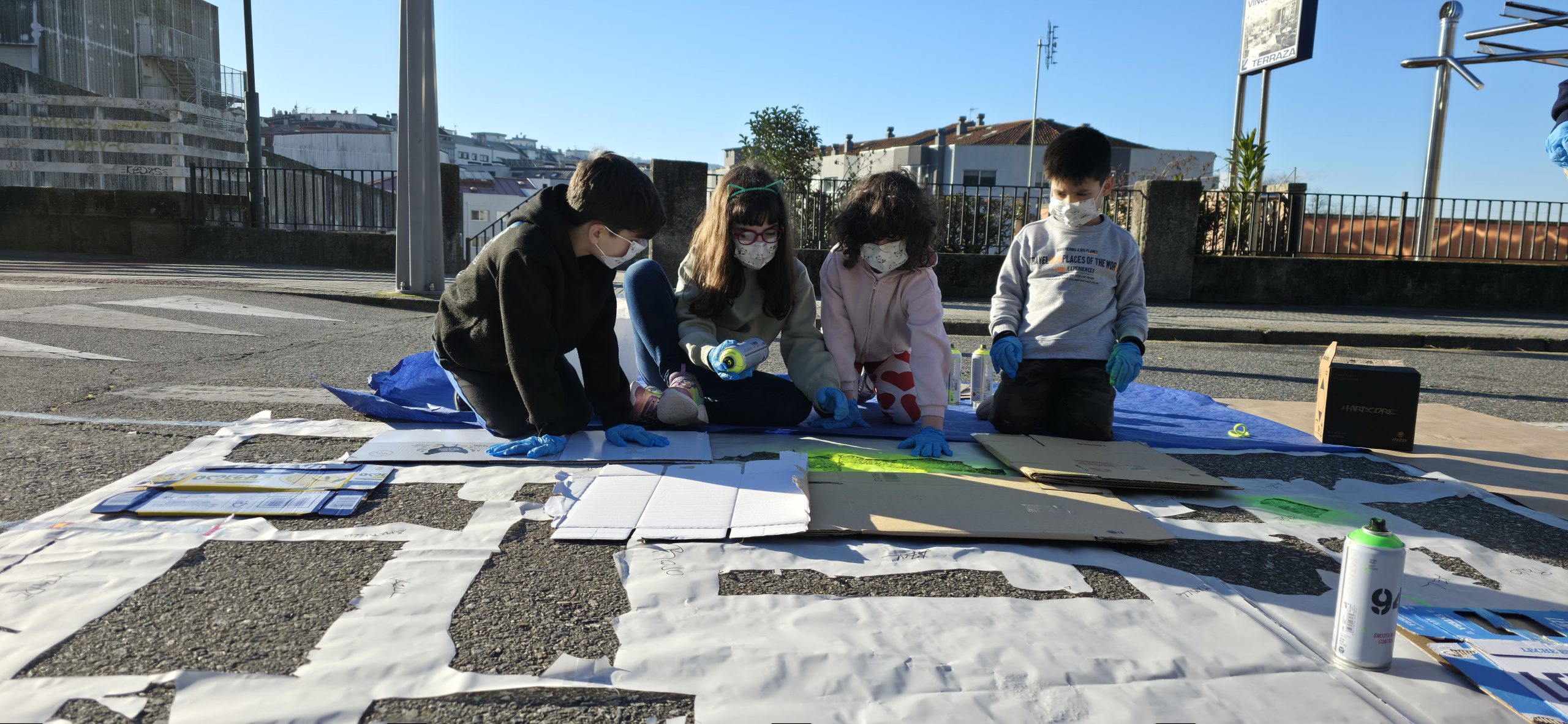
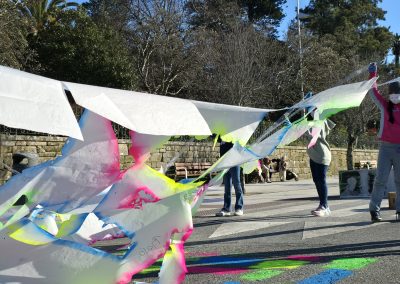
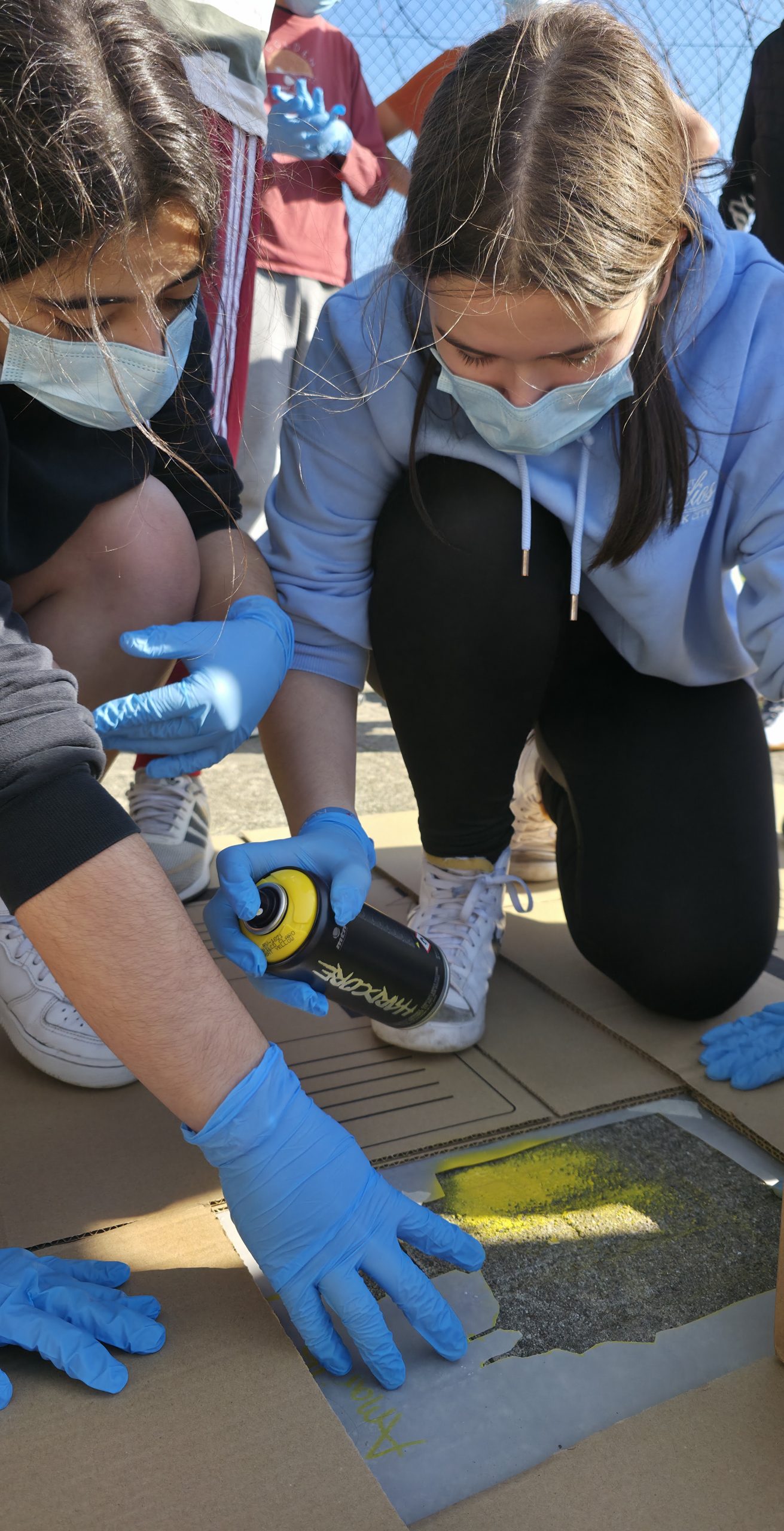
Colour your city

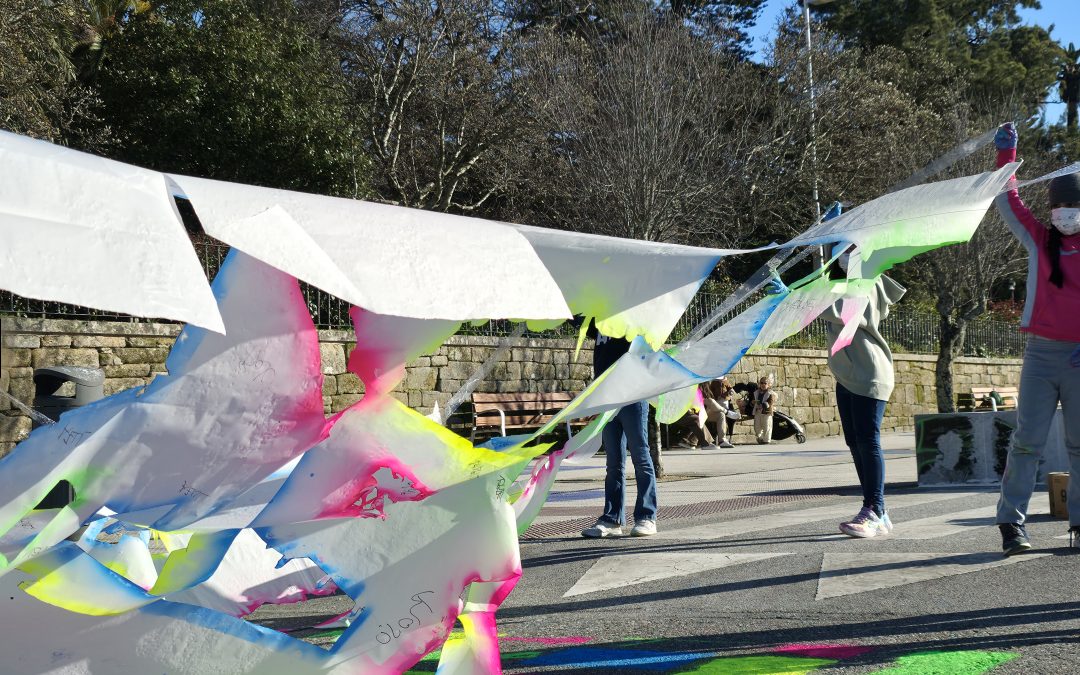
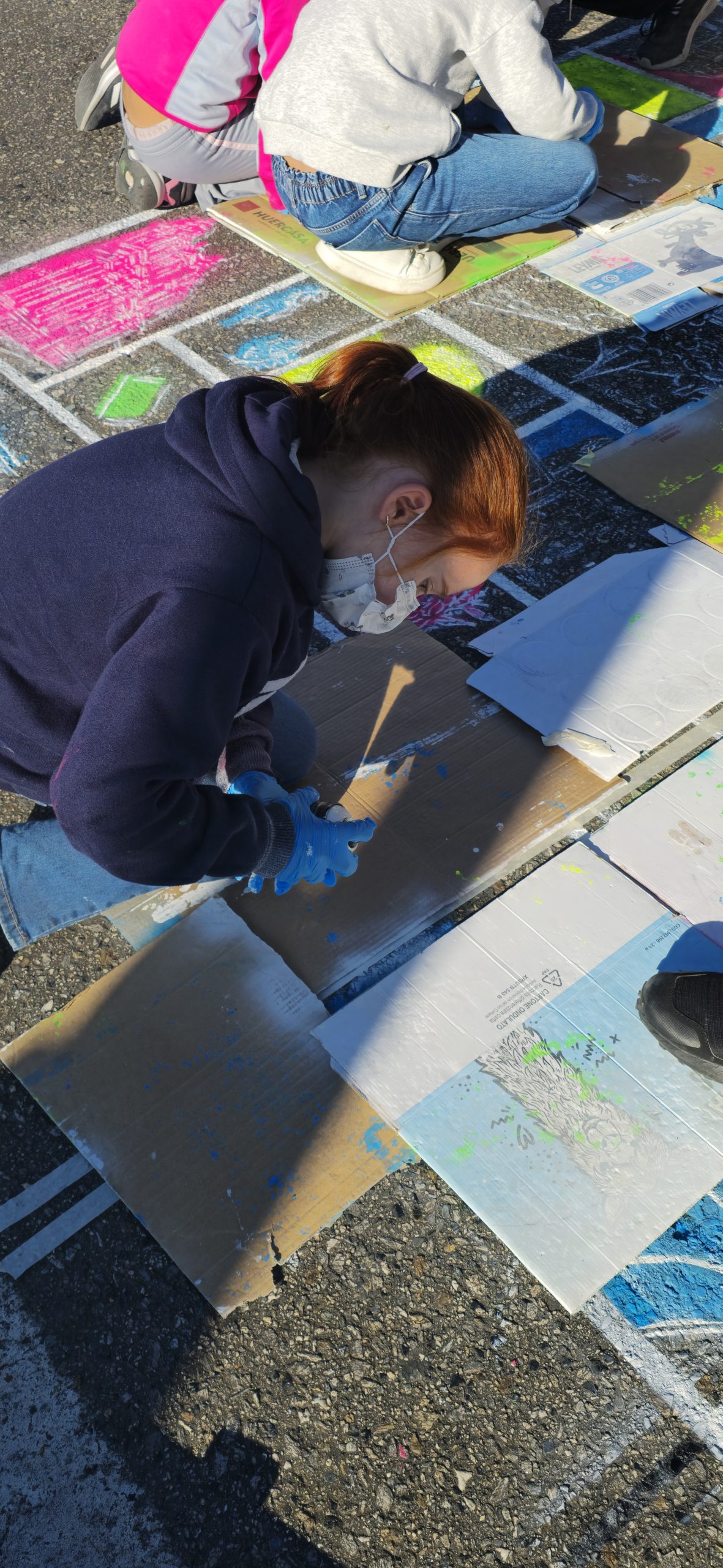
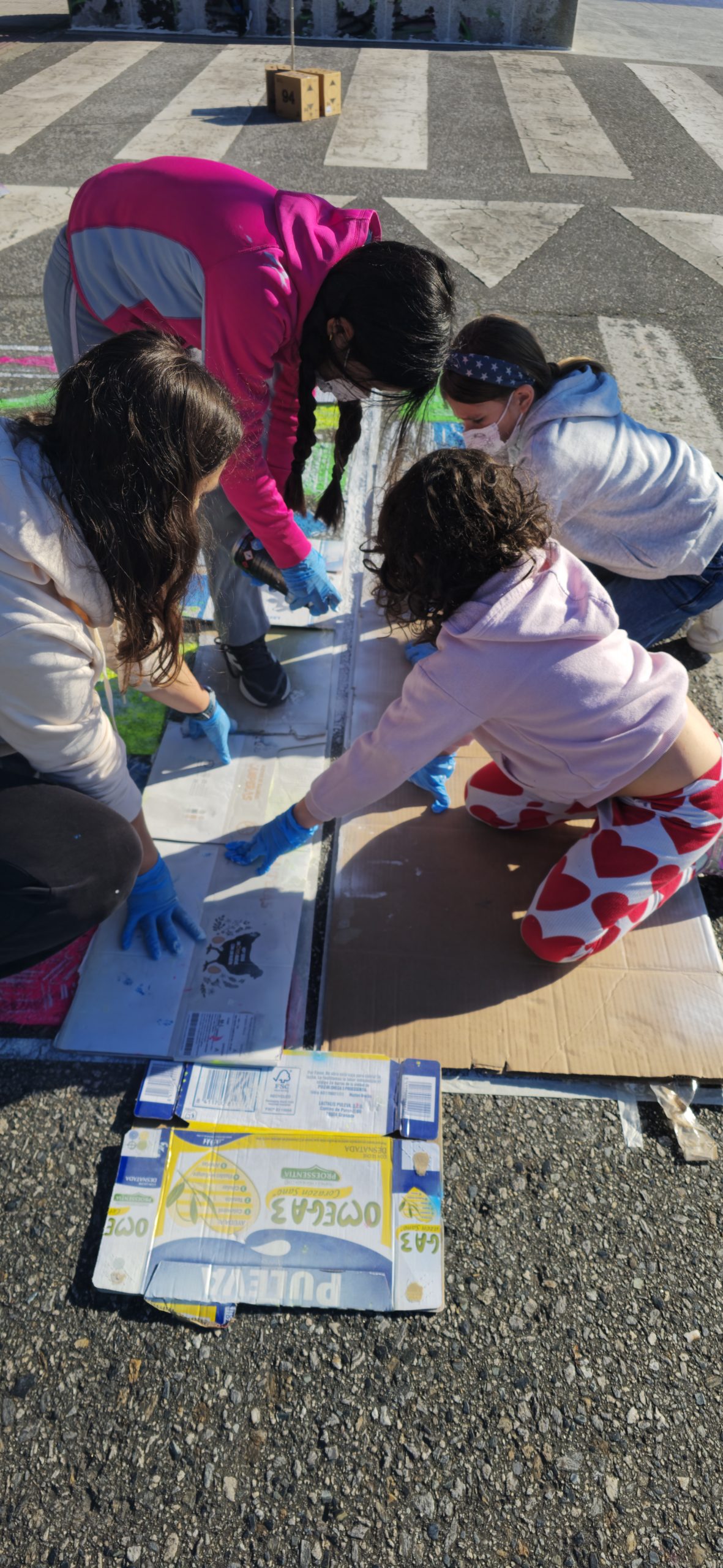
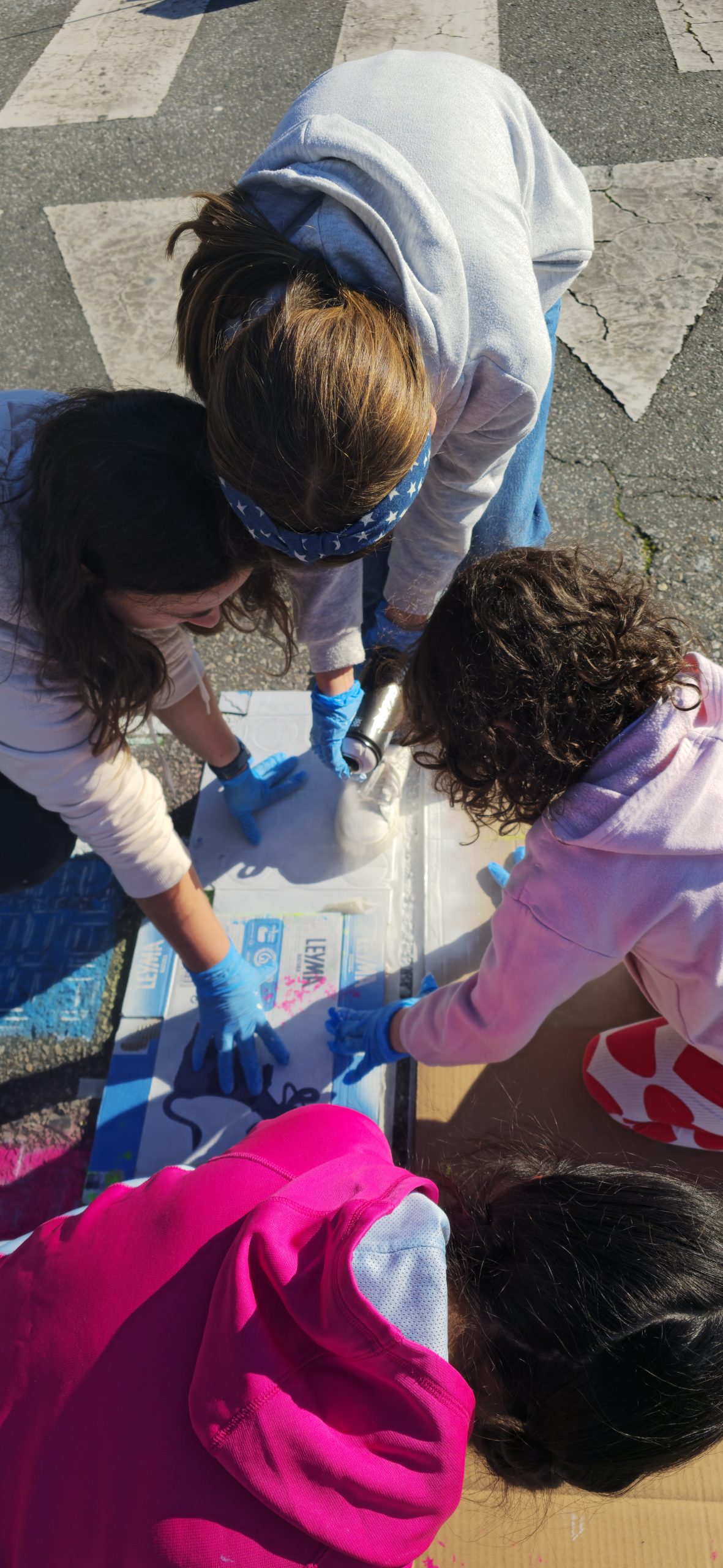
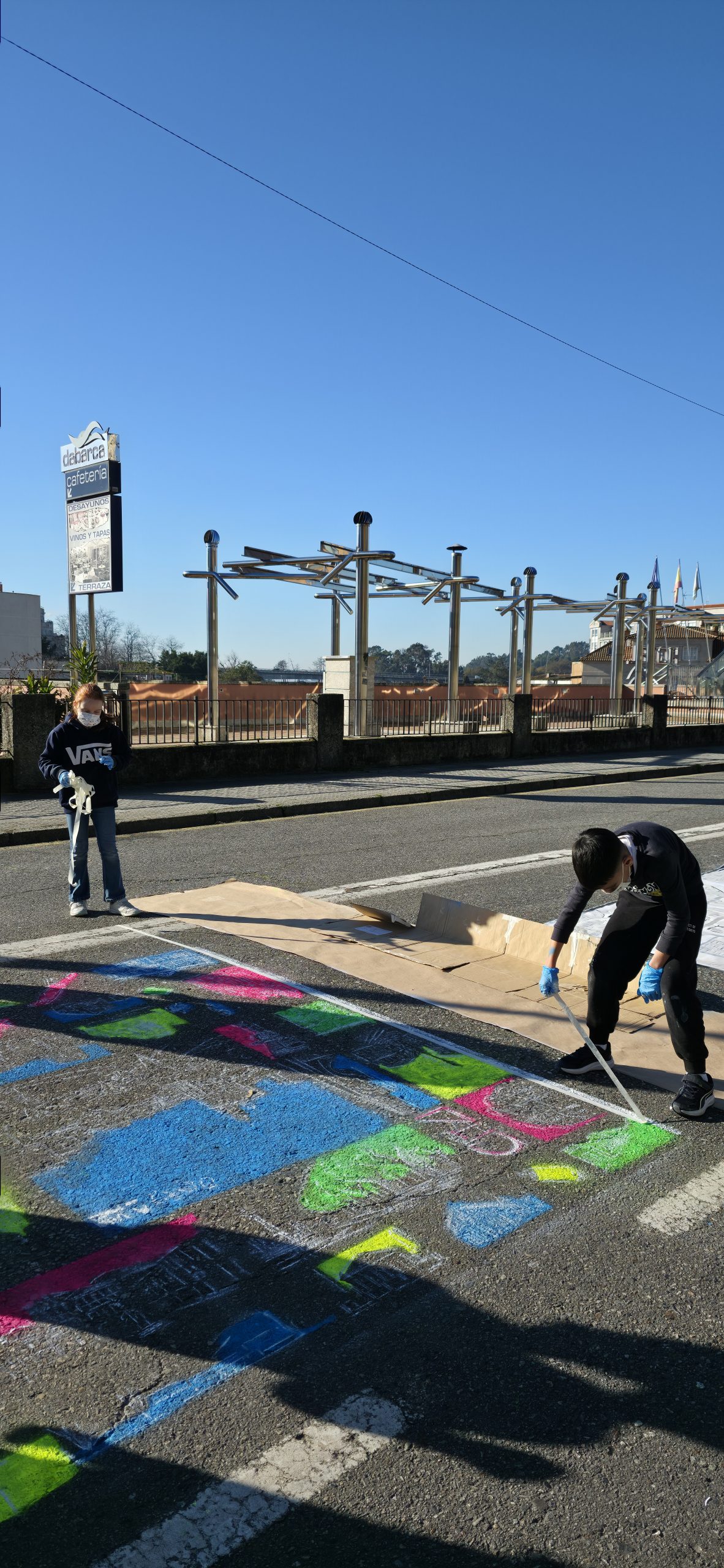
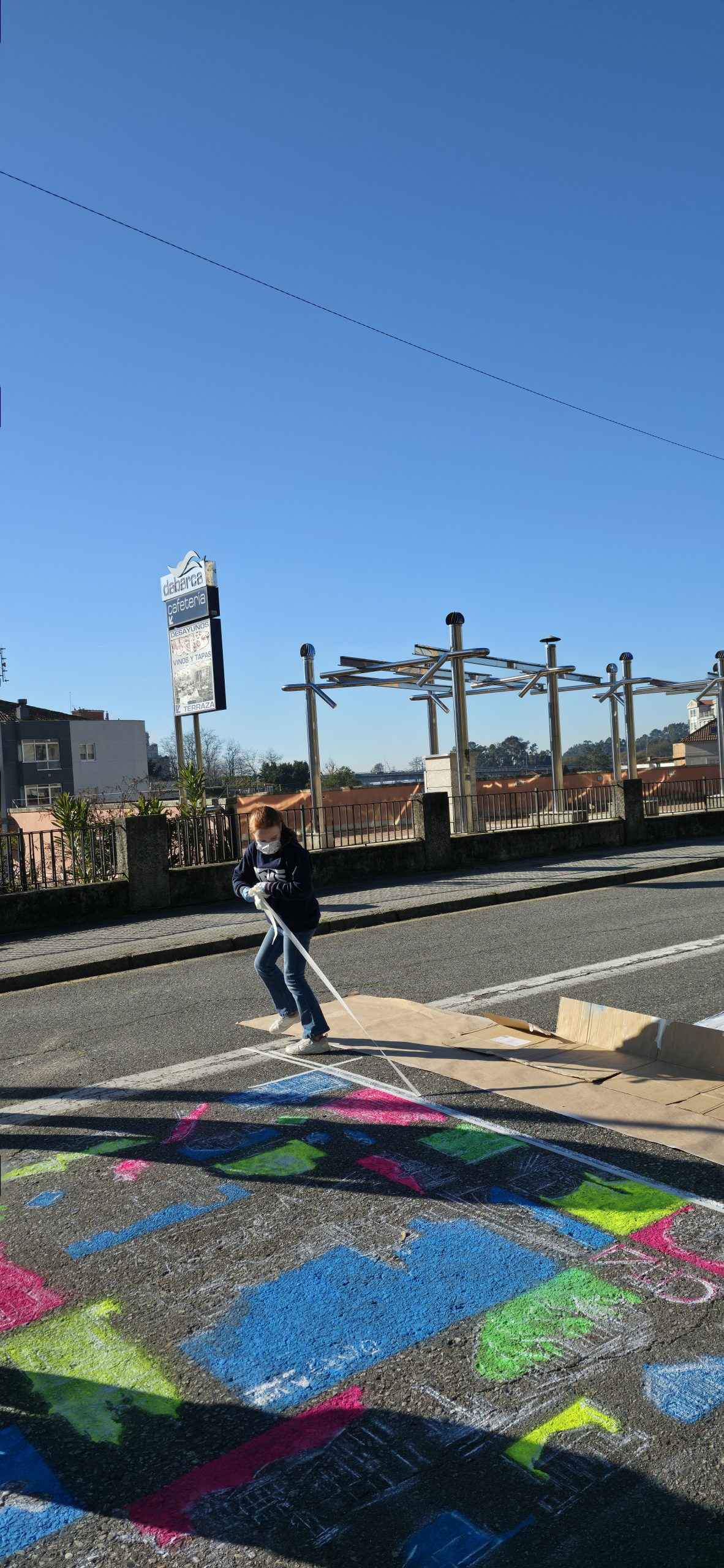
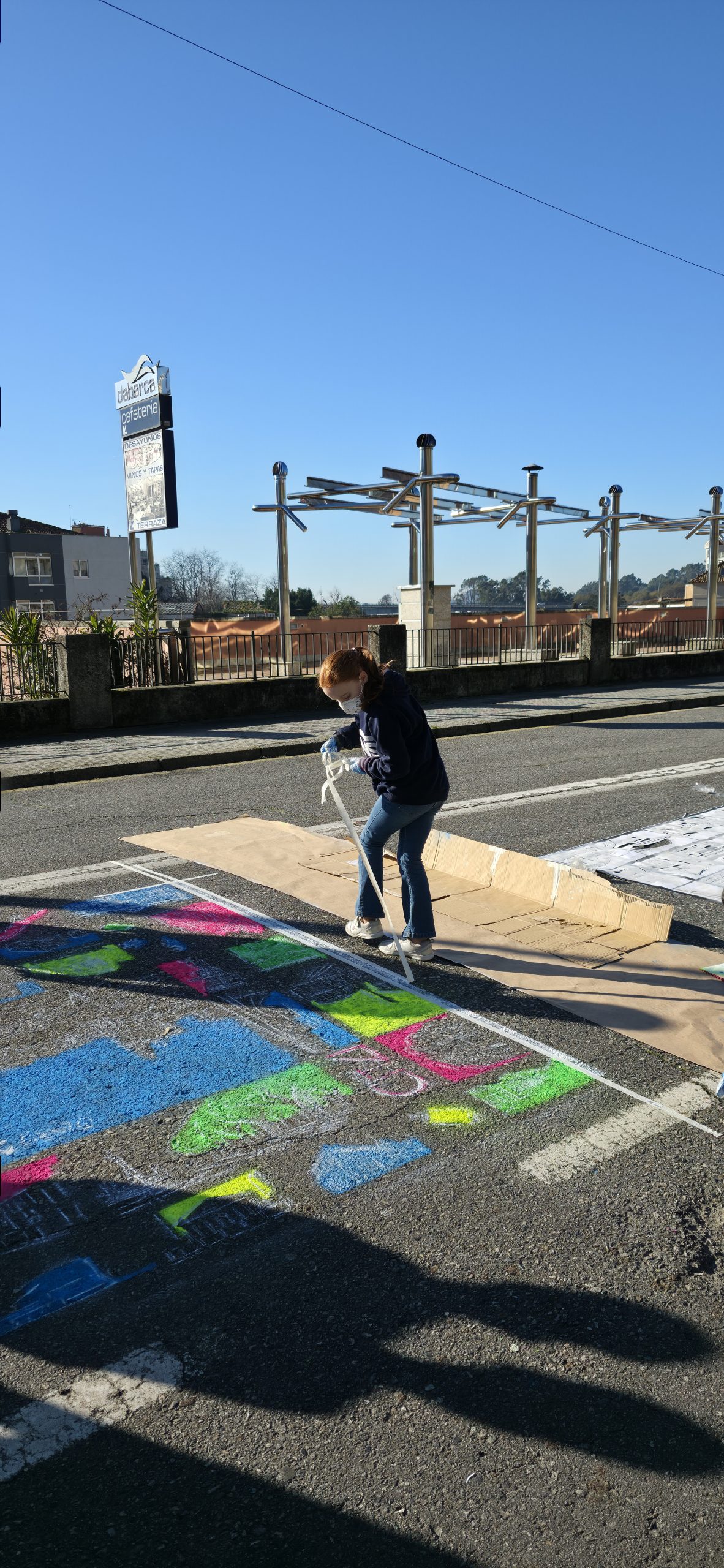
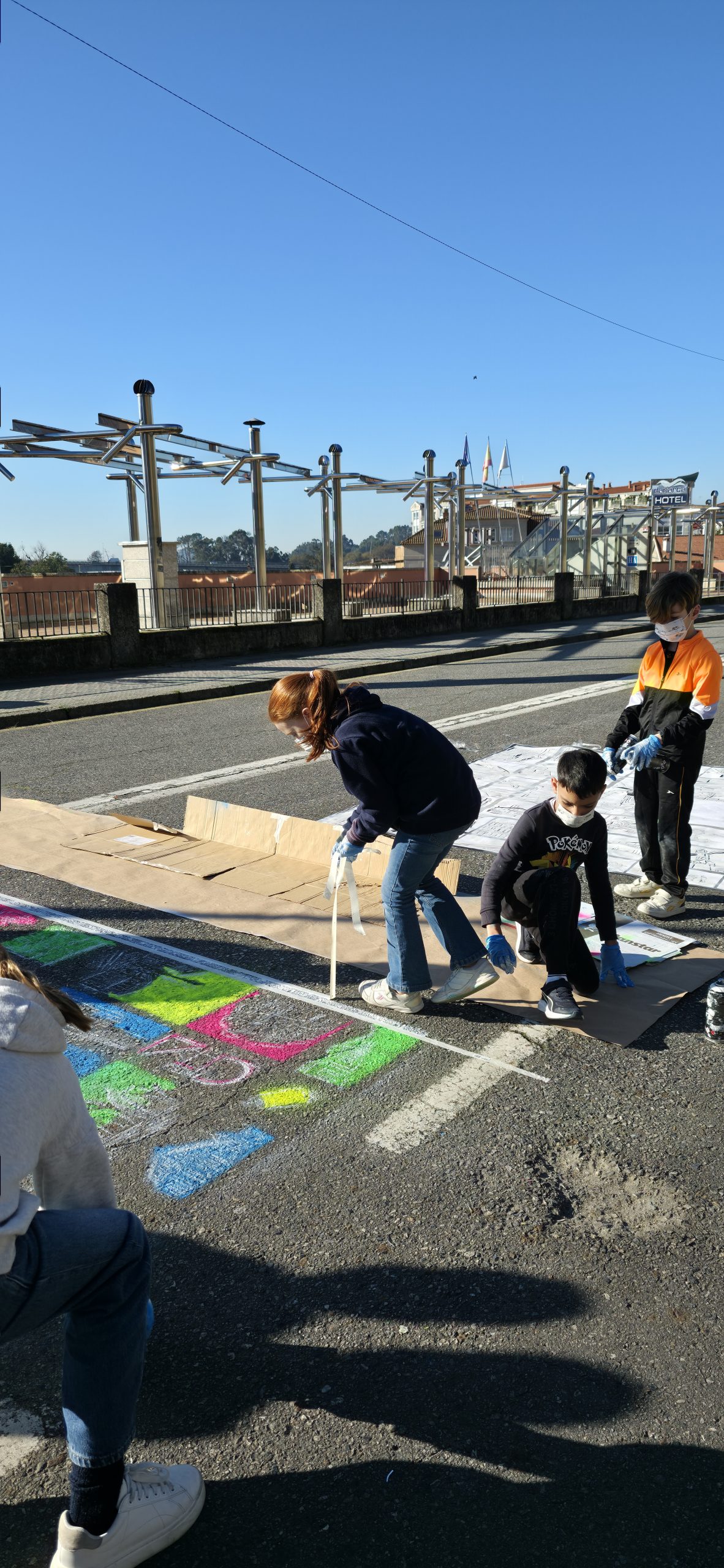
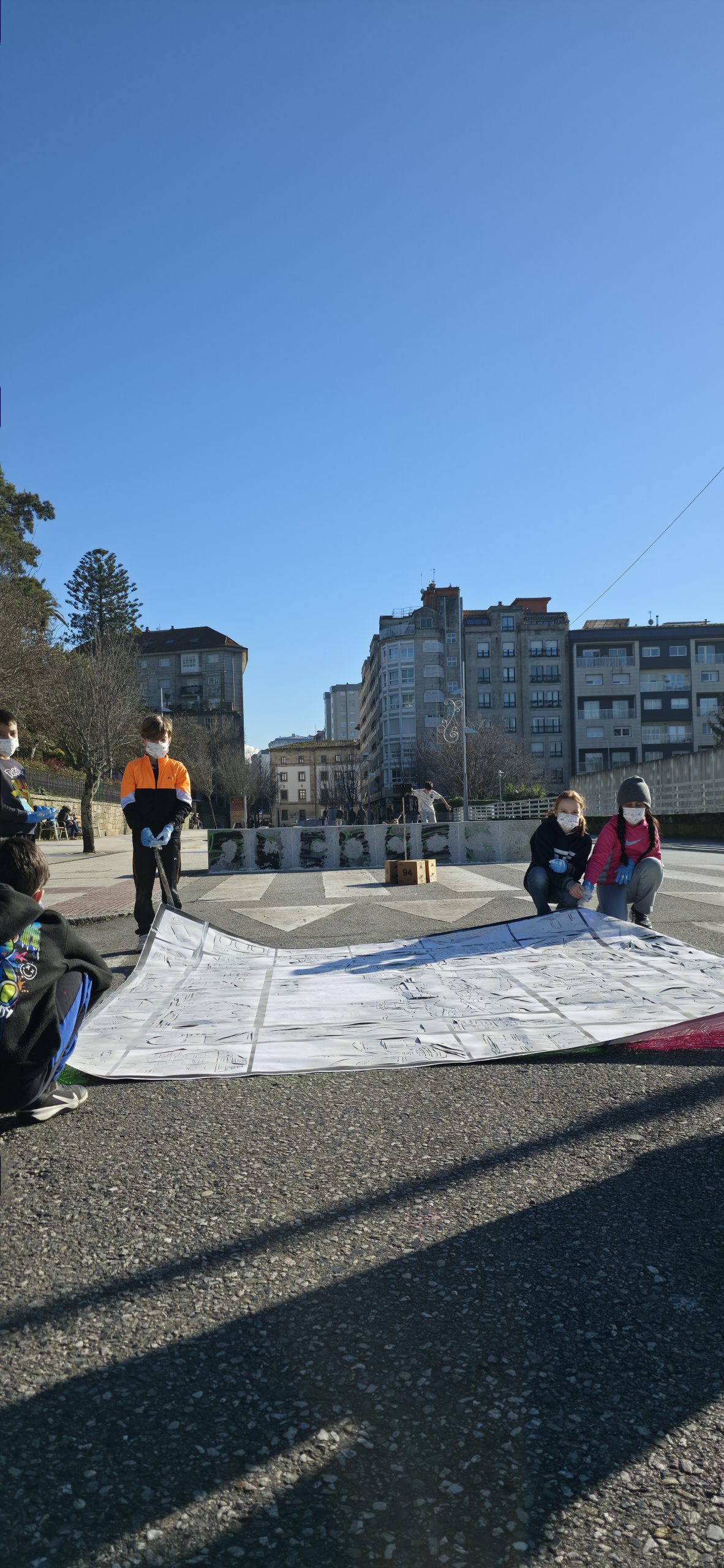
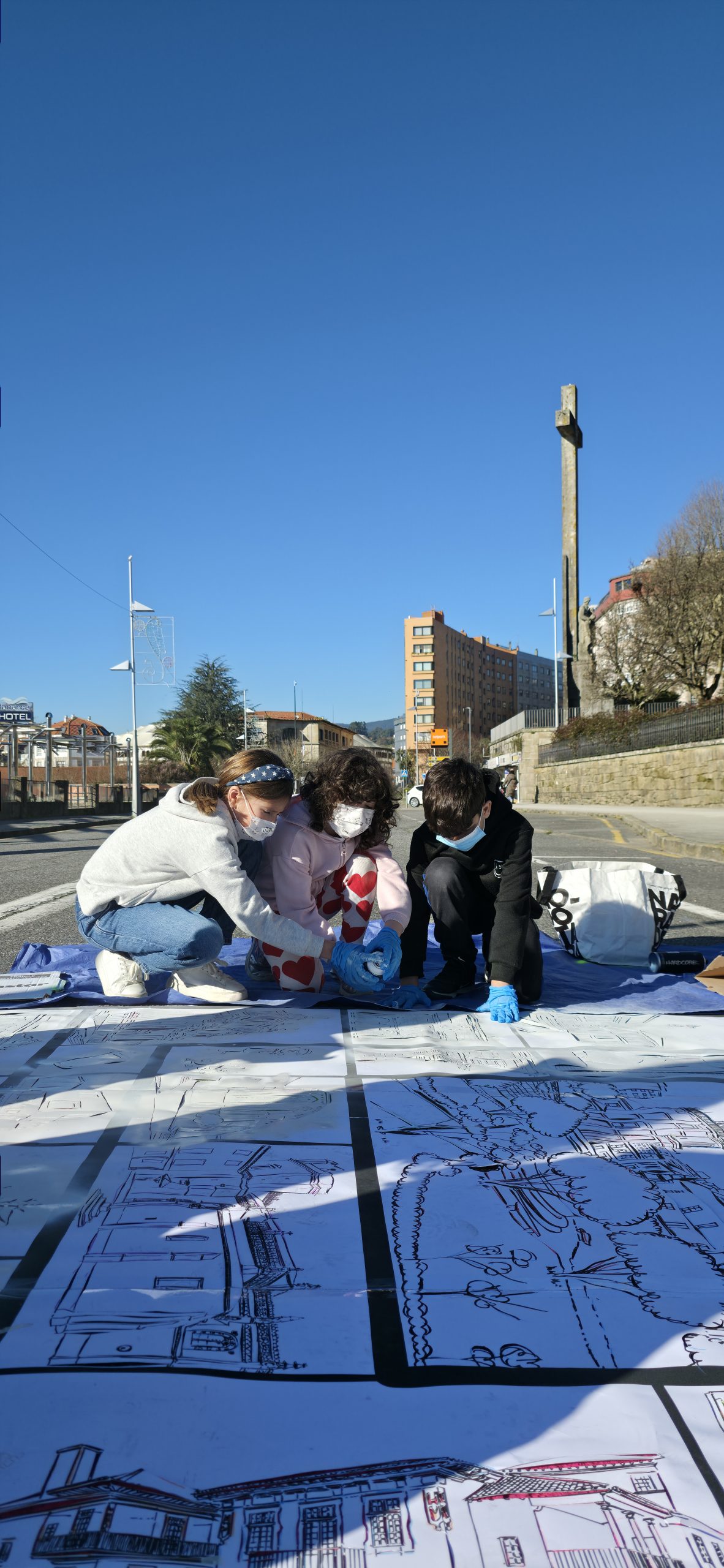
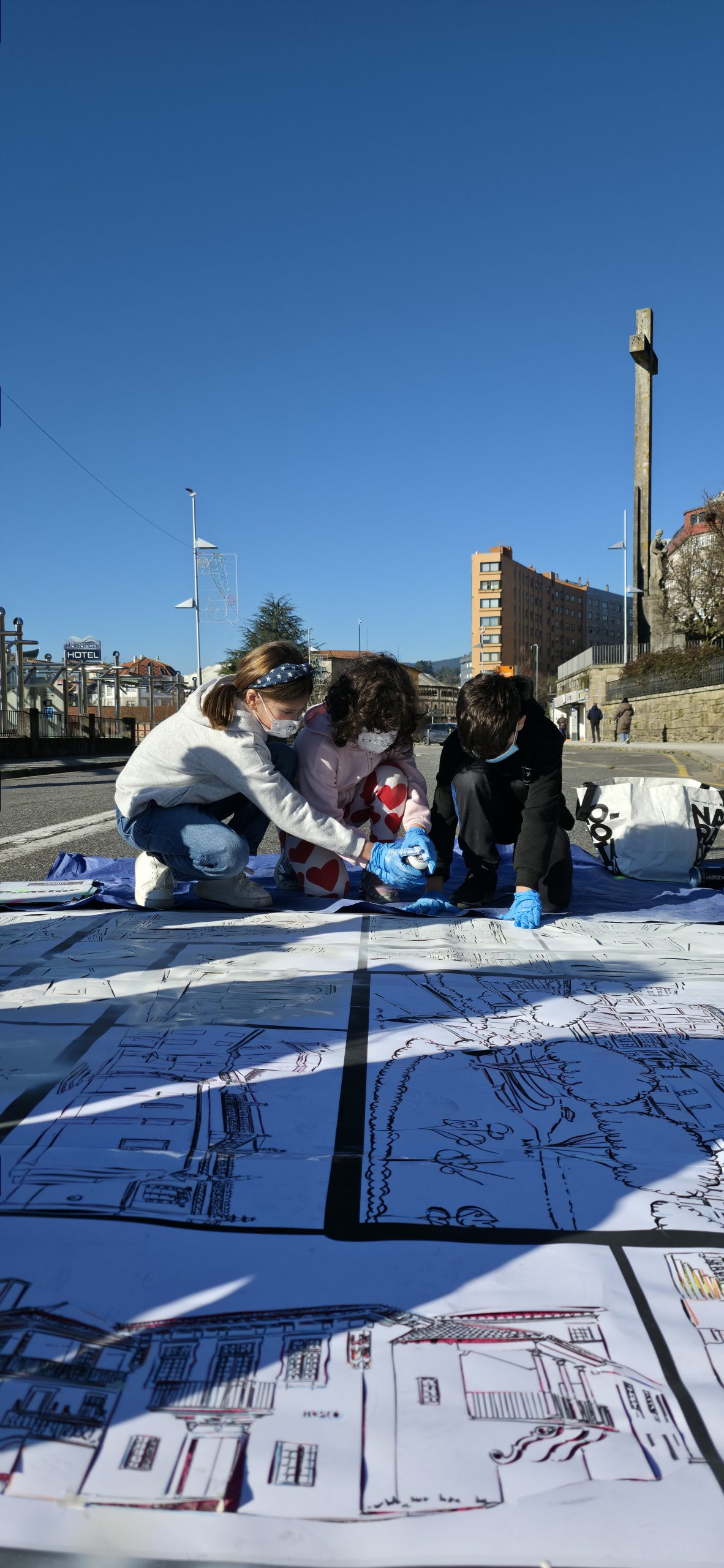
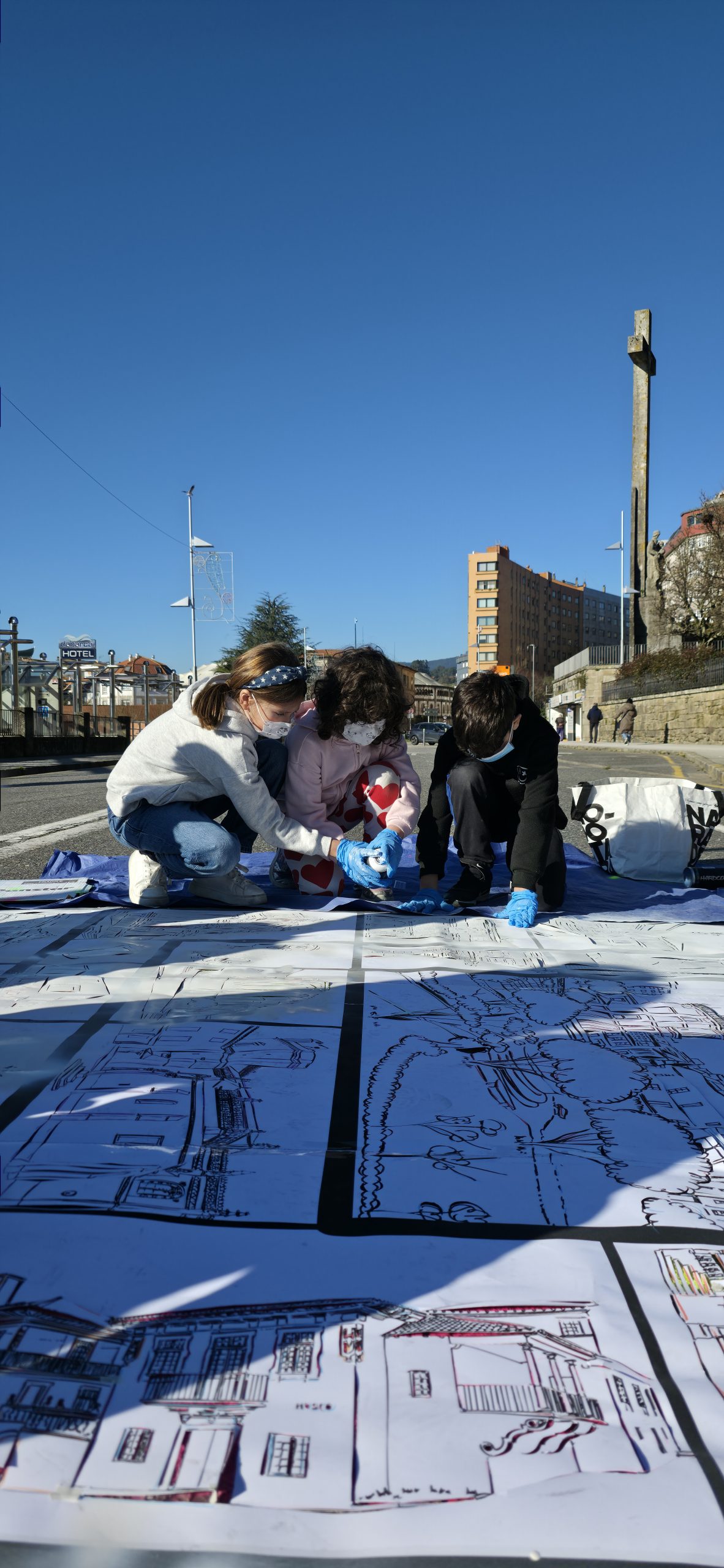
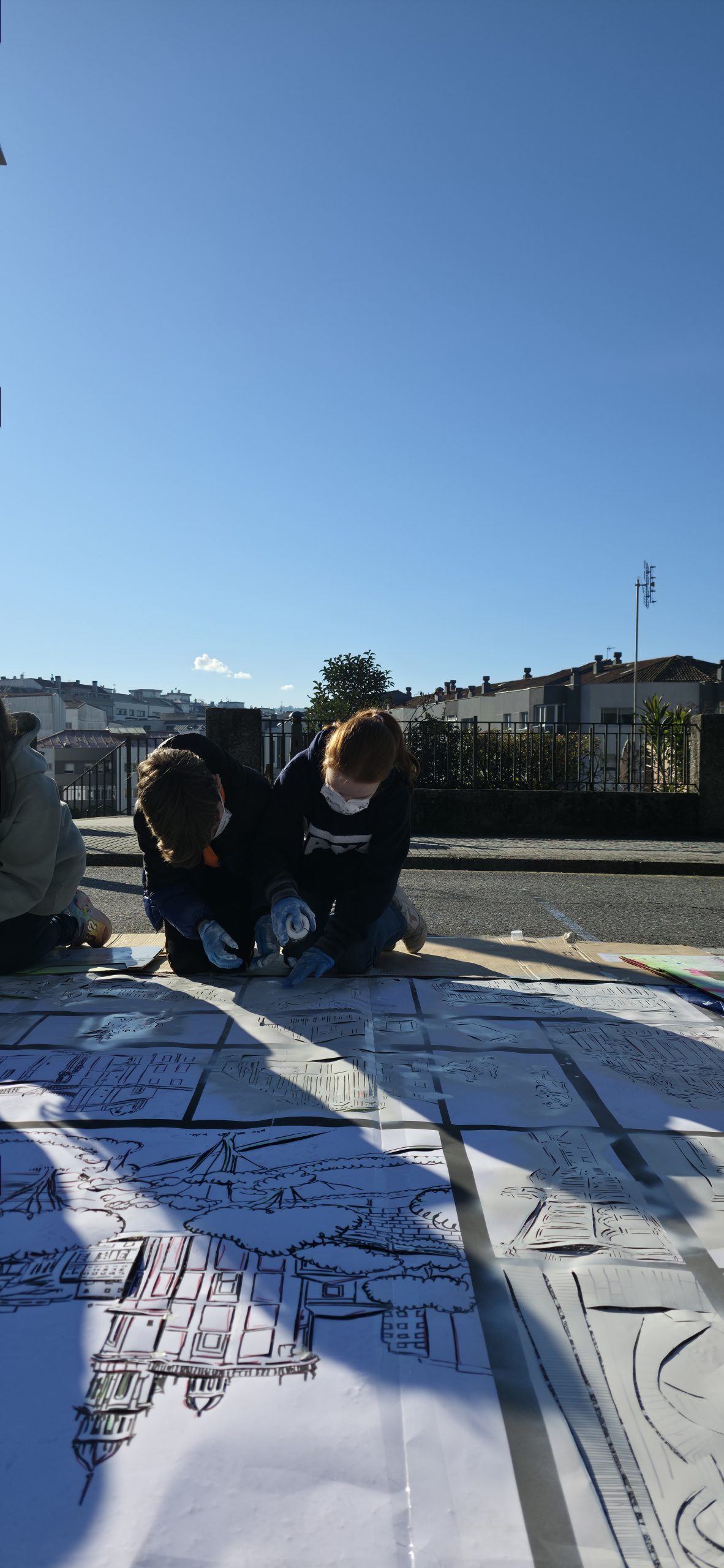
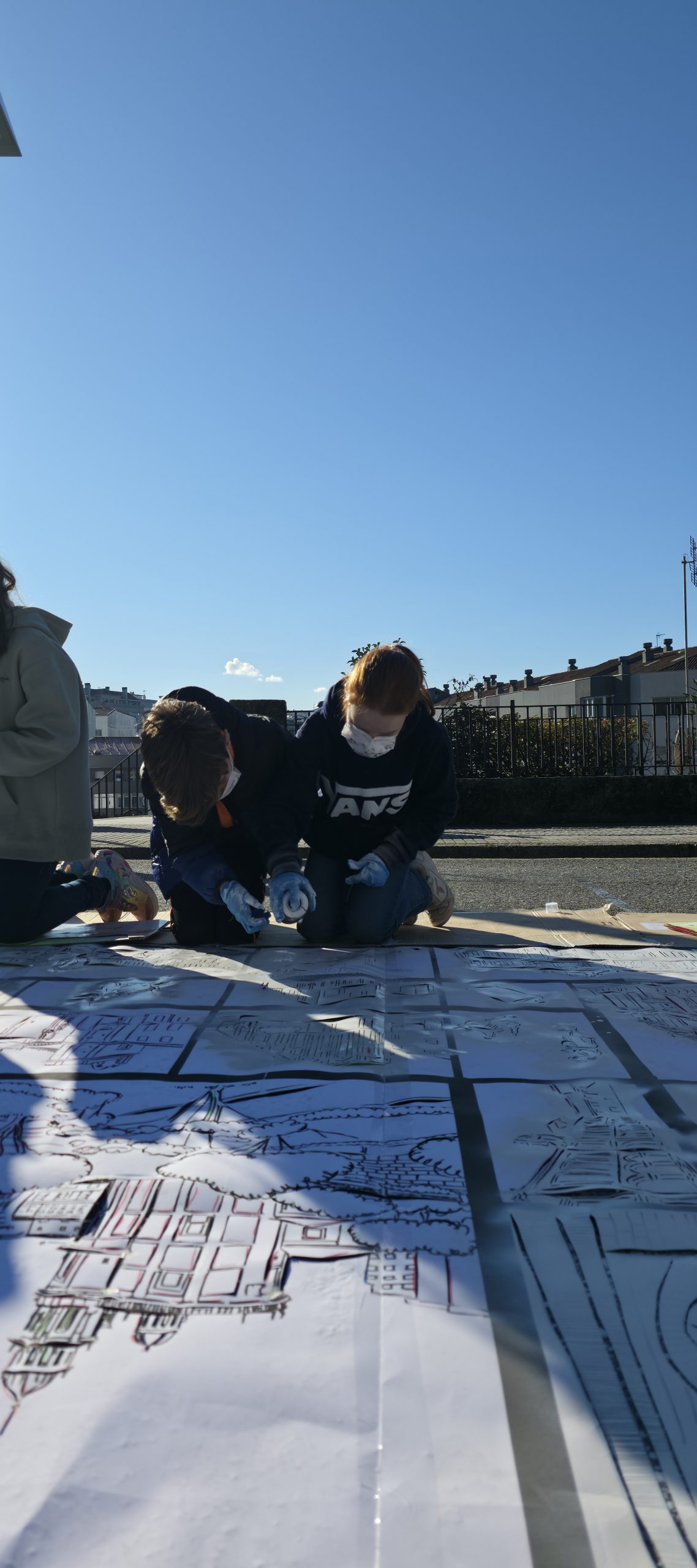
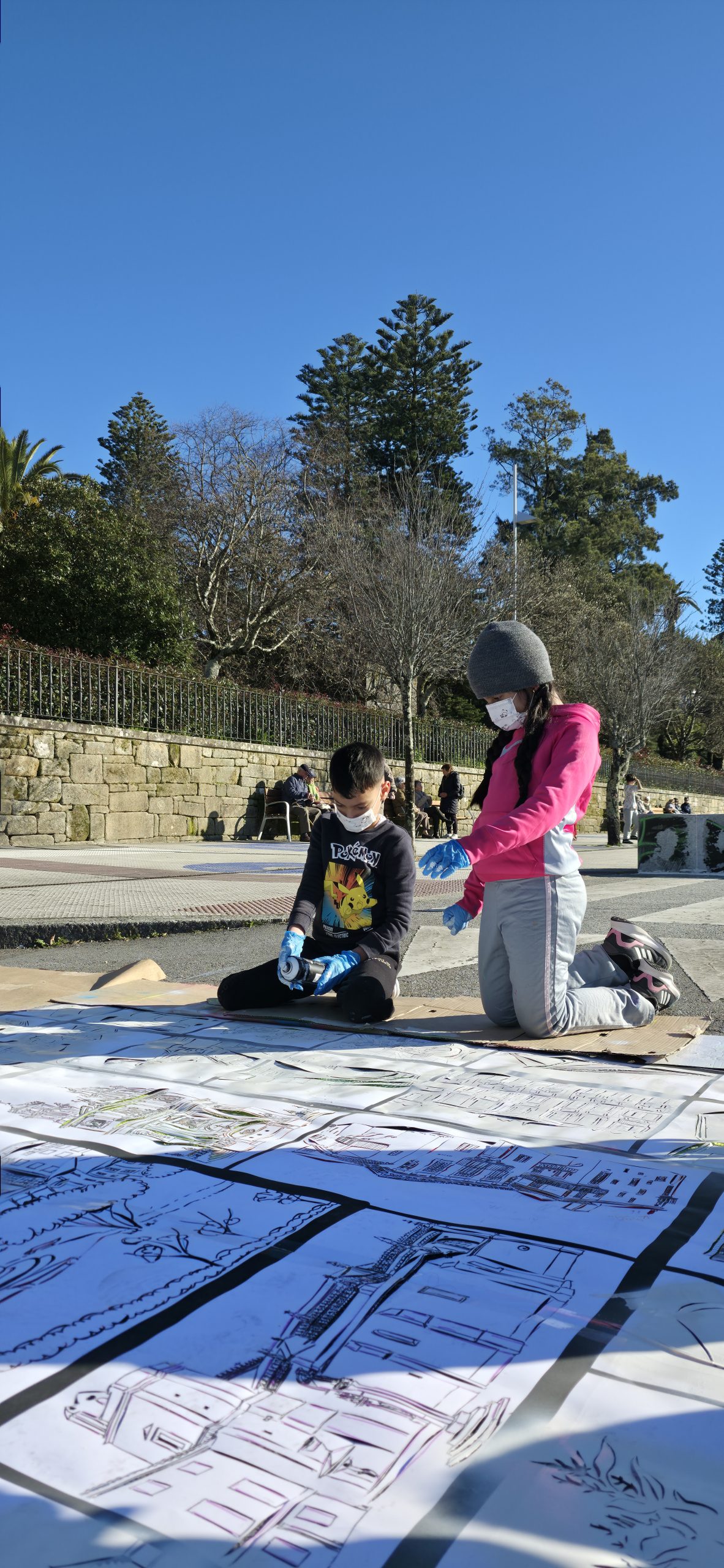
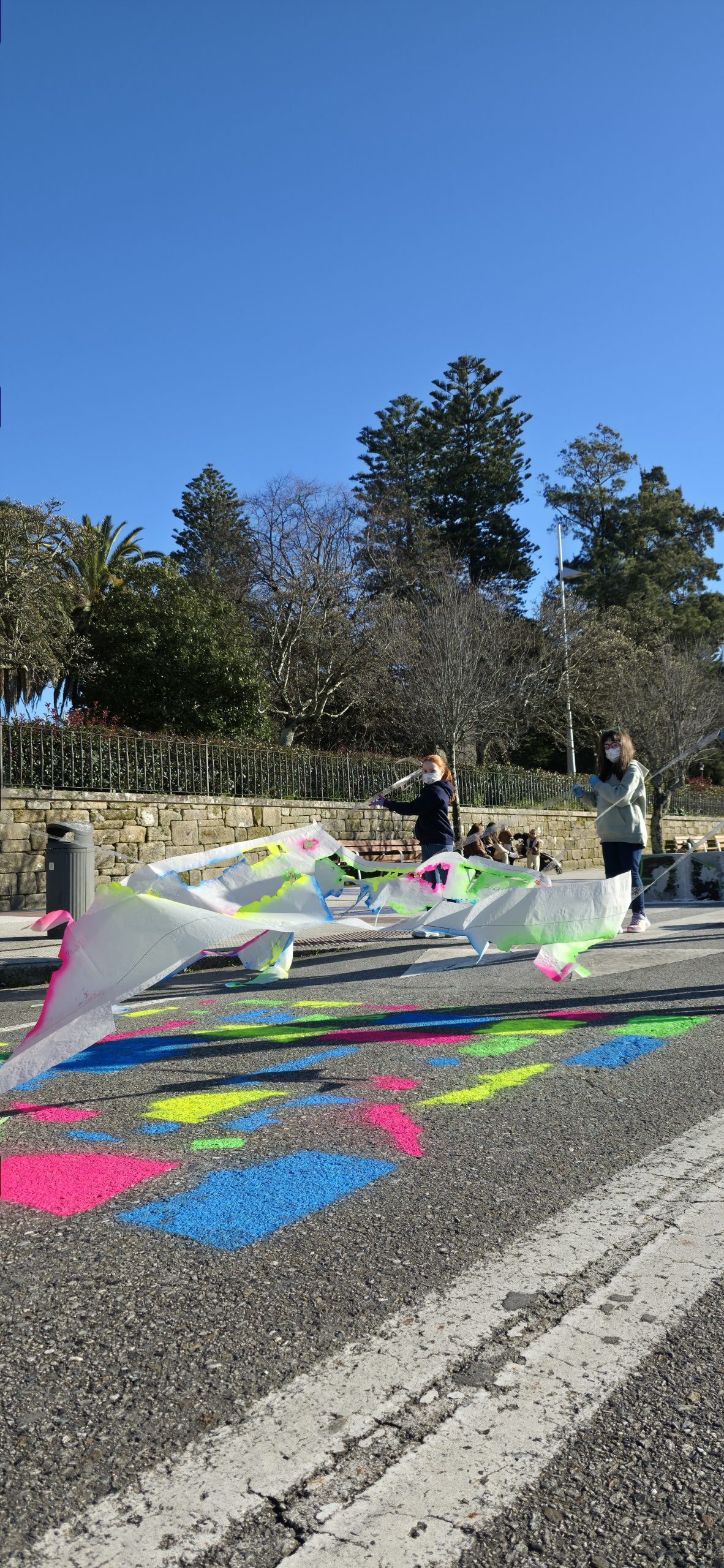
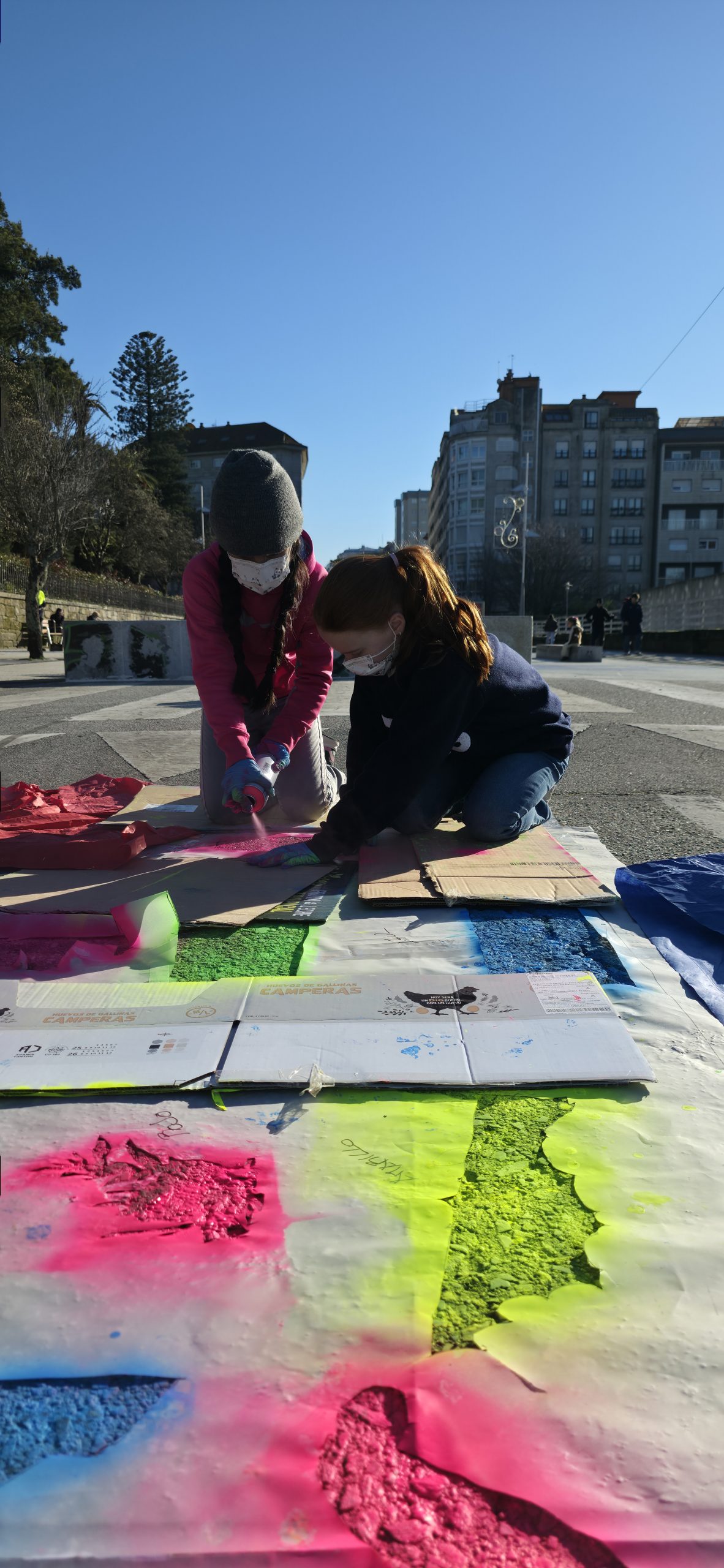
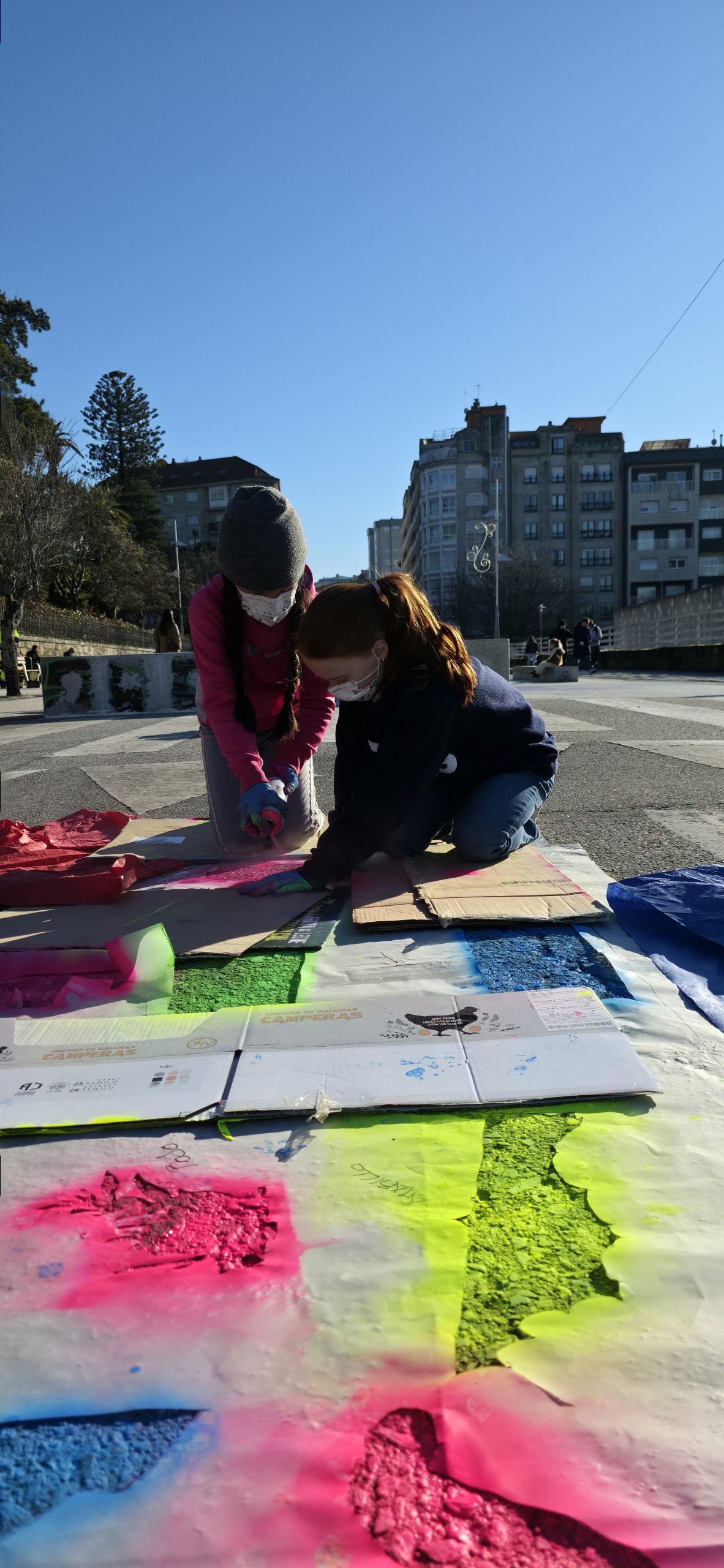
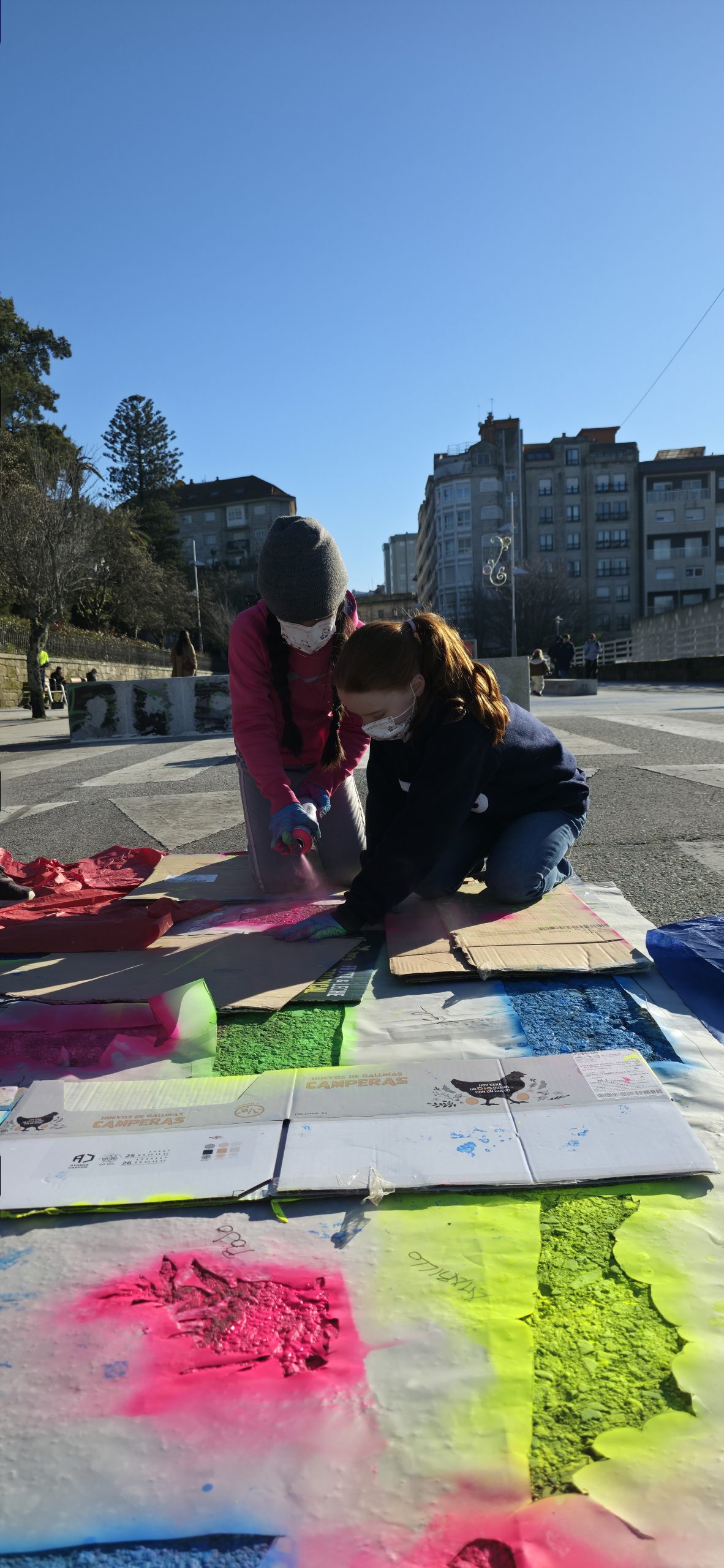
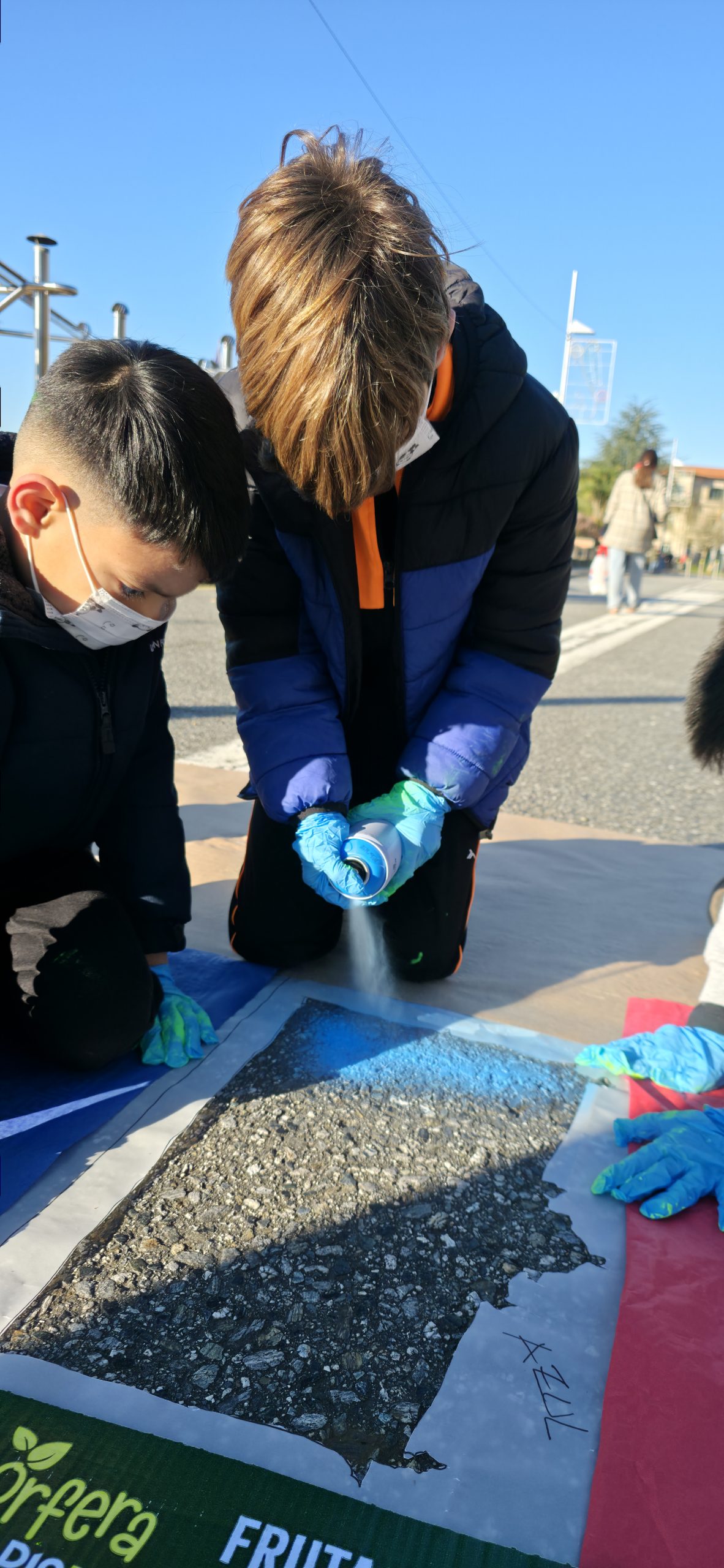
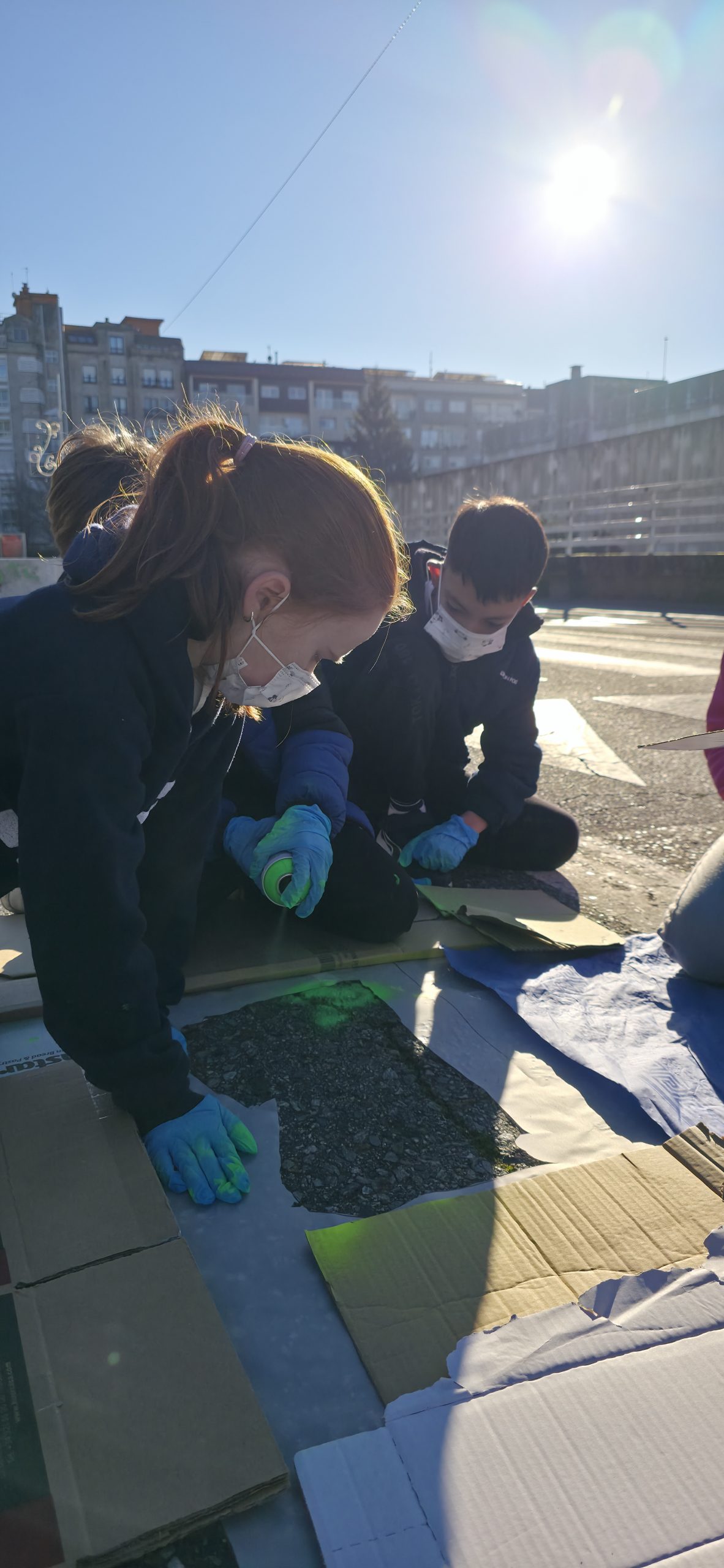
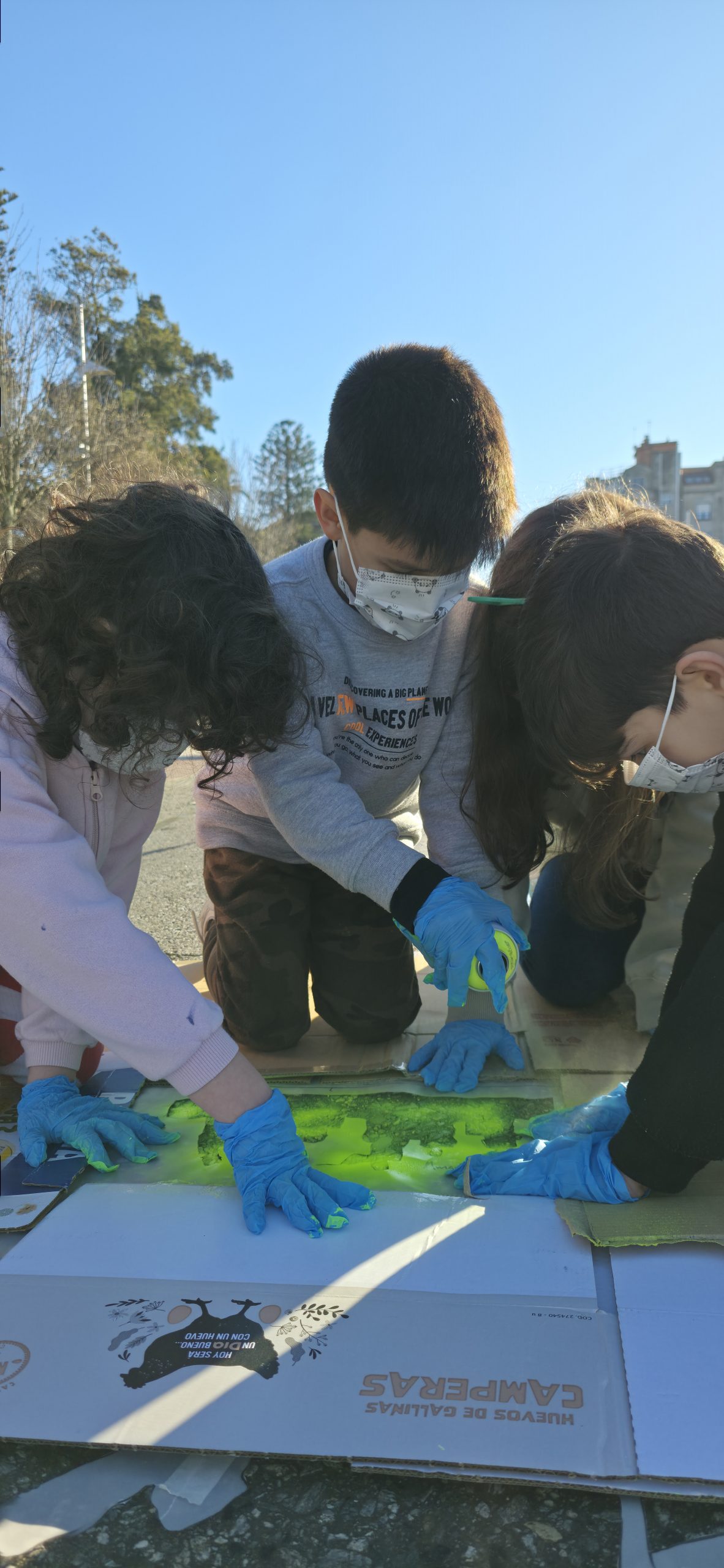
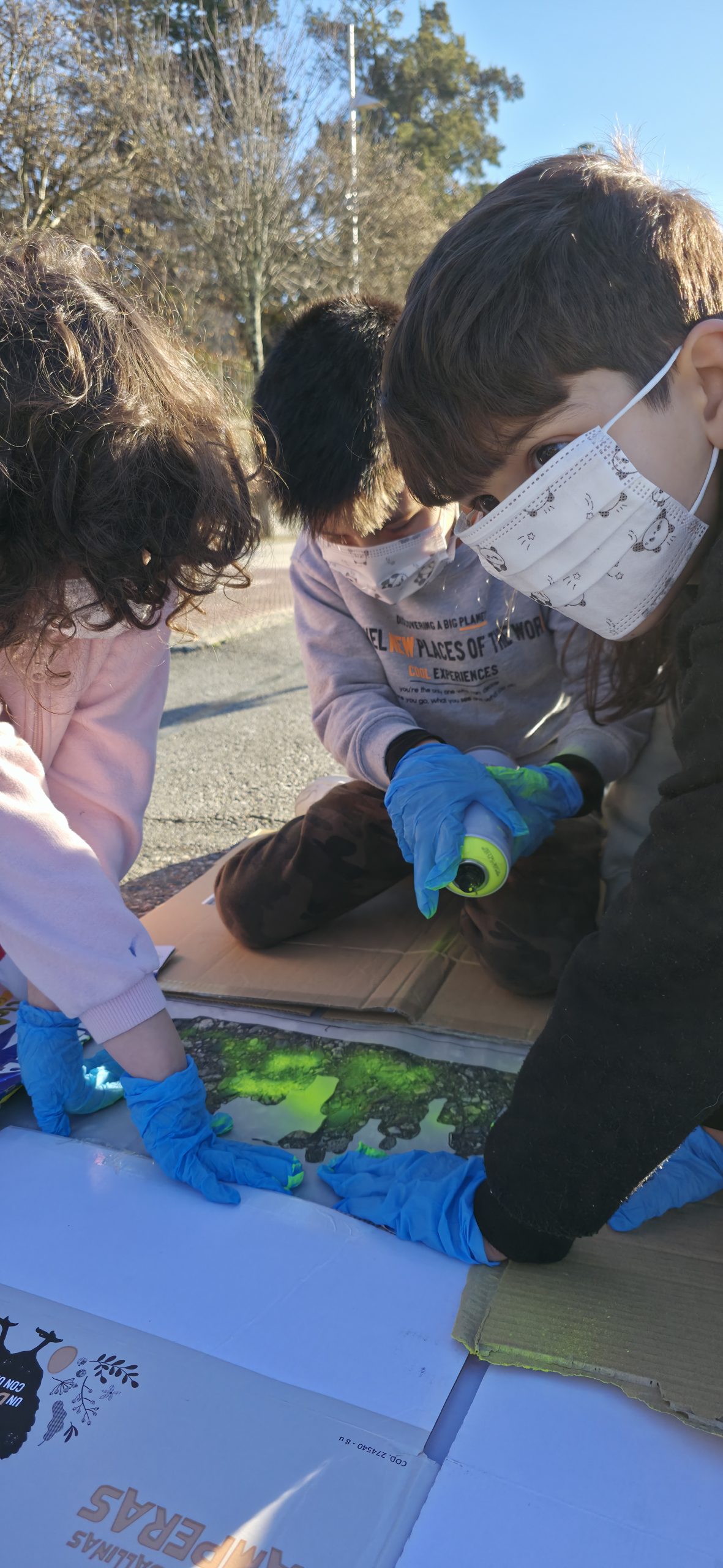
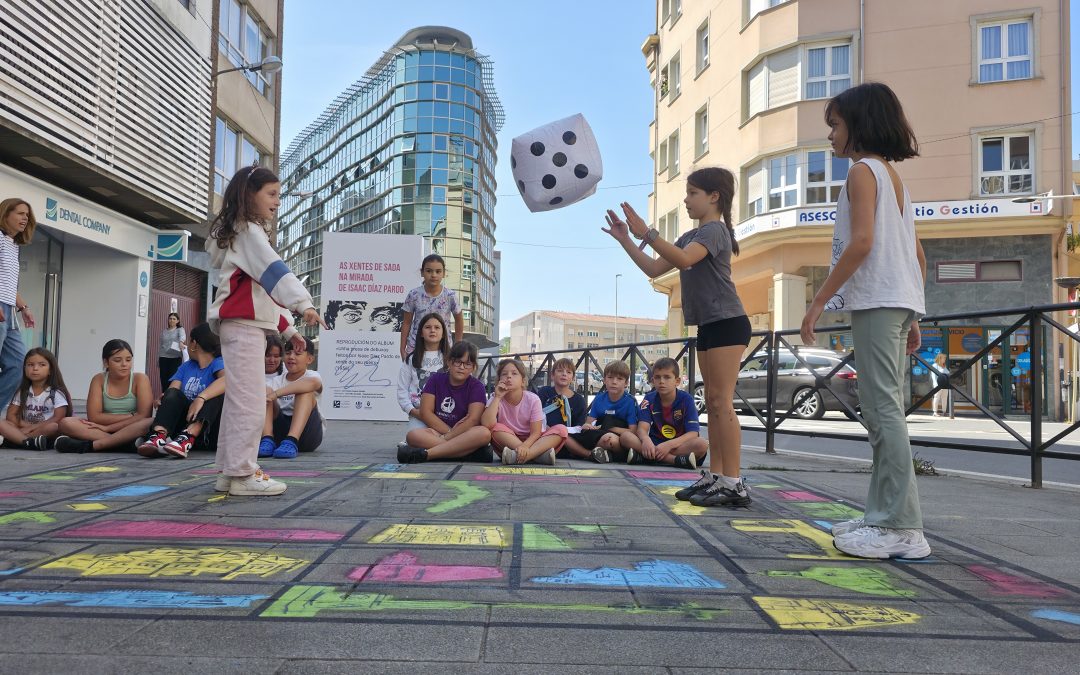
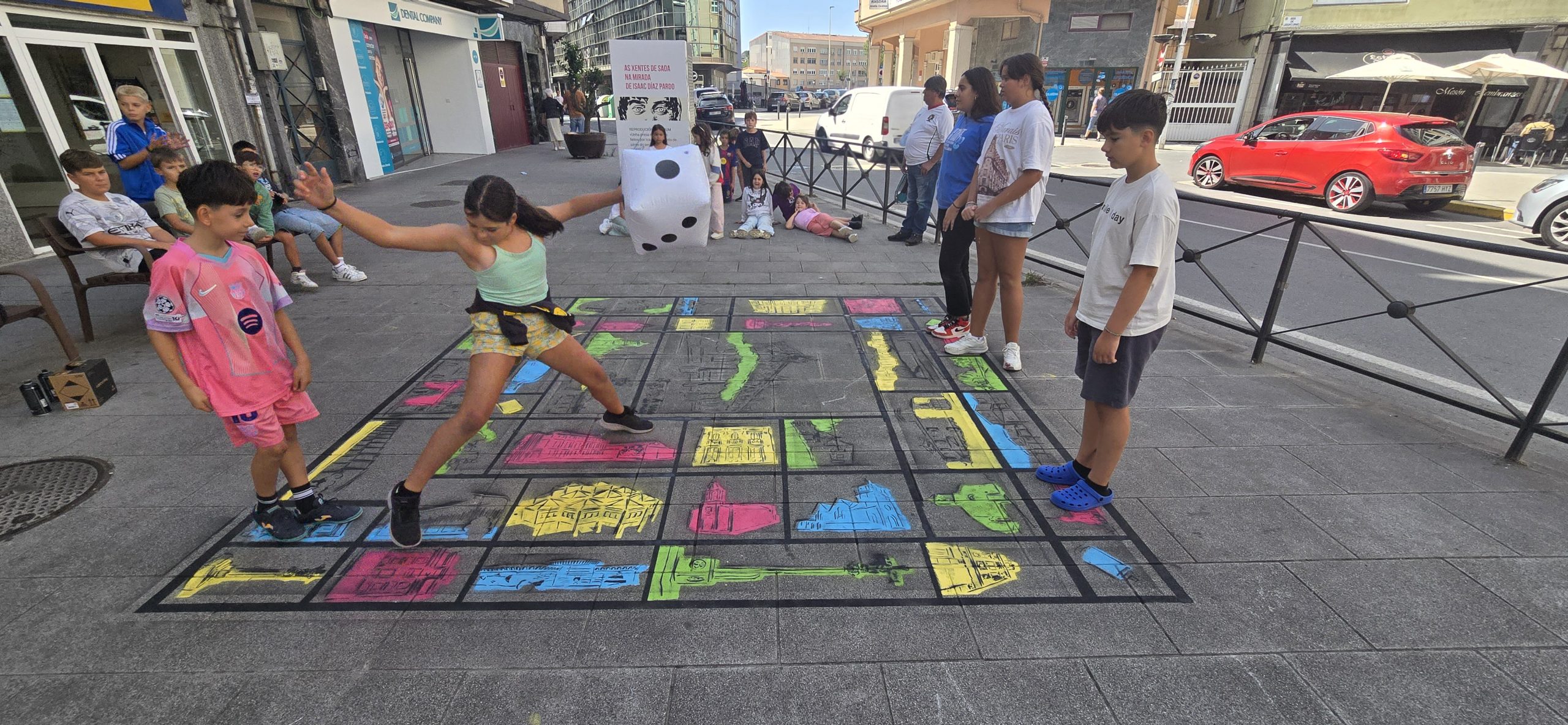
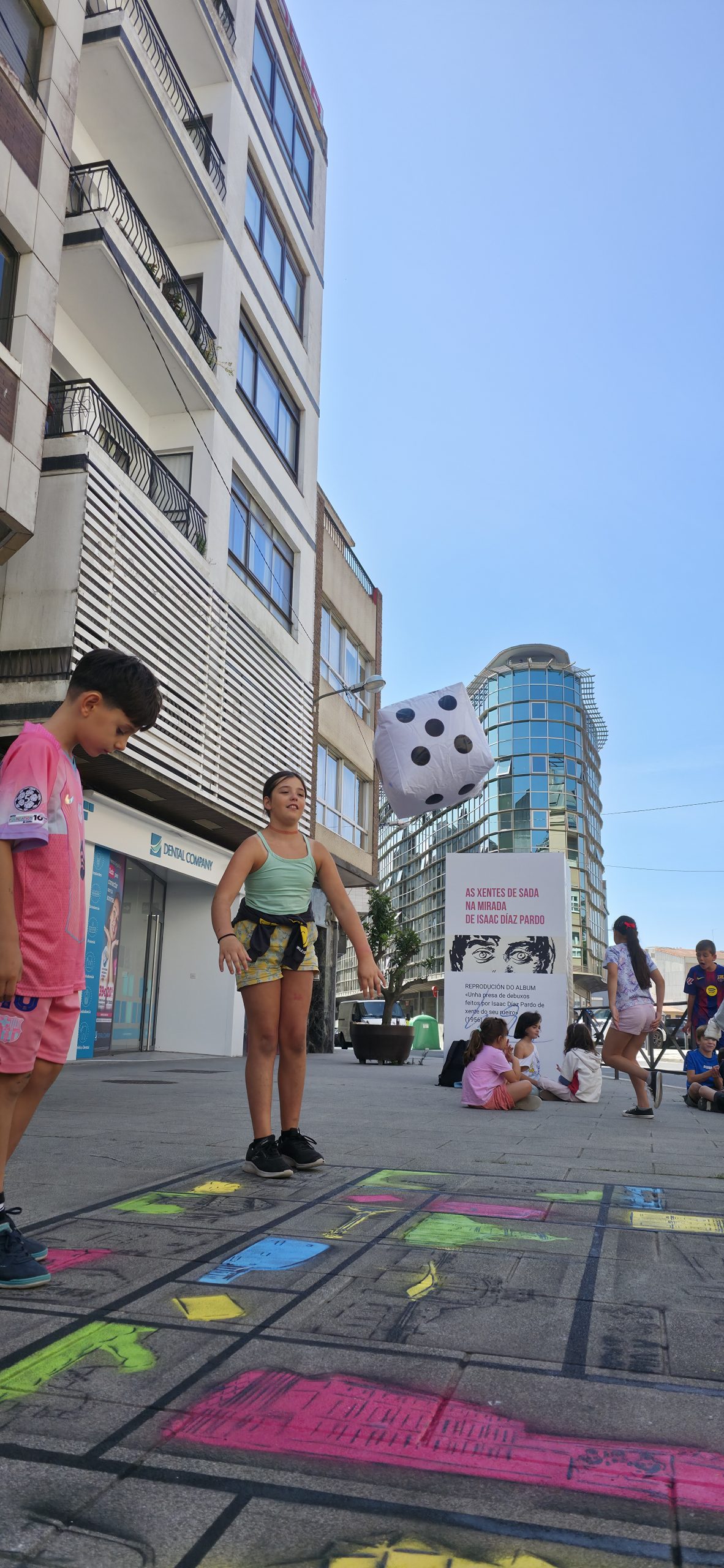
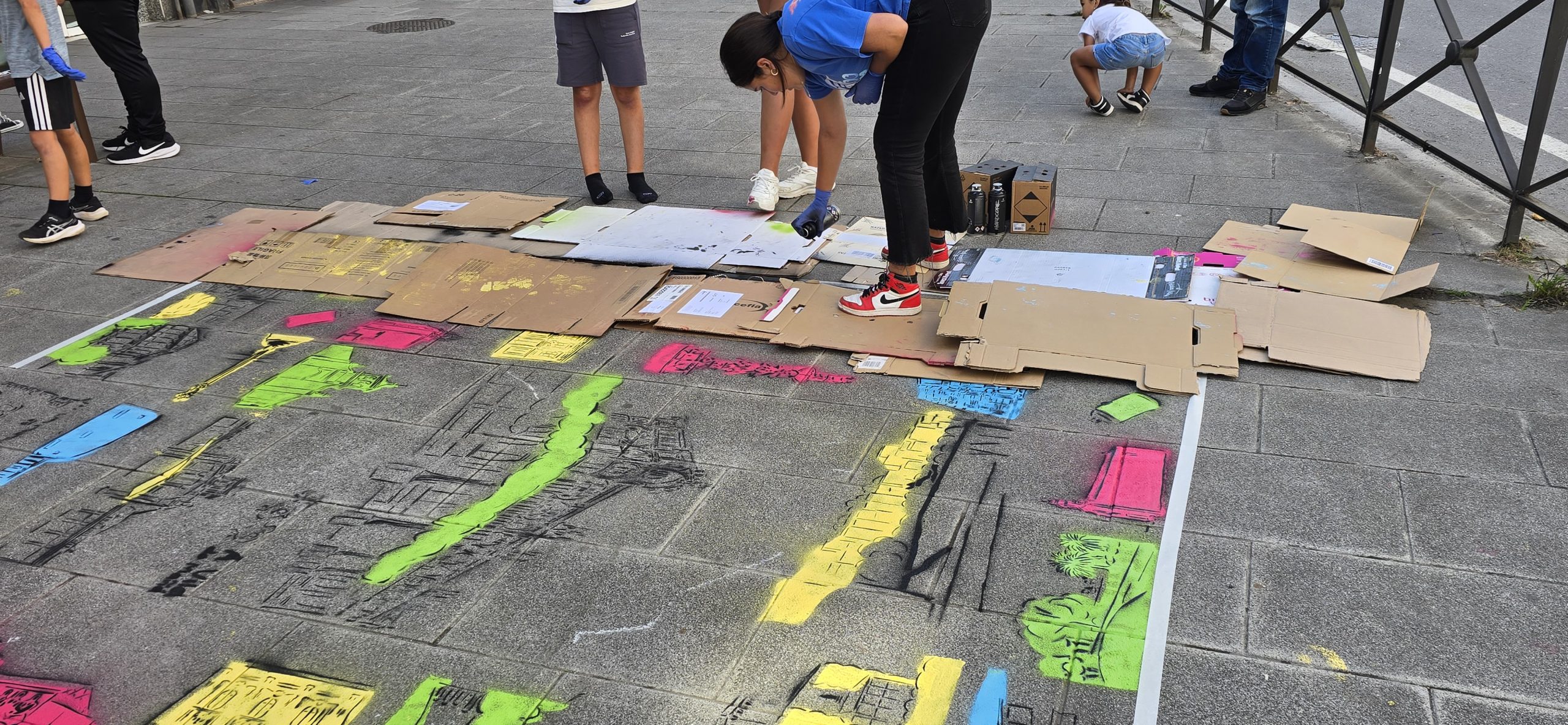
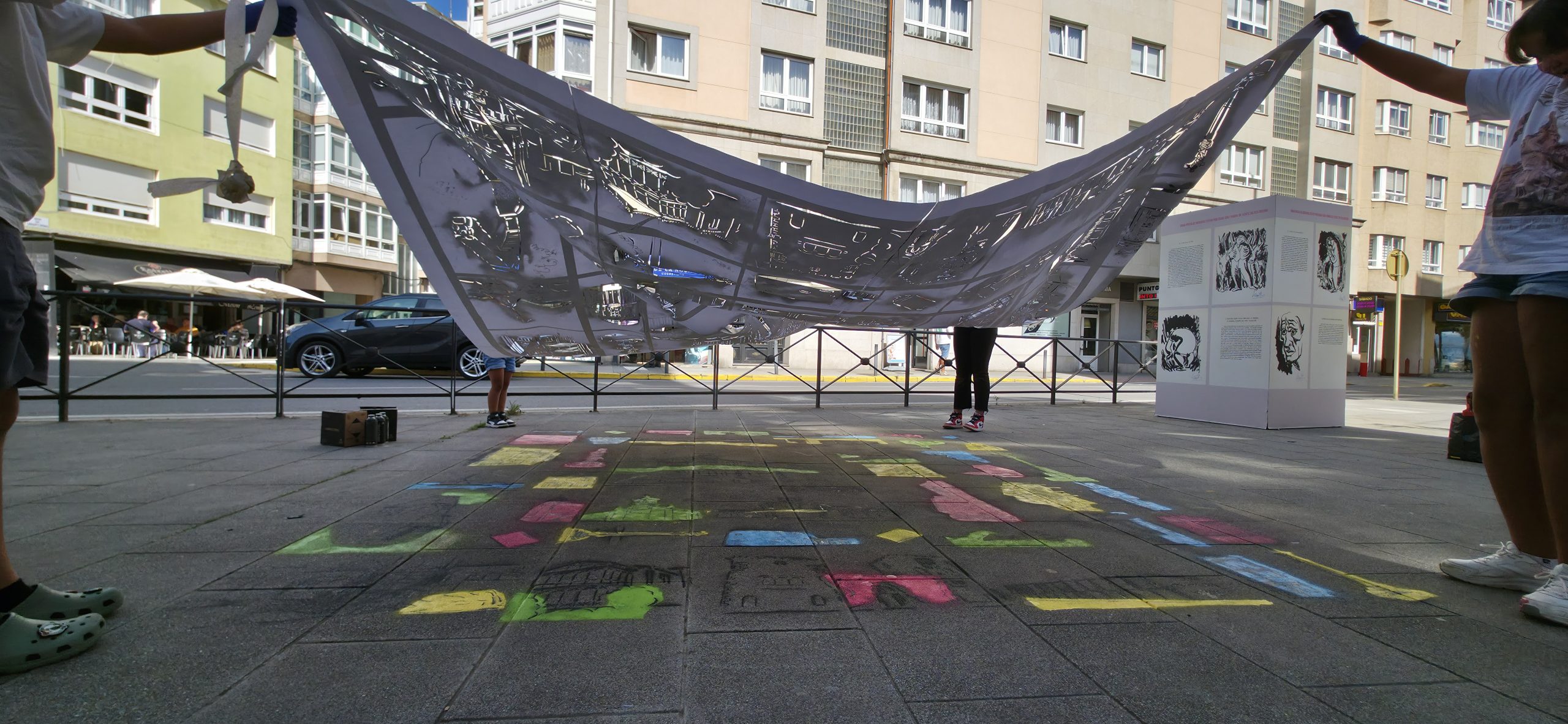
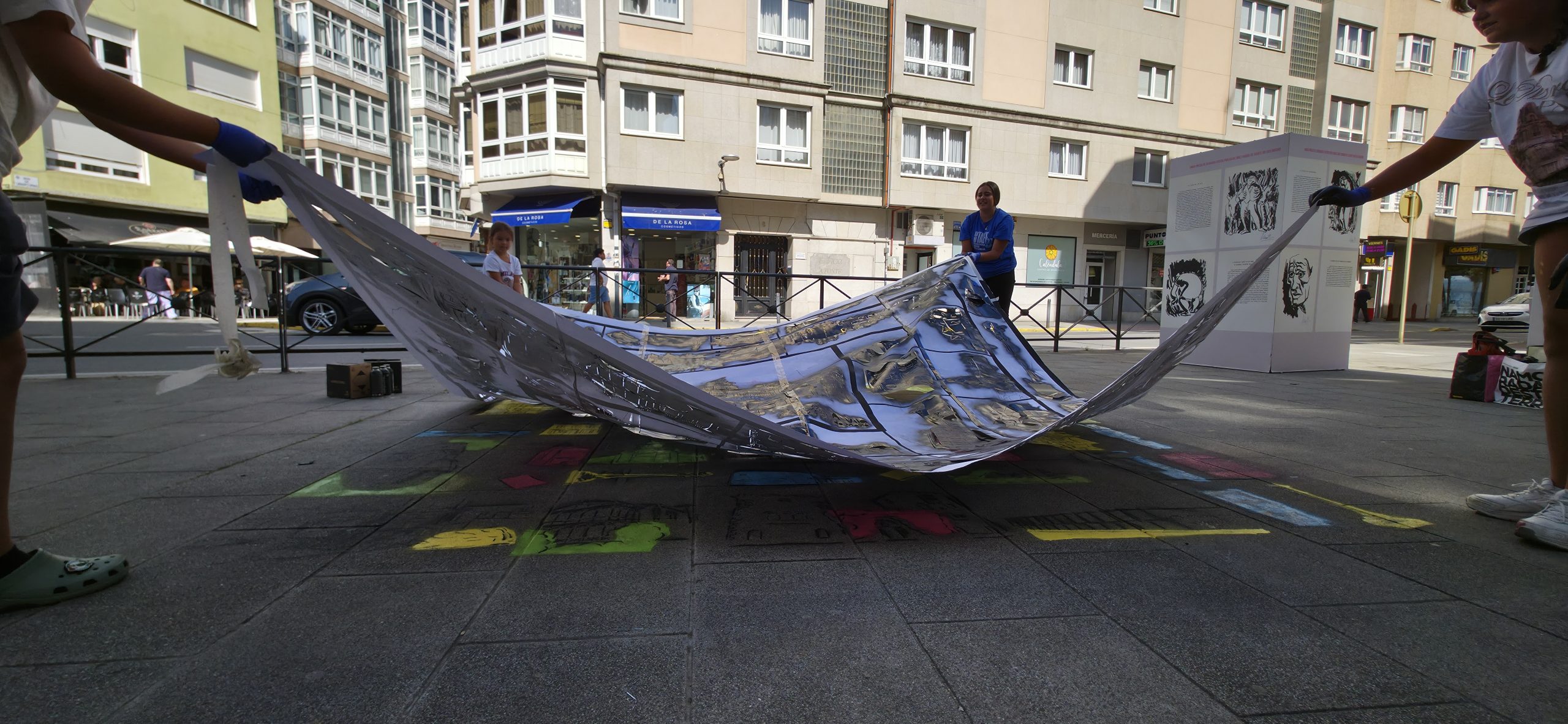
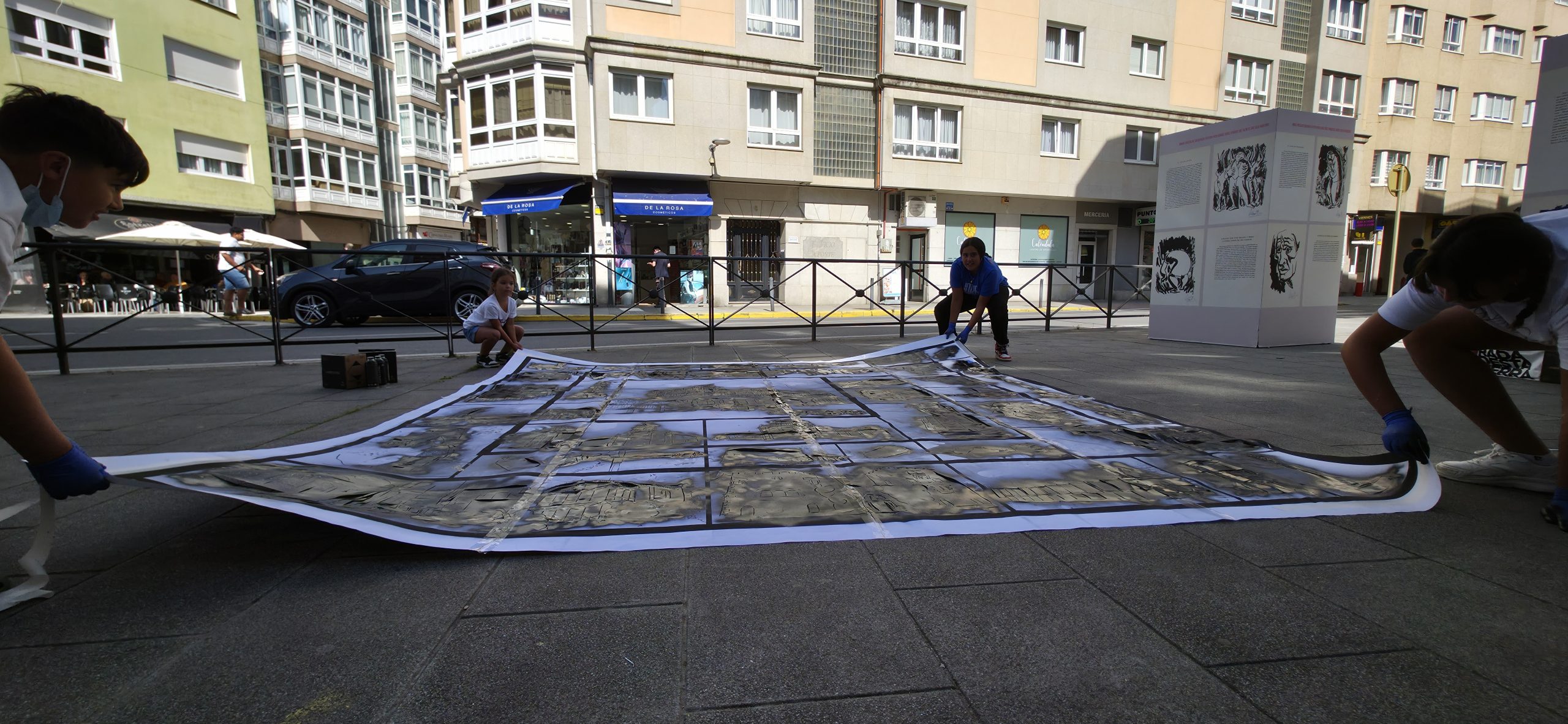
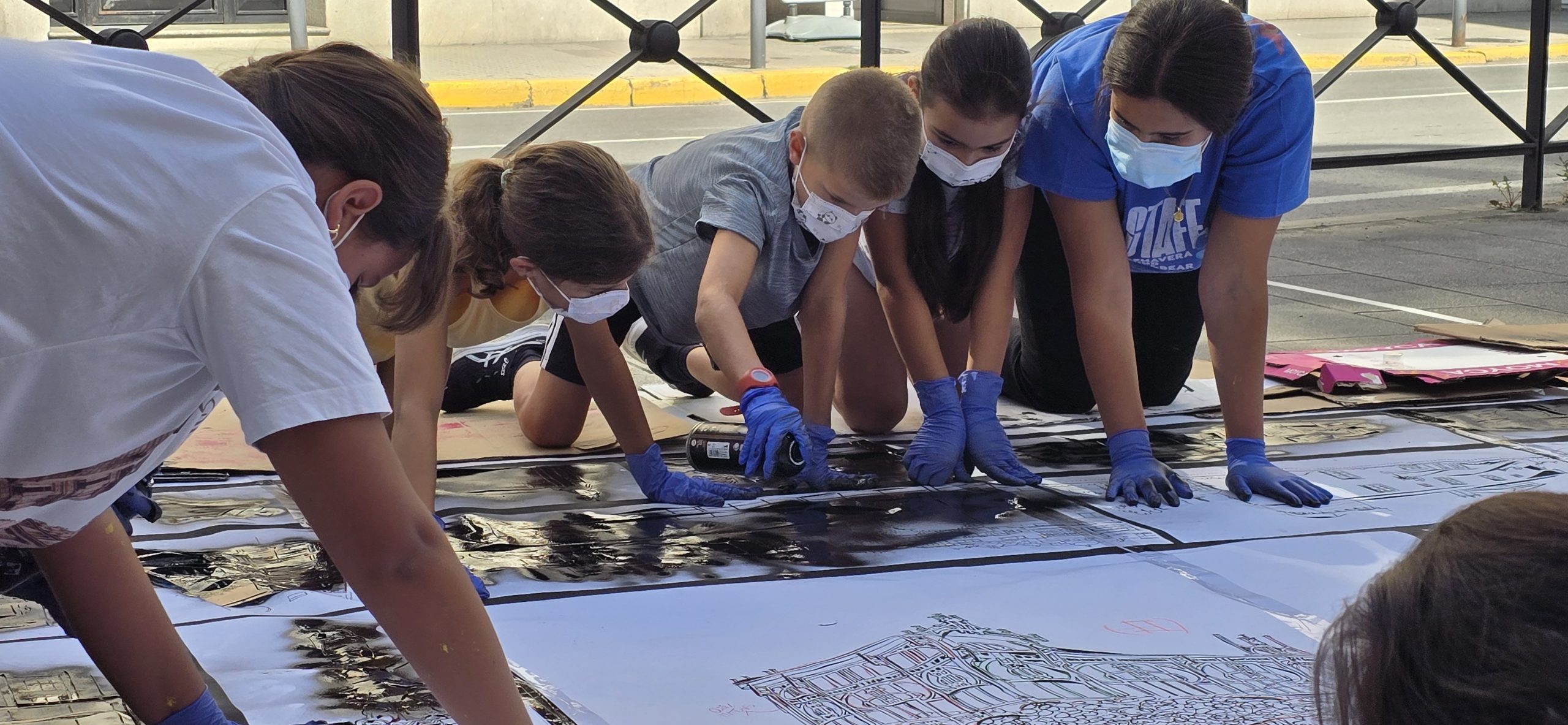
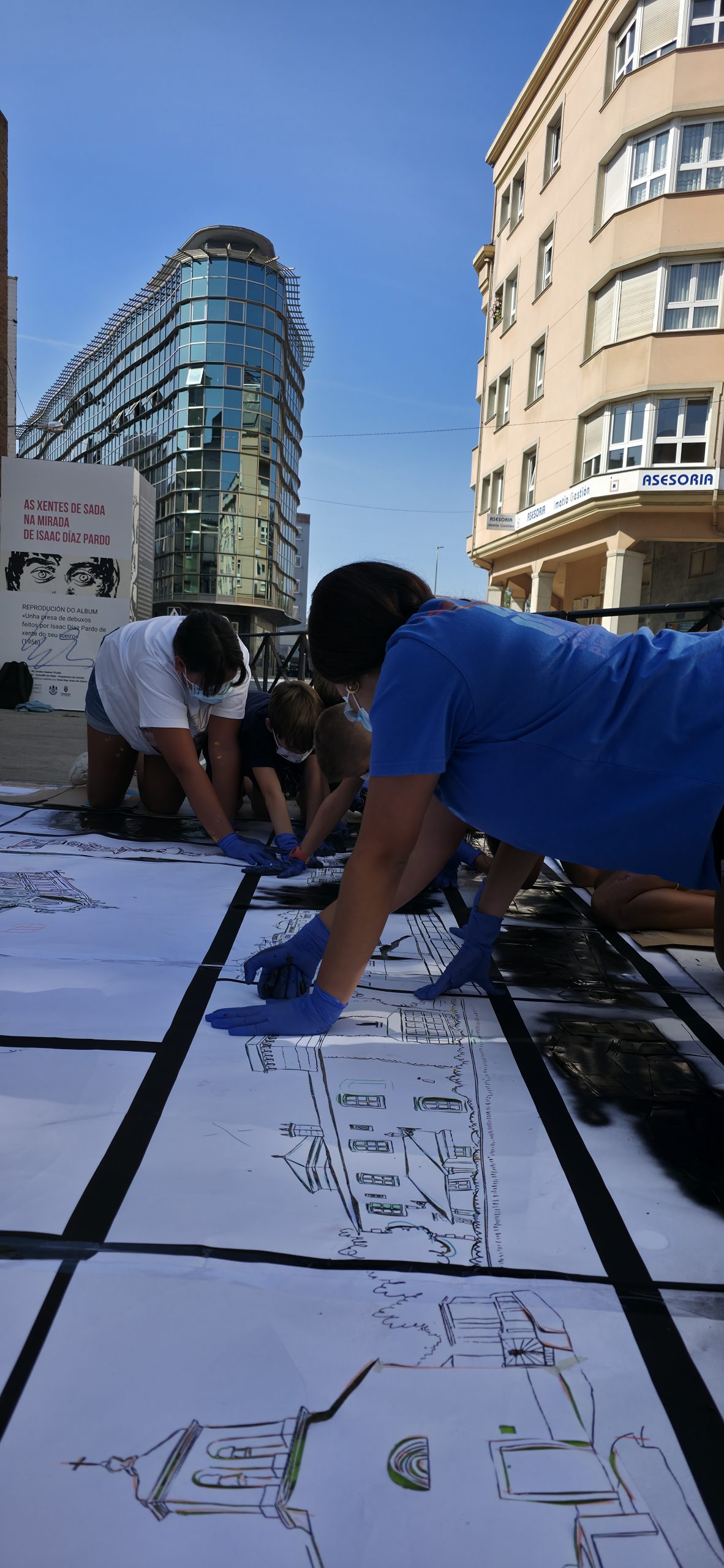
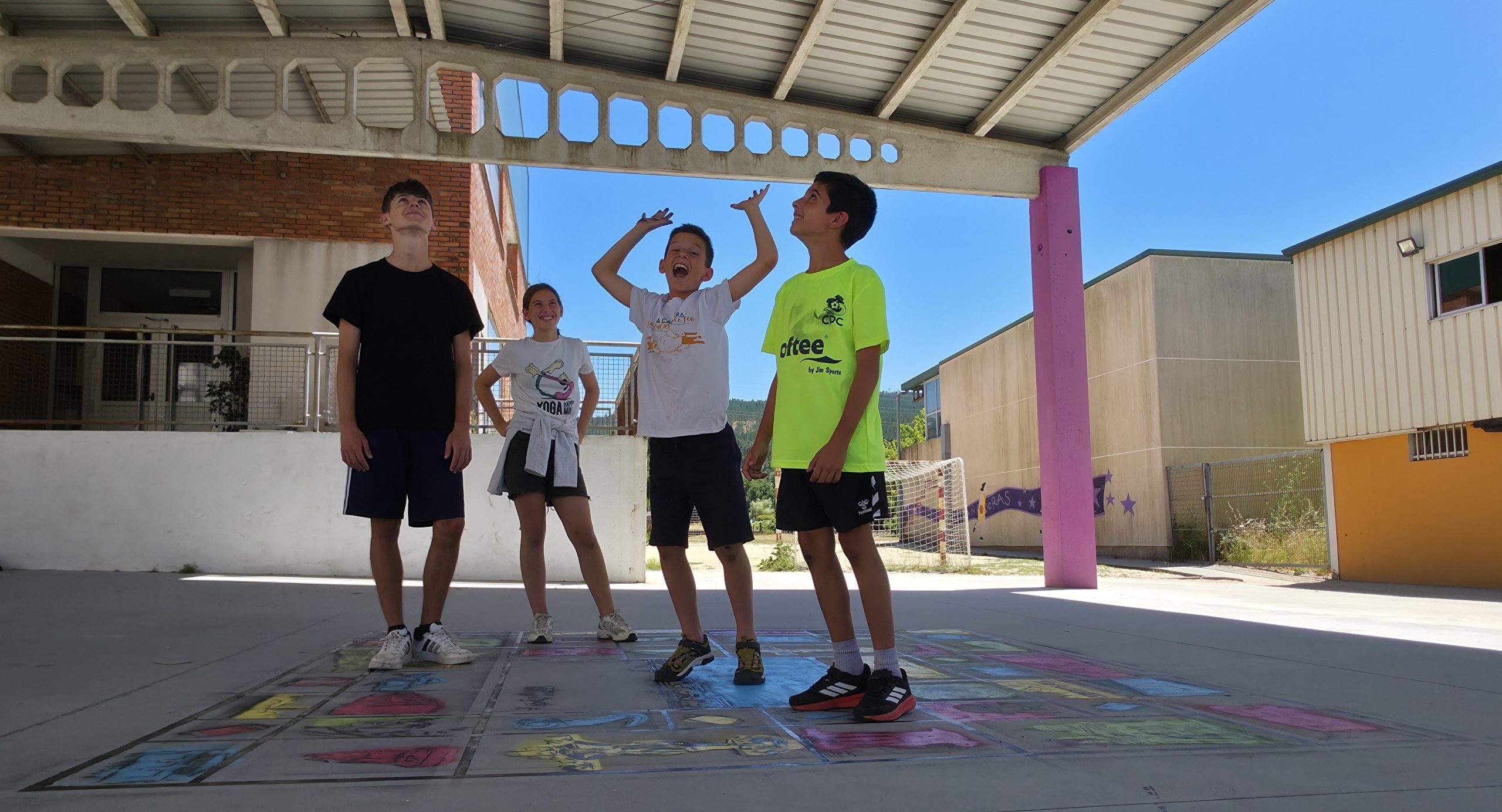
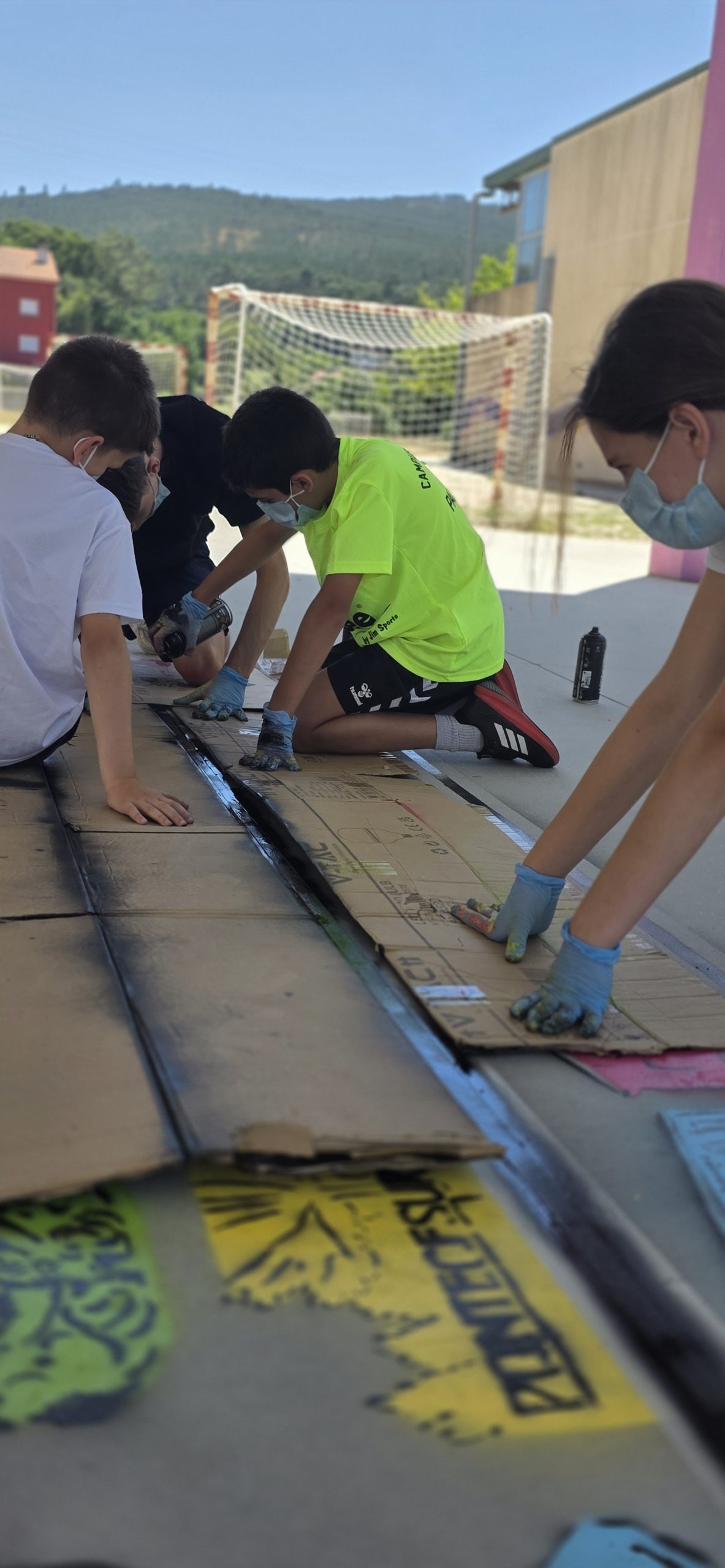
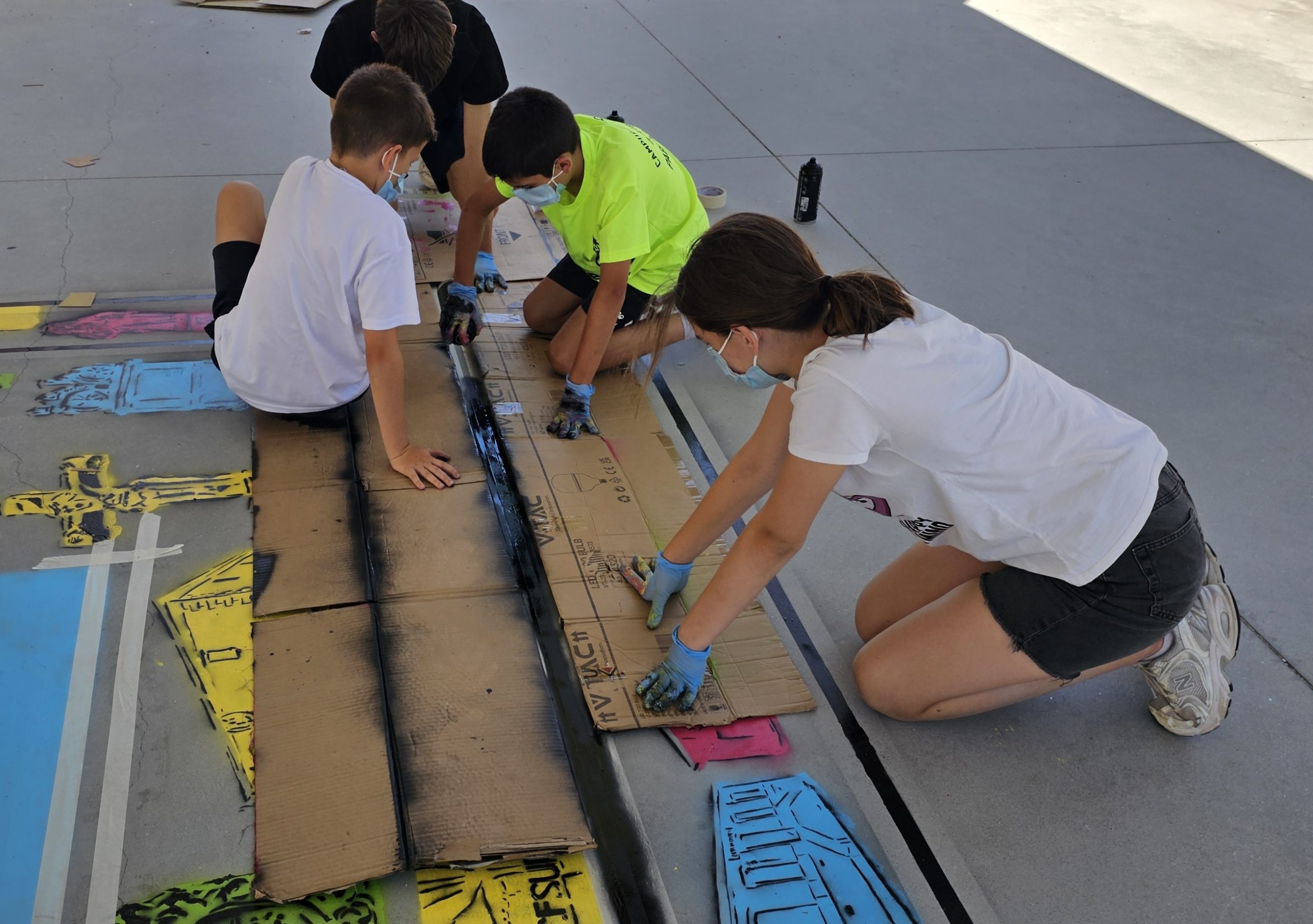
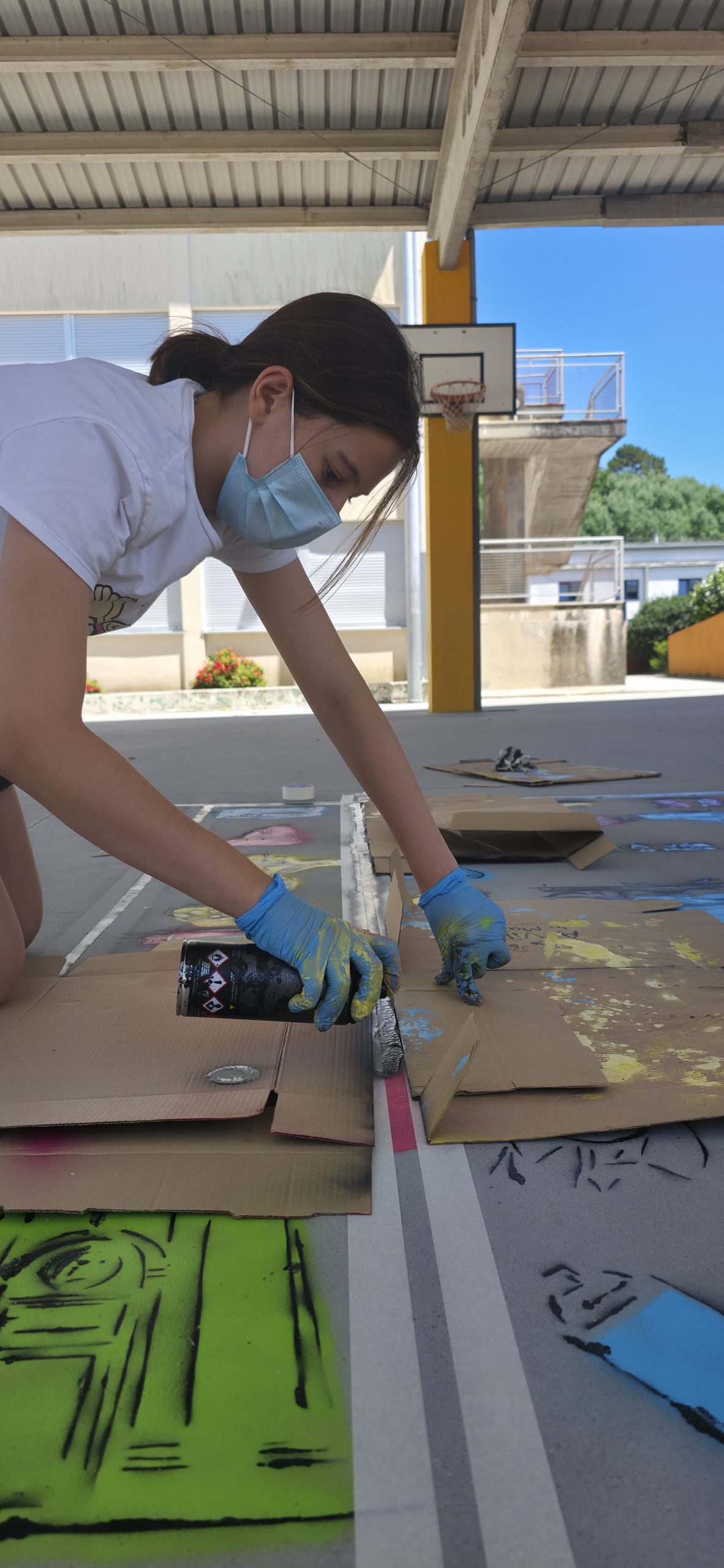
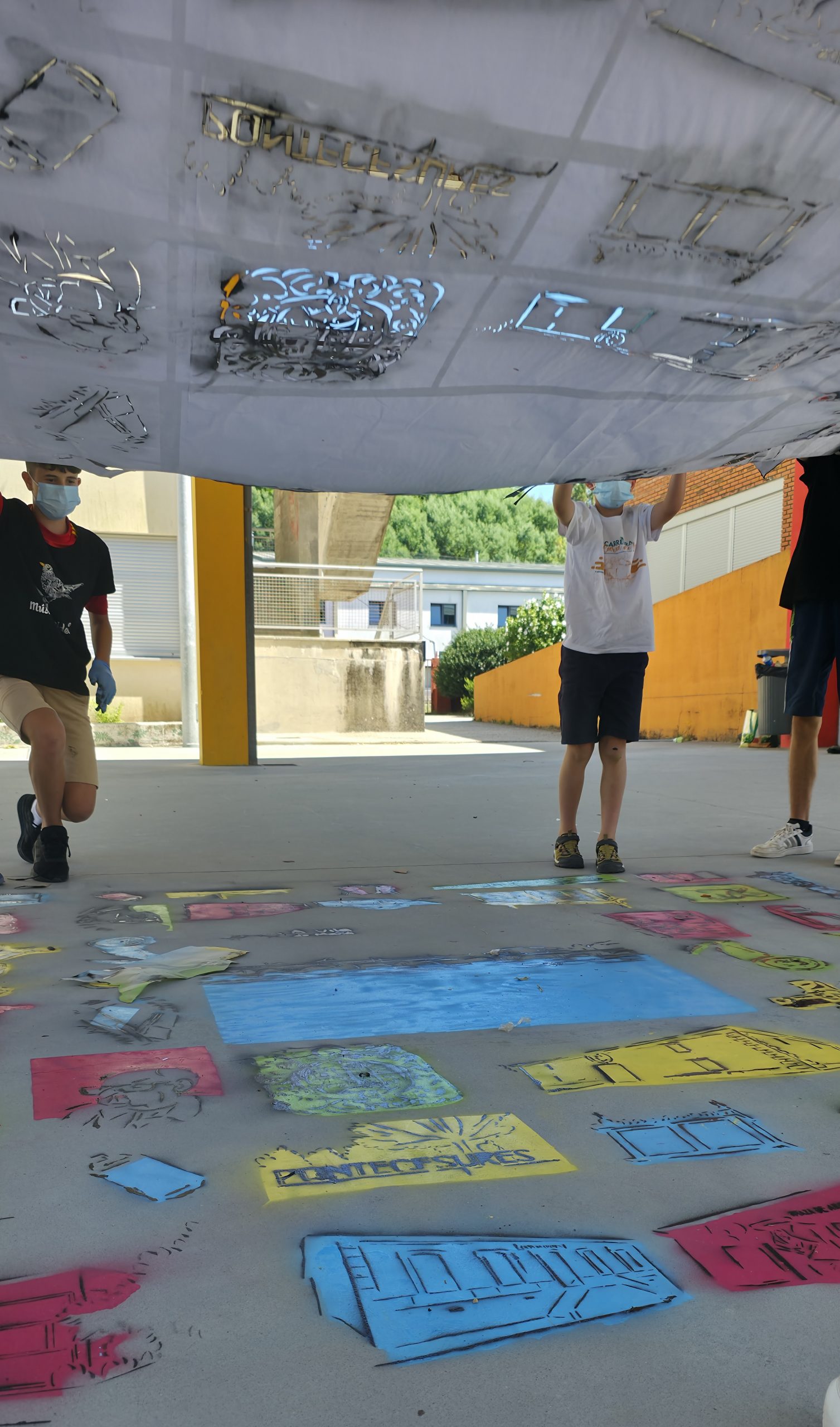
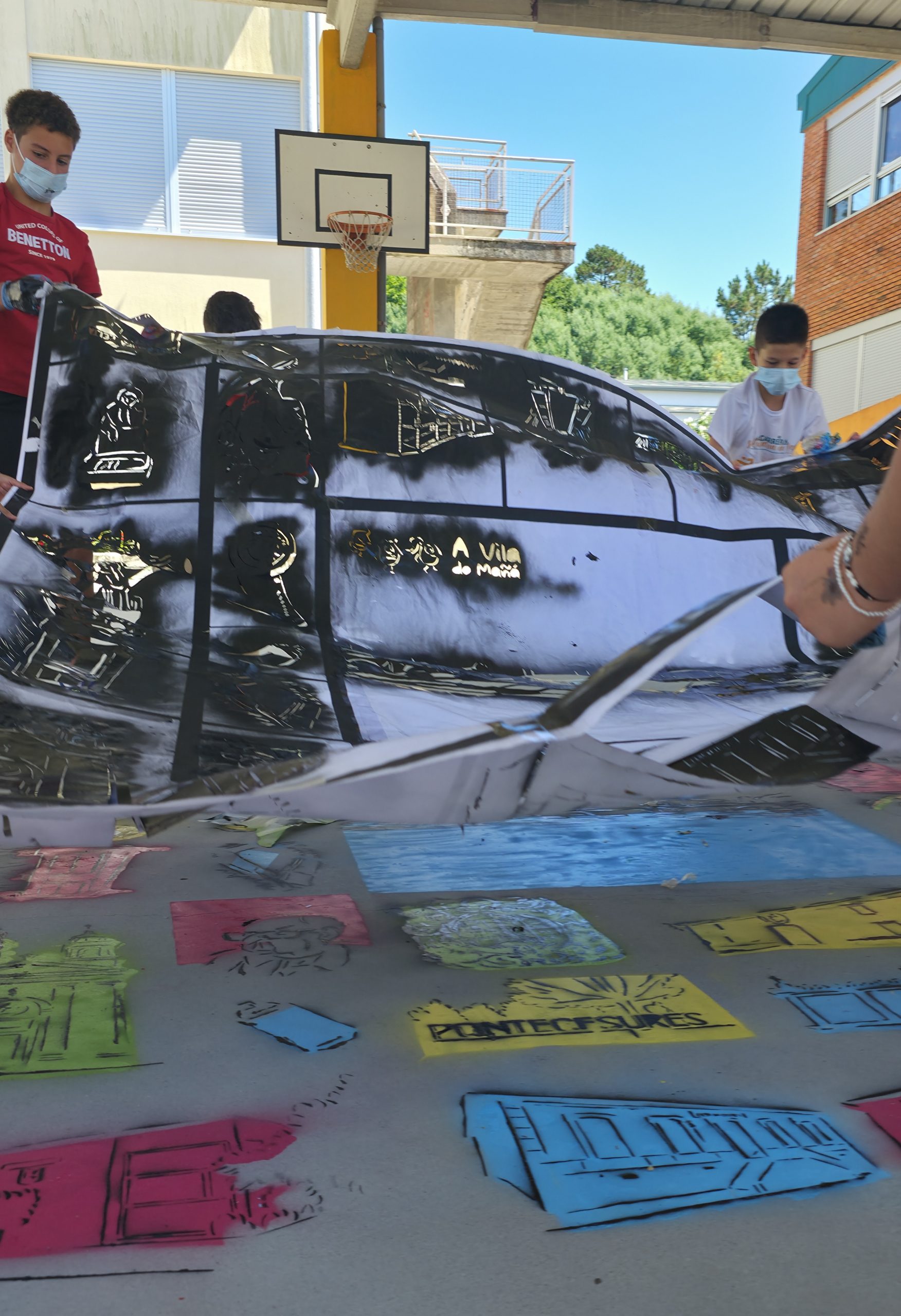
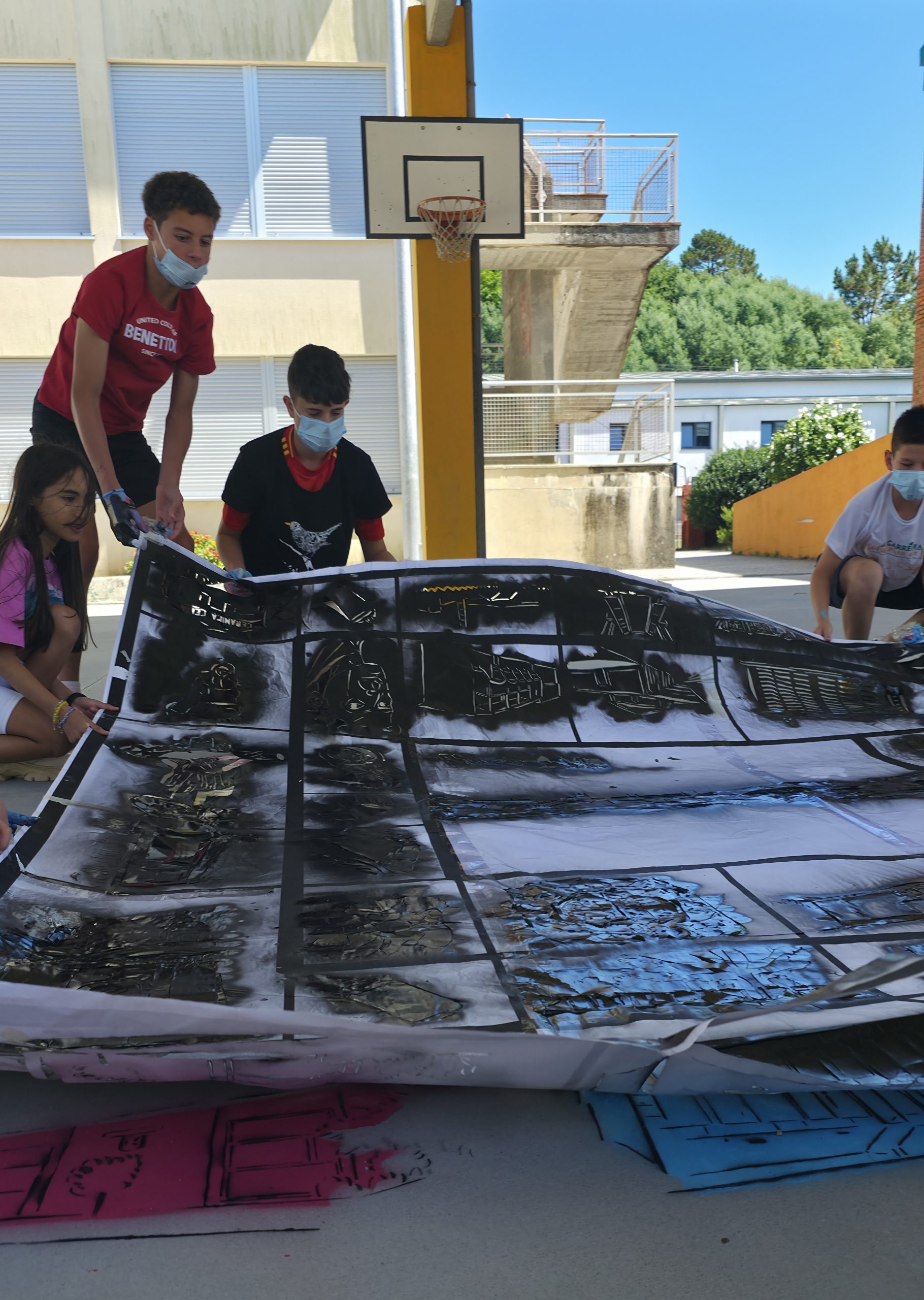
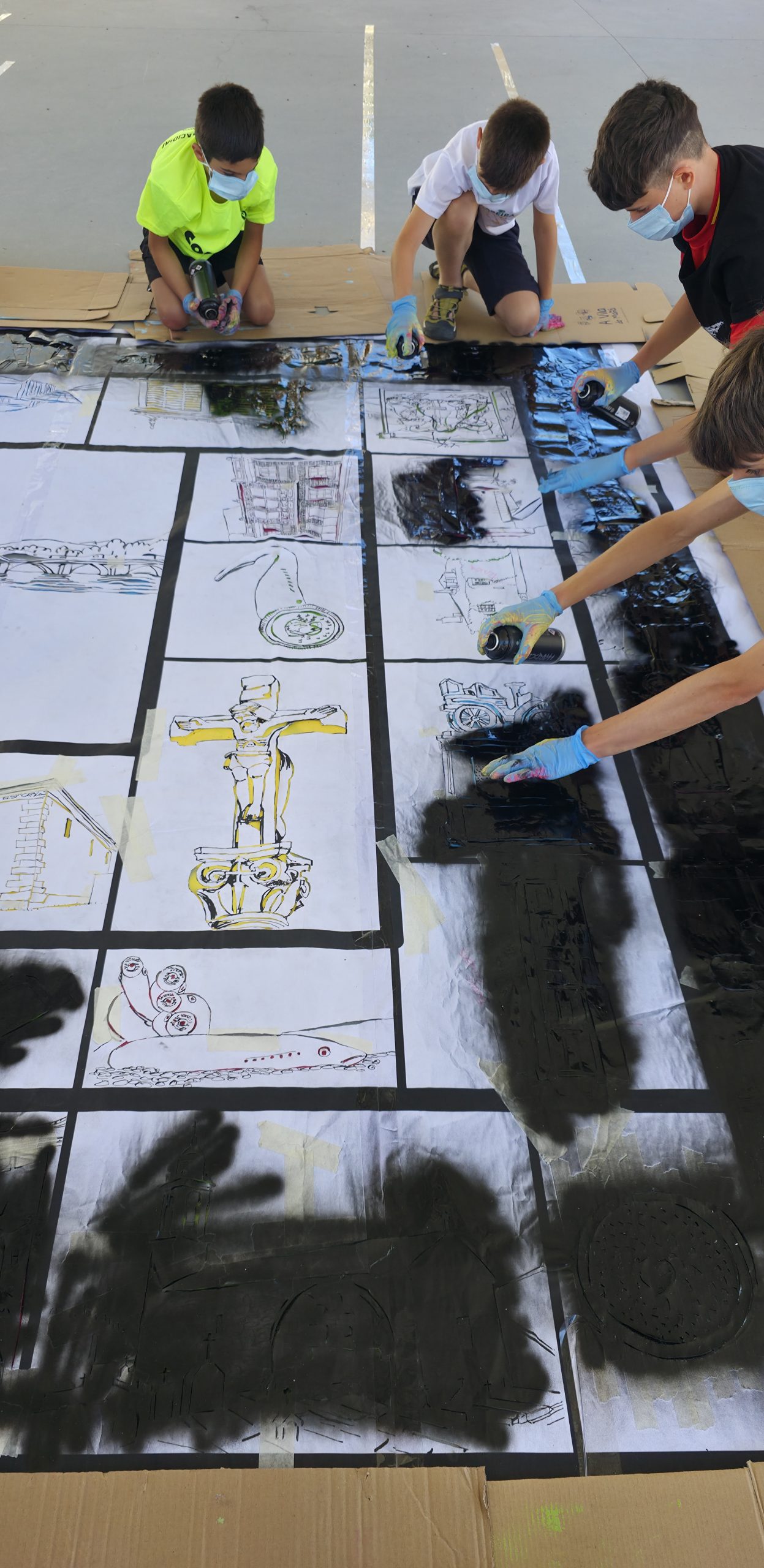
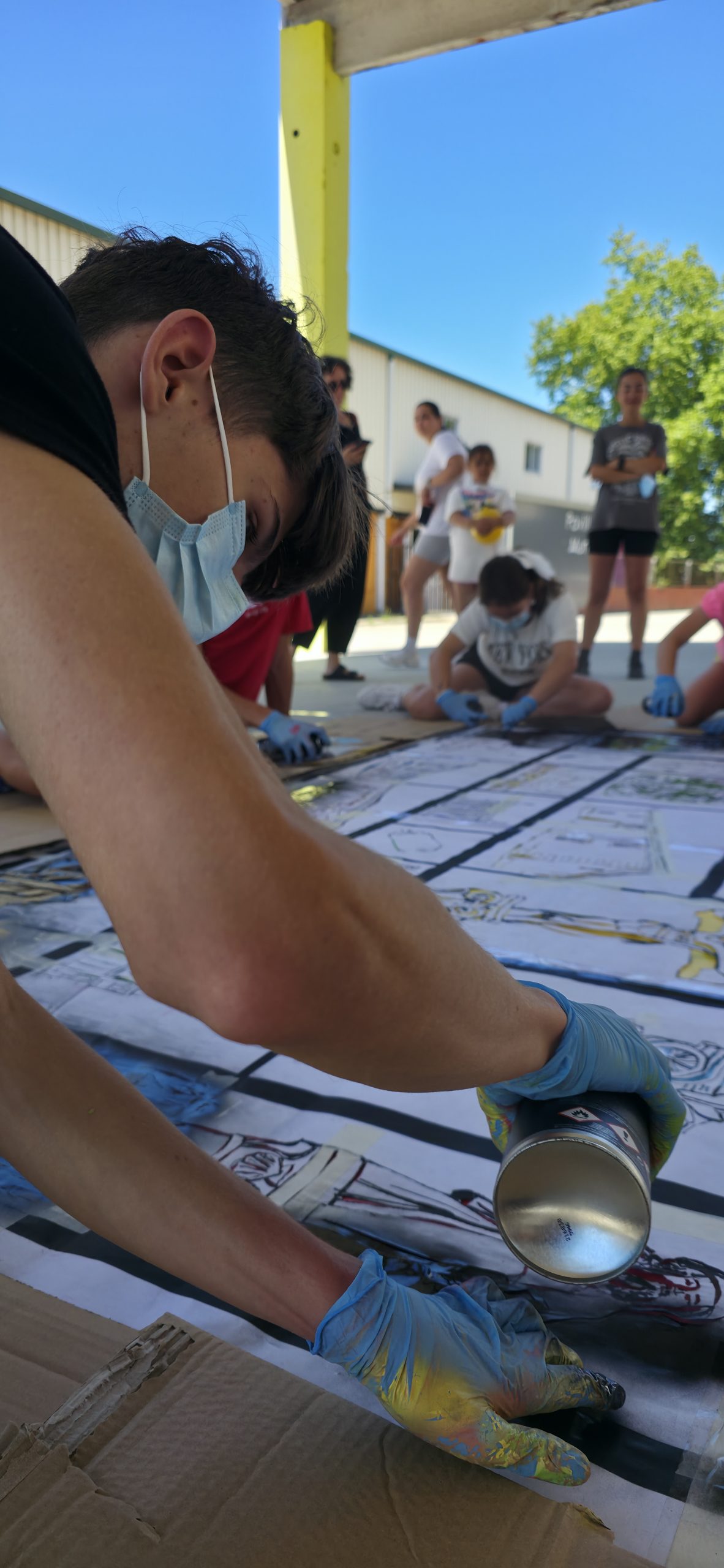
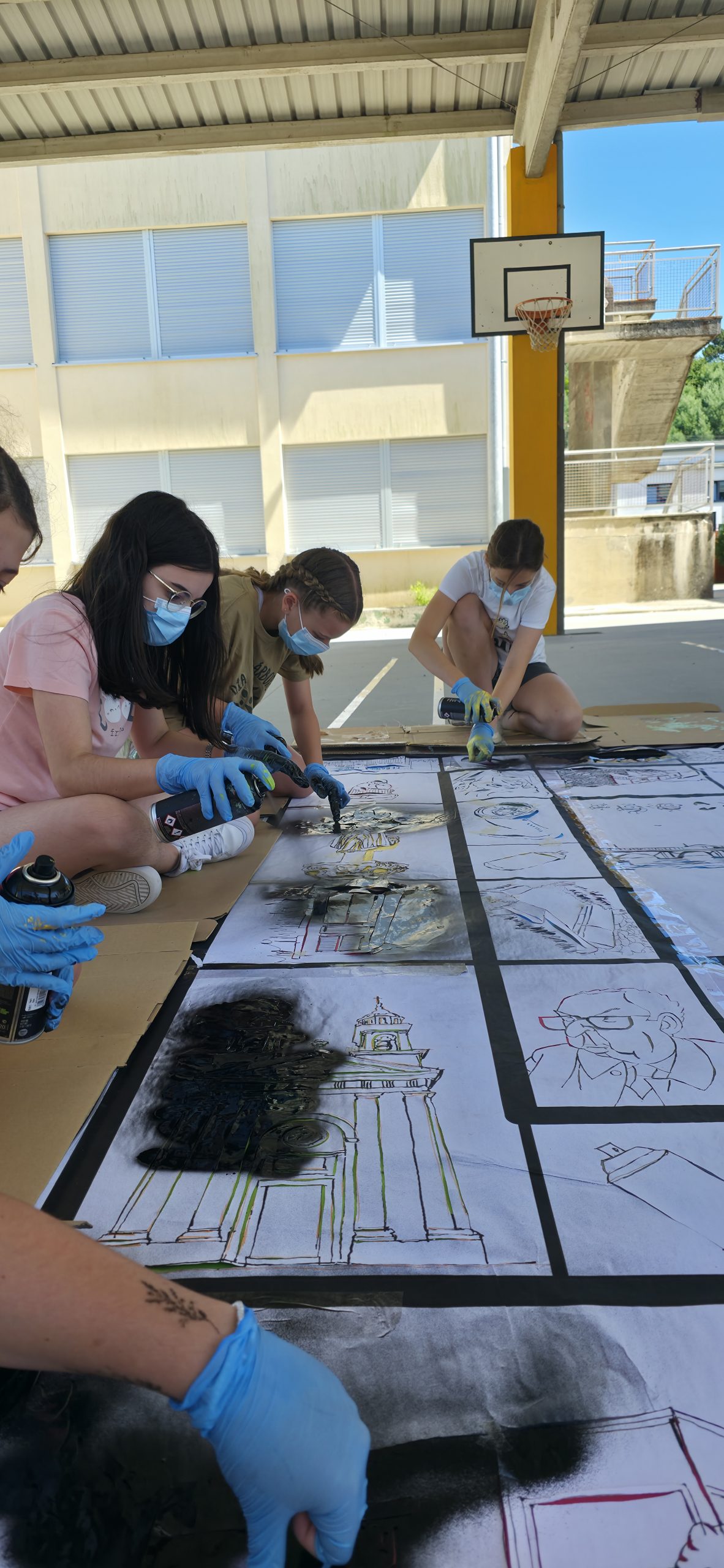
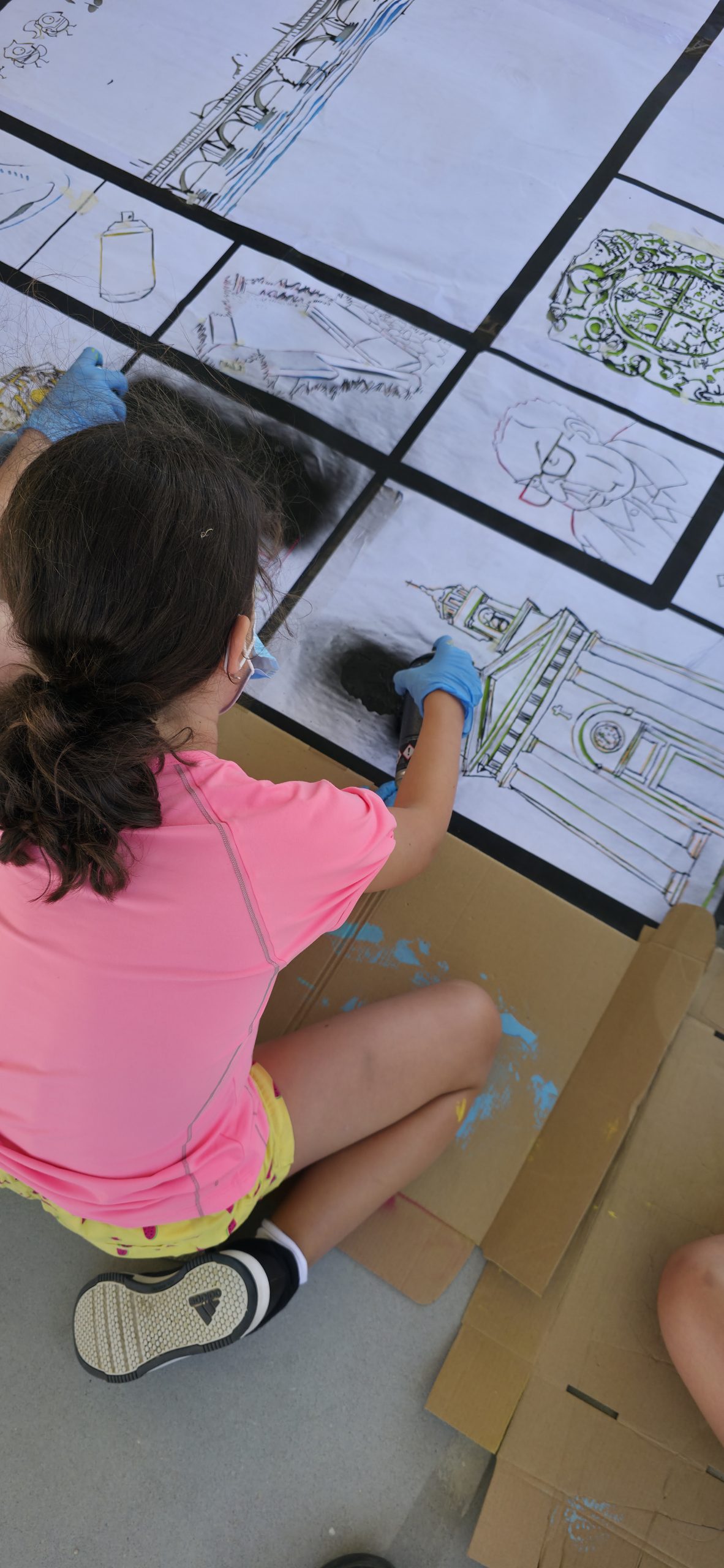
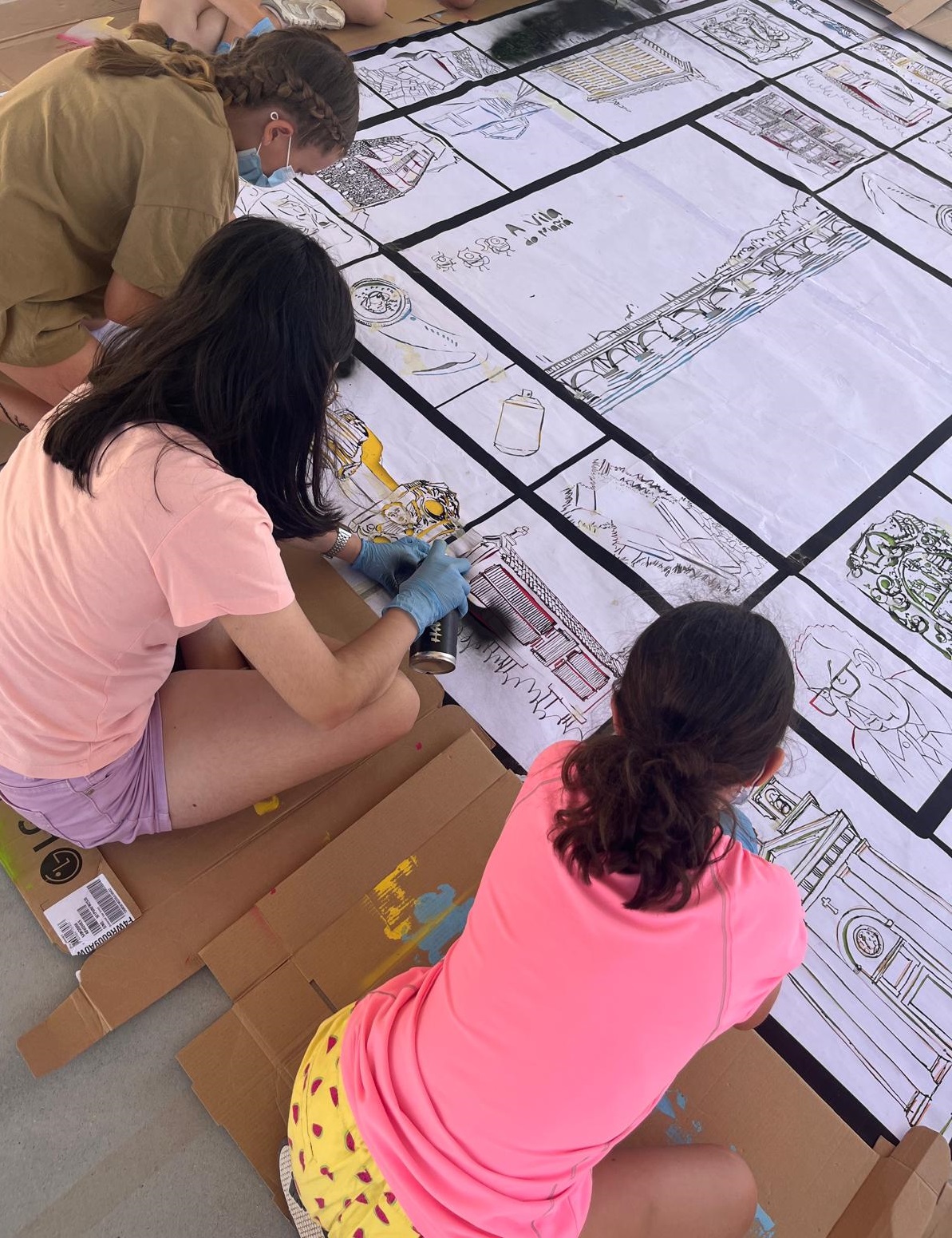
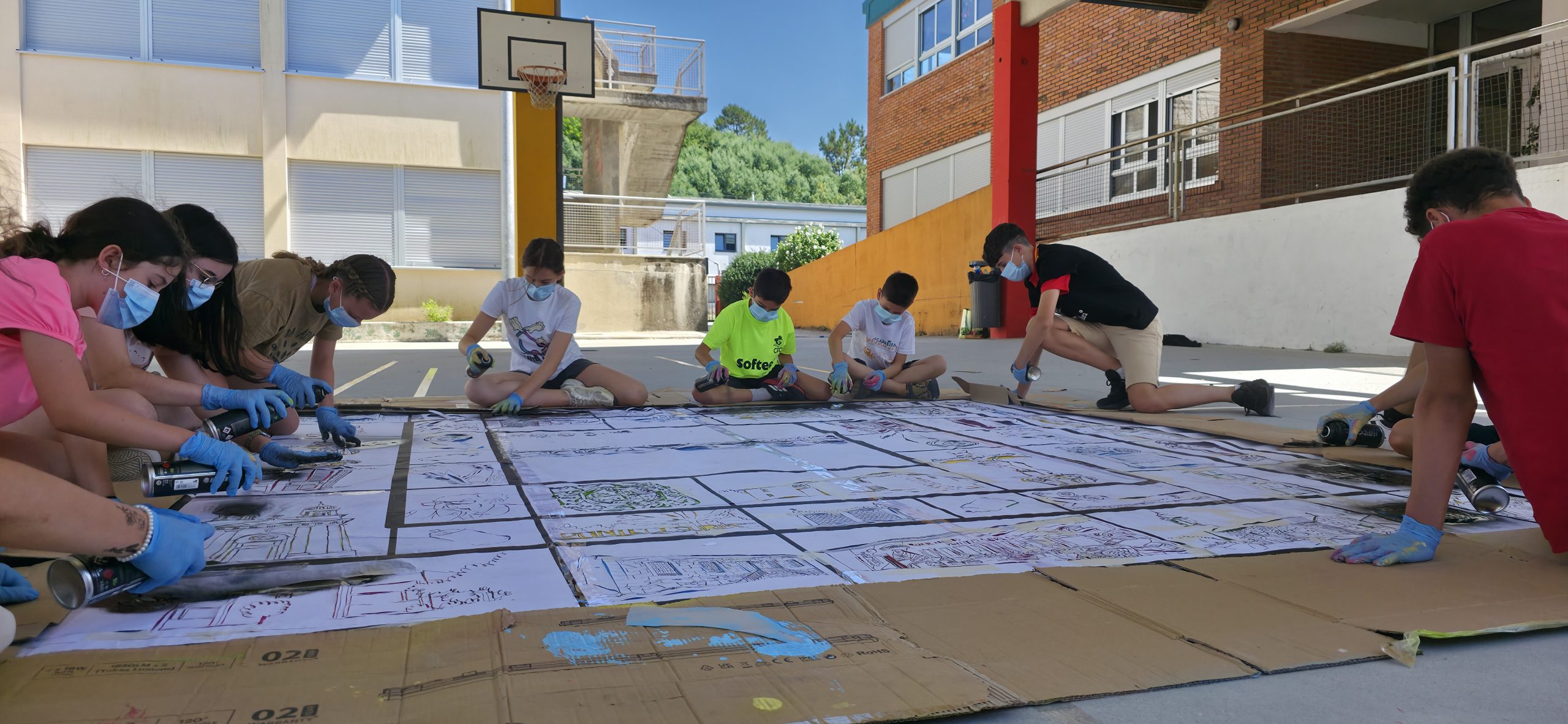
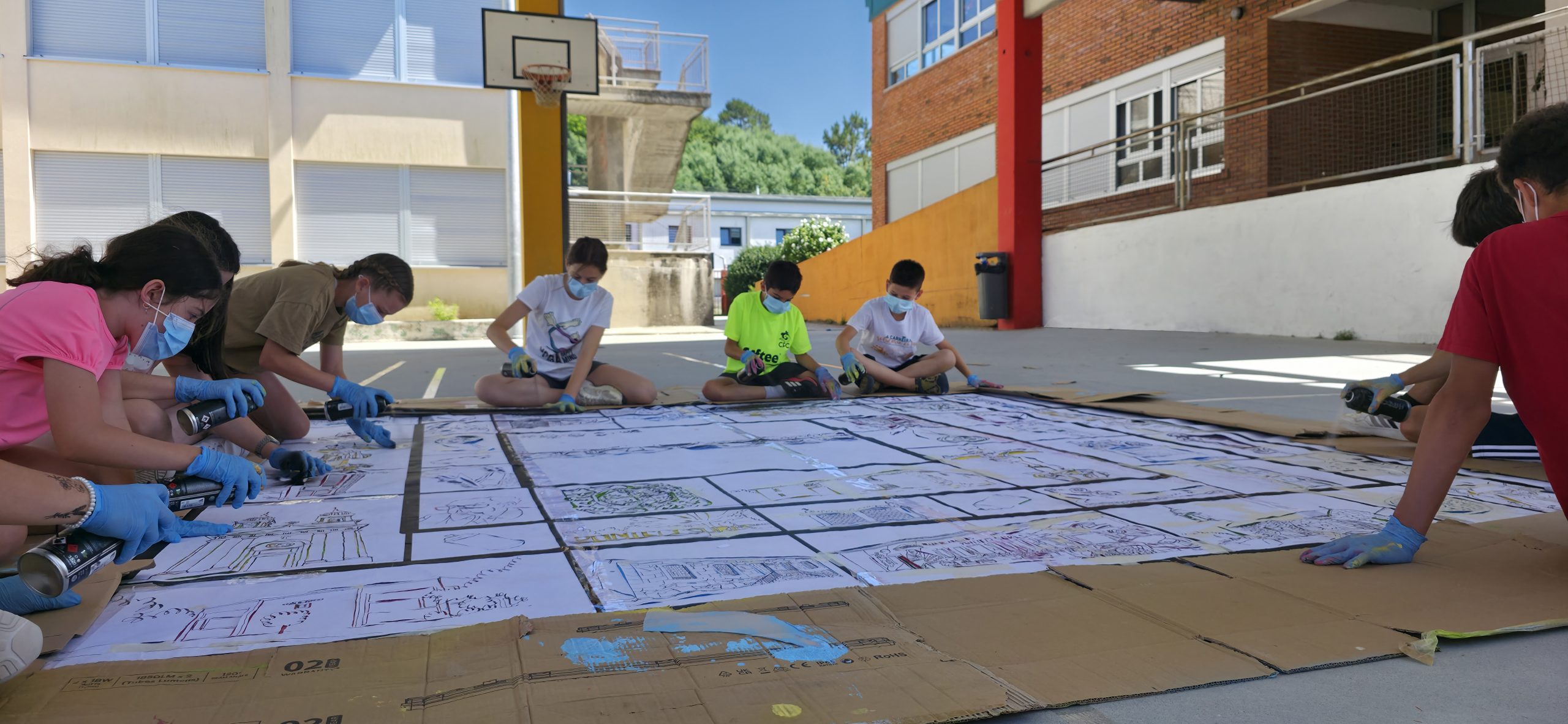
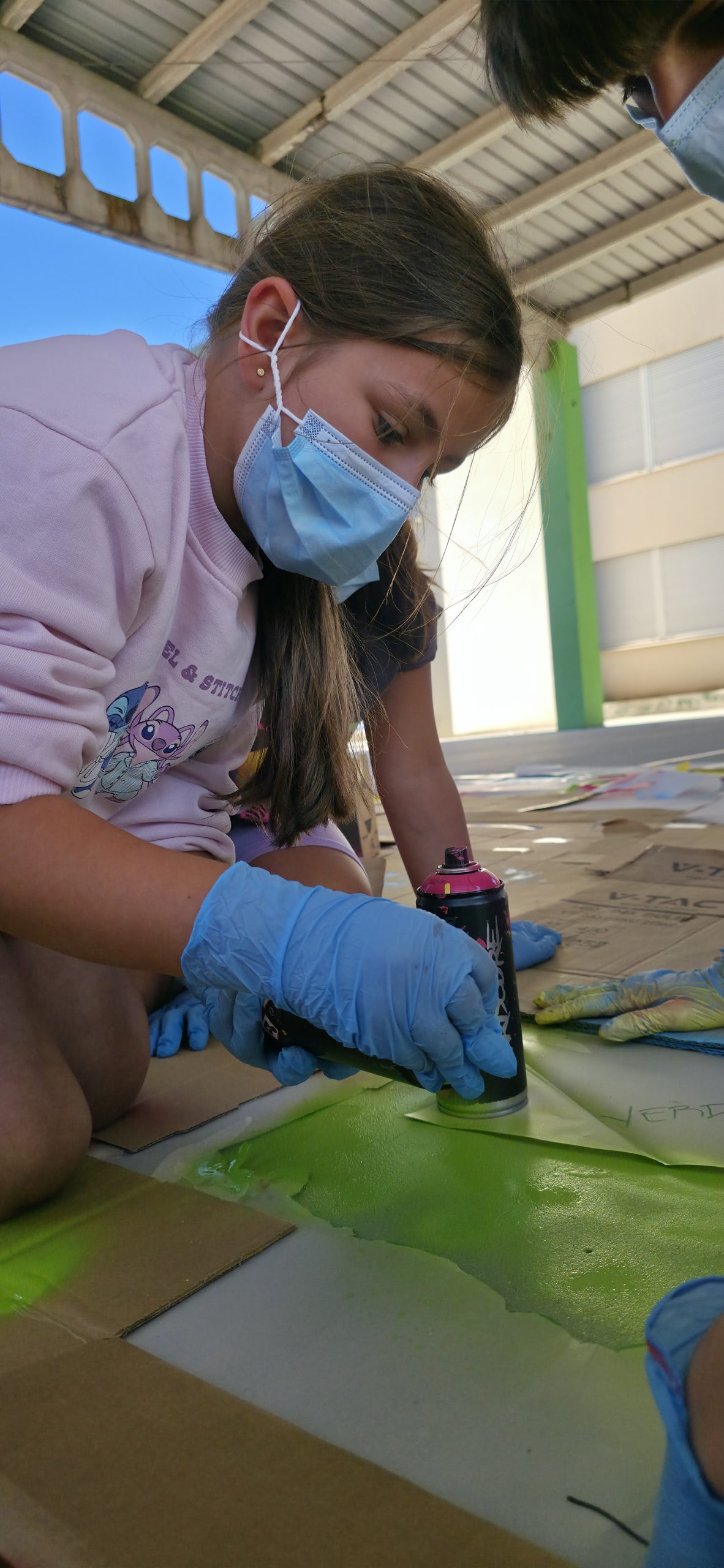
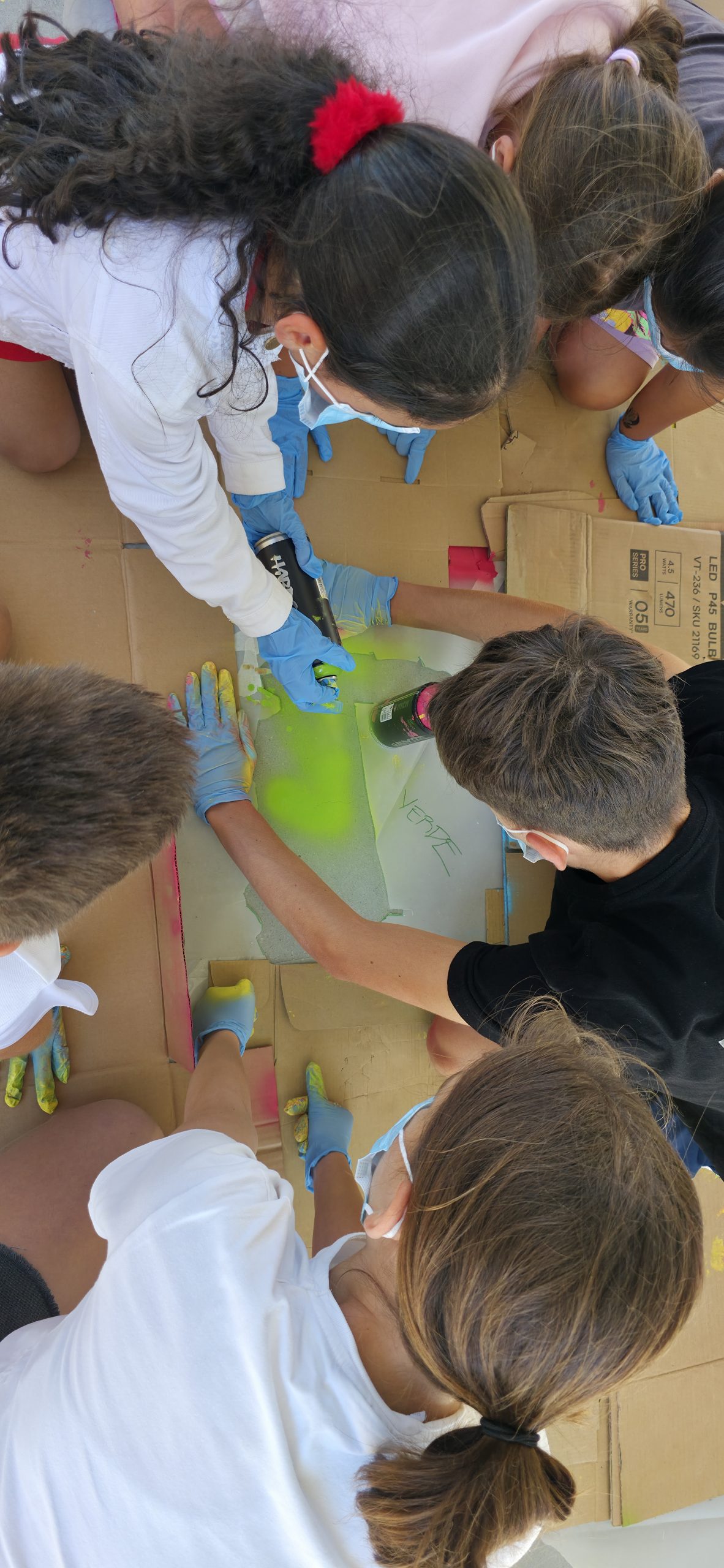
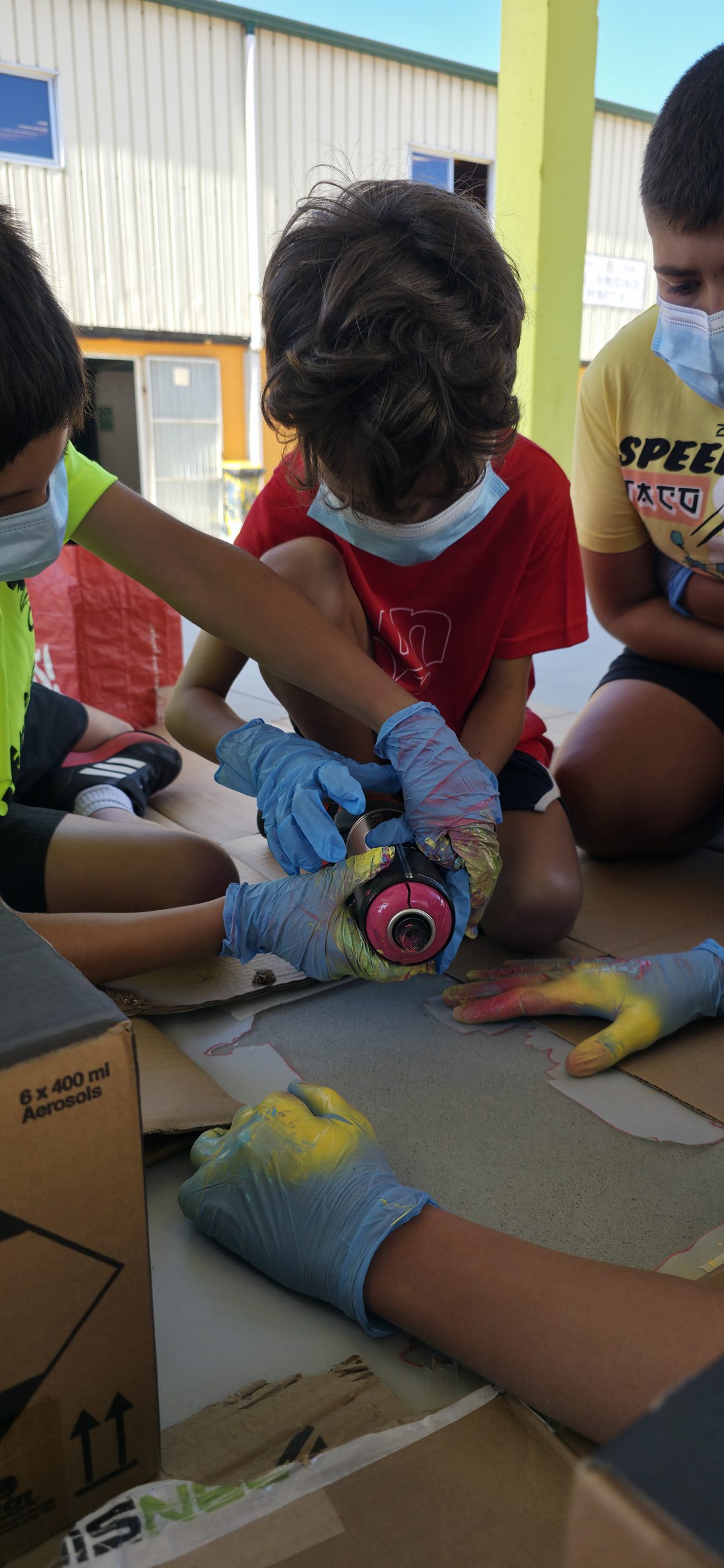
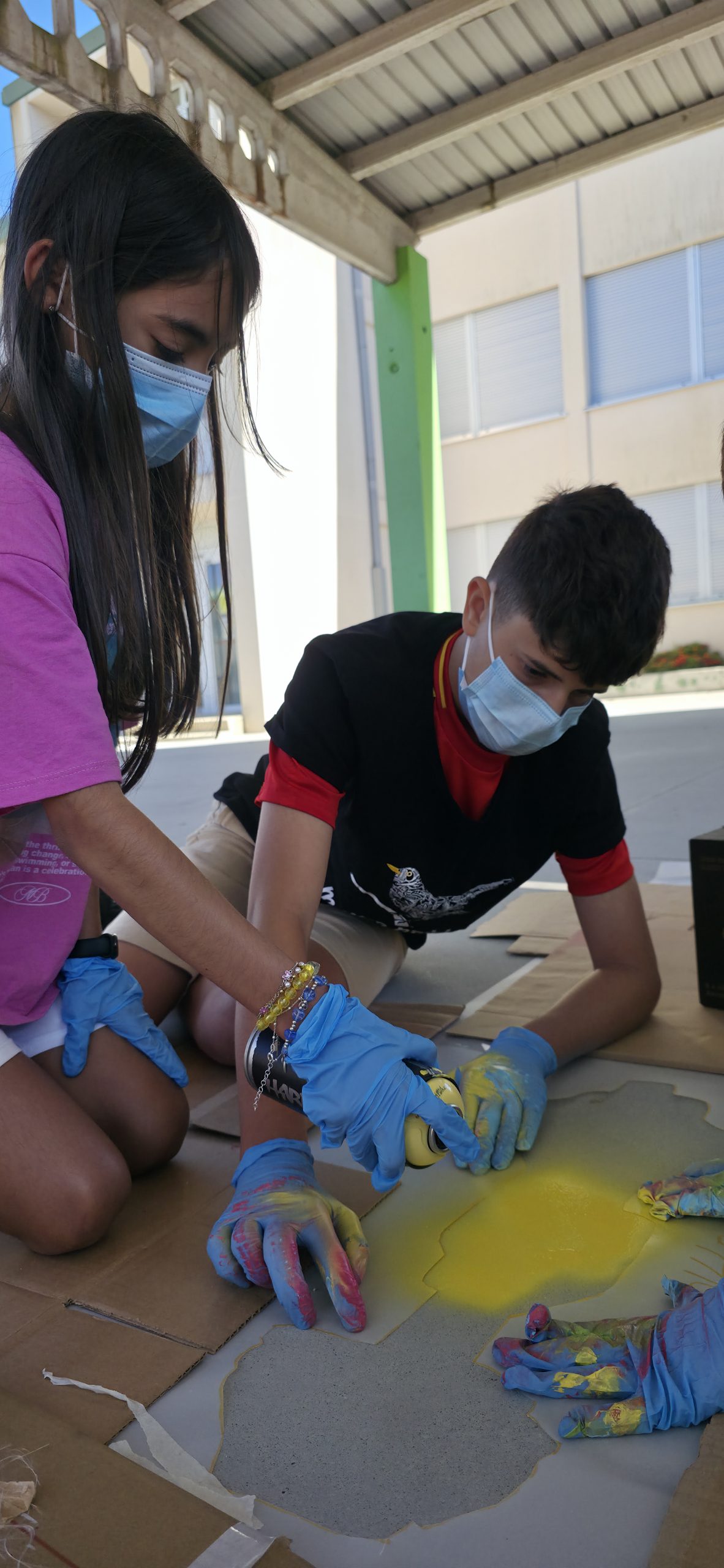
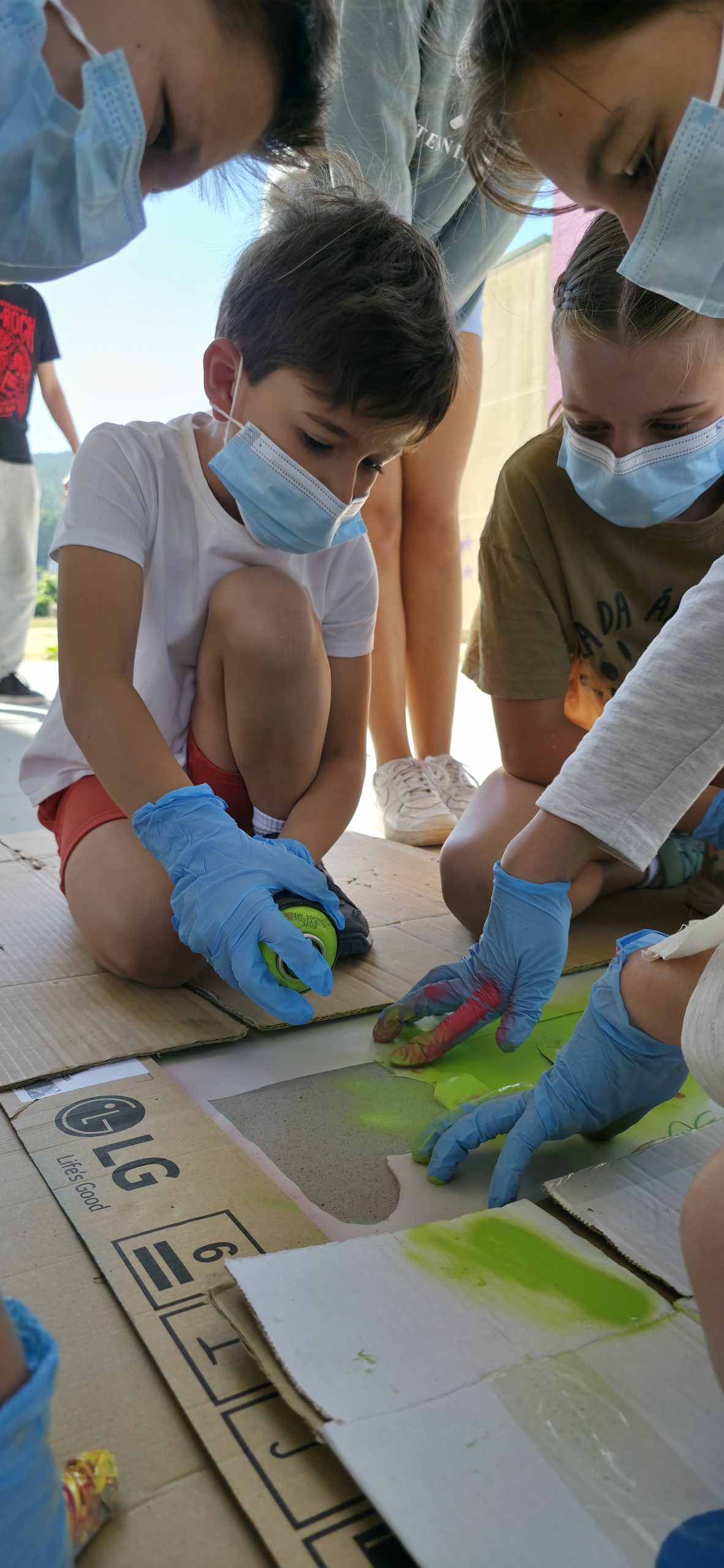
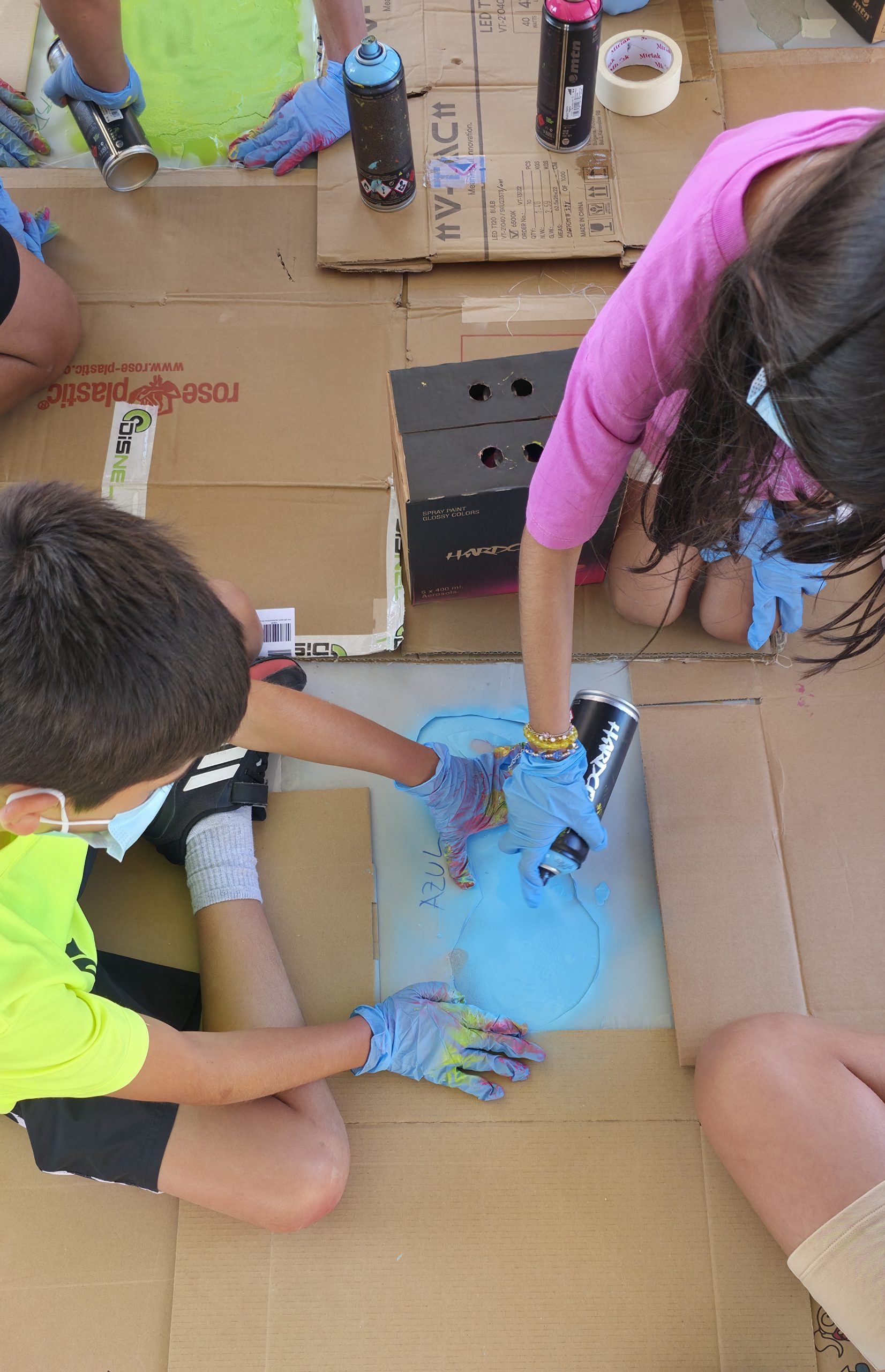
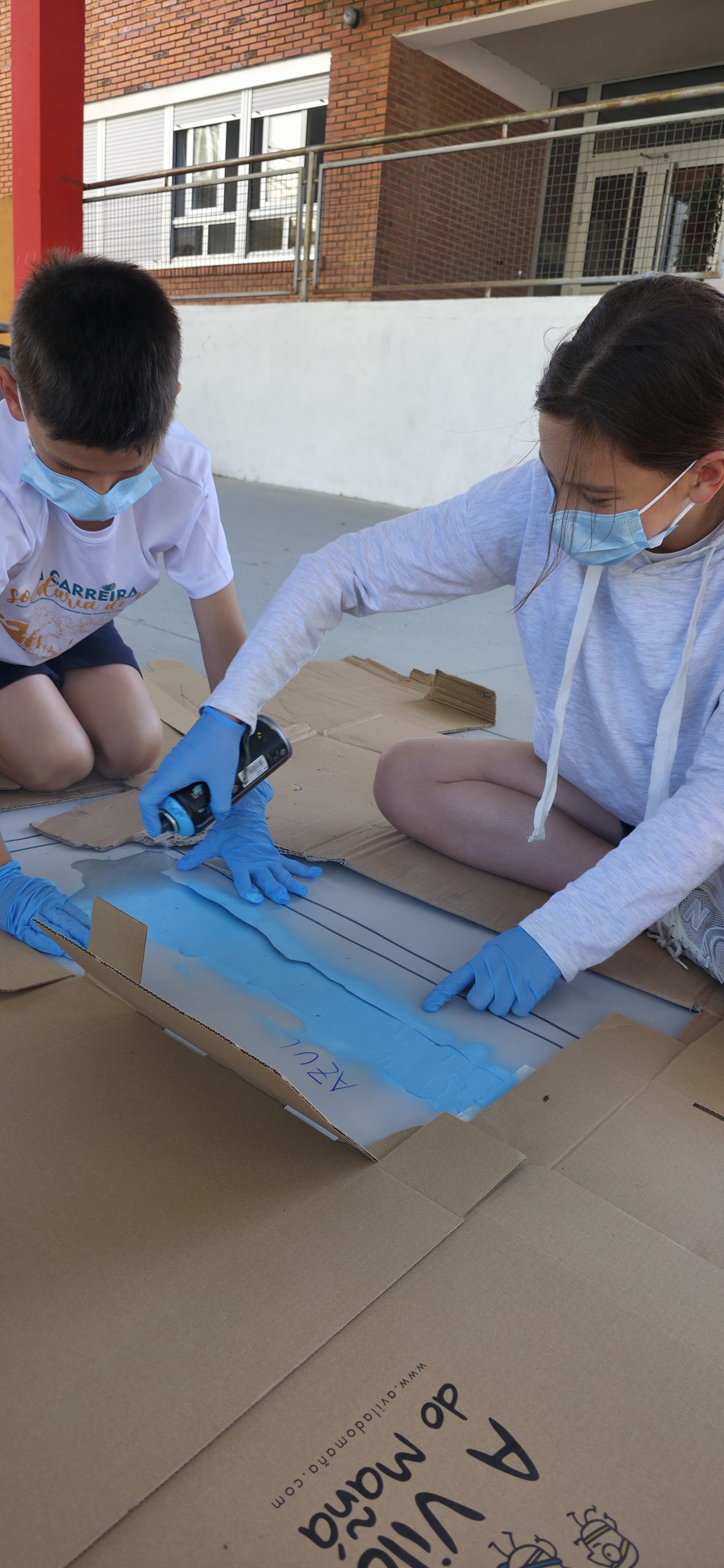
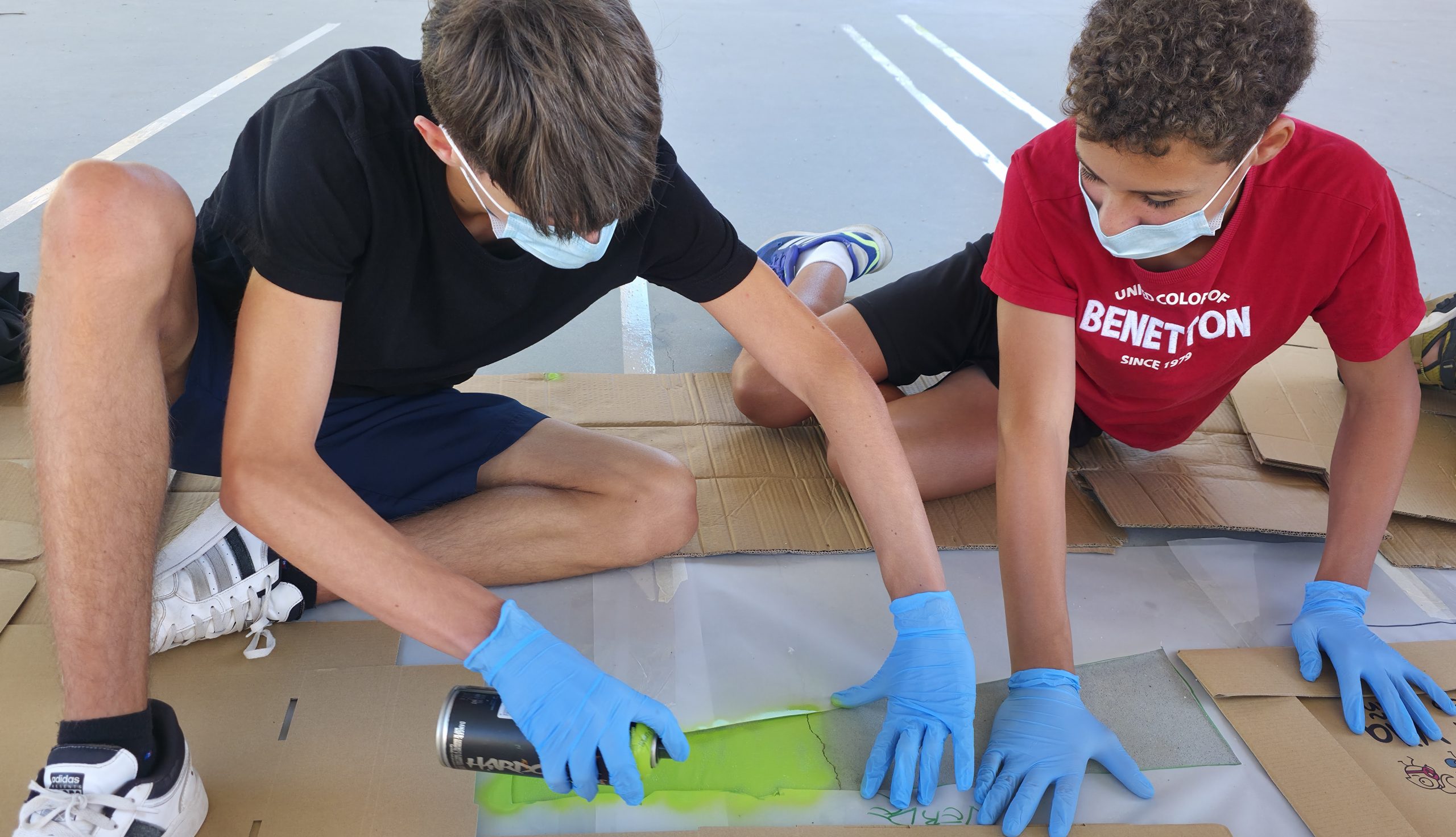
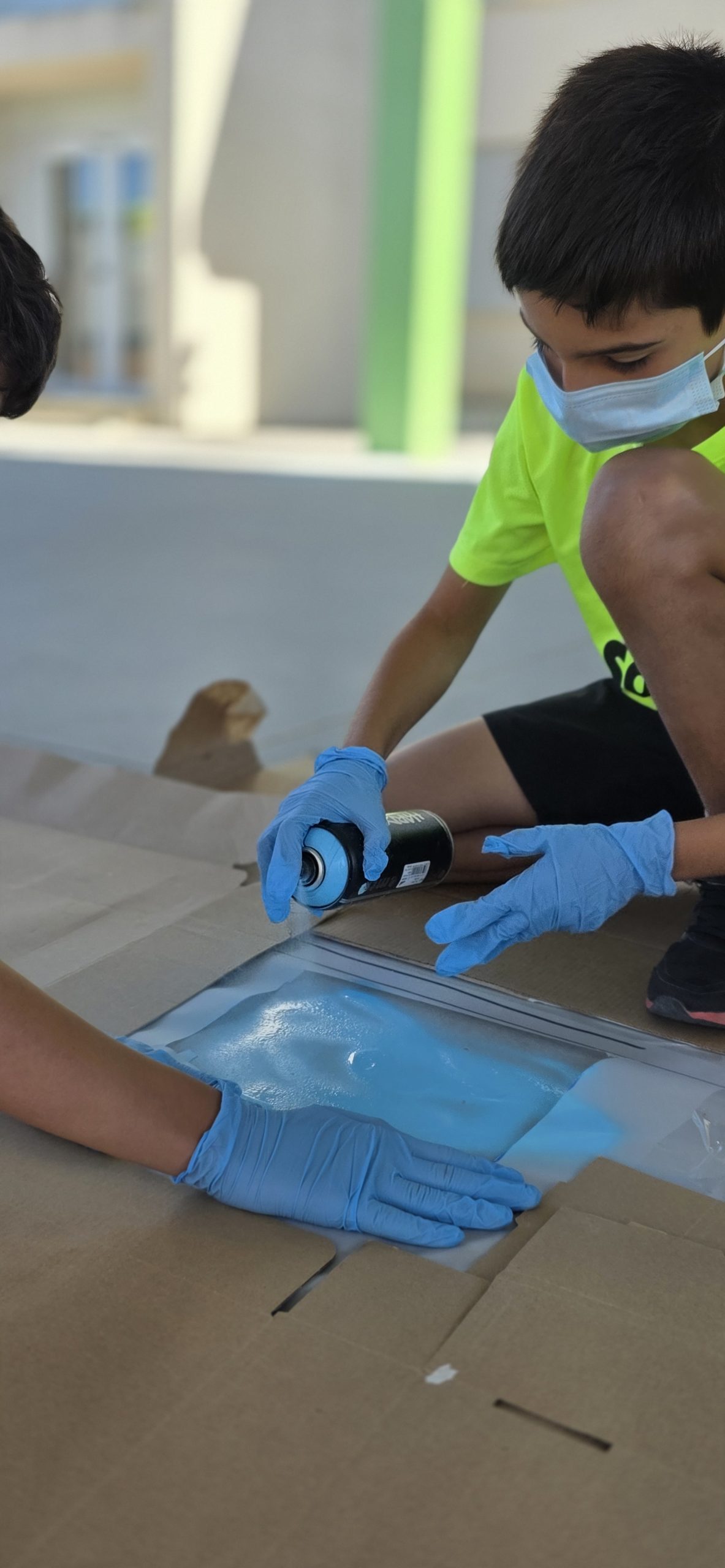
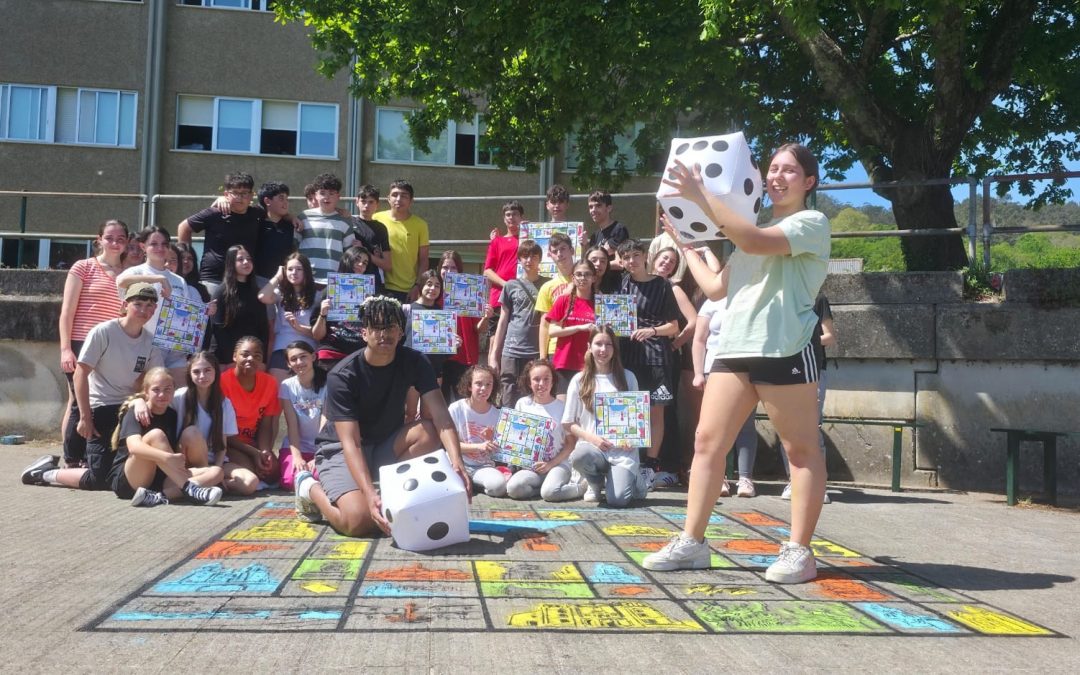
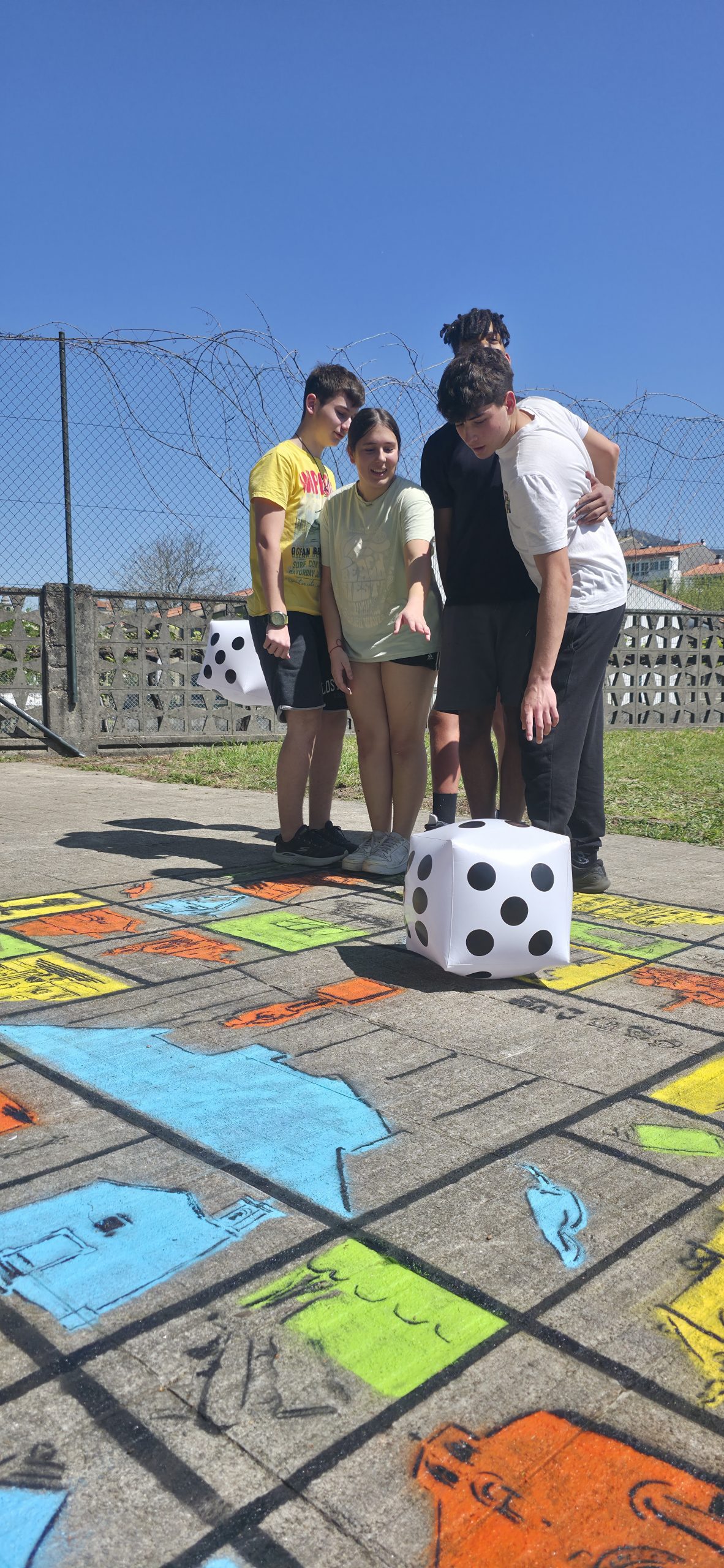
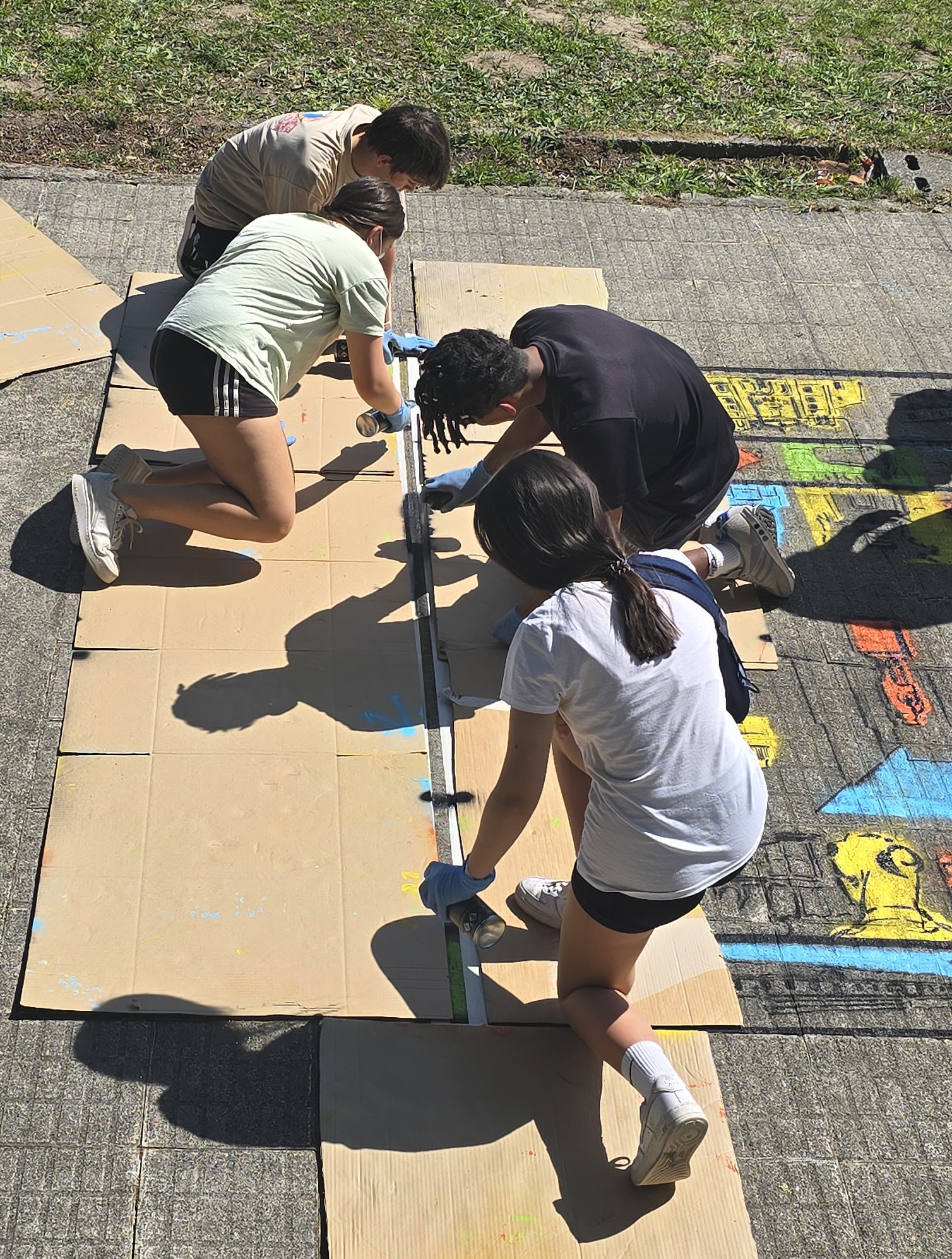
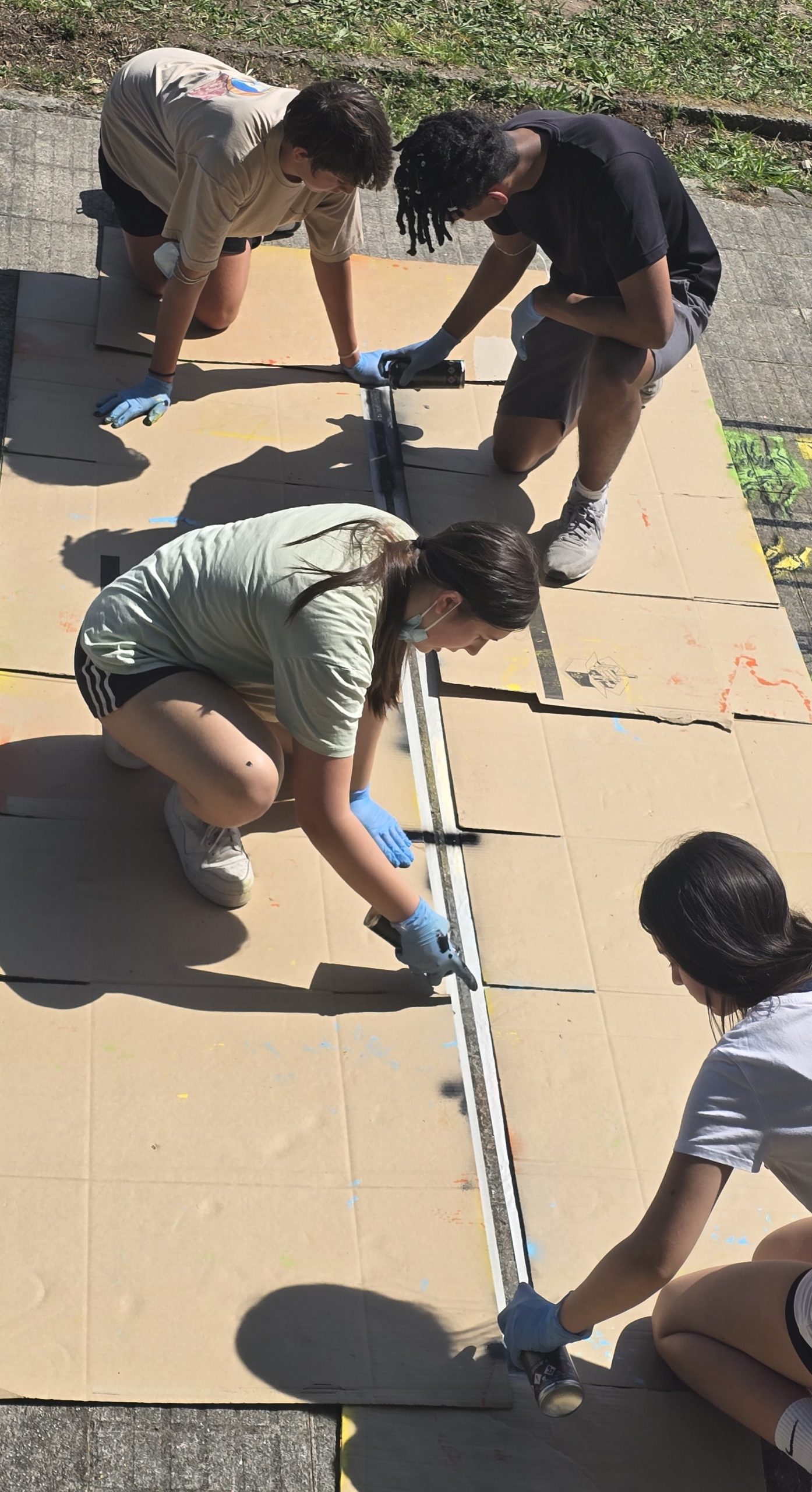
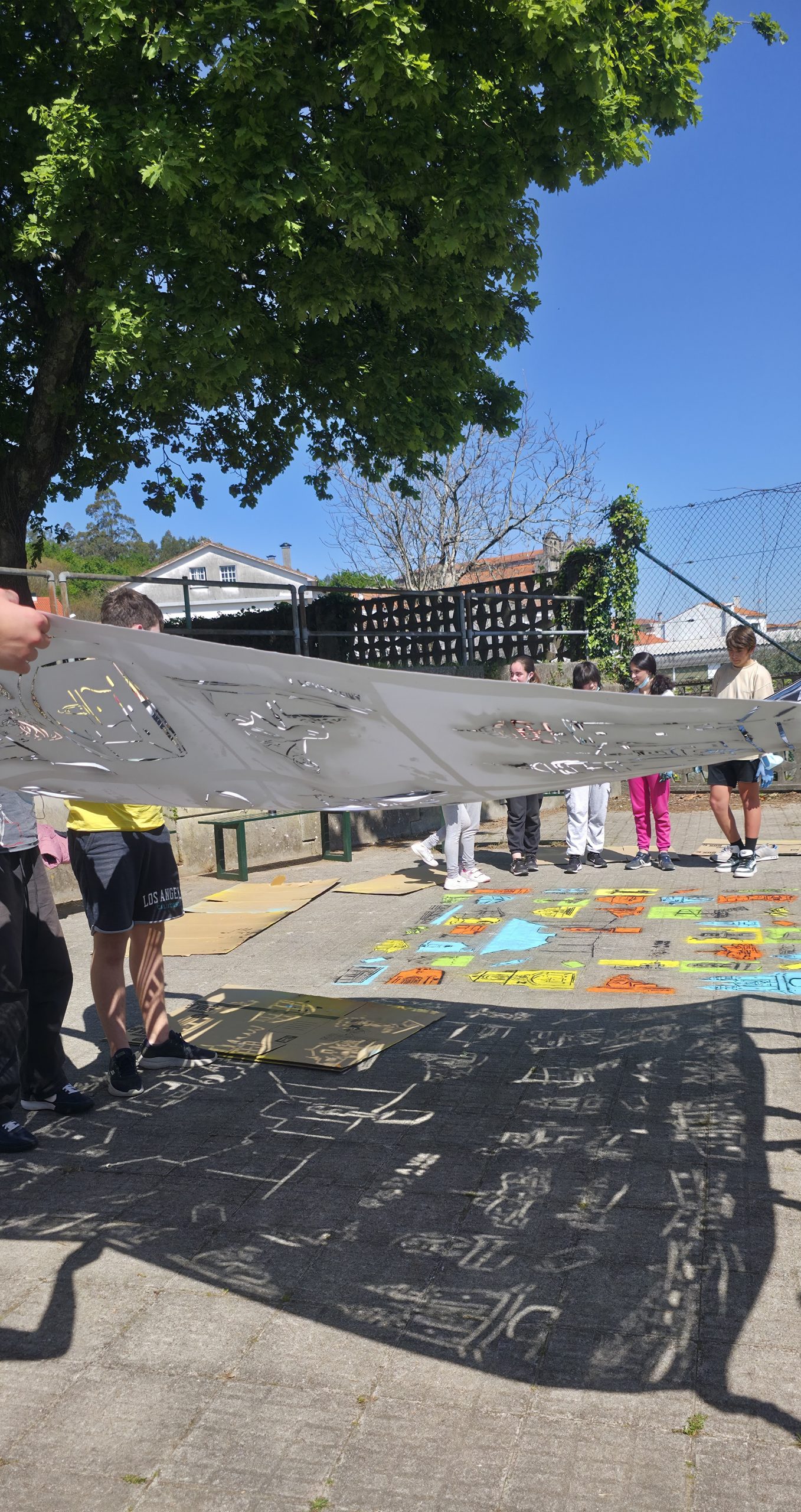
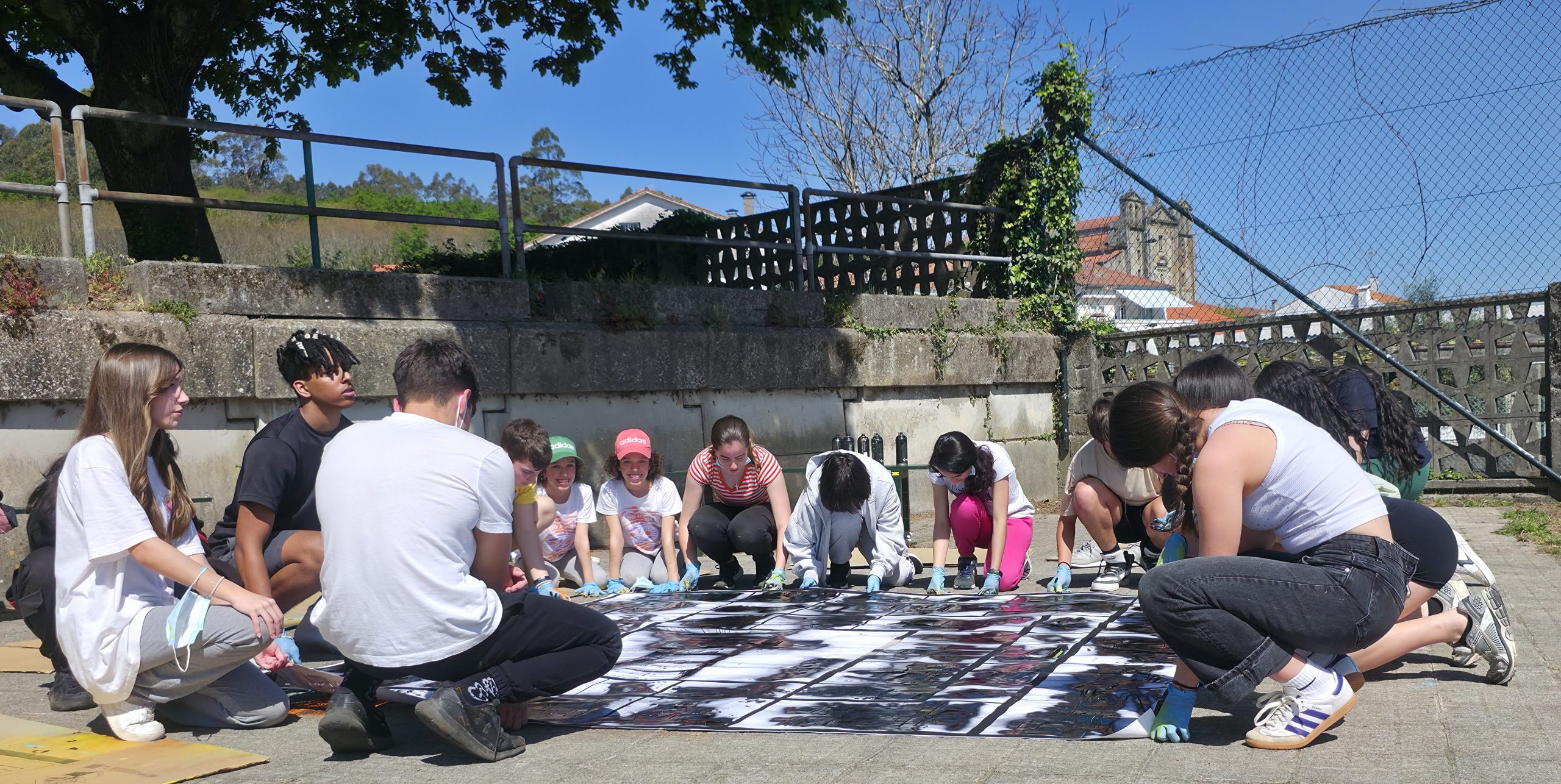
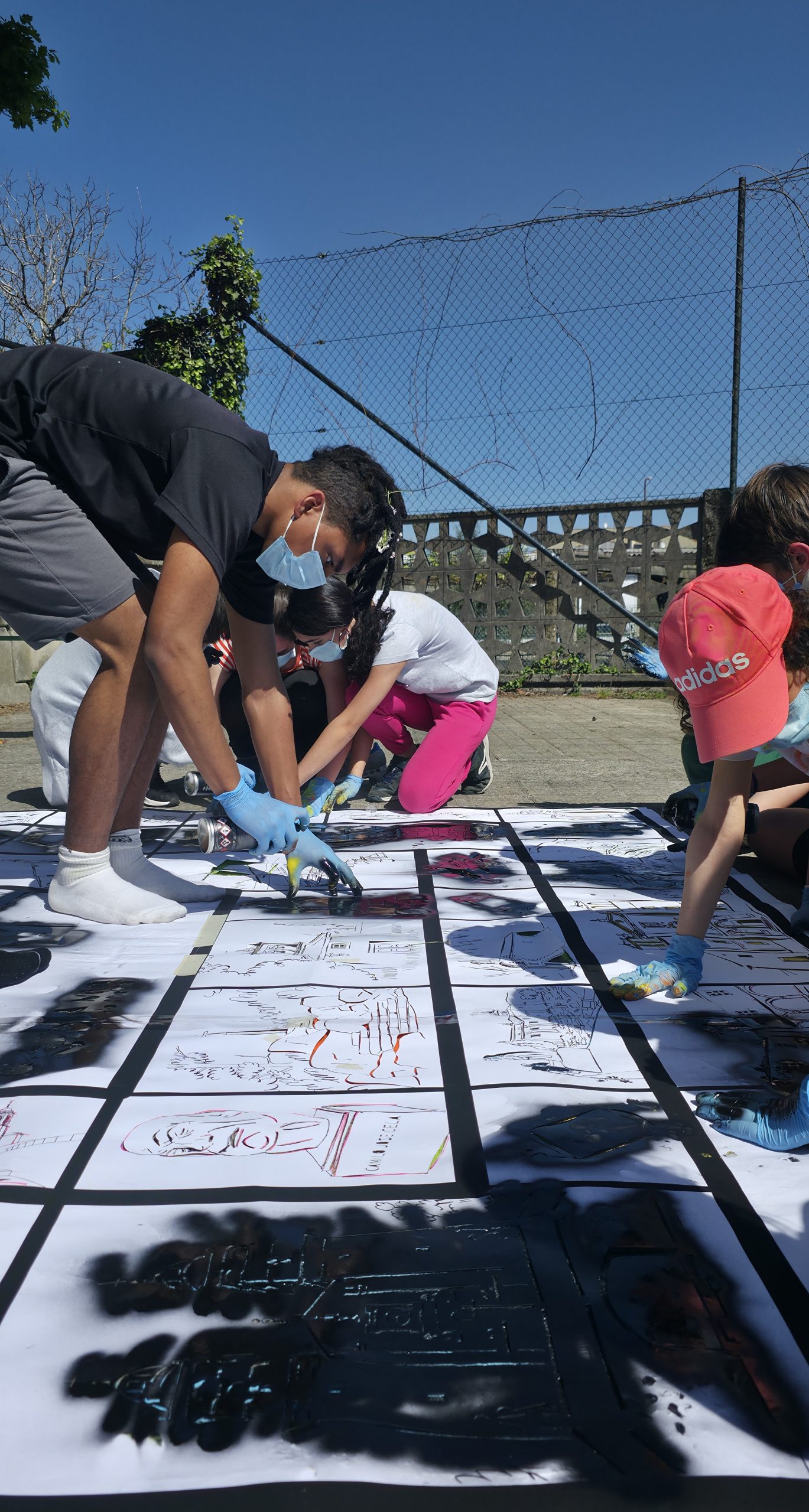
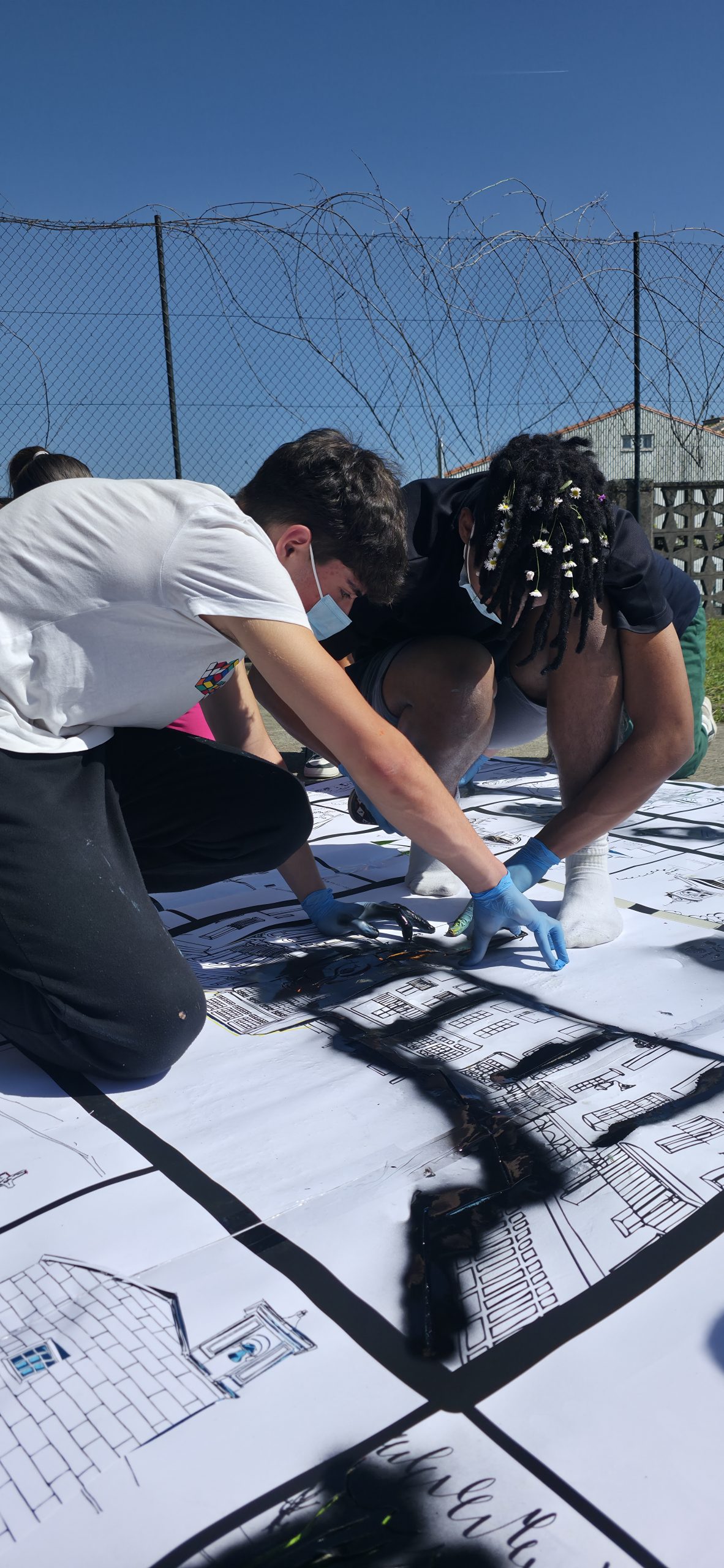
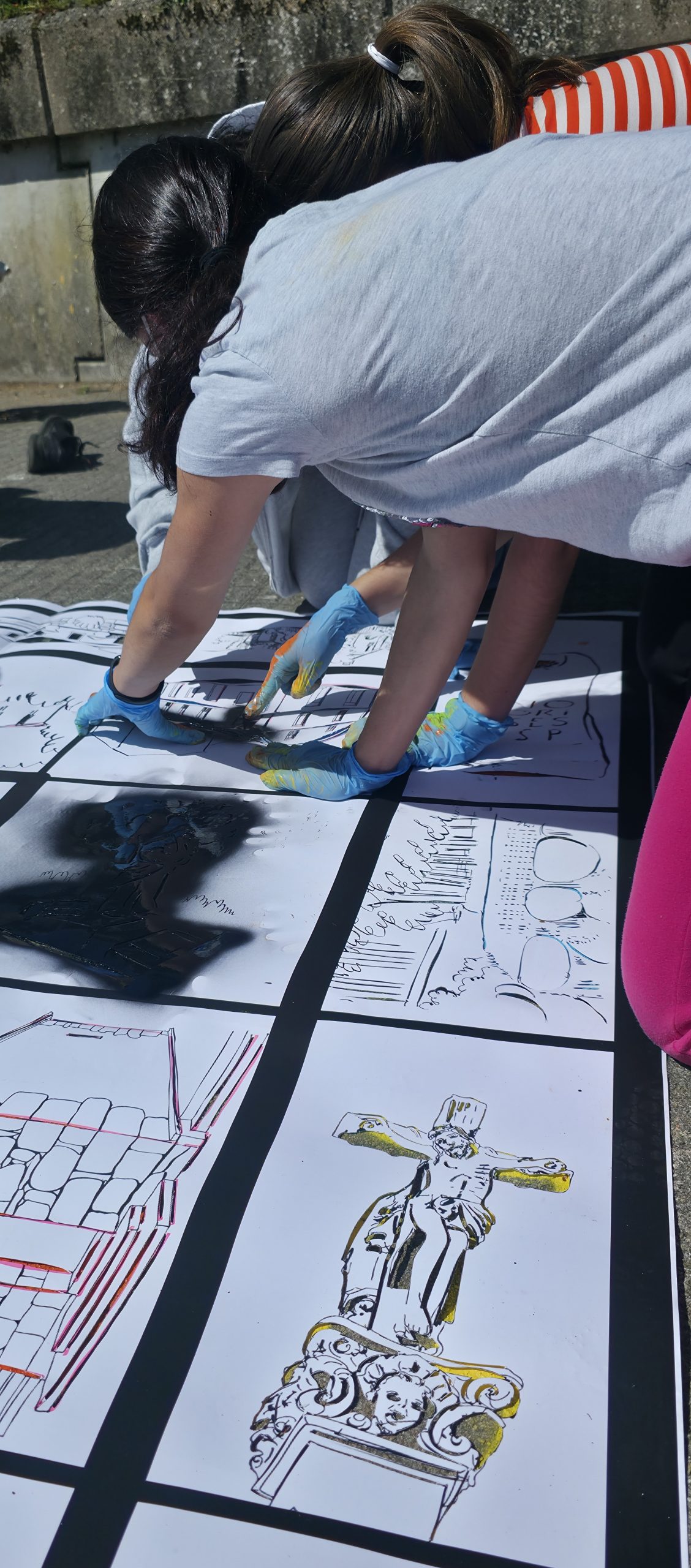
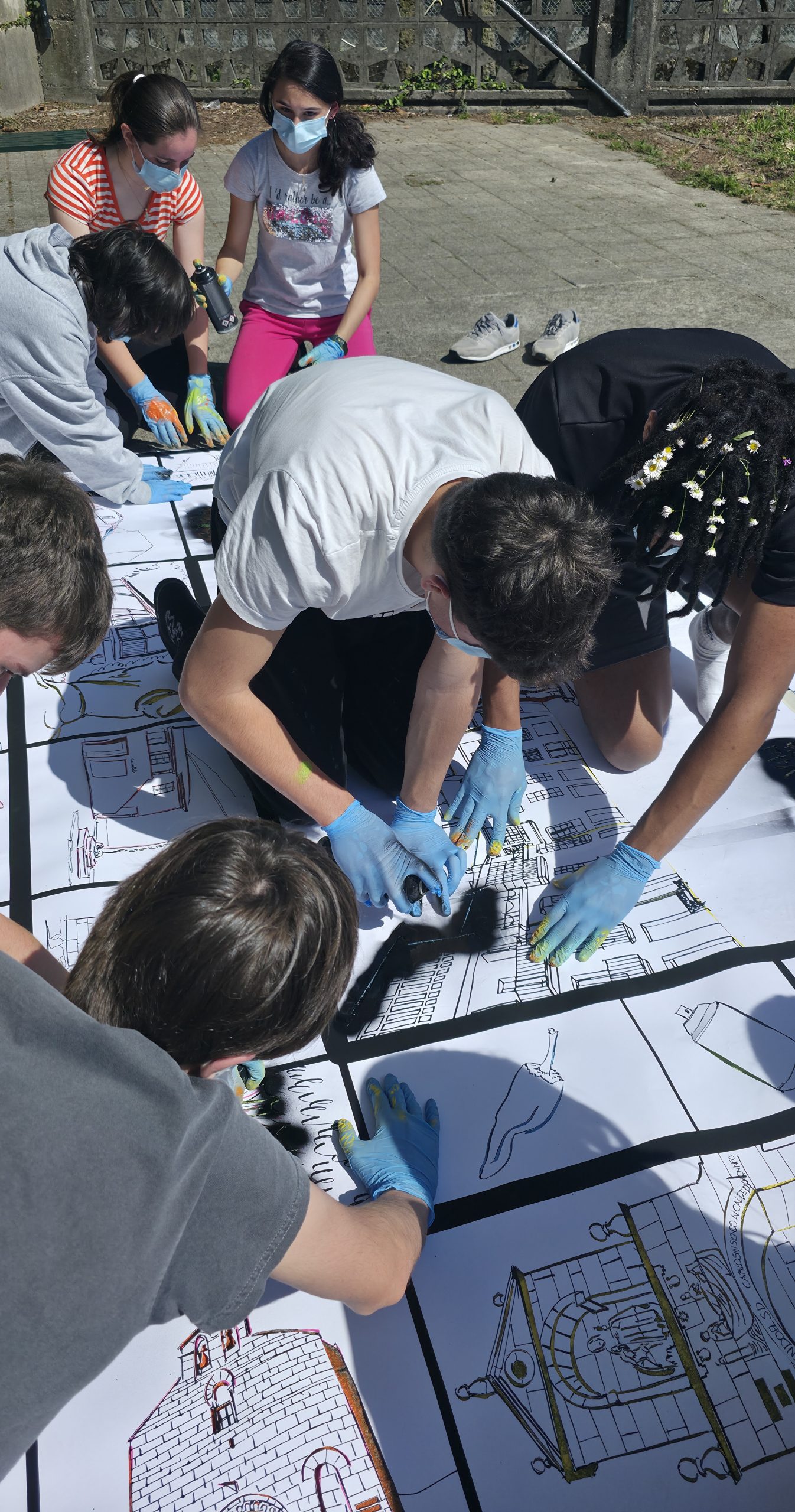
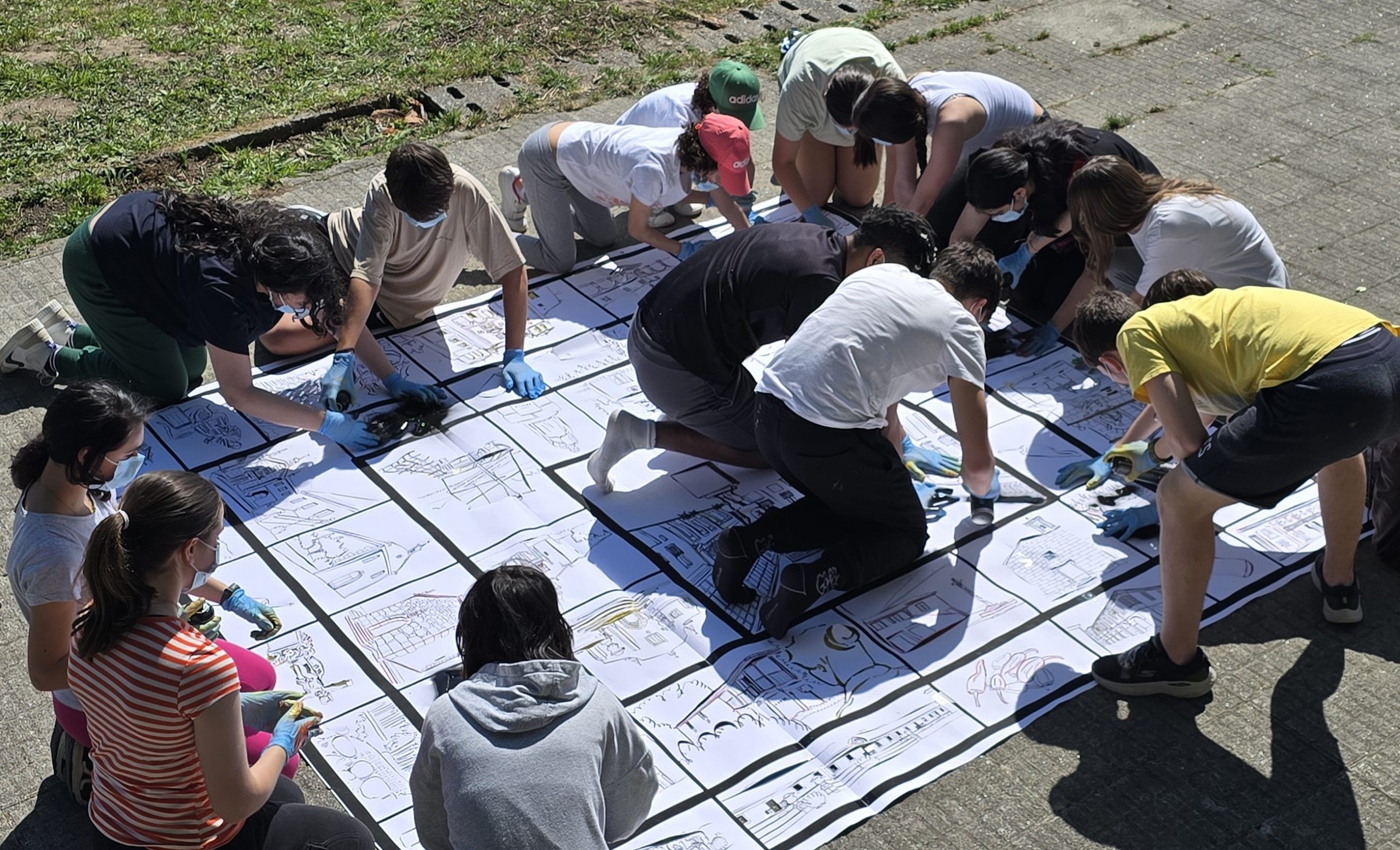
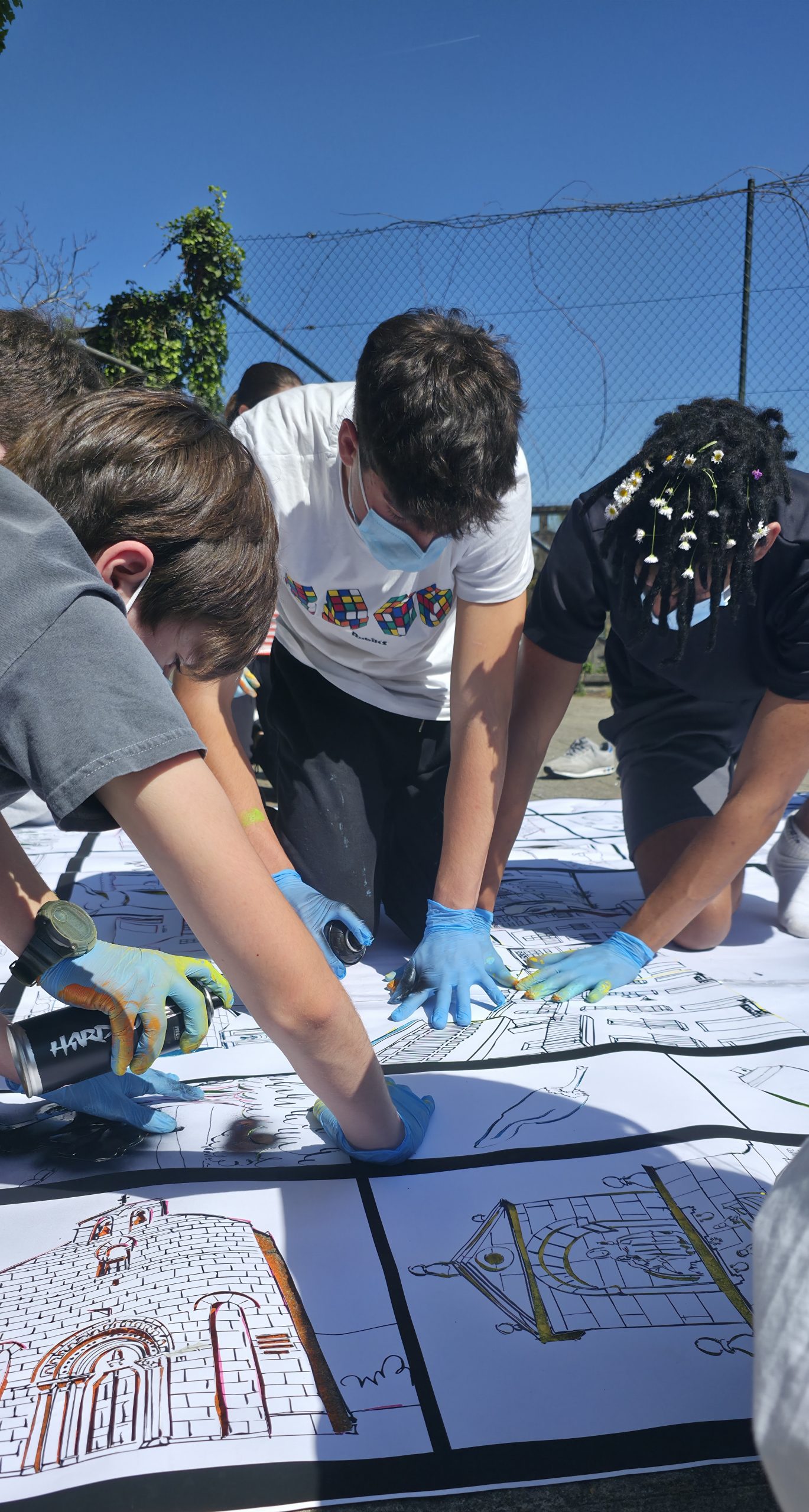
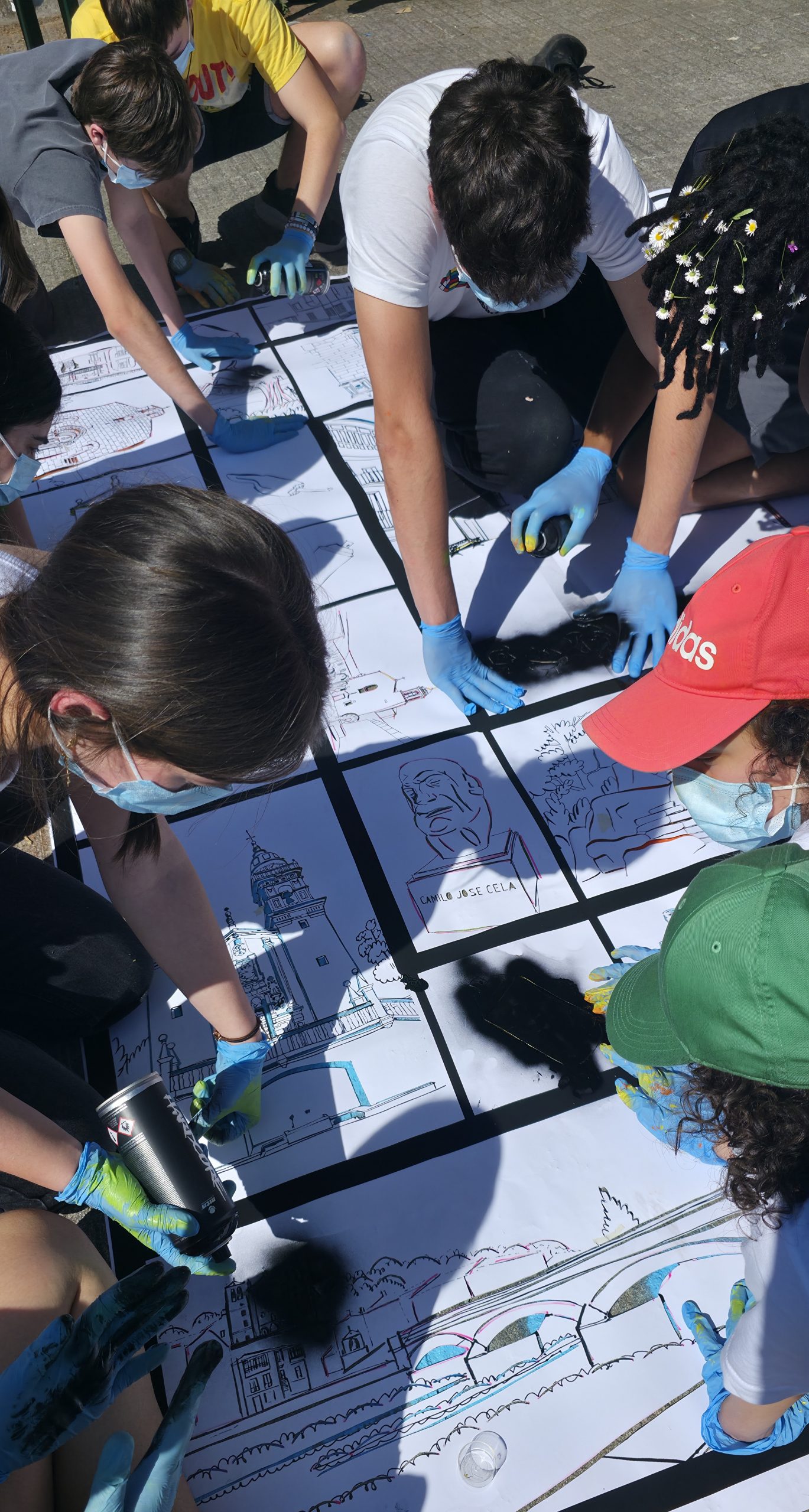
The village or city in which we are working has been turned into a game board, a laboratory of experimentation where children and teenagers can act from a new point of view.

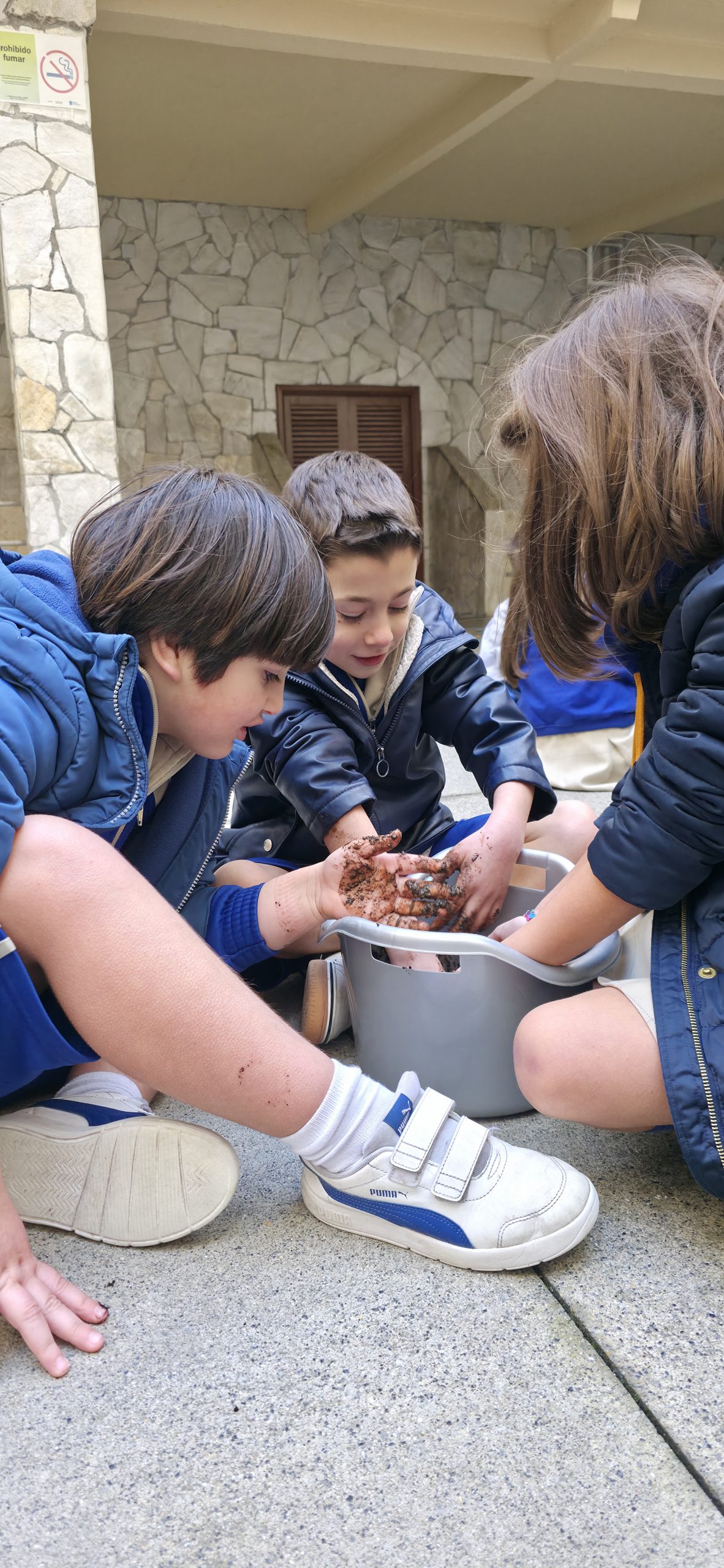
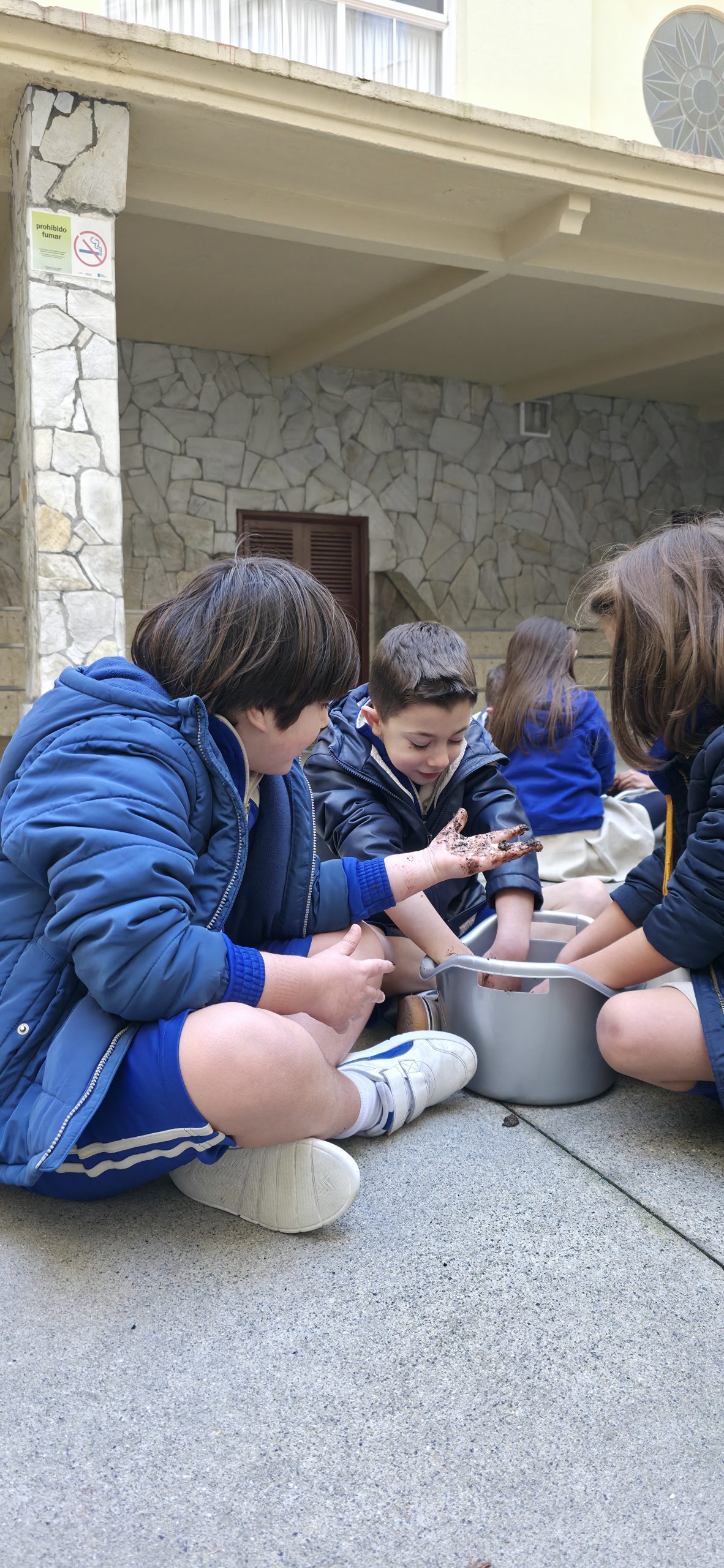
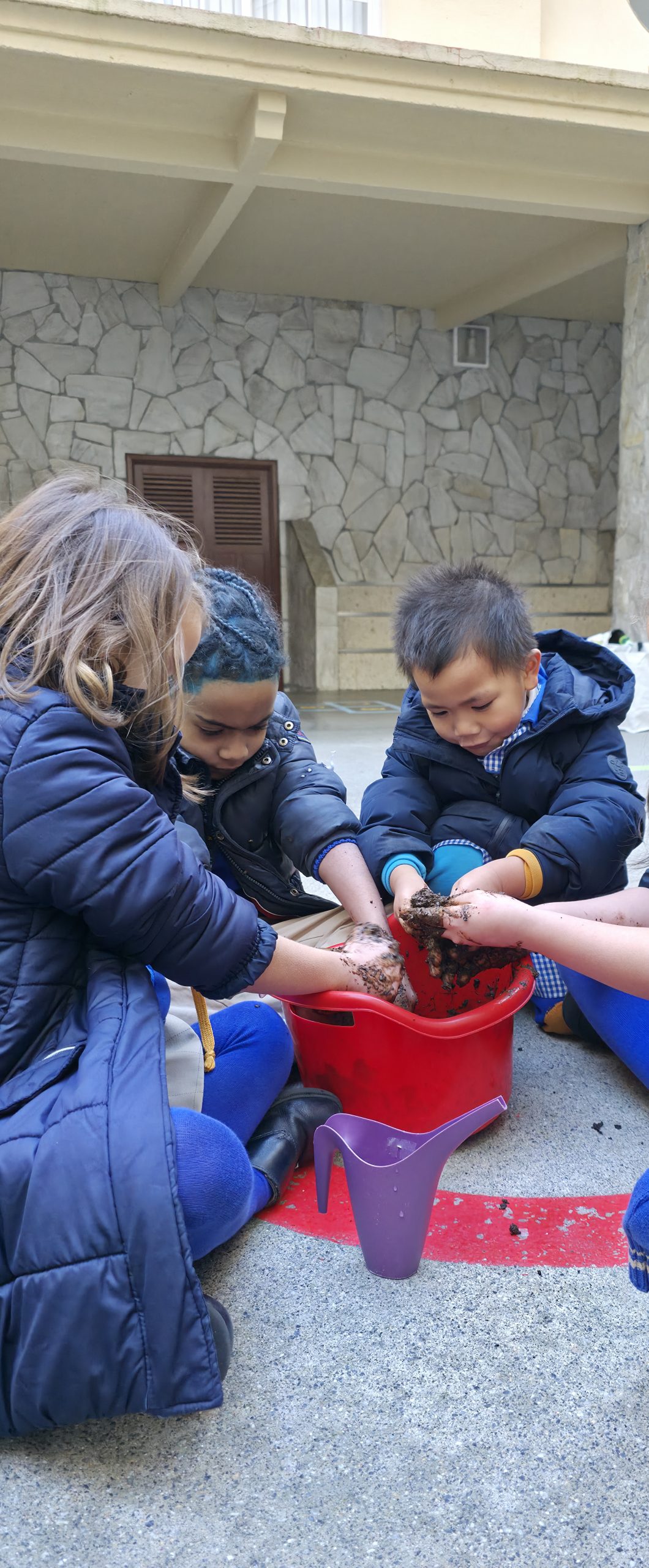
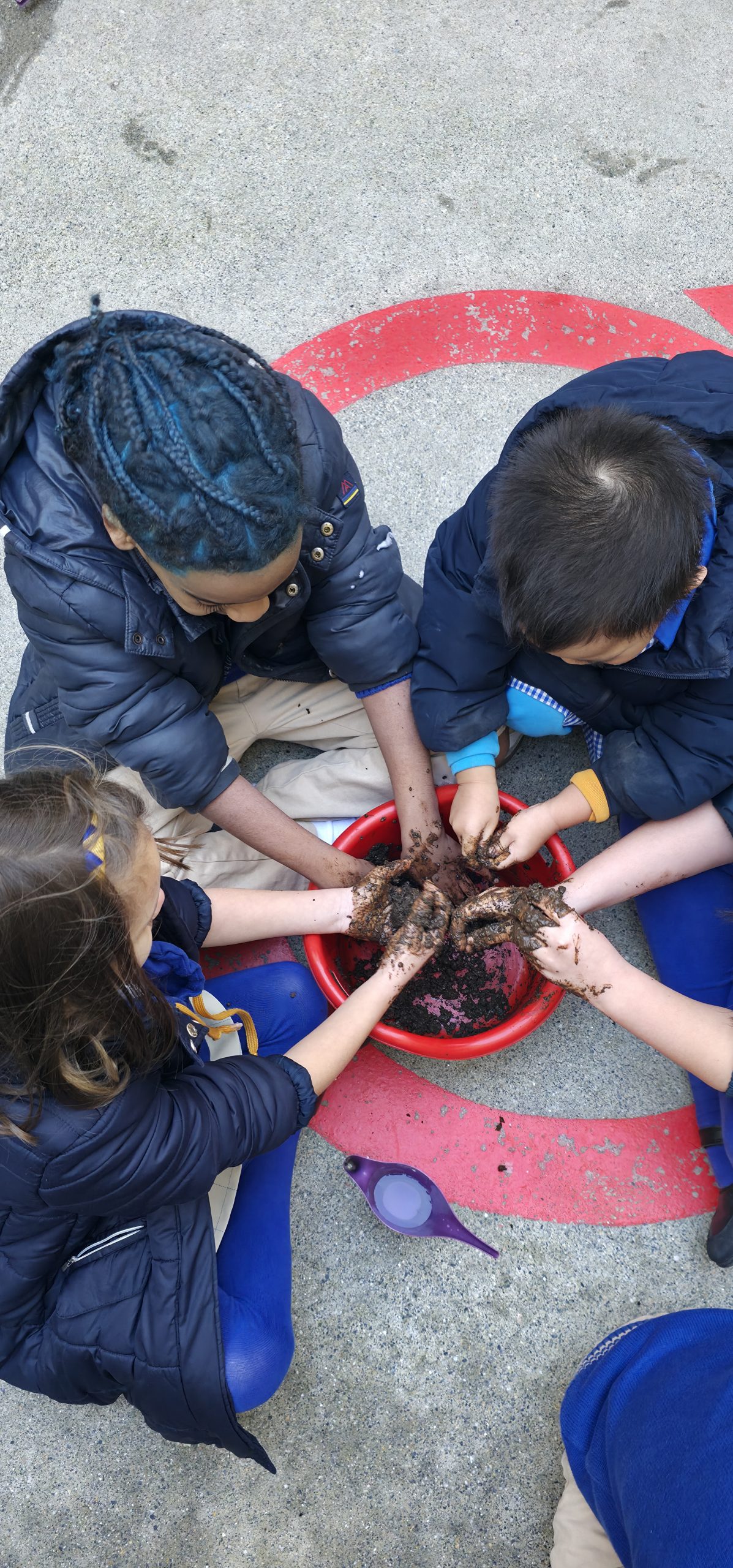
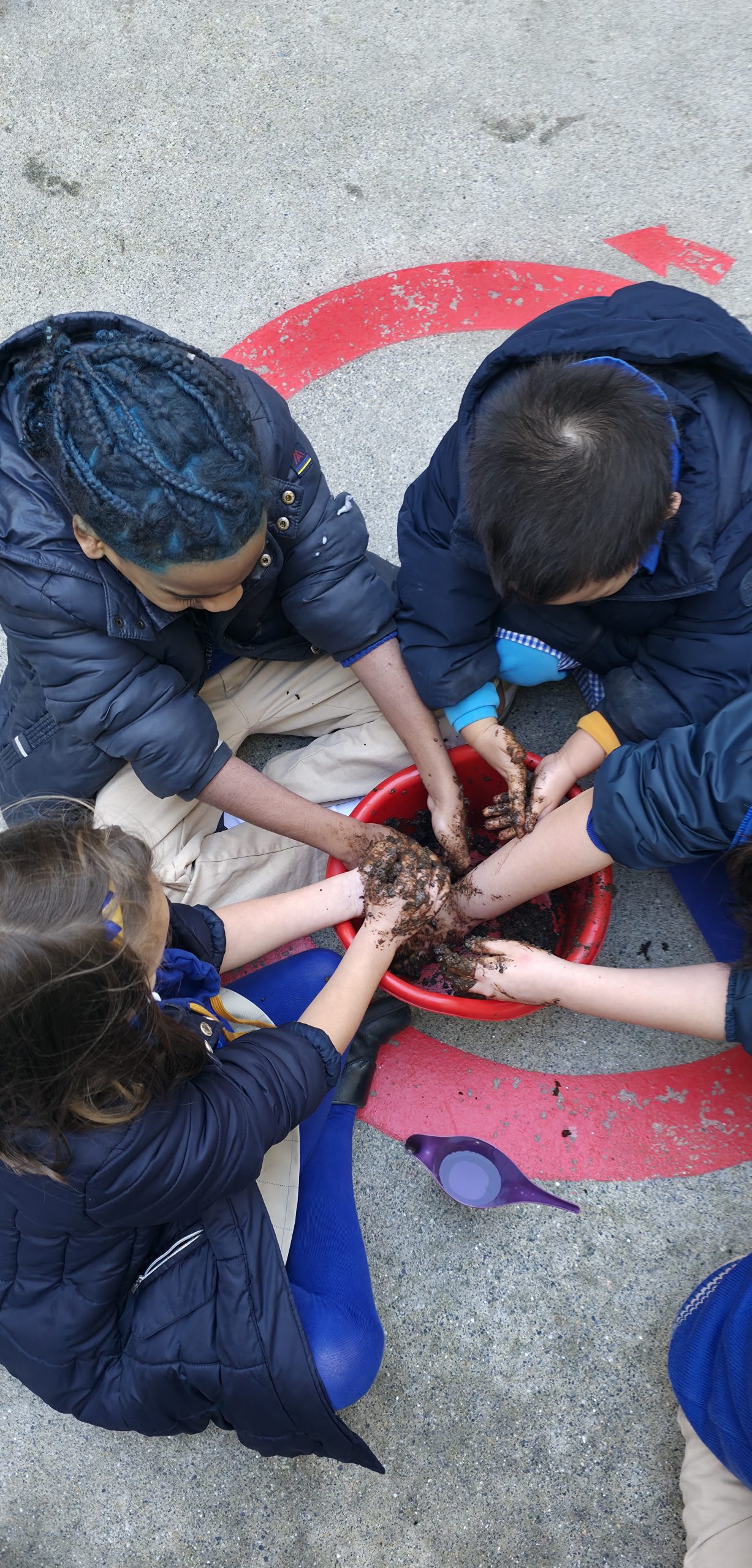
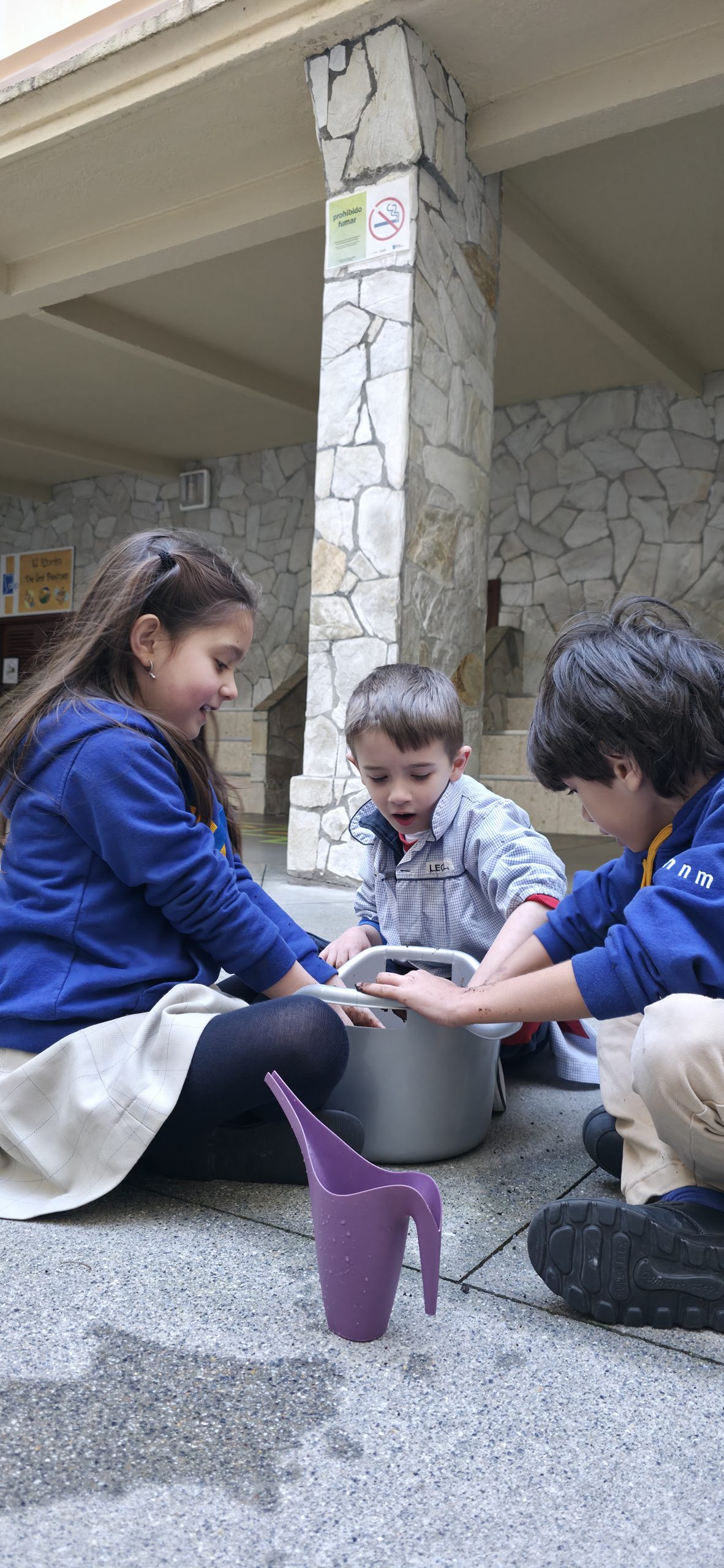
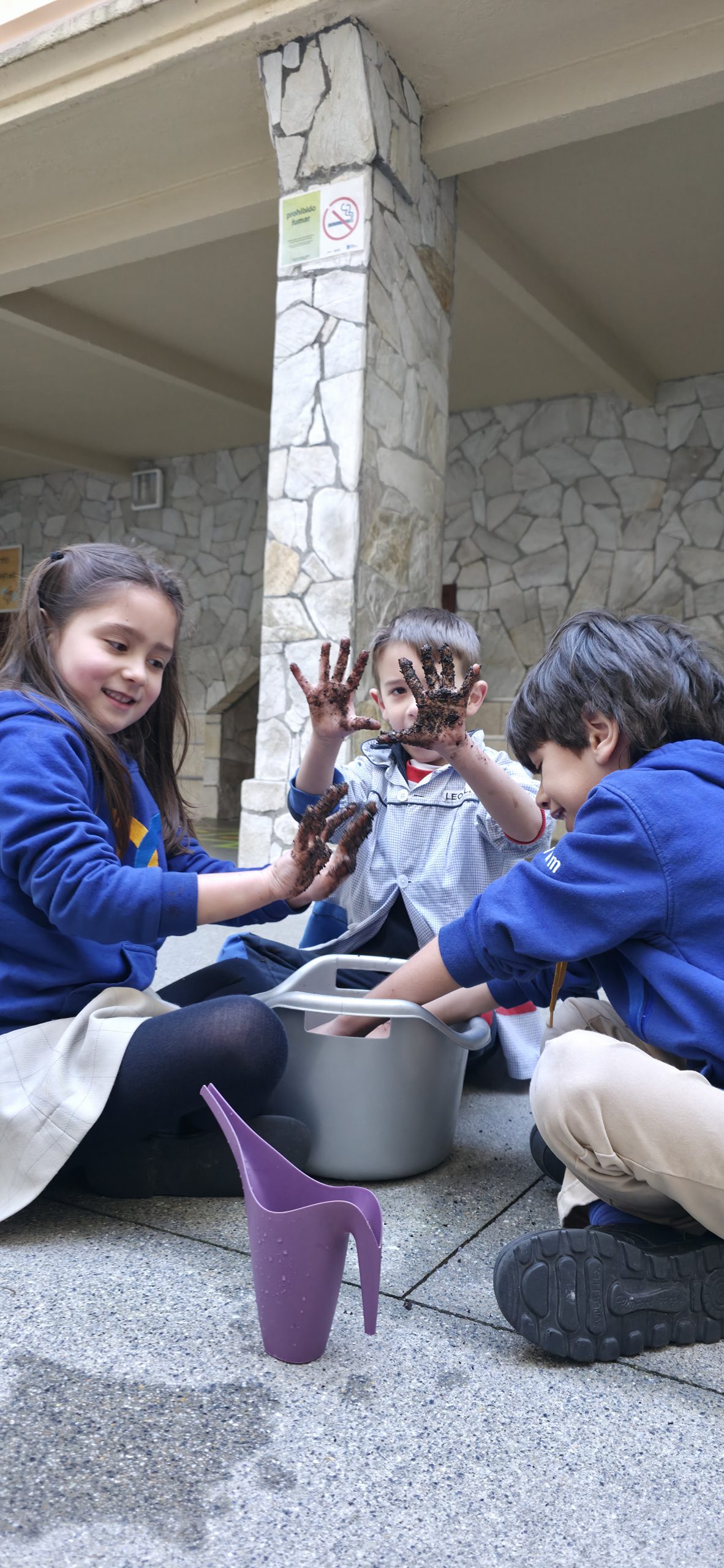
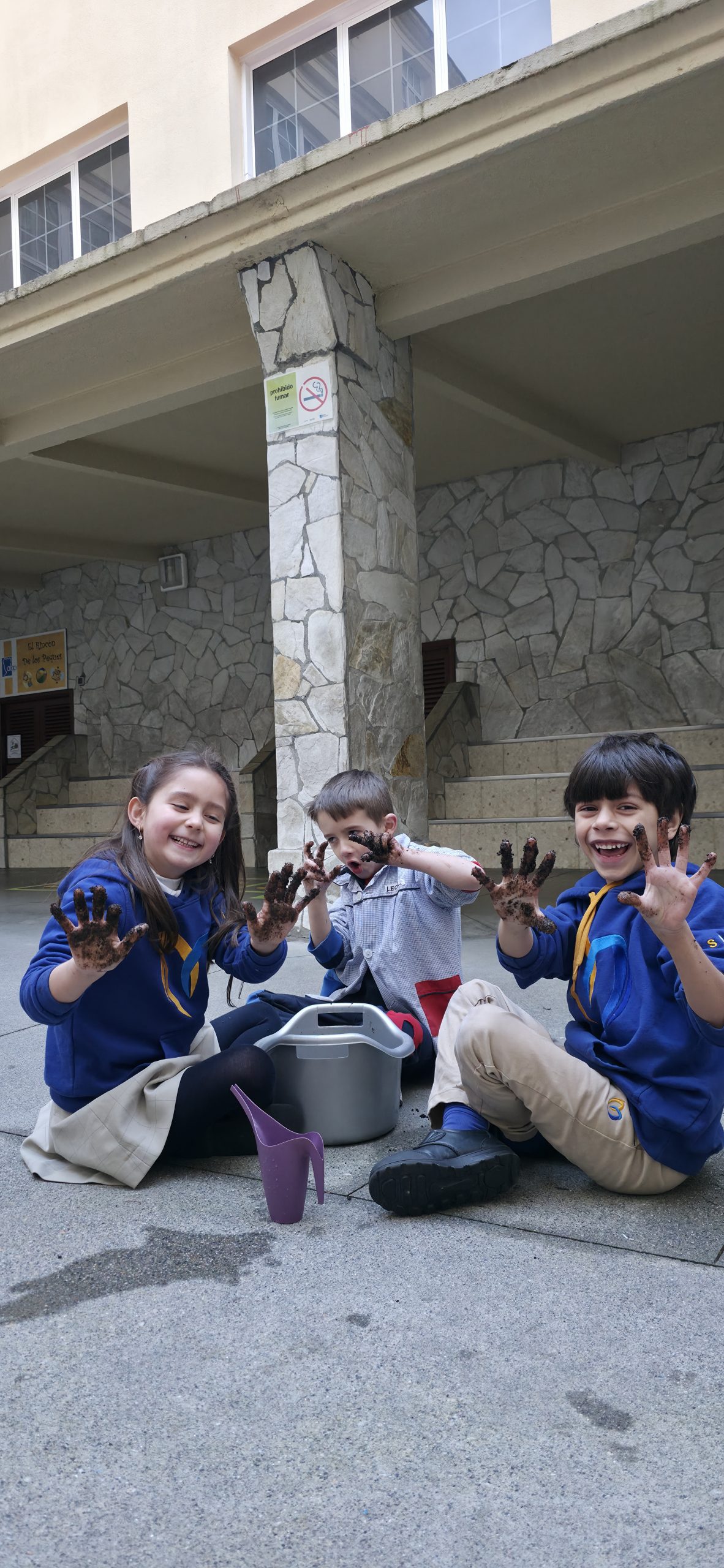
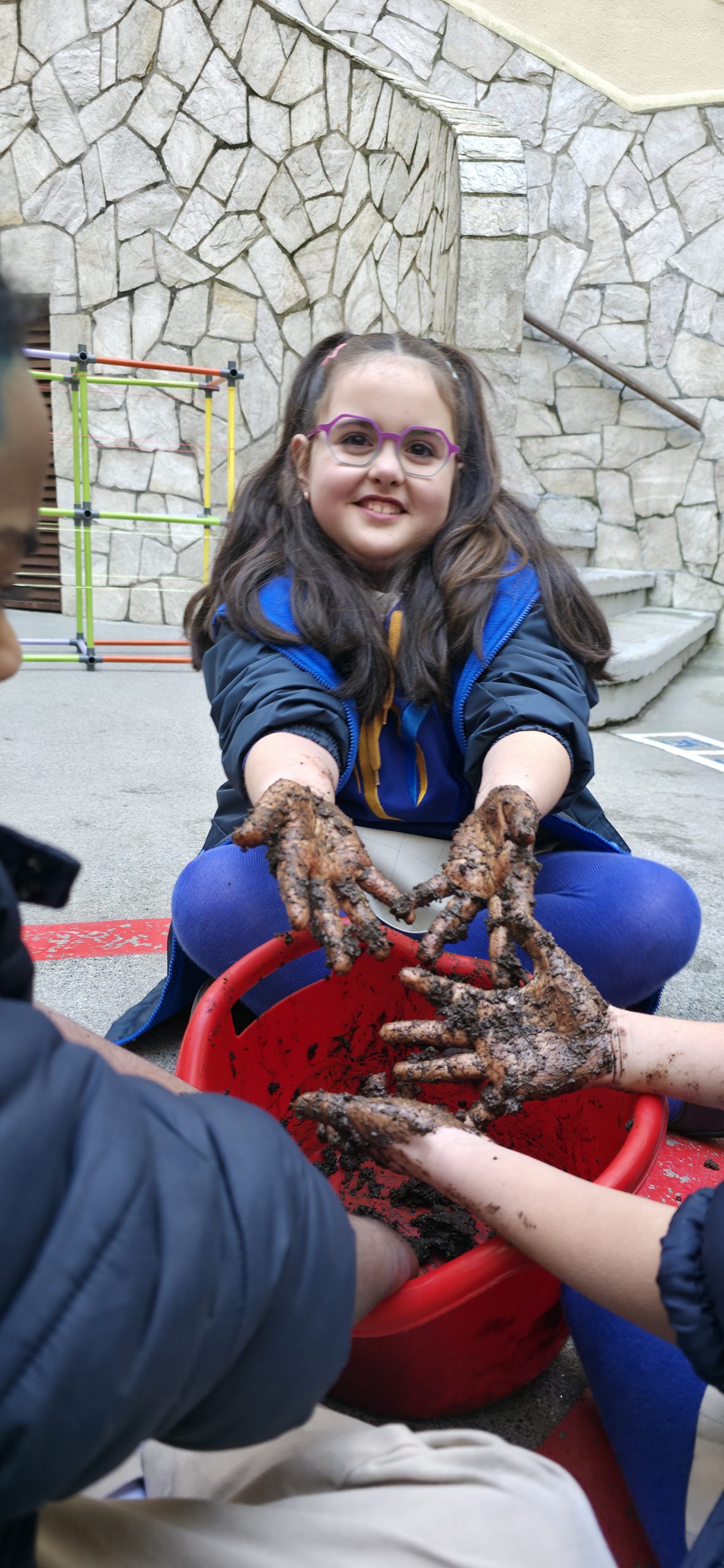
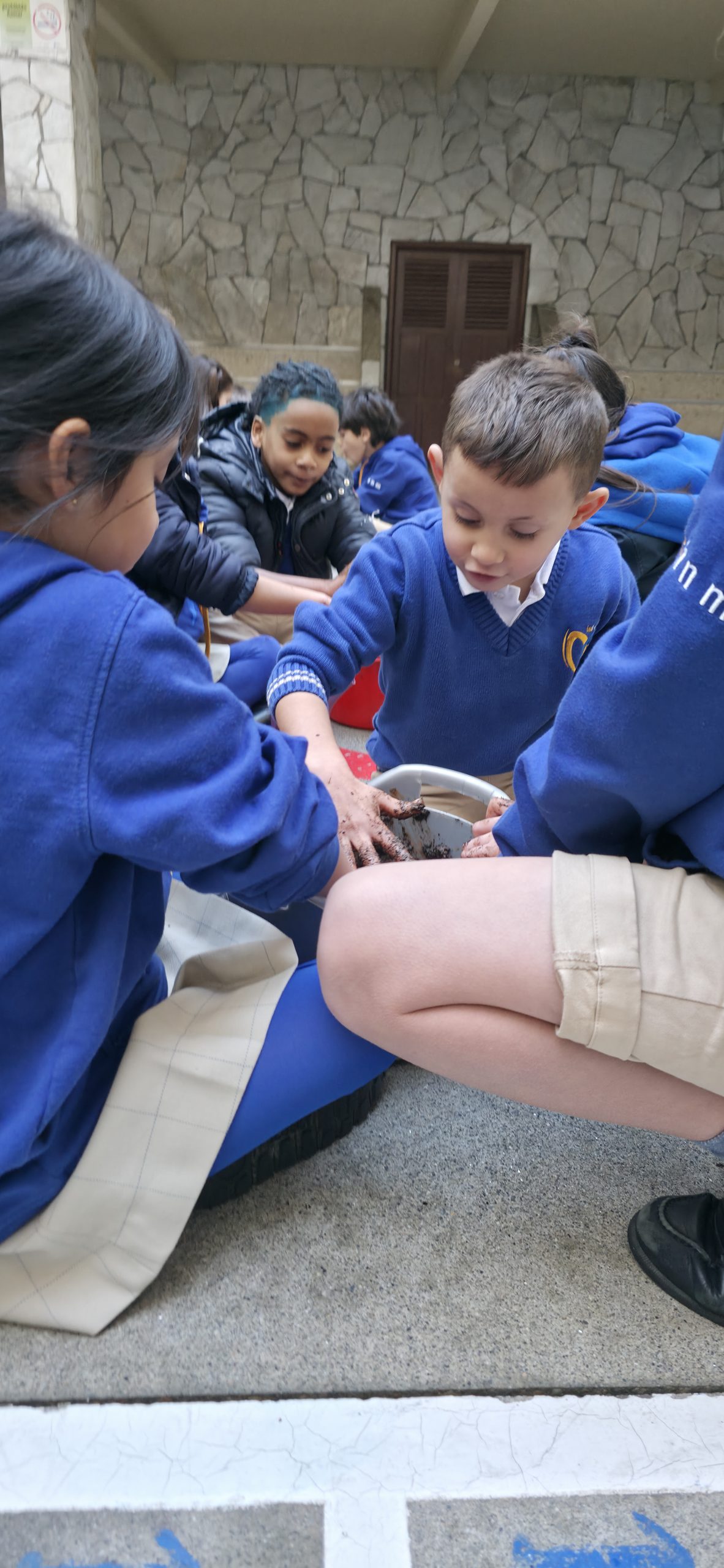
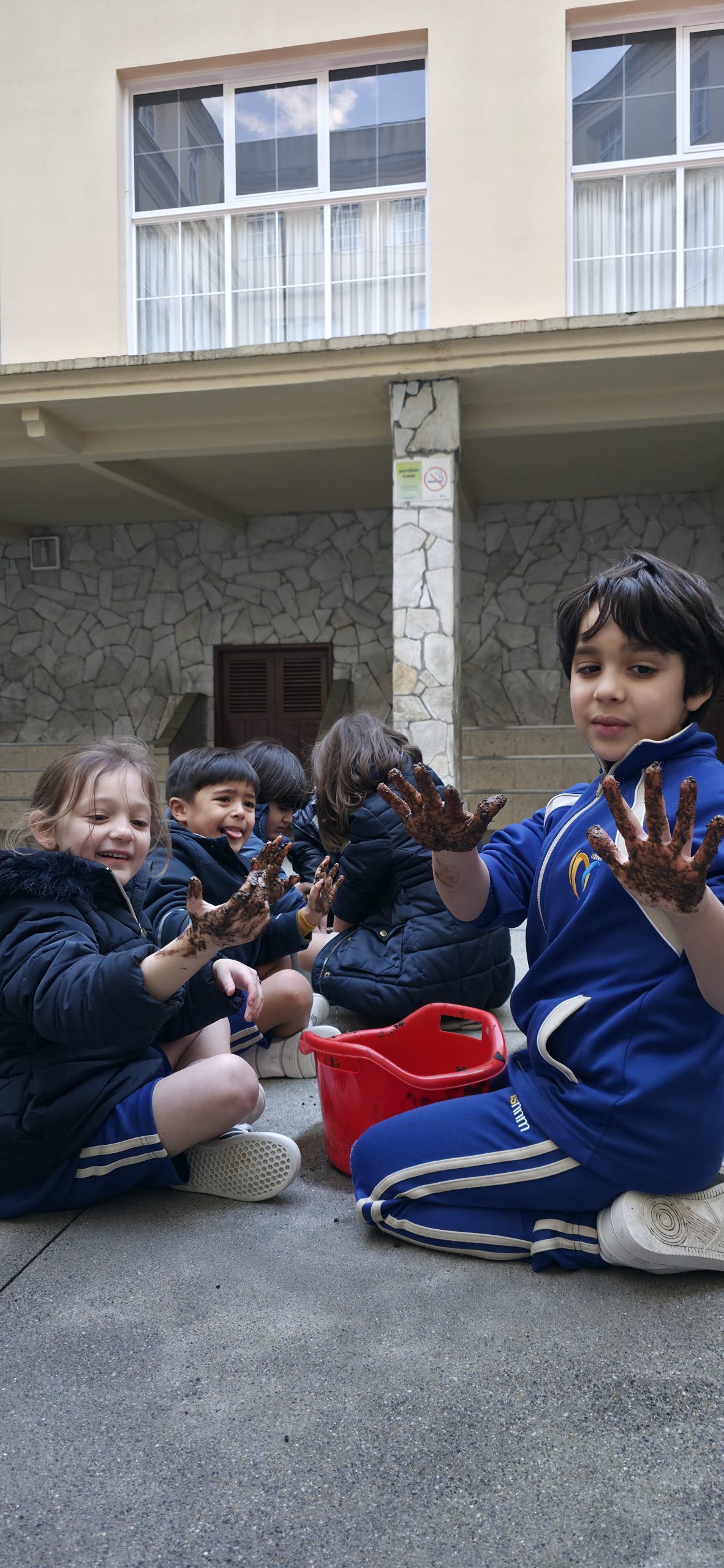
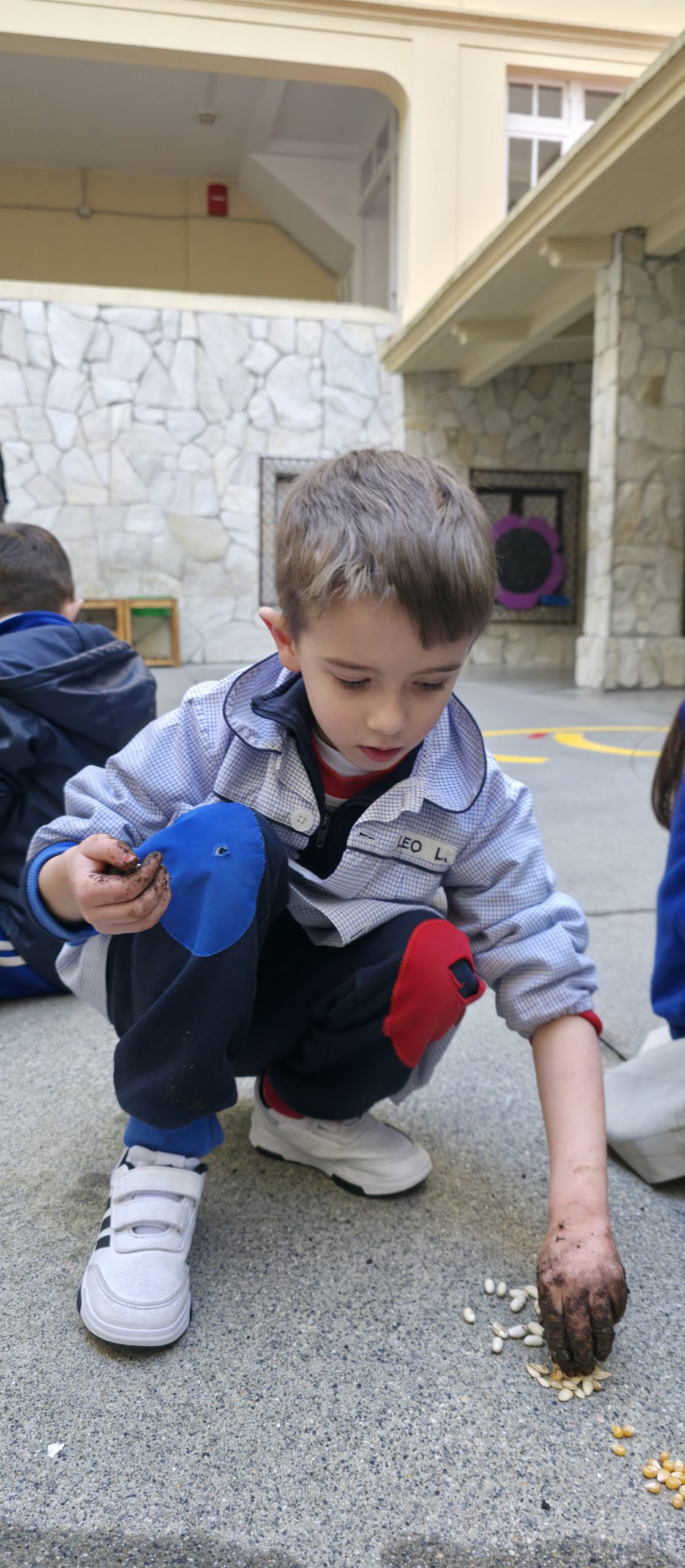
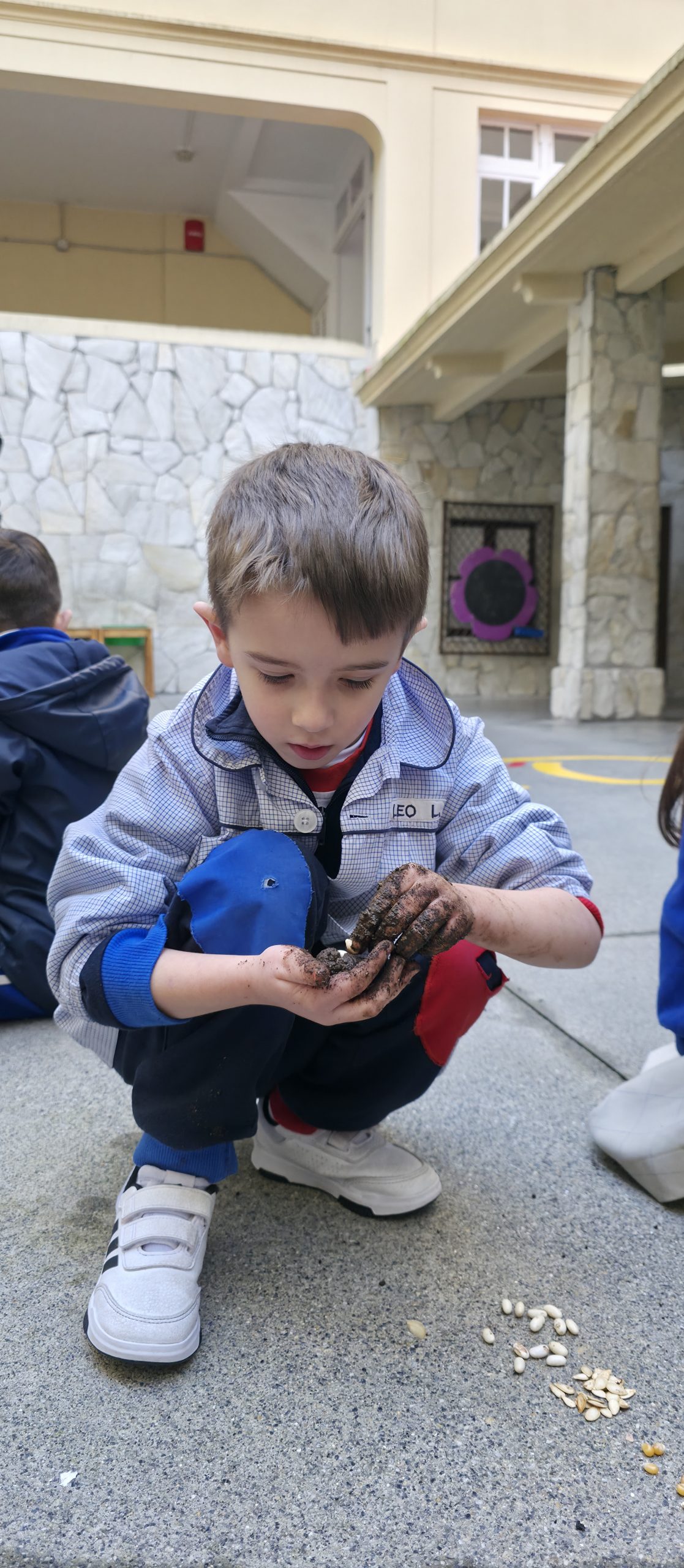
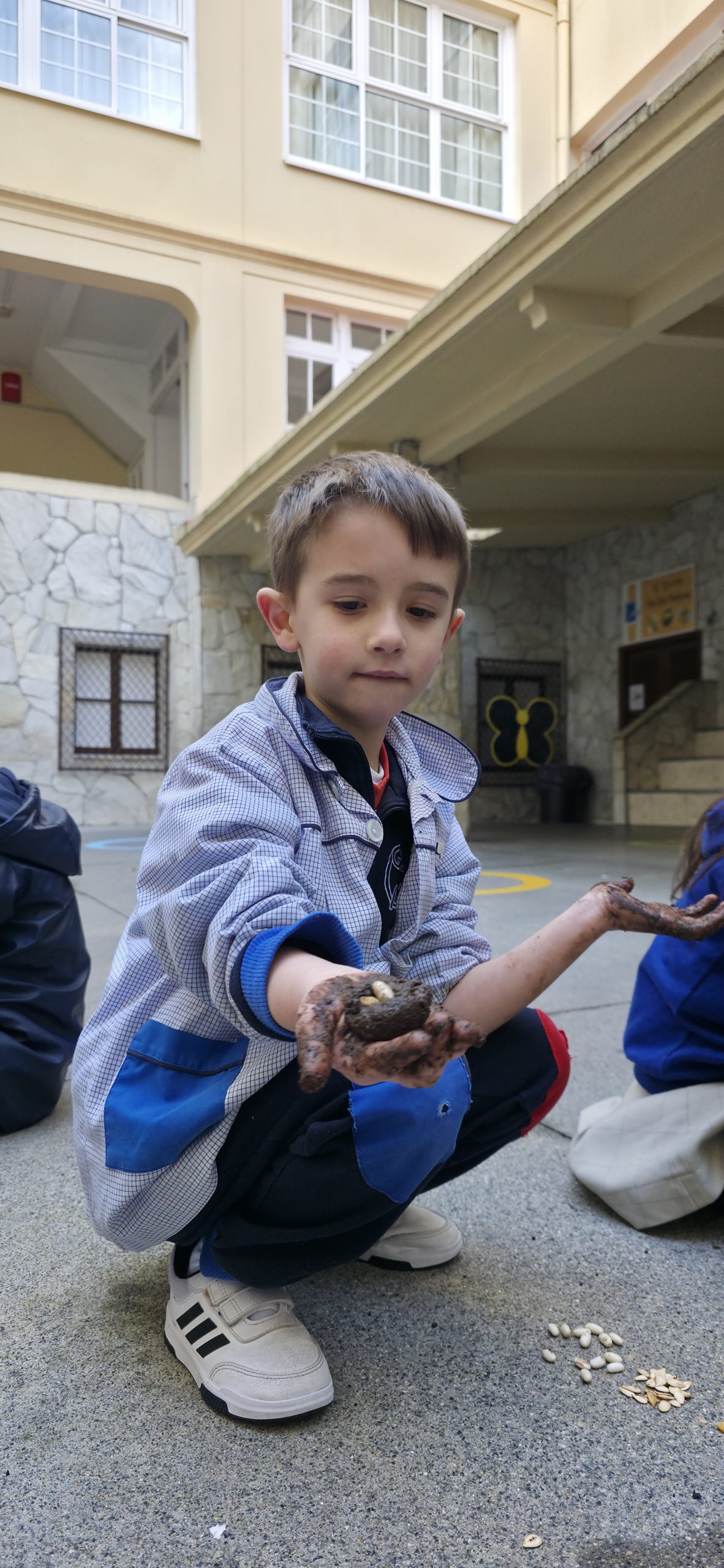
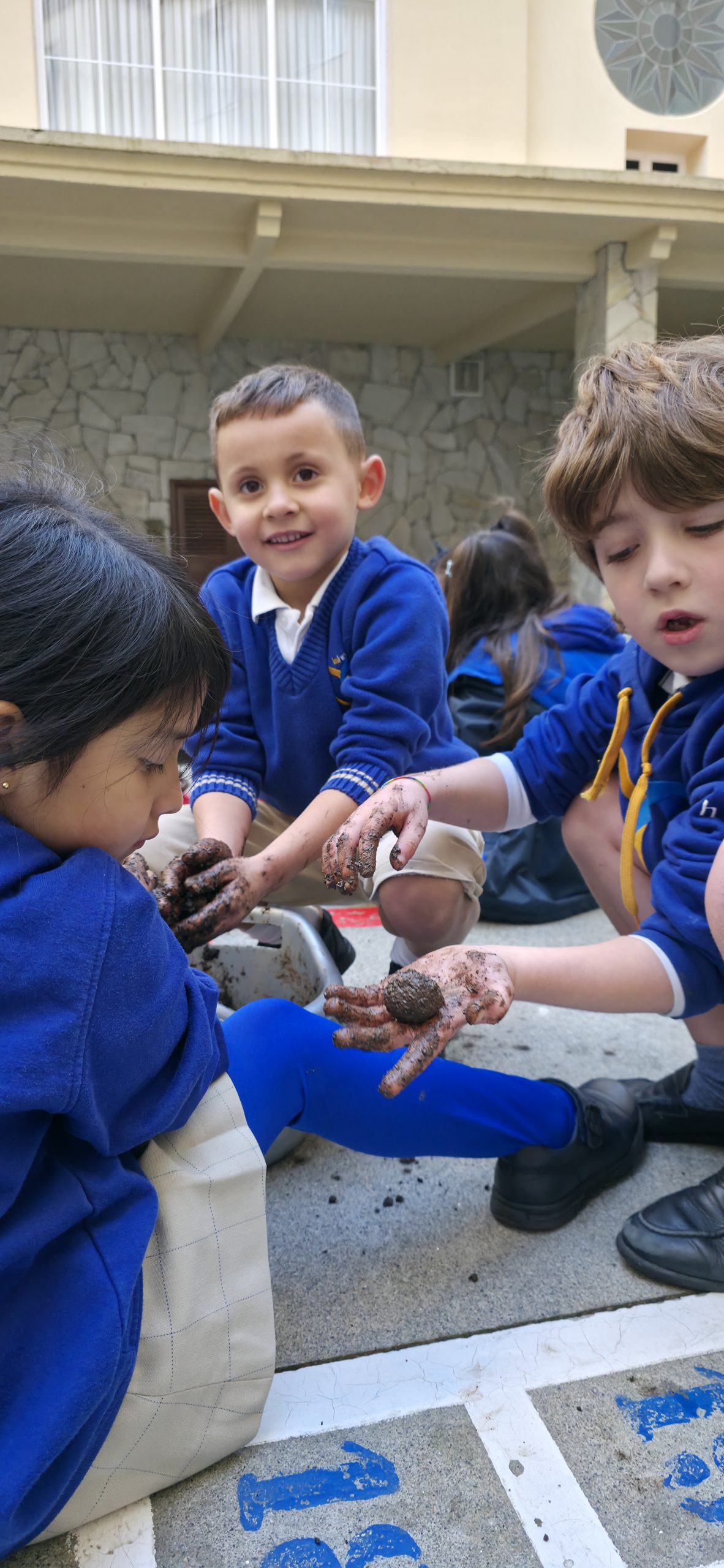
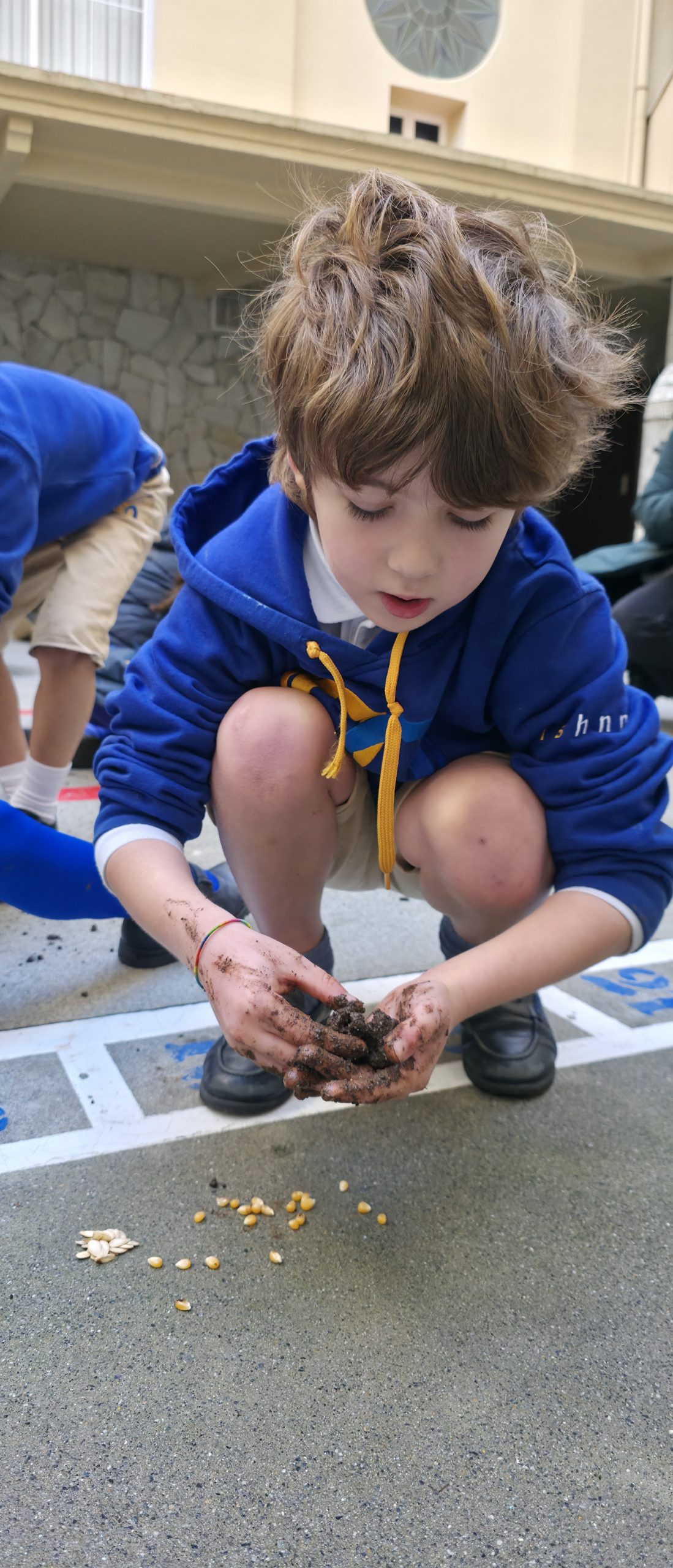
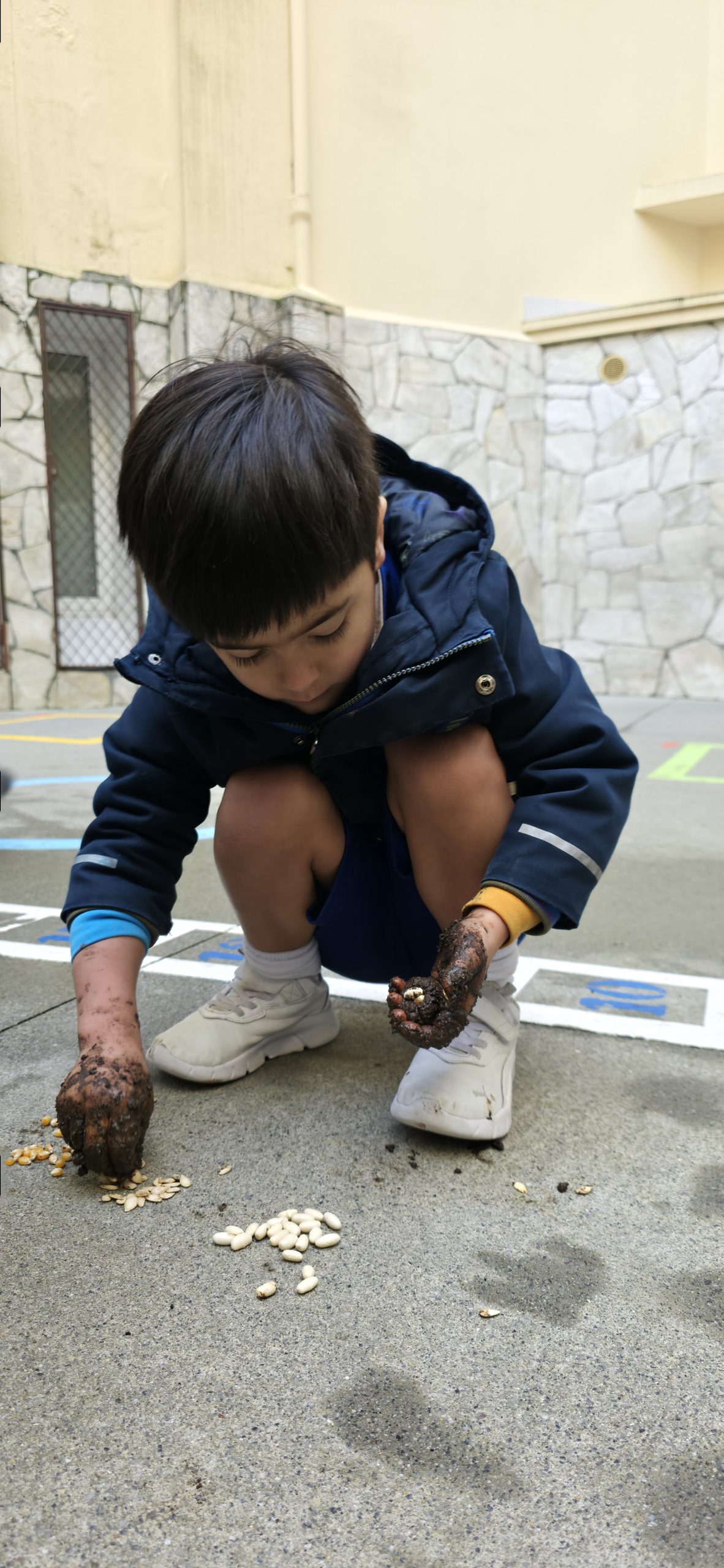
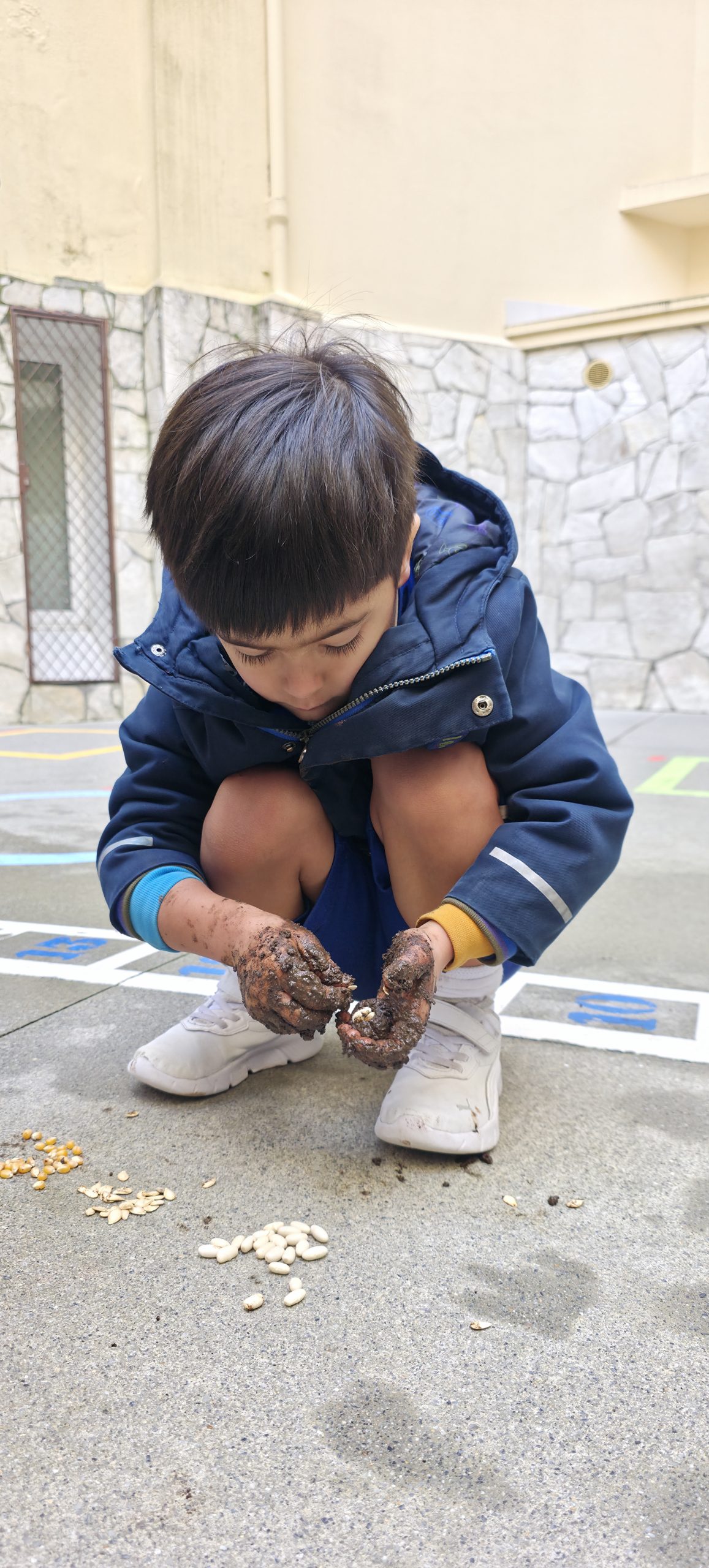
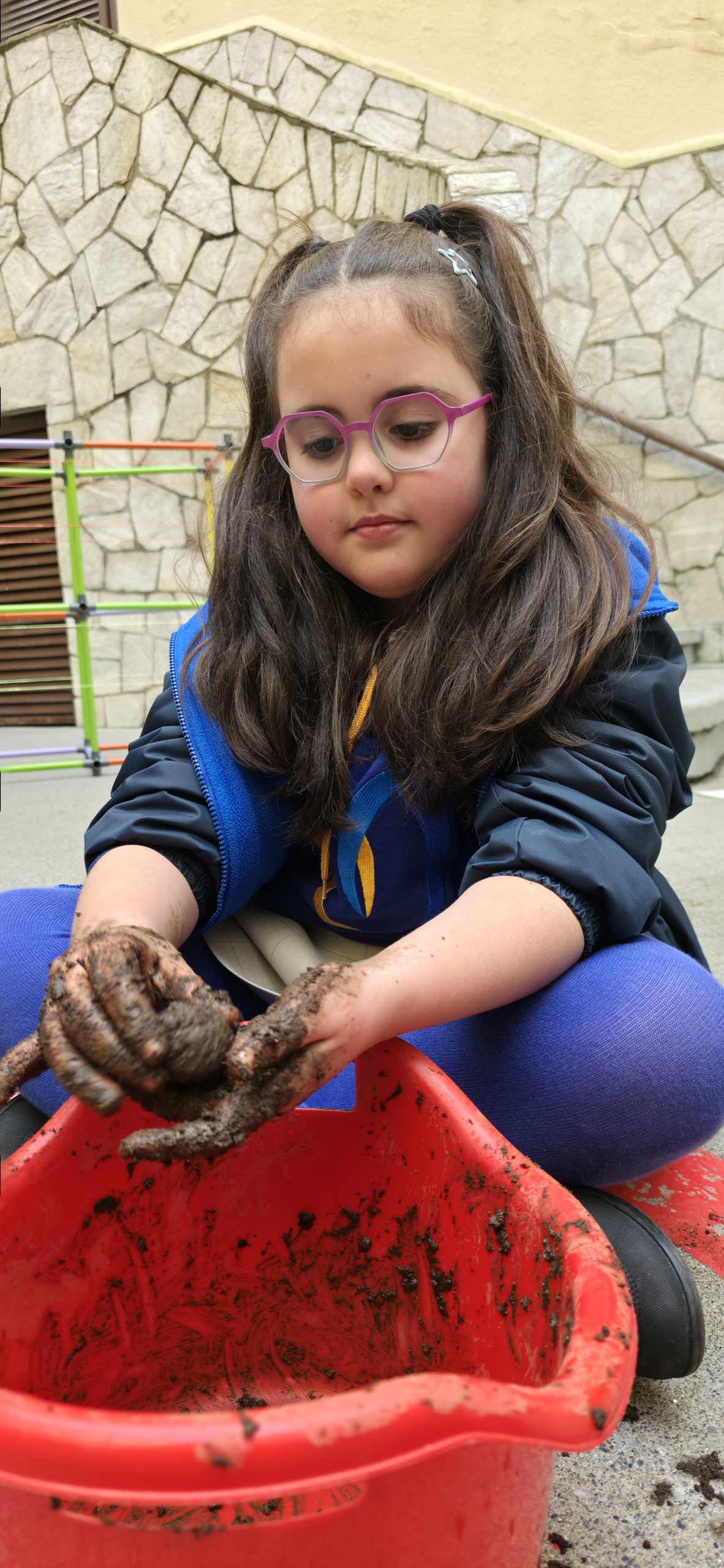
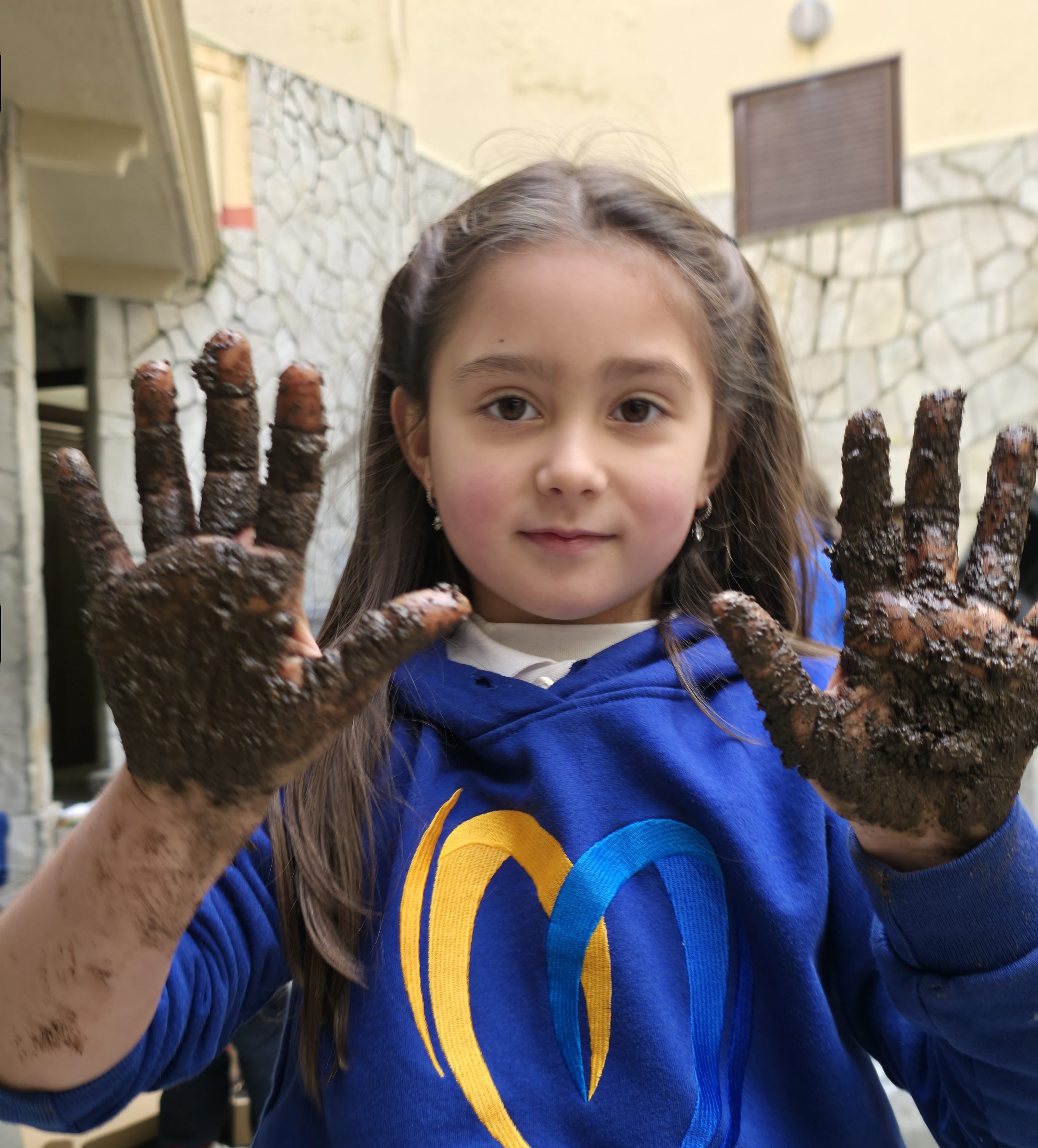
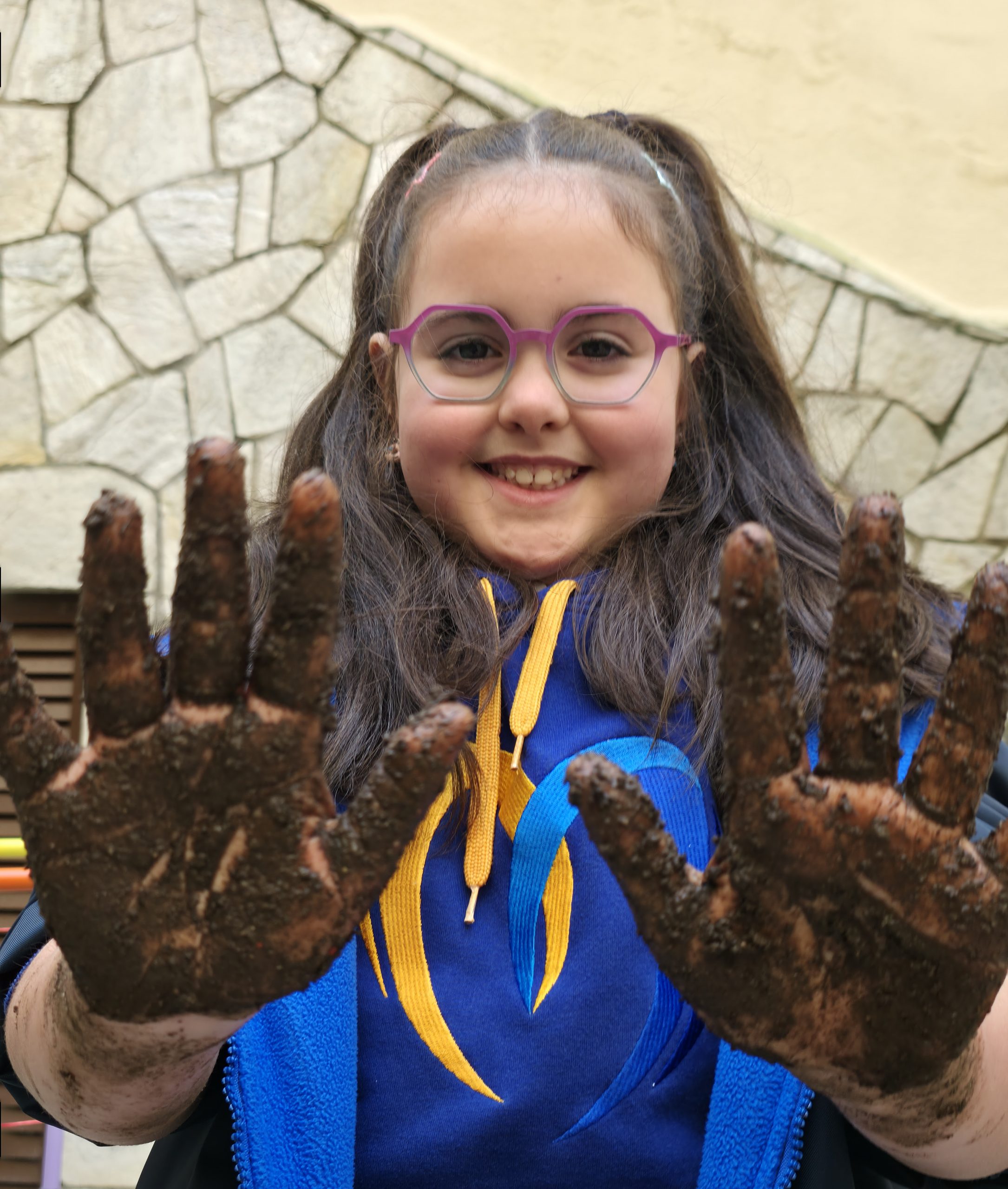
Transforming the yard working with natural elements

Transforming the yard working with natural elements

A Coruña


Transforming the Village Through Protagonist Participation


working with natural elements


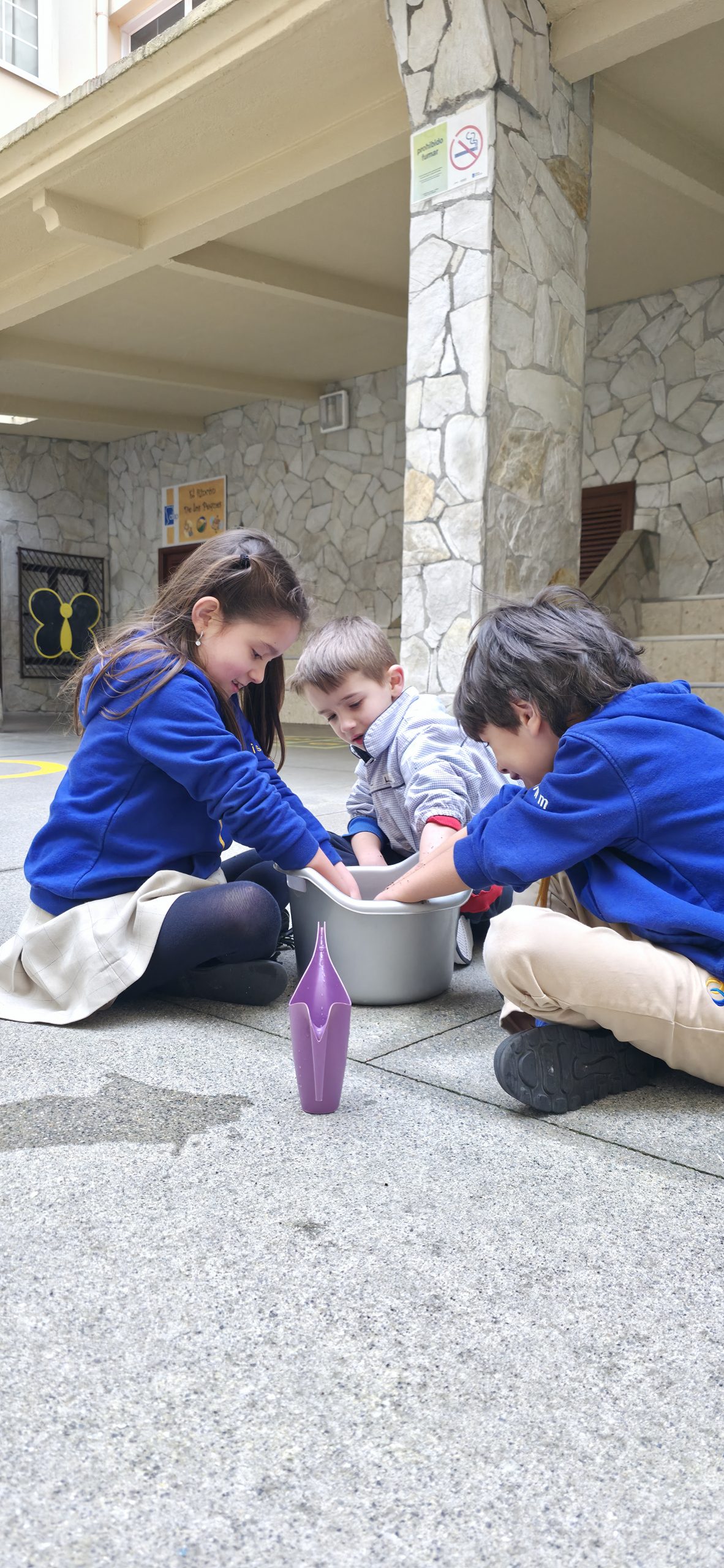
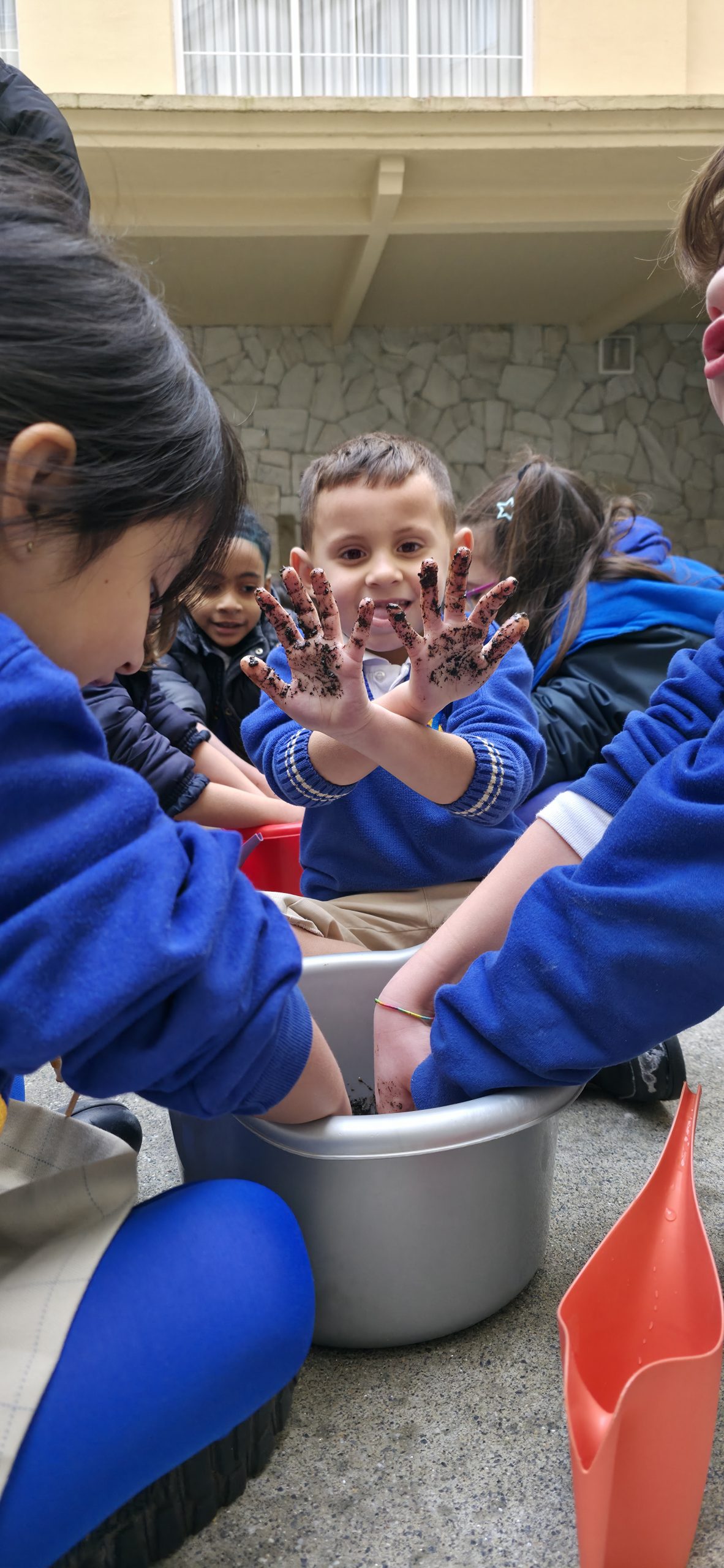
The aim of ‘A Vila da Mañá’ is to change the model of town or city, we believe that another one can be possible. This is achieved through the protagonist participation of local children and adolescents who, by working with fundamental concepts through tactical urban planning actions, become active citizens capable of transforming their spaces.

In this case we work with sustainability, reflecting on the way in which we relate to the planet and making girls, boys, and teenagers aware that what is sustainable consists of a balance between what allows us to develop our lives and what does not compromise the survival of future generations. And so, realizing that we only have one planet with limited resources that must be taken care of.


Color your city

The village or city in which we are working, transformed into a game board, a laboratory of experimentation where children and teenagers can act from a new point of view.

Working with three-dimensional elements

Working with three-dimensional elements

A Coruña


changing the village through protagonist participation 


Working with three-dimensional elements


“The opportunity for the child to discover his or her own movement is part of the city itself; the city is also a play space. The child uses all the elements of the city, all the built objects, all the surfaces he or she can climb or climb on. Children know how to play with these things very well, even if they are not allowed to.”

Aldo van Eyck
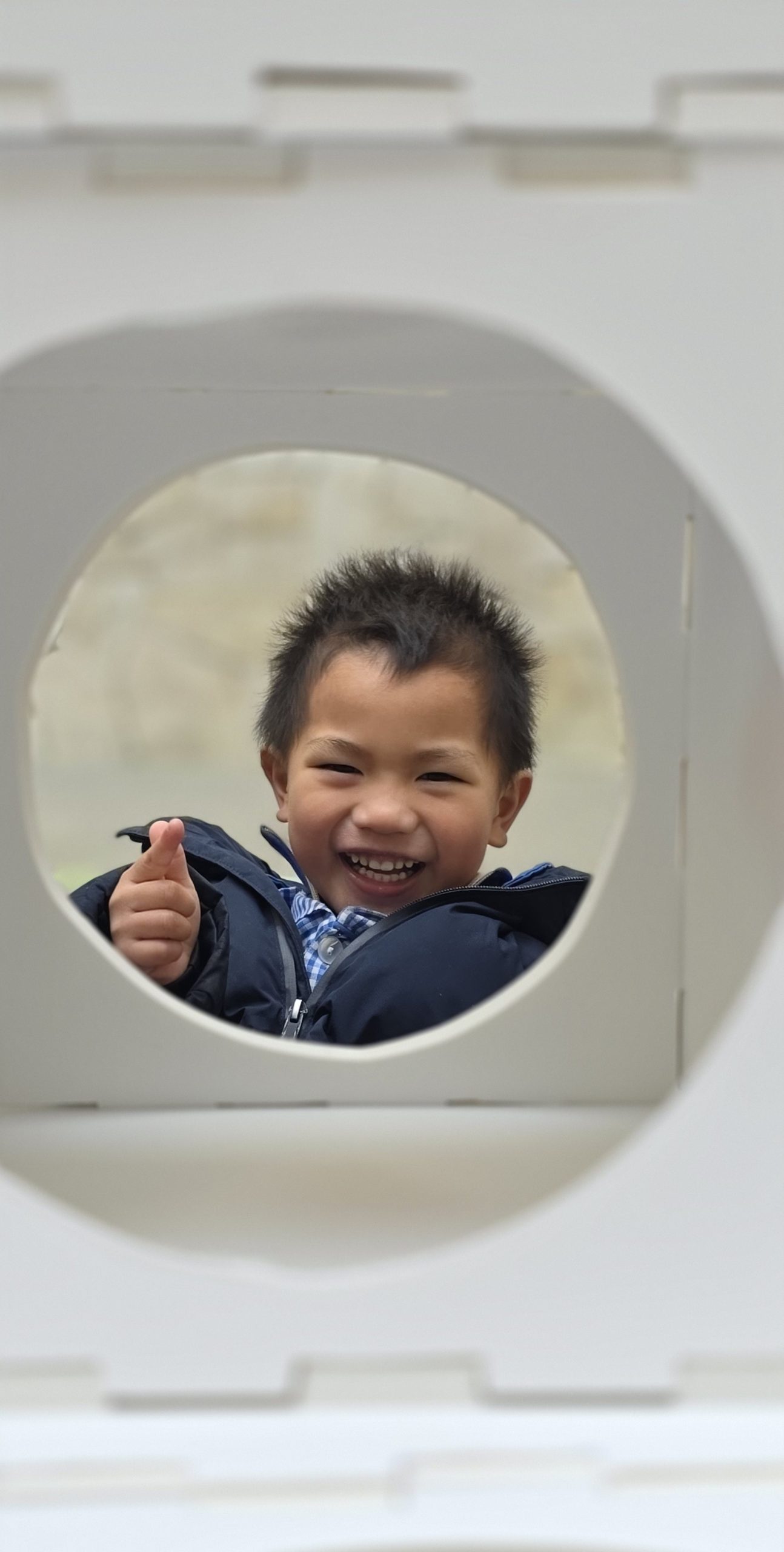


‘A Vila do Maña’ works with three-dimensional elements, based on Froebel’s “third gift”.
In architecture we have Froebel as a reference, through Frank Lloyd Wrigth who was educated with this method. It is a system based on the creativity and intuition of the child through direct experience, play and nature. It creates a pedagogical resource based on ‘gifts’ and ‘occupations’. The ‘gifts’ are pedagogical materials that do not change, but are transformed; the ‘occupations’ are activities in which children play by transforming the objects they manipulate. The ‘gifts’ are precursors of today’s building blocks.
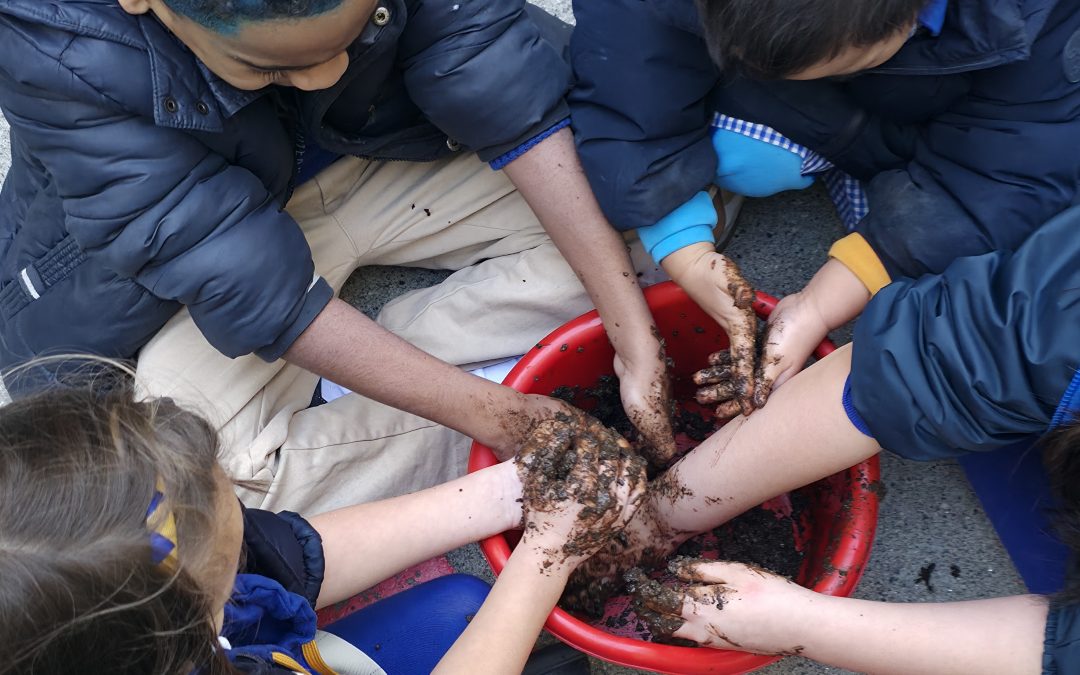
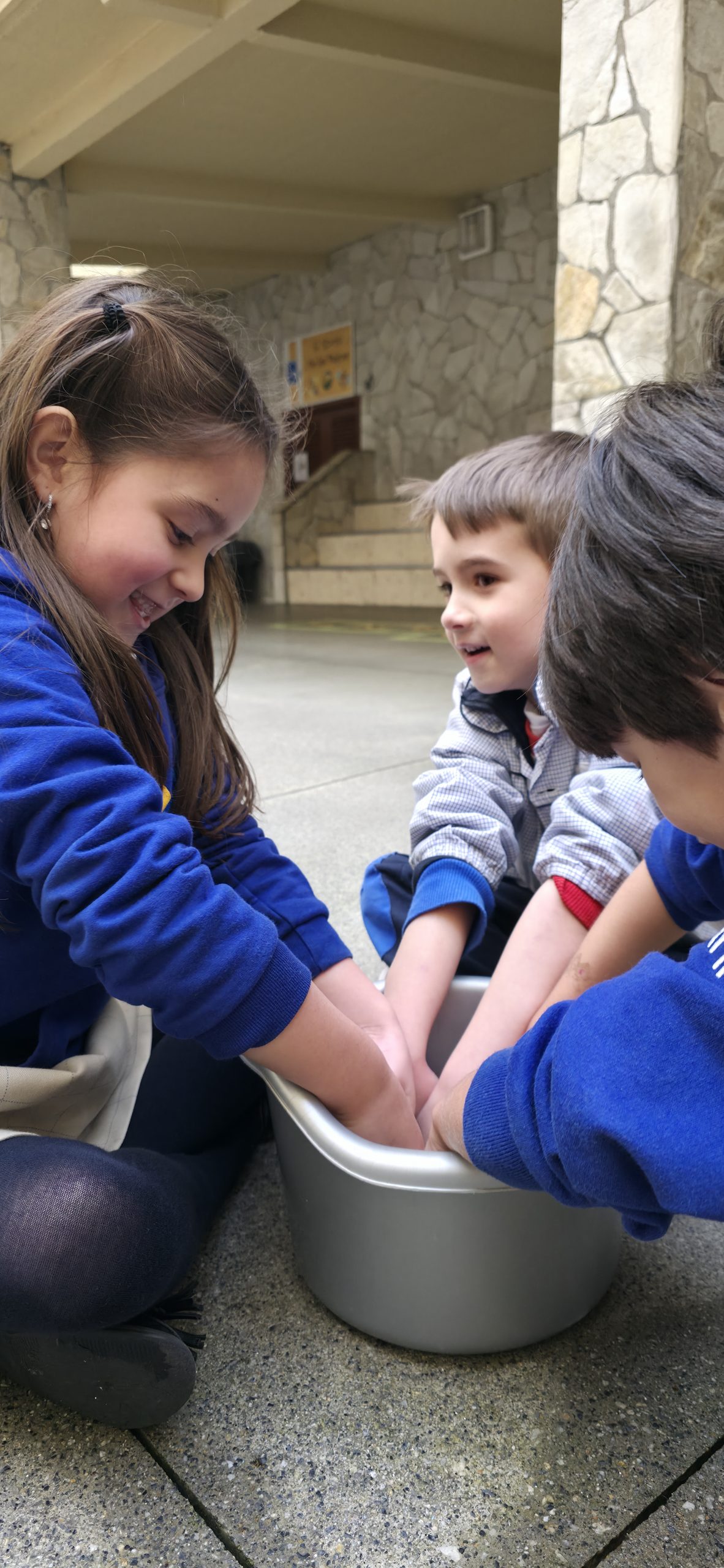
Colour your village

The village or city in which we are working has been turned into a game board, a laboratory of experimentation where children and teenagers can act from a new point of view.
THE VILLAGE AS A GAMEBOARD

THE VILLAGE AS A GAMEBOARD

PONTEVEDRA

CHANGING THE VILLAGE THROUGH PROTAGONIST PARTICIPATION


THE VILLAGE AS A GAMEBOARD


“Every city has its own history, its own landmarks. I’m not only referring to those buildings officially recognised as important parts of the nation’s historical heritage. I mean, above all, the places that belong to the city’s memory — places that are fundamental to its identity, to the sense of belonging to a city. Whether it’s a factory, an old tram stop, or one of those grocery shops where everything was ingenuously displayed.”

Jaime Lerner


The right of children and adolescents to PARTICIPATE in the CONSTRUCTION of their VILLAGE or CITY as part of an ACTIVE CITIZENSHIP, in such a way that they become both participants in and agents of change in their surroundings.

For this sense of protagonist to exist, CHILDREN and ADOLESCENTS must reflect on their surroundings (the space in which they live their lives), their context and propose solutions for change become aware of what it means to be a legal entitlement and the importance that their participation can have as a driving force for change in the rest of society.

COLOUR YOUR VILLAGE

The village or city in which we are working, transformed into a game board, a laboratory of experimentation where children and teenagers can act from a new point of view.
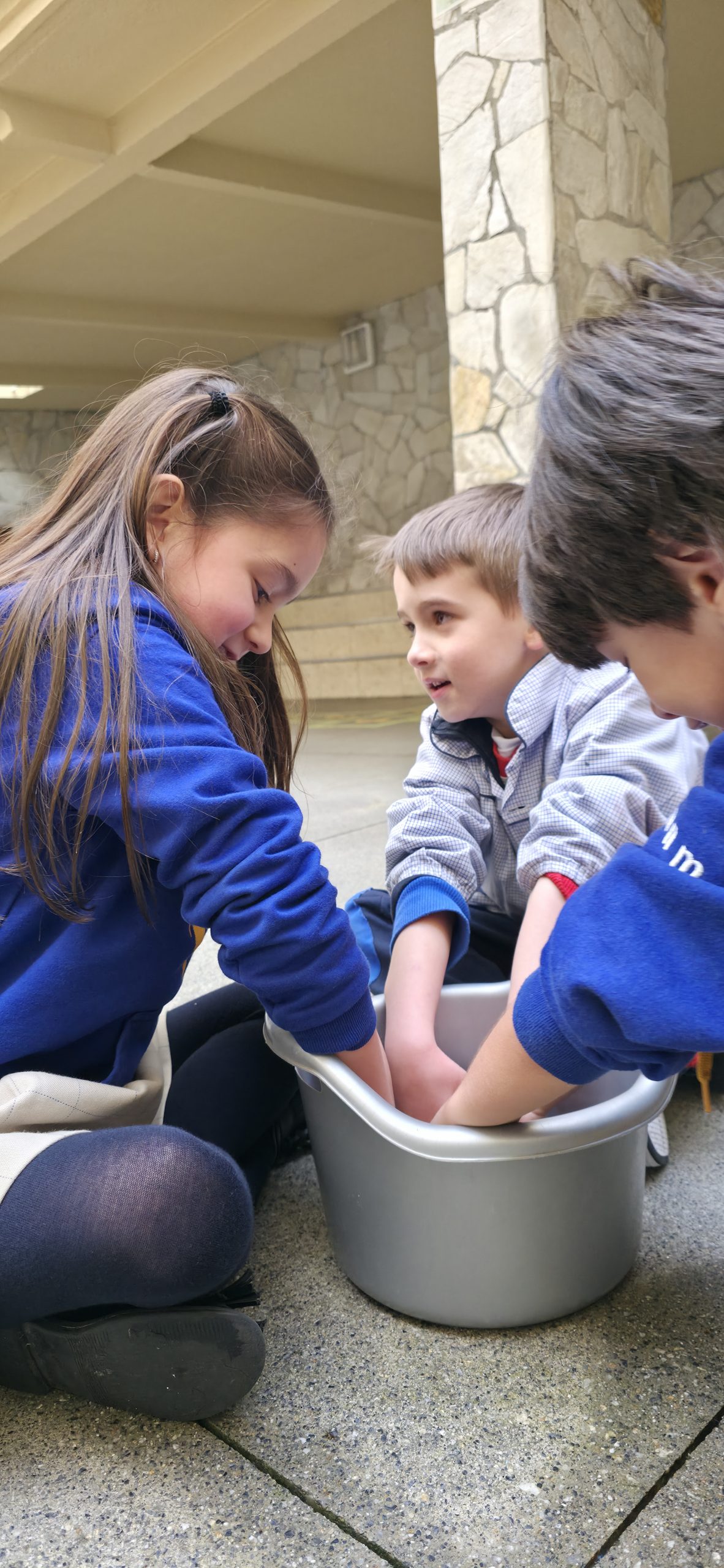
Working with the SCALE

Working with the SCALE

PONTEVEDRA


Changing the village through protagonist participation


Working with the scale


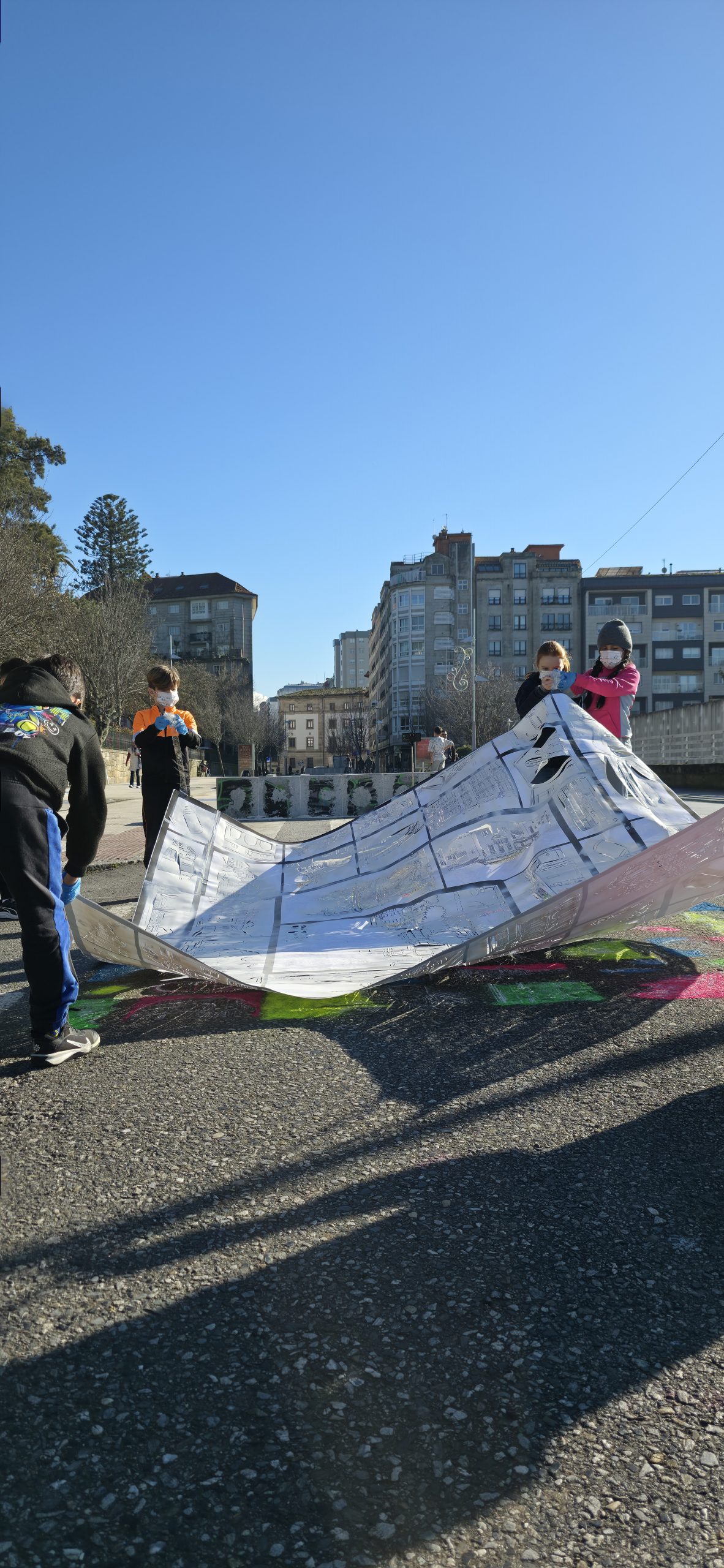
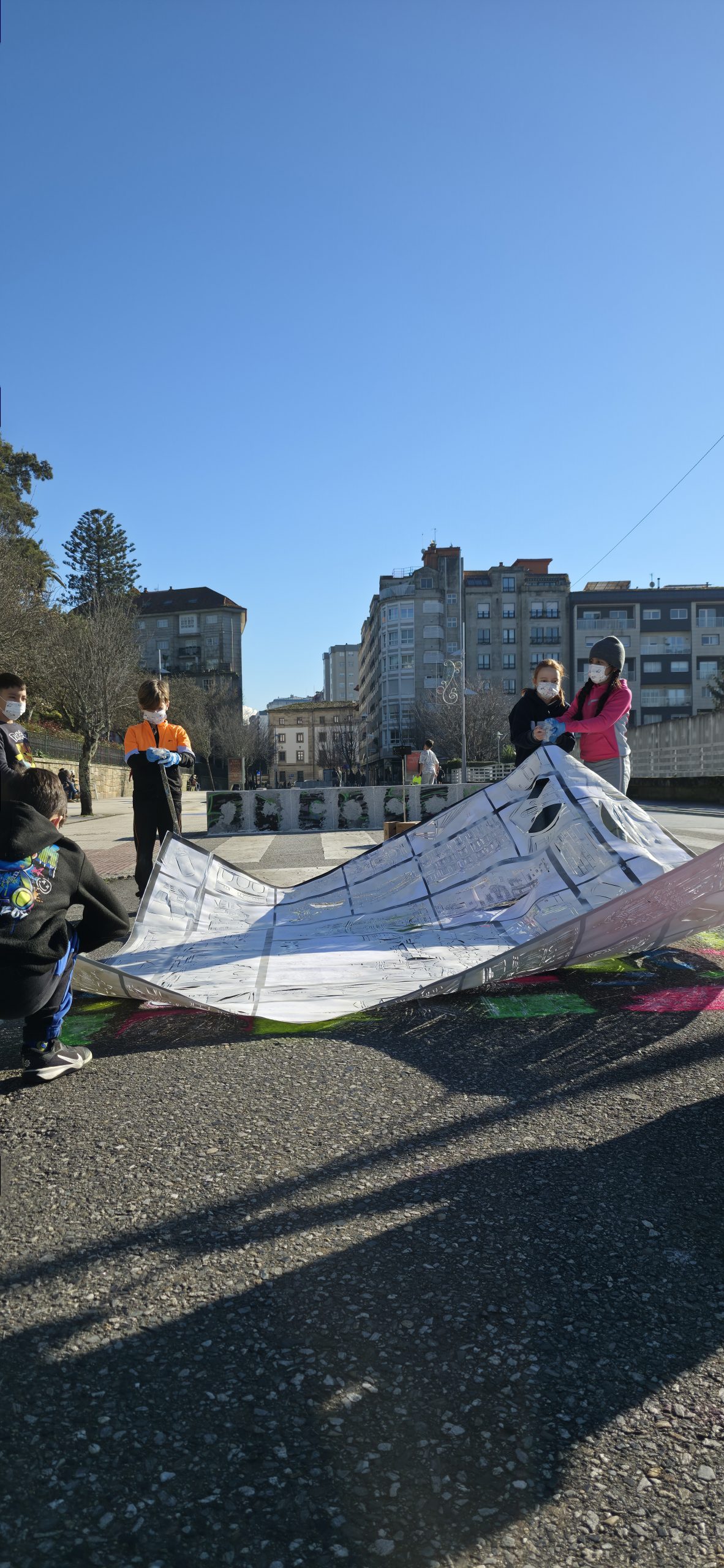
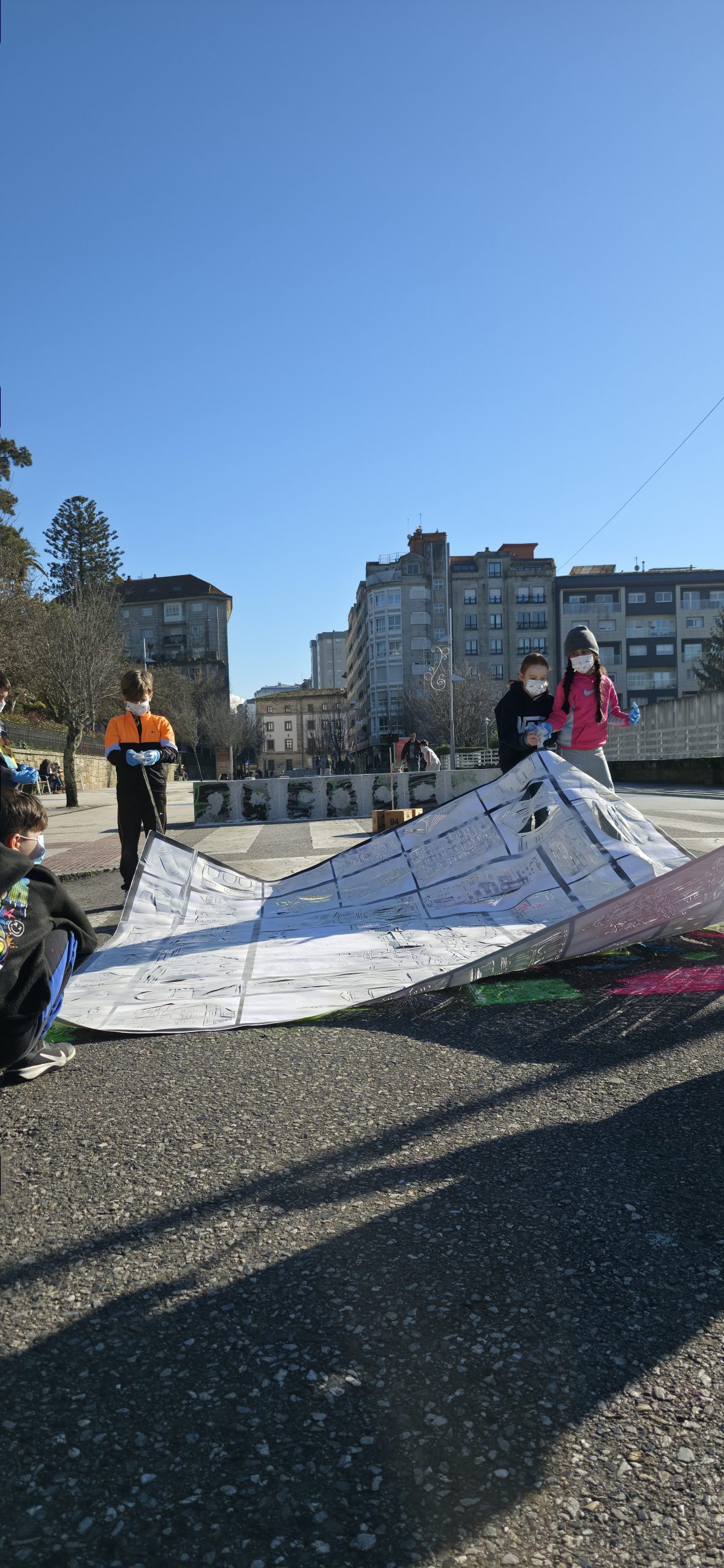
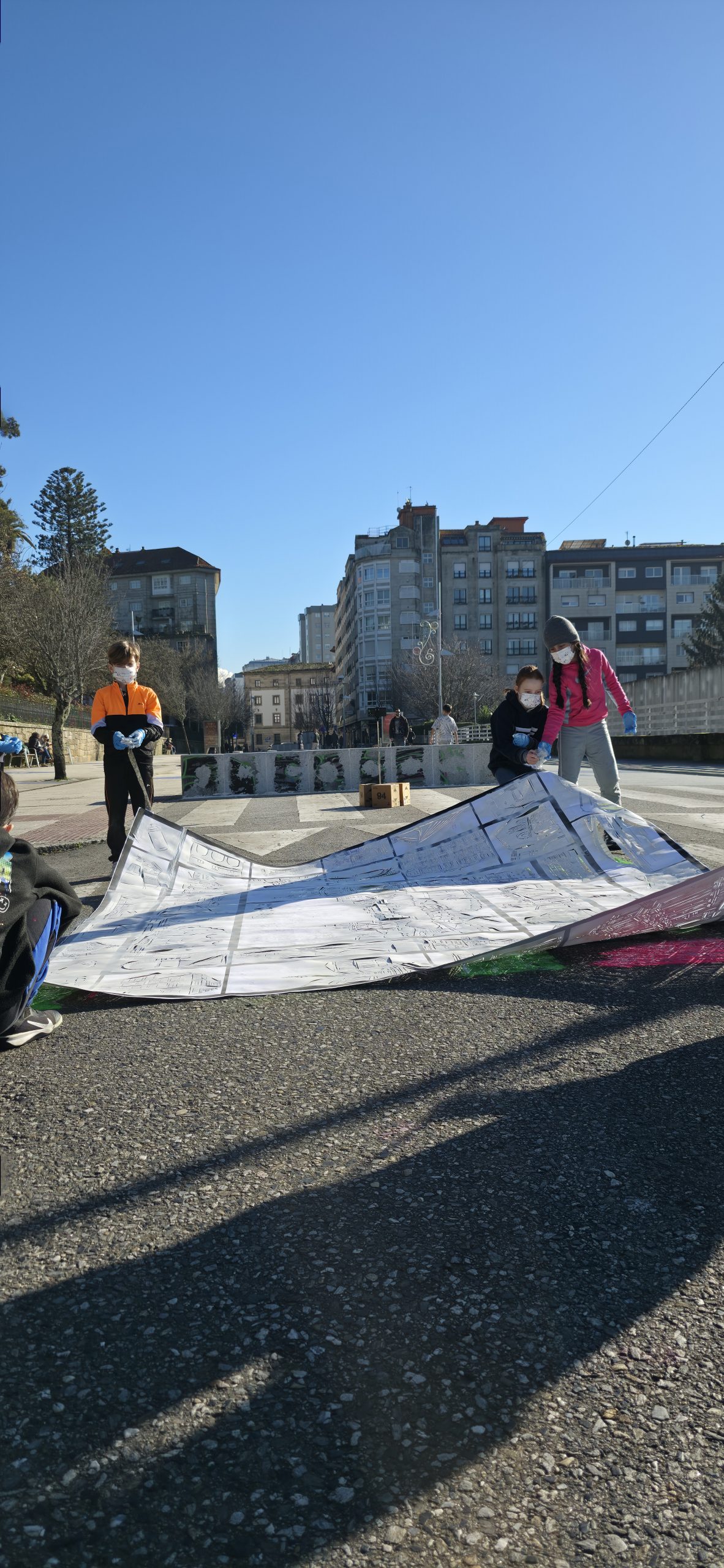
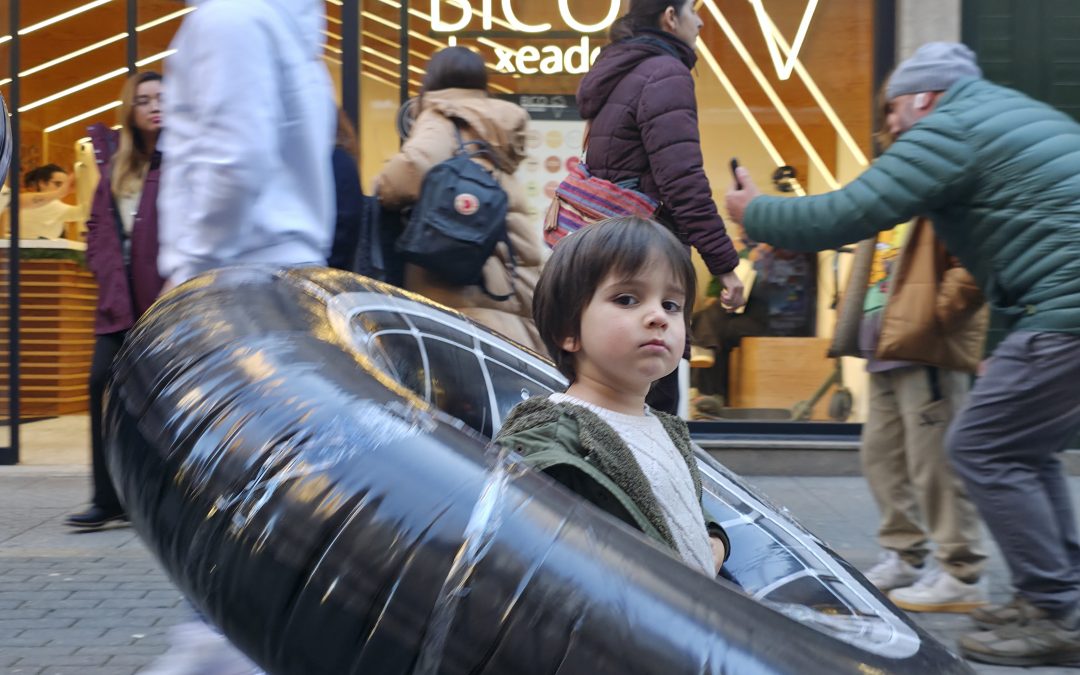
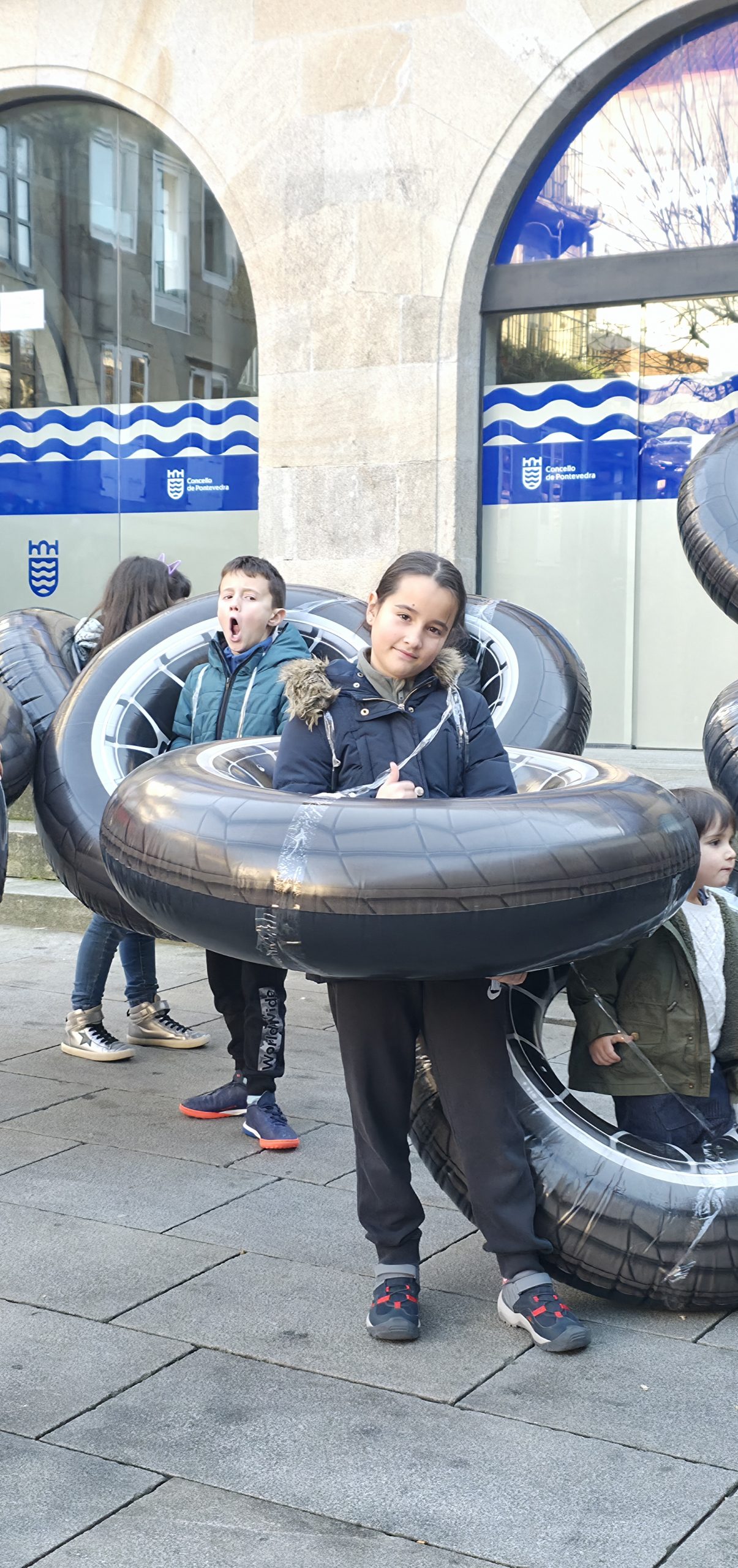
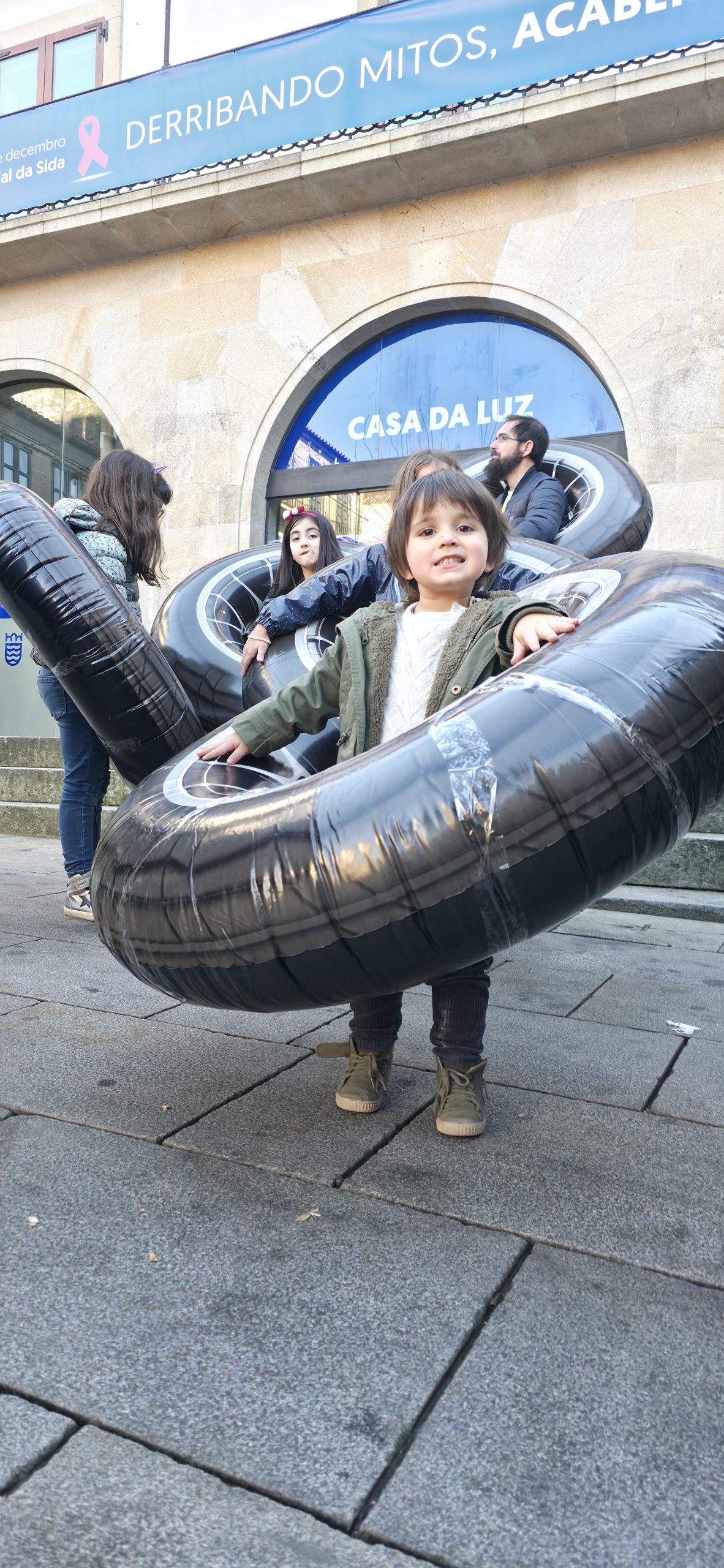
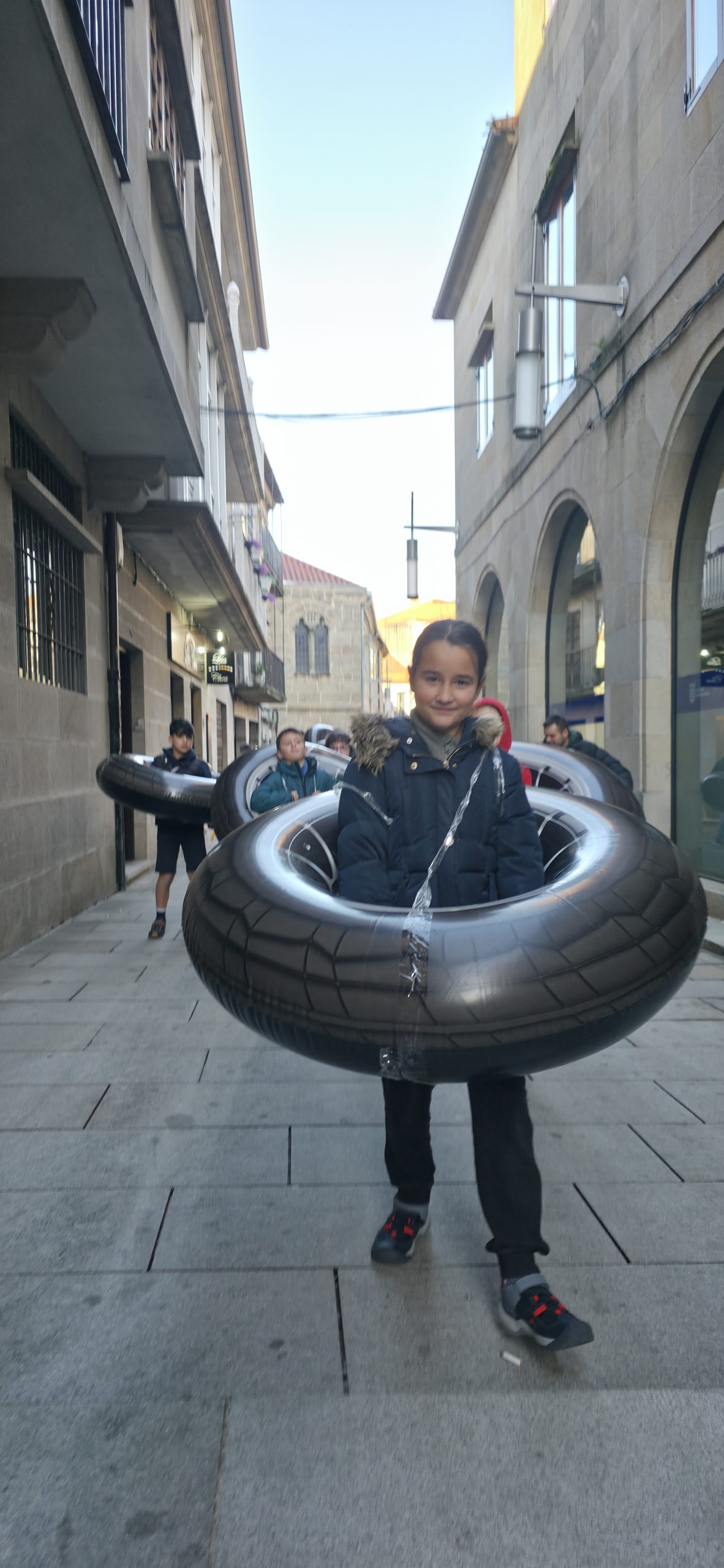
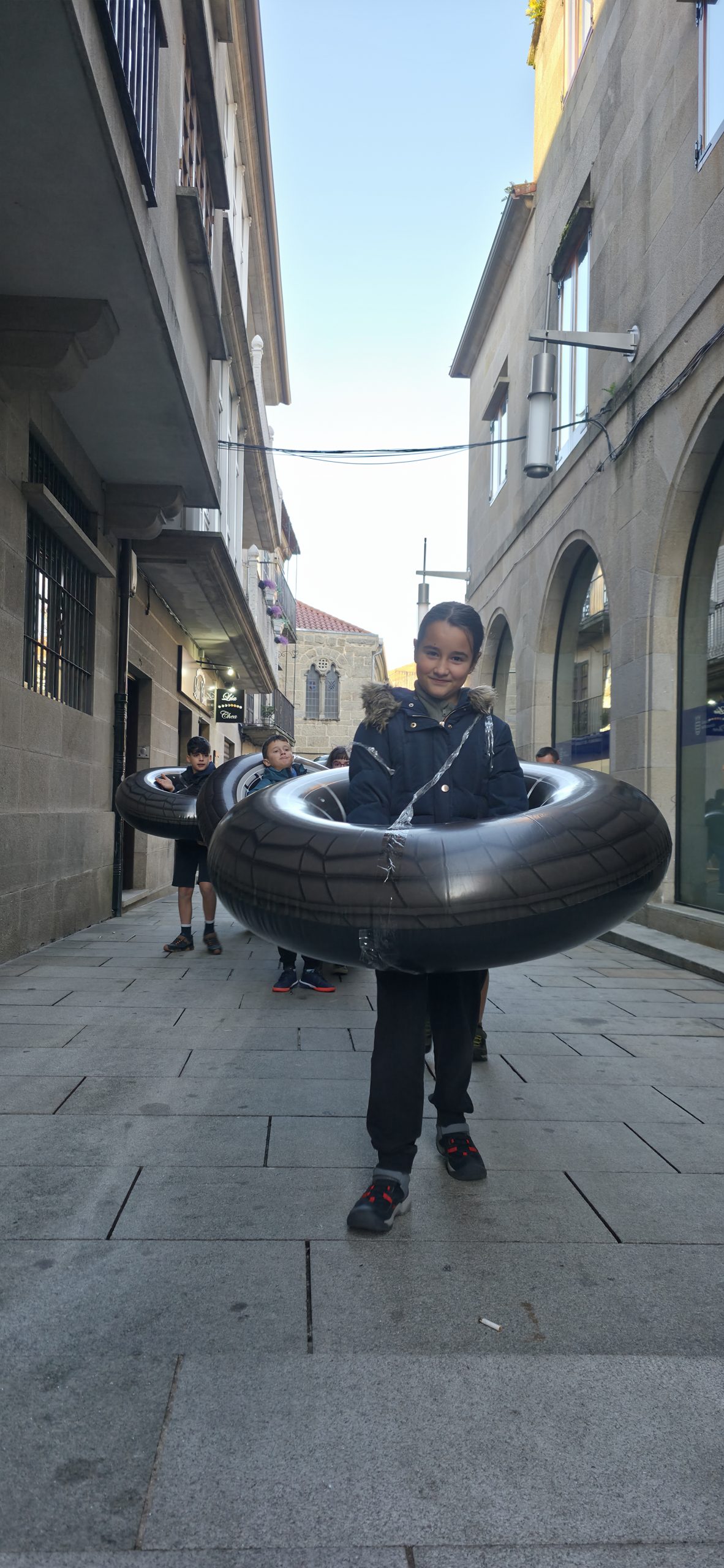
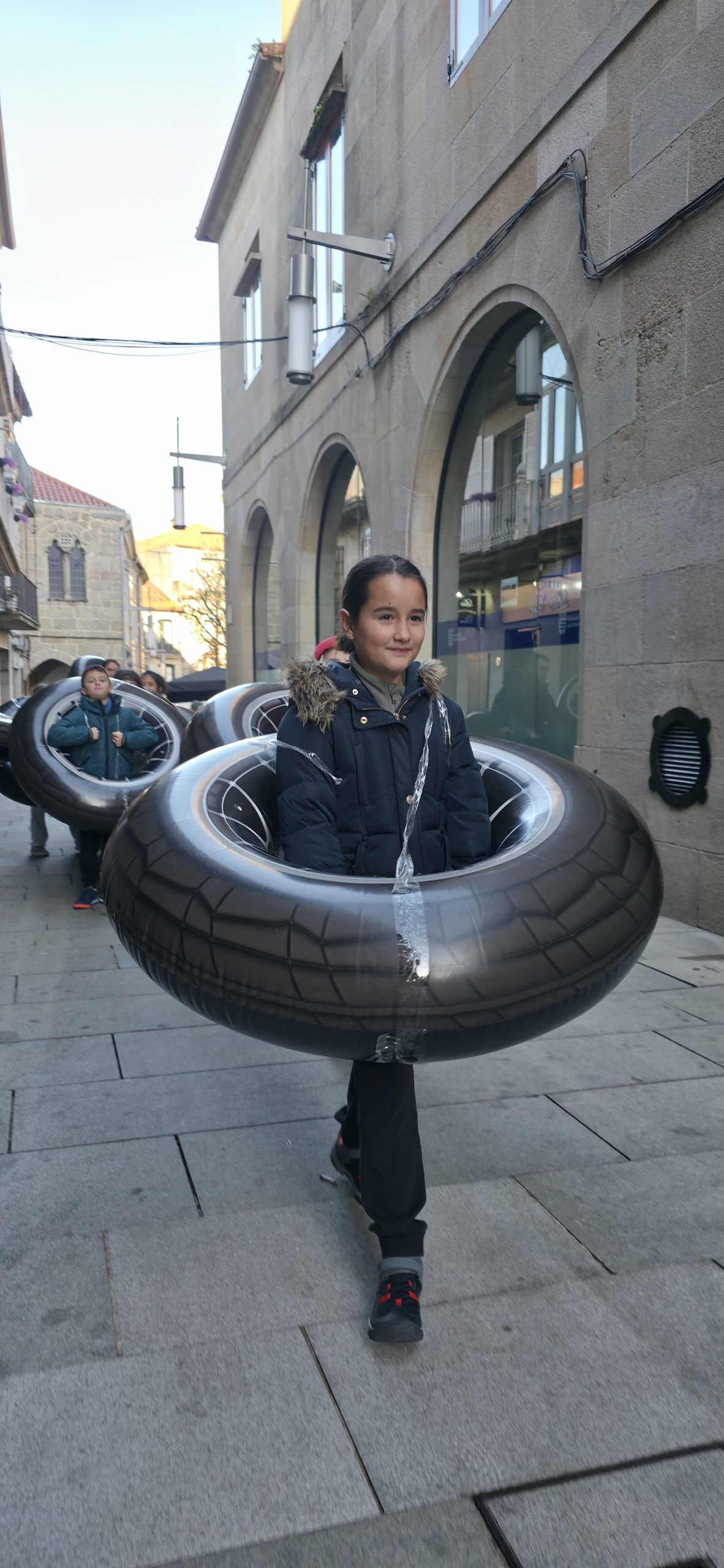
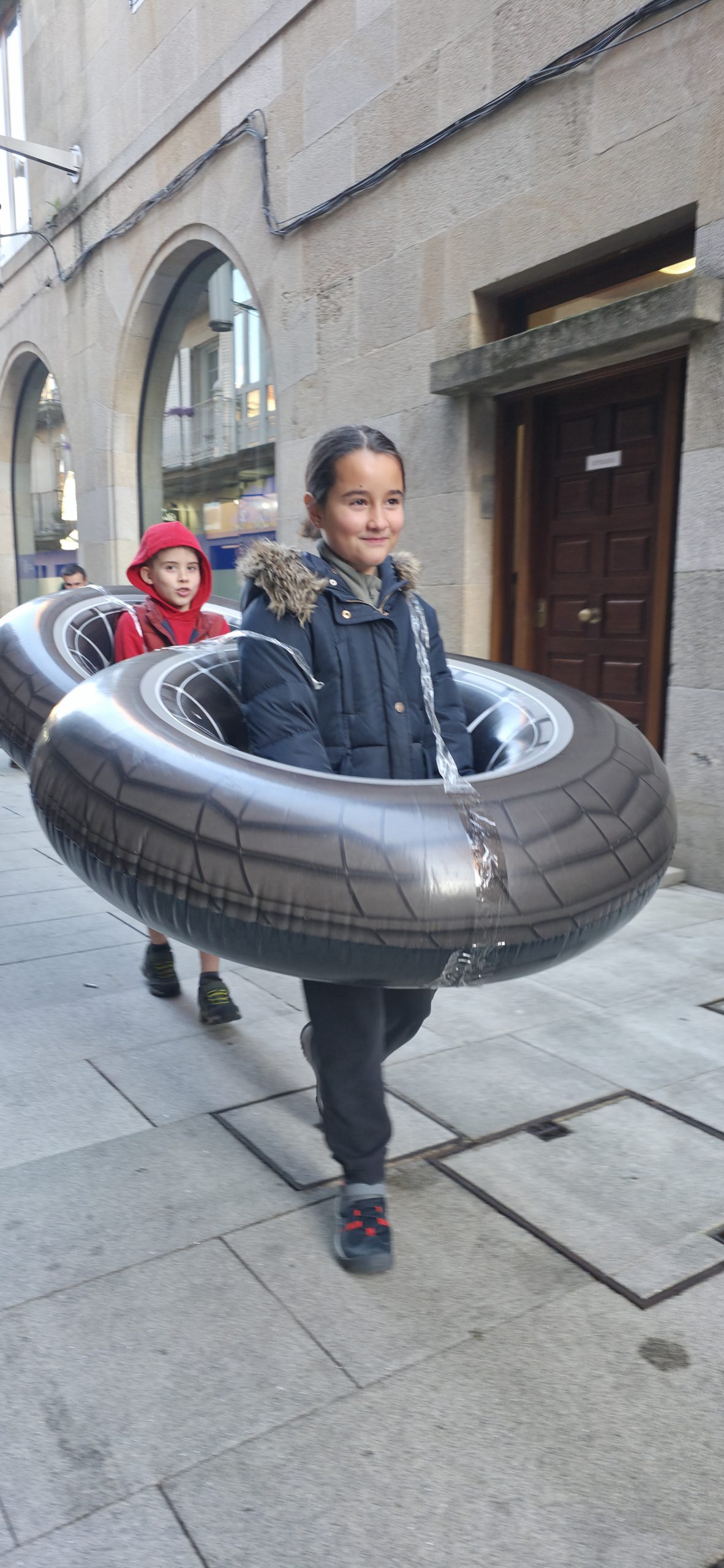
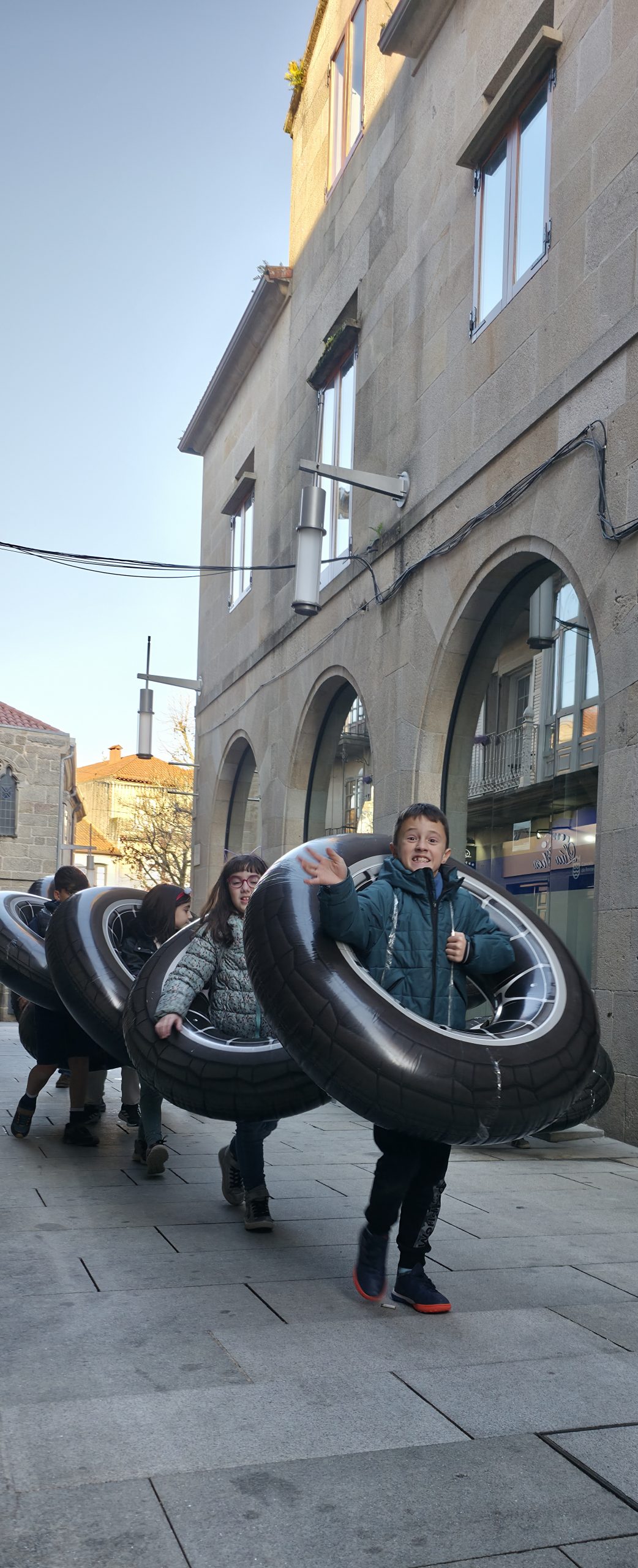
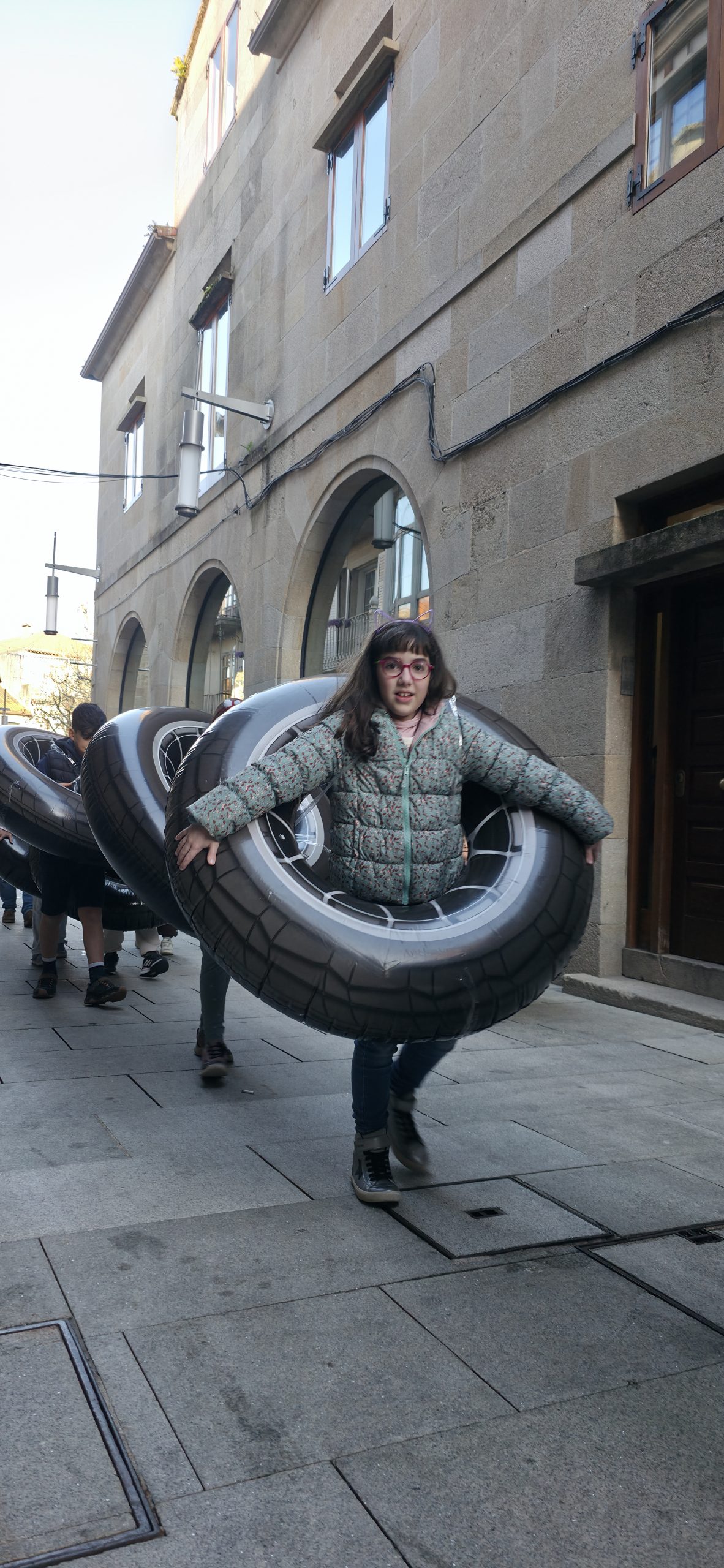
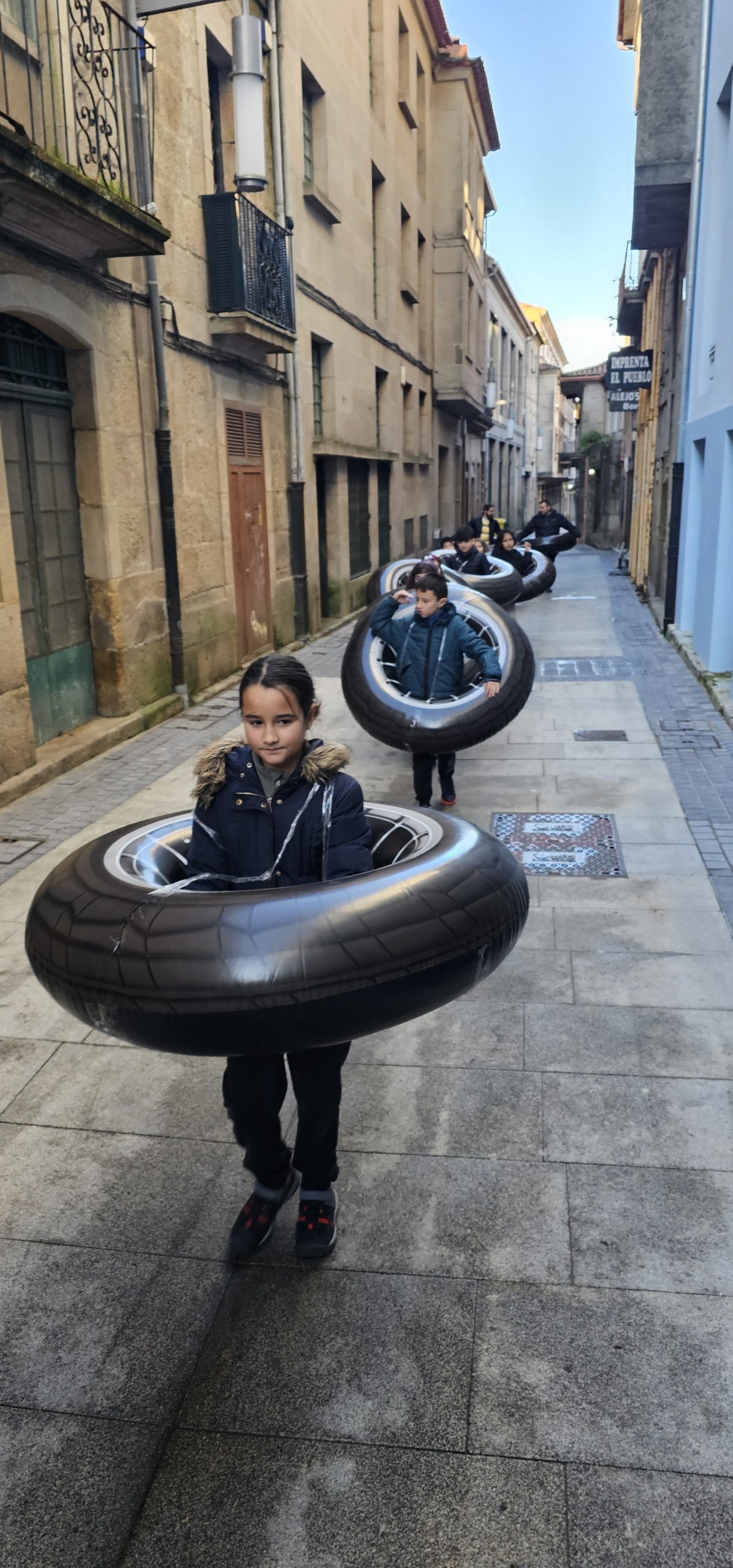
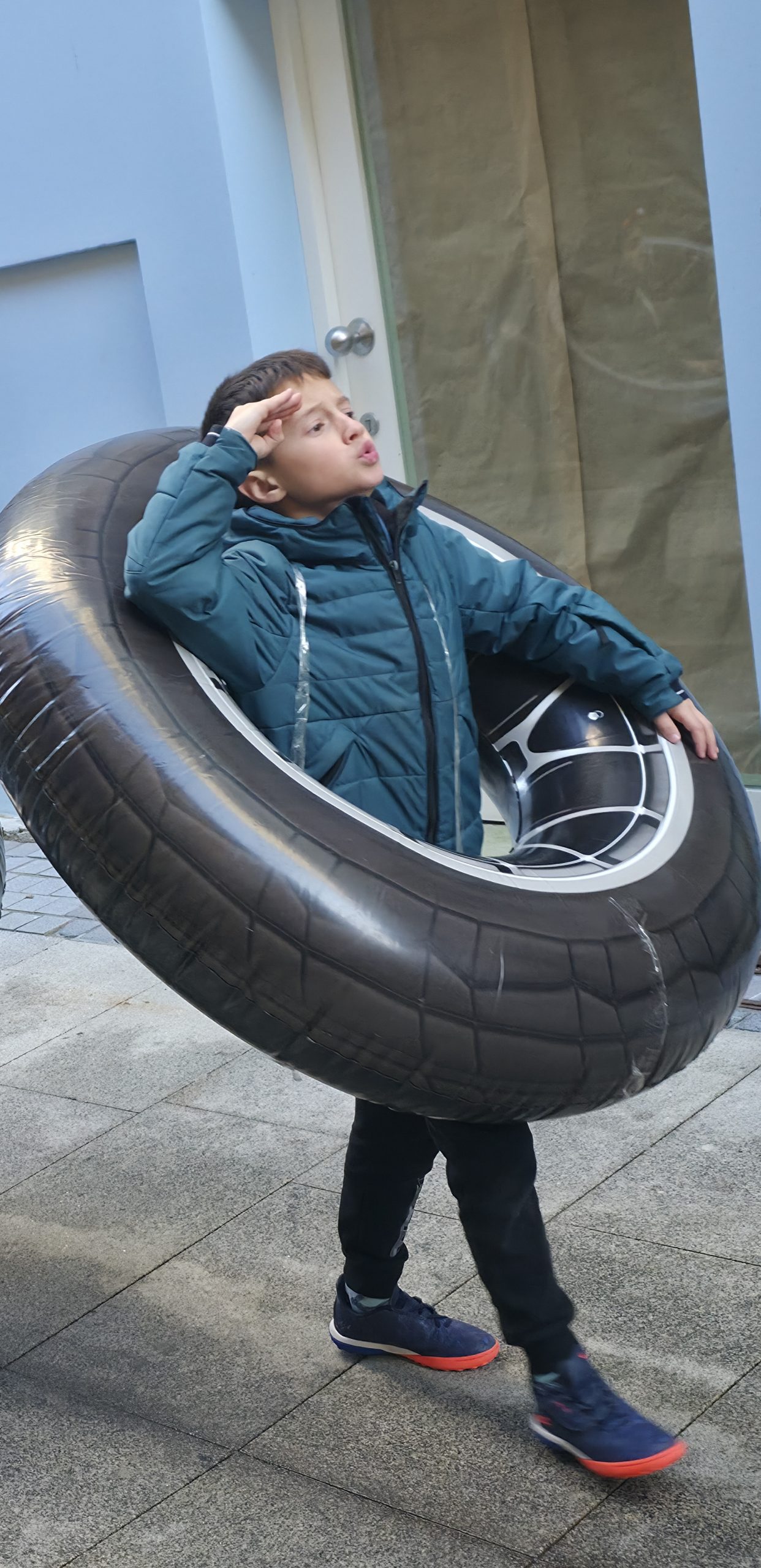
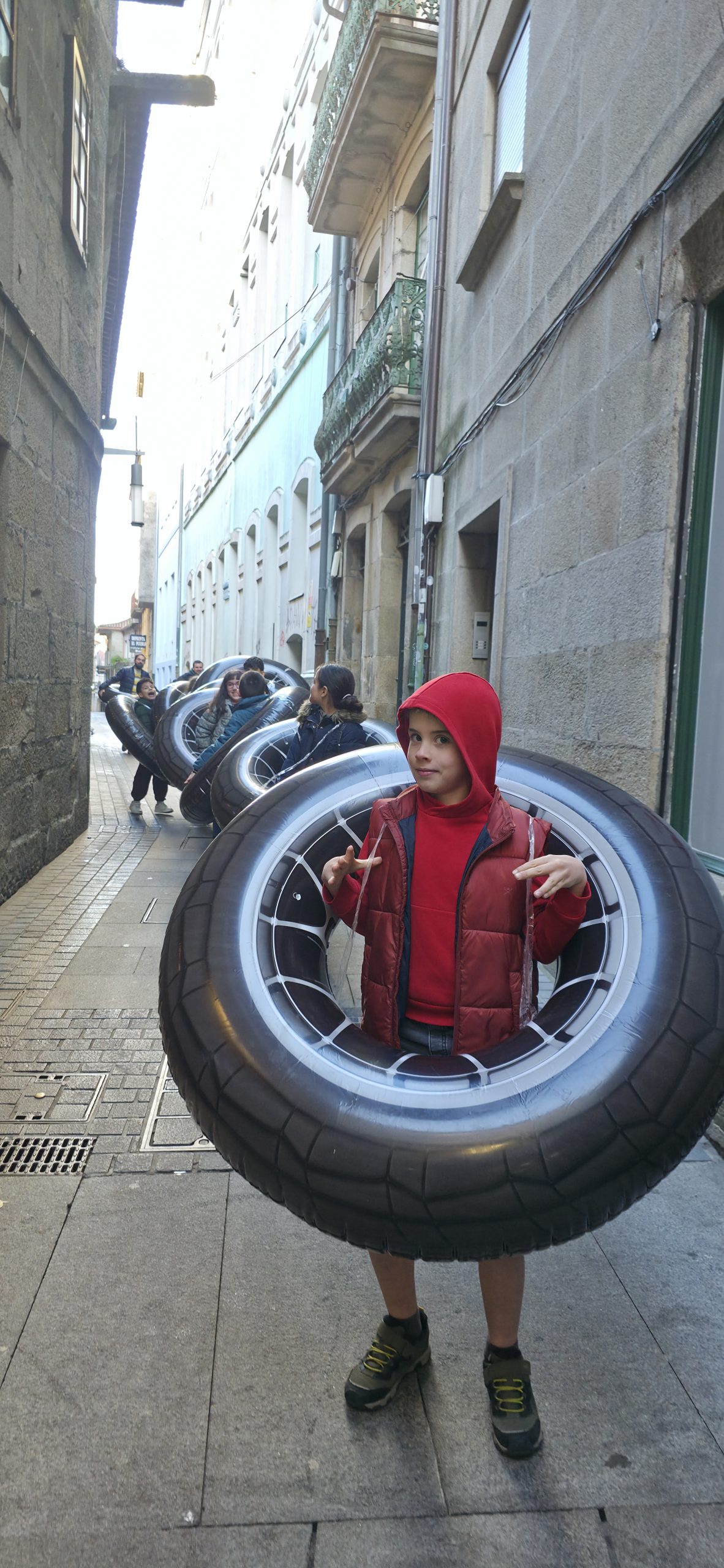
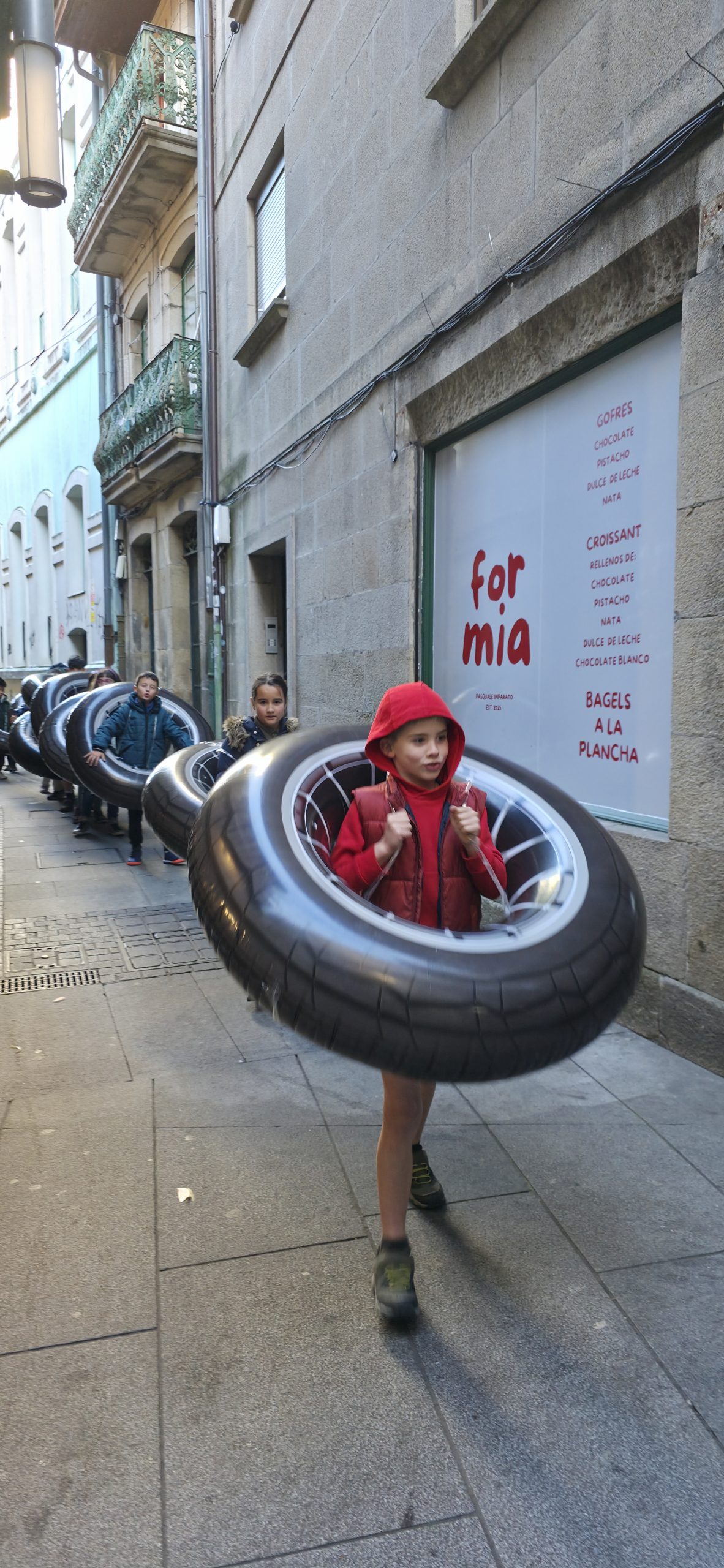
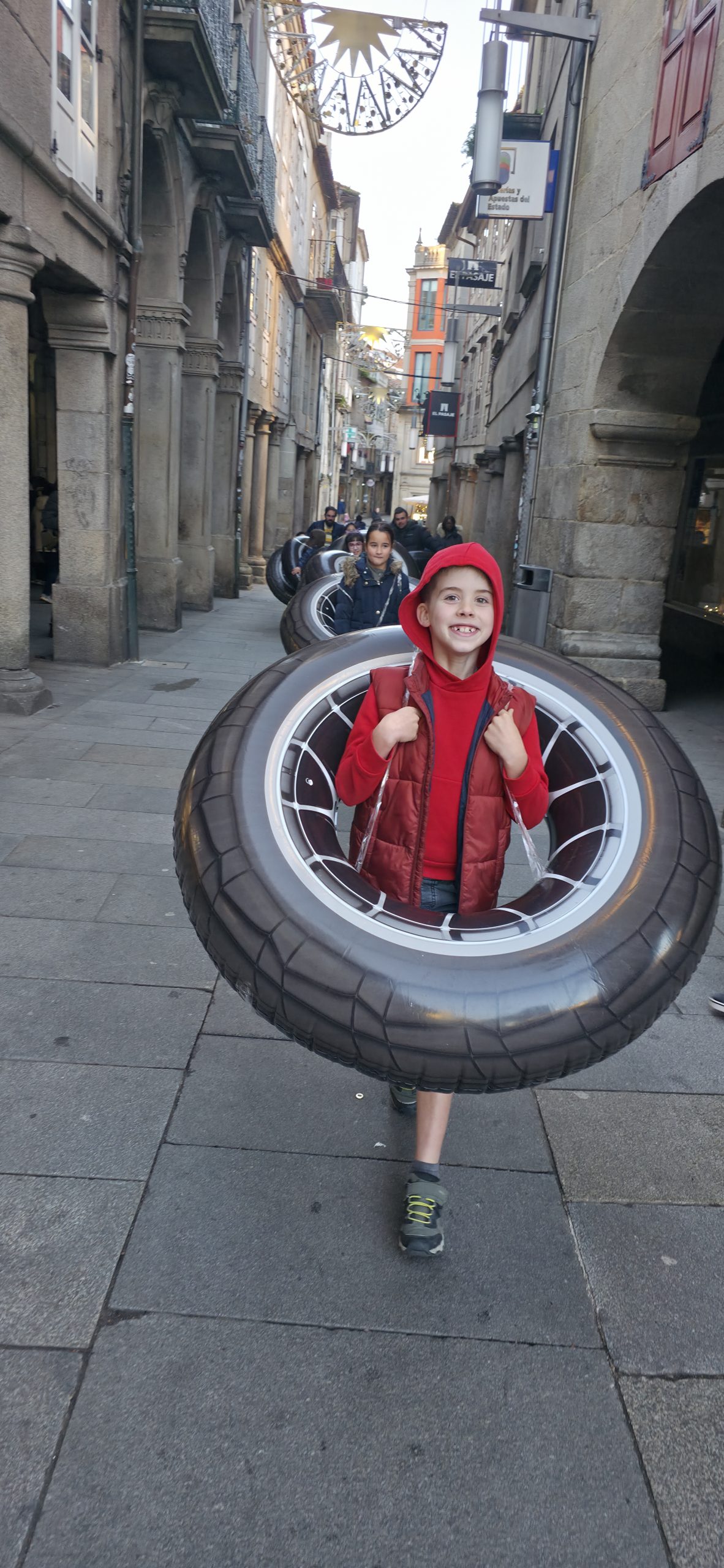
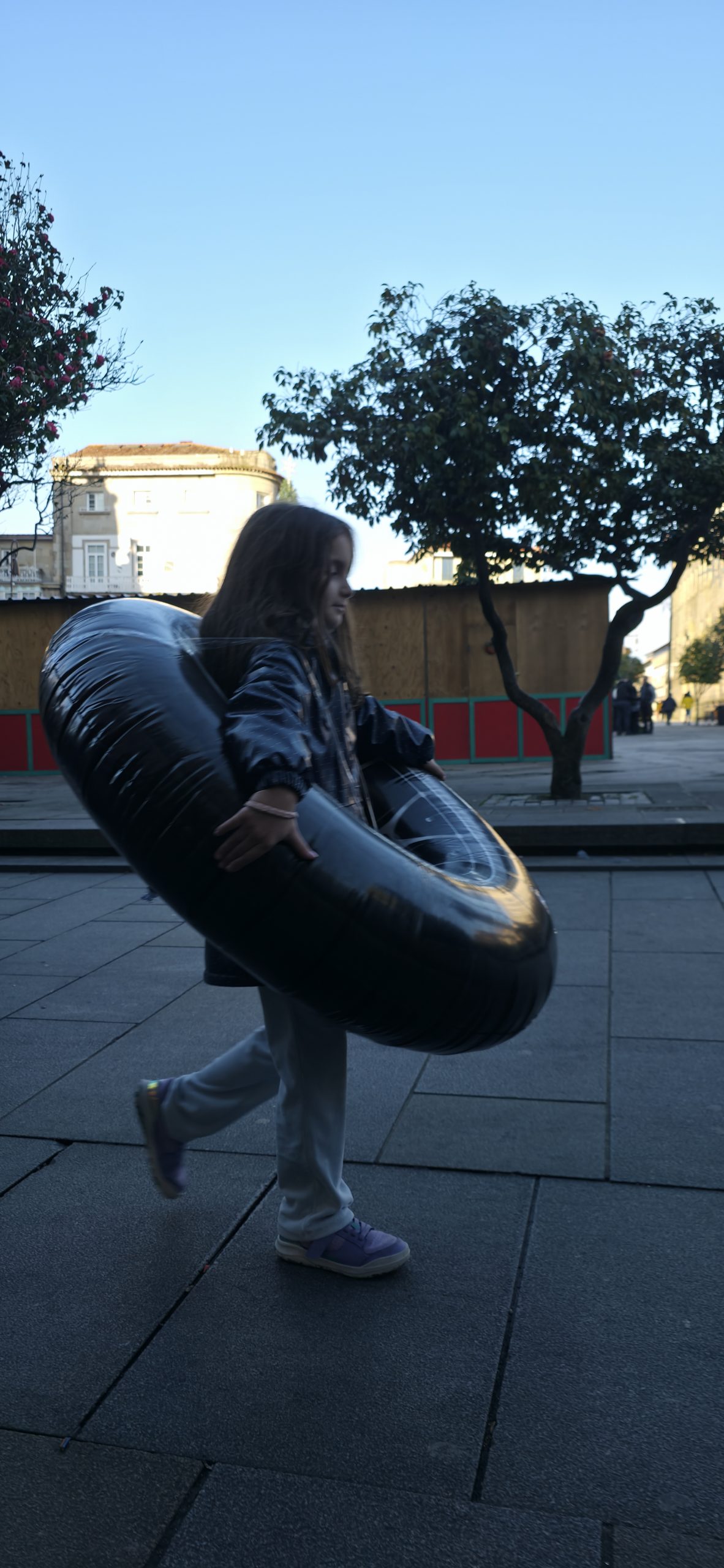
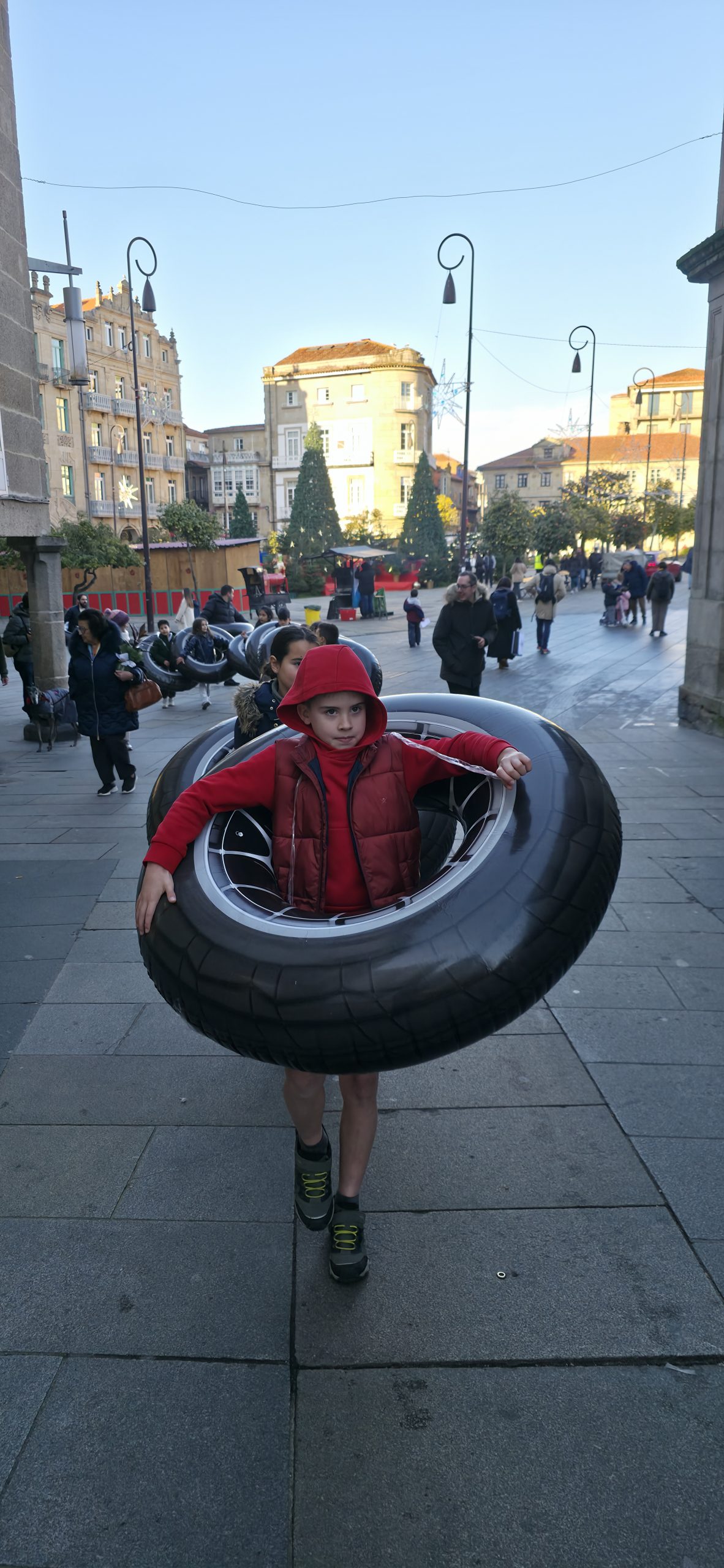
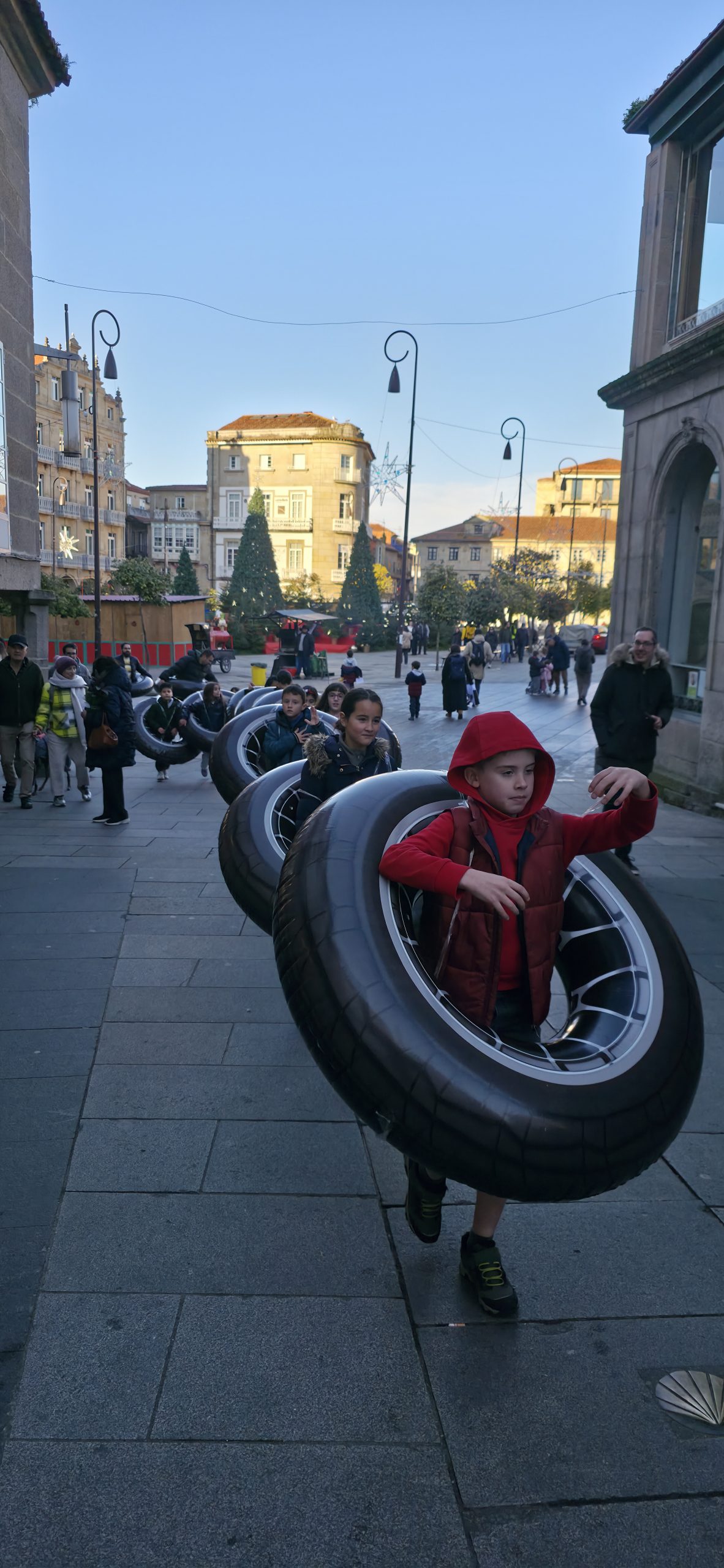
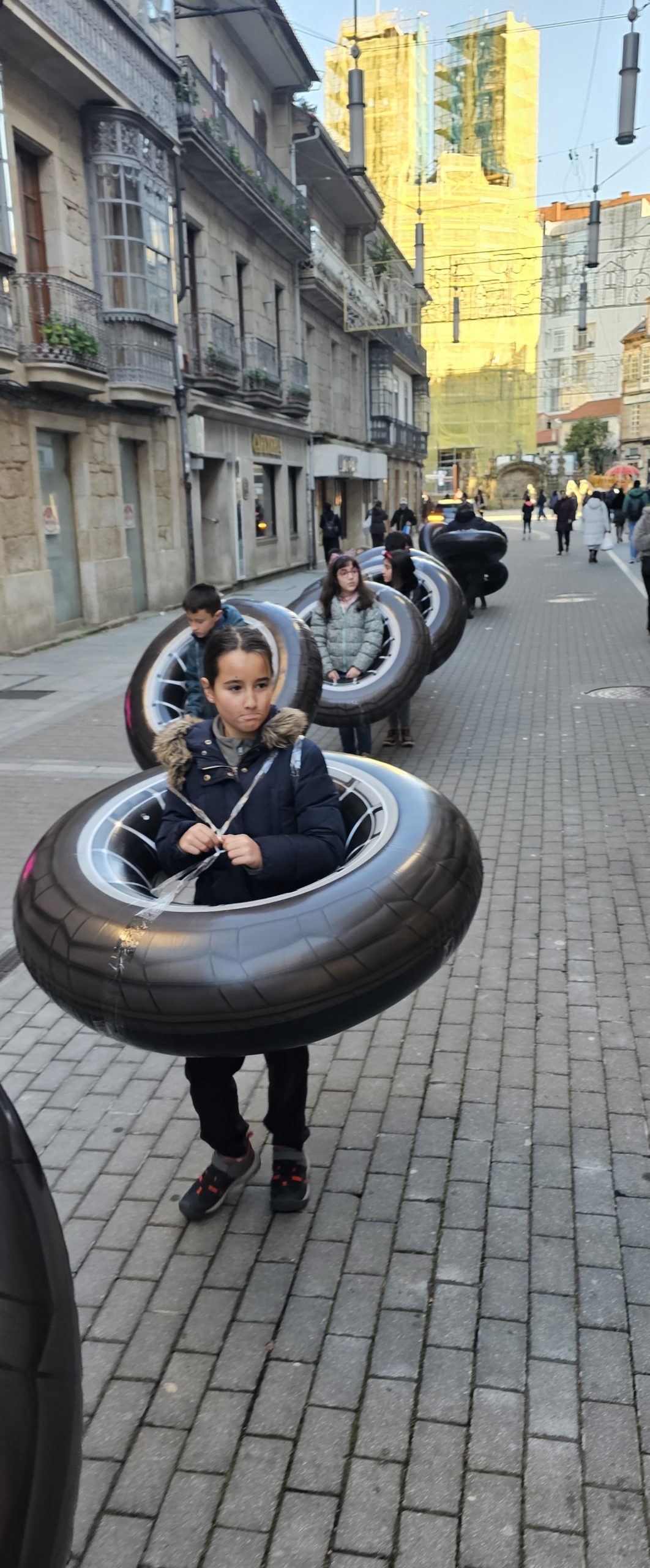
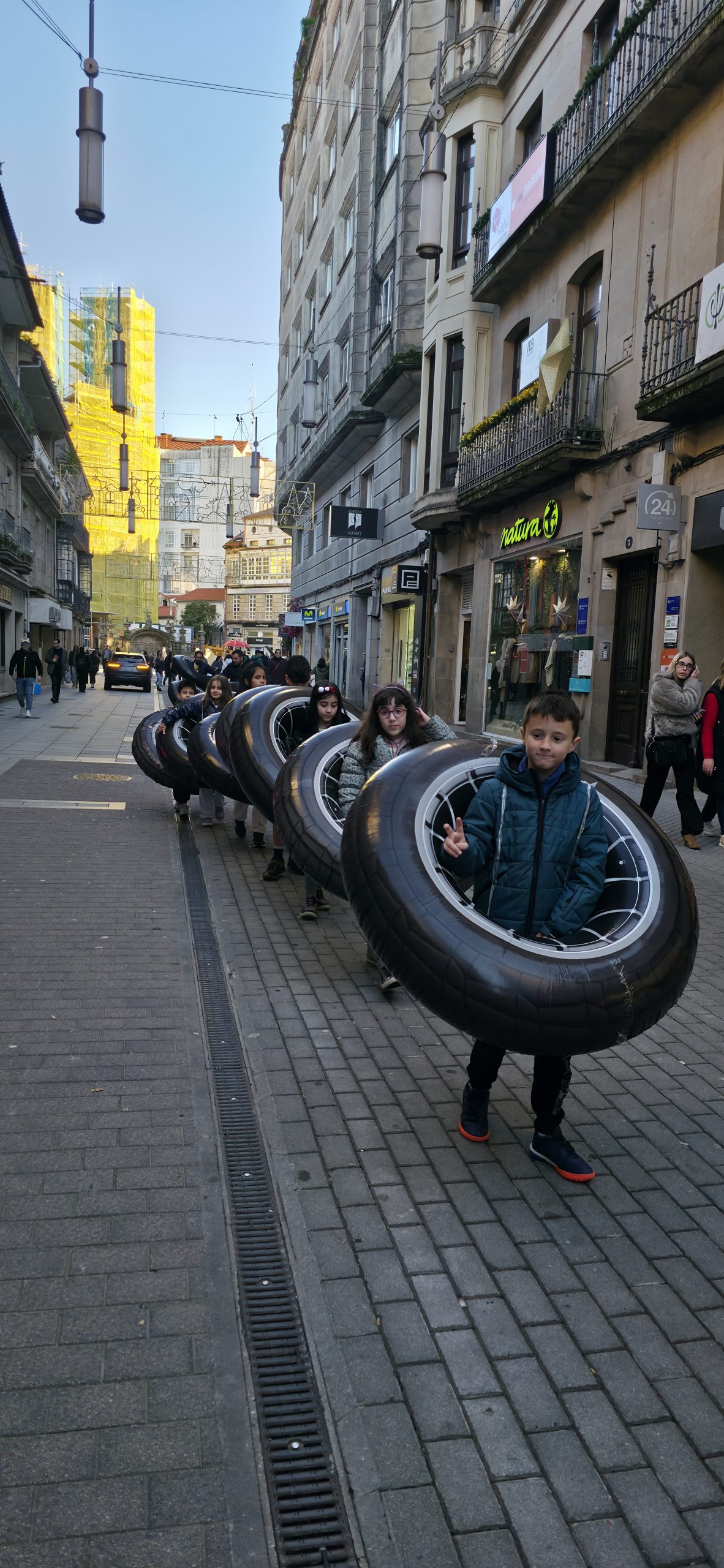
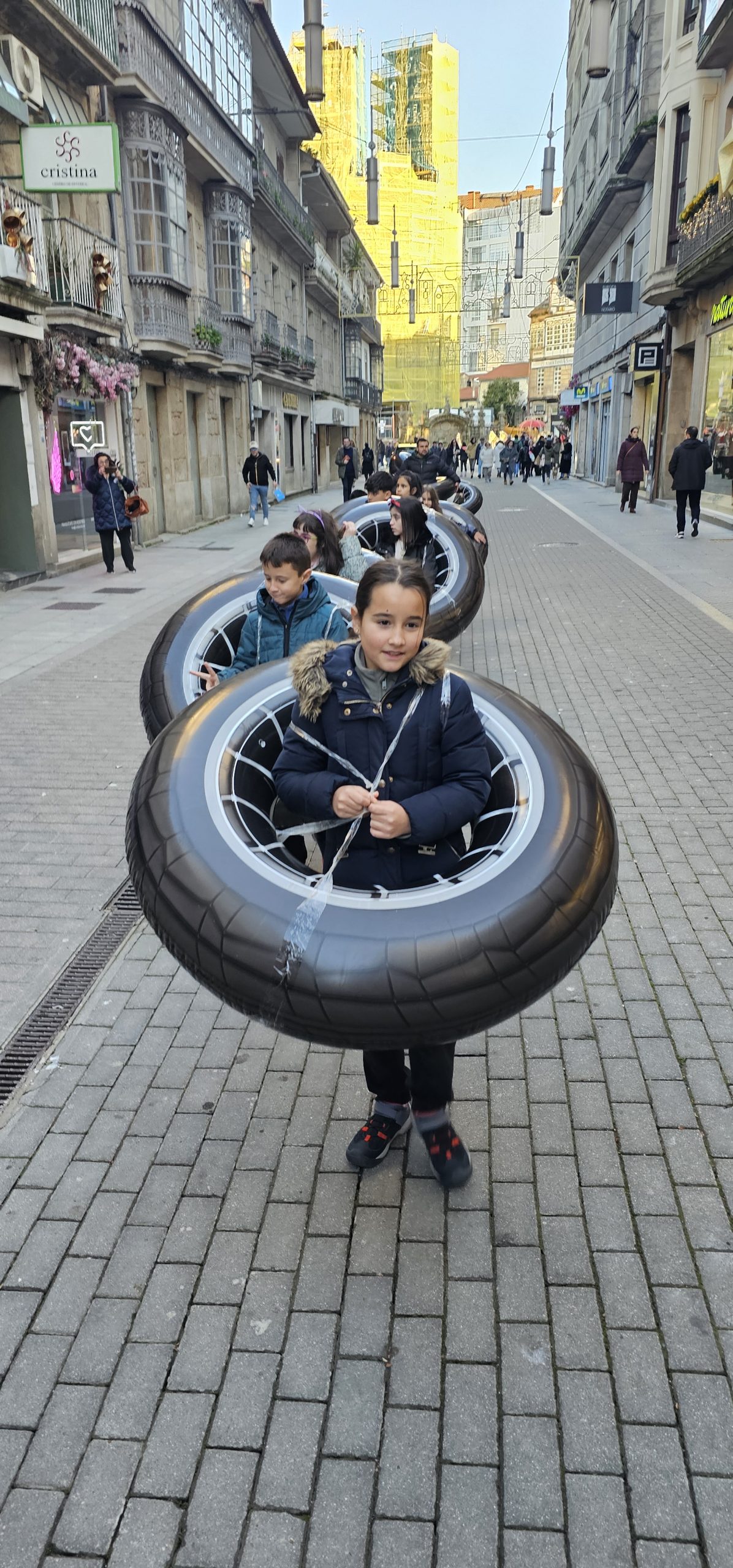
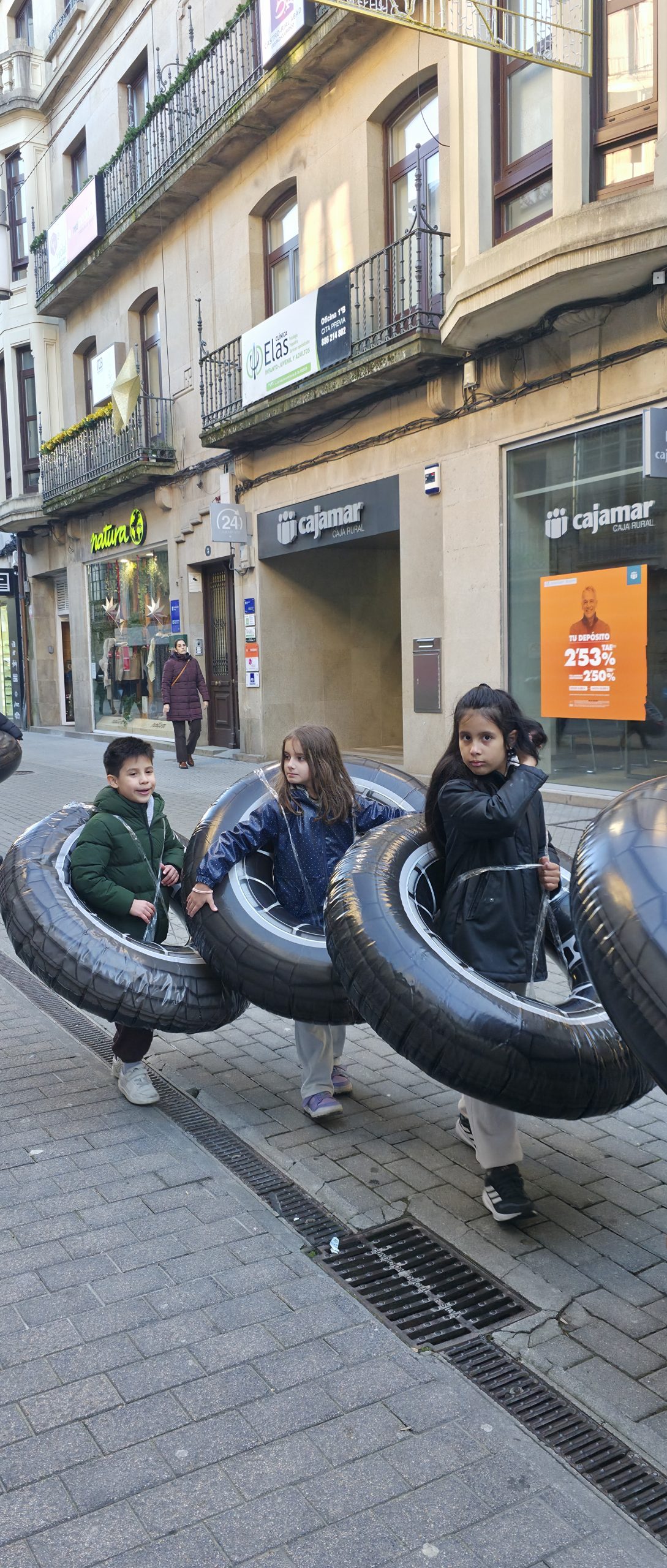
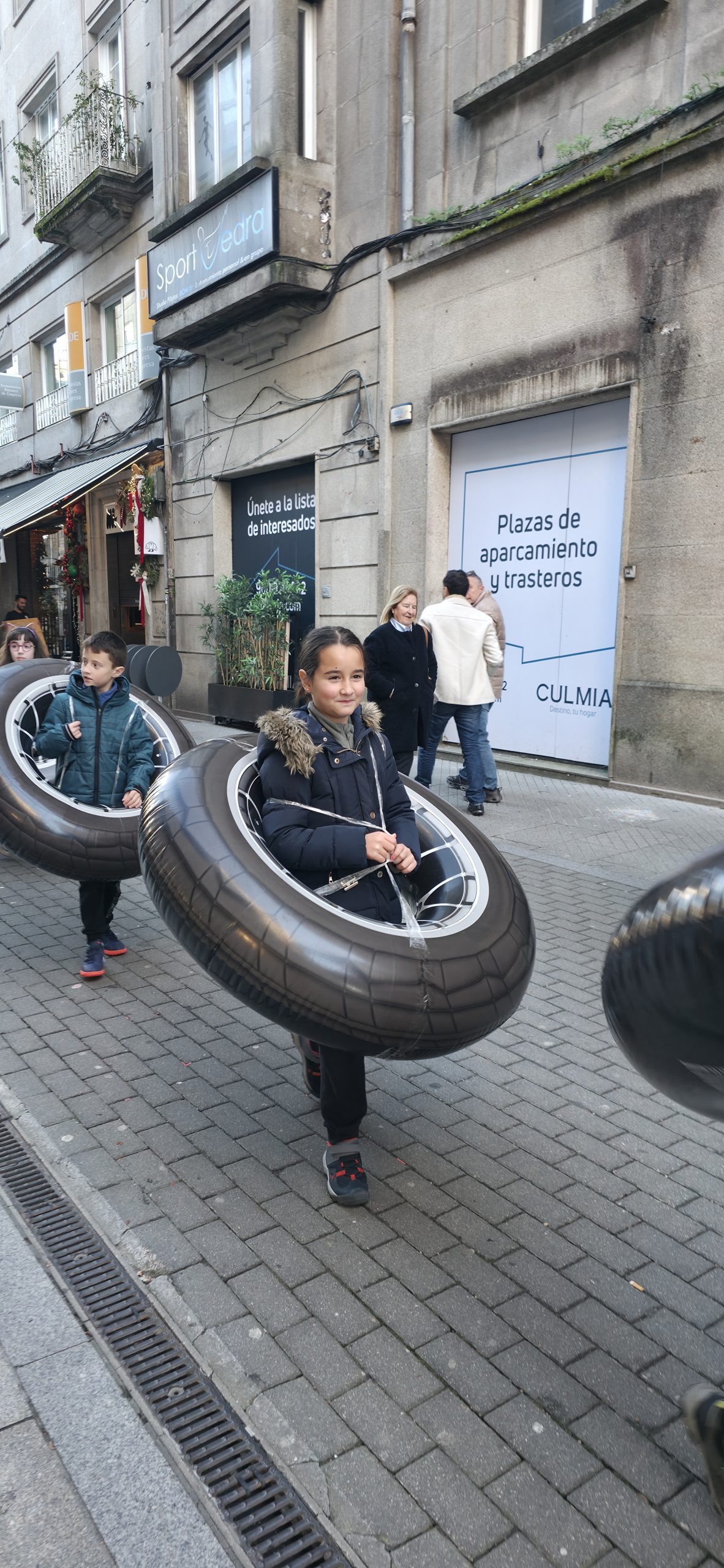
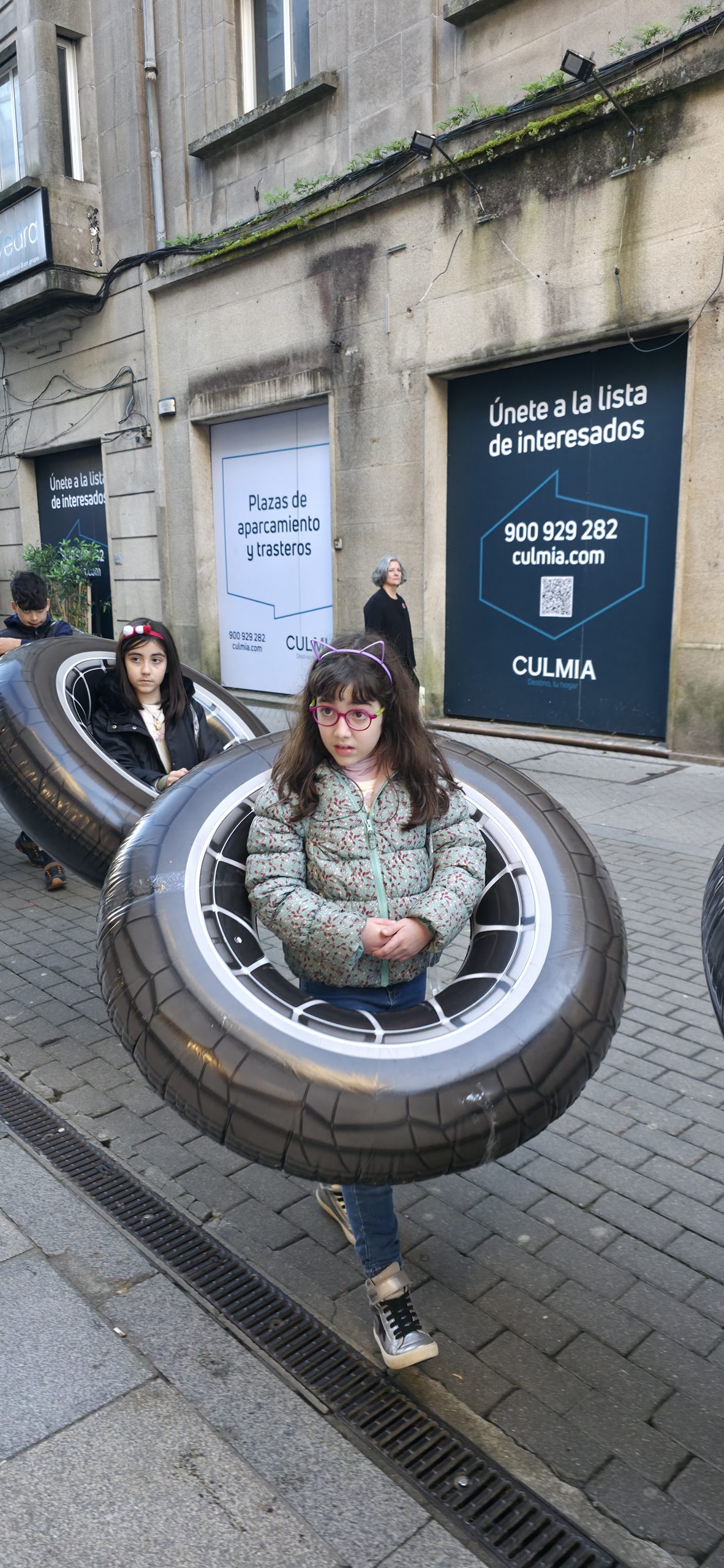
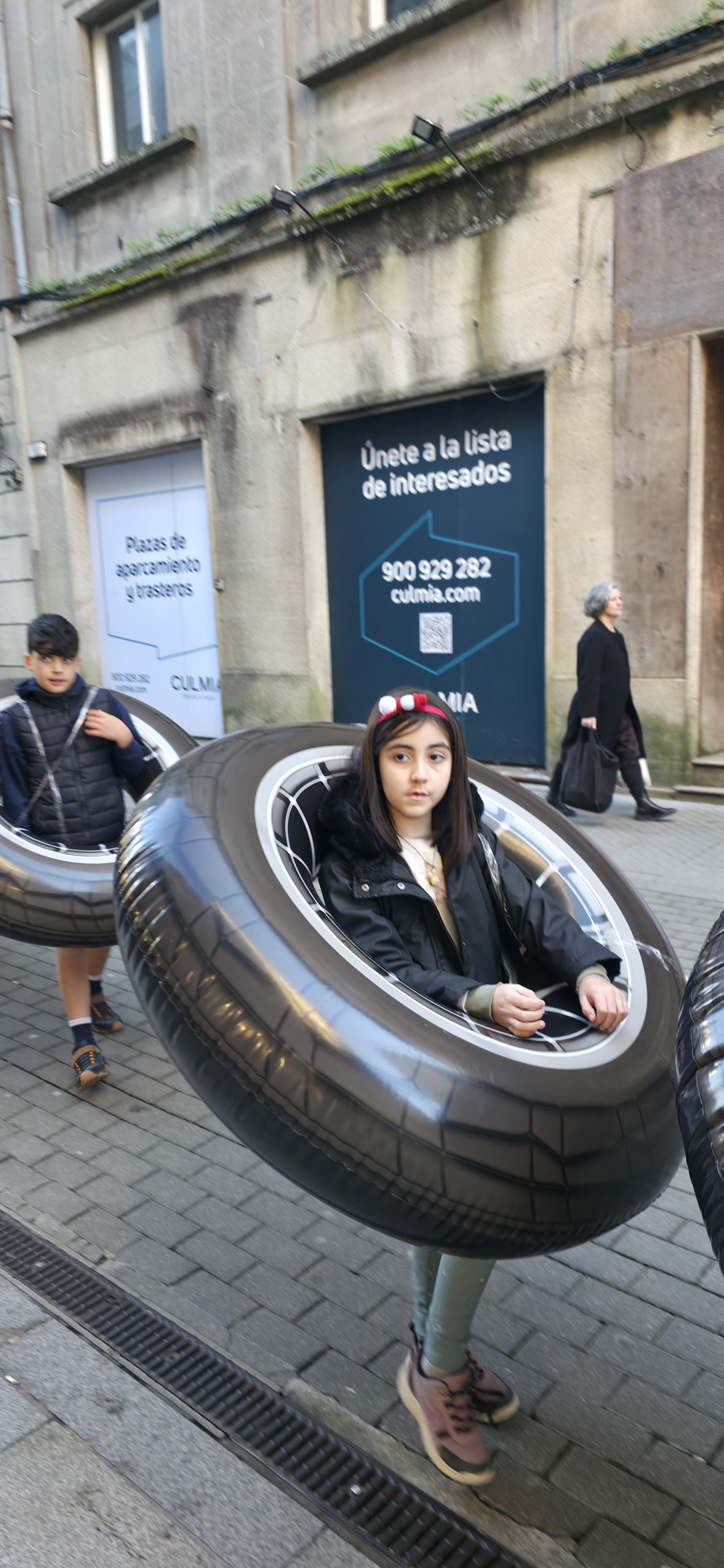
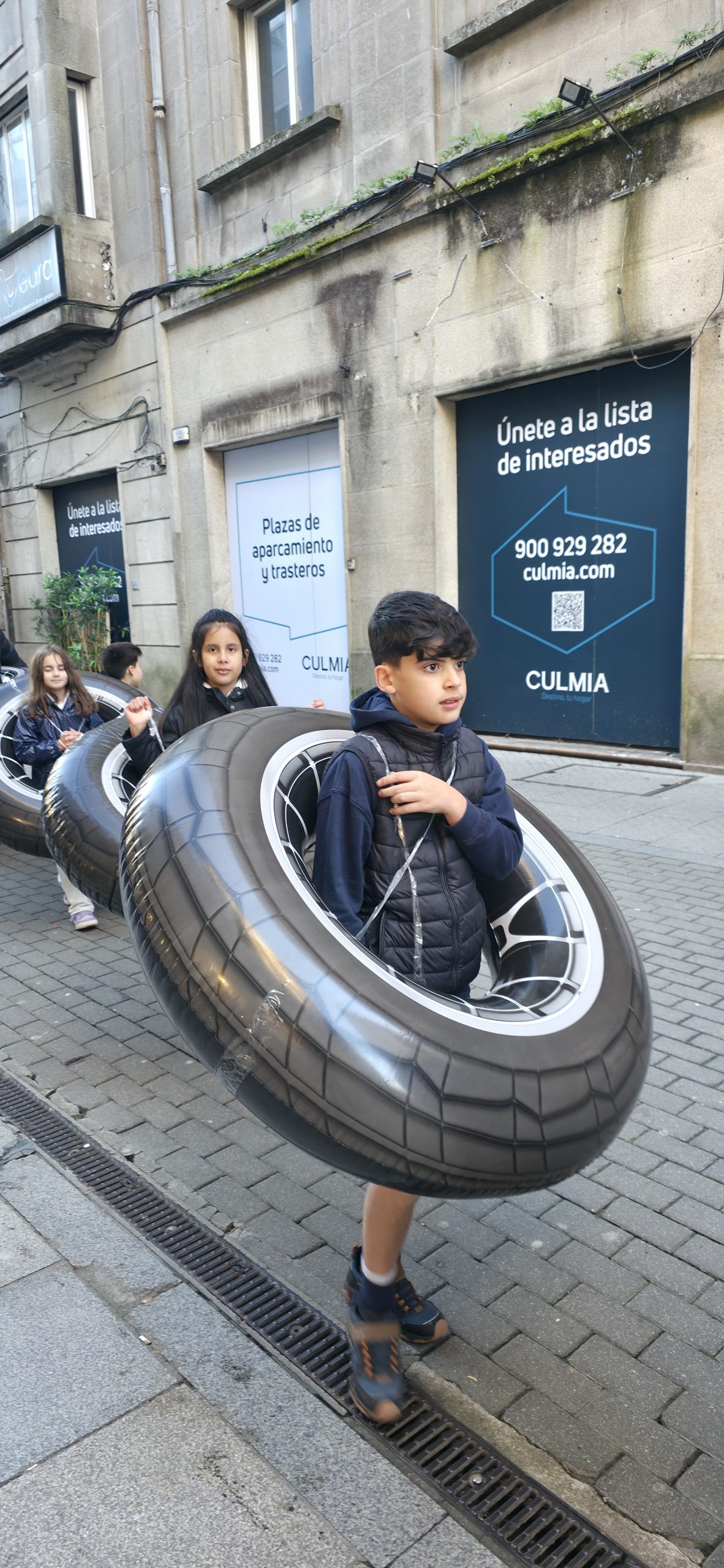
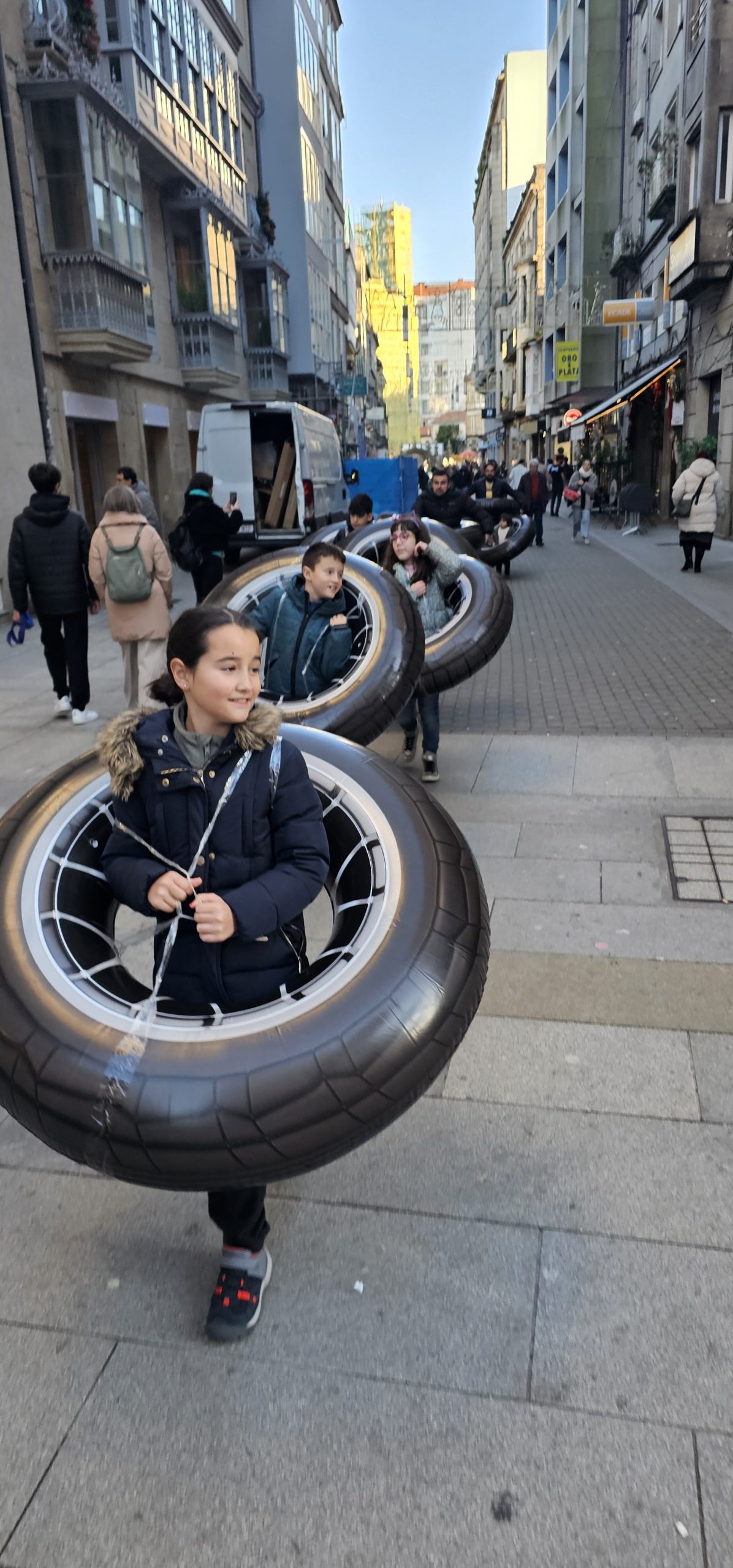
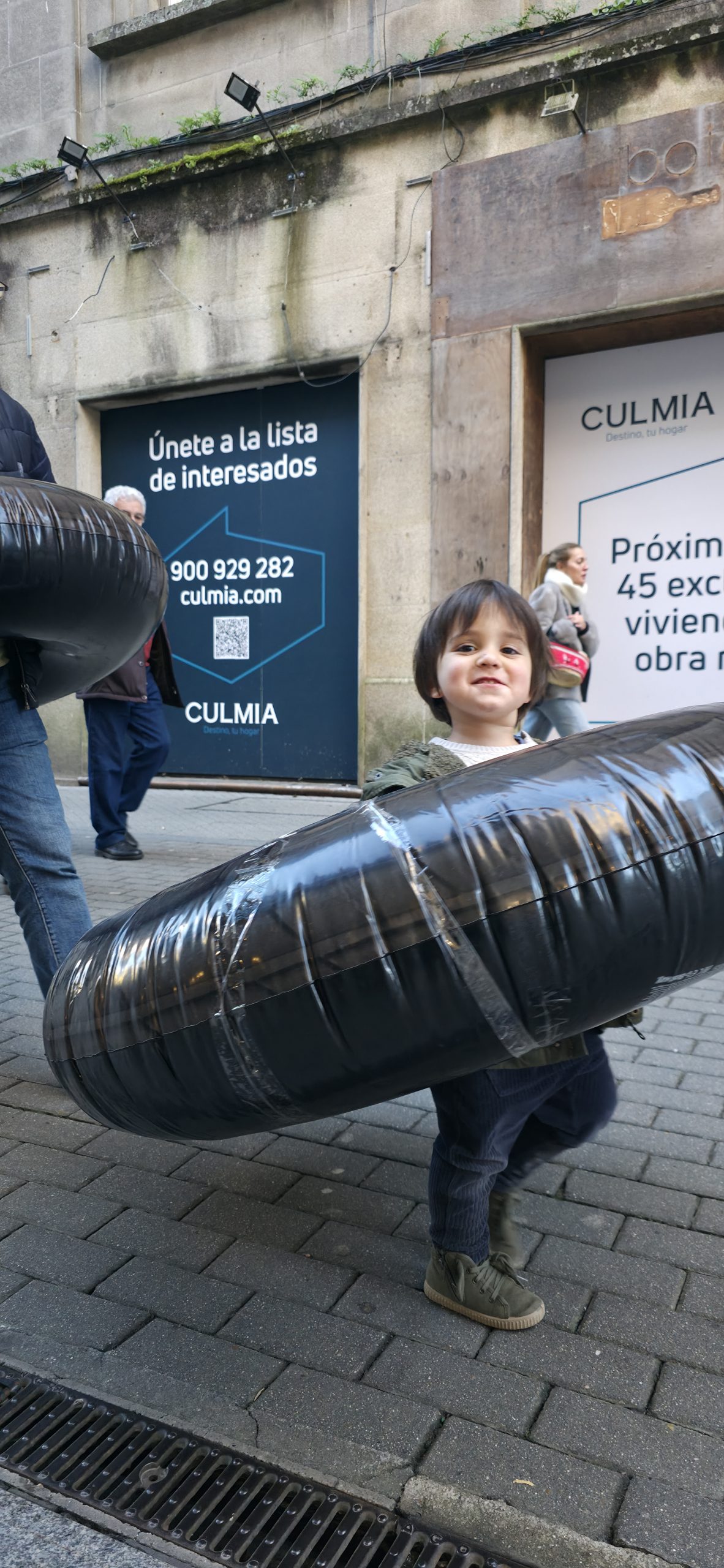
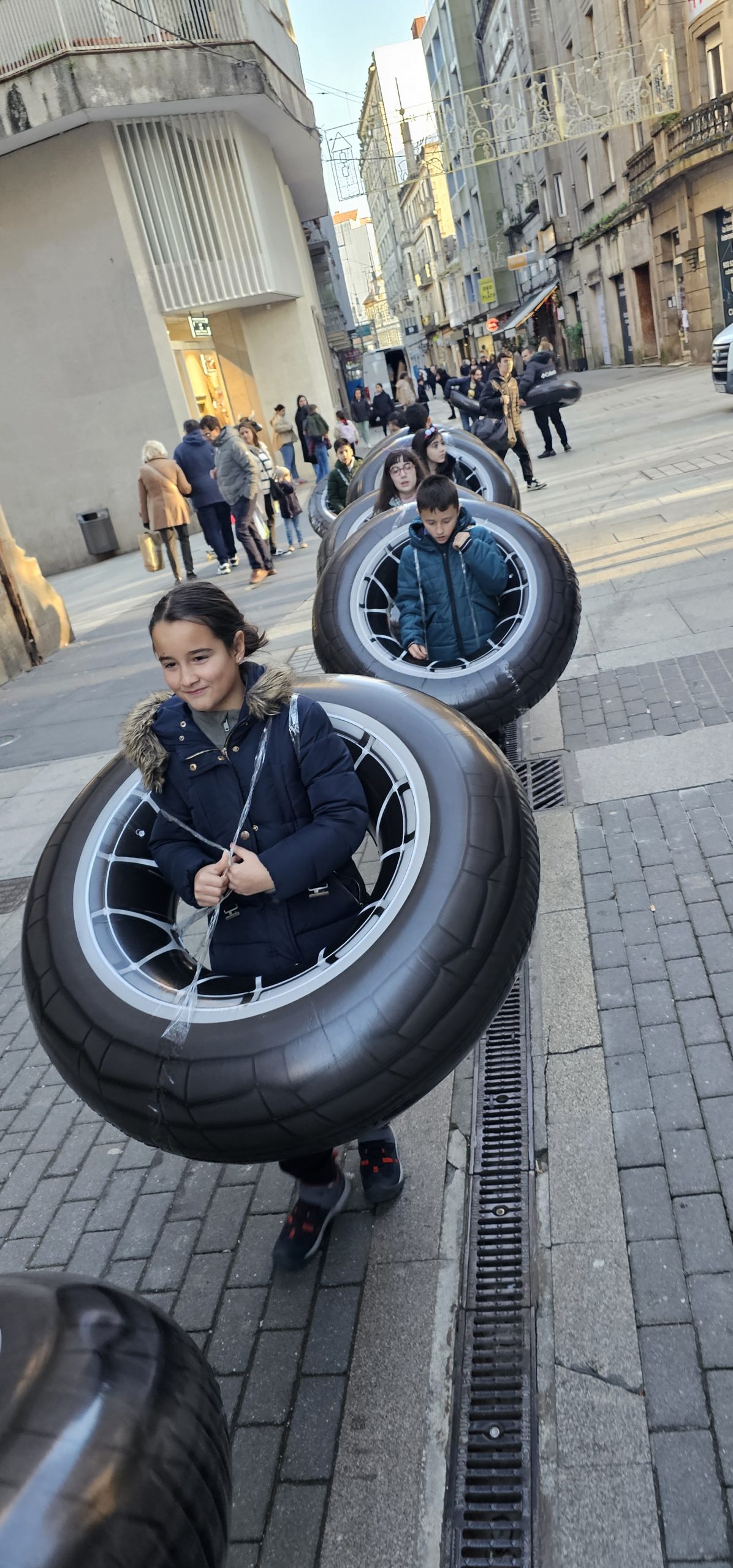
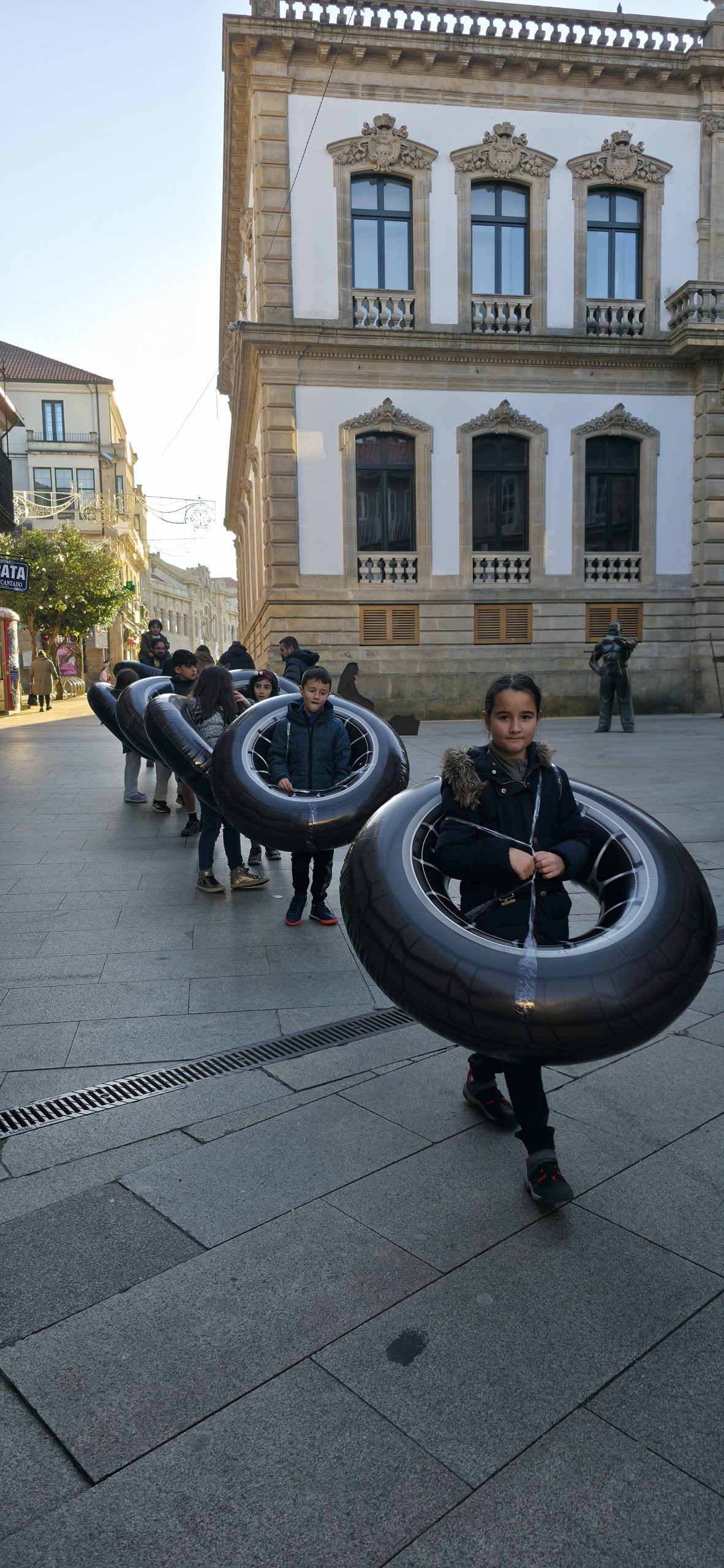
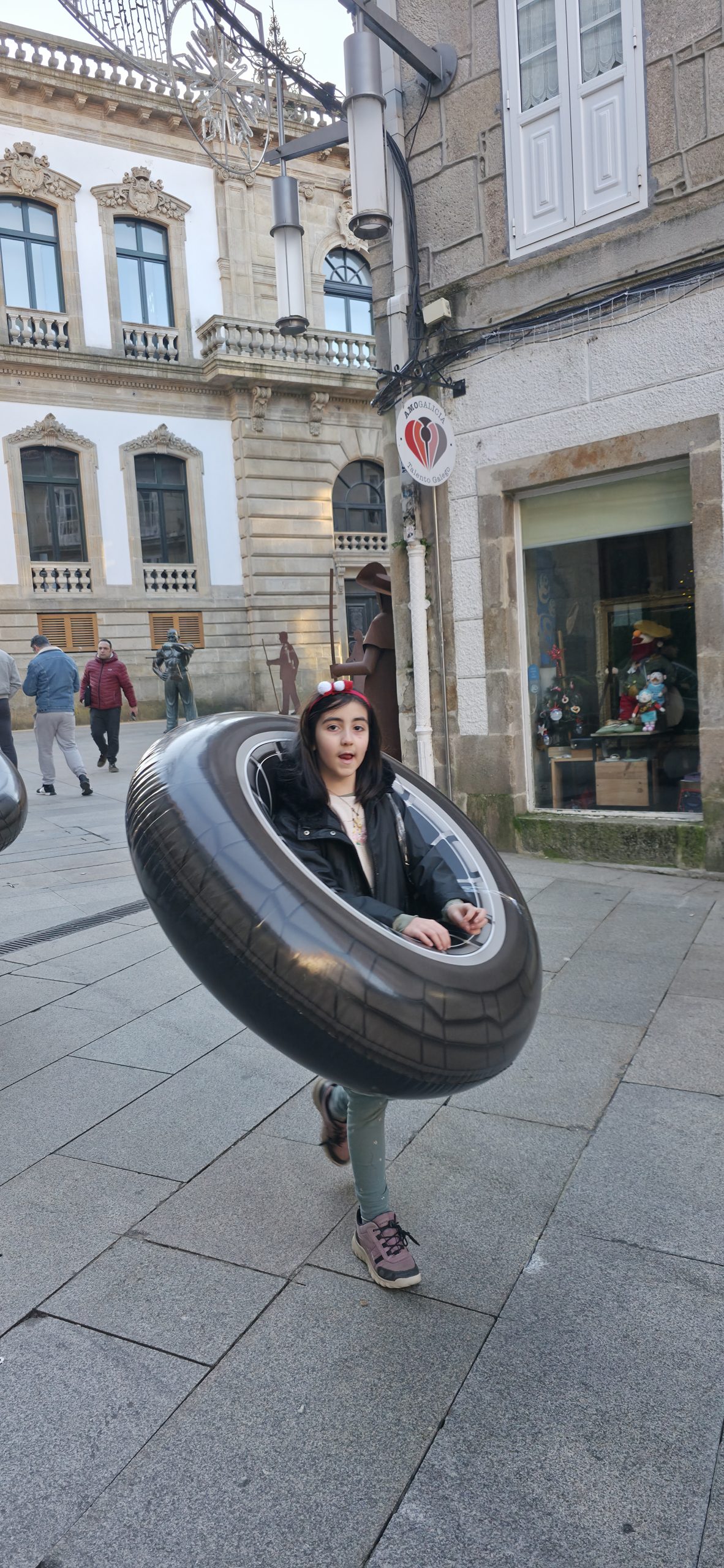
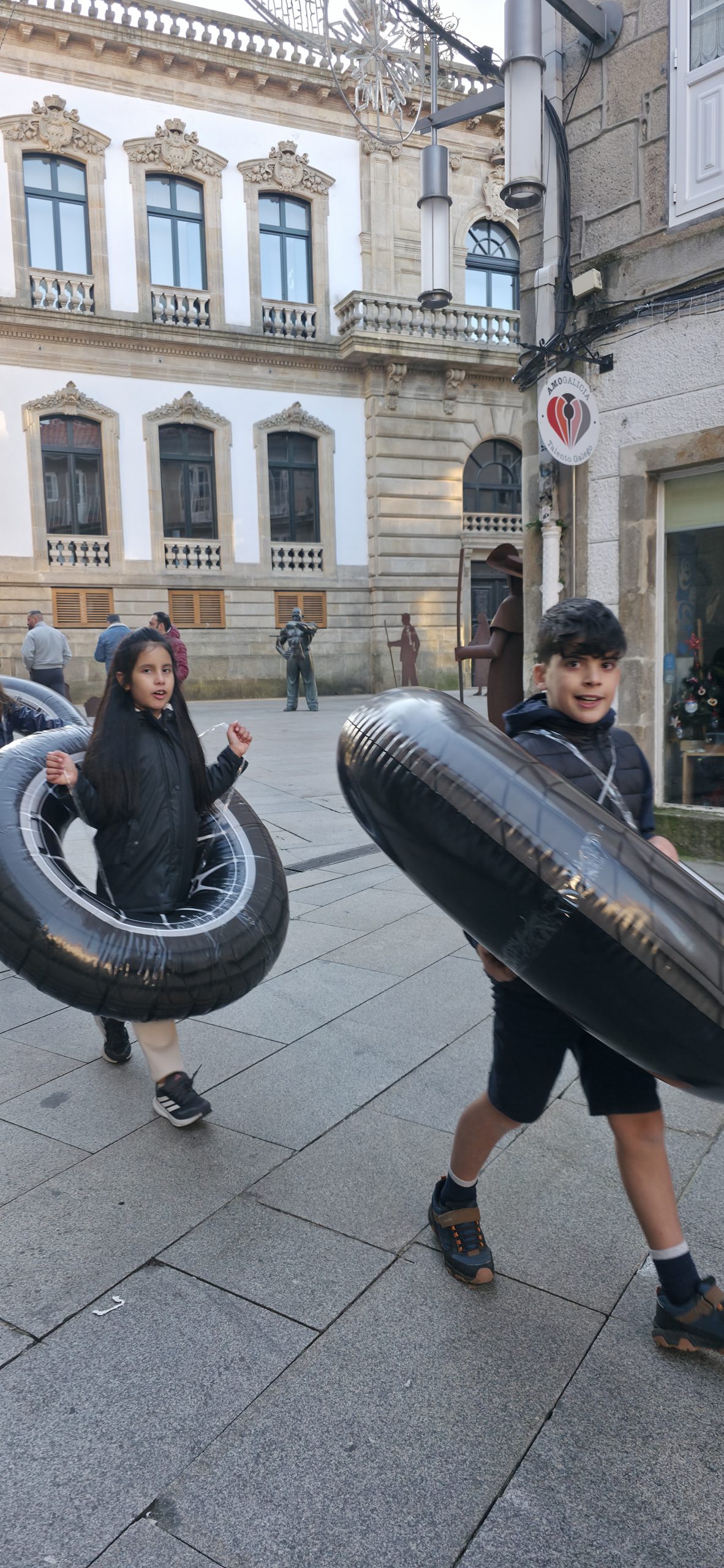
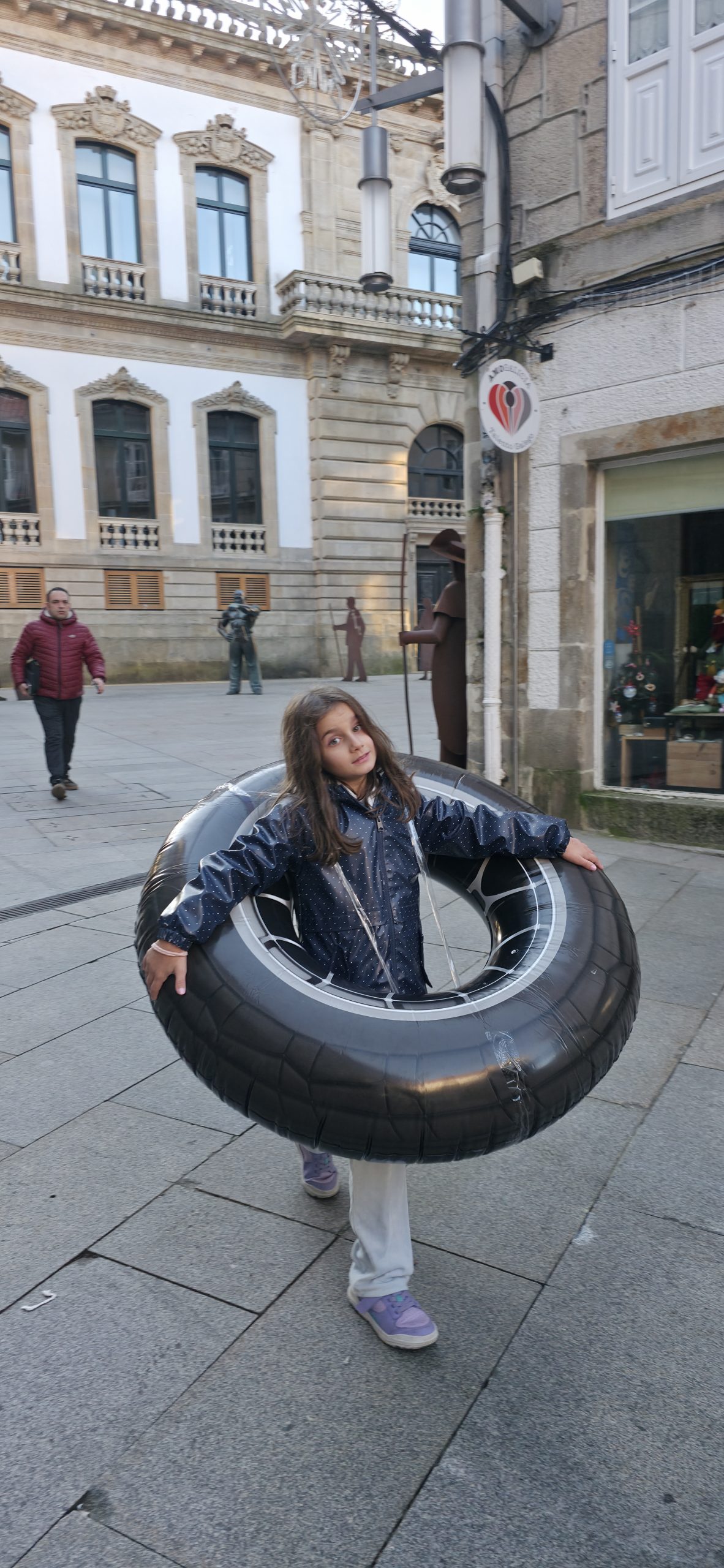
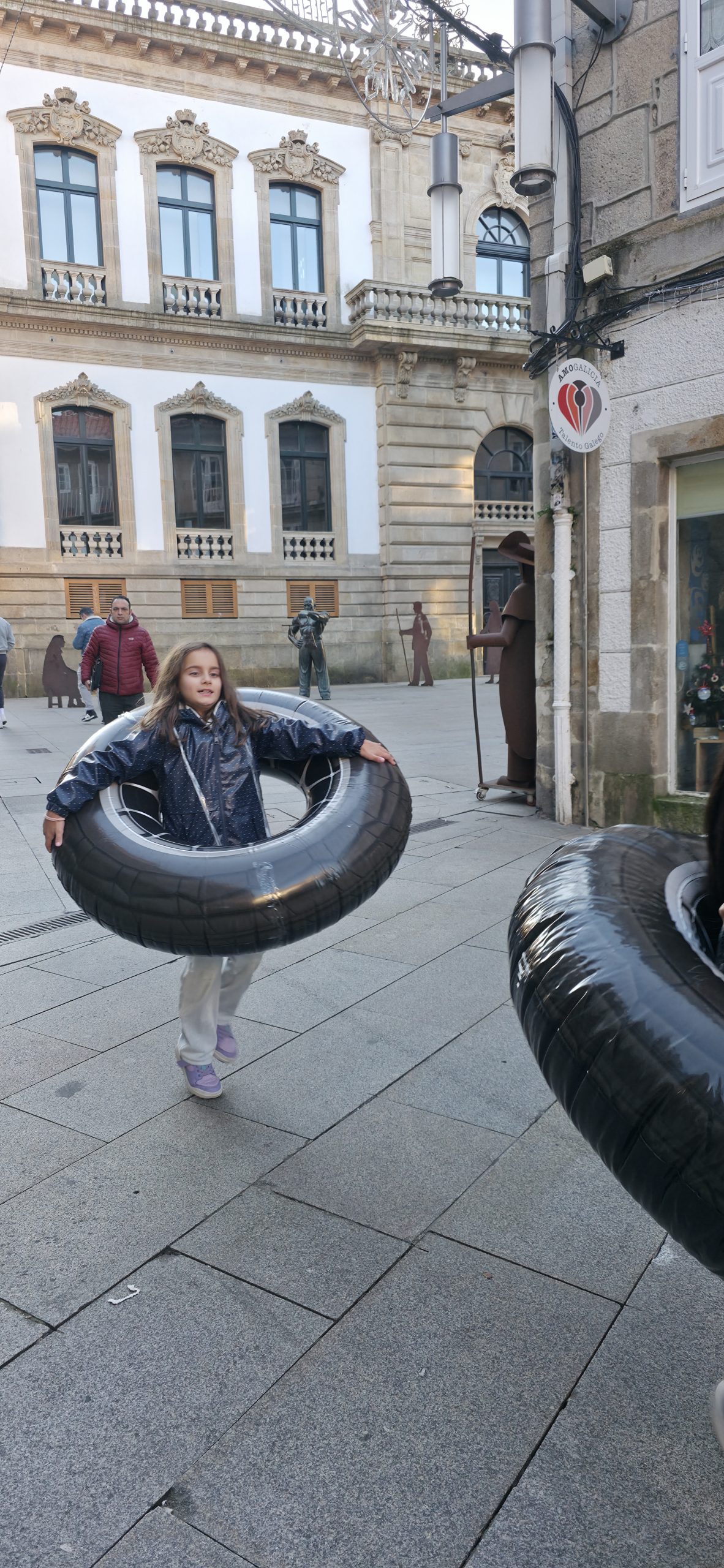
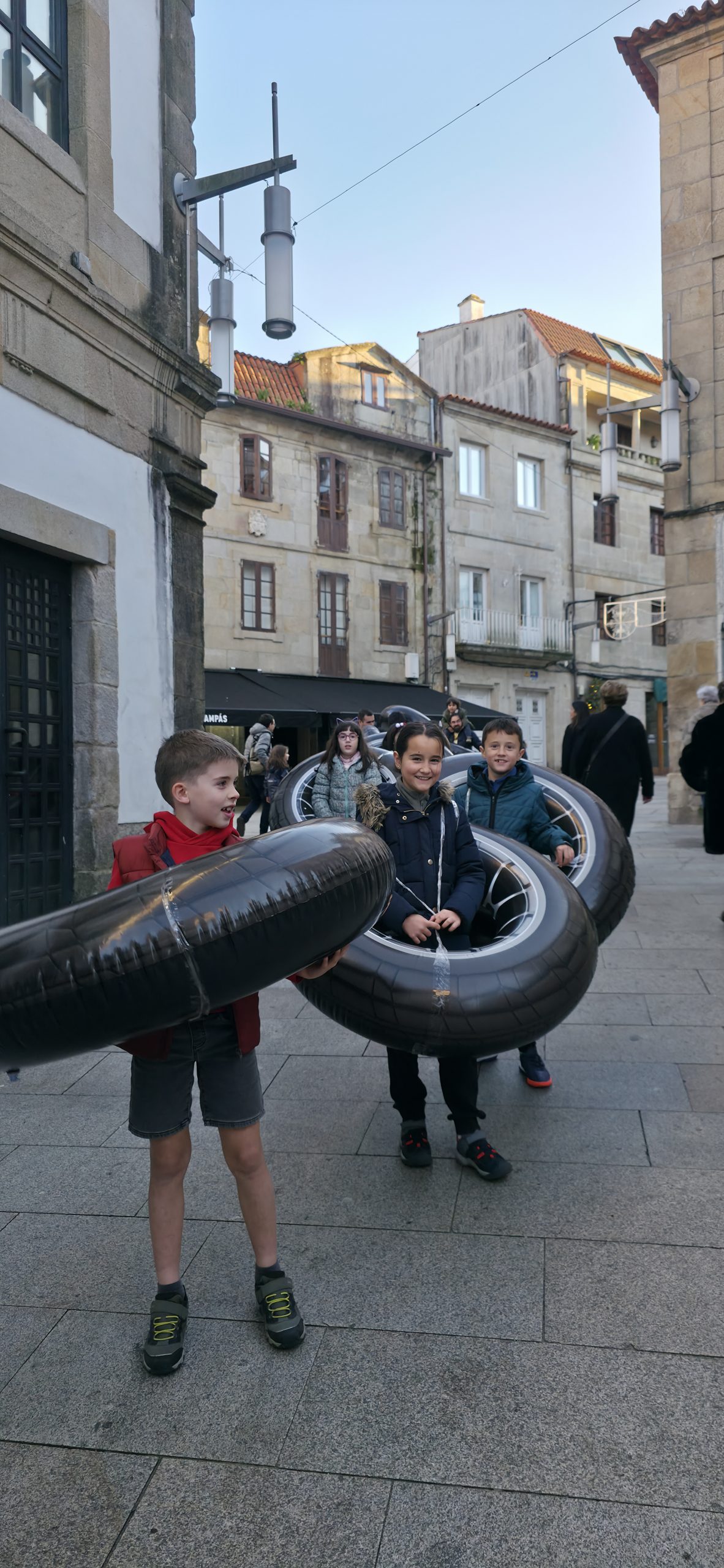
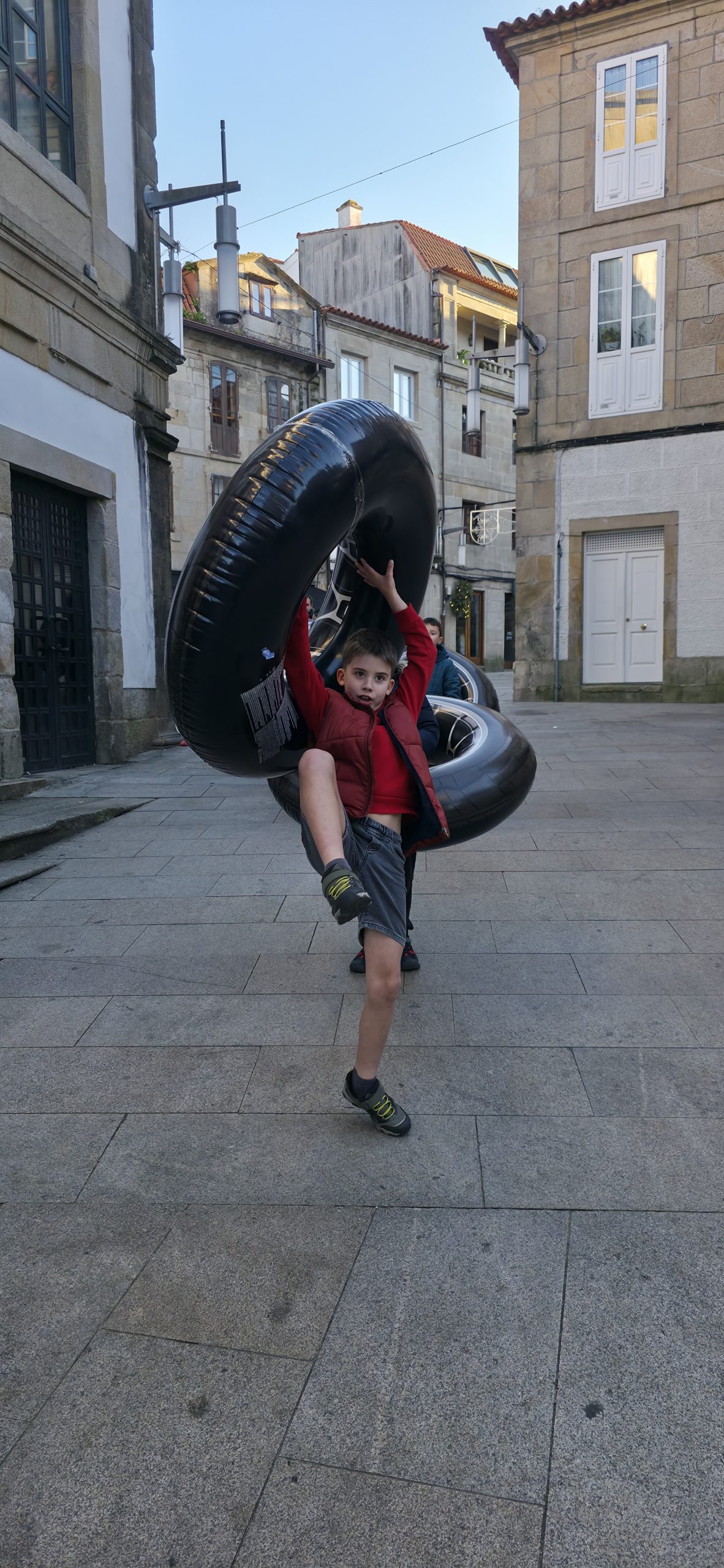
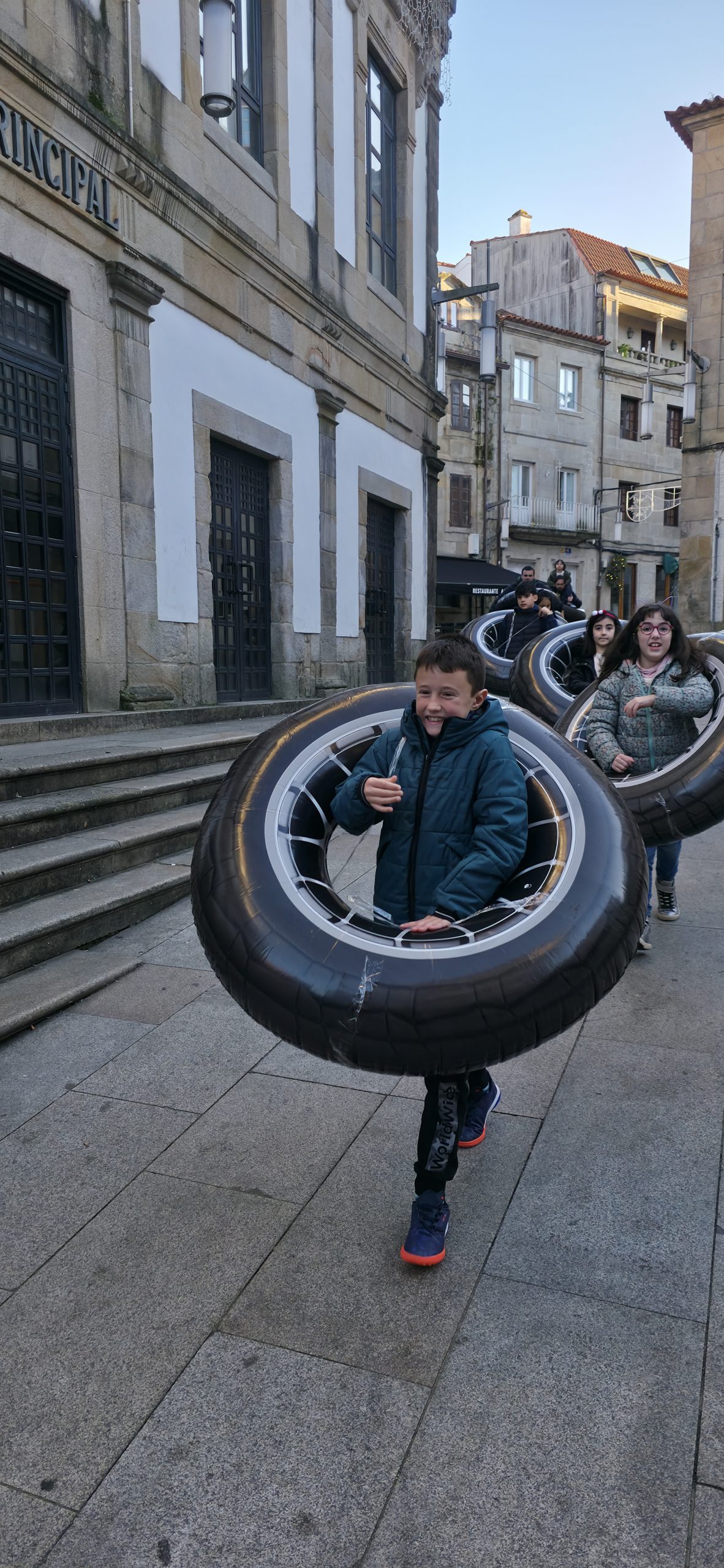
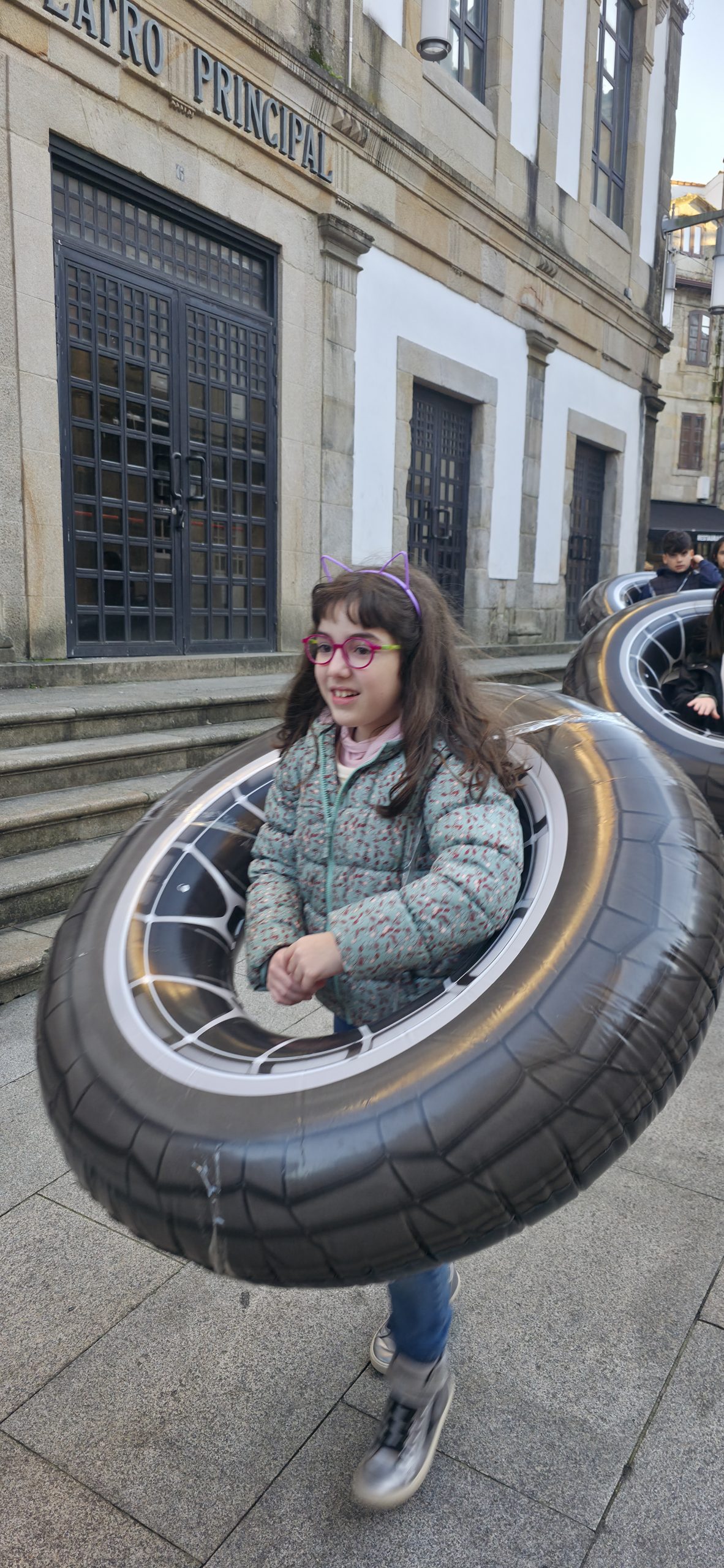
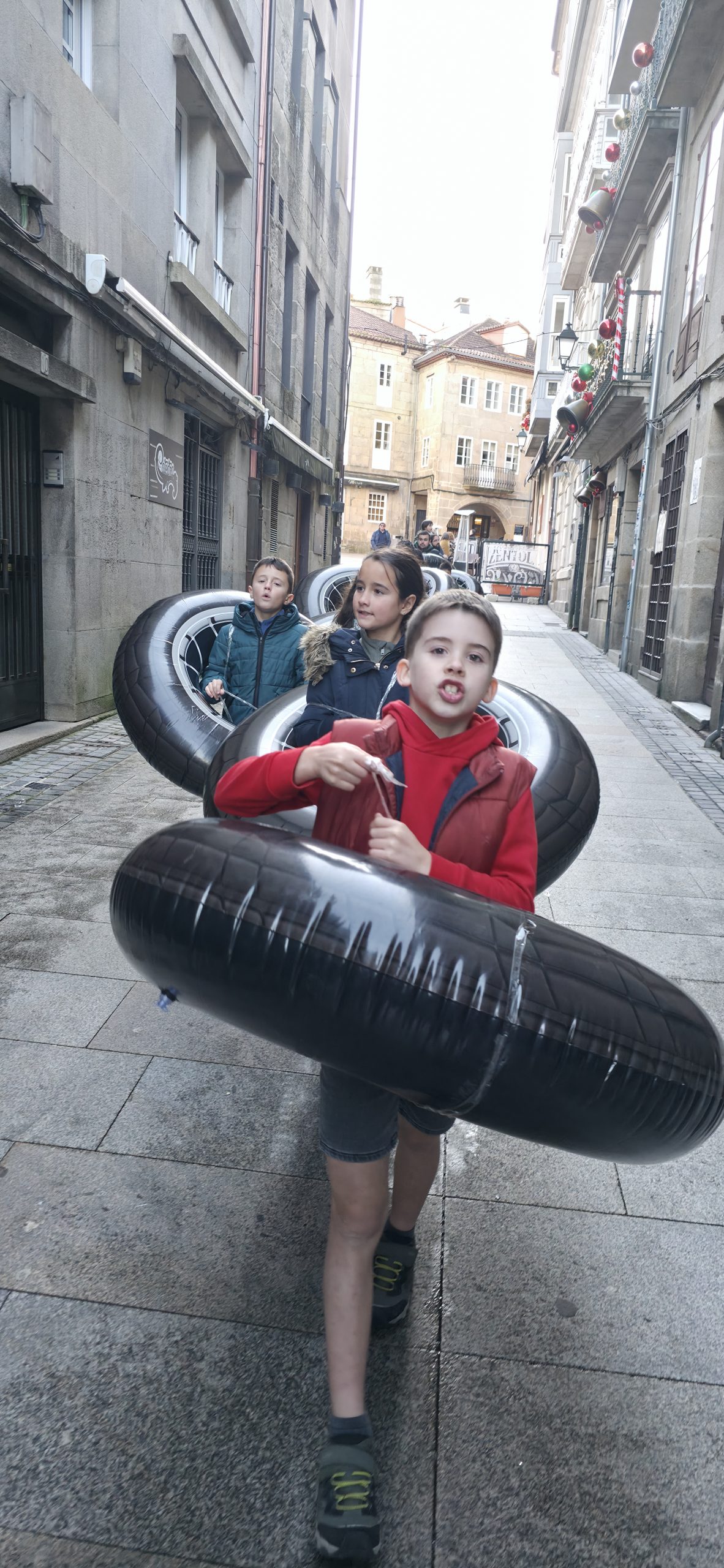
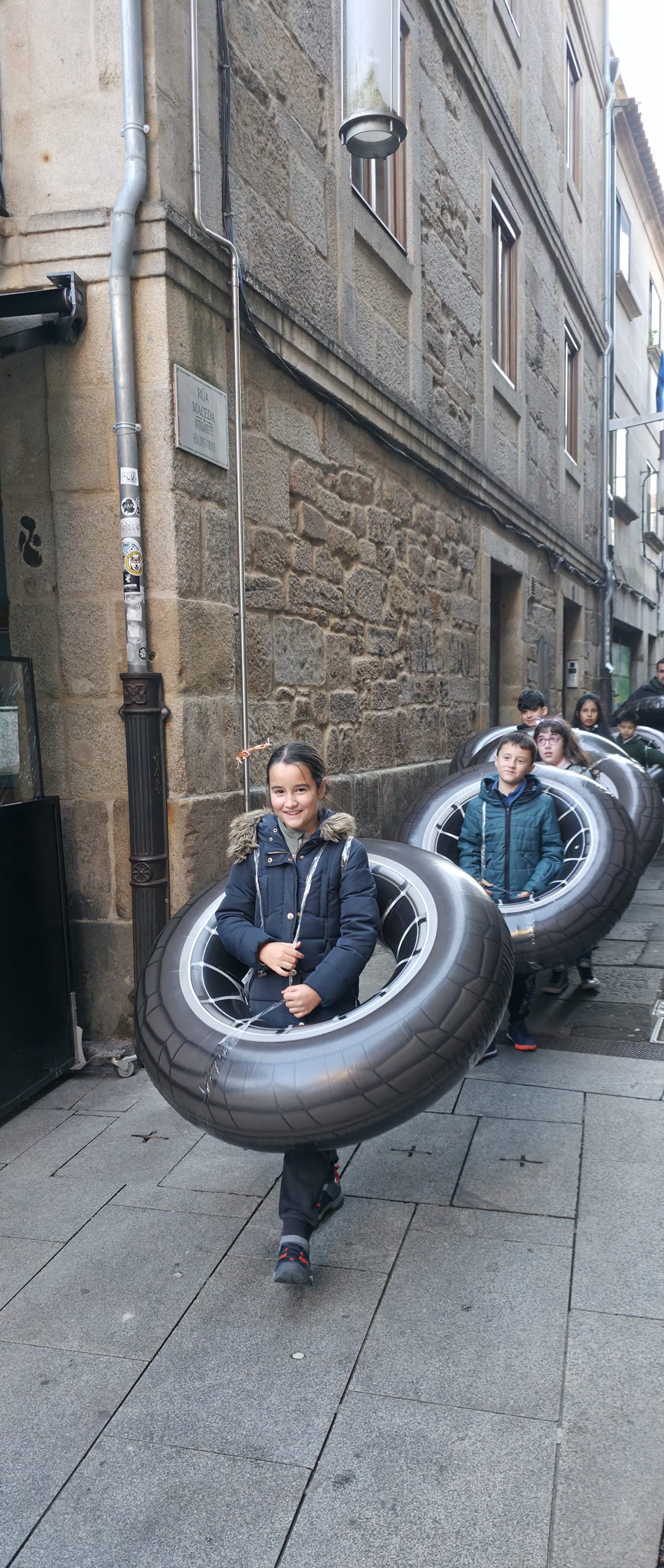
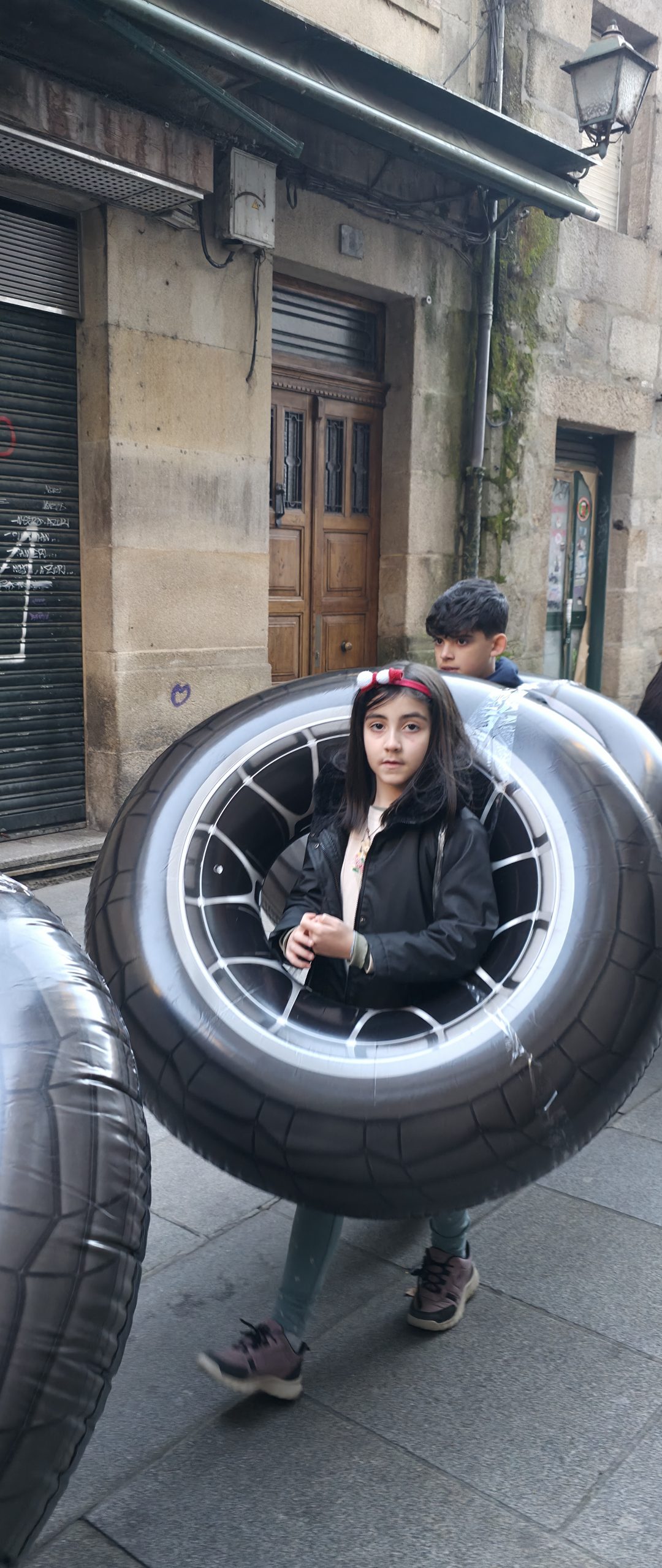
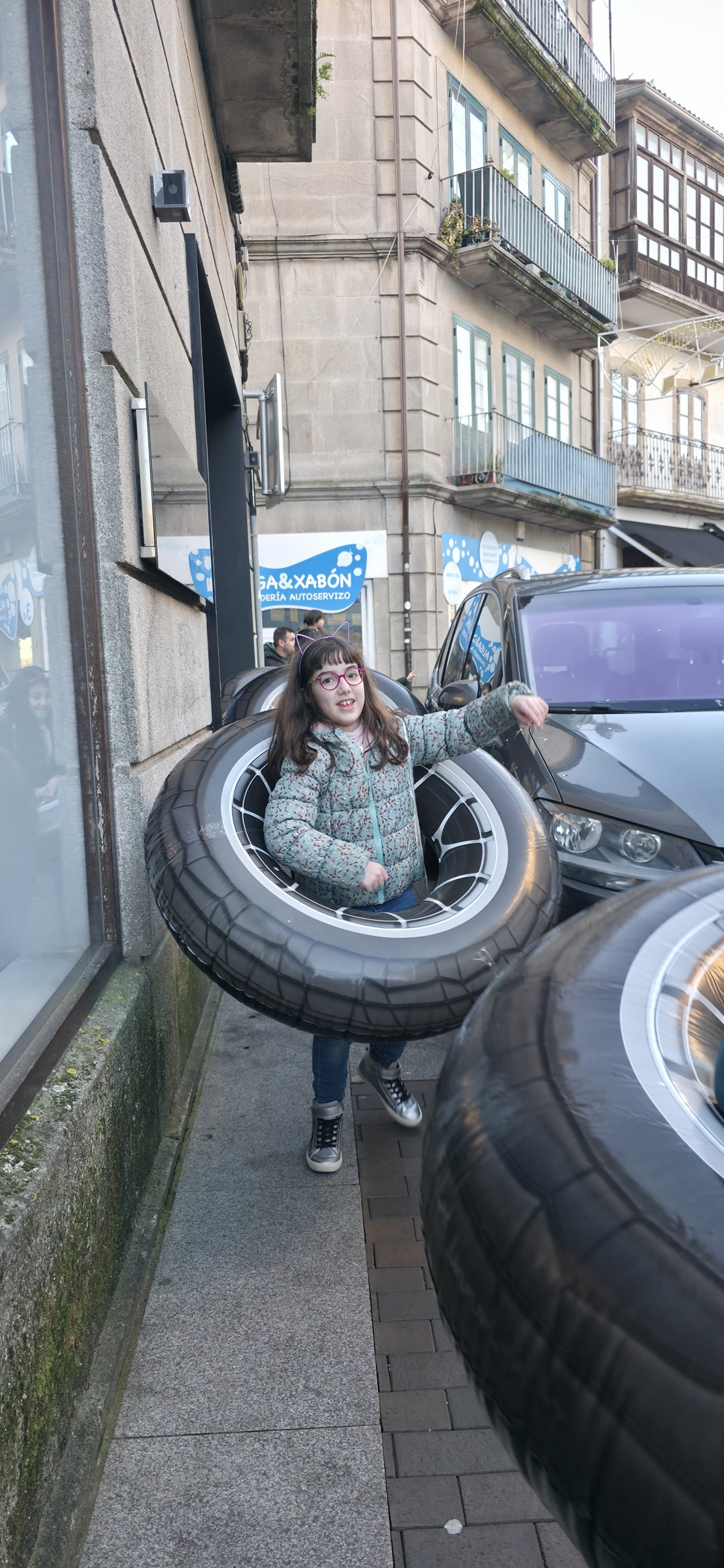
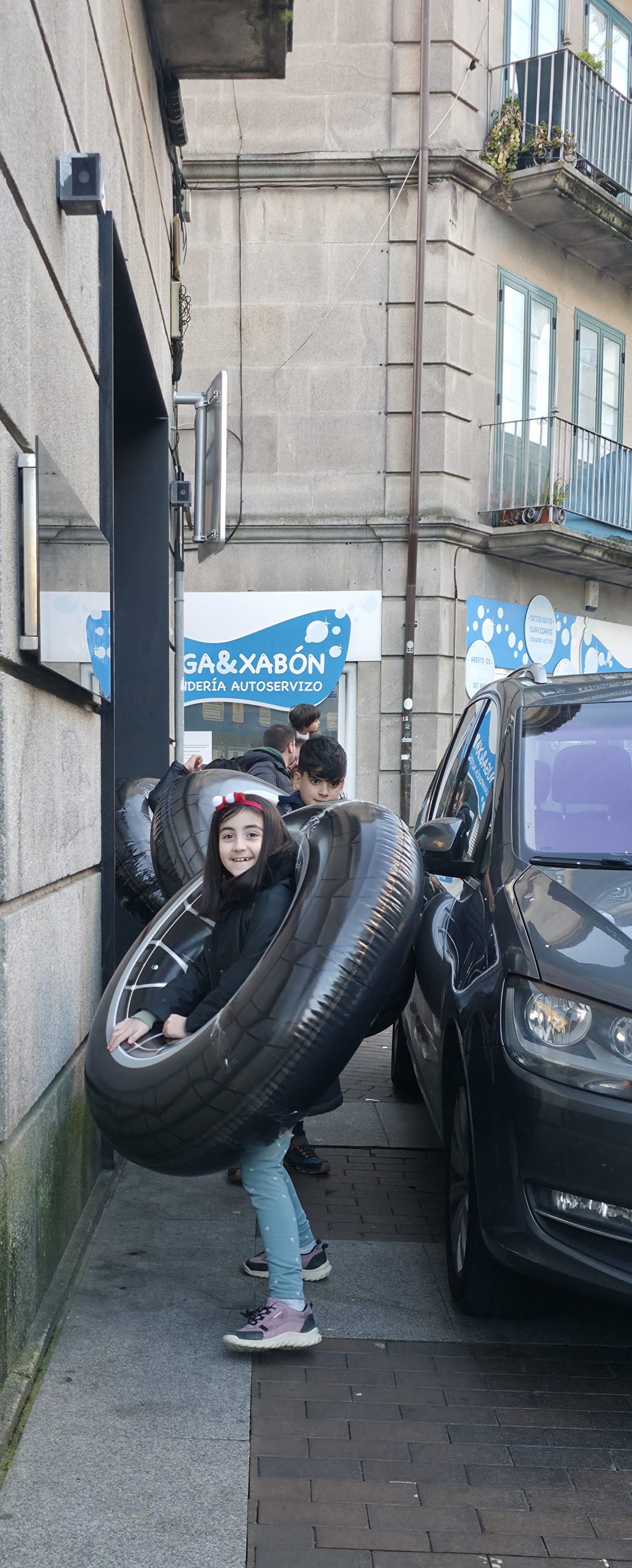
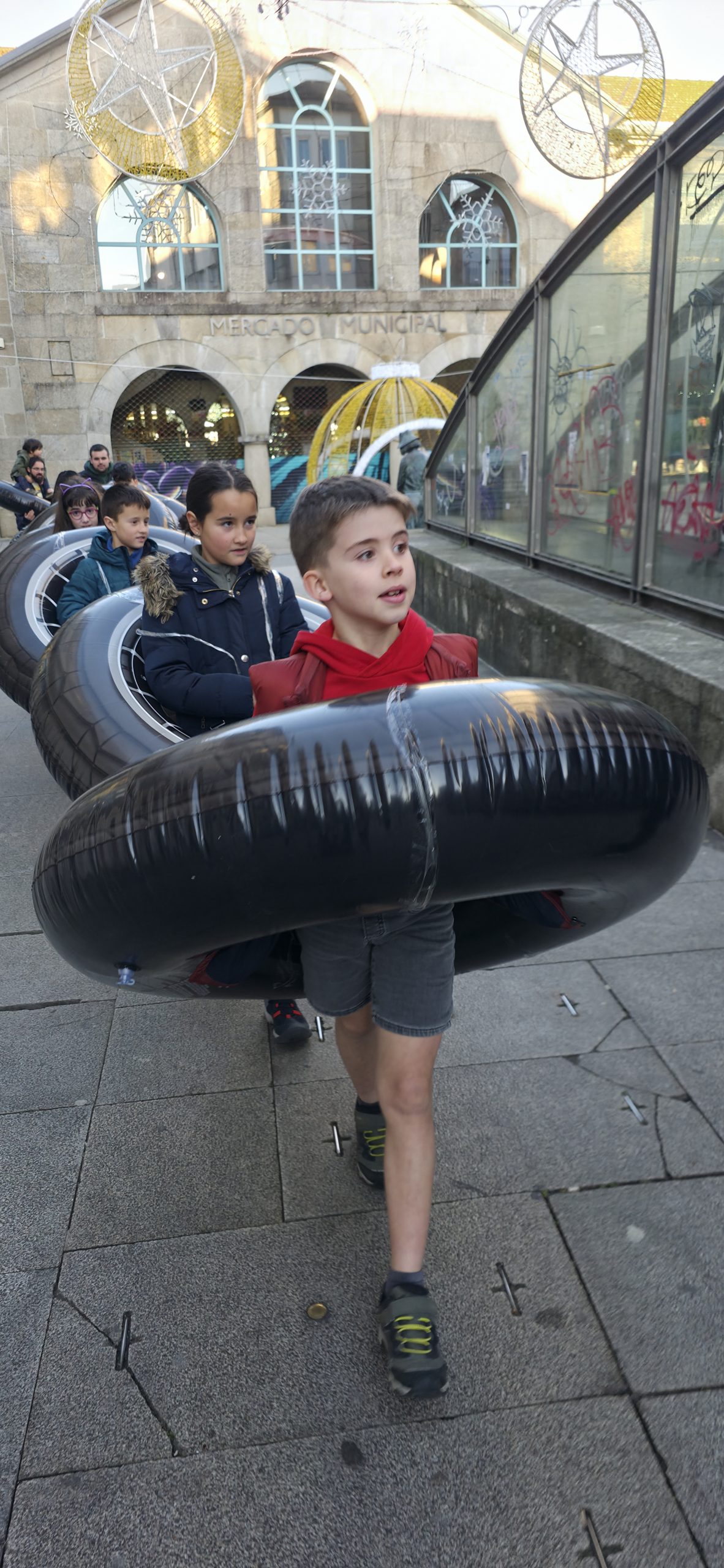
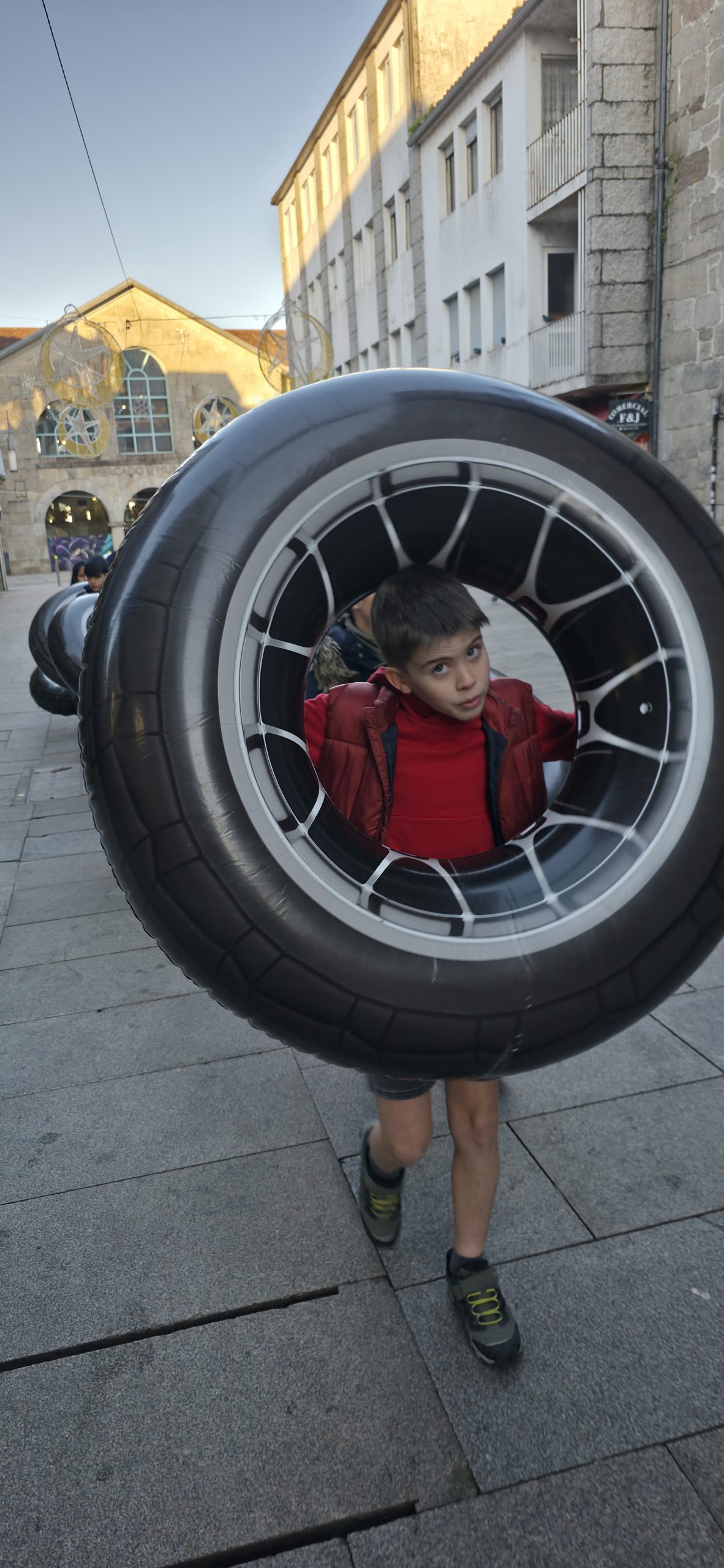
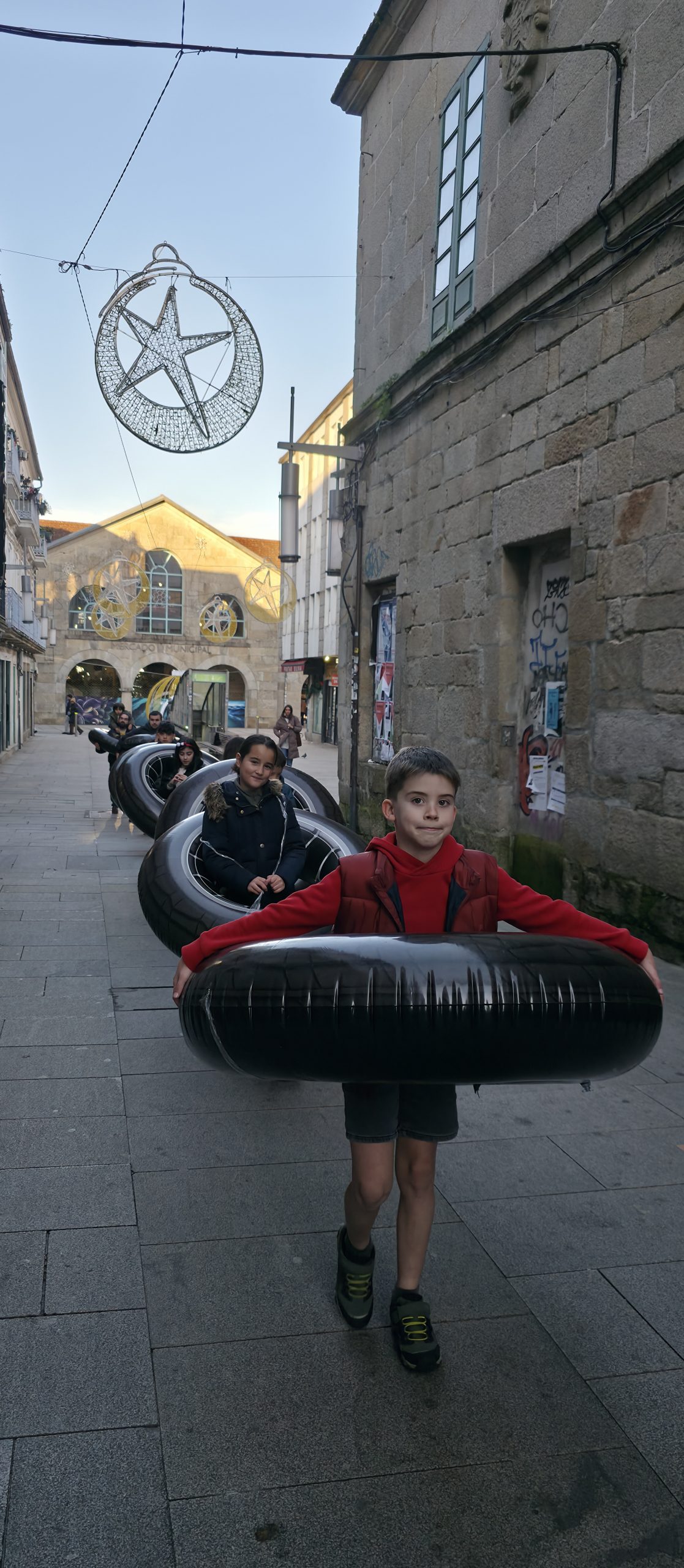
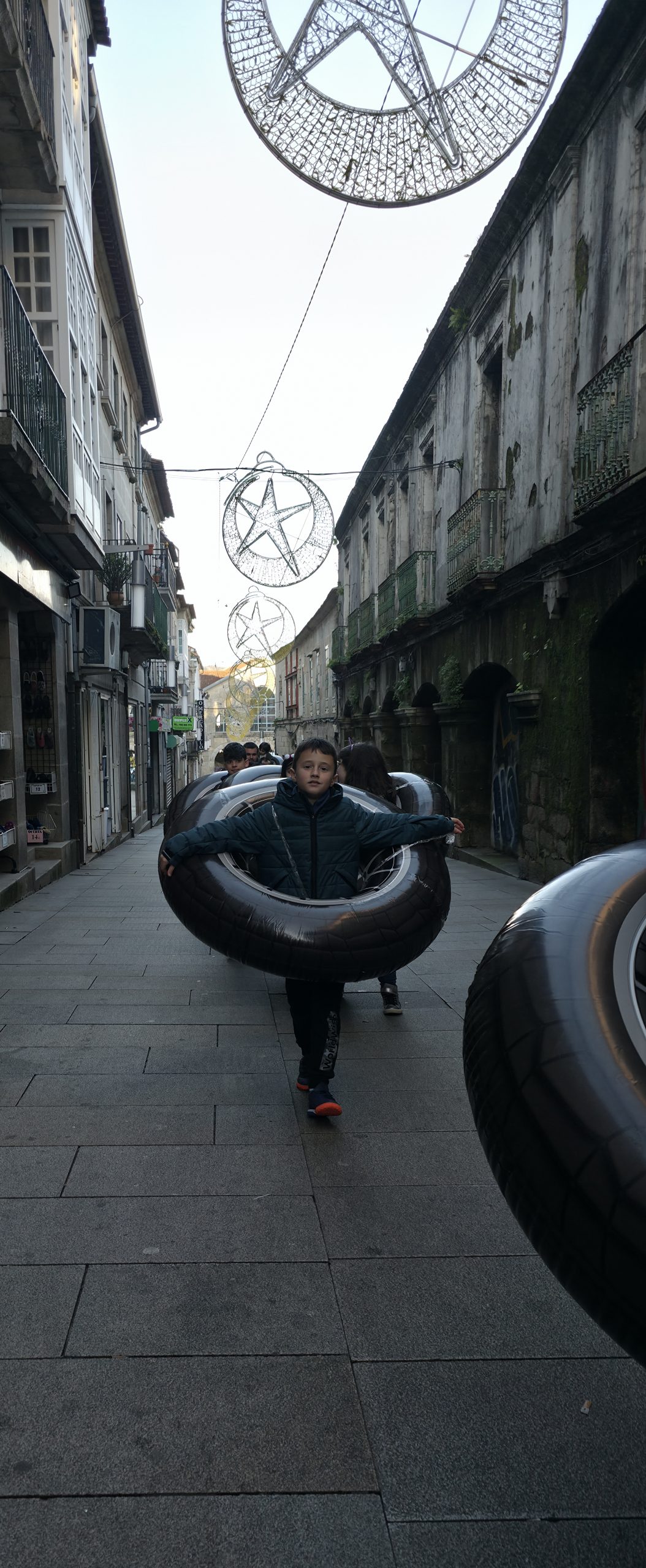
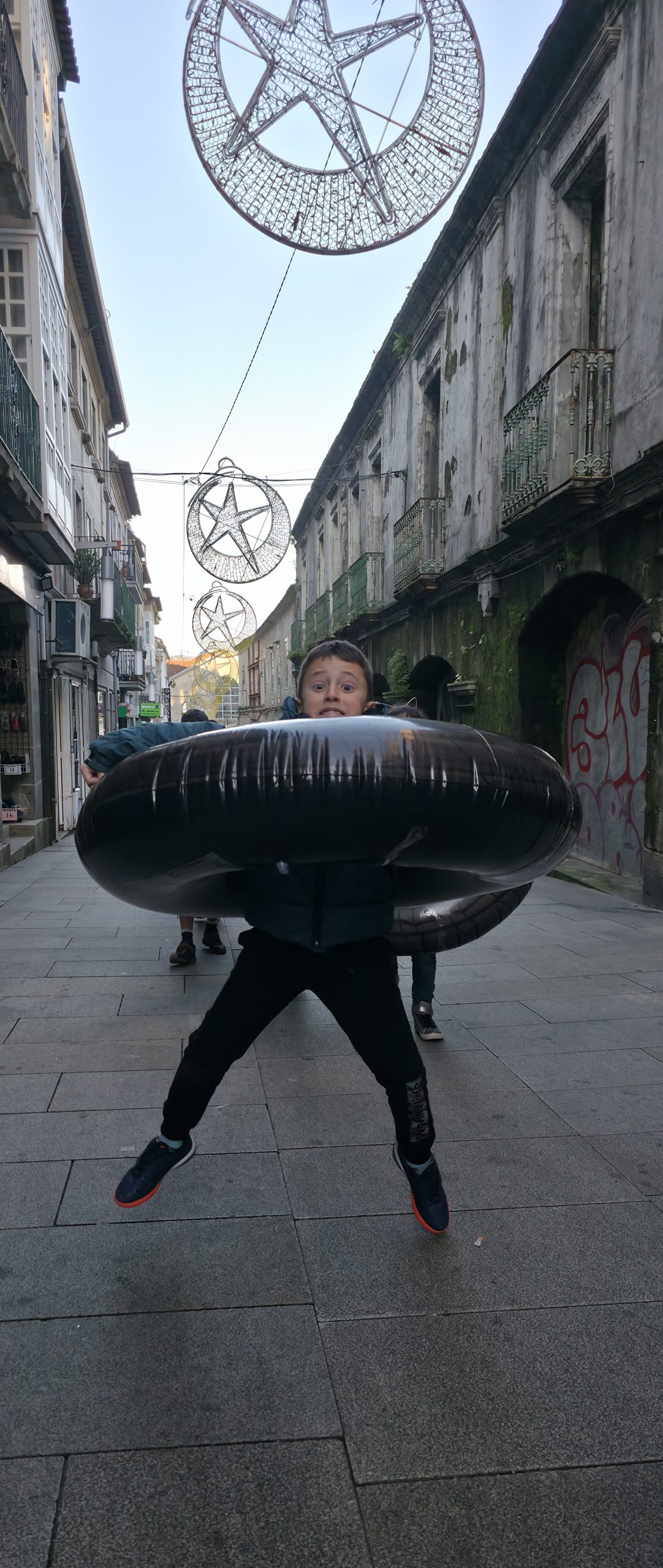
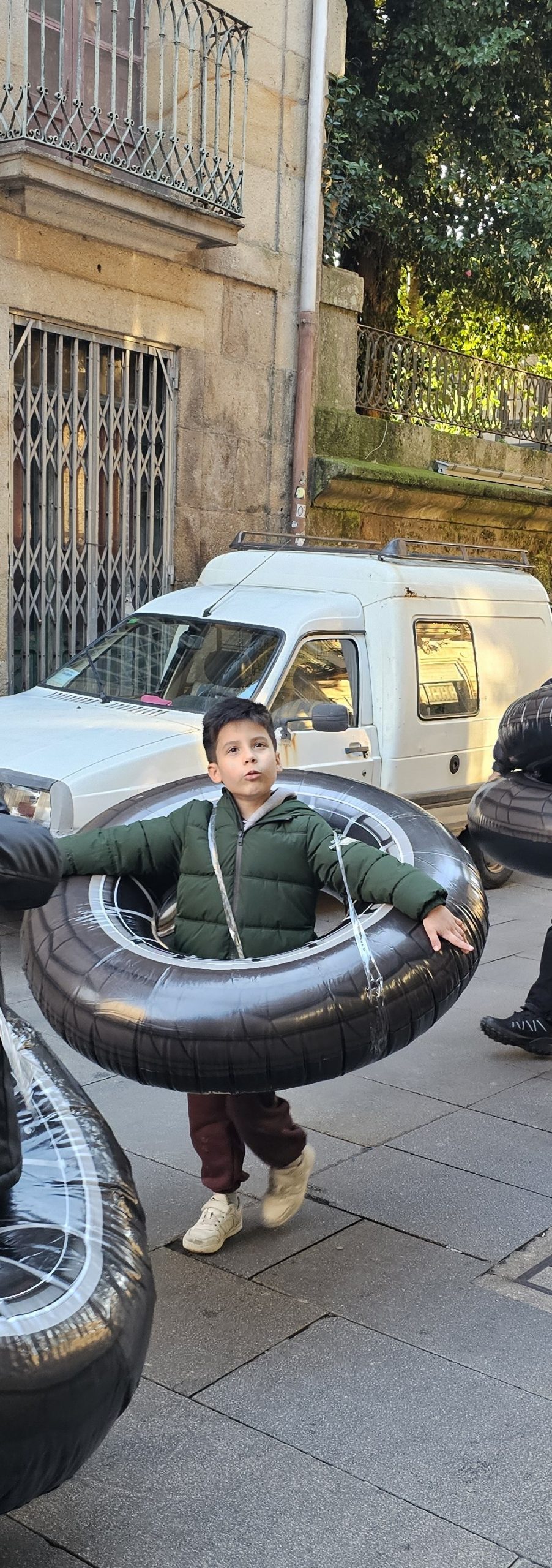
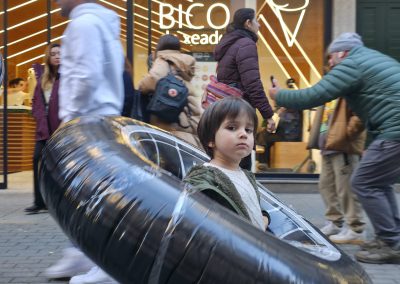
A few years ago, in a context where measuring distances between bodies became urgent, in A Vila do Mañá we took the floaters out to the street.
They helped us make visible the invisible space, the one we occupy when we notice, the one that separates or unites us.

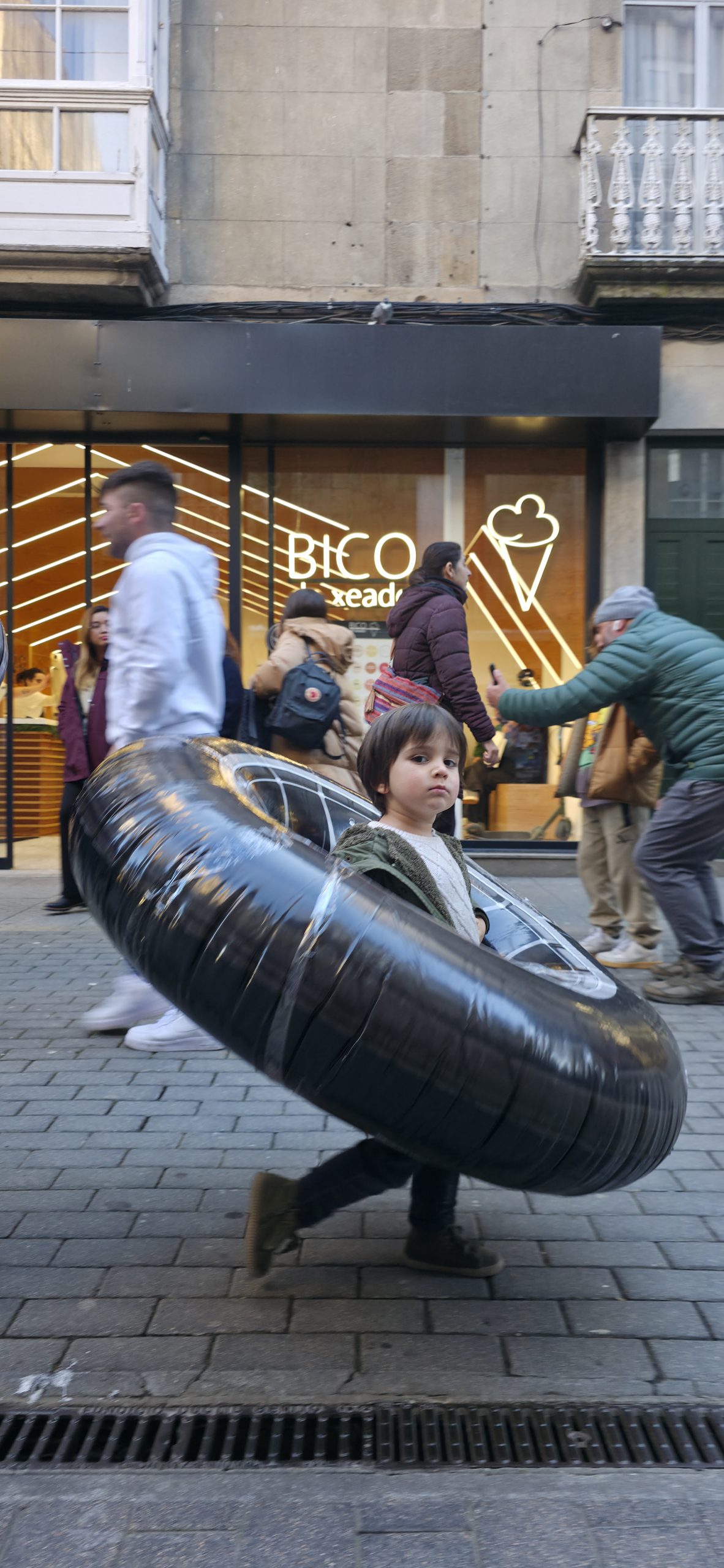
Today we recover the floaters, but from a different perspective: not as a defense, but as a tool for perception, not to mark distances, but to measure presence, scale, and the right to public space.

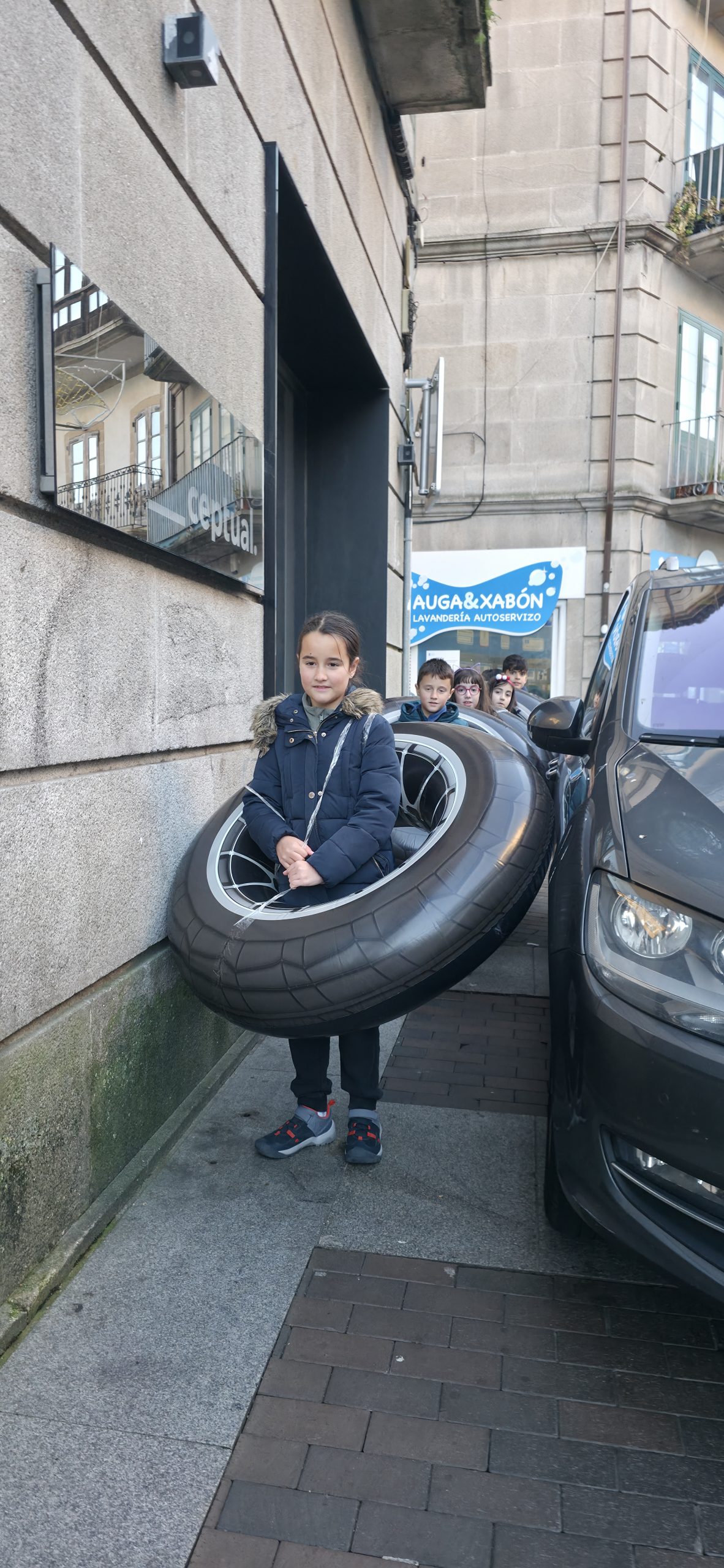
How much space does a body in motion occupy?
How much space does a person need to walk, stop, play, or talk without having to step aside?

In Pontevedra, a city that has been standing by people’s side for years, we went out to check.
We want to make visible what is already working, and also what can still improve.

The floaters, with their playful shape and enveloping volume, help us to feel the space with our bodies, to experience the city from a human scale, and to ask ourselves collectively:

Is my city designed for me?

Color your city

The village or city in which we are working has been turned into a game board, a laboratory of experimentation where girls, boys and teenagers can act from a new point of view.

Pontevedra

Pontevedra


pontevedra

We understand the village as a game board, as a meeting place and as a learning laboratory for children and teenagers, through the tools of childhood such as their own movement and play. They have to discover, live, know and value their habitat in order to be able to act in it as an active citizen, thus encouraging protagonist participation from childhood.

PONTEVEDRA

THE IMPORTANCE OF PLACE

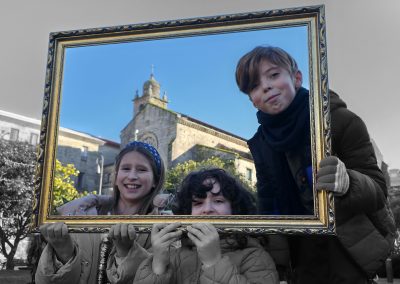
We want children and teenagers to learn to look at the place where they live, taking with them two powerful tools: ART and ARCHITECTURE. They are two elements that help us to understand the world and, most importantly, also to transform it.

THE VILLAGE AS A GAMEBOARD

THE VILLAGE AS A GAMEBOARD

SADA

CHANGING THE VILLAGE THROUGH PROTAGONIST PARTICIPATION


THE VILLAGE AS A GAMEBOARD


“Every city has its own history, its own landmarks. I’m not only referring to those buildings officially recognised as important parts of the nation’s historical heritage. I mean, above all, the places that belong to the city’s memory — places that are fundamental to its identity, to the sense of belonging to a city. Whether it’s a factory, an old tram stop, or one of those grocery shops where everything was ingenuously displayed.”

Jaime Lerner


The right of children and adolescents to PARTICIPATE in the CONSTRUCTION of their VILLAGE or CITY as part of an ACTIVE CITIZENSHIP, in such a way that they become both participants in and agents of change in their surroundings.

For this sense of protagonist to exist, CHILDREN and ADOLESCENTS must reflect on their surroundings (the space in which they live their lives), their context and propose solutions for change become aware of what it means to be a legal entitlement and the importance that their participation can have as a driving force for change in the rest of society.

COLOUR YOUR VILLAGE

The village or city in which we are working, transformed into a game board, a laboratory of experimentation where children and teenagers can act from a new point of view.
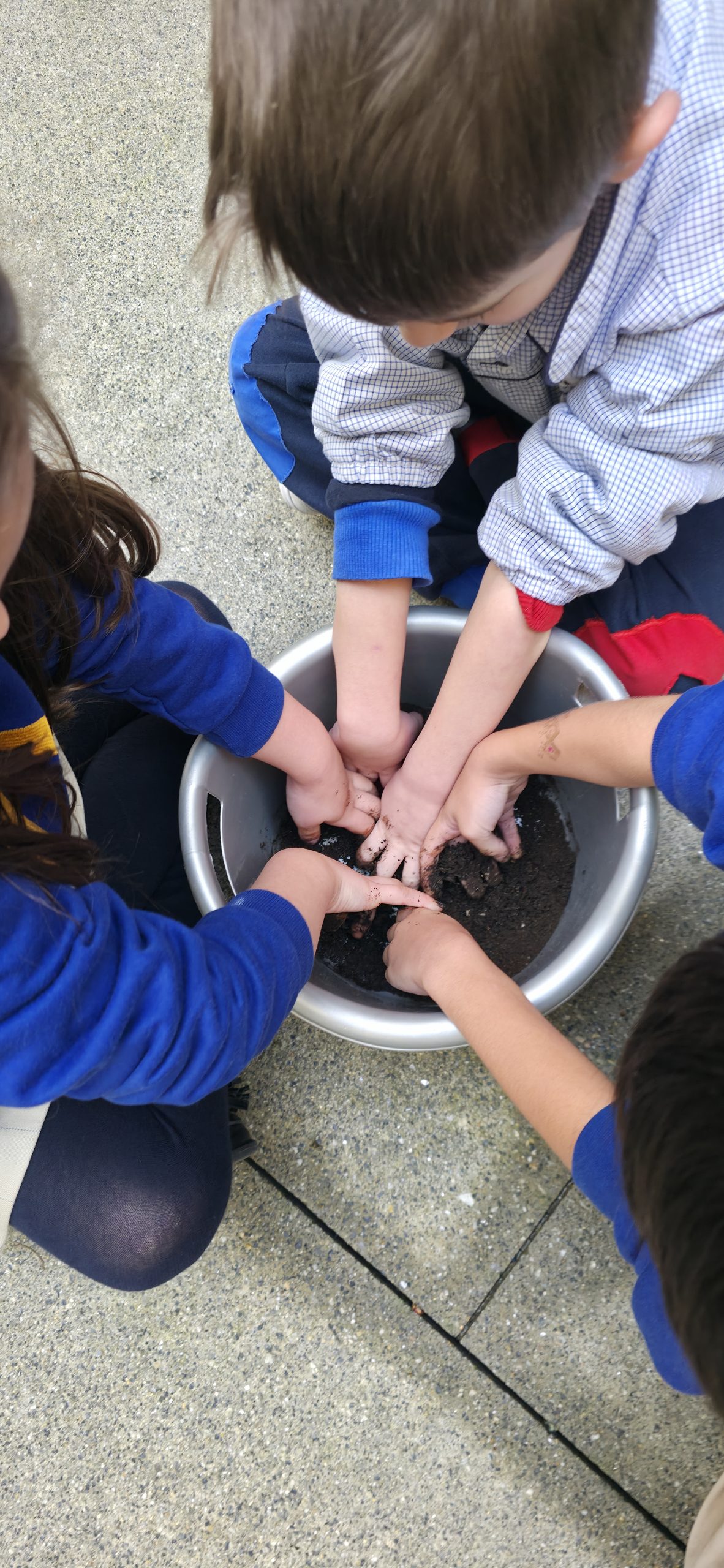
Sada

Sada


Sada

We understand the village as a game board, as a meeting place and as a learning laboratory for children and teenagers, through the tools of childhood such as their own movement and play. They have to discover, live, know and value their habitat in order to be able to act in it as an active citizen, thus encouraging protagonist participation from childhood.

SADA

THE IMPORTANCE OF PLACE

We want children and teenagers to learn to look at the place where they live, taking with them two powerful tools: ART and ARCHITECTURE. They are two elements that help us to understand the world and, most importantly, also to transform it.

The village as a gameboard

The village as a gameboard

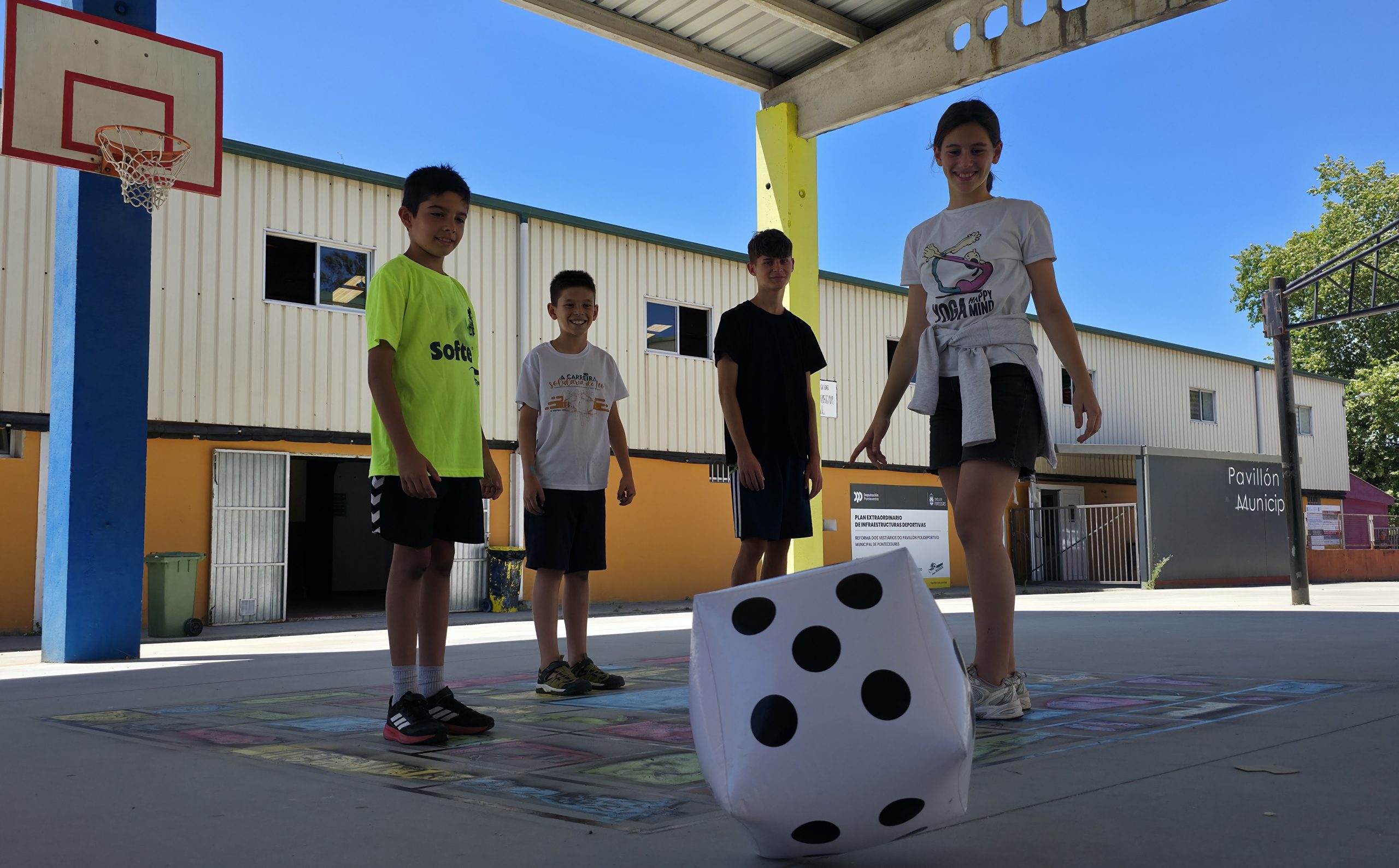
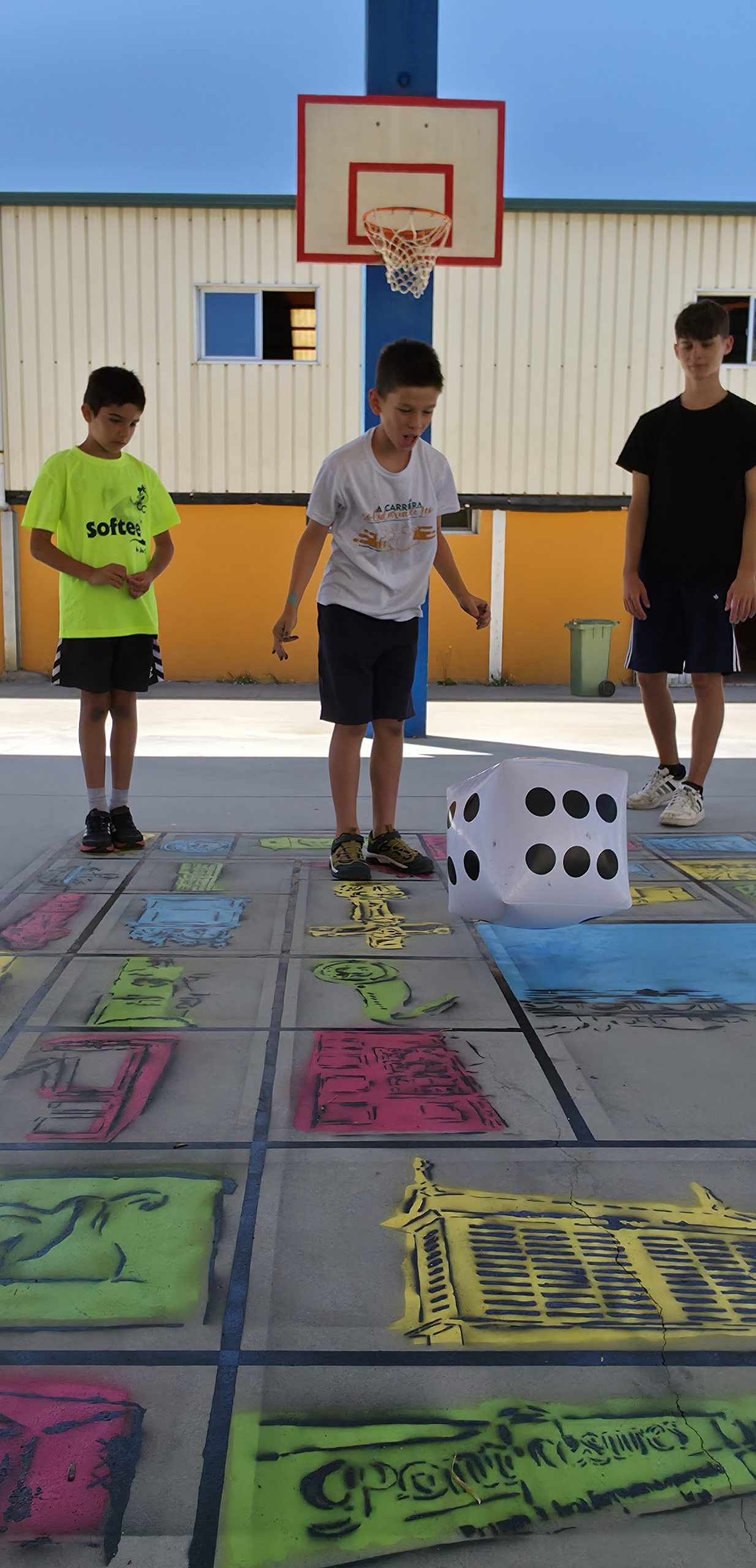
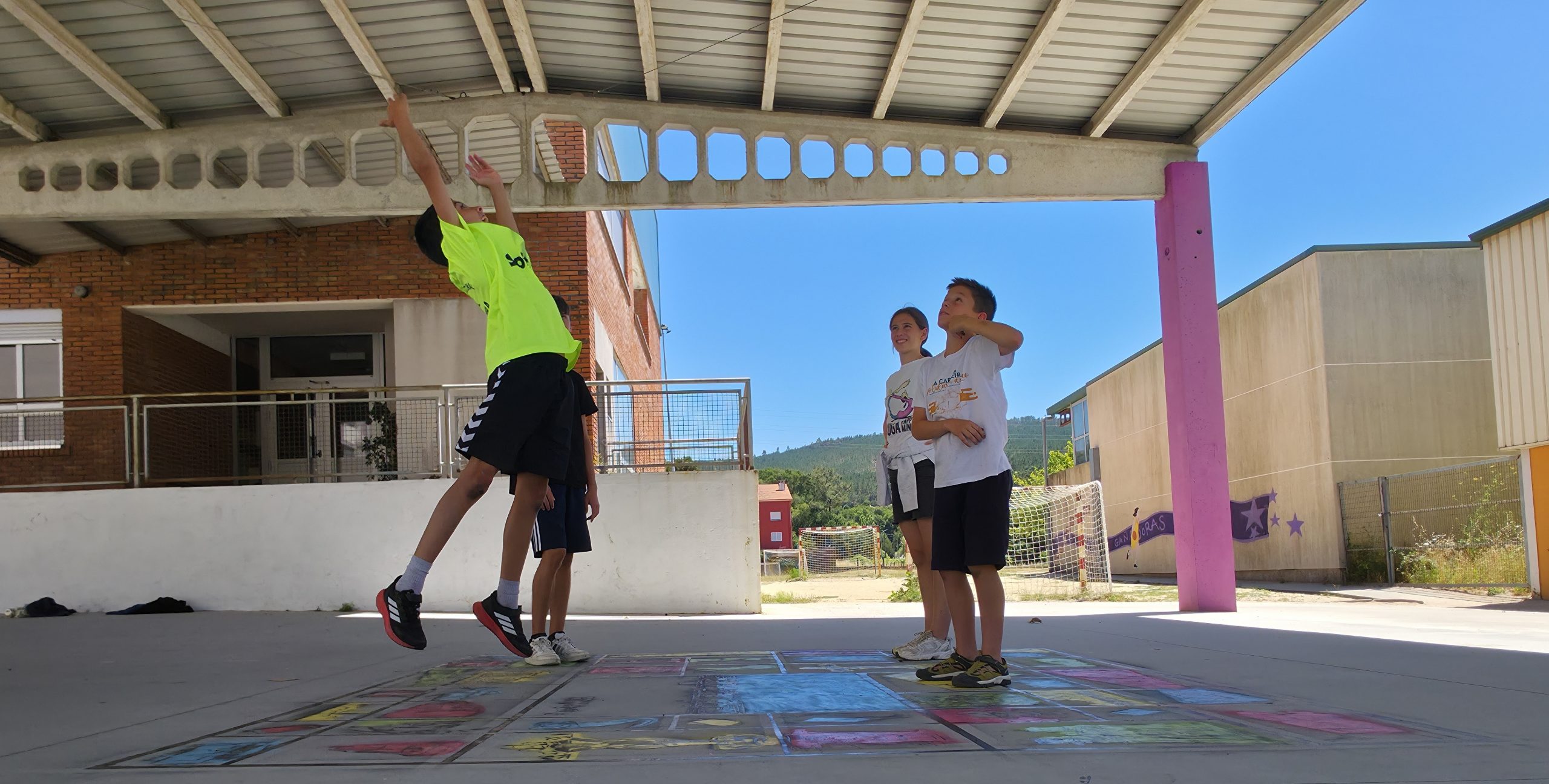
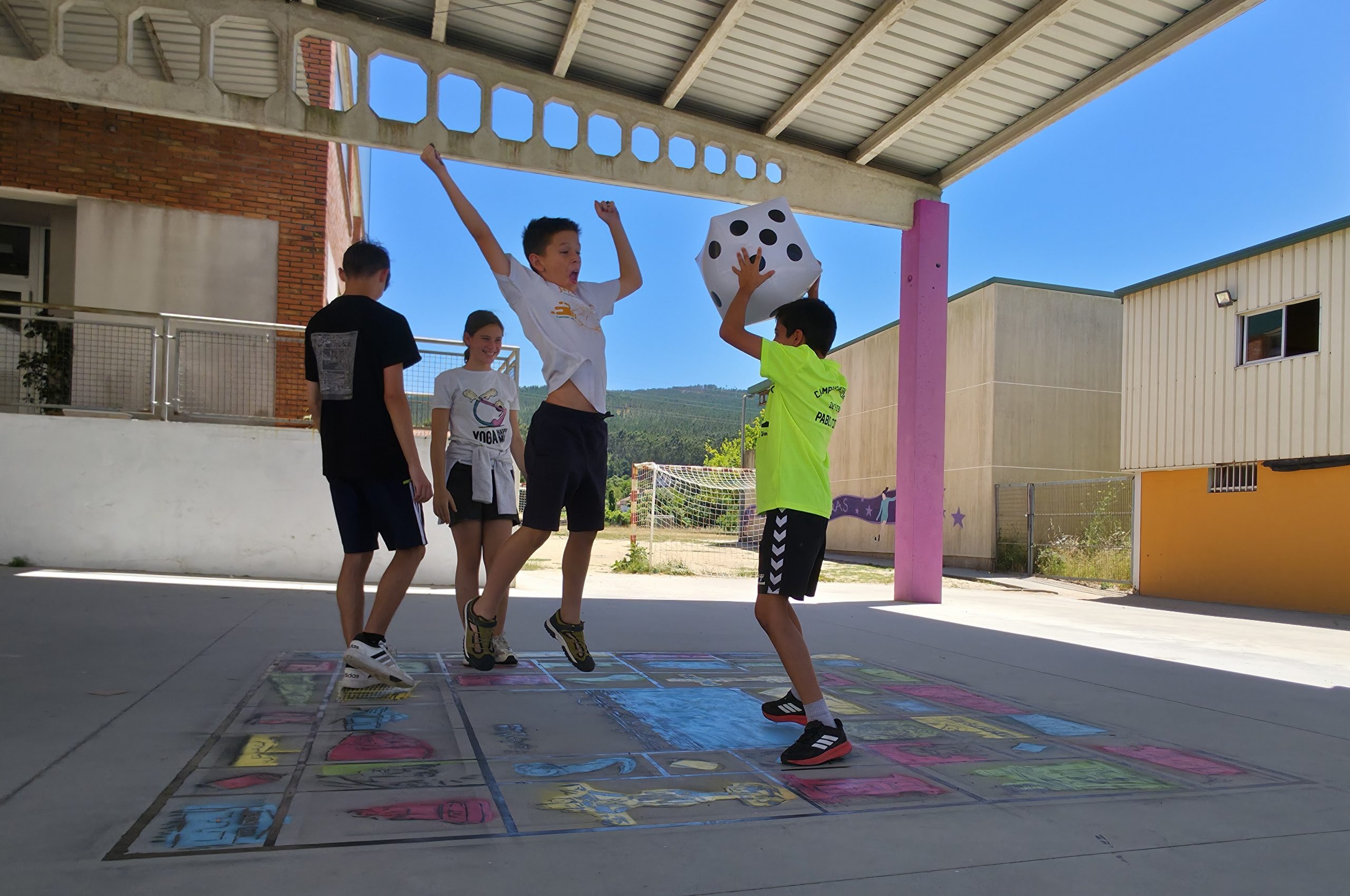
PONTECESURES

CHANGING THE VILLAGE THROUGH PROTAGONIST PARTICIPATION


THE VILLAGE AS A GAMEBOARD


“Every city has its own history, its own landmarks. I’m not only referring to those buildings officially recognised as important parts of the nation’s historical heritage. I mean, above all, the places that belong to the city’s memory — places that are fundamental to its identity, to the sense of belonging to a city. Whether it’s a factory, an old tram stop, or one of those grocery shops where everything was ingenuously displayed.”

Jaime Lerner


The right of children and adolescents to PARTICIPATE in the CONSTRUCTION of their VILLAGE or CITY as part of an ACTIVE CITIZENSHIP, in such a way that they become both participants in and agents of change in their surroundings.

For this sense of protagonist to exist, CHILDREN and ADOLESCENTS must reflect on their surroundings (the space in which they live their lives), their context and propose solutions for change become aware of what it means to be a legal entitlement and the importance that their participation can have as a driving force for change in the rest of society.

COLOUR YOUR VILLAGE

The village or city in which we are working, transformed into a game board, a laboratory of experimentation where children and teenagers can act from a new point of view.
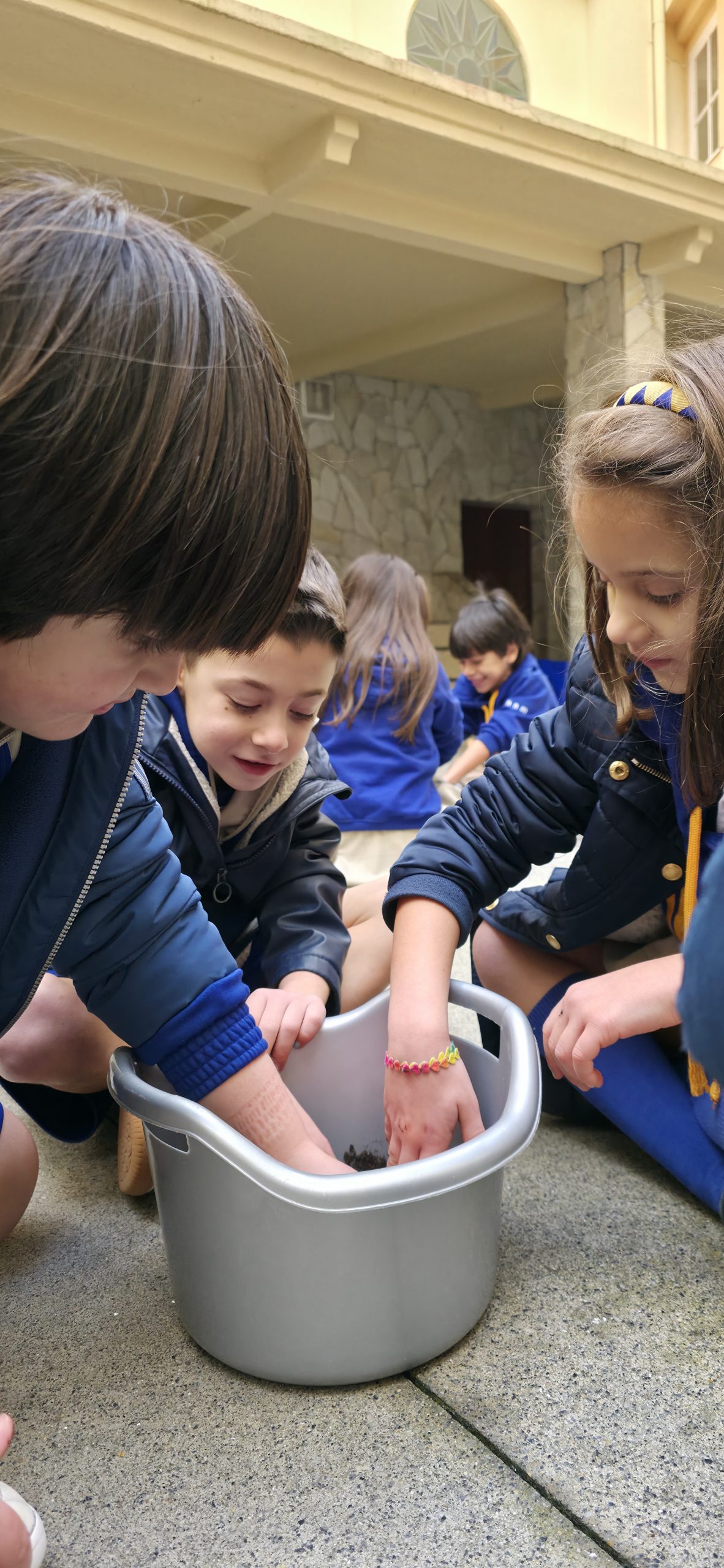
THE VILLAGE AS A GAMEBOARD

THE VILLAGE AS A GAMEBOARD

PADRÓN

CHANGING THE VILLAGE THROUGH PROTAGONIST PARTICIPATION


THE VILLAGE AS A GAMEBOARD


“Every city has its own history, its own landmarks. I’m not only referring to those buildings officially recognised as important parts of the nation’s historical heritage. I mean, above all, the places that belong to the city’s memory — places that are fundamental to its identity, to the sense of belonging to a city. Whether it’s a factory, an old tram stop, or one of those grocery shops where everything was ingenuously displayed.”

Jaime Lerner


The right of children and adolescents to PARTICIPATE in the CONSTRUCTION of their VILLAGE or CITY as part of an ACTIVE CITIZENSHIP, in such a way that they become both participants in and agents of change in their surroundings.

For this sense of protagonist to exist, CHILDREN and ADOLESCENTS must reflect on their surroundings (the space in which they live their lives), their context and propose solutions for change become aware of what it means to be a legal entitlement and the importance that their participation can have as a driving force for change in the rest of society.

COLOUR YOUR VILLAGE

The village or city in which we are working, transformed into a game board, a laboratory of experimentation where children and teenagers can act from a new point of view.
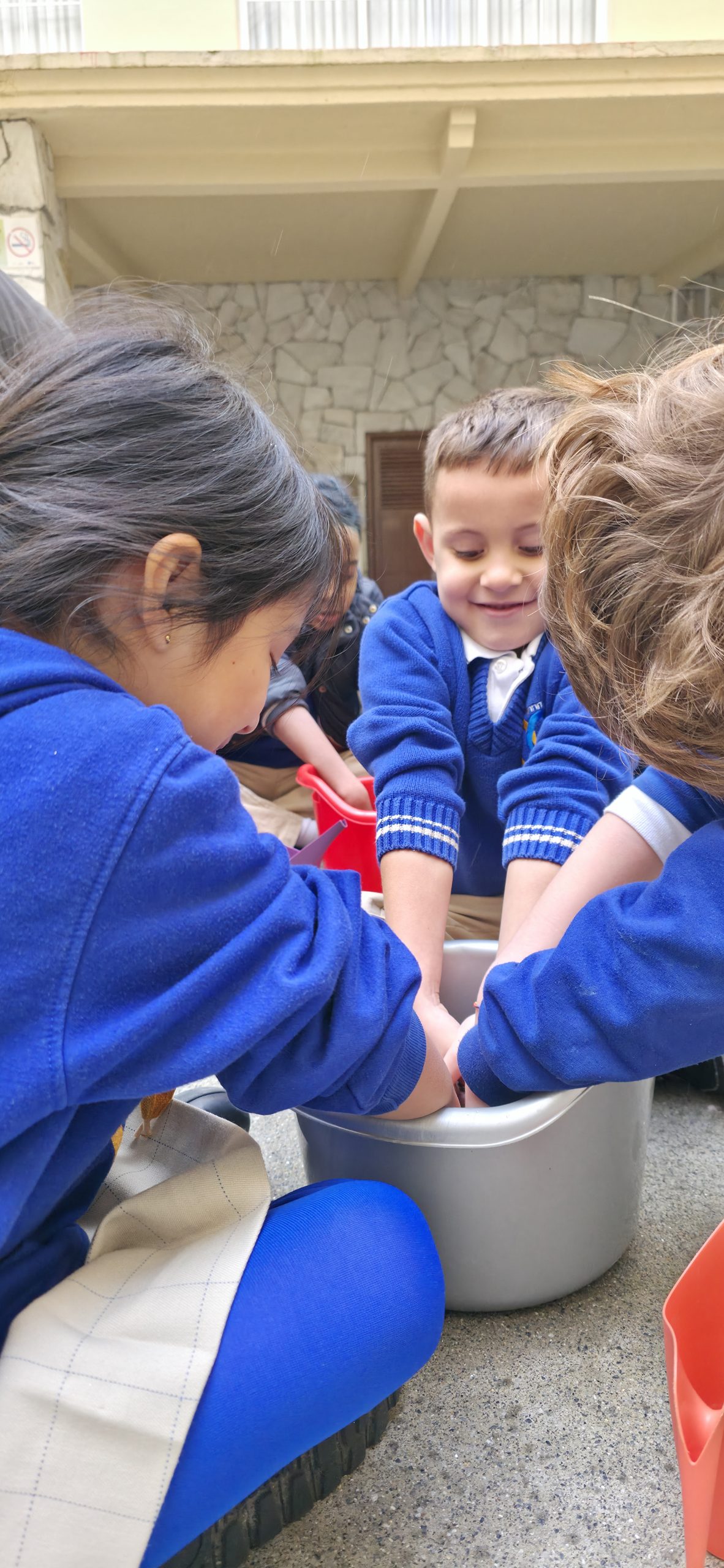
Tags

Accessible Cities (69) Acoruñanarede (1) Ames (5) Anxel Casal (3) A Pobra do Caramiñal (2) ArchDaily (1) Architecture (159) Arquitectura (40) Arteixo (2) Art magazine - Logopress (2) Arzúa (34) As Pontes (2) Atlántico (1) A Vila do Mañá (256) barbadas.es (1) Barbadás (15) Barbanza Channel (3) Bergantiños Diary (1) Book (8) boys and adolescents (24) Brasil (11) Brazil (5) Bueu (16) Cambados (15) Carballo (40) Childhood (198) City (76) codesign (16) Coia (19) Compostela24horas.com (1) Conference (5) Coronavirus (68) Council of Carballo (1) Covid (69) crtvg (1) Cultural heritage (7) Culture city (1) Curtis (7) derecho a la ciudad (1) Diario de Arousa (4) Diario de Pontevedra (1) Diary of Arousa (29) Ecos da comarca (4) El Comarcal (1) El Correo Gallego (43) ElDiario.es (1) el ideal gallego (1) El progreso (1) enfoques (2) Environment (3) Faro de Vigo (43) Ferrol (19) Ferrol360.es (1) Ferrol Diary (5) Floats (8) Galicia (232) Galicia@PRESS (2) Galician literature (1) Game board (5) Game of goose (5) GDiario (1) Girls (18) Girls, boys and adolescents (133) Green flag (4) Hai Mulleres (2) Heritage (142) High School Alexandre Bóveda (5) Historic city (9) History of Galicia (1) Hoyesarte.com (1) Iberoamerican Biennial (4) Independence square (1) Infancia (14) Inmodiario (1) inquEDU (2) Instituto Alexandre Bóveda (1) International (3) Interview (2) Landscape (131) La Opinión (16) La Región (22) La Voz de Galicia (100) library (1) Lina Bo Bardi (6) Lindeiros (1) Lo Que Yo Te Digo (2) Ludantia (4) Madrid (2) Malpica (5) Master Houses (1) Mobility (2) Mobility Week (2) Mondoñedo (6) Nenas nenos e adolescentes (13) Nets (1) News (185) NH Diary (8) Nius Diary (1) Noticia (14) O Barbanza (2) Observador (1) O Correo de Bergantiños (2) O Porriño (4) Padrón (3) Pandemic (47) Park (2) Participación protagónica (41) Patrimonio cultural (1) Pazo do Martelo (1) PonteAreas (4) Pontevedra (4) PontevedraViva!com (2) Portugal (1) Protagonist participation (85) Protegim-nos (1) Que pasa na Costa (3) RadioValladares (1) Regiao news (1) Region (3) Revista AMSGO! (1) Rianxo (20) Ribadeo (2) Ribeira (8) Right to the city (88) Rías Baixas Channel (3) Rúa (14) Sandra Gonzalez Alvarez (19) Sandra González (131) San Francisco Vilagarcía de Arousa School (3) Santiago's road (46) Santiago de Compostela (12) Sesc Santo Amaro (1) Silleda (30) Social distance (68) Street (96) São Paulo (14) Tactical urbanism (88) Talleres (22) Teixeiro (2) Telecinco (1) Terrachá xá (1) Touro (8) treintayseis (1) TV (3) TV of Galicia (2) Urban garden (7) Urbanism (145) Urbanismo (40) Urbanismo de Guerrilla (142) Urbanismo táctico (42) Venice Biennale (2) Verín (5) Viena (2) Vila (23) Vilagarcía (24) Village (101) Vimianzo (7) Virtual (40) Vía Láctea Communication (1) Workshops (139) XUNTA DE GALICIA (3) zero code (1)

Logo A Vila do Mañá

Proxecto financiado por:

Proxecto financiado pola Deputación da Coruña

Grazas polo teu aporte